2027 Cheapest AI Degrees That Are Actually Worth It

Co-Founder and Chief Data Scientist
Many prospective graduate students and working professionals face a significant challenge when seeking affordable, credible pathways to transition into the artificial intelligence industry. The abundance of online programs and degrees makes choosing the right option overwhelming, especially when balancing costs, accreditation, and career relevance.
Without clear guidance, learners risk investing in programs that lack industry recognition or fail to provide flexible learning suited to busy schedules. This article explores the cheapest AI degrees available that combine affordability with quality, helping readers identify flexible, accredited programs that genuinely enhance career opportunities in artificial intelligence.
Key Things You Should Know
- In 2026, affordable AI degrees often combine online accessibility with hands-on projects, offering practical skills aligned with the 40% projected job growth in AI-related fields through 2030.
- Most cost-effective programs focus on key areas like machine learning, data analytics, and ethical AI, emphasizing workforce readiness amid rising demand for AI-competent professionals.
- Graduates from budget-friendly AI degrees report average starting salaries above $85,000, highlighting strong ROI despite lower tuition compared to traditional tech degree paths.
What are the most affordable accredited AI degree programs available in the United States?
The most affordable accredited artificial intelligence degree programs in the United States are often found at public universities offering in-state tuition rates and reputable online courses.
According to the National Center for Education Statistics (NCES), the average annual tuition for in-state undergraduate programs at public universities was $9,750. This figure highlights the cost advantage of public institutions compared to many private or out-of-state alternatives.
Top-value artificial intelligence universities with accredited degrees in the US include the University of Florida, Arizona State University, and the University of Texas at Austin.
These schools offer online and on-campus Bachelor's and Master's degrees in computer science or data science with AI specializations, with tuition typically ranging from $12,000 to $15,000 annually, consistent with NCES data. Choosing a program with regional accreditation, such as from the Higher Learning Commission, secures the degree's recognition and transferability.
Students aiming for affordability should focus on public universities within their home state to benefit from reduced tuition rates. Online programs provide added flexibility and competitive pricing, which is valuable for working professionals or those balancing education with other responsibilities.
It is important to avoid unaccredited programs, even if they seem cheaper, since these often lack recognition from employers and graduate schools.
Prospective students should investigate whether programs include practical AI applications, research opportunities, and partnerships with industry—factors that enhance the value of the degree beyond its cost.
For more insight into career pathways, learn what is applied artificial intelligence and the opportunities it presents.
How much can you expect to earn after completing a low-cost AI degree?
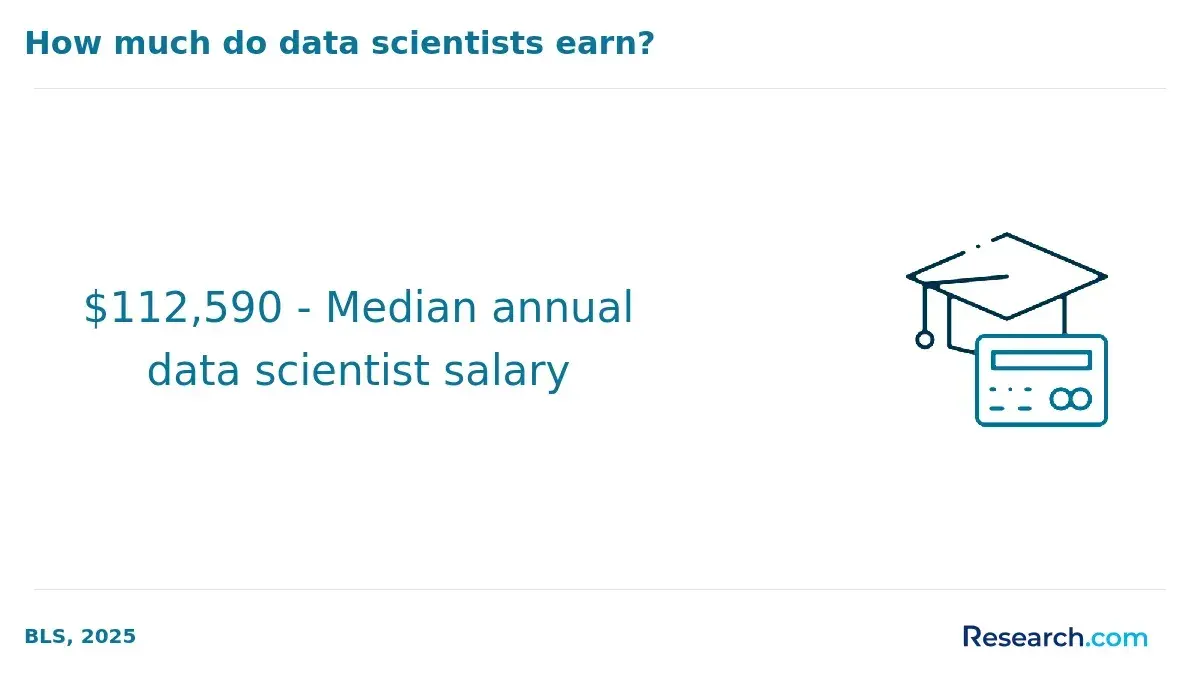
Graduates with low-cost artificial intelligence degrees can expect strong earning potential, reflecting both industry demand and competitive salaries. According to the U.S. Bureau of Labor Statistics, computer and information research scientists earn a median annual salary of $136,620, with the top 10% making over $208,000.
The expected salary after completing a low-cost artificial intelligence degree varies by role, experience, and location, but entry-level AI-related jobs often start above $80,000 annually. Careers such as machine learning engineers, data scientists, and AI software developers typically reach mid-six-figure salaries after gaining experience.
Affordable programs, including those offered online or through community colleges, still yield average earnings with an affordable AI degree that are competitive within the tech sector.
Employers increasingly prioritize practical skills validated by certifications and project portfolios alongside formal degrees. Low-cost degree programs frequently emphasize hands-on learning, making graduates highly appealing to startups and tech companies focusing on AI applications.
While some high-level AI roles require advanced degrees, many well-paying positions are accessible with a bachelor's or associate degree coupled with relevant experience and continued skill development.
For more detailed rankings and insights, see the data science master rank that highlights affordability in related fields.
What is the job outlook and demand for AI professionals in the current job market?
The job outlook for AI professionals is robust, reflecting rapid technological advancements and strong industry demand. The U.S. Bureau of Labor Statistics projects a 21% growth in employment for computer and information research scientists through 2033, a rate far above the average for all occupations.
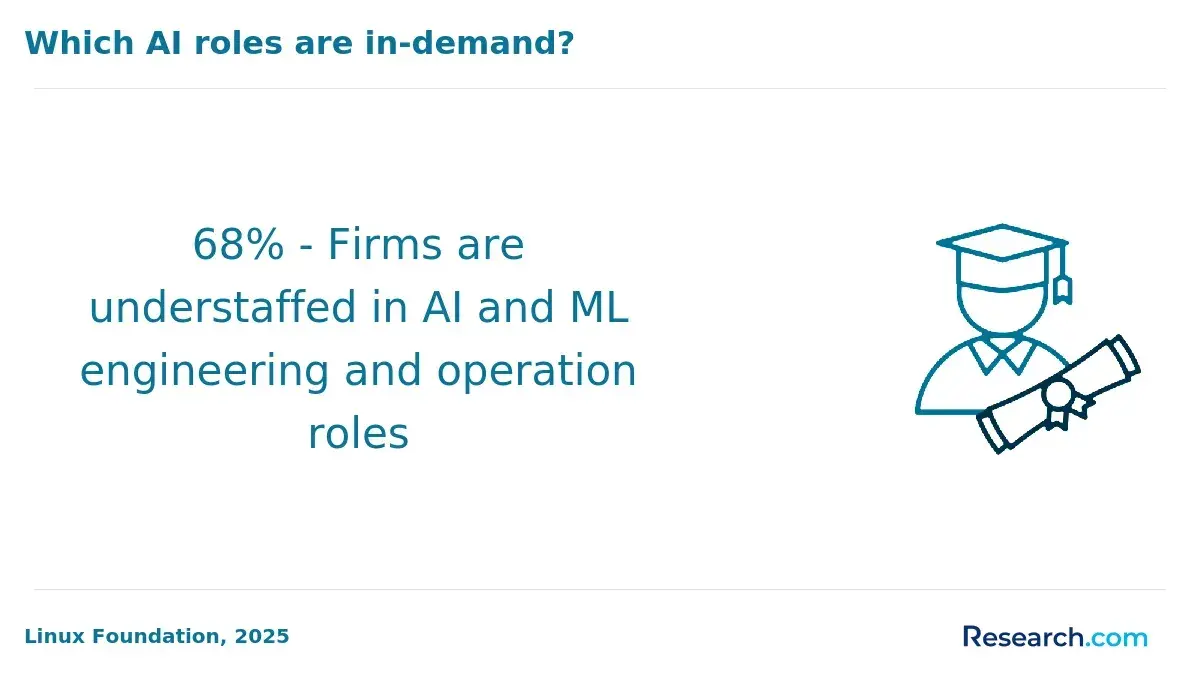
Companies in sectors like healthcare, finance, automotive, and cybersecurity are actively hiring AI specialists to design intelligent systems, improve efficiency, and analyze large datasets. Positions such as AI research scientist, machine learning engineer, and data scientist often require practical knowledge in Python, TensorFlow, and neural networks.
Graduates holding affordable AI degrees with hands-on experience and interdisciplinary knowledge are well positioned in this competitive job market. Early-career salaries frequently exceed $100,000 annually, showcasing strong hiring activity.
Businesses particularly value candidates who blend AI expertise with domain-specific skills, including natural language processing for customer service automation or computer vision applications in manufacturing. Those exploring the cheapest engineering degree online can find programs emphasizing applied AI, internships, and portfolio development.
Demand also extends to professionals skilled in ethical AI design and regulatory compliance, responding to increasing societal and legal scrutiny. AI professional job demand in the current market rewards those who combine deep technical knowledge with adaptability to industry changes and evolving challenges.
What are the key differences between online and campus-based AI degree programs in terms of cost and quality?
Online ai degree programs generally cost 30% to 60% less than campus-based equivalents due to savings on facilities, housing, and commuting. For instance, a typical online master's in artificial intelligence ranges from $15,000 to $30,000, while campus programs often exceed $40,000.
This highlights significant financial advantages for online options. However, cost alone does not determine quality. Accredited online degrees increasingly match campus programs in rigor and curriculum breadth, especially when delivered by experienced faculty.
Campus-based programs provide more direct access to in-person labs, research centers, and face-to-face networking, which bolster experiential learning and collaborative projects. These features are vital for students pursuing AI research or roles involving hands-on skills like hardware and robotics.
Conversely, online programs offer greater scheduling flexibility, making them attractive to working professionals balancing multiple commitments.
Student support differs widely: campus students have access to on-site career services and peer networks, while online learners rely on virtual platforms and self-discipline. Quality online programs address this gap with live sessions, mentorship, and participation in AI research groups.
Quality differences between online and traditional artificial intelligence degree programs continue to narrow, enabling competitive academic value at reduced cost.
For those researching options, resources such as the data science master online guide can offer valuable insights into affordable, flexible learning pathways.
What specific coursework and technical skills are covered in budget-friendly AI degree programs?
Budget-friendly artificial intelligence degree programs emphasize core coursework that builds essential technical skills aligned with job market needs. Students focus on machine learning algorithms, data structures, and statistical modeling, which form the basis for understanding AI systems.
Python is a primary programming language taught, reflecting its dominance in AI development and data science. Hands-on projects in natural language processing, computer vision, and reinforcement learning help students apply theoretical knowledge to real-world problems.
These programs often include specialized training in deep learning frameworks like TensorFlow and PyTorch to prepare students for building and optimizing neural networks.
Key technical skills such as data preprocessing, feature engineering, and algorithm tuning are integrated to enhance model performance. Mathematical foundations, including linear algebra, calculus, and probability support algorithmic understanding throughout the curriculum.
According to LinkedIn's 2024 Jobs Report, skills in machine learning engineering, deep learning, and Python programming saw a 74% yearly increase in job postings. Affordable AI degrees align with these trends, ensuring students gain relevant capabilities without high costs.
Some programs also offer training in cloud platforms like AWS and Azure, as deployment expertise is increasingly valued by employers.
What are the admission requirements and prerequisites for entering affordable AI degree programs?
Admission to affordable ai degree programs generally requires a high school diploma or an equivalent credential with a solid background in math and science. Many state universities highlight prerequisites such as calculus, statistics, computer science, and physics.
Applicants often need to show programming skills in languages like Python or Java. Those transferring or returning to school may strengthen their application with relevant college-level coursework.
Standardized test requirements vary; over 47% of four-year colleges admitted more than 75% of applicants recently, with many affordable state universities reporting acceptance rates above 80%.
This suggests that minimum SAT or ACT scores may be flexible, though strong scores help when applying to selective programs focused on artificial intelligence.
Undergraduate AI programs seldom require prior AI experience, but internships or projects can enhance an application. Graduate programs typically ask for a bachelor's in computer science, engineering, or math, often with a minimum 3.0 GPA.
GRE scores, recommendation letters, and statements of research interests in AI are common requirements. Some schools use placement tests or mandate foundational coursework before advancing.
Benefits such as VA assistance, financial aid, and in-state residency status can affect admission and tuition costs. Since requirements differ widely by institution and state, students should carefully review individual program details.
How long does it take to complete a low-cost AI degree, and what are the total program costs?
Low-cost artificial intelligence degrees generally range from two to four years, depending on the program and student pace. Associate degrees in artificial intelligence or related areas are typically completed in about two years full-time and are offered mainly at community colleges, providing an affordable entry point for technical jobs.
Bachelor's degrees, which offer a more extensive curriculum, usually take around four years at public universities, with some accelerated options reducing this to about three years for motivated students.
Costs vary widely by institution and residency status. Public four-year universities often provide the most affordable route for in-state students. According to the College Board's 2024 Trends in College Pricing, the average annual cost at in-state public universities, including tuition and fees, is approximately $28,240, translating to roughly $112,960 for a four-year bachelor's degree.
Community college associate degrees cost significantly less, generally between $3,500 and $5,000 annually, leading to total tuition below $10,000 before living expenses.
Online and hybrid formats offer flexible scheduling and reduce housing costs, but sometimes come with higher per-credit fees. Shorter, skill-focused certificates or bootcamps cost between $5,000 and $15,000 but do not provide the full academic foundation of a degree.
What accreditation standards and quality indicators should you verify when evaluating affordable AI programs?
Verify program accreditation from recognized bodies such as ABET (Accreditation Board for Engineering and Technology), which endorses quality engineering and technology education internationally. ABET accredits over 2,400 engineering and engineering technology programs across 32 countries, signaling consistent quality assurance.
For artificial intelligence degrees, accreditation by ABET or regional agencies recognized by the U.S. Department of Education confirms that the curriculum meets industry standards, faculty qualifications are strong, and facilities support effective learning.
Look for programs offering specialized AI coursework or concentrations within computer science, data science, or engineering departments. Programs integrating current AI frameworks, hands-on projects, and access to modern computational resources provide better preparation than courses focused solely on theory.
Institutions that support research opportunities or partner with tech companies often enhance practical experience and improve employability.
Faculty expertise is critical—review instructors' academic backgrounds, publications, and industry involvement in artificial intelligence. Programs led by faculty active in AI research or holding relevant credentials typically deliver higher educational value. Also, inquire about class sizes and student support services, as small cohorts and mentoring can significantly improve learning outcomes.
Financial transparency and affordability, combined with quality, matter. Ensure tuition aligns with accreditation and graduate employment rates. Request data on job placement percentages and average starting salaries, which offer insight into whether the program's affordability translates into genuine career opportunities.
What professional certifications complement an affordable AI degree and improve career prospects?
Professional certifications enhance the value of an affordable artificial intelligence degree by validating specialized skills that employers prioritize. Credentials such as the Certified Artificial Intelligence Practitioner (CAIP) verify practical AI expertise, boosting employability in technical roles.
Cloud certifications like Amazon Web Services (AWS) Certified Machine Learning - Specialty and Google Cloud Professional Machine Learning Engineer highlight the ability to deploy AI at scale, which aligns with many companies' focus on integrating AI with cloud infrastructure.
Data-centric certifications such as Certified Data Scientist and Microsoft Certified: Azure Data Scientist Associate emphasize skills in data manipulation and model building, essential for AI model accuracy and interpretability.
According to CompTIA's 2024 Certification Impact Report, professionals with certifications earn approximately 15% more than non-certified peers; in AI-related fields, this rises to a 28% salary premium.
Advanced certifications in AI ethics and cybersecurity, like the Certified Information Systems Security Professional (CISSP) with AI security specialization, expand career opportunities into governance and compliance.
Combining an affordable AI degree with one or more of these industry-recognized certifications delivers practical skills aligned with employer demands, significantly improving hiring prospects and salary outcomes.
How do you compare and select the best affordable AI program based on career goals and learning format?
Align your choice of an affordable AI program with clear career goals and preferred learning formats. Identify whether your focus is research, software development, data analysis, or business intelligence. Select programs offering specialized tracks or electives supporting those aims.
For instance, a program emphasizing machine learning algorithms is ideal for aspiring data scientists, while one centered on AI ethics and policy suits those targeting governance roles.
Consider the learning format carefully: on-campus, online asynchronous, or hybrid. Working professionals often find flexible online or evening courses advantageous, whereas recent graduates may prefer immersive, full-time on-campus programs.
Check course schedules, internship requirements, and networking opportunities to ensure they match your availability and learning preferences.
The National Association of Colleges and Employers (NACE) report highlights that 72% of employers actively recruit from specific schools, making program reputation and partnerships crucial.
Choose programs accredited by recognized bodies with strong connections to tech firms or research labs to enhance job placement chances. Review alumni success and internship pipelines, prioritizing those demonstrating employer engagement.
Evaluate the total cost, including tuition, fees, and resources such as lab access or mentoring. Look into scholarships, grants, and assistantships. Affordable options like state universities or community colleges often offer transferable credits to prestigious institutions, balancing cost and reputation effectively.
Use these comprehensive criteria rather than focusing solely on tuition to find a program that supports both affordability and career outcomes.
Other Things You Should Know About Artificial Intelligence
Many affordable AI degrees require a capstone in the final term, usually worth 3 to 6 credits. Students typically must complete a working project with a faculty adviser, such as a model, app, or research report. Some programs allow an internship or thesis instead.
Yes, many AI degree programs offer specializations such as natural language processing, computer vision, robotics, or data science. Choosing a specialization can help tailor your education to specific career paths and emerging industry demands.
Practical experience through internships, research projects, or hands-on labs is highly valuable in artificial intelligence education. It helps students apply theoretical concepts to real-world problems, making them more attractive to employers upon graduation.
In 2027, graduates with a low-cost AI degree can pursue roles such as data analysts, machine learning engineers, AI research assistants, and junior data scientists. These positions offer opportunities to work across various industries, leveraging newly acquired skills in AI technology applications and data management.
References
- Most Affordable Online Master's in AI for 2025 https://www.mastersinai.org/degrees/affordable-online-masters-in-ai/
- How Long Do AI Courses Take? https://www.nobledesktop.com/learn/ai/how-long-do-ai-courses-take
- Choosing the Right AI Software: Compare Top Tools and Find Your Best Fit - AI Smart Ventures https://aismartventures.com/posts/choosing-the-right-ai-software-compare-top-tools-and-find-your-best-fit-2/
- Ultimate Guide: How to Choose the Right AI Training Course to Boost Your Career - ONLC https://www.onlc.com/blog/how-to-choose-ai-training-courses/
- Online vs. In-Person AI and Machine Learning Courses: Which is Better for You? https://orhanergun.net/online-vs-in-person-ai-and-machine-learning-courses-which-is-better-for-you
- Guidance on the Responsible Use of Artificial Intelligence (AI) in Accredited Continuing Education (CE) - ACCME https://accme.org/resource/guidance-on-ai/
- Best AI Certifications to Boost Your Career in 2026 – Dataquest https://www.dataquest.io/blog/best-ai-certifications/
- Top College Degrees That Will Land You the Highest-Paying AI Jobs in 2026 https://www.investopedia.com/top-college-degrees-that-will-land-you-the-highest-paying-ai-careers-in-2026-11923863
- The Most Affordable Master’s Degrees in Artificial Intelligence https://aidegreeguide.com/editors-choice/most-affordable-masters-degrees-in-artificial-intelligence/
- Cheapest Master in Artificial Intelligence Online https://agtu.us/en/programs/graduate-programs/computer-science/cheapest-master-artificial-inteligence/