2027 How Long Does It Take to Earn an AI Master's Degree?

Co-Founder and Chief Data Scientist
Many prospective students wonder how long it takes to earn an AI master's degree while balancing work and life commitments. This uncertainty can delay important career decisions, especially for those transitioning from unrelated fields. Time investment concerns often overshadow the potential benefits of entering the growing AI industry. Understanding typical program lengths and flexible learning options helps applicants select the best path to meet their goals efficiently. This article outlines the common durations of AI master's degree programs and highlights factors influencing timelines to assist readers in making informed decisions about their education and career pivot.
Key Things You Should Know
- The typical duration for earning a master's degree in artificial intelligence is 1.5 to 2 years for full-time students, with part-time options extending up to 3 years.
- Most programs require 30 to 36 credit hours, focusing on machine learning, data analytics, and ethical AI, aligning with evolving industry demands.
- Enrollment in accredited U.S. institutions grew by 15% between 2023 and 2025, reflecting increased labor market demand for AI expertise.
How long does it typically take to complete a master's degree in artificial intelligence?
Completing a master's degree in artificial intelligence typically takes between one and two years of full-time study, with most U.S. programs requiring 30 to 36 credit hours. Core subjects often include machine learning, neural networks, and data science, supplemented by electives tailored to specific AI applications. For those balancing work, the average duration of a master's degree in artificial intelligence can extend to three years or more as part-time students progress at a slower pace.
Accelerated options enable completion within about 12 months by increasing course loads and minimizing breaks, suiting students with strong computer science backgrounds or full-time availability. Research-driven master's programs, especially those involving thesis commitments, may push the timeframe to closer to two years due to the time needed for experiments and academic writing.
Online and hybrid programs add flexibility, allowing students to set their own pace, though the timeframe to finish a master's in artificial intelligence program may lengthen, potentially impacting overall costs and earnings timeline. Prospective students should carefully assess program structure alongside personal commitments to optimize duration and investment.
Graduates often see financial benefits soon after completing their degrees. According to data from the Bureau of Labor Statistics, AI master's degree holders earn median salaries ranging from $120,000 to $150,000 within six months post-graduation. This underscores the immediate career value of such degrees. Students are advised to pursue programs with strong industry ties and current curricula to stay competitive in the fast-evolving AI sector and explore artificial intelligence career paths.
What are the admission requirements for AI master's degree programs at accredited universities?
Admission requirements for accredited AI master's degree programs in the U.S. typically include a bachelor's degree in computer science, engineering, mathematics, or another STEM discipline. Some programs admit applicants with strong quantitative backgrounds from other fields but may require prerequisite courses in programming, calculus, and linear algebra. These eligibility criteria for postgraduate artificial intelligence studies ensure students possess foundational skills needed for advanced learning.
About 73% of these programs require GRE scores, with successful applicants often scoring between 160 and 170 on the quantitative section. High GRE quantitative scores demonstrate the math proficiency essential for AI coursework. Additional admission components frequently include letters of recommendation, a statement of purpose, and a resume focusing on relevant AI research, projects, or work experience. Competitive programs may also emphasize publications or internships in AI or machine learning.
Some specialized AI master's programs require proficiency in programming languages like Python or familiarity with AI frameworks. International applicants usually need TOEFL or IELTS scores to prove English proficiency. Requirements vary by university; some waive GRE scores for applicants with extensive work experience or advanced degrees, while others may include interviews or coding assessments.
For working professionals, part-time or online AI master's options often provide more flexible admissions but still expect strong quantitative skills. Prospective students interested in affordability and program options can explore the data science degree rankings to find suitable pathways.
How much does an AI master's degree cost, and what financial aid options are available?
The average cost of an AI master's degree at leading U.S. universities ranges from $80,000 to $120,000, presenting a significant financial challenge for many students. Only about 12% of graduate AI students receive full scholarships, so complete tuition waivers remain limited. Various financial aid options are available, including merit-based scholarships, need-based grants, and teaching or research assistantships, each offering different levels of support.
Merit-based scholarships are highly competitive and generally awarded to applicants with strong academic records or professional experience. Institutions like Stanford and MIT provide partial scholarships to top candidates. Teaching assistantships grant stipends and tuition remission in exchange for assisting with undergraduate courses or faculty research. Similarly, research assistantships offer tuition coverage and practical experience by involving students in funded AI projects.
Need-based grants depend on demonstrated financial need and vary by institution. Many schools participate in federal aid programs offering low-interest loans repayable after graduation. Industry professionals should consider employer tuition reimbursement to lower their expenses. Early exploration of funding opportunities and combining multiple sources can help manage the overall cost.
Students looking to reduce expenses might also explore an online engineering degree, which can offer more affordable paths. Those curious about the cost of an AI master's degree in the US should consult financial aid offices and online resources.
Financial aid options for AI master's programs continue to expand, making advanced education more accessible.
What is the difference between online and campus-based AI master's programs?
Online and campus-based AI master's programs mainly differ in delivery mode, flexibility, and student interaction. Online programs offer asynchronous learning accessible from anywhere, making them a strong fit for working professionals or those unable to relocate. Campus-based programs require physical attendance, providing more structured schedules along with in-person access to professors and research facilities.
The differences between online and campus AI master's degrees also extend to instructional methods. Campus programs emphasize hands-on labs, group projects, and face-to-face collaboration, which enhances practical skills and networking. In contrast, online programs use virtual labs, recorded lectures, and discussion forums, favoring flexibility but sometimes limiting direct interaction. Some universities offer hybrid formats that blend accessibility with on-campus resources.
Enrollment in online AI master's programs surged by 47% from 2022 to 2024, according to the Online Learning Consortium. Despite the different formats, job placement rates remain similar, with online graduates achieving a 94% placement compared to 96% for campus students. Time to completion varies widely; many online programs support accelerated, self-paced options often finishing in under a year, while campus programs usually follow fixed two-year schedules. Prospective students should consider their learning preferences, career stage, and personal obligations when evaluating program duration.
Those exploring an online master in data science may find useful parallels in AI education, especially regarding flexibility and career outcomes.
What coursework and technical skills are covered in an AI master's curriculum?
Master's programs in artificial intelligence commonly require core courses in machine learning and deep learning, which appear in 89% of accredited programs. These courses train students to design, implement, and assess models that analyze data patterns and support predictive analytics. Learners typically work with supervised, unsupervised, and reinforcement learning methods, along with neural networks and convolutional architectures, building the technical groundwork for AI applications.
Programs also emphasize advanced math topics such as linear algebra, probability, statistics, and optimization algorithms to deepen understanding of AI model mechanics. Programming skills in Python, R, or Java are prioritized for hands-on experimentation and deployment. Data engineering covers preprocessing, storage, and pipeline development vital for handling real-world datasets.
Only about 31% of programs mandate courses addressing AI ethics and responsible AI practices, covering fairness, transparency, privacy, and societal impact. This highlights a gap that students should consider if they want expertise grounded in ethical considerations.
Electives allow specialization in areas such as natural language processing, computer vision, robotics, and human-AI interaction. Project-based learning and research opportunities help reinforce theoretical knowledge with practical skills. Prospective students are advised to ensure curricula align with their career goals and the evolving AI industry landscape.
What career paths and job titles are available to AI master's degree graduates?
Graduates holding a master's degree in artificial intelligence frequently step into roles such as machine learning engineers, data scientists, or AI research scientists. Machine learning engineering positions make up 34% of placements, focusing on developing and refining algorithms that empower systems to learn from data, often requiring expertise in Python and frameworks like TensorFlow or PyTorch.
Data scientists represent 28% of AI master's graduates. They work on analyzing complex datasets to generate insights and create predictive models, applying statistical and machine learning methods across sectors like healthcare, finance, and marketing.
AI research scientists account for 18% of graduates, concentrating on advancing AI theory and novel algorithms. These professionals usually operate within academia, tech firms, or research labs, relying on strong mathematics skills and peer-reviewed publications to establish credibility.
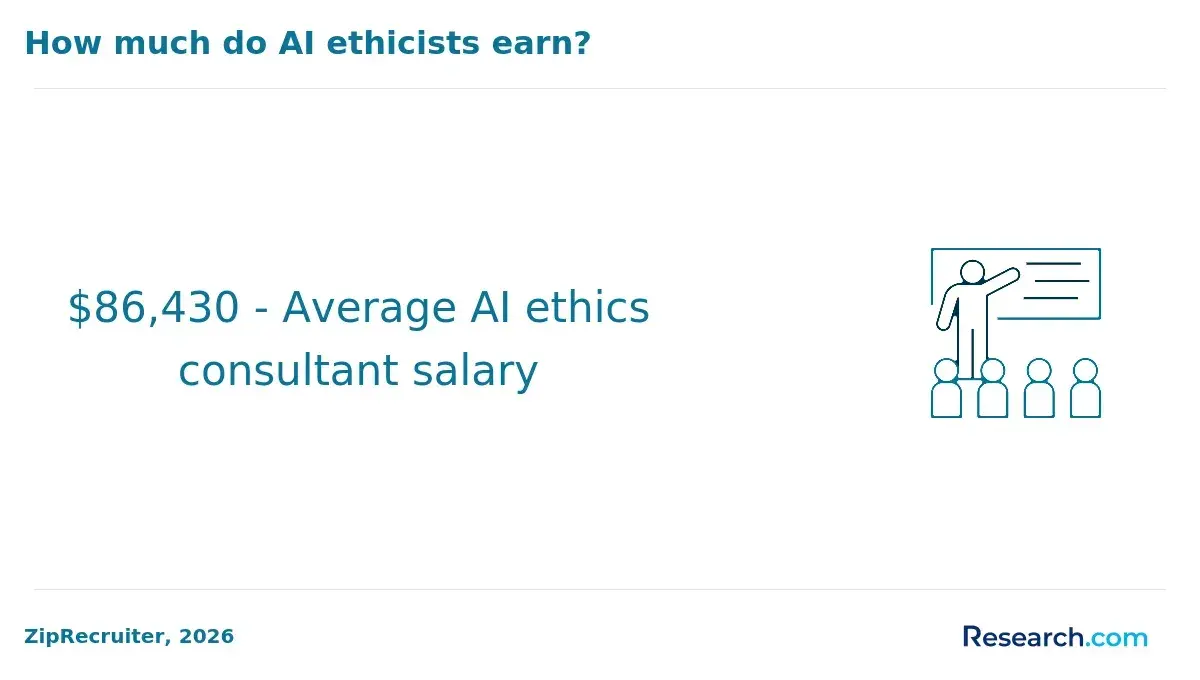
Other career paths include AI product managers who link technical development with business aims, and AI ethics specialists focused on bias and fairness issues. Some graduates move into AI-focused software engineering or pursue doctoral studies for deeper specialization.
Tailoring applications toward specific AI subfields-such as natural language processing or computer vision-and highlighting relevant projects or internships can significantly boost employability. Achievements like certifications and contributions to open-source AI projects also enhance a candidate's professional profile.
What is the job outlook and salary potential for AI master's degree holders?
The job outlook for master's degree holders in artificial intelligence is exceptionally strong, with AI specialist roles projected to grow at 35% annually through 2028, significantly outpacing the average growth for all occupations. This growth is driven by widespread AI adoption across industries such as healthcare, finance, automotive, and cybersecurity.
Masters graduates can expect attractive salary potential. Entry-level AI professionals typically earn between $90,000 and $110,000 yearly, depending on location and employer. With experience and specialization, these salaries often rise to the $130,000 to $160,000 range. Senior positions like AI research scientists, machine learning engineers, and AI architects often command salaries exceeding $200,000, especially in tech hubs like Silicon Valley, Seattle, and New York City.
Artificial intelligence master's graduates are also in demand in consulting, product management, and data science roles, where expertise in machine learning, natural language processing, or computer vision is vital. For instance, healthcare AI specialists might develop diagnostic tools, while those focused on autonomous systems contribute to self-driving car technologies.
Programs offering internships or industry partnerships provide valuable practical experience, enhancing employability. The combination of strong job growth, competitive salaries, and diverse career options makes a master's in artificial intelligence a strategic investment for advancement in technology fields.
Which universities offer the most reputable and accredited AI master's programs in the United States?
A select group of 47 universities in the United States offer ABET-accredited master's degrees in Artificial Intelligence, representing the highest standard of educational quality and industry recognition. Carnegie Mellon University, Stanford University, and the Massachusetts Institute of Technology (MIT) are prominent leaders among these institutions, producing 22% of all graduates from accredited AI programs. Carnegie Mellon is known for its technical depth and close ties to industry, which greatly benefit students pursuing advanced careers in machine learning and robotics. Stanford integrates AI with interdisciplinary fields such as health informatics and autonomous systems, fostering broad collaboration. MIT provides a rigorous, research-focused curriculum supported by cutting-edge labs and global technological partnerships.
Other respected universities include the University of California, Berkeley; the University of Washington; and Georgia Tech, each offering accredited AI master's programs with unique emphases ranging from theoretical AI to practical applications in business and engineering. These programs vary in length, flexibility, and specialization options like natural language processing and computer vision. Choosing an accredited program is crucial for employability, as top employers often prefer graduates from ABET-accredited institutions. Prospective students should carefully evaluate factors such as graduation rates, faculty expertise, and alumni success to make informed decisions.
Are there professional certifications or industry credentials that complement an AI master's degree?
Professional certifications enhance the value of an AI master's degree by validating practical skills critical to today's job market. Those who add cloud certifications like AWS Certified Machine Learning Specialty, Google Cloud Professional Data Engineer, or Microsoft Certified: Azure AI Engineer Associate often gain a salary increase of 18-22% within a year of graduation, according to the 2024 Stack Overflow Developer Survey. This reflects strong employer demand for candidates who combine theoretical AI knowledge with cloud computing expertise to build scalable AI applications.
Specialized credentials beyond cloud platforms also add significant value. Certifications such as the Certified Data Scientist from DASCA or the TensorFlow Developer Certificate demonstrate proficiency in data science and specific machine learning frameworks. Professionals interested in ethical AI benefit from certificates on AI governance and fairness, offered by organizations like IEEE and the AI Ethics Institute, showcasing a commitment to responsible AI practices.
Choosing the right certification depends on career goals: data engineers and AI solution architects often prioritize cloud provider certifications, while researchers may focus on domain-specific credentials. Employers increasingly emphasize the ability to implement real-world AI systems over purely theoretical skills. Obtaining these certifications within 12 months of earning an AI master's degree can maximize career momentum and return on education investment.
How does prior work experience or a non-technical background affect admission to AI master's programs?
Applicants with three or more years of relevant work experience have a 41% higher acceptance rate in top-tier ai master's programs compared to recent graduates, according to a Council of Graduate Schools analysis. Admissions committees highly value practical skills and demonstrated commitment to the field, especially from those coming from roles such as software engineering, data analysis, or robotics. This experience can strengthen applications even if the applicant's undergraduate degree is outside STEM disciplines.
Notably, 28% of admitted students come from non-STEM backgrounds like economics, psychology, or linguistics. These candidates often need to showcase quantitative aptitude through supplemental coursework, certifications, GRE math scores, or coding bootcamps. Demonstrating proficiency in programming or machine learning fundamentals helps offset a lack of formal technical education. Work experience in technical or research roles can further compensate for this gap.
Prospective students without technical degrees should consider preparatory programs or part-time studies before applying. Strong letters of recommendation from supervisors familiar with ai-related responsibilities also improve chances. These insights highlight the importance of combining practical experience with academic readiness for competitive admission to ai master's programs.
Other Things You Should Know About Artificial Intelligence
Yes, many AI master's programs accept students from diverse academic backgrounds, including fields outside computer science. However, applicants without a technical foundation may need to complete prerequisite courses in programming, mathematics, or data structures before or during the program.
Many AI master's programs require either a thesis or a capstone, usually worth 6 to 12 credits. Thesis tracks often add one semester, while capstone tracks focus on applied work and may be completed within the final term. Program handbooks and accreditation rules set the exact requirement.
In 2027, research experience remains vital for AI master's students. It enhances problem-solving skills and theoretical knowledge, fosters innovation, and increases employability in the competitive AI industry. Many programs encourage or require students to engage in research projects, often collaborating with industries or participating in internships.
Many AI master's programs include hands-on projects such as machine learning model development, data analysis, natural language processing applications, and robotics. Practical experiences often involve collaboration, internships, or capstone projects that apply theoretical knowledge to real-world challenges.
In 2027, a full-time AI master's degree usually takes about one to two years, while part-time learners may extend this to three or four years to accommodate work or other commitments. Some programs offer flexibility, such as an AI for finance graduate program designed for professionals balancing careers.
References
- Application and admission - Master Artificial Intelligence https://www.uva.nl/shared-content/programmas/en/masters/artificial-intelligence/application-and-admission/international-prior-education/international-prior-education-foldout-menu.html
- 7 Industry-Recognized AI Certifications and How to Make Them Count in Your Career | HackerNoon https://hackernoon.com/7-industry-recognized-ai-certifications-and-how-to-make-them-count-in-your-career
- Top AI Graduate Programs To Kickstart Your Career in Artificial Intelligence Today https://www.investopedia.com/top-ai-graduate-programs-to-kickstart-your-career-in-artificial-intelligence-today-11916749
- Most Affordable Online Master's in AI for 2025 https://www.mastersinai.org/degrees/affordable-online-masters-in-ai/
- 16 Artificial Intelligence Career Paths https://www.calmu.edu/news/artificial-intelligence-career-paths
- Can You Do a Master’s in AI or Data Science Without a Coding Background? https://aifolks.org/blogs/can-you-do-a-masters-in-ai-or-data-science-without-a-coding-background
- Should You Go to Grad School Online or In Person? https://www.ets.org/grad-school-journey/online-vs-in-person.html
- Top 10 Careers You Can Pursue With an Online Master’s in AI https://www.ucumberlands.edu/blog/careers-you-can-pursue-with-an-online-masters-in-ai
- Fastest AI Master’s Programs for 2026 (1 Year or Less) https://aidegreeprograms.org/rankings/fastest-ai-masters-programs/
- Master of Artificial Intelligence https://wscs.eu/master-of-artificial-intelligence/