2027 AI Master's Degrees With 10-Week Courses

Co-Founder and Chief Data Scientist
Professionals from unrelated fields often face significant challenges when seeking to enter the rapidly evolving AI industry. Lengthy graduate programs and inflexible schedules create barriers for those balancing careers and personal commitments. The need for concise, intensive learning options that accommodate busy lives has never been greater. Accelerated master's degrees with 10-week courses offer a solution by condensing core curriculum into manageable timeframes while maintaining accreditation and industry relevance.
This article explores such programs, helping prospective students identify flexible, credible paths to gain AI expertise and smoothly transition into high-demand roles within the technology sector.
Key Things You Should Know
- Many 2027 AI master's programs now offer accelerated 10-week courses, enabling faster skill acquisition and meeting urgent industry demand for AI expertise.
- Top U.S. institutions report a 25% increase in enrollment for AI master's degrees in 2025, reflecting growing career interest in machine learning and data science.
- Curricula emphasize practical skills such as natural language processing and ethical AI, aligning with employer requirements in tech, healthcare, and finance sectors.
What are AI master's degrees with 10-week courses, and how do they work?
AI master's degrees with accelerated 10-week programs deliver advanced knowledge in artificial intelligence within a compressed timeframe. These intensive courses typically focus on core topics such as machine learning, neural networks, natural language processing, or computer vision. Unlike traditional master's degrees spanning one to two years, these programs break the curriculum into concentrated 10-week segments tailored for fast skill acquisition.
The structure of 10-week AI master's degrees is often cohort-based, combining lectures, hands-on projects, and assessments. Many programs utilize hybrid formats that mix online instruction with in-person labs, making them accessible for working professionals. This rapid pace requires strong commitment but helps students quickly develop marketable skills aligned with industry needs.
In recent years, the demand for computer and information science degrees has surged. U.S. institutions awarded a record number of such master's degrees, encouraging universities and private providers to offer accelerated formats. These include specialized AI tracks and practical AI application-focused programs. Prospective students should verify accreditation, faculty experience, and career support when evaluating options.
This format is ideal for those seeking flexibility and rapid upskilling but may challenge students without a solid foundation in math or programming. It is crucial to assess readiness before enrolling. For those interested in efficient graduate education options, consider exploring a 1 year computer science degree online as an alternative pathway.
Which accredited U.S. schools offer AI master's programs with 10-week terms?
Several accredited U.S. universities offering AI master's programs with 10-week terms provide innovative curriculum designs tailored for working professionals and accelerated learning preferences. These programs deliver core artificial intelligence coursework in focused intervals without sacrificing depth or academic rigor.
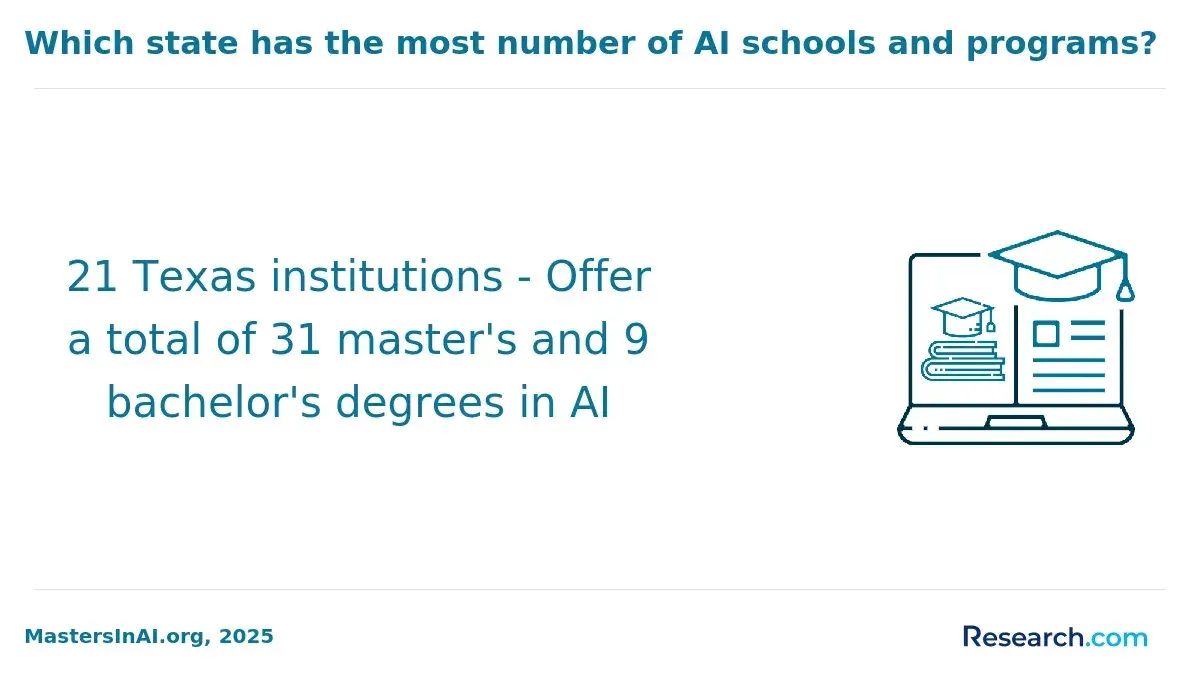
Top American schools with 10-week AI master's courses include Northeastern University, offering an MS in Artificial Intelligence with accelerated 10-week terms that can be completed in about 15 months. The University of Texas at Austin features a Master of Science in Computer Science with AI specialization in a modular 10-week format, which supports both part-time and full-time study options.
Accreditation is crucial when selecting programs, as noted by the National Center for Education Statistics, highlighting roughly 3,900 U.S. degree-granting postsecondary institutions in federal Title IV programs. Prospective students should verify accreditation from recognized bodies like ABET or regional accreditors and confirm authentic 10-week term structures rather than simply renamed semesters.
Additional considerations include curriculum relevance in machine learning, natural language processing, robotics, and faculty expertise with industry connections. Many institutions also offer hybrid or fully online 10-week terms, accommodating professionals balancing work commitments. Clarifying residency and course load requirements ensures alignment with student goals.
Those interested in related fields might explore affordable options, such as the cheapest online master's mechanical engineering degrees, which also provide flexible pathways for working professionals.
Are 10-week AI master's courses available online, on campus, or hybrid?
Ten-week AI master's programs online and on campus offer varied delivery methods to fit different lifestyles and learning preferences. Online programs are especially popular, with about 31% of U.S. postbaccalaureate students exclusively enrolled in distance education, according to the National Center for Education Statistics. This approach is often favored for flexibility, allowing working professionals and those unable to relocate to engage in AI studies through recorded lectures, live seminars, and virtual labs at institutions like Georgia Tech and the University of Texas.
Campus-based 10-week AI master's courses, typically offered during intensive summer or winter terms, provide immersive experiences with direct access to faculty and resources, supporting hands-on projects and networking. Hybrid formats for AI master's degrees in 10 weeks blend online coursework with scheduled in-person sessions, ideal for students near campuses who want flexibility along with face-to-face interaction.
Choosing between these formats requires considering your work schedule, learning style, and access to campus facilities. Online curricula maximize accessibility and digital support, while campus and hybrid models often facilitate mentoring and collaboration opportunities essential in AI fields emphasizing teamwork and research. For those exploring related technology fields, it's worth also reviewing video game programs, which share many interdisciplinary elements with AI education.
What curriculum and core courses are typical in AI master's programs?
AI master's core curriculum and foundational courses commonly focus on a blend of theoretical knowledge and practical skills to prepare students for advances in artificial intelligence. Key coursework covers machine learning fundamentals including supervised, unsupervised, and reinforcement learning algorithms. Deep learning receives particular attention, driven by the rapid growth of foundation models that surged recently, encouraging proficiency in neural networks, convolutional and recurrent architectures, and generative AI applications.
Typical coursework in AI master's degree programs also includes natural language processing, computer vision, and AI ethics, addressing societal impacts such as algorithmic bias and responsible deployment. Computational infrastructure courses emphasize GPUs, cloud computing platforms, and parallel processing, crucial for training large-scale models. Students learn essential model evaluation techniques, including performance metrics and robustness testing.
Practical experience is often gained through projects, labs, or internships, allowing learners to apply concepts to real-world datasets or simulations. Electives may cover robotics, AI-driven cybersecurity, or human-computer interaction, adding specialization options. For those interested in security-related AI applications, some may pursue an accelerated cyber security program alongside their AI studies.
What prerequisites and admission requirements do AI master's programs commonly require?
AI master's programs generally require applicants to have a solid background in mathematics, computer science, and programming. Key prerequisites often include courses in linear algebra, calculus, probability, statistics, and data structures. Familiarity with programming languages like Python, Java, or C++ is also important. Degrees in computer science, engineering, mathematics, or other STEM fields are typically preferred or required.
Admission criteria usually include:
- A bachelor's degree from an accredited institution, preferably in a STEM discipline
- Official transcripts showing coursework in areas such as algorithms and machine learning
- Standardized test scores; however, many schools have adopted test-optional or test-waiver policies, reflecting trends in AI-related education
- Letters of recommendation that highlight technical skills and graduate potential
- A statement of purpose outlining career goals and motivations for pursuing AI studies
- Some programs may request GRE scores or evidence of advanced math proficiency, though this is becoming less common
Professional experience in data analysis, software development, or research can enhance applications, especially for part-time or executive formats. Programs focusing on AI management or analytics may emphasize leadership and industry experience over strict technical prerequisites. Applicants without a formal STEM background might need to complete foundational courses prior to full admission.
Admissions committees seek candidates demonstrating quantitative aptitude, programming ability, and clear career objectives aligned with AI fields. Preparing thoroughly and addressing knowledge gaps through pre-program study can improve admission chances to competitive AI master's programs.
How long does an AI master's degree take with 10-week course schedules?
Most AI master's programs using 10-week course formats can be completed within 12 to 24 months. These accelerated schedules break the academic year into shorter terms, often dividing 30 to 36 credit hours across three or four 10-week sessions annually. This structure allows students to concentrate on fewer courses at a time, promoting faster degree completion compared to traditional semester programs that typically last two years or more.
Completion times depend on enrollment status and course load: full-time students taking 2 to 3 courses per term often finish in 12 to 18 months, while part-time students balancing work obligations usually take 18 to 24 months or longer. Flexibility in pacing may be offered, but extending beyond two years can increase the risk of delays or attrition, as shown by National Center for Education Statistics data.
These accelerated 10-week formats are especially suited for working adults aiming for efficient credentialing. Intense, focused terms help maintain momentum and reduce distractions. Prospective students should consider personal schedules and program policies on the maximum time allowed to complete the degree. Employer tuition assistance programs may also require adherence to these accelerated timelines.
In sum, AI master's degrees with 10-week courses balance speed and manageability, enabling many students to complete their degrees in under two years through careful course load planning and consistent enrollment.
What is the total cost of an AI master's program with 10-week courses?
The total cost of a master's program in artificial intelligence, structured around 10-week courses, generally falls between $30,000 and $70,000. This range varies primarily due to residency status, institution type, and program format. Public universities typically charge out-of-state graduate students mid-five-figure tuition annually, often around $25,000 to $30,000, while in-state students may pay up to 40% less.
Most programs last about two years, with tuition fees accumulating over this period. Private universities and specialized AI-focused schools usually have higher tuition, ranging from $50,000 to $70,000, reflecting their operational costs and prestige. Beyond tuition, additional expenses may include course materials, software licenses, and, occasionally, specialized hardware, adding several thousand dollars to the total cost. Living expenses also apply for in-person programs but can be reduced or eliminated with online options commonly available for 10-week courses.
Students should verify aid eligibility for modular or short-term courses to manage overall investment effectively.
What careers can you pursue with an AI master's degree?
An AI master's degree opens diverse career opportunities beyond the traditional data scientist role. Graduates frequently become machine learning engineers, designing algorithms to automate complex tasks in fields like healthcare, finance, and autonomous vehicles. AI research scientists focus on advancing core AI methods for both academic and corporate innovation.
Other prominent roles include AI product managers, who integrate AI technologies into products while aligning with business objectives, and AI consultants, who help organizations implement AI-driven strategies. In cybersecurity, AI specialists develop intelligent systems to detect and prevent threats.
Additional positions include natural language processing (NLP) engineers, working on chatbots and voice recognition software, and computer vision specialists, who apply AI to medical imaging and manufacturing quality control. Robotics engineers use AI to design autonomous systems for logistics and industrial automation.
The World Economic Forum's Future of Jobs Report 2025 identifies AI and machine learning specialists as among the fastest-growing job categories worldwide. This strong demand spans multiple sectors, encouraging graduates to specialize in niches such as healthcare AI or financial modeling.
To enhance career prospects, students should tailor coursework toward specific industries, gain hands-on experience with frameworks like TensorFlow or PyTorch, and seek internships in relevant fields.
What salary can AI master's graduates expect in common AI roles?
Graduates holding a master's degree in artificial intelligence can anticipate strong salary prospects across various AI roles. According to the U.S. Bureau of Labor Statistics (Occupational Employment and Wage Statistics, May 2024), the median annual wage for computer and information research scientists-a common research-driven AI position-is about $120,000. This figure sets a solid baseline for advanced AI careers requiring deep technical knowledge.
Salaries vary by specialization, experience, and location. For example:
- Entry-level AI engineers typically earn between $90,000 and $110,000, progressing to $130,000 or more with experience.
- Machine learning engineers command $110,000 to $140,000 annually, reflecting widespread demand.
- AI product managers and data scientists with AI expertise usually see salaries ranging from $100,000 to $130,000.
- AI roles in ethics, compliance, or policy start around $80,000 to $100,000 but are growing in demand.
Geographic location also influences compensation, with tech hubs like Silicon Valley, Seattle, and New York offering 10-20% higher salaries than the national average. Additionally, expertise in areas such as natural language processing, computer vision, or autonomous systems often results in premium pay.
Overall, those entering the AI workforce with advanced degrees should expect competitive salaries well above the median for general computing roles, supported by ongoing growth in AI technologies and applications.
Which certifications complement an AI master's degree for specific job paths?
Certifications paired with an AI master's degree vary depending on the career path. For roles in machine learning operations (MLOps) and AI production systems, cloud certifications are crucial. Data from Google Cloud's 2024 Certification Program highlights strong growth in professional cloud credentials, reflecting increased employer demand for cloud AI and ML expertise. Certifications such as Google Cloud Professional Machine Learning Engineer and AWS Certified Machine Learning Specialty enhance employability for deploying and managing AI models at scale.
Data science and analytics positions benefit from credentials in data engineering and advanced analytics, including Microsoft Certified: Azure Data Scientist Associate and IBM Certified Data Scientist. These certifications validate skills in data preparation, feature engineering, and scalable analytics alongside AI theory.
AI researchers and algorithm specialists gain from programming and software development certificates like the TensorFlow Developer Certificate and NVIDIA Deep Learning Institute certifications, which show proficiency in building and optimizing neural networks.
Cybersecurity professionals applying AI should consider combining Certified Information Systems Security Professional (CISSP) with adversarial machine learning courses.
Business intelligence and AI product management roles often require project management certifications such as PMP or Agile, plus AI ethics and governance certificates to support regulatory compliance and strategic alignment.
Aligning chosen certifications with career goals maximizes the practical impact of an AI master's degree and meets industry demand across sectors.
Other Things You Should Know About Artificial Intelligence
Yes, many AI master's programs accept students from diverse academic backgrounds, including those without prior technical experience. However, these programs often require foundational coursework in mathematics, statistics, and programming before or during the degree. Some schools offer preparatory modules to help non-technical students build necessary skills.
Yes, 10-week courses are typically more intensive than traditional 15-week semesters because the same amount of material is covered in a shorter period. Students can expect a faster-paced learning environment with increased workload and tighter deadlines. This structure suits motivated learners who can dedicate significant time and focus during each term.
Many AI master's programs now include dedicated modules on AI ethics, focusing on issues like bias, privacy, and responsible AI deployment. These courses explore the societal impact of AI technologies and encourage critical thinking about ethical challenges in AI design and application. This emphasis prepares graduates to develop AI solutions that adhere to ethical standards and legal regulations.
In 2027, AI master's programs with 10-week courses often provide career support services like personalized career counseling, networking events, and internship placements. Specialized modules, such as MSc healthcare artificial intelligence, may offer specific industry connections relevant to healthcare careers.
References
- 6 High-Paying Jobs With a Master’s in AI | University of Bridgeport https://www.bridgeport.edu/news/high-paying-jobs-with-a-masters-in-ai/
- Master of Applied AI | UC Online | UC Online https://uconline.ac.nz/courses/master-of-applied-artificial-intelligence
- Best AI Certifications to Boost Your Career in 2026 – Dataquest https://www.dataquest.io/blog/best-ai-certifications/
- 10 AI Courses to Master Artificial Intelligence in 2025 | DigitalOcean https://www.digitalocean.com/resources/articles/ai-courses
- Master of Artificial Intelligence https://wscs.eu/master-of-artificial-intelligence/
- Top 25 Online Master’s In AI Programs for 2026 - Programs.com https://programs.com/programs/online-masters-in-ai/
- Blogs https://www.leoglobaloverseas.com/blogdetails/ai-career-pathways-from-msc-to-industry-roles
- Master of Science in Applied Artificial Intelligence at Bryant University https://www.bryant.edu/graduate/graduate-academics/graduate-programs/master-science-applied-ai
- AI Careers: Roles, Salaries, and Certifications to Get You Hired - ONLC https://www.onlc.com/blog/ai-careers-roles-salaries-certifications/
- What can I do with a master's in artificial intelligence? | edX https://www.edx.org/resources/what-can-you-do-with-a-masters-in-artificial-intelligence