2027 Cost of Living vs Salary for AI Degree Graduates by State

Co-Founder and Chief Data Scientist
Graduates with an artificial intelligence degree often face uncertainty when choosing where to live and work due to varying costs of living and salary ranges across states. A high salary in one region may not deliver the same financial comfort in another with higher expenses. This challenge complicates decisions for those transitioning from unrelated fields and considering relocation for career advancement.
Understanding how income aligns with living costs in different states is crucial for making informed moves. This article analyzes state-by-state contrasts in cost of living versus salary for artificial intelligence graduates, helping readers identify optimal locations for financial stability and growth.
Key Things You Should Know
- AI degree graduates in states like California and New York earn the highest median salaries, exceeding $115,000 annually in 2026, but face higher living costs, impacting real income.
- Midwestern states offer lower salaries around $85,000 but have significantly reduced living expenses, resulting in comparatively better salary-to-cost ratios for AI graduates.
- Rising housing prices and inflation rates in 2025-2026 are critical factors diminishing purchasing power, emphasizing the importance of regional cost of living when evaluating job offers.
How do AI graduate salaries compare to state cost of living nationwide?
AI graduate salaries, when adjusted for state cost of living, reveal notable disparities in real earnings across the U.S. The Bureau of Labor Statistics lists the median annual salary for computer and information research scientists, a typical path for AI degree holders, at $145,080.
However, the cost-of-living index from the Council for Community and Economic Research ranges from about 80 in more affordable states to over 180 in the most expensive ones. This means the same nominal salary can translate into vastly different purchasing power depending on location.
For instance, graduates earning the median salary in states like Mississippi (cost index near 80) enjoy greater financial flexibility than those in California or New York, where living expenses are significantly higher.
Lower housing and transportation costs in affordable states leave more income available for savings or discretionary spending. This comparison of AI degree earnings and living expenses by state underscores the importance of evaluating salary offers alongside local living costs.
- High cost-of-living states necessitate salaries well above the national median for comparable lifestyles.
- Lower-cost states allow comfortable living standards even with below-median salaries.
- Job seekers should use cost-of-living calculators alongside salary estimates before accepting positions.
When choosing a career path or location, AI graduates should prioritize areas balancing competitive pay and affordable living for optimal financial stability.
For those exploring education options, consider reviewing degrees in AI to better understand opportunities ahead.
Which states offer the best salary-to-cost-of-living value for AI graduates?
States like Texas and North Carolina offer the best salary to cost of living ratio for AI graduates in US states, providing strong opportunities for career growth and financial stability. Both states feature AI salaries commonly at or above $120,000 while maintaining cost-of-living indexes below the national average of 100, ensuring more disposable income compared to pricier coastal areas.
Texas, with key urban centers such as Austin and Dallas, has seen a surge in AI job postings, thanks to competitive pay and affordable housing.
North Carolina's Research Triangle, including cities like Raleigh and Durham, also ranks among the top states for AI degree salary and living expenses balance, attracting talent with salaries near or above $120k annually and significantly lower living costs than metropolitan hubs like San Francisco or New York.
Graduates should consider practical factors such as housing affordability, local taxes, transportation costs, and opportunities for advancement within each state's AI ecosystem.
- Evaluating housing affordability, which heavily impacts net income
- Examining local taxes and transportation costs
- Assessing opportunities for career advancement within each state's AI ecosystem
States like California and New York offer higher salaries but come with cost-of-living indexes above 130, which can diminish real income gains.
For a comprehensive perspective on affordable education paths related to this field, explore the top data science master's programs in the US.
How do entry-level AI salaries vary by state for new graduates?
Entry-level AI salaries for new graduates vary significantly by state, influenced by regional economic conditions, industry presence, and cost of living impact on ai graduate salaries across states. ZipRecruiter's data shows average starting salaries ranging from about $90,000 in lower-paying states to over $130,000 in top-paying areas, a more than 40% difference based solely on location.
States with leading tech hubs such as California, Washington, and Massachusetts typically offer salaries above $120,000. For instance, California's Silicon Valley often provides entry-level positions exceeding $130,000, fueled by major tech companies and startups. In contrast, Midwest and Southern states like Ohio or Georgia report salaries closer to the low $90,000 mark.
Graduates must weigh these salary differences alongside living expenses. A $40,000 gap can be offset by higher housing, transportation, and general costs in expensive regions. For example, a salary of $130,000 in San Francisco may not stretch as far as $90,000 in Austin, Texas.
Advice for new graduates includes researching local job markets and cost structures, seeking remote roles when relocation isn't desired, or considering emerging tech states with competitive pay and lower expenses. Exploring specialized programs like a game design degree online can also provide alternative tech career pathways.
Understanding entry-level ai salaries by state for new graduates helps inform smarter career and financial decisions moving forward.
What factors drive state-by-state differences in AI salaries and living costs?
State-by-state variations in ai degree salary variations by state cost of living are largely influenced by industry presence, regional economic health, and living expenses.
Data from the U.S. Bureau of Economic Analysis (BEA) highlights that states with the highest wages in the information sector also tend to have regional price parities (RPPs) above 110, indicating living costs more than 10% above the national average.
For example, tech hubs like California and Massachusetts offer AI salaries 20-30% higher than the national median but with correspondingly higher local costs.
Regional factors affecting AI graduates' compensation include the following:
- Industry concentration: Areas rich in AI and tech companies demand specialized talent, pushing salaries higher.
- Cost of living: Elevated housing, transport, and services in tech-centric cities require salary adjustments.
- State tax policies: Variations in income tax and business regulations affect take-home pay and hiring trends.
- Workforce supply: Markets with abundant AI talent may see salary moderation, while emerging regions may offer incentives to attract professionals.
Graduates should consider that a $120,000 salary in New York often provides less purchasing power than $95,000 in Texas due to differences in rents and taxes. This helps prioritize locations that balance career growth with living standards.
Those exploring education options might also find value in researching the best online cyber security degrees, which can complement AI skills in the current technology landscape.
Which AI job titles pay the most, and how do they vary by state?
Computer and information systems managers earn the highest median salaries among AI-related jobs, with an annual wage of $169,510 according to BLS data from May 2024. These leadership roles typically pay more than hands-on positions such as machine learning engineers or data scientists.
Significant pay disparities exist depending on location, with states like California, New York, and Massachusetts offering salaries well above the national median due to their tech industry concentration and higher living costs.
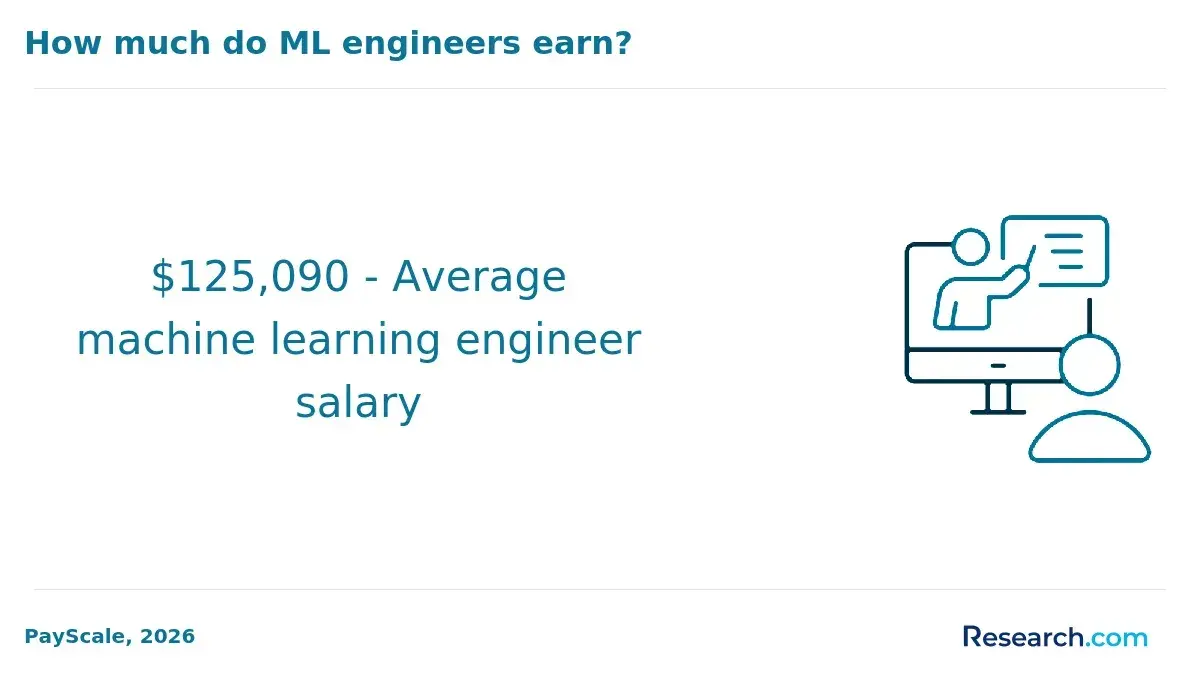
Hands-on AI roles remain profitable but show less salary variation by state. Machine learning engineers generally earn between $110,000 and $150,000, with top salaries in tech hubs like San Francisco and Seattle.
Data scientists often earn slightly less but benefit from higher wages in states with thriving AI ecosystems such as Texas and Washington.
Factors influencing these pay differences include regional job demand, cost of living, and employer density.
For career planning, targeting states with strong tech sectors can boost earnings potential while lower-cost areas offer a better cost-of-living balance.
- Managerial roles demand experience and leadership skills but offer the highest pay.
- Hands-on AI jobs provide competitive salaries that vary by state and industry.
- Higher wages often coincide with increased housing and living expenses.
Graduates should carefully weigh location, job title, and growth opportunities when pursuing AI careers to maximize both income and lifestyle benefits.
How do online AI degrees compare to campus programs for employer acceptance?
Online degrees in artificial intelligence from reputable institutions are gaining widespread acceptance among U.S. employers. A major survey by Wiley found that many hiring managers regard online credentials as equally credible to in-person degrees when issued by recognized universities. This shift challenges the old perception that online learning is inherently less valuable.
Employer acceptance largely depends on the institution's reputation, program accreditation, and the graduate's demonstrated skills. For example, graduates from accredited online master's programs like Georgia Tech's report hiring outcomes on par with their campus counterparts.
Companies often prioritize proven capabilities, real-world projects, and internship experience over the degree's delivery format.
Certain fields that emphasize collaboration or hands-on research may still prefer on-campus education for networking and mentorship. However, online programs offer flexibility attractive to working professionals who need to balance career and learning.
Prospective students should verify accreditation, seek programs with strong employer connections, and actively build portfolios.
- Focus on skills and tangible outcomes rather than format
- Choose programs with career services and real-world projects
- Understand industry-specific preferences for campus versus online experience
Ultimately, employer acceptance increasingly reflects quality signals, making accredited online artificial intelligence degrees a viable option for many aspiring professionals.
What accreditation should AI degree programs have to be credible to employers?
Accreditation plays a critical role in the credibility of AI degree programs for employers and licensing bodies. Recognized institutional accreditation, especially from agencies approved by the U.S. Department of Education's Database of Accredited Postsecondary Institutions and Programs (DAPIP) ensures eligibility for federal Title IV funding and serves as a fundamental "credibility filter."
Degrees lacking accreditation from these approved agencies often hold little value in competitive job markets.
Regional accreditors like the Higher Learning Commission (HLC) and Middle States Commission on Higher Education (MSCHE) are well-established examples. National accreditors, such as the Distance Education Accrediting Commission (DEAC), are also approved but may be perceived differently by employers depending on their preferences.
Programmatic accreditation, such as ABET certification for computing and engineering programs, offers an additional layer of rigor but is less common. Institutional accreditation remains the primary benchmark for determining the legitimacy of AI degree programs.
Employers and background-check services typically confirm accreditation via official government databases or trusted third-party platforms. Graduates from unaccredited schools face challenges in employment, professional licensing, and further education opportunities.
Students should verify the accreditation status of AI degrees before enrolling, including for remote or online programs, as credible accreditation influences career advancement and salary potential in this rapidly evolving field.
What coursework and skills most affect AI graduate pay and employability?
Key skills that influence AI graduate salaries and job prospects revolve around programming, data management, and cloud operations. Job listings analyzed by Lightcast highlight strong demand for proficiency in Python, machine learning, and SQL, which are essential for creating models and handling big data effectively.
In addition to programming, expertise in cloud technologies such as AWS, Docker, and Kubernetes significantly boosts employability and salary offers. These skills demonstrate the ability to deploy and manage AI at scale, increasingly valued by employers seeking versatile candidates ready for production environments.
Important coursework that helps build these capabilities includes:
- Advanced programming focusing on Python libraries like TensorFlow or PyTorch
- Database management and SQL querying
- Machine learning algorithms and statistical modeling
- Cloud infrastructure and containerization techniques
Hands-on experience gained through projects or internships involving AI model deployment in cloud settings further enhances job readiness. Lightcast's labor-market data reveals that combining algorithmic knowledge with operational skills not only improves employability but can also raise starting salaries by thousands annually.
What are typical AI degree costs and payback timelines by state?
Costs for an artificial intelligence degree vary widely across the United States, mainly due to differences in public in-state tuition fees. According to NCES, average yearly tuition at public four-year institutions ranges from under $4,000 in states like Wyoming and New Mexico to more than $7,000 in states such as California and New York.
This leads to total degree expenses typically between $12,000 and $28,000 for a standard four-year bachelor's program, excluding living costs.
Return on investment also varies by location. Graduates in higher-cost states usually need 3 to 5 years of AI-related employment, earning about $85,000 annually, to repay tuition expenses, while those in lower-cost states may recover costs in 2 to 3 years.
Factors like regional salary averages and cost of living—often double in cities like San Francisco or Boston compared to smaller towns—significantly affect these timelines.
Prospective students should consider scholarships, residency requirements, and part-time work opportunities, which can lower upfront costs or shorten payback periods. A close analysis of local tuition rates alongside job market salaries is crucial for realistic financial planning before committing to an artificial intelligence degree.
Which certifications can boost AI salaries, and when should graduates earn them?
Certifications that enhance ai salaries often include cloud platform credentials like AWS Certified Solutions Architect, Microsoft Azure AI Engineer, and Google Cloud Professional Data Engineer. These certifications demonstrate expertise in deploying and managing ai and machine learning systems on leading cloud infrastructures.
According to Skillsoft's IT Skills & Salary Report, cloud certifications offer salary premiums typically exceeding 15-20% compared to those without certification.
Graduates and early-career professionals should aim to earn these certifications within their first year on the job or before applying for promotions. This timing aligns well with hiring cycles and helps candidates secure roles combining AI with cloud data services.
Complementary certifications in machine learning-such as TensorFlow Developer or Certified Data Scientist-further strengthen technical credentials and are best pursued after foundational cloud certification.
Specialized credentials in data engineering, like the Google Professional Data Engineer, enhance skills in managing vital pipelines for ai applications. Those transitioning careers should consider scheduling certifications around job changes or performance reviews for maximum impact.
Employers increasingly value candidates who blend ai technical skills with cloud infrastructure knowledge.
Key points to consider include:
- Earning cloud certifications early boosts salary growth.
- Machine learning certifications add valuable expertise.
- Aligning certification with career milestones maximizes benefits.
- Verify private training programs match industry-recognized credentials.
- Using data from reputable sources helps candidates focus on certifications proven to command premium wages in a competitive market.
Other Things You Should Know About Artificial Intelligence
In 2027, states like Texas, North Carolina, and Washington offer the most competitive salaries for AI degree graduates in relation to the cost of living. These states balance high salaries with a cost-effective lifestyle, providing a favorable environment for new graduates.
While many roles in artificial intelligence welcome bachelor's degree holders, a master's degree often provides a competitive edge, especially for specialized positions or research roles. Advanced degrees typically offer deeper expertise, which can lead to higher salaries and more leadership opportunities.
Internships provide practical experience and networking opportunities critical for artificial intelligence graduates. They improve understanding of real-world applications, making candidates more attractive to employers and often leading to job offers upon graduation.
Key industries include technology, finance, healthcare, and automotive sectors, where artificial intelligence drives innovation and efficiency. Additionally, areas like retail, manufacturing, and government agencies increasingly seek AI talent to support automation and data-driven decision-making.
References
- How much does it cost to train frontier AI models? https://epoch.ai/blog/how-much-does-it-cost-to-train-frontier-ai-models
- Entry-Level AI Engineer Salary Calculator https://tripleten.com/tools/entry-level-ai-engineer-salary/
- Anthropic Economic Index report: Uneven geographic and enterprise AI adoption https://www.anthropic.com/research/anthropic-economic-index-september-2025-report
- Highest Paying AI Jobs in America and Where to Find Them https://resume.ai/reports/ai-jobs-that-pay-the-most/
- Top College Degrees That Will Land You the Highest-Paying AI Jobs in 2026 https://www.investopedia.com/top-college-degrees-that-will-land-you-the-highest-paying-ai-careers-in-2026-11923863
- AI Certifications: Accredited Programs, Vendor Credentials, and Emerging Standards - Total Seminars https://totalsem.com/ai-certifications-accredited-programs-vendor-credentials-and-emerging-standards/
- How employable are AI graduates? - upGrad GSP https://cpanel.upgradgsp.com/how-employable-are-ai-and-robotics-graduates/
- Executive Search and Outplacement Services for the Engineering, Architecture, Construction, and Manufacturing Industries https://www.davron.net/average-wage-cost-of-living-by-state-2025/
- Beyond MSAs: Determining How U.S. Pay Varies by Location https://www.shrm.org/topics-tools/news/benefits-compensation/beyond-msas-determining-how-u-s-pay-varies-location
- AI Priorities for Accredited Bodies https://aaa-accreditation.org/ai-priorities-for-accredited-bodies/