2027 AI Master's Degree Careers in Government and Defense

Co-Founder and Chief Data Scientist
Government and defense sectors increasingly rely on advanced technology to address national security and operational challenges. However, many professionals with unrelated undergraduate backgrounds struggle to transition into these specialized fields. The rapid evolution of artificial intelligence creates demand for skilled experts capable of developing and managing AI systems that enhance decision-making, cybersecurity, and threat detection.
Without a clear pathway, individuals risk being left behind in an expanding job market. This article explores 2027 AI master's degree careers in government and defense, offering guidance on flexible, accredited programs that enable effective career pivots into these critical industries.
Key Things You Should Know
- Government and defense sectors expect a 35% rise in AI specialist roles by 2028, driven by expanding cybersecurity and autonomous systems programs.
- Master's degrees focusing on AI ethics, data privacy, and defense applications are increasingly preferred for competitive positions in federal agencies.
- Starting salaries for AI master's graduates in government roles average $95,000 annually, with growth tied to classified project involvement and security clearances.
What are the primary career roles available for AI master's graduates in government and defense sectors?
Graduates with a master's degree in artificial intelligence can fill key roles in government and defense sectors, including AI research scientists who develop algorithms and machine learning models focused on autonomous vehicles, threat detection, and cybersecurity. These scientists improve defense systems by addressing challenges like algorithmic bias and real-time system reliability. AI engineers apply these models practically, ensuring secure and effective defense platforms.
Primary career roles for AI master's graduates in government and defense sectors include artificial intelligence policy analyst positions that consult on ethical, legal, and strategic issues related to AI deployments. These advisors work on regulations, compliance, and international protocols. Additionally, AI data analysts interpret complex datasets to strengthen predictive analytics and risk assessment that support decision-makers.
Emerging specialized roles include autonomous systems operators who manage AI-powered drones and surveillance systems, while cybersecurity experts utilize AI for advanced threat detection and network defense. The U.S. Department of Defense has prioritized artificial intelligence as critical, with demand expected to increase by 35% through 2032, underscoring a growing need for skilled professionals in defense agencies.
Practical advice for candidates emphasizes gaining expertise in defense-specific AI frameworks, security clearances, and teamwork. Continuous learning and communication skills are vital for success. For those exploring career opportunities, a helpful resource on what jobs can you get with an AI degree offers further insights into available paths and industries.
What are the typical salary ranges and job outlook for AI professionals working in federal agencies and defense contractors?
AI professionals working in federal agencies earn median salaries around $156,000 per year, reflecting the strong demand for advanced technical skills in areas like data analysis, machine learning, and cybersecurity. Defense contractors typically offer about 22% higher pay than non-defense tech sectors, with AI engineers at major companies earning up to $190,000 annually depending on experience and security clearance. These figures illustrate typical federal government ai salary ranges.
The job outlook for ai professionals in defense remains robust due to ongoing federal investment in technology modernization and national security programs. Agencies such as the Department of Defense, NSA, and DARPA are expanding AI teams to improve autonomous systems and threat intelligence. Positions include AI research scientist, machine learning engineer, and AI cybersecurity analyst, favoring candidates with master's degrees and relevant security clearances.
Salary progression depends on qualifications, clearance status, and mission-critical skills. Entry-level roles may start near $100,000, while mid-career experts with specialized knowledge often exceed $180,000. Government benefits like pensions, healthcare, and telework add valuable compensation components. Graduates looking to enter the field should also evaluate defense contractors such as Lockheed Martin, Raytheon, and Booz Allen Hamilton for potentially higher pay.
For those considering education pathways, exploring an online mechanical engineer degree can be a strategic step toward careers in AI. Staying informed about salary trends and job outlook for AI professionals in defense sectors helps in realistic career planning and goal-setting.
What master's degree programs in AI are accredited and specifically designed for government and defense careers?
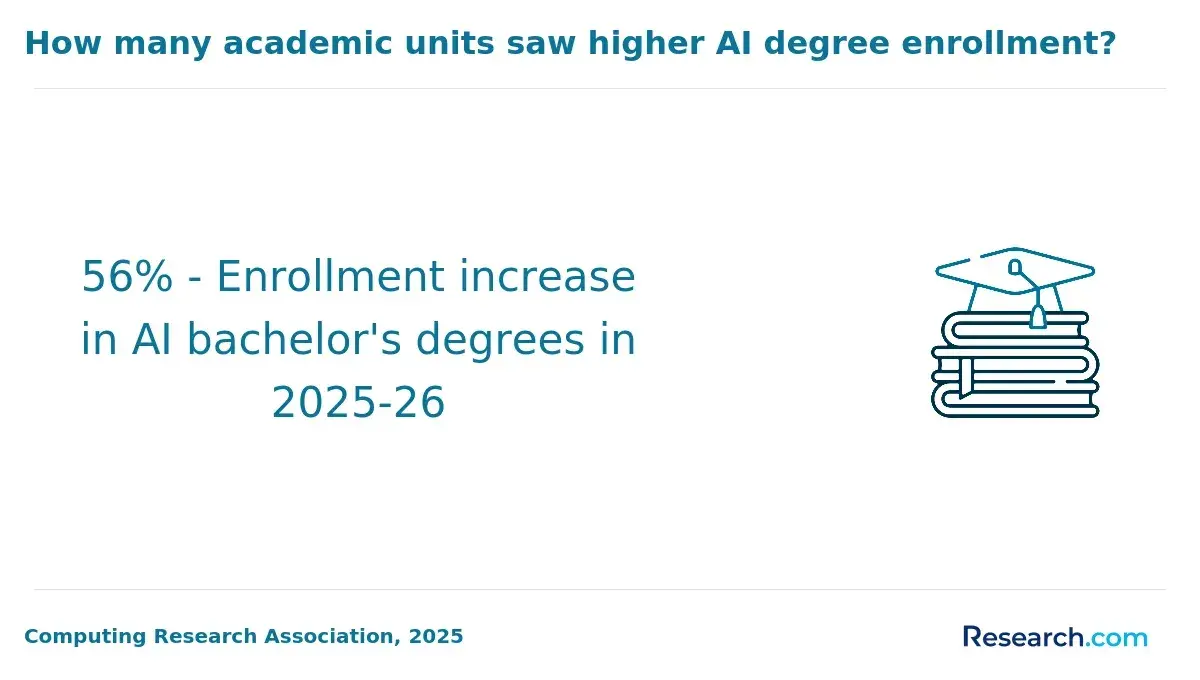
As of 2024, 47 master's degree programs in artificial intelligence have secured ABET accreditation or equivalent specialized recognition, confirming strong academic quality and industry alignment. Among these, 12 accredited artificial intelligence degrees tailored to defense and government roles feature explicit tracks in defense and national security, addressing the needs of government defense careers. These programs blend core AI principles with specialized applications in cybersecurity, autonomous systems, and intelligence analysis, preparing students for work in agencies like DARPA, the Department of Defense, and the National Security Agency.
Many of these master's degree programs in artificial intelligence for government defense careers are offered by universities collaborating with defense research centers or located near military installations. They emphasize secure AI systems, ethical defense AI deployment, and algorithms for real-time decision-making. Hands-on projects often include drone technology and threat detection models, enhancing practical skills valuable to defense contractors and agencies requiring security clearances.
Applicants should confirm ABET or recognized accreditation to align their degrees with government hiring standards. Programs offering internships or cooperative education with defense organizations further boost employment prospects. For comprehensive preparation, students should select degrees with defense-specific tracks or certifications combining AI expertise with the regulatory and operational frameworks vital to national security.
For those exploring options, reviewing the AI masters degree listings can help identify affordable and accredited programs suited to these specialized career paths.
What are the admission requirements and security clearance considerations for AI master's programs targeting federal employment?
Admission requirements for AI master's programs focused on federal employment security clearance procedures often include a bachelor's degree in computer science, engineering, mathematics, or a related STEM field. Many programs require a minimum GPA of 3.0 and prerequisites in programming, linear algebra, and statistics. Candidates with experience in machine learning, data science, or defense-related technology sectors are preferred by competitive programs. Federal-focused programs also demand strong letters of recommendation, a statement of purpose outlining government AI application interests, and relevant coursework or certifications in cybersecurity or systems engineering.
Security clearance eligibility and admission criteria for AI master's degrees in government careers are crucial. The Defense Counterintelligence and Security Agency reports that 68% of AI job openings with federal contractors require eligibility for Top Secret/SCI clearance. Obtaining clearance involves comprehensive background checks on financial history, foreign contacts, and criminal records and can take 6-12 months. Students should start clearance preparation early during their studies. Universities often provide guidance on clearance protocols and internships with cleared organizations, facilitating smoother post-graduate clearance acquisition.
Academic activities such as foreign travel or dual citizenship can complicate clearance, so early self-assessment is advisable. Students targeting defense AI careers should select programs connected to agencies or contractors for a more direct path to security clearance and employment. Consistency in application documentation and behavior aligned with security standards is essential throughout the program.
In addition to meeting academic standards and clearance readiness, prospective students can explore options like the cheapest online data science masters programs to balance quality and affordability.
How do online versus campus-based AI master's programs differ in accessibility for working professionals and military personnel?
Online AI master's programs provide significant flexibility for working professionals and military personnel, who often face scheduling challenges with campus-based options. A notable 58% of military and active-duty students enroll in online AI master's degrees, compared to just 12% who attend in person. The online format accommodates unpredictable deployments and work hours, which traditional campuses cannot easily support.
For working professionals, 73% remain fully employed while studying online, benefiting from asynchronous lectures and assignments that fit around their careers. Campus programs usually require fixed attendance times, disrupting work and income continuity. Online AI programs also offer tailored resources for military students, such as credit for military training and dedicated advisers, improving completion rates.
These support structures are less common on campus, creating barriers for part-time military members or those balancing job responsibilities. For example, a reserve officer can maintain duties with online study but may struggle to attend required on-campus sessions. Prioritizing accredited online programs enables these students to advance their AI expertise without sacrificing their professional or service commitments.
What core coursework and technical skills are covered in AI master's programs for national security applications?
Core coursework in AI master's programs designed for national security emphasizes expertise in advanced machine learning, deep learning, cybersecurity, and autonomous systems. Foundational classes focus on algorithms, neural networks, and reinforcement learning to develop predictive models and real-time decision-making essential for defense tasks like threat detection and intelligence analysis.
Cybersecurity forms a vital part of the curriculum, covering cryptography, network security, and secure software development to defend AI systems against adversarial threats. Since defense AI operates in hostile environments, ensuring data integrity and system resilience is critical.
Instruction also includes autonomous systems training, such as robotics, unmanned aerial vehicles (UAVs), and sensor fusion technologies. Students gain skills in designing AI capable of independent operation in complex and dynamic environments through practical, mission-focused projects.
A Defense Innovation Unit AI Skills Assessment highlights a significant gap: although 91% of defense agencies prioritize machine learning and deep learning, 84% require cybersecurity, and 76% seek autonomous systems proficiency, only 42% of AI professionals meet all three criteria. Integrated, multidisciplinary training fills this need.
Emerging coursework covers ethical AI deployment and explainable AI to enhance accountability in automated decisions. Programs offering hands-on labs, government collaboration, and access to classified or simulation environments provide valuable practical experience for national security applications.
How long does it take to complete an AI master's degree, and what are the typical program costs and funding options?
An AI master's degree usually takes 18 to 24 months of full-time study to complete. Part-time programs extend this to about three years, accommodating working professionals. Accelerated options condense the curriculum into 12 to 18 months but require a more intense time commitment. Core subjects typically include machine learning, data analytics, and ethics in AI, often culminating in a capstone project or thesis.
Costs vary widely depending on the institution and format. The average tuition for top-tier AI master's programs ranges from $85,000 to $120,000. These fees commonly include tuition and services such as software licenses. Public universities often offer significantly lower tuition rates for in-state students, reducing costs by 30% or more.
There are several funding opportunities to explore. Federal tuition assistance can cover up to $10,000 annually for eligible government employees pursuing graduate studies. Defense contractors often provide education benefits averaging $15,000 per employee. Scholarships, employer tuition reimbursement, and federal student aid also help reduce out-of-pocket expenses. It is important to consult human resources or benefits coordinators about eligibility.
Selecting the appropriate program length and funding path depends on one's career goals and financial situation. Balancing coursework with job demands often leads to part-time or employer-supported enrollment, which can optimize both educational outcomes and affordability.
What professional certifications and credentials complement an AI master's degree for government and defense positions?
Professional certifications greatly increase the value of an AI master's degree for careers in government and defense. According to the Cybersecurity Certification ROI Study and Federal Job Analysis Report, 64% of federal AI roles now require both an advanced degree and specialized certifications. Important qualifications include DoD 8570 cybersecurity credentials like Certified Information Systems Security Professional (CISSP) and Certified Ethical Hacker (CEH), which demonstrate expertise in protecting AI systems used by the Department of Defense and related agencies.
Other highly relevant certifications are the Certified Information Security Manager (CISM) and Certified Cloud Security Professional (CCSP), key for securing AI on cloud platforms. These prove capabilities in managing security programs and safeguarding sensitive information in distributed environments.
For AI integration roles within defense technology, certifications such as AWS Certified Machine Learning - Specialty and TensorFlow Developer Certificate provide a competitive advantage by verifying skills in developing and maintaining AI models that comply with government security standards.
Defense contractors especially value candidates with these dual credentials, often offering salaries up to 31% higher for those holding DoD 8570 certifications alongside master's degrees. Pursuing certifications aligned with both cybersecurity and AI technical competencies is essential to meet growing industry demands and optimize employment opportunities in this sector.
Which U.S. universities and institutions have established partnerships with government agencies and defense organizations for AI education?
Several U.S. universities have formed formal partnerships with government agencies and defense organizations to enhance artificial intelligence education and research. Currently, 23 institutions collaborate actively with the Defense Advanced Research Projects Agency (DARPA), including the Massachusetts Institute of Technology (MIT), Stanford University, Carnegie Mellon University, and the University of California, Berkeley. These partnerships focus on joint research projects, curriculum development, and faculty exchanges that concentrate on advanced AI technologies critical to national security.
Additionally, 18 universities work with the National Security Agency (NSA) to develop specialized AI curricula and internship opportunities that prepare students for careers in government and defense sectors. Members of this group include Georgia Tech, Johns Hopkins University, and the University of Texas at Austin. These alliances provide students with practical experience on defense challenges and access to exclusive training resources.
This network of educational partnerships has grown by 41% since 2022, reflecting a strong government commitment to strengthening AI expertise for defense innovation. Collaboration extends beyond education to joint grant funding and research consortia, granting access to classified projects unavailable in typical academic settings. Prospective students should verify the current status of these partnerships, as agency priorities and university consortia can change rapidly.
What are the key differences between AI master's programs emphasizing cybersecurity, autonomous systems, and intelligence analysis for defense applications?
Master's programs in artificial intelligence tailored for defense vary mainly by specialization: cybersecurity, autonomous systems, and intelligence analysis. Cybersecurity degrees focus on protecting military networks with advanced threat detection, cryptography, and incident response. Graduates develop AI-driven skills in vulnerability assessment and defensive algorithms, leading to rapid employment in cyber defense roles. According to the Defense Industry Hiring Trends Report, these graduates fill 45% of defense AI positions, with an average job placement time of 2.3 months.
Autonomous systems programs emphasize unmanned vehicles, drones, and robotic platforms. Training includes sensor fusion, real-time decision-making, and reinforcement learning to improve autonomy and navigation. Integration with hardware engineering and control theory is essential. Specialists in this area represent 38% of defense AI hires and typically take 4.1 months to secure jobs, reflecting the technical complexity involved.
Intelligence analysis-focused degrees train students in data interpretation, pattern recognition, and predictive modeling, applying natural language processing and large-scale data mining to enhance threat assessment and operational tactics. This niche accounts for 17% of defense AI vacancies, with hiring timelines similar to autonomous systems.
Students should weigh career urgency, strengths, and interests: cybersecurity offers faster placement and widespread demand, autonomous systems suits robotics enthusiasts, and intelligence analysis fits those keen on data science and strategic decision-support roles.
Other Things You Should Know About Artificial Intelligence
Ethical considerations in AI for government and defense include ensuring transparency, fairness, and accountability. It is crucial to address potential biases in data and algorithms to avoid unintended discrimination. Additionally, the responsible use of autonomous systems must comply with international laws and human rights standards.
AI systems enhance decision-making in national security by providing rapid data analysis, predictive modeling, and automation. These capabilities allow for quicker and more informed strategic decisions, enabling government agencies to respond effectively to emerging threats and complex scenarios.
Integrating AI into defense systems faces challenges such as legacy infrastructure compatibility and cybersecurity risks. Ensuring secure data sharing across agencies is complex, and workforce upskilling is required to manage AI tools effectively. Moreover, maintaining human oversight is essential to mitigate potential AI errors.
In 2027, AI master's graduates need proficiency in machine learning, data analysis, and cybersecurity. They should also grasp policy implications and ethical AI deployment. Candidates can bolster their knowledge with a master’s in AI without coding experience to enhance versatility in these fields.
References
- How Federal Contractors Can Position for $13.4B in Defense AI Spending? - CCS Global Tech https://ccsglobaltech.com/federal-contractors-defense-ai-strategy/
- 25 Best Master's in AI Programs - MastersInAI.org https://www.mastersinai.org/degrees/best-masters-in-artificial-intelligence/
- 11 Best AI Certifications in 2025 to Deepen Your Technical Knowledge | DigitalOcean https://www.digitalocean.com/resources/articles/ai-certifications
- Major Organizations Commit to Supporting AI Education https://www.whitehouse.gov/releases/2025/09/major-organizations-commit-to-supporting-ai-education/
- qa.com | Top 10 Must Have AI Certifications in 2026 https://www.qa.com/browse/certifications/ai-certifications/
- Understanding AI job roles and career path | GSA - IT Modernization Centers of Excellence https://coe.gsa.gov/coe/ai-guide-for-government/understanding-ai-job-roles-career-path/
- AI and Government - Masters Degree at University of Birmingham 35326 https://www.masterscompare.co.uk/masters-course/ai-and-government/35326
- Are online electives different from on-campus options? https://online.seas.upenn.edu/faqs/are-online-electives-different-from-on-campus-options/
- Campus AI vs. Commercial AI: Comparing How Students and Employees Perceive their University's LLM Chatbot vs. ChatGPT https://arxiv.org/abs/2509.15826
- Master of Artificial Intelligence https://wscs.eu/master-of-artificial-intelligence/