2027 Best AI Master's Degrees for Working Professionals

Co-Founder and Chief Data Scientist
Balancing a full-time job while seeking a career change into artificial intelligence (AI) presents unique challenges. Professionals without a technical background often struggle to find programs that combine flexibility, credibility, and relevance to the rapidly evolving AI industry.
Many traditional degrees demand full-time attendance or prior AI experience, creating barriers for working adults. This article highlights the best master's degrees in AI for 2027 designed specifically for those needing part-time, online, or hybrid options with recognized accreditation. It aims to guide readers in selecting programs that enable a successful transition into AI careers without sacrificing their current commitments.
Key Things You Should Know
- Top master's programs in ai for working professionals offer flexible, part-time, or online formats, with 60% reporting enrollment growth since 2024, reflecting rising industry demand.
- Curricula focus on practical skills in machine learning, data ethics, and AI deployment, aligning with 80% of employers prioritizing candidates with applied ai experience.
- Tuition varies widely, averaging $35,000-$60,000, but many programs provide employer partnerships or scholarships supporting continued professional advancement in AI careers.
What are the best AI master's degrees for working professionals in 2027?
The best AI master's degrees for working professionals blend flexibility with a rigorous curriculum that meets evolving industry demands. Leading programs, such as Carnegie Mellon University's Master of Science in Artificial Intelligence and the University of Texas at Austin's online Master of Science in Data Science with an AI specialization, offer part-time, hybrid, or fully online formats to accommodate full-time work.
These top part-time artificial intelligence graduate programs emphasize core topics like machine learning, natural language processing, and computer vision while integrating practical projects to enhance job readiness.
Professionals should prioritize degrees focused on applied AI skills and hands-on experience with frameworks like TensorFlow or PyTorch. Programs like Georgia Tech's Online Master of Science in Computer Science, specializing in machine learning, provide valuable networking and internship opportunities by partnering with industry.
Schools offering micro-credentials or certificate pathways alongside master's degrees help students gradually upskill without pausing careers.
According to the U.S. Bureau of Labor Statistics, employment in computer and information technology occupations is projected to grow 15% from 2023 to 2033, a rate much faster than average. AI specialist roles show the highest growth rates, underscoring the demand for advanced credentials aligned with technology trends.
Working professionals considering their educational path may also explore options like a 1 year computer science degree online for quicker upskilling.
When selecting a program, verify industry recognition, alumni outcomes, and curriculum relevance. Investigate if your employer offers tuition assistance or partnerships with universities to lessen financial burdens.
Prioritize programs that regularly update coursework and offer mentorship or career services tailored to professionals seeking advancement or transitioning into AI roles.
What is the difference between online and campus-based AI master's programs for career changers?
The primary distinction between online AI master's programs for career changers and campus-based artificial intelligence degrees for working professionals lies in flexibility and networking. Online programs offer adaptable schedules that accommodate busy professionals by allowing study outside traditional hours.
This flexibility supports career changers in balancing work, family, and education while continuing to earn income. According to LinkedIn's 2024 Workforce Report, 76% of tech professionals prefer flexible learning, contributing to a 42% surge in online AI master's program enrollments from 2022 to 2024.
In contrast, campus-based programs provide immersive, hands-on learning with access to labs, in-person mentoring, and collaboration. These environments suit students who benefit from structured settings and prioritize networking for career transitions into AI roles.
Those seeking rapid industry connections often find campus programs more advantageous through direct internships and job placements. Hybrid models combining online coursework with brief on-campus residencies are increasingly common, catering to diverse learner needs.
While curriculum quality remains comparable across formats, online programs often include more asynchronous materials and digital tools for practical applications. Prospective students should consider their learning preferences, career objectives, and professional responsibilities when choosing a program.
For insights on related affordability concerns, explore mechanical engineering degree online cost as a reference point for evaluating expenses in technical fields.
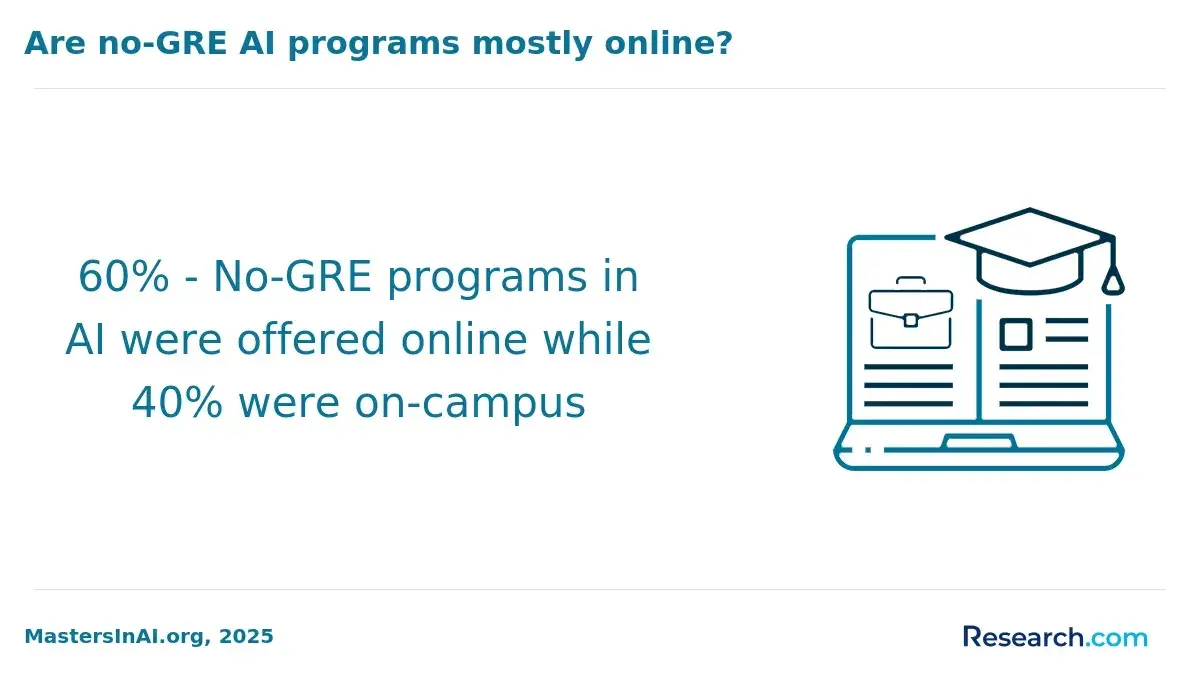
How long does an AI master's degree take, and what is the typical cost for working professionals?
An AI master's degree typically takes between one and three years to complete, varying mainly with enrollment status and program structure. Full-time students usually finish in about 12 to 18 months, while part-time students, often working professionals, may take two to three years.
This duration of AI master's programs for professionals offers flexibility but extends total completion time. Some programs combine online and in-person coursework to offer accelerated tracks, allowing completion closer to one year without sacrificing depth.
The cost of AI master's degrees varies significantly. According to Graduate Management Admission Council (GMAC) data, average tuition ranges from $40,000 to $120,000 for a master's in computer science or AI. Part-time formats tend to cost 30-40% less annually than full-time programs, making the cost of AI master's degree for working students somewhat more affordable in the short term, although longer durations may balance overall expenses.
Public universities usually cost less, while private or specialized research-driven programs are more expensive. Additional fees and indirect costs, such as lost income or travel, should also be considered.
When evaluating options, students should carefully weigh duration, cost, and flexibility in alignment with career goals and finances. Comparing per-credit costs and delivery formats is essential to estimate true commitments.
For those exploring affordable options, exploring the cheapest online civil engineering degree offerings may provide useful insights into balancing quality and cost across STEM fields.
What are the admission requirements and prerequisites for AI master's degree programs?
Admission requirements for AI master's degree programs typically include a bachelor's degree from an accredited institution, ideally in computer science, engineering, mathematics, or related STEM fields. A solid foundation in programming, algorithms, statistics, and linear algebra is often expected.
Many programs have minimum GPA requirements, commonly around 3.0 on a 4.0 scale. Standard application materials include official transcripts, letters of recommendation, and a statement of purpose.
For working professionals, prerequisites for enrolling in AI master's degrees can sometimes be fulfilled through alternative credentials. A 2024 survey by the National Association of Graduate Admissions Professionals revealed that 68% of AI master's programs now accept candidates without a computer science background if they show proficiency via online courses, certificates in machine learning, data science bootcamps, or foundational programming and math classes completed before enrollment.
Standardized tests like the GRE are increasingly optional but may still be requested to evaluate quantitative skills. Relevant AI-related work experience strengthens applications, especially for those balancing careers. International applicants often must submit TOEFL or IELTS scores to demonstrate English proficiency.
Prospective students should check specific program prerequisites, as some require bridge courses in subjects like linear algebra or statistics during the first semester to ensure baseline knowledge.
Those interested in expanding their qualifications might consider a data science degree online as a complementary path to AI studies, broadening career opportunities in the field.
What career outcomes and job roles can graduates expect after completing an AI master's degree?
Graduates with a master's degree in Artificial Intelligence often experience rapid career growth, moving into specialized roles across diverse industries. According to Coursera's 2024 Career Skills Report, 87% of AI master's holders secure specialized positions within six months of graduation, and 73% receive promotions or new job titles within their first year.
Common careers include machine learning engineer, data scientist, AI researcher, and AI product manager, all requiring skills in model development, data analysis, and AI deployment.
Technology companies primarily hire graduates for roles in natural language processing, computer vision, or robotics engineering. Financial institutions seek AI experts for predictive modeling, risk assessment, and algorithmic trading. The healthcare industry relies on AI for medical imaging, diagnostics, and personalized medicine, while sectors like automotive and manufacturing use AI talent to enhance automation and supply chains.
Many professionals engage in AI ethics and policy, focusing on algorithmic fairness and regulatory compliance. Some pursue research or PhD programs to develop innovative AI methods.
Combining technical expertise with strategic thinking, roles such as AI strategy consultant and technical lead are common career paths.
To advance, continuous learning of new AI frameworks and programming skills is essential, especially for those from non-technical backgrounds. Strong communication and project management abilities support collaboration with business stakeholders. Overall, an AI master's degree opens doors to lucrative, impactful careers in a fast-evolving market.
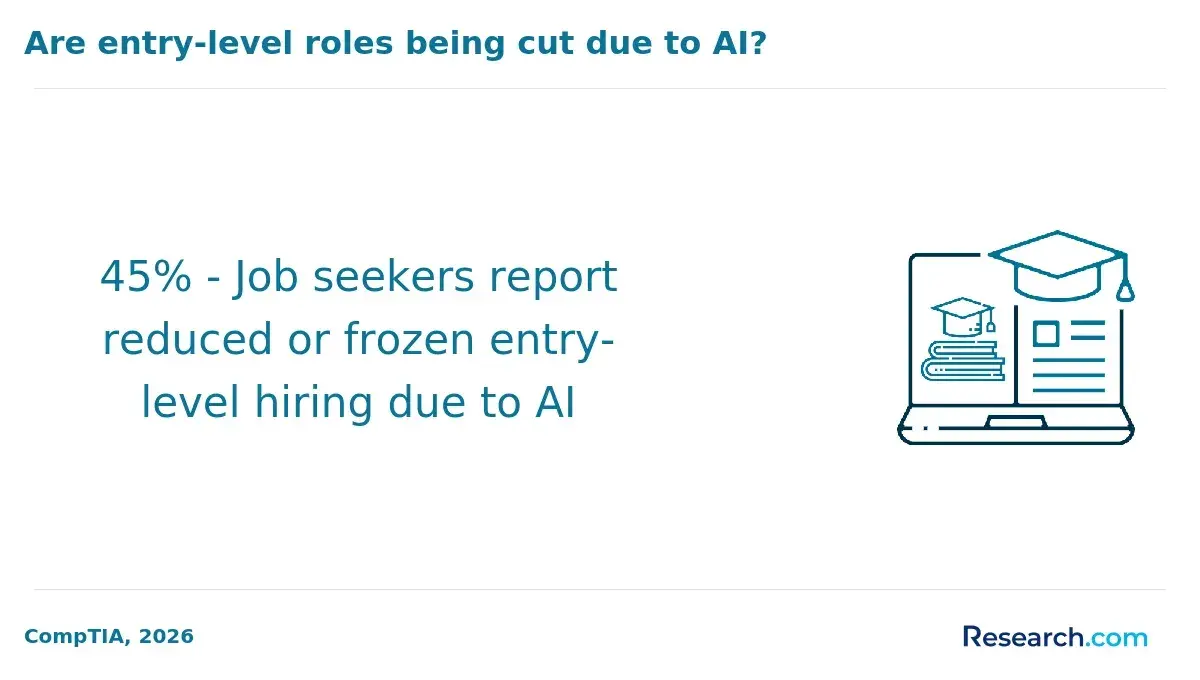
What is the average salary for AI master's degree holders, and how does it compare to other tech fields?
AI master's degree holders command an average annual salary of $165,000, according to Glassdoor's 2024 Salary Guide. This is about 35% higher than software engineers with bachelor's degrees and roughly 28% more than data scientists with master's degrees, reflecting the high value employers place on advanced AI expertise.
Software engineers with bachelor's degrees typically earn around $122,000 annually, while data scientists with master's degrees make approximately $129,000. The salary premium for AI specialists is driven by the growing demand for professionals skilled in developing machine learning models, optimizing algorithms, and applying AI technologies across sectors.
For those considering graduate programs, this financial advantage is significant. Employers particularly seek AI graduates for their specialized knowledge and problem-solving capabilities, especially in industries like healthcare, finance, and technology.
Additionally, AI roles often involve cutting-edge technologies that justify higher compensation due to their complexity and business impact.
Geography, industry, and experience play important roles in salary variations. For example, AI professionals working in tech centers such as San Francisco or New York often earn salaries above the national average. Overall, investing in an AI master's degree offers a clear pathway to enhanced earning potential compared to other tech careers.
What accreditation standards and certifications should you verify when choosing an AI master's program?
Verifying accreditation is crucial when selecting an AI master's program to ensure educational quality and employer recognition. The most significant accreditation is ABET accreditation through the Computing Accreditation Commission (CAC). Only about 34% of AI-focused master's programs have this formal recognition, which confirms adherence to rigorous standards in curriculum, faculty qualifications, and learning outcomes.
In addition to ABET, prospective students should check for regional accreditation from recognized bodies like the Middle States Commission on Higher Education (MSCHE) or the Higher Learning Commission (HLC). These accreditations guarantee institutional oversight and academic integrity beyond the AI discipline itself.
Some programs may also provide certifications or endorsements in specialized areas such as machine learning or data science. While beneficial, these do not replace the need for ABET or regional accreditation. Important questions to consider include:
- Is the AI master's degree ABET-accredited or recognized by the CAC?
- Which regional accreditation does the university hold?
- Are faculty actively engaged in AI research or professional organizations?
- Does the curriculum align with industry certifications like IEEE or ACM?
Prioritizing formally accredited programs reduces the risk of enrolling in unrecognized degrees and improves career prospects. Professionals investing time and money should carefully vet credentials to ensure their degree delivers lasting career value.
What core coursework and specializations are typically included in AI master's degree curricula?
Core coursework in AI master's programs typically focuses on machine learning, deep learning, natural language processing, computer vision, and data mining. These subjects build the essential mathematical, statistical, and programming skills needed to develop effective AI models.
A study by the Association of Computer Machinery (ACM) reports that 94% of AI master's programs require machine learning and deep learning, highlighting their significance in the curriculum.
Specializations often include reinforcement learning, AI ethics, robotics, autonomous systems, and AI applications in healthcare or finance. Despite increasing calls for responsible AI, only about 31% of programs cover ethics and reinforcement learning, signaling a gap for those prioritizing these fields.
Reinforcement learning concentrates on algorithms that learn optimal behaviors via interaction with environments, critical for robotics and gaming AI.
Many programs offer project-based courses or capstone projects, giving students practical experience in AI system development. Electives may explore explainable AI, adversarial machine learning, or edge AI, enabling learners to tailor their expertise to industry demands. Flexible or part-time options are available for professionals balancing work and study.
Students should assess programs for a balance of foundational theory and emerging AI challenges, including ethical considerations. Integrating interdisciplinary coursework from computer science, statistics, and relevant domains prepares graduates to address complex AI issues and evolving industry needs.
What is the job outlook and industry demand for AI professionals with master's degrees?
The demand for professionals with a master's degree in Artificial Intelligence continues to grow rapidly. McKinsey's 2024 State of AI Report highlights a 74% year-over-year increase in demand for AI talent with advanced degrees. Today, master's degree holders occupy 58% of mid-to-senior AI roles, up from 22% in 2021.
This shift reflects employers' preference for candidates with graduate-level expertise to handle AI research, development, and strategic tasks.
Key industries driving this trend include technology, healthcare, finance, automotive, and manufacturing. Advanced-degree AI professionals play crucial roles in designing predictive healthcare models, automating financial risk assessments, and improving autonomous vehicle technology.
These complex applications demand the deep analytical skills and technical knowledge gained through graduate education.
Working professionals interested in AI master's programs should consider that advanced degrees open doors to leadership and specialized research opportunities. Employers value candidates capable of managing AI projects, analyzing complex data, and implementing AI solutions ethically.
Graduates also tend to secure positions with higher salaries and greater potential for career advancement.
This makes earning a master's degree in Artificial Intelligence a strategic move for those aiming to lead innovation and advance their careers in a competitive field.
How do you evaluate and compare AI master's programs based on faculty expertise, resources, and student support?
Evaluate master's programs in artificial intelligence by focusing on faculty expertise and their active research presence. Faculty publishing in top AI conferences like NeurIPS, ICML, or CVPR often correlate with stronger program outcomes.
Studies show that programs with such research-active faculty report 3.2 times higher graduate employment rates in AI roles and 22% higher starting salaries, reflecting tangible career benefits.
Beyond titles, prioritize professors engaged in significant AI projects or industry collaborations to gain relevant mentorship and exposure to emerging technologies. Essential resources include AI labs, robust computing infrastructure such as GPUs and cloud access, and opportunities for internships through industry partnerships, which enhance practical learning for working professionals.
Student support is key: flexible scheduling, career advising oriented to AI industries, and networking events improve accessibility. Part-time options, evening or weekend classes, and online modules cater to diverse needs, while accessible faculty and advisors provide valuable one-on-one guidance.
Compare programs by examining alumni success, including placement rates and salary benchmarks. Transparent career data and active employer engagement serve as reliable indicators aligned with professional goals in artificial intelligence.
Other Things You Should Know About Artificial Intelligence
While a background in computer science can be beneficial, many AI master's programs in 2027 are designed to accommodate students from diverse academic backgrounds. Foundational courses are often provided to help bridge any knowledge gaps.
The typical completion time for AI master's degrees aimed at working professionals is between 18 to 24 months. These programs are often designed with flexible scheduling options, including evening and weekend classes, to accommodate full-time work commitments.
Many do not require a thesis. A common requirement is a capstone project, often 3 to 6 credits, completed in the final term and tied to a real AI problem such as model deployment, data governance, or applied machine learning. Some programs offer either a thesis track or a capstone track.
For 2027, AI master's programs are concentrating on cutting-edge areas like explainable AI, AI ethics, and AI in specialized fields such as healthcare. For example, some curricula now emphasize skills for a master’s in AI in healthcare, equipping graduates to address industry-specific challenges.
References
- MSc Artificial Intelligence-career prospects University of Hull Online https://online.hull.ac.uk/courses/msc-artificial-intelligence/careers
- Earn a Master’s in Artificial Intelligence in One Year - MastersInAI.org https://www.mastersinai.org/degrees/one-year-masters-in-ai/
- Best AI Masters Online & On-Campus - AIDegreePrograms.org https://aidegreeprograms.org/rankings/best-ai-masters-programs/
- How to Choose the Right AI Courses and Certifications for Your IT Career https://www.cloudinstitute.io/cloud-computing/how-to-choose-the-right-ai-courses-and-certifications/
- What are the Best Degrees in AI in 2025? – 365 Data Science https://365datascience.com/trending/best-degrees-in-ai/
- Artificial Intelligence (AI) https://ai-master.org/requirements
- Master of Artificial Intelligence https://wscs.eu/master-of-artificial-intelligence/
- Who Accredits Artificial Intelligence (AI) Degree Programs? - AI Degrees Online https://aidegreesonline.com/accreditation/who-accredits-ai-degree-programs/
- What Can I Do With a Master’s Degree in Artificial Intelligence (AI)? https://wp.wpi.edu/catalyst/2024/04/03/what-can-i-do-with-a-masters-degree-in-artificial-intelligence-ai/
- Best Master’s Programs in AI Engineering in Europe https://www.snycosmos.com/best-master-programs-in-artificial-intelligence-ai-in-europe/