2027 AI Associate Degrees With 2+2 Transfer Pathways

Co-Founder and Chief Data Scientist
Many prospective students and working professionals face uncertainty when seeking credible, flexible pathways into artificial intelligence careers. Transitioning from an unrelated undergraduate field often involves navigating complex degree options and transfer agreements. Without clear guidance, candidates risk enrolling in programs that hinder timely completion or fail to facilitate advanced study.
This challenge is especially pronounced when looking for associate degrees with guaranteed transfer to four-year institutions. This article examines current AI associate degrees offering 2+2 transfer pathways, helping readers identify accredited programs that enable seamless progression toward bachelor's degrees and successful career transitions.
Key Things You Should Know
- Many U.S. community colleges now offer 2+2 transfer pathways for AI associate degrees, facilitating seamless transfer to four-year universities for bachelor's completion by 2026.
- According to recent data, AI-related associate programs have grown by over 40% since 2024, reflecting rising industry demand and broader academic adoption.
- These pathways often blend core AI concepts with practical skills, preparing 65% of graduates for immediate employment or advanced study in competitive technology sectors.
What is an AI associate degree with a 2+2 transfer pathway?
An AI associate degree with a 2+2 transfer pathway offers a two-year foundation in AI concepts, allowing students to transition smoothly into four-year institutions to complete bachelor's degrees. These community college pathways for AI degree transfer ensure curriculum alignment that reduces credit loss and supports timely degree completion.
Core coursework typically includes introductory programming, machine learning fundamentals, data analytics, and ethics in AI. Upon earning the associate degree, students benefit from articulation agreements or guaranteed admission policies that enable direct entry into the junior year of bachelor's programs in AI, computer science, or related fields.
The National Student Clearinghouse Research Center (2024) reports that associate degree transfer students have the highest six-year bachelor's completion rates, underscoring the value of this route. Advantages of these programs include:
- Lower overall tuition expenses by starting at community colleges
- Practical foundational skills in AI technologies
- Flexibility to join the workforce early or continue education
Students exploring options should verify specific transfer agreements and GPA requirements to ensure a seamless credit transfer. For those interested in accelerated options, considering a 2-year bachelor's degree computer science may also complement their education path.
Which bachelor's majors can you transfer into after an AI associate degree?
After completing an AI associate degree, students often transfer into bachelor's programs that align with AI's technical focus. Common AI associate degree transfer majors in the US include computer science, data science, software engineering, and other STEM fields that emphasize programming, algorithms, and analytics.
Many schools offer 2+2 transfer pathways designed to smoothly transition foundational AI coursework into advanced bachelor's studies. The best bachelor's degrees to transfer into after an AI associate usually build on AI concepts with courses in advanced programming languages, database management, and data modeling.
For example, students in computer science might explore machine learning, computer vision, or robotics tracks, which deepen AI and software skills. Data science programs complement AI's data-driven nature by focusing on analytics and statistical methods.
Labor market data from Lightcast shows that job postings requiring AI skills are heavily concentrated in bachelor 's-level majors like software development and data analytics. This suggests that students aiming for high-demand careers should target those programs.
Students should always check transfer agreements between their community colleges and four-year universities to confirm that AI-related credits meet degree requirements. Academic advisors play a crucial role in this process. Additional transfer options include cognitive science, electrical engineering with an AI hardware concentration, or business analytics.
Choosing a major aligned with AI expertise enhances career prospects in AI system design, implementation, and research. Prospective students may also explore opportunities such as an online mechanical engineering bachelor's degree to diversify their skills.
How do you verify accreditation for AI associate programs and partner universities?
To verify accreditation for AI associate degrees, begin by confirming that the institution is accredited by a U.S. Department of Education (USDE)-recognized accreditor. Only schools accredited by these institutions qualify for federal Title IV aid, as noted in the USDE's College Scorecard/Accredited Postsecondary Institutions datasets.
Students seeking accreditation verification for AI transfer pathway universities should check the official U.S. Department of Education Database of Accredited Postsecondary Institutions and Programs to ensure the institution is listed. Confirm that the accreditor itself is recognized by the USDE through the Council for Higher Education Accreditation (CHEA) or the USDE website. Review the institution's website for current accreditation documents and status.
For associate programs featuring 2+2 transfer pathways, recognized accreditation is crucial for credit transfer and program quality assurance. Without regional accreditation, credits may not transfer, potentially delaying degree completion or increasing costs. It is important to communicate with academic advisors at both the community college and the transfer university to verify articulation agreements.
Non-regionally accredited schools-even if nationally accredited-may not satisfy partner universities' requirements. Always rely on multiple official sources and obtain written confirmation before enrollment to safeguard financial aid eligibility and academic progression in AI studies.
Prospective students exploring related fields might also consider researching the online game design degree as an alternative path within technology disciplines.
What prerequisite math and programming skills do AI associate programs require?
AI associate degree programs with 2 plus 2 transfer programs in the United States often require strong foundational math and programming skills to succeed. Essential prerequisite math skills for AI associate degrees in the US include college algebra, statistics, and basic linear algebra, as these support core AI concepts like data analysis, probability, and matrix operations.
Some curricula also recommend discrete mathematics for a better understanding of algorithms and logic structures. Programming readiness centers mostly on Python, the dominant language in AI fields. Research indicates Python is the most frequently requested programming language for entry-level AI jobs, making it a baseline skill.
Students should be proficient in Python syntax, basic data structures such as lists and dictionaries, control flow, and key libraries like NumPy or pandas. Experience with algorithm implementation and debugging in Python is usually expected before enrollment.
Additional programming skills that enhance preparedness include understanding object-oriented programming concepts, having basic scripting and automation knowledge, and being familiar with version control systems like Git.
While some programs require prior coursework or experience in software development or other languages such as Java or C++, Python proficiency remains critical. Prospective students should evaluate their math and programming backgrounds early and consider preparatory courses to strengthen their foundation.
Mastery of these prerequisites enables a smoother transition to AI-specific coursework like machine learning and neural networks. Students seeking affordable pathways in related technical fields may explore options such as an online cybersecurity degree to broaden their skill set and career prospects.
What courses and projects are typically included in an AI associate curriculum?
AI associate degree programs with 2+2 transfer pathways combine core studies in programming, data structures, calculus, and linear algebra with foundational topics like machine learning, natural language processing, and computer vision. Students learn statistics and probability to support data analysis, crucial for AI development.
Many curricula include database management and cloud computing to manage extensive datasets and scalable systems effectively. Hands-on learning through projects is essential, often using Python and libraries such as TensorFlow or PyTorch. Capstone projects involve real-world data sets with tasks like sentiment analysis, image classification, or recommendation systems.
Ethics and AI bias courses prepare students for responsible AI deployment, while electives in robotics expand technical exposure. Structured curricula help transfer students smoothly transition credits to four-year programs by balancing technical and general education requirements.
Students should choose programs emphasizing both theory and applied projects. Building a strong portfolio via notebook-driven assignments enhances employment prospects and readiness for bachelor's degrees. This approach supports a solid foundation for diverse roles in AI and related fields.
How do online AI associate degrees compare with campus programs for learning outcomes?
Online AI associate degrees often provide learning outcomes comparable to traditional campus programs when they maintain rigorous academic standards and offer comprehensive student support. The U.S. Department of Education, Institute of Education Sciences/NCES highlights that millions of undergraduate students engage in at least one online course, signaling distance education's mainstream acceptance.
Improved instructional design and technological tools contribute to effective online learning experiences. Studies indicate that online programs can match campus offerings in knowledge retention, technical skills, and career readiness, especially when curricula include hands-on virtual labs, coding projects, and AI algorithm simulations. Such practical components replicate the benefits of physical labs.
Key factors ensuring equivalency include:
- Institutional accreditation
- Access to expert instructors providing prompt feedback
- Use of virtual collaboration tools for peer interaction
- Integration of current AI software and datasets for hands-on experience
While campus programs may offer enhanced face-to-face networking, mentorship, and access to AI research centers, online options compensate with virtual office hours, remote internships, and career services. Prospective students should carefully evaluate lab work, project-based learning, and transfer pathways to determine if an online AI associate degree aligns with their educational and career objectives.
How long do AI associate and 2+2 transfer pathways take, and what do they cost?
Associate degrees in artificial intelligence combined with 2+2 transfer pathways provide a cost-effective way to earn a bachelor's degree in about four years. Students typically complete the first two years at a community college before transferring to a four-year institution to finish their degree.
Tuition costs at public two-year colleges average around $3,900 annually-roughly one-third of the $11,500 annual tuition at public four-year in-state universities, according to College Board data. This structure enables significant savings by minimizing expenses during the initial phase of education.
Many community colleges tailor their AI-related associate degree programs for seamless transfers, ensuring credits fully count towards bachelor's degrees in computer science, data science, or AI. This alignment reduces redundant coursework and shortens time to graduation.
The costs for the remaining two years vary by institution type, with public universities generally being more affordable than private ones. Some state systems offer guaranteed transfer agreements that lock in tuition rates or provide financial benefits for transfer students. Additionally, scholarships and financial aid targeting AI fields can further lower costs.
Students should evaluate articulation agreements between colleges and universities carefully to maximize credit transfer and tuition savings. This planning is essential for an efficient and affordable 2+2 AI education pathway.
Which AI jobs can you qualify for after an associate degree and transfer credits?
Graduates with an associate degree in artificial intelligence and transfer credits can pursue various entry-level roles supporting AI development and deployment. Common positions include AI technician, data analyst, machine learning assistant, and junior software developer focused on AI applications. These roles typically emphasize data management, algorithm implementation, and system testing rather than leading AI model design or research.
For example, an AI technician may maintain AI hardware and software systems to ensure proper data pipeline function. A data analyst often cleans datasets, conducts statistical analyses, and generates reports to guide AI training. Junior developers assist with coding under senior supervision, contributing to AI features in broader software products.
This foundational experience is often required before advancing to specialized careers such as data scientist or machine learning engineer, which generally require bachelor's degrees. Many associate degree programs include structured 2+2 transfer pathways, allowing seamless continuation of education while gaining practical skills.
The U.S. Bureau of Labor Statistics projects above-average growth for data-centric roles linked to applied AI, signaling strong demand for entry-level professionals ready to support AI work. Focused programs typically develop practical skills like Python programming, data management, and AI ethics. Additionally, internships or projects help align academic knowledge with workplace expectations, enhancing employability.
What salaries can AI-related associate degree holders earn in entry-level roles?
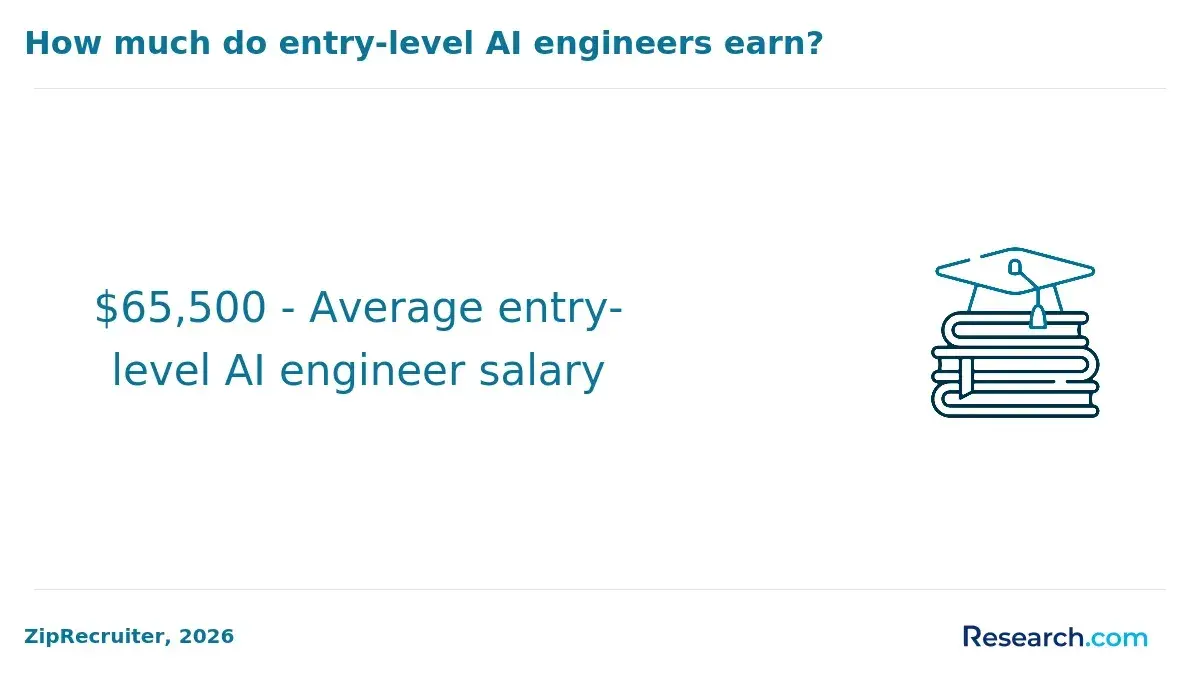
Entry-level salaries for associate degree holders in artificial intelligence generally align with national median wages, ranging from $50,000 to $55,000 annually. For instance, Computer User Support Specialists earn a median of about $50,240, according to the U.S. Bureau of Labor Statistics. This role reflects typical earnings immediately after graduation with an AI-focused associate degree.
Positions available to graduates often include AI support technician, data annotation specialist, and junior AI systems analyst. Salaries vary by region, employer size, and sector, with metropolitan and technology hubs commonly offering 10-15% higher pay. Specialized knowledge in industries like health informatics or finance can also boost starting salaries.
Many graduates pursue 2+2 transfer pathways to complete bachelor's degrees in computer science or AI-related fields. This advancement opens doors to higher-paying roles such as AI developer or machine learning engineer, where starting salaries often exceed $75,000.
Employers prioritize practical skills in programming languages like Python and experience with AI frameworks. Hands-on project work combined with an associate degree enhances job prospects and salary offers. Additionally, certifications in data science or cloud computing serve as valuable credentials to increase earnings in entry-level artificial intelligence careers.
Which industry certifications pair best with an AI associate degree for employability?
Industry certifications that complement an AI associate degree focus on cybersecurity, data science, and cloud technologies to boost employability in today's interconnected job market. The CompTIA Security+ credential is especially valuable, consistently ranking among the most-requested in U.S. job postings according to CompTIA's Workforce and Industry data. It validates essential cybersecurity skills critical for protecting AI systems from breaches or manipulation.
Other important certifications include:
- Certified Data Professional (CDP): It confirms expertise in data management and analytics necessary for AI model training and evaluation
- Microsoft Certified: Azure AI Fundamentals: This is ideal for those deploying AI solutions on cloud platforms
- Google Associate Cloud Engineer: offering hands-on experience with cloud infrastructure that supports AI applications
- Certified Ethical Hacker (CEH): designed for professionals focused on AI application security through proactive vulnerability assessment
Combining an AI associate degree with these certifications addresses key employer concerns such as practical skills, security awareness, and the operation of AI tools in cloud environments. Employers seek candidates capable of developing AI models as well as securing data and managing cloud resources. Credentials like Security+ and cloud certifications demonstrate this diverse capability.
Students should select certifications aligned with their career goals: data science and cloud certifications suit AI development roles, while security-focused careers benefit from Security+ or CEH certifications. This strategy enhances job readiness and long-term career flexibility.
Other Things You Should Know About Artificial Intelligence
Yes, an AI associate degree provides foundational knowledge and practical skills that can prepare students for entry-level roles in technology fields related to artificial intelligence. It offers a cost-effective and time-efficient pathway to start a career or transfer into a bachelor's program, making it valuable for those seeking early workforce entry or further education.
AI Associate Degrees with 2+2 transfer pathways in 2027 offer a streamlined education path, allowing students to complete an associate degree and then transfer seamlessly into a bachelor's program. This provides cost savings, continuity in education, and a focused curriculum designed to meet current industry demands in AI.
Programming languages commonly emphasized include Python, given its extensive use in AI and machine learning applications, as well as Java and R. These languages equip students with the ability to develop algorithms, manipulate data sets, and implement AI models in academic and real-world projects.
Some AI associate programs include internships or cooperative education components to provide practical experience in industry settings. These opportunities help students apply technical skills, build professional networks, and improve employment prospects after graduation.
AI associate degrees in 2027 focus on emerging technologies and real-world applications, ensuring students gain relevant skills. They provide foundational knowledge transferable to more advanced studies, such as a healthcare AI graduate program, aligning with industry trends and future demands.
References
- Entry-Level AI Engineer Salary Calculator https://tripleten.com/tools/entry-level-ai-engineer-salary/
- Online vs. In-Person AI and Machine Learning Courses: Which is Better for You? https://orhanergun.net/online-vs-in-person-ai-and-machine-learning-courses-which-is-better-for-you
- Associate Degree in Artificial Intelligence https://aidegreeguide.com/degrees/ai-associate-degree-and-certificate-programs/
- AI Certification Programs: Which Ones Matter for Your Career https://www.businessplusai.com/blog/ai-certification-programs-which-ones-matter-for-your-career
- AI Isn’t Taking These 12 Entry-Level Jobs Paying Upwards of $80K https://finance.yahoo.com/news/ai-isn-t-taking-12-144904290.html
- Which AI Certifications in the USA Lead to the Highest Job Placement Rates? https://www.h2kinfosys.com/blog/which-ai-certifications-in-the-usa-lead-to-the-highest-job-placement-rates/
- Top College Degrees for Securing the Highest-Paying AI Jobs in 2026 https://www.investopedia.com/top-college-degrees-for-securing-the-highest-paying-ai-jobs-in-2026-11946777
- Salesforce AI Associate Certification Guide & Tips | Salesforce Ben https://www.salesforceben.com/salesforce-ai-associate-certification-guide-tips/
- Transfer Pathways (formerly called 2+2s) – MCC Advisor Handbook https://mccadvisorhandbook.pressbooks.sunycreate.cloud/chapter/22-programs/
- Top AI Certifications to Advance Your Career https://whitefiretechnologies.com/top-ai-certifications-to-advance-your-career/