2027 Regional vs National Accreditation for AI Bachelor's Degrees

Co-Founder and Chief Data Scientist
Choosing between regional and national accreditation for an artificial intelligence bachelor's degree in 2026 can affect a student's future employment and graduate study opportunities. Many prospective students face uncertainty about credit transferability, employer recognition, and program quality when selecting online or flexible programs. This decision is crucial for career changers seeking a credible and efficient path into the AI industry. This article explores the differences between regional and national accreditation, clarifies their implications, and guides readers to make informed choices aligned with professional and academic goals.
Key Things You Should Know
- Regional accreditation is often recognized for ensuring localized quality standards, while national accreditation may focus on specialized or vocational AI bachelor's programs with different regulatory criteria.
- About 78% of top U.S. employers prefer degrees from regionally accredited AI programs, affecting graduates' job prospects and eligibility for advanced studies.
- Students should verify accreditation status carefully, as regional accreditation tends to have broader credit transfer acceptance, critical for career flexibility in AI fields.
What is the difference between regional and national accreditation for AI bachelor's degrees?
Regional accreditation and national accreditation differ significantly in their scope and recognition, which greatly influences AI bachelor's degrees. Regional accreditation is awarded by one of six agencies responsible for overseeing colleges within specific U.S. geographic regions. These schools represent 97% of all colleges nationwide and are highly respected for their thorough evaluation of academic standards, faculty qualifications, and institutional resources. This rigorous process supports broader academic validation and transferability of credits, which is critical for those interested in pursuing graduate studies or careers in research and development.
National accreditation, on the other hand, often applies to for-profit or specialized career-focused institutions, including some technical schools offering AI programs. While these schools meet basic quality standards, national accreditation tends to be narrower in scope and less comprehensive than regional accreditation. This distinction is important for students comparing the differences between regional and national accreditation in AI programs, especially since regional accreditation generally leads to stronger employer recognition in the AI industry.
Students seeking AI bachelor's degrees should carefully verify accreditation to align with their career goals. Those focused on affordability and specific vocational training might consider nationally accredited schools, but must review their acceptance carefully in the broader AI job market. For insights on career possibilities, explore what jobs can you get with an AI degree.
Why does accreditation matter when choosing an AI degree program?
Accreditation plays a crucial role in the value and recognition of an AI bachelor's degree. Employers in technical fields often require verification of accreditation status to confirm the legitimacy and quality of a program. Regional accreditation for artificial intelligence degree programs generally carries more prestige and is widely accepted across the U.S., facilitating smoother credit transfers and stronger employer recognition of academic rigor. In contrast, nationally recognized accreditation in artificial intelligence education often applies to specialized or vocational schools and may restrict opportunities for graduate studies or employment at top-tier companies.
Graduates holding regionally accredited degrees are more likely to secure internships and job interviews at top tech firms and research organizations. Federal financial aid eligibility depends on attending an accredited institution, so students in nonaccredited programs are often ineligible for these benefits. Licensure, certification preparation, and consortium participation, such as with the Computing Accreditation Commission, also require accredited status to be valid.
Prospective students should verify the accrediting agency through the Council for Higher Education Accreditation (CHEA) or the U.S. Department of Education to ensure program credibility. Exploring the best universities for data science undergraduate programs can also provide insight into quality AI education options.
Which accrediting bodies oversee AI and computer science bachelor's degree programs in the United States?
The Accreditation Board for Engineering and Technology (ABET) remains the leading authority for accrediting AI and computer science bachelor's degree programs in the United States. ABET evaluates over 4,200 engineering and computing programs worldwide, ensuring these degrees meet rigorous industry and academic standards essential for technical careers. This program-specific accreditation is widely recognized by employers and graduate schools as a mark of quality education.
Regional accrediting bodies for AI and computer science degrees, like the Middle States Commission on Higher Education or the Western Association of Schools and Colleges, evaluate institutions as a whole rather than individual programs. Consequently, a school's regional accreditation does not guarantee that its AI or computer science programs have the depth and rigor provided by ABET accreditation. Prospective students should carefully check both accreditations to maximize career and educational opportunities.
In contrast, national accreditation organizations for AI bachelor's programs tend to focus on certain institution types and rarely apply to mainstream AI or computer science degrees. Choosing a program without ABET accreditation might limit access to professional certifications and graduate studies. It is important to verify both institutional and program-specific accreditation for a comprehensive academic path.
Students looking for affordability might consider the cheapest online engineering degree options, but accreditation remains a key factor when selecting programs that lead to meaningful careers in AI and computer science.
How do regional and national accreditation affect AI degree transferability and graduate school admission?
Regional accreditation plays a crucial role in the transferability of AI bachelor's degree credits. According to the National Student Clearinghouse, 68% of regionally accredited institutions accept transfer credits from similarly accredited schools, whereas nationally accredited institutions accept only 34%, highlighting a stark difference in credit acceptance. This regional accreditation impact on ai bachelor's degree transferability is vital for students who might transfer colleges or pursue graduate studies.
Students with regionally accredited AI degrees often have an easier time gaining admission to master's or doctoral programs, as these institutions view such degrees as more rigorous and widely recognized. National vs regional accreditation and graduate school admission for ai degrees reveals that nationally accredited programs typically emphasize career-focused or vocational training, which may not fit the criteria for advanced AI education. Those holding nationally accredited bachelor's degrees in AI may face credit denials or additional prerequisites when applying to competitive graduate programs.
Professionals returning to school or seeking certifications should check accreditation status early to avoid obstacles. Employers and AI research labs linked to universities also tend to prefer degrees from regionally accredited programs. For those exploring options, there are valuable resources like a cybersecurity degree online that may offer insights into affordable education paths related to AI and tech fields.
What are the typical admission requirements and prerequisites for accredited AI bachelor's programs?
Admission to accredited artificial intelligence bachelor's programs often requires a strong background in mathematics and computer science. Applicants typically submit official high school transcripts that include coursework in algebra, geometry, calculus, and introductory programming. Many programs expect a minimum GPA of 3.0, with more competitive programs favoring closer to 3.5.
Standardized test performance remains important, particularly SAT or ACT scores. The National Association for College Admission Counseling reports that ABET-accredited ai and computer science programs admit students with SAT scores about 15-20 percentile points higher than non-accredited programs, reflecting the academic rigor prioritized by these institutions. While some schools are test-optional, submitting strong scores can significantly enhance an application.
Prerequisites often include proficiency in English and sometimes science subjects such as physics. Letters of recommendation from math or science teachers and a personal statement detailing interest in artificial intelligence are commonly required. Competitive or nationally accredited programs may also ask for placement exams or portfolios showcasing programming projects.
Transfer students and working professionals pursuing accelerated paths typically must demonstrate prior college-level coursework in data structures, algorithms, or discrete math. Regional accreditations may have slightly less demanding requirements, but all emphasize core competencies essential for admission.
Applicants should confirm specific program requirements early and focus on technical coursework and standardized test preparation to improve their chances of acceptance into high-quality artificial intelligence bachelor's degrees.
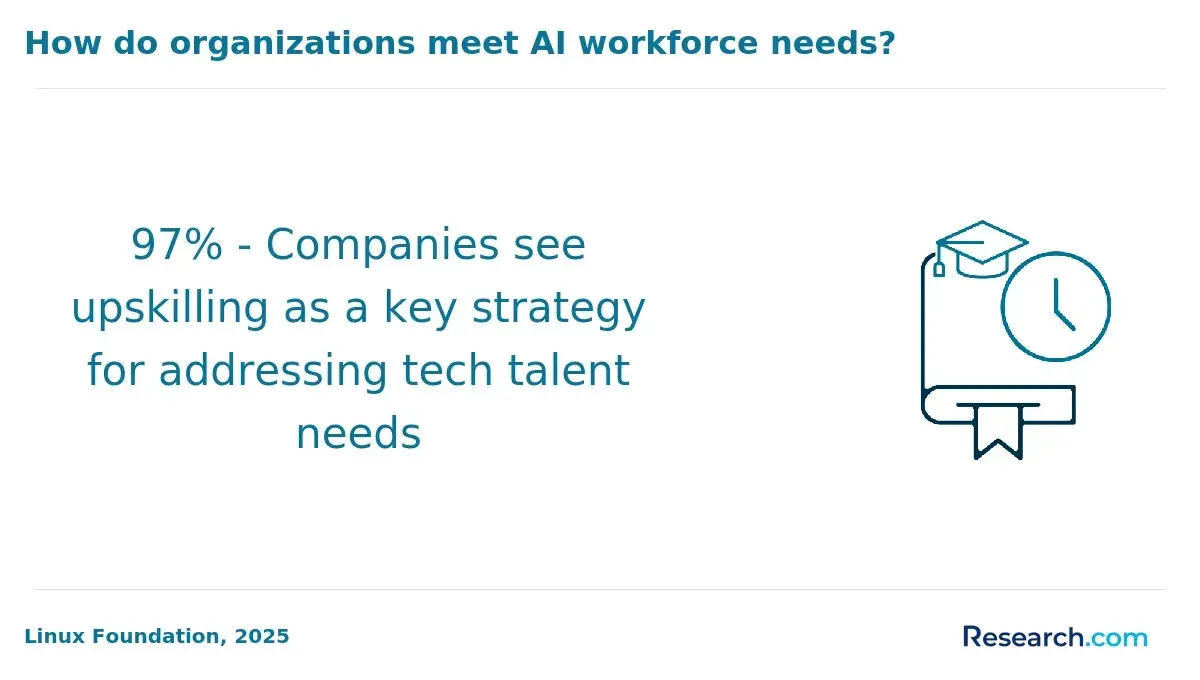
How long does it take to complete an accredited AI bachelor's degree, and what is the average cost?
Completing an accredited AI bachelor's degree generally requires about four years of full-time study, consistent across most regionally and nationally accredited programs. The main difference lies in program structure and flexibility. Some nationally accredited for-profit schools offer accelerated or part-time options, which can shorten or extend the timeline, but the standard duration remains around four years for traditional students.
Cost varies significantly between accreditation types. The College Board's 2024 Trends in College Pricing report shows that regionally accredited public institutions average $9,750 annually in tuition and fees, while nationally accredited for-profit AI programs average $15,200 per year. Over four years, regionally accredited degrees often cost under $40,000 in tuition, compared to over $60,000 for nationally accredited offerings.
Students prioritizing affordability and broader employer acceptance typically choose regionally accredited schools. Those valuing flexible schedules or faster completion may opt for nationally accredited programs despite higher costs. Transfer policies also differ, with regionally accredited institutions generally allowing easier credit transfers, potentially reducing time to degree when switching schools.
Additional expenses like technology fees, textbooks, and living costs vary widely by institution. Thorough research of specific programs and verification of accreditation status is essential for making informed decisions that balance time, cost, and career goals.
What is the curriculum structure and core coursework in accredited AI bachelor's degree programs?
Accredited AI bachelor's degree programs emphasize strong foundations in mathematics, science, and computer science, ensuring students develop critical technical skills. ABET's standards require at least 30 credit hours covering calculus, linear algebra, probability, statistics, and physics. This foundation enables comprehension of algorithms, data modeling, and computational theory vital for AI development.
Core subjects include programming languages like Python, Java, or C++, alongside data structures and software engineering principles. AI-specific courses focus on machine learning, neural networks, natural language processing, computer vision, and robotics. Many programs now address ethical AI, AI system design, and human-computer interaction to meet evolving industry standards and regulations.
Regional and national accreditation differ in course depth and electives. Regional programs typically offer more lab work and project-based learning, promoting hands-on experience. Nationally accredited curricula often emphasize career flexibility and interdisciplinary options, such as cognitive science or business analytics.
Students should seek programs offering up-to-date modules reflecting developments post-2020, including deep learning frameworks and AI hardware optimization. Practical experience through internships or research projects is frequently integrated in the final year, balancing theoretical knowledge and applied skills for readiness in AI roles across industry and research.
What career outcomes and job roles are available to graduates with regionally or nationally accredited AI degrees?
Graduates from regionally accredited AI bachelor's programs enjoy broader career opportunities and higher placement rates in fast-growing roles such as AI specialist, machine learning engineer, and AI ethics consultant. LinkedIn's 2024 Jobs on the Rise report highlights that 82% of professionals in these roles hold degrees from regionally accredited institutions, compared to only 18% from nationally accredited schools.
Regional accreditation is highly valued by employers, especially for competitive tech positions, government jobs, and graduate studies. Careers as AI research scientists at tech firms, data scientists in finance, or AI policy analysts often prioritize candidates with regionally accredited degrees due to their rigorous curriculum and comprehensive training.
By contrast, graduates of nationally accredited AI programs may face challenges entering established tech companies or federal agencies where regional accreditation is a standard requirement. Nonetheless, these degrees can still lead to roles in AI application development, technical support, or AI system implementation at smaller firms.
Prospective students should consider accreditation carefully when choosing programs or internships, as many prestigious opportunities prefer candidates from regionally accredited schools. Aligning degree accreditation with career goals is crucial for entering leadership or specialized research roles in AI.
What is the salary potential and job outlook for AI bachelor's degree holders in the current job market?
Roles in computer and information research science, encompassing many AI-related jobs, are projected to grow by 23% from 2023 to 2033, a rate much faster than the average for all fields. This signals strong demand for AI skills across industries like technology, healthcare, finance, and manufacturing. Median annual salaries for these positions reached $136,620 as of May 2024, reflecting the high value placed on expertise in AI development, machine learning, data analysis, and algorithm design.
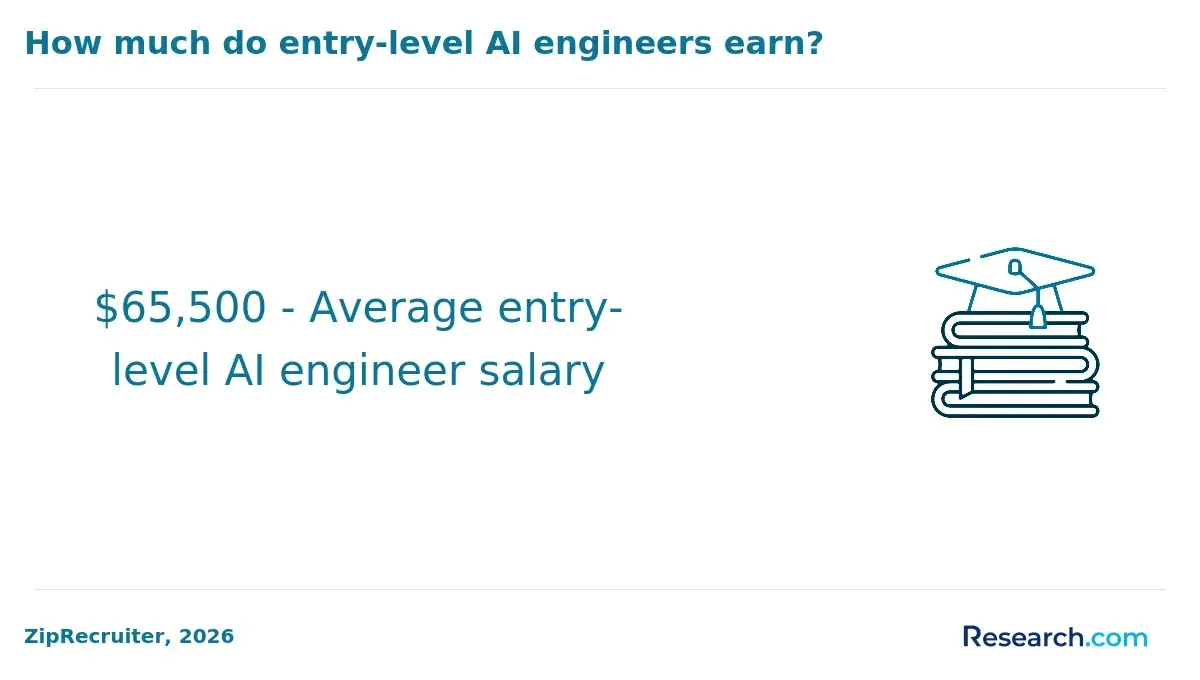
Starting salaries for entry-level graduates typically range from $80,000 to $100,000, depending on location, employer size, and specific technical proficiencies. Accreditation type influences job prospects somewhat, as many employers prioritize regionally accredited degrees. However, companies focused on skill sets may emphasize portfolio work and certifications more than accreditation alone.
AI degrees open doors to a range of roles beyond research scientist jobs, including AI engineer, data scientist, and machine learning engineer positions, each with lucrative pay scales. Maintaining up-to-date skills in languages like Python, frameworks such as TensorFlow, and cloud AI platforms is crucial for sustained career advancement and opportunities.
Overall, AI bachelor's degree holders who combine relevant accreditation, practical experience, and continuously updated skills can expect competitive salaries and exceptional growth potential in the evolving job market.
How should prospective students evaluate and compare the credibility of AI programs with different accreditation types?
When comparing AI bachelor's degrees, prioritizing programs with regional accreditation is essential. Regional accreditation signals stricter academic standards and better credit transferability. A significant 2024 GMAC survey showed that 91% of MBA programs and 87% of graduate computer science programs prefer or require undergraduate degrees from regionally accredited institutions. This affects graduate school eligibility and employer perception.
National accreditation may offer flexible or vocational curricula but lacks the same recognition for academic rigor. Students from nationally accredited AI programs sometimes face obstacles applying to graduate schools or seeking roles at organizations with strict credential requirements. Confirming smooth credit transfer to other regionally accredited schools is important for students considering program changes or certificates.
It's crucial to identify the specific regional accrediting organization, like the Middle States Commission or Higher Learning Commission, as this impacts program credibility both nationally and internationally. Prospective students should review graduate outcomes, employer partnerships, and faculty qualifications linked to accredited programs for solid quality indicators.
Always verify a school's accreditation status through official government or accreditor websites to avoid misleading claims or outdated statuses. This knowledge empowers students to make informed decisions, boosting career prospects and academic flexibility in the competitive AI field.
Other Things You Should Know About Artificial Intelligence
When transferring credits between regionally and nationally accredited AI bachelor's programs in 2027, challenges include differing curricula standards, acceptance policies, and institutional prestige. Regionally accredited institutions may not recognize credits from nationally accredited ones, complicating the transfer process.
Yes, an AI bachelor's degree often provides skills that are transferable to broader technology sectors like software development, data science, and robotics. The training in programming languages, algorithms, and data handling equips graduates to work in various areas beyond strict AI roles. This versatility benefits those wanting flexibility in their tech careers.
Practical experience through internships or projects is highly valuable for AI students as it bridges theory and real-world application. These opportunities allow students to work with real datasets, use industry tools, and collaborate on team-based problem solving. Such experience improves employment prospects and helps build a professional network.
Rapid innovation in AI means degree programs must continuously update their curricula to include the latest developments, such as deep learning frameworks and ethical AI guidelines. Students need to engage in lifelong learning to maintain relevant skills after graduation. Educational institutions often integrate emerging topics and encourage research participation to keep students current.
References
- Who Accredits Artificial Intelligence (AI) Degree Programs? - AI Degrees Online https://aidegreesonline.com/accreditation/who-accredits-ai-degree-programs/
- Regional Accreditation vs National: Understanding Key Differences and Benefits - The Scholarship System https://thescholarshipsystem.com/blog-for-students-families/regional-accreditation-vs-national-understanding-key-differences-and-benefits/
- Regional vs. National Accreditation: What Is the Difference? https://www.onlineu.com/resources/college-planning/regional-vs-national-accreditation
- Artificial Intelligence and Accreditation: Does It Really Help Us? https://nac-us.org/2025/11/25/artificial-intelligence-and-accreditation-does-it-really-help-us/
- Regional Vs. National Accreditation - There's A Huge Difference - EDsmart https://www.edsmart.org/regional-vs-national-accreditation/
- Undergraduate https://ai.seas.upenn.edu/academics/undergraduate/
- What do you learn in a bachelor's in artificial intelligence? | edX https://www.edx.org/resources/what-do-you-learn-in-a-bachelors-in-artificial-intelligence
- C-RAC Releases Statement on the Use of Artificial Intelligence (AI) - Middle States Commission on Higher Education https://www.msche.org/2025/10/06/c-rac-releases-statement-on-the-use-of-artificial-intelligence-ai/
- Accreditation and AI: Ensuring Quality in an Era of Smart Learning https://www.qahe.org/article/accreditation-and-ai-ensuring-quality-in-an-era-of-smart-learning/
- What Are the Career Paths After a Bachelor of Science in AI https://tetr.com/blog/what-are-the-career-paths-after-a-bachelor-of-science-in-ai