2027 Best AI Degrees for Students Interested in Supply Chain Analytics

Co-Founder and Chief Data Scientist
Professionals aiming to enter supply chain analytics often encounter a gap in their technical expertise, especially when transitioning from unrelated fields. The dynamic nature of supply chain challenges demands proficiency in artificial intelligence techniques tailored to data-driven decision-making. Without focused education, these learners risk falling behind in a competitive job market that increasingly values AI fluency.
This article examines the best AI degree programs designed to bridge that skill gap for students seeking flexible, accredited pathways. It presents options that combine core AI knowledge with supply chain analytics applications to enable practical career advancement.
Key Things You Should Know
- Supply chain analytics degrees increasingly integrate artificial intelligence tools, with 65% of top U.S. programs updating curricula by 2025 to include machine learning and predictive modeling.
- Graduates skilled in AI-driven supply chain analysis can expect a 20% higher salary than peers without AI expertise, reflecting growing industry demand according to 2024 labor market reports.
- Interdisciplinary programs combining data science, business, and artificial intelligence are preferred by 70% of hiring managers for roles in supply chain optimization and logistics.
What is supply chain analytics in AI, and what problems does it solve?
Supply chain analytics using artificial intelligence leverages advanced AI technologies to analyze complex data sets and enhance decision-making processes. These AI-powered models improve demand forecasting, inventory management, and logistics optimization by detecting patterns and predicting disruptions more accurately than traditional approaches.
For instance, machine learning algorithms can forecast product demand by assessing historical sales and external factors such as market trends or weather, helping businesses minimize excess stock and prevent shortages.
Artificial intelligence solutions for supply chain challenges also focus on real-time responsiveness. By consolidating data from suppliers, warehouses, transportation, and customers, AI systems dynamically adjust schedules and routes to optimize delivery efficiency and cost. They further identify risks such as supplier failures or geopolitical disruptions, enabling proactive contingency planning.
By 2026, over 75% of large enterprises are projected by Gartner to adopt AI-enabled supply chain decision intelligence for automation and optimization. Students interested in these advancements often pursue AI degrees centered on supply chain analytics, gaining expertise in data science, predictive modeling, and AI tools essential for logistics, procurement, and operations management. Many explore a computer science accelerated degree to accelerate their entry into this field.
Key AI techniques in supply chain analytics include natural language processing for unstructured data, reinforcement learning for adaptive decision-making, and computer vision for quality assurance. Mastery of these methods addresses issues like demand volatility, cuts operational costs, and boosts customer satisfaction effectively.
What types of AI degrees prepare you for supply chain analytics roles?
Degrees combining ai and supply chain analytics skills are increasingly vital as industries rely on advanced technology to optimize operations. Programs often merge data science, operations research, and machine learning, including bachelor's or master's degrees in Artificial Intelligence and Data Analytics, Supply Chain Management with AI specialization, and Industrial Engineering focusing on AI-driven optimization. These curricula equip students to develop AI models that forecast demand, optimize inventory, and enhance logistics efficiency.
Practical skills in machine learning algorithms, predictive analytics, natural language processing, and automation tools directly address supply chain challenges such as risk assessment, route planning, and supplier selection. For instance, integrating Python programming and AI frameworks like TensorFlow helps prepare students for dynamic supply chain environments.
Students pursuing degrees in artificial intelligence and supply chain management will also benefit from interdisciplinary programs that combine business analytics with AI. This approach enhances communication of technical AI insights to strategic decision-makers and includes exposure to relevant case studies and quantitative methods.
Employer demand for generative AI skills in supply chain roles has surged, highlighting the value of degrees that integrate foundational AI techniques with domain expertise. Pursuing programs with hands-on projects, internships, or co-ops and certifications in cloud computing or data visualization can further boost readiness.
Those interested in affordable pathways can consult data science rankings for guidance on cost-effective education options.
Which AI specialization fits supply chain analytics: ML, data science, or operations research?
The best AI specialization for supply chain analytics combines machine learning (ML) with operations research, supported by data science fundamentals. Machine learning excels at demand forecasting and pattern recognition in complex datasets, directly improving inventory management and service levels. For instance, ML models can optimize delivery routes and predict stockouts in real time, enabling 5-10% service-level improvements and 20-30% inventory reductions, as reported by McKinsey.
Operations research contributes critical optimization techniques and mathematical modeling necessary for efficient decision-making. Its methods, such as linear programming and simulation, help allocate resources wisely and resolve logistical challenges. Professionals skilled in operations research can design algorithms that lower costs while maintaining service quality, impacting supplier selection, warehouse placement, and transport scheduling.
Data science underpins these specialties by offering skills in data manipulation, visualization, and statistical analysis for handling large supply chain datasets. However, data science alone lacks the predictive and optimization power that ML and operations research provide for advanced supply chain analytics.
Those interested in artificial intelligence applications in supply chain analytics should pursue degree programs integrating predictive analytics, optimization, and supply chain modeling courses. Programs with practical projects on real-world data best prepare students for effective business problem-solving. Working professionals exploring machine learning specialization for supply chain optimization will find interdisciplinary training vital.
For related educational paths focusing on technology, consider exploring a game design degree online to complement skills in data-driven industries.
How do you verify accreditation for AI programs and related business schools?
Verifying accreditation for AI programs in supply chain analytics and related business schools is essential to ensure education quality and employer recognition. The most reliable resource is the U.S. Department of Education's Database of Accredited Postsecondary Institutions and Programs (DAPIP), which lists recognized institutional accreditors and accredited schools or programs. Prospective students should use this federal database to confirm a program's or institution's official accreditation status instead of relying on marketing claims.
Start by identifying the accrediting agency associated with the AI program or business school. Regional accreditors such as the Middle States Commission on Higher Education and the Western Association of Schools and Colleges are widely accepted and signal reputable schools. National accreditors may accredit specialized programs but require additional scrutiny to confirm Department of Education recognition.
To verify accreditation, search the program or institution directly in DAPIP. This helps confirm whether a business school's AI-related degrees are officially accredited, as some schools may hold overall accreditation but not for every specialized degree.
Accreditation impacts federal student aid eligibility, credit transfer, and graduate employability. Additionally, confirm recognition with professional bodies in supply chain analytics or AI when possible.
For those exploring accredited business schools offering artificial intelligence degrees in North America, it's advisable to prioritize those with accreditations recognized federally.
Students seeking cost-effective options might consider programs listed as a master of data science online, which often include supply chain analytics specializations and verified accreditation.
What core courses should an AI supply chain analytics degree include?
Core courses in an AI supply chain analytics degree emphasize skills in data engineering, machine learning, and supply chain management. Since 44% of supply chain leaders cite data quality and integration as major transformation barriers (IBM IBV, 2024), curricula prioritize data governance and systems integration. Developing a strong foundation in data architecture is essential for managing diverse supply chain datasets effectively.
Key courses commonly include:
- Data Engineering and Database Management, focusing on ETL processes to maintain data integrity.
- Machine Learning for Supply Chain Analytics, involving predictive modeling, demand forecasting, and anomaly detection tailored to logistics and inventory.
- Supply Chain Fundamentals, covering procurement, logistics, and inventory management to support AI-driven solutions.
- Advanced Analytics and Optimization, which deals with simulation, network optimization, and decision-making models to enhance efficiency.
- Data Governance and Quality Management, teaching frameworks to ensure accurate and compliant data flow.
- Programming and Software Tools, including hands-on experience with Python, R, SQL, and AI frameworks for model development and deployment.
Integrating case studies and real-world projects bridges theory and practice and prepares students for industry integration challenges. Electives may explore emerging areas like blockchain for supply chain transparency or IoT data analytics.
This comprehensive approach ensures graduates are prepared to design AI-driven strategies that resolve systemic data issues and optimize supply chain performance effectively.
What admissions requirements are common for AI analytics programs?
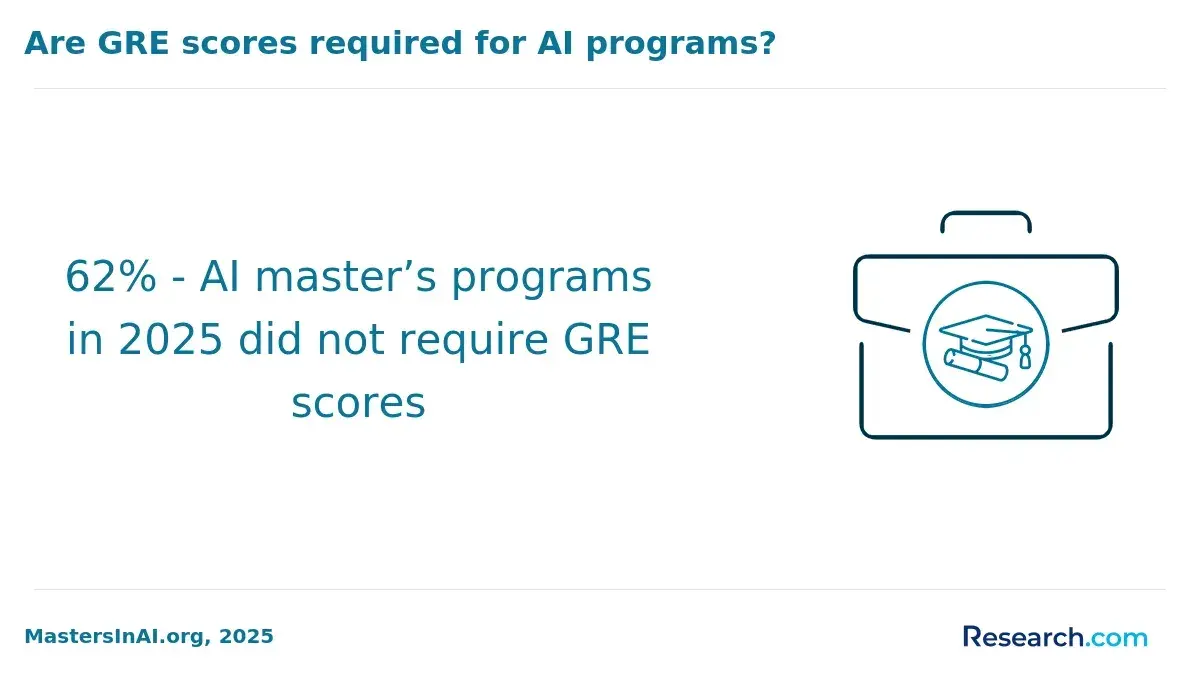
Admissions for AI analytics programs in supply chain analytics generally require a bachelor's degree in fields such as computer science, engineering, mathematics, statistics, or business with quantitative coursework. Some programs accept degrees in other areas but may ask for prerequisite classes in programming, linear algebra, and statistics to ensure foundational knowledge.
Standardized test scores play a significant role in admissions. The GMAT Focus Edition, commonly used for analytics-focused master's programs, often serves as a benchmark, with a median score around 546 among test takers. However, some programs accept GRE scores or waive testing for candidates with relevant work experience.
Professional experience, especially 1-3 years in data analysis, supply chain management, or software development, is increasingly valued to demonstrate practical understanding and commitment. Applicants typically need to submit a statement of purpose outlining their interest in AI and supply chain analytics and clear career goals.
Letters of recommendation from supervisors or professors who can attest to analytical skills and graduate-level readiness are usually required. Some programs may also request a coding or mathematics proficiency test or portfolio to verify technical skills.
How long do these AI degrees take, and what do they cost?
Degrees in artificial intelligence focused on supply chain analytics typically span from two to four years of full-time study, depending on the academic level. Bachelor's programs usually last four years, while associate degrees or accelerated tracks can be completed in about two years.
Master's degrees generally require 12 to 24 months for full-time students, with part-time options extending up to three years. Flexible online and hybrid programs are also common, helping working professionals balance education with employment.
Costs vary widely by institution type and residency. Public four-year universities have an average in-state tuition around $10,940 annually, while out-of-state students often pay two to three times this amount.
Private institutions typically charge between $30,000 and $50,000 per year. Online degrees often provide cost savings, with total tuition ranging from $15,000 to $40,000. Master's programs may range from $20,000 to $70,000, influenced by program prestige and delivery method.
- Additional expenses include books, software licenses, and technology fees.
- Financial aid, scholarships, and employer tuition assistance can substantially reduce costs.
- Prospective students should consult institutions directly for detailed pricing and funding options.
- Comparing program length, format, and total costs helps align choices with personal goals and budgets.
Should you choose online or on-campus AI programs for supply chain careers?
Choosing between online and on-campus programs for supply chain analytics with a focus on artificial intelligence depends on your career goals, learning preferences, and logistical factors. Online programs offer flexibility that fits well for working professionals juggling jobs or family responsibilities.
According to the National Center for Education Statistics, most U.S. undergraduates engage in at least one distance-education course, highlighting that online programs deliver comparable rigor and credibility to traditional formats.
On-campus options provide valuable access to physical resources such as labs, faculty, and networking events. This face-to-face interaction can be vital for those who benefit from direct mentorship and collaborative, hands-on learning experiences. Internships and real-world problem-solving activities often favor on-campus attendance, strengthening professional connections.
Key points to consider include:
- Online programs commonly use asynchronous coursework, allowing study flexibility but requiring self-discipline.
- On-campus courses may offer immediate hands-on experience with artificial intelligence applications in supply chain settings.
- Hybrid models blend online convenience with periodic in-person engagement.
- Cost differences exist; online options sometimes have lower tuition but may include technology fees.
- Employers increasingly recognize AI credentials earned online, especially from accredited institutions, though verifying program reputation is essential.
Assess your ability to invest time, desire for networking, and access to facilities. If structured support and mentorship are priorities, on-campus programs may be advantageous. For those seeking flexibility aligned with current education trends, online learning represents a respected and practical alternative.
What jobs can you get with an AI degree focused on supply chain analytics?
Graduates specializing in ai applied to supply chain analytics can pursue roles that focus on enhancing efficiency through data-driven methods and predictive modeling.
Positions include AI and machine learning specialists who develop algorithms for demand forecasting, inventory optimization, and logistics improvement. Data analysts and scientists use statistical techniques and machine learning to extract valuable insights that help reduce costs and mitigate risks.
Other career paths include supply chain analysts who leverage AI tools to oversee supplier performance and procurement, and operations research analysts who create models to optimize transport routes, warehouse operations, and production schedules.
AI software engineers develop and support platforms that automate forecasting and inventory management. According to the World Economic Forum's Future of Jobs Report 2025, roles such as "AI and Machine Learning Specialists" and "Data Analysts and Scientists" are among the fastest-growing through 2027.
Key skills for these careers include programming in Python or R, familiarity with machine learning frameworks, and understanding supply chain principles like just-in-time inventory and demand planning.
Experience with big data platforms such as Hadoop or Spark further boosts employability. Industries hiring for these roles range from manufacturing and retail to logistics and tech firms deploying advanced analytics. Annual salaries for AI experts in supply chain fields typically range from $90,000 to $140,000 in the U.S.
The rise of e-commerce and global trade escalates demand for professionals blending AI expertise with supply chain knowledge, opening diverse opportunities focused on automation, risk evaluation, and strategic planning.
What are salary ranges and job outlook for AI supply chain analytics careers?
Careers in ai supply chain analytics offer a wide salary range influenced by role, experience, and industry. Operations Research Analysts, a key role in AI-driven supply chain optimization, earn a median annual salary of $99,290 according to the U.S. Bureau of Labor Statistics. Entry-level salaries start near $65,000, while senior roles can exceed $130,000 per year.
The job outlook is strong, with employment growth projected at 23% from 2022 to 2032, much faster than average. This is fueled by demand for companies to improve efficiency, lower costs, and optimize logistics through AI and advanced analytics.
Common roles include Data Analyst, Supply Chain Analyst, and AI Specialist, with respective salaries varying: early career Supply Chain Analysts may earn $70,000-$90,000, while AI Specialists with programming skills often command more than $110,000.
Advanced degrees in operations research, data science, or AI-enhanced supply chain analytics improve salary potential and career opportunities. Certifications in machine learning and supply chain management software further enhance prospects.
For more detailed information, see the U.S. Bureau of Labor Statistics report on operations research analysts and related AI careers in supply chain contexts.
Other Things You Should Know About Artificial Intelligence
Domain knowledge in supply chain management is crucial for applying AI effectively. Understanding logistics, inventory management, procurement, and distribution helps AI professionals design relevant models and interpret results accurately. Many AI programs integrate supply chain coursework or recommend supplementary studies to build this expertise alongside technical skills.
Yes, internships and hands-on projects are highly beneficial for students in this field. Practical experience helps bridge the gap between theoretical AI concepts and real-world supply chain challenges, improving employment prospects. Many degree programs encourage or require internships to provide exposure to industry tools and collaborative problem-solving.
Ethical issues such as data privacy, algorithmic bias, and transparency are increasingly important in AI-driven supply chains. Professionals must ensure that AI systems handle sensitive supplier and customer data responsibly and do not perpetuate unfair practices. Ethics education is often part of AI programs to prepare students for these challenges.
In 2027, AI students should familiarize themselves with blockchain integration, IoT for real-time data collection, and advanced robotics in autonomous logistics. Understanding these technologies will enhance their ability to design AI systems for supply chain improvements. Explore further education options such as an AI governance master’s degree online.
References
- How Long Do AI Courses Take? https://www.nobledesktop.com/learn/ai/how-long-do-ai-courses-take
- What is AI in Supply Chain Management? Examples and Use Cases | SAP https://www.sap.com/resources/ai-in-supply-chain-management
- Artificial Intelligence (AI) in Supply Chain Analytics: Future Trends https://www.latentview.com/blog/role-of-artificial-intelligence-in-supply-chain-analytics/
- Do AI Degree Programs Worth It?Cost,Time, Career Alternative https://agilefever.com/artificial-intelligence-degree-programs/
- Must-Have Skills in Supply Chain Management with Data Analytics and AI: A Comprehensive Guide https://academy.u2xai.com/blog/must-have-skills-in-supply-chain-management-with-data-analytics-and-ai-a-comprehensive-guide
- Do AI courses with placement really help candidates get AI jobs faster? | H2K Infosys Blog https://www.h2kinfosys.com/blog/do-ai-courses-with-placement-really-help-candidates-get-ai-jobs-faster/
- Supply chain careers delivering high pay, purpose in a shifting economy - Supply Chain Management Review https://www.scmr.com/article/supply-chain-careers-delivering-high-pay-purpose-in-a-shifting-economy
- Online AI Course https://www.snhu.edu/online-degrees/classes/ai-training-course
- Supply Chain Skills for AI: What Actually Matters in 2026 https://www.scoperecruiting.com/blog/supply-chain-skills-ai
- ISCEA: AI and Gen-AI for Supply Chain Management | edX https://www.edx.org/learn/artificial-intelligence/international-supply-chain-education-alliance-ai-and-gen-ai-for-supply-chain-management