2027 What Can You Do With an AI Master's Degree?

Co-Founder and Chief Data Scientist
In 2026, many professionals with non-technical backgrounds face challenges entering the rapidly evolving ai industry. Employers increasingly seek advanced skills in machine learning, data analysis, and automation, yet traditional pathways can demand extensive retraining or prior experience. This gap creates uncertainty for those aiming to pivot into ai roles. An ai master's degree offers a structured, accredited route to acquire relevant expertise while accommodating flexible schedules.
This article explores practical career opportunities, skill applications, and program formats designed to help prospective students transition effectively into the ai workforce and meet current market demands.
Key Things You Should Know
- An AI master's degree in 2026 opens paths in machine learning, data science, and robotics, with 40% of graduates employed in high-growth tech sectors within six months.
- Graduates can expect median salaries around $115,000 annually, reflecting a 12% increase compared to those with only bachelor's degrees in related fields as of 2025 data.
- The degree equips students to address ethical AI challenges, crucial as 62% of businesses adopt AI-driven systems by 2025, requiring skilled professionals to ensure responsible deployment.
What career paths are available to graduates with an AI master's degree?
Graduates with an AI master's degree in the United States have access to numerous career opportunities driven by strong market demand. Top job roles for artificial intelligence master's degree holders include machine learning engineers, AI researchers, and data scientists. According to LinkedIn's 2024 Jobs Report, AI-related job postings grew by 74% year-over-year, reflecting rapid industry expansion.
Machine learning engineers create models that empower computers to learn from data and often find roles in technology, healthcare, finance, and autonomous vehicles. This position demands solid programming knowledge and expertise in algorithms and data structures. AI researchers typically work in academia, government labs, or corporate R&D departments, focusing on pushing the boundaries of AI theory through novel machine learning architectures and systems like natural language processing and computer vision.
Data scientists apply AI for predictive analytics, anomaly detection, and decision support across industries such as retail, marketing, and cybersecurity. Strong statistics skills combined with domain-specific knowledge are essential for success in these roles. Other AI graduate career opportunities in the United States include AI product managers who align technical work with business goals, AI ethicists addressing social implications, and AI consultants guiding technological integration. Specialized fields like robotics engineering or AI hardware development require additional expertise.
Graduates should evaluate their interests to target roles with technical depth, research orientation, or applied solutions. Staying updated with evolving AI technologies and acquiring skills like cloud computing or software engineering notably enhances employability. For detailed insight into compensation, see artificial intelligence degree salary.
What is the average salary for AI master's degree holders across different industries?
The average salary for artificial intelligence master's graduates across industries remains high, but varies widely by sector. According to Glassdoor's 2025 Salary Report, machine learning engineers with a master's degree make about $165,000 annually in the U.S. In tech companies, compensation can exceed $200,000 due to bonuses, stock options, and other incentives.
Industry-wise earnings for ai master's degree holders show that data scientists, ai researchers, and software engineers typically earn between $140,000 and $190,000 depending on experience and location. Finance professionals specializing in algorithmic trading or risk management earn from $120,000 to $180,000, often with performance-based bonuses. Healthcare roles focusing on medical imaging or diagnostics usually pay between $110,000 and $160,000.
Manufacturing and automotive sectors, using AI for automation and autonomous vehicles, typically offer salaries from $100,000 to $150,000. While lower than tech, these jobs provide chances for rapid skill growth and leadership opportunities. Geographic location strongly influences pay, with urban tech hubs like San Francisco, Seattle, and New York offering top salaries. Entry-level AI master's positions start near $100,000 and increase quickly with specialization and experience.
For those exploring educational costs related to engineering fields, understanding the mechanical engineering degree cost can offer helpful insight into investing in a STEM career. This context aids prospective students in budget planning when pursuing advanced degrees in related disciplines.
What are the job prospects and employment outlook for AI professionals through 2034?
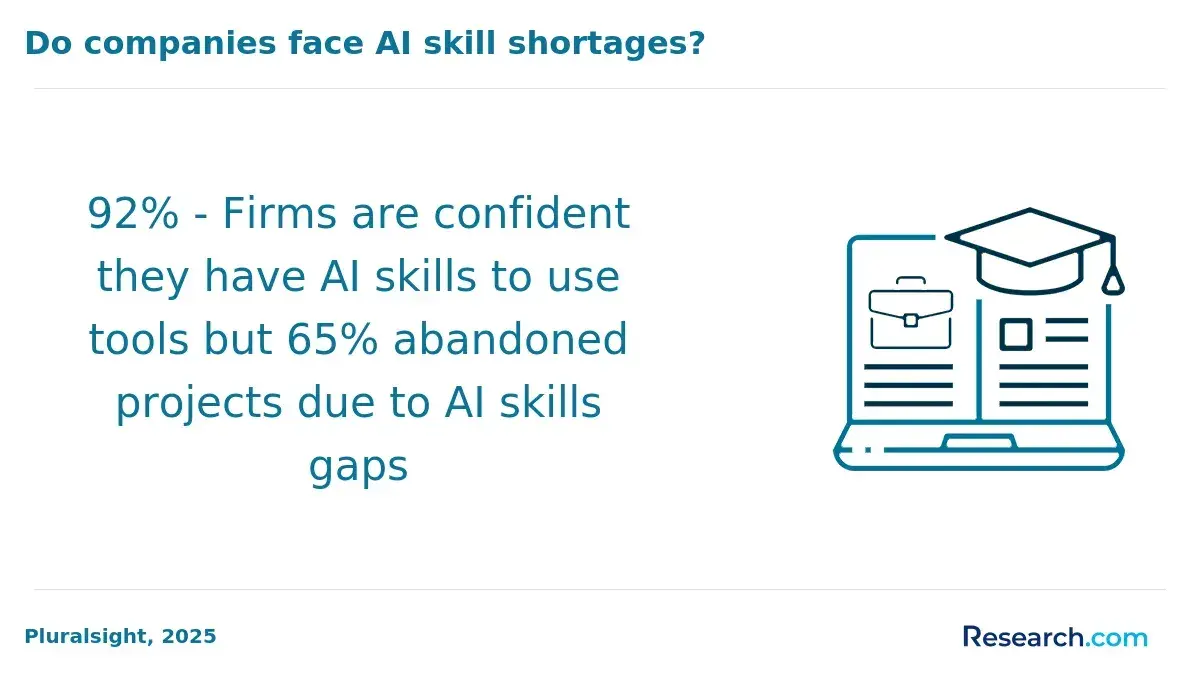
The job outlook for artificial intelligence professionals in the United States remains exceptionally strong, with the U.S. Bureau of Labor Statistics projecting a 21% employment increase for computer and information research scientists, including AI specialists, from 2023 to 2033. This growth rate significantly exceeds the 3% average for all occupations, highlighting the strong demand for experts holding an AI master's degree.
Career options include roles like machine learning engineers, data scientists, AI research scientists, and AI product managers. Industries such as healthcare, finance, automotive, and cybersecurity are rapidly adopting AI technologies. For instance, AI specialists help develop predictive models for personalized medicine or automate fraud detection in banking, demonstrating the broad career opportunities available.
Employment growth is driven by rising AI adoption and expanded investment in research and development. Organizations seek professionals skilled in designing algorithms, optimizing neural networks, and ensuring ethical AI implementation. Advanced degrees are favored due to in-depth knowledge of complex methodologies like deep learning and natural language processing, essential for North American AI master's degree employment trends.
Gaining hands-on experience via internships or partnerships with industry enhances employability and readiness for advanced roles. Continuous education and upskilling on evolving AI tools and regulatory standards remain vital for maintaining competitiveness in this fast-growing field.
Prospective students can explore options for obtaining an affordable degree by considering the cheapest online computer engineering degree, reinforcing practical and economic pathways into AI careers.
What are the typical admission requirements for accredited AI master's programs?
Typical admission requirements for accredited AI master's programs in the United States emphasize strong academic performance and quantitative aptitude. Around 85% of leading programs, based on a U.S. News analysis of 2024-2025 requirements, expect applicants to have a minimum undergraduate GPA of 3.0 and GRE quantitative scores above 160, roughly the 90th percentile. These standards ensure candidates possess the foundational skills necessary for challenging coursework in mathematics, statistics, and computer science.
Minimum academic qualifications for AI master's degree programs often include a bachelor's degree in computer science, engineering, mathematics, or related STEM fields, although some programs may accept students from diverse STEM backgrounds if they demonstrate relevant programming and analytical skills. Applicants must provide transcripts, recommendation letters, and personal statements that highlight their motivation and experience in artificial intelligence or related fields.
Work experience or internships in AI, data science, software engineering, or research can significantly strengthen applications by proving practical skills. Some programs require proficiency in programming languages such as Python or familiarity with machine learning frameworks. International candidates typically submit TOEFL or IELTS scores to confirm English proficiency. Applicants with non-STEM backgrounds may need to complete prerequisites like linear algebra, calculus, probability, and programming fundamentals before or during their studies.
Prospective students should review individual program sites, as requirements can vary but generally highlight a combination of academic excellence, quantitative reasoning, and relevant technical experience. For those exploring further options, a data science degree online can be a flexible alternative within related fields.
- Minimum academic qualifications for AI master's degree programs
- Standard prerequisites for admission to AI graduate studies
How long does an AI master's degree take to complete, and what are typical program costs?
Completing a master's degree in artificial intelligence typically requires 18 months to 2 years of full-time study. Part-time and online programs can extend this to 3 years or more, depending on scheduling flexibility. Most programs involve 30 to 36 credit hours, combining coursework, projects, and often a thesis or capstone experience to develop advanced skills.
Tuition costs vary widely, with full-time programs ranging from $40,000 to $120,000. Elite schools like Carnegie Mellon and Stanford often exceed $150,000, reflecting their comprehensive curricula, prestigious faculty, and strong industry ties that can improve job prospects. These higher costs also support access to state-of-the-art resources and research opportunities.
Evaluating return on investment is crucial. The 2024 Graduate Program Cost Analysis shows that AI master's degrees typically break even within 2.5 years after graduation, due to salary gains enabled by specialized expertise. This quick ROI is driven by strong demand for AI professionals in tech, finance, healthcare, and beyond.
Working professionals may prefer part-time programs for flexibility, though this could delay financial returns. Scholarships, employer tuition assistance, and fellowships play an important role in reducing expenses and optimizing the financial and time investment for those pursuing an advanced degree in artificial intelligence.
What is the difference between online and campus-based AI master's degree formats?
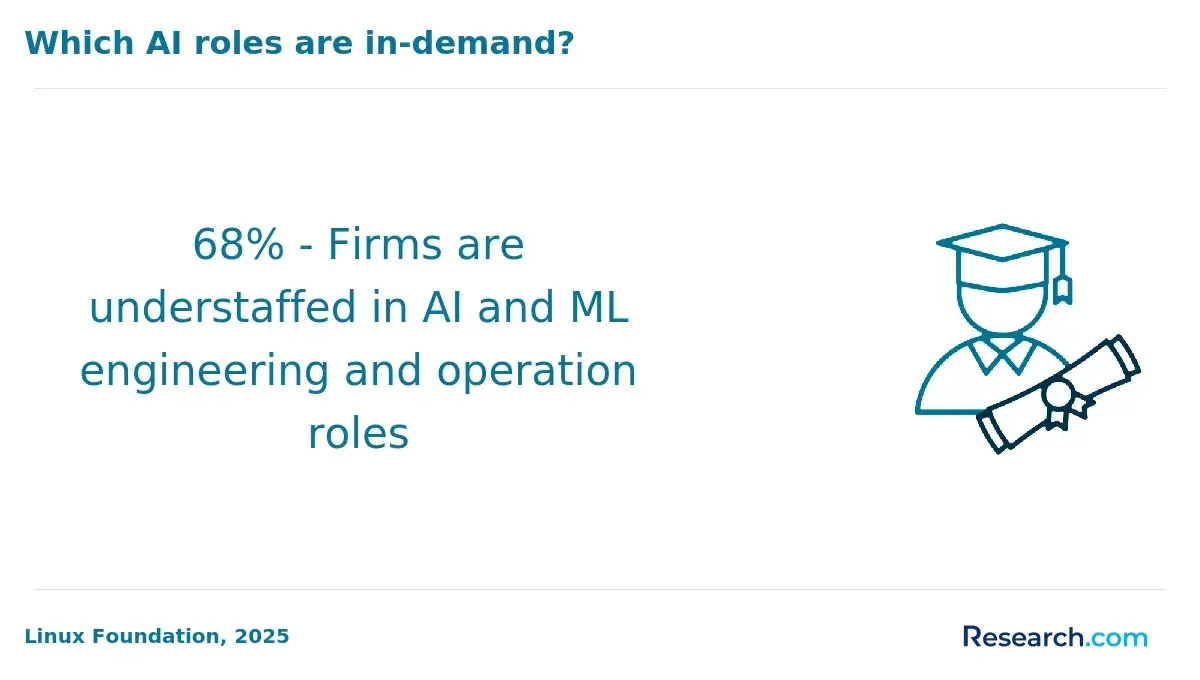
Online and campus-based ai master's degrees primarily differ in delivery, cost, and student experience. Online programs provide flexibility, enabling students to study from any location and balance coursework with work or personal commitments. This format is ideal for professionals wanting to upskill without relocating or pausing their careers. In contrast, campus-based programs require physical attendance, fostering direct interaction with faculty and peers and often include hands-on labs with on-site resources like research centers and networking events.
Completion rates and costs further distinguish these options. According to Coursera's Global Skills Report (2024), online ai master's students report 34% higher completion rates and 28% lower average costs than their campus-based peers. Cost savings come from eliminated commuting, housing, and sometimes reduced tuition fees. Higher completion rates likely reflect the adaptability of online learning to diverse schedules.
Employer preferences show no significant hiring differences between graduates of online and campus programs, both yielding candidates with comparable skills and knowledge. This parity underscores that employers prioritize competence and portfolio over study format. Prospective students should weigh their learning style, schedule flexibility, and financial situation when choosing.
Campus-based programs suit those seeking immersive experiences, direct mentorship, and collaborative projects. Online programs benefit independent learners valuing asynchronous schedules and global peer networks. Hybrid formats blend online study with occasional campus visits, addressing various student needs effectively.
What core coursework and technical skills are covered in AI master's programs?
Master's programs in artificial intelligence focus heavily on programming skills and foundational theories vital for developing expertise. Python is either required or taught in 94% of accredited programs, reflecting its role as the main language for AI development and data manipulation. Machine learning is a core subject in 92% of curricula, covering algorithms such as supervised, unsupervised, and reinforcement learning.
Deep learning features in 87% of programs, with instruction on neural networks, convolutional networks for image processing, and recurrent networks for sequence data. Natural language processing (NLP) appears in 76% of programs, training students to work with text, speech, and linguistic data using transformers and word embeddings.
Other essential topics include statistical methods, probability theory, optimization, and data structures, all crucial for designing algorithms and evaluating performance. Students complete hands-on projects using large datasets, tackling challenges like autonomous driving, recommendation systems, and healthcare diagnostics.
Technical skills with frameworks such as TensorFlow and PyTorch are emphasized to build and deploy AI models. Ethical issues, AI safety, bias, privacy, and accountability are integral parts of coursework. Practical experience with cloud platforms and big data tools prepares students for industry roles. Electives often cover robotics, computer vision, and AI policy, allowing specialization for career transitions or deeper expertise.
Which professional certifications complement or enhance an AI master's degree?
Professional certifications aligned with an AI master's degree greatly enhance employability and increase salary potential. Cloud platform certifications such as AWS Certified Solutions Architect, Google Cloud Professional Data Engineer, and Microsoft Certified: Azure AI Engineer Associate are highly valuable. According to the 2024 Coursera Career Outcomes Report, AI master's degree holders who earn these certifications realize average salary gains of 15-22% within a year. These credentials verify expertise in deploying AI models on scalable cloud infrastructure, making graduates highly attractive to employers seeking cloud-native AI solutions.
Beyond cloud certifications, credentials like the Certified Artificial Intelligence Practitioner (CAIP) and TensorFlow Developer Certificate bolster practical AI skills and demonstrate proficiency with machine learning frameworks. Data-centric certifications such as Certified Data Scientist and Microsoft Certified: Azure Data Scientist Associate are important for professionals specializing in data preprocessing, feature engineering, and model evaluation.
For those aiming at leadership or strategic roles in AI, obtaining project management certifications like PMP or Agile Certified Practitioner adds value by highlighting the ability to manage AI projects effectively. Certifications focused on ethical AI and cybersecurity are increasingly critical due to mounting regulatory demands and the emphasis on responsible AI deployment.
Selecting the right certifications should align with career goals and specific job requirements. Engineers prioritizing hands-on AI development benefit most from cloud and AI framework certifications, while those interested in policy or governance gain more from ethics and management credentials.
How do you evaluate the accreditation and reputation of an AI master's program?
Verify if the AI master's program holds ABET accreditation, a key marker of quality in engineering and technology education. Only 23 U.S. universities offer ABET-accredited AI or AI-focused master's degrees, reflecting rigorous technical and ethical standards that align with industry demands.
Consider program rankings from sources like U.S. News & World Report or QS World University Rankings. Data from LinkedIn Recruiter Insights 2024 indicates that graduates from top-20 ranked AI master's programs receive over three times more recruiter outreach than those from non-ranked programs. Rankings assess faculty expertise, research output, and employer reputation-factors critical to career success.
Examine faculty credentials and industry ties. Professors who publish at leading AI conferences or partner with tech companies provide students with valuable practical exposure and networking opportunities. Review faculty profiles and learn about integrated internships or current research projects.
Alumni outcomes also reveal program strength. Programs that publish placement statistics or feature graduates working at prominent AI firms and research labs demonstrate strong market acceptance and real-world impact.
Transparency and curriculum relevance are essential. Leading AI programs detail course content and update syllabi regularly to reflect advances in machine learning, neural networks, and AI ethics. Evaluating these elements ensures a comprehensive education that enhances career prospects in this competitive field.
What industries and employers actively hire AI master's degree graduates?
Graduates with a master's degree in Artificial Intelligence are in high demand across several prominent industries. Technology companies hire 42% of these graduates, including firms specializing in software development, cloud computing, cybersecurity, and data analytics. This sector's growth is remarkable, with hiring surging by 89% year-over-year as innovation drives the need for advanced AI skills. Employers range from major tech giants to startups focused on machine learning and automation technologies.
Financial services employ 18% of AI master's graduates. This includes banks, insurance companies, and investment firms using AI for risk assessment, fraud detection, algorithmic trading, and customer service automation. Roles in this sector require expertise in developing predictive models that handle vast amounts of financial data efficiently.
Healthcare accounts for 12% of AI master's graduates' employment opportunities. Hospitals, pharmaceutical firms, and health tech startups use AI for medical imaging, personalized medicine, and patient management systems. Professionals in this field help design AI-driven diagnostics and treatment protocols aimed at improving patient outcomes and reducing healthcare costs.
Manufacturing hires 8% of these graduates, applying AI to predictive maintenance, supply chain optimization, and robotics automation. Graduates contribute to enhancing operational efficiency and integrating intelligent systems in production.
The 2024 AI Graduate Employment Report by the National Association of Colleges and Employers (NACE) highlights these trends, emphasizing the alignment of AI expertise with diverse, data-intensive fields that are shaping the future workforce.
Other Things You Should Know About Artificial Intelligence
Yes, an AI master's degree provides a strong technical foundation that can support roles in AI policy and regulation. Graduates often contribute to developing frameworks that guide the ethical and legal use of AI. Their expertise helps inform governmental and organizational decisions to balance innovation with societal impact.
The most common programming languages in artificial intelligence include Python, R, Java, and C++. Python is especially popular due to its libraries and frameworks like TensorFlow and PyTorch. Knowledge of these languages is crucial for building, training, and deploying AI models effectively.
Continuous learning is critical in artificial intelligence due to the field's rapid evolution. New algorithms, tools, and research emerge frequently, so professionals must stay current through courses, conferences, and publications. Lifelong learning ensures they maintain a competitive edge and adapt to changing technologies.
By 2026, industries like healthcare, finance, and autonomous systems are expected to experience significant benefits from AI expertise. Professionals with an AI master's degree can explore career opportunities in these fields, integrating AI solutions for improved decision-making and efficiency. Check out best master's programs in AI and finance for more insights.
References
- 11 Best AI Certifications in 2025 to Deepen Your Technical Knowledge | DigitalOcean https://www.digitalocean.com/resources/articles/ai-certifications
- What can I do with a master's in artificial intelligence? | edX https://www.edx.org/resources/what-can-you-do-with-a-masters-in-artificial-intelligence
- Top 10 Careers You Can Pursue With an Online Master’s in AI https://www.ucumberlands.edu/blog/careers-you-can-pursue-with-an-online-masters-in-ai
- Master’s in Artificial Intelligence Salary | University of Bridgeport https://www.bridgeport.edu/news/masters-in-artificial-intelligence-salary-expectations/
- MSc Artificial Intelligence-career prospects University of Hull Online https://online.hull.ac.uk/courses/msc-artificial-intelligence/careers
- Top 10 AI certifications and courses for 2025 https://www.techtarget.com/whatis/feature/10-top-artificial-intelligence-certifications-and-courses
- What AI certification options are best for professionals transitioning into AI roles? https://dev.to/georgiaweston/what-ai-certification-options-are-best-for-professionals-transitioning-into-ai-roles-20gp
- Employers favor AI talent with master’s degrees, job posts indicate https://www.hrdive.com/news/AI-jobs-masters-degrees/720285/
- ARTiBA Accreditation Program | Elevate Your AI Education Standards https://www.artiba.org/artiba-accreditation-program
- AI Master Course Guide | Careers, Curriculum & Benefits https://futurense.com/blog/ai-master-course