2027 AI Bachelor's Degrees at R1 Research Universities

Co-Founder and Chief Data Scientist
Many professionals with undergraduate degrees in unrelated fields face challenges entering the rapidly evolving artificial intelligence sector. Traditional pathways often require extensive retraining or graduate studies, which may not fit diverse schedules or financial constraints. Identifying accredited bachelor's programs at R1 research universities that specialize in artificial intelligence can shorten the transition while maintaining academic rigor and industry relevance.
This article examines these programs, highlighting flexible options designed to equip learners with the necessary skills and credentials for AI careers. The goal is to guide readers toward informed decisions that facilitate a practical and efficient pivot into this expanding field.
Key Things You Should Know
What is an AI bachelor's degree at an R1 research university?
An AI bachelor's degree at an R1 research university offers comprehensive training in the theory, development, and application of artificial intelligence technologies. These programs, found at institutions classified as "Doctoral Universities: Very High Research Activity (R1)," provide students with access to advanced computational resources, cutting-edge labs, and faculty with specialized research expertise. There are 187 such universities in the United States, known for their robust research infrastructure that benefits AI students.
Undergraduate programs for artificial intelligence at top research universities integrate disciplines like computer science, mathematics, cognitive science, and ethics. Students gain foundational knowledge in machine learning, natural language processing, robotics, computer vision, and data analytics. Many schools offer specialized tracks or electives, such as AI for healthcare, autonomous systems, or AI fairness and accountability, allowing tailored education to suit specific industries or research interests.
These programs emphasize practical experience through internships, research assistantships, or capstone projects that connect theory with real-world challenges. Flexible course scheduling and hybrid learning options often accommodate working professionals and transfer students balancing career demands. Graduates are well-prepared for competitive roles in tech companies, research labs, or graduate study.
Students exploring AI bachelor's degrees at R1 research universities in the United States should verify program accreditation and faculty research interests to align with career goals. For details on career prospects in the field, consider exploring the ai career path.
Which R1 universities offer bachelor's degrees in artificial intelligence?
Among R1 universities offering bachelor's degrees in artificial intelligence, very few confer standalone AI B.S. programs. According to ABET Accredited Program Search, only a small number of U.S. bachelor's degrees explicitly include "Artificial Intelligence" in their titles, reflecting the rarity of dedicated AI degrees even at leading research institutions.
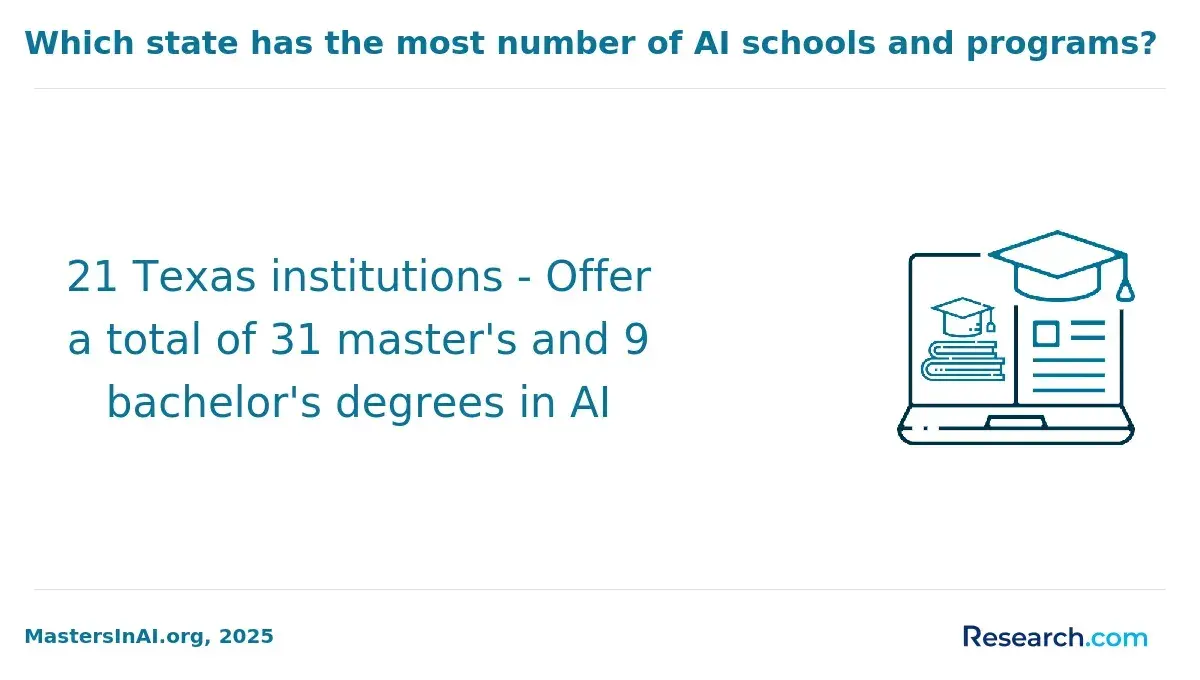
Notable examples of bachelor's in artificial intelligence programs at top R1 research universities include Carnegie Mellon University, which provides a B.S. in Artificial Intelligence combining computer science, machine learning, and robotics. The University of Texas at Austin also offers a focused AI bachelor's degree emphasizing theory, applications, ethics, and human-AI interaction.
Many other R1 universities embed artificial intelligence education within broader computer science or engineering majors instead of offering discrete AI degrees. For example:
- Massachusetts Institute of Technology offers computer science degrees with AI-specialized tracks and certificates.
- University of California, Berkeley provides AI-focused courses within computer science and electrical engineering programs.
- Stanford University integrates AI extensively across its computer science curriculum but has not yet awarded dedicated AI bachelor's degrees.
Prospective students should carefully evaluate program structures since AI may appear as a concentration or minor rather than a full bachelor's title. Verifying accreditation through ABET ensures academic rigor and industry recognition. Those interested in related fields might also explore online computer science degree.
How do AI bachelor's degrees differ from computer science or data science majors?
AI bachelor's degrees at R1 research universities focus deeply on machine learning, neural networks, natural language processing, and robotics, grounded in mathematics like linear algebra and probability theory. This contrasts with computer science (CS) majors, who cover a wider range of topics such as algorithms, general-purpose programming languages, and software engineering.
The differences between AI and data science undergraduate programs in the US are also notable. Data science students primarily concentrate on data manipulation, statistical analysis, SQL, and visualization techniques. According to Lightcast, the AI skill set is especially tied to machine learning, while data science roles emphasize SQL and statistics, and CS roles focus on broad programming skills. This specialization means AI degrees prepare graduates for highly focused roles in AI development and research, distinct from the broader tech functions of CS and DS.
Examples highlight these distinctions: AI students build and optimize predictive models for autonomous decision-making, data science students clean and analyze datasets, and computer science students prioritize software development with languages like Java and Python. Prospective students should consider their career goals carefully to choose the right path.
For those looking for affordable options, the cheapest online masters in artificial intelligence offer a pathway to advance expertise without high costs.
What accreditation should an AI bachelor's program and university have?
A bachelor's program in artificial intelligence should hold recognized accreditation to ensure academic quality and employer trust. In the United States, the main accreditation for computing-related degrees is from ABET (Accreditation Board for Engineering and Technology). ABET accredits over 4,000 programs worldwide across computing, engineering, and related disciplines, including AI-focused curricula. These programs meet rigorous standards in curriculum, faculty qualifications, and continuous improvement to stay aligned with industry needs.
Regional accreditation of the university itself is also critical. Bodies such as the Middle States Commission on Higher Education (MSCHE) or the Higher Learning Commission (HLC) validate the institution's overall academic quality and financial stability. Without this, even ABET-accredited programs may not produce degrees recognized by employers or graduate schools. This is especially relevant when considering regional accreditation requirements for AI bachelor programs at R1 universities, which often uphold the highest standards.
Students should verify both ABET and regional accreditation when assessing AI bachelor's degrees. Programs that combine both provide the strongest signal of quality and relevance. For example, the Georgia Institute of Technology offers an ABET-accredited Bachelor of Science in computer science with AI specializations, assuring graduates and employers of a solid foundation.
When accreditation is unclear, graduates may face difficulties transferring credits, accessing financial aid, or gaining employer recognition. Keeping pace with evolving AI skills depends on ABET's emphasis on continuous program improvement. For those exploring different fields related to computing, a cybersecurity online degree is an option to consider alongside AI programs.
Can you earn an AI bachelor's degree online at an R1 university?
Several R1 research universities now offer fully online or hybrid bachelor's degrees specializing in artificial intelligence or related fields such as computer science with ai concentrations. These programs provide high-quality, accessible education remotely, meeting the growing demand from diverse student populations.
Distance education has become mainstream, with over half of U.S. undergraduates taking at least one distance-education course as reported by the National Center for Education Statistics. This trend supports scalable ai degree pathways at leading research universities.
Programs may be explicitly branded as artificial intelligence degrees or be computer science or engineering degrees featuring substantial ai coursework. Core topics commonly include machine learning, natural language processing, robotics, and data science, ensuring academic rigor on par with traditional on-campus degrees.
Prospective students should consider key factors such as accreditation, faculty expertise, research opportunities, and available technical support. Hybrid models often blend online lectures with periodic in-person labs or project work, depending on the institution's approach.
What courses and skills are taught in AI bachelor's degree curricula?
AI bachelor's degree programs at R1 research universities focus on essential skills like machine learning, data structures, algorithms, and programming languages, particularly Python. Python and machine learning consistently rank as top skills in U.S. AI job markets, reflecting the emphasis on Python-based model training and evaluation in coursework.
Students gain hands-on experience with supervised and unsupervised learning, deep learning architectures such as neural networks, and reinforcement learning. Foundational math courses covering linear algebra, probability, statistics, and calculus support building and assessing AI models. Programs often include specialized topics like natural language processing, computer vision, and robotics to connect theory with practical applications.
Software tools such as TensorFlow, PyTorch, and Scikit-learn enable students to design and implement algorithms. Capstone projects simulate industry challenges, including chatbot creation or image classification systems. Ethical considerations and AI fairness are integral parts of the curriculum, preparing students to address bias mitigation and social impact.
Other common subjects include:
- Data management and big data processing
- Cloud computing fundamentals for AI scalability
- Human-computer interaction
- Information retrieval
Graduates should exhibit strong programming abilities, mathematical modeling skills, and practical AI system design. Internships are highly recommended to bridge academic knowledge with real-world AI applications, guiding students toward careers in research, software development, and data science.
What are the admission requirements and prerequisites for AI bachelor's programs?
AI bachelor's programs at R1 research universities demand a strong academic record, especially in mathematics-calculus and statistics in particular-and science courses like physics or computer science. Many programs expect applicants to have experience with programming languages such as Python or Java.
While not universally required, competitive standardized test scores (SAT or ACT) remain important for admission to top-tier institutions, where acceptance rates often fall below 20%. Letters of recommendation from STEM teachers and personal statements showing a genuine passion for AI are critical elements of a successful application. Supplemental essays that highlight motivation and problem-solving skills can strengthen an applicant's profile.
Extracurricular activities related to computing, robotics, math competitions, internships, or relevant research are highly valued, showcasing engagement beyond coursework. Admission pathways vary; some schools allow direct entry into AI majors, while others require students to declare the major after completing core prerequisites. Transfer applicants must meet additional requirements like GPA thresholds and completion of foundational courses.
Preparing early and emphasizing strong quantitative abilities alongside AI-relevant experiences are key strategies for navigating the competitive admissions landscape at R1 institutions known for their research intensity.
How long do AI bachelor's degrees take, and what do they cost?
A bachelor's degree in artificial intelligence at R1 research universities usually requires four years of full-time study. This timeframe aligns with typical undergraduate degrees and includes coursework in computer science, mathematics, machine learning, and specialized ai topics. Accelerated options may reduce the duration to three years, while dual-degree or co-op programs could extend it, depending on research or internship commitments.
Tuition costs vary notably based on institution type and residency. For public four-year universities, in-state tuition averages around $11,610 annually. Private nonprofit schools typically charge about $43,350 per year. Out-of-state students should expect to pay two to three times the in-state rates at public universities. Additional expenses such as textbooks, computing equipment, and fees often add $1,000 to $2,000 yearly.
Financial planning is essential. Prospective students should investigate scholarships, institutional aid, and federal loans. Public universities are generally more affordable for residents, while private programs may offer more aid despite higher costs. Choosing programs with integrated internships or research funding can help offset expenses and improve practical experience, enhancing job readiness within the standard four-year timeline.
What AI jobs can you get with a bachelor's degree, and what do employers want?
Graduates holding a bachelor's degree in Artificial Intelligence from R1 research universities can secure various roles such as machine learning engineer, data analyst, AI software developer, and AI product manager. Employers often prioritize applied skills over advanced degrees, valuing expertise in machine learning algorithms, Python programming, and cloud platforms like AWS or Azure, according to Lightcast (2024).
Typical responsibilities include developing and deploying AI models, data preprocessing, automating workflows, and integrating AI solutions within existing systems. Effective communication of technical concepts across teams is also crucial. Industries vary in focus; for example, healthcare roles emphasize data privacy and regulatory compliance, while finance positions concentrate on risk modeling and fraud detection.
Building a strong portfolio with real-world projects-such as chatbot development or contributions to open-source AI initiatives-is essential. Internships and certifications in AI tools further enhance employability.
Key skills to develop include:
- Machine learning frameworks: TensorFlow, PyTorch
- Programming languages: Python, R, SQL
- Cloud platforms: AWS, Google Cloud
- Data manipulation and visualization
Employers also seek problem-solving abilities and teamwork experience to adapt to evolving workplace challenges. The ongoing growth in the AI sector means a bachelor's combined with targeted skills provides a solid pathway into AI careers.
What salary and job outlook can AI bachelor's graduates expect in the U.S.?
Graduates with a bachelor's degree in artificial intelligence from R1 research universities can expect strong job growth and competitive salaries in the U.S. labor market. Employment for data scientists-a role closely related to AI graduates-is projected to grow by 35% from 2022 to 2032, significantly outpacing the average for all occupations. This indicates a high demand for AI skills.
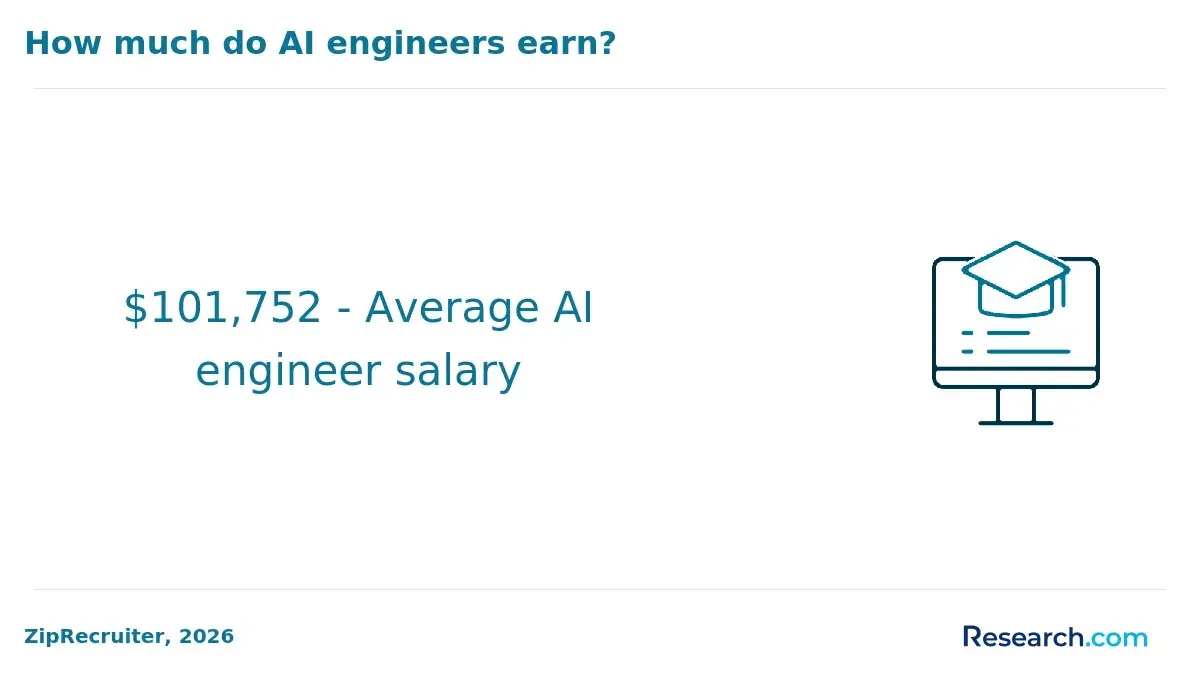
The 2023 median annual wage for data scientists was $108,020, showing employers value these competencies. Entry-level salaries for AI bachelor's graduates typically range from $70,000 to $90,000, influenced by factors such as location, employer, and expertise in programming, machine learning, or domain-specific areas.
Available roles include machine learning engineer, AI software developer, data analyst, and research assistant in AI labs. Graduates find opportunities in sectors like healthcare, finance, autonomous systems, and innovative AI startups. Salary ranges vary by role and industry.
To enhance employment prospects, students should seek internships and develop portfolios showcasing skills in tools such as Python, TensorFlow, and PyTorch. Practical experience and project demonstrations are increasingly valued alongside academic credentials.
The strong projected growth and substantial median pay emphasize opportunities for AI bachelor's graduates from R1 institutions who cultivate relevant skills aligned with industry needs.
Other Things You Should Know About Artificial Intelligence
No, artificial intelligence encompasses much more than just programming and coding. It involves understanding algorithms, data analysis, machine learning models, and human-computer interaction. Students also study logic, statistics, and ethics to build AI systems that can reason, learn, and make decisions.
Graduates with AI bachelor's degrees are in demand across a wide range of industries including technology, healthcare, finance, automotive, and manufacturing. Companies use AI experts to develop automation, improve data-driven decision-making, create natural language processing tools, and design intelligent robotics. The versatility of AI skills makes graduates valuable in both established firms and startups.
Yes, internships are crucial for AI students to gain hands-on experience and apply theoretical knowledge to real-world problems. R1 research universities often have strong connections with industry partners, offering students opportunities to work on cutting-edge projects. Internships can improve job prospects by building practical skills and professional networks.
Ethical considerations are increasingly emphasized in AI curricula to prepare students for responsible technology development. Programs incorporate topics such as bias mitigation, privacy concerns, transparency, and the social impact of AI systems. This ensures graduates can create technologies that align with legal standards and societal values.
In 2027, AI bachelor’s programs at R1 universities are increasingly emphasizing interdisciplinary studies, integrating AI with fields like healthcare and humanities. Courses now often include hands-on projects with real-world applications and focus on developing ethical guidelines alongside technical skills.
References
- What do you learn in a bachelor's in artificial intelligence? | edX https://www.edx.org/resources/what-do-you-learn-in-a-bachelors-in-artificial-intelligence
- AI skills are in demand, but is it enough for new grads? | The Reynolds Center https://businessjournalism.org/2mintip/ai-and-grads/
- ARTiBA Accreditation Program | Elevate Your AI Education Standards https://www.artiba.org/artiba-accreditation-program
- B.SC. PROGRAM IN ARTIFICIAL INTELLIGENCE https://put.poznan.pl/en/node/4294
- A Complete 4-Year Course Plan for an Artificial Intelligence Undergraduate Degree https://www.mihaileric.com/posts/complete-artificial-intelligence-undergraduate-course-plan/
- Cost to Study Artificial Intelligence in 2026 https://checkmateittech.com/cost-to-study-artificial-intelligence-usa/
- Best AI Bachelor's Degrees - AIDegreeProgams.org https://aidegreeprograms.org/rankings/best-ai-bachelor-degrees/
- Prepare for the Future of Tech with a Bachelor’s in AI | UMGC https://www.umgc.edu/blog/umgc-bachelors-degree-artificial-intelligence
- Key Skills Gained from a Bachelor of Science in Artificial Intelligence https://tetr.com/blog/key-skills-gained-from-a-bachelor-of-science-in-artificial-intelligence
- Online Bachelor of Science (BSc) in Artificial Intelligence - Swiss School of Business and Management Geneva https://www.ssbm.ch/online-bachelor-of-science-bsc-in-artificial-intelligence/