2027 Robotics Courses in AI Master's Programs

Co-Founder and Chief Data Scientist
Many professionals with non-technical backgrounds face challenges transitioning into robotics within AI master's programs due to the field's complexity and fast pace. Identifying programs that offer comprehensive robotics courses while accommodating flexible schedules is essential for meaningful career pivoting.
This article examines the robotics curriculum offerings in AI master's programs across U.S. institutions, highlighting course structures, practical training opportunities, and program flexibility to support informed decision-making for career changers.
Key Things You Should Know
- Over 70% of AI master's programs in the U.S. include robotics courses, reflecting growing industry demand for integrated AI-robotics expertise.
- Robotics courses increasingly emphasize machine learning and computer vision, with 65% incorporating hands-on labs using real-world AI robotic systems.
- Graduates with combined AI and robotics training report 30% higher starting salaries on average compared to peers focusing solely on AI or robotics separately.
What robotics courses are typically included in AI master's programs in 2027?
Robotics course offerings in AI master's degree programs commonly integrate core artificial intelligence concepts with practical robotic system design. Key modules include Introduction to Robotics, which covers the fundamentals of kinematics, dynamics, and control theory essential for robot movement and manipulation.
Advanced Robotics courses delve into perception systems, sensor fusion, and probabilistic robotics, equipping students to develop robots capable of operating in unstructured environments.
Core robotics modules included in advanced AI studies often feature Robot Learning and AI, focusing on machine learning approaches like reinforcement learning and neural network control policies that help robots adapt and optimize their behavior.
Computer vision courses tailored for robotics emphasize object recognition, depth estimation, and scene understanding-skills necessary for robots to interact successfully within complex real-world environments.
Human-robot interaction classes are also a common offering, addressing collaborative robots (cobots) and the design of effective interfaces for teamwork between humans and robots. Hands-on experience is provided through labs and capstone projects involving robotic hardware, simulation tools, and programming languages such as ROS (Robot Operating System) and Python.
The rising demand for these skills reflects market trends: the global robotics market is expected to reach $189.3 billion by 2030, growing at a CAGR of 14.8%, driving increased enrollment in AI-integrated robotics curricula.
Prospective students curious about what jobs can you get with an AI degree should prioritize programs emphasizing a blend of AI algorithms with robotics engineering to stay competitive in automation, manufacturing, and autonomous systems development.
Which U.S. universities offer robotics specializations within accredited AI master's degrees?
Several leading U.S. universities incorporate robotics specializations within accredited ai master's degrees, offering cutting-edge tracks and electives. Carnegie Mellon University's Master of Science in Artificial Intelligence and Innovation features an autonomous systems track with robotics courses emphasizing perception, control, and robot learning.
Massachusetts Institute of Technology provides a robotics-focused track within its ai master's program in electrical engineering and computer science, covering robot kinematics, manipulation, and multi-robot systems.
Stanford University offers robotics electives addressing robot vision, motion planning, and human-robot interaction through its artificial intelligence master's curriculum. The University of California, Berkeley integrates robotics and ai in its Electrical Engineering and Computer Sciences track, focusing on advanced robotics algorithms and autonomous vehicle technologies.
According to QS World University Rankings by Subject, 87% of top-ranked U.S. computer science and AI master's programs now include robotics or autonomous systems electives or specializations, up from 64% in 2021. This reflects growing demand for expertise that bridges AI and robotics across sectors like autonomous vehicles, manufacturing automation, and healthcare robotics.
Prospective students should evaluate practical lab resources and program focus, as hands-on experience is critical. Emphasis may vary between hardware integration and software or algorithm development. Opportunities for interdisciplinary collaboration, such as with mechanical engineering or cognitive science departments, enhance understanding of robotic systems.
Choosing programs aligned with specific career goals, like industrial automation or autonomous navigation, ensures relevant skills and market competitiveness.
For students interested in mechanical foundations alongside robotics and AI, exploring an online mechanical engineering bachelor degree can complement advanced studies effectively.
Are robotics-focused AI master's programs available online, and how do they compare to campus-based options?
Robotics-focused AI master's programs online are growing rapidly, with enrollment surging by 156% between 2022 and 2024. This increase reflects wider acceptance of virtual learning, as online students benefit from tuition costs about 22% lower than on-campus options.
Many programs mirror campus curricula with asynchronous lectures, virtual labs, and simulations, achieving learning outcomes comparable to in-person peers at around 89% effectiveness.
Hands-on robotics experiences remain a main challenge for fully online delivery, since manipulating hardware and participating in real-time competitions require physical presence. Schools often address this by offering hybrid models, local lab partnerships, or sending robotics kits for remote hands-on work.
Campus-based versus online robotics AI master's degrees both have distinct advantages; campuses provide direct access to cutting-edge labs and research mentoring, while online formats are prized for flexibility and cost-efficiency, especially for software-focused study.
Top institutions like Carnegie Mellon University and Georgia Tech demonstrate increasing parity between online and in-person tracks in AI and robotics education. Prospective students should carefully weigh their need for physical lab interaction against scheduling flexibility and cost considerations.
For those exploring options, resources on the most affordable online artificial intelligence degree can be valuable starting points for informed decisions.
What are the admission requirements for AI master's programs with robotics coursework?
Admission requirements for robotics and artificial intelligence master's degrees emphasize a strong technical foundation and relevant academic experience. Most programs expect prior programming skills or courses in computer science.
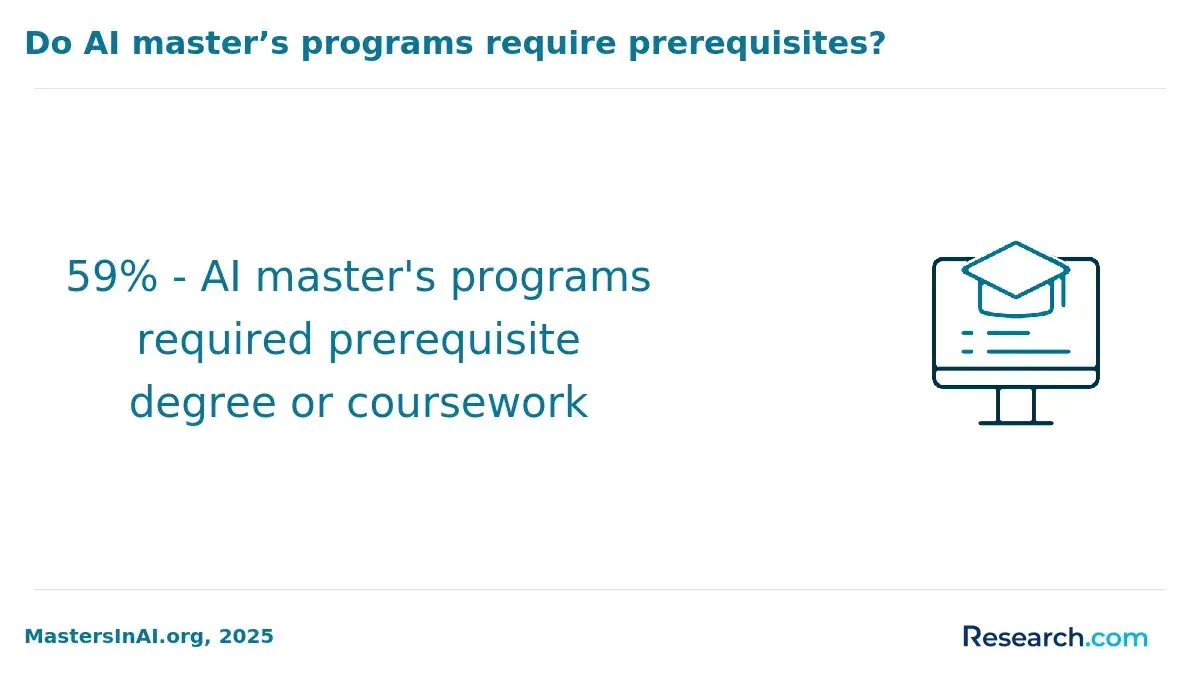
According to the Graduate Management Admission Council, 73% of these programs require such qualifications, with 68% specifically demanding proficiency in Python, signaling the essential role programming plays in AI and robotics.
Applicants generally need a bachelor's degree in computer science, engineering, mathematics, or related fields. However, some programs accept students from other backgrounds if they have completed prerequisite studies in algorithms, data structures, and software development.
Candidates without direct robotics experience can offset this by excelling in foundational AI or programming courses.
Standardized tests like the GRE are optional but can strengthen applications. Most schools request letters of recommendation that focus on technical skills and problem-solving ability related to AI or robotics. A statement of purpose should detail the applicant's experience with programming and robotics projects, alongside clear career goals in these areas.
These entry criteria for AI master's programs with robotics specialization serve to identify candidates ready to advance in this interdisciplinary field.
International applicants must demonstrate English proficiency via TOEFL or IELTS scores. Many programs also value hands-on experience through robotics competitions, internships, or research involving hardware-software integration.
Students exploring this field may benefit from reviewing online cybersecurity degree programs to understand related technical competencies that enhance career prospects in AI and robotics.
How long does it take to complete an AI master's program with robotics concentration, and what is the typical cost?
An AI master's program with a robotics concentration usually lasts 18 to 24 months full-time, or 3 to 4 years part-time for working professionals. These programs require 30 to 36 credit hours, blending core AI courses with robotics-specific subjects such as machine learning for robotics, robot perception, and autonomous systems.
Tuition varies by institution: for in-state students at public universities, total costs range from $15,000 to $30,000, while out-of-state and private institutions may charge between $40,000 and $70,000. Additional expenses can include lab fees and specialized robotics hardware. Students should also budget for software licenses and travel costs related to internships at robotics labs or tech firms.
Financial aid, scholarships, and assistantships are commonly available to help offset these expenses. Comparing curricula and overall costs in relation to career goals is important for maximizing both learning outcomes and financial return.
The average ROI for AI master's degrees is about 240% over ten years. Graduates focusing on robotics commonly receive starting salaries 18-24% higher than those without this specialization.
For example, a general AI master's graduate may start at approximately $95,000 annually, while robotics specialists often begin between $112,000 and $118,000, reflecting strong demand in the field.
What certifications or industry credentials complement a robotics-focused AI master's degree?
Certifications that complement a robotics-focused AI master's degree significantly enhance career prospects and industry credibility. According to the IEEE Robotics and Automation Society, 94% of employers prefer candidates with additional certifications when hiring robotics engineers holding master's degrees.
Among these, ROS (Robot Operating System) certification is especially prized, with 67% of companies valuing expertise in this widely used open-source robotic middleware prevalent in both research and commercial sectors.
Equally important is the AWS Robotics certification, which 54% of employers endorse. This credential demonstrates proficiency in cloud-based robotics services crucial for scalable AI-driven robotic solutions.
Professionals with AWS Robotics certification are recognized for practical knowledge integrating robotics systems with cloud infrastructure, a key competency in modern automation projects.
Beyond these, specialized certifications in machine learning frameworks, computer vision, and real-time embedded systems further distinguish candidates. For instance, NVIDIA's Deep Learning Institute offers targeted courses aligned with robotics AI applications.
Certifications that focus on specific domains such as sensor integration or autonomous vehicle systems add significant value, particularly in niche industry sectors.
Employers emphasize certifications featuring hands-on labs or projects, which better prepare candidates for real-world challenges. Maintaining certification through continuing education keeps professionals updated with rapid technological advances.
Industry credentials like ROS and AWS Robotics certification thus deliver measurable benefits and improve job prospects for graduates in robotics-focused artificial intelligence fields.
What career roles and job titles are available for graduates with AI master's degrees in robotics?
Graduates holding a master's degree in AI with a focus on robotics can pursue specialized roles such as robotics engineer, autonomous systems engineer, AI research scientist, machine learning engineer, controls engineer, and robotics software developer.
These careers often involve designing, programming, and optimizing robotic systems by integrating AI algorithms for perception, decision-making, and automation.
Robotics engineers typically bridge hardware and software, developing physical robotic devices and ensuring their functionality. Autonomous systems engineers create self-driving cars, drones, and other automated platforms that rely on sensor fusion and real-time AI control.
AI research scientists advance algorithms to enhance robotic cognition and adaptability, often working with research institutions or corporate R&D.
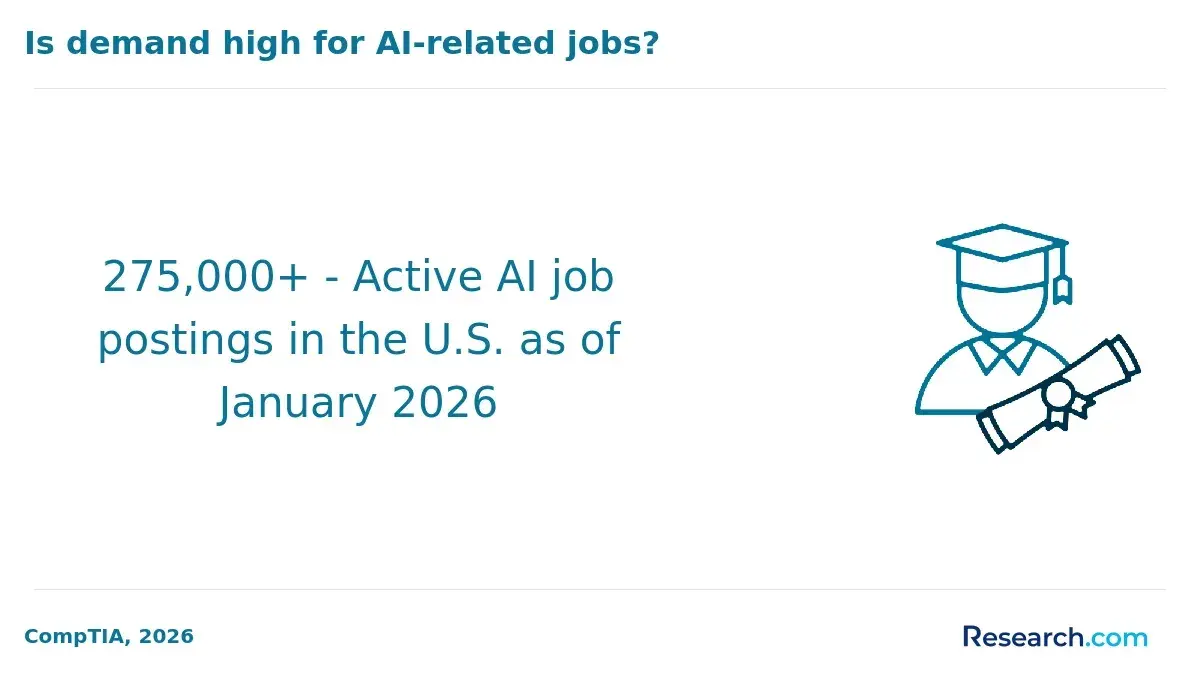
Job postings for these roles requiring master's degrees have risen sharply—by 312%, according to Indeed Hiring Lab—reflecting strong demand in sectors like manufacturing, healthcare, logistics, and defense.
Additionally, roles like systems integration engineer, robotic process automation developer, and AI product manager are gaining traction, demanding both AI and robotics expertise.
Proficiency in programming languages such as Python and C++, familiarity with AI frameworks, and experience with the Robot Operating System (ROS) are frequently required. Practical project experience is essential, as employers seek candidates who combine theoretical AI knowledge with hands-on robotics solutions.
What is the job outlook and salary potential for robotics engineers and AI specialists with master's degrees?
Robotics engineers and AI specialists with master's degrees enjoy strong career prospects and competitive salaries. The U.S. Bureau of Labor Statistics reports a median annual salary of $127,500 for robotics engineers holding a master's degree, reflecting high demand for expertise in robotics design, automation, and AI integration.
Job growth for robotics engineers is projected at 18% through 2032, well beyond the average for all occupations, fueled by expanding robotics applications in manufacturing, healthcare, logistics, and autonomous vehicles.
AI specialists with master's degrees work in diverse fields, including robotics, data analysis, natural language processing, and computer vision. Salaries generally align with those of robotics engineers due to their overlapping skills.
Employers value professionals skilled in developing intelligent systems, optimizing algorithms, and managing AI-powered hardware.
Students and graduates should gain experience with machine learning frameworks, robotic control systems, and sensor integration to enhance employability.
Engaging in internships or research projects during a master's program is crucial for hands-on expertise and professional networking. Adapting to rapid technological advances and evolving industry standards remains essential.
Career roles often include research and development, system architecture, product engineering, AI algorithm design, and intelligent manufacturing system maintenance. Given the strong job growth and lucrative salaries, pursuing advanced studies in robotics and AI offers a compelling return on investment.
What technical prerequisites and foundational knowledge do applicants need before entering an AI master's program with robotics focus?
Applicants to robotics-focused AI master's programs must have a strong foundation in linear algebra, multivariable calculus, and probability/statistics. These areas are essential for grasping robotics algorithms, control systems, sensor fusion, and machine learning models integral to robotics applications.
The National Center for Education Statistics reports that 72% of admitted students had coursework in these subjects, which correlated with a 34% higher first-semester GPA in core robotics courses.
Linear algebra underpins matrix transformations and spatial reasoning necessary for robot kinematics, while multivariable calculus aids in dynamics calculations and optimization in motion planning. Probability and statistics are vital for decision-making amid uncertainty and interpreting sensor data.
Alongside mathematics, programming expertise in languages like Python, C++, or MATLAB is critical. Practical knowledge of data structures, algorithms, and software development enables effective implementation of AI techniques on robotic platforms.
Many programs also value experience in computer vision or embedded systems, which enhances autonomous robotics capabilities. Applicants lacking these prerequisites may need bridge courses or must demonstrate proficiency through projects or certifications.
Prospective students should review specific requirements, as some programs mandate introductory AI or machine learning courses. Mastery in advanced mathematics and programming forms the foundation for success in AI master's programs focused on robotics.
How should prospective students evaluate and compare the quality and reputation of AI master's programs offering robotics courses?
Program accreditation is a critical factor for prospective students considering AI master's programs with robotics courses. Credentials from recognized bodies like ABET or ACBSP ensure adherence to high educational standards.
Data from ABET and the Council for Higher Education Accreditation show graduates from accredited programs achieve a 92% employment rate within six months, significantly higher than the 76% for non-accredited options.
Employers confirm this, with 81% favoring ABET-accredited credentials during hiring, highlighting the importance of accreditation for career outcomes and employer trust.
Faculty expertise and active research also play essential roles. Programs with robotics-focused faculty who publish in top AI and robotics journals or engage in industry partnerships provide practical learning through access to cutting-edge equipment and real-world challenges.
Curriculum depth, including foundational AI topics like machine learning and computer vision combined with robotics-specific courses such as control systems and sensor integration, enhances student preparation. Hands-on labs, capstone projects, and internships further improve employability and skill development.
Beyond employment rates, examining alumni career trajectories, starting salaries, and leadership roles offers insight into long-term value. Transparency in these outcomes enables students to align programs with their career goals effectively.
Other Things You Should Know About Artificial Intelligence
Python is the most widely used programming language in robotics AI courses due to its simplicity and vast AI libraries. C++ is also important because of its performance efficiency, especially in real-time robotic control systems. MATLAB is commonly used for simulations and algorithm development, while ROS (Robot Operating System) provides essential tools for robotics software development.
In 2027, robotics courses in AI master's programs focus on practical skills such as programming in languages like Python and C++, developing autonomous systems, integrating machine learning models, and working with sensors and actuators. Students also gain experience in problem-solving with real-world robotics applications and collaborative project management.
Yes, many AI master's programs encourage interdisciplinary collaboration with fields such as mechanical engineering, computer vision, and neuroscience. This approach allows students to integrate multiple perspectives for advancing robotics research and development. Joint projects and electives help broaden skill sets beyond traditional computer science.
Machine learning is a foundational component of robotics in AI master's programs, enabling robots to learn from data and adapt to changing environments. Courses cover techniques like reinforcement learning, neural networks, and computer vision that are critical for autonomous decision-making. This knowledge equips students to create more intelligent and adaptable robotic systems.
References
- Top 11 Robotics Certifications - MentorCruise https://mentorcruise.com/certifications/robotics/
- What Can I Do with a Master’s Degree in Robotics Engineering? https://wp.wpi.edu/catalyst/2025/04/25/what-can-i-do-with-a-masters-degree-in-robotics-engineering/
- What Are The Top 10 Careers in Robotics in 2026? | NEIT https://www.neit.edu/blog/careers-in-robotics
- 16 Artificial Intelligence Career Paths https://www.calmu.edu/news/artificial-intelligence-career-paths
- Robotics and Artificial Intelligence MSc https://www.qmul.ac.uk/postgraduate/taught/coursefinder/courses/robotics-and-artificial-intelligence-msc/
- Your 2025 Guide to Robotics & Automation Certifications | UTI https://www.uti.edu/blog/robotics-and-automation/2025-robotics-automation-certifications-guide
- Top MS Programs for Robotics in USA 2025 https://www.aeccglobal.com/advice/why-study-ms-in-robotics-in-usa
- Professional services https://www.strath.ac.uk/courses/postgraduatetaught/autonomousroboticintelligentsystems/
- Stackable certifications prepare the next generation of robotics operators https://www.acteonline.org/tech-stackable-credentials/
- Top Careers in Robotics and Automation | University of Bridgeport https://www.bridgeport.edu/news/careers-in-robotics-and-automation/