2027 Best AI Bachelor's Degrees for AI Product Management Careers

Co-Founder and Chief Data Scientist
Professionals with unrelated undergraduate degrees often face challenges when seeking to enter the AI product management field. Many struggle to find flexible, accredited programs that build both technical and managerial skills needed in AI-driven markets. This gap hinders career pivot opportunities and stunts career growth in a rapidly evolving industry.
Identifying quality bachelor's degrees tailored for AI product management careers can streamline this transition and enhance employability. This article provides a comprehensive overview of the best AI bachelor's programs designed to equip graduates with practical knowledge and strategic expertise to succeed in AI product management roles.
Key Things You Should Know
- Top AI bachelor's degrees for product management blend computer science, data analytics, and business strategy, equipping students to lead AI-driven product development effectively.
- By 2025, AI product management roles in the U.S. are projected to grow 35%, demanding graduates with interdisciplinary expertise and hands-on AI project experience.
- Leading programs emphasize ethical AI, user-centered design, and collaborative skills, aligning with industry expectations for responsible and innovative AI product leadership.
What is an AI bachelor's degree path for AI product management careers?
An AI bachelor's degree curriculum for product management careers blends core technical skills in artificial intelligence with business strategy, product development, and user-centered design. These programs combine computer science fundamentals-such as machine learning, data structures, and programming languages like Python or Java-with coursework in project management, marketing analytics, and product lifecycle management. This interdisciplinary approach prepares graduates to connect AI technology teams with market needs effectively.
Students seeking career pathways with an AI bachelor's degree should explore options offering interdisciplinary minors or dual focuses, like business administration or information systems. Programs titled AI and business analytics or AI and information technology management emphasize algorithm understanding alongside stakeholder communication and go-to-market strategies.
Hands-on experience is crucial. Many programs encourage internships or cooperative education with AI-driven companies, enhancing exposure to real-world product challenges. Complementary certifications in agile methodology or product ownership can also boost employability and leadership readiness.
According to the PwC Global AI Jobs Barometer 2024, jobs requiring AI skills grew 3.5 times faster than other roles and offered a 25% wage premium. This growth highlights the need for professionals who grasp AI and can strategize its application in product development. Prospective students should assess whether their degree integrates:
- Core AI and machine learning foundations
- Business strategy and market analysis courses
- Hands-on project management and teamwork opportunities
- Internships or partnerships with AI product teams
For those interested in accelerated study options, consider a computer science accelerated degree that includes AI curricula alongside essential software skills.
Which AI bachelor's programs best prepare students for product management roles?
Bachelor's programs that best prepare students for AI product management careers combine technical expertise with business and communication skills. Computer science degrees featuring AI specializations cover essential areas such as programming, machine learning, and data modeling. According to the National Association of Colleges and Employers (NACE) Winter 2024 Salary Survey, computer science bachelor's graduates have a projected average starting salary of $76,251, highlighting strong demand for these skills.
Top AI degrees preparing students for product management roles typically include courses in:
- AI fundamentals like neural networks, natural language processing, and computer vision
- Product design, project management, and agile methodologies
- Data analytics and user experience (UX) design
- Communication, leadership, and cross-functional collaboration
Programs offering dual tracks or minors that combine AI with business administration or information systems ensure graduates understand both technology and market strategy, crucial for managing product lifecycles. Hands-on projects, internships, and capstone experiences in AI product environments greatly enhance student readiness.
Prospective students should prioritize programs providing:
- Access to AI labs and real-world datasets
- Opportunities for interdisciplinary teamwork
- Mentorship from faculty experienced in AI product management
Students looking for the best AI bachelor programs for product management careers should avoid degrees focused solely on theory. Instead, seek balanced curricula that build strategic thinking, technical skills, and leadership needed to manage complex AI products in competitive markets. For assessing options, the data science major ranking offers valuable insights into affordability and program quality.
What skills do AI product managers need, and which majors teach them?
AI product managers combine technical expertise with business acumen and leadership skills to succeed. Essential skills include knowledge of AI technologies such as machine learning, natural language processing, and data analytics. Proficiency in programming languages like Python or R, along with familiarity with AI frameworks, helps managers effectively collaborate with development teams.
Strong project management, strategic thinking, and communication skills enable them to translate complex AI concepts into actionable business strategies and align AI solutions with market needs and customer expectations. These essential skills form the foundation for success in AI product management.
Majors offering AI product management training typically include computer science, data science, and software engineering, which provide solid technical foundations. Business administration and management information systems programs teach product lifecycle management, agile methodologies, and stakeholder coordination. Interdisciplinary AI or AI engineering degrees increasingly deliver a blend of technical and managerial training, incorporating courses like AI ethics and policy that prepare students for regulatory and societal challenges.
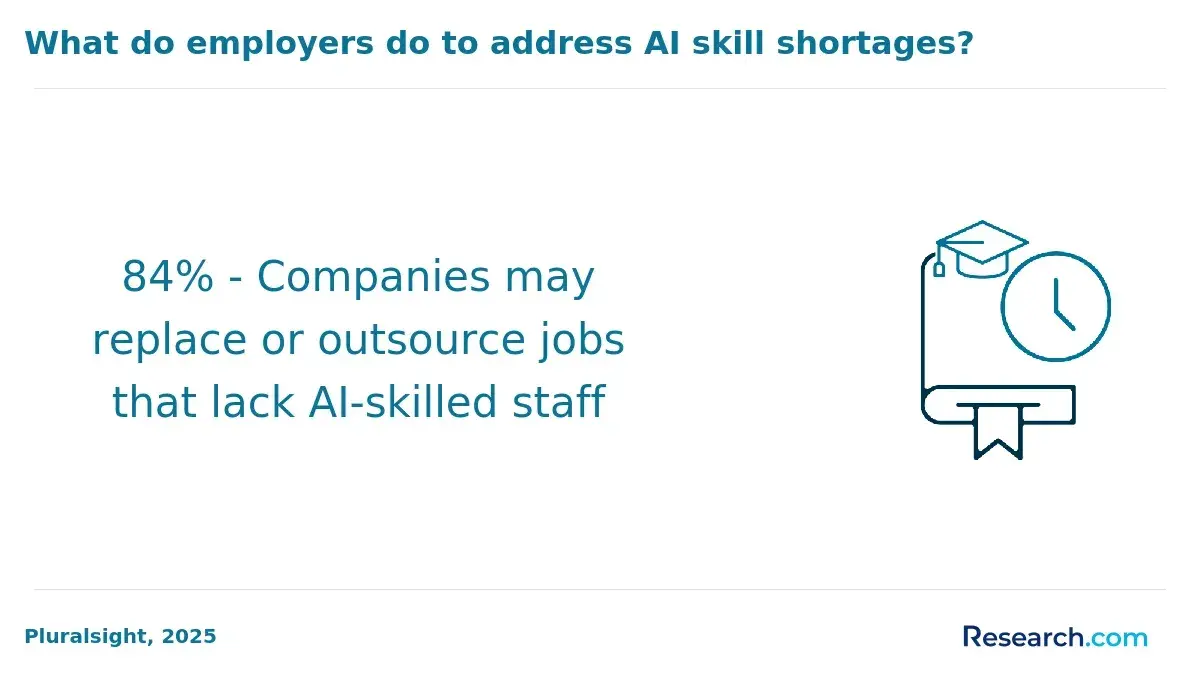
The World Economic Forum Future of Jobs Report 2025 emphasizes that 70% of companies intend to hire staff with AI-related skills by 2030, highlighting growing demand for these cross-functional capabilities.
Students should pursue programs combining rigorous AI coursework with practical product management projects. Internships at AI-driven companies offer valuable real-world experience managing AI products from conception through deployment.
For those interested in combining creativity and technology, exploring options like a game design degree online can complement AI product management skills and broaden career opportunities.
How do online AI bachelor's degrees compare with on-campus programs for AI PM?
Online AI bachelor's degrees vs on-campus programs for AI product management show similar academic rigor but differ in delivery and experience. Online tuition averages about $10,400 annually, compared to roughly $11,400 for in-state public four-year on-campus programs, representing notable savings over four years.
Core curriculum and accreditation standards remain consistent in both formats, covering essential AI topics like machine learning, data analytics, and product lifecycle management. The differences between online and campus AI degrees for AI product managers often lie in learning style and interaction: on-campus students gain hands-on access to labs, face-to-face mentorship, and networking opportunities, while online learners engage through asynchronous lessons, virtual labs, and industry guest lectures designed for remote collaboration.
Prospective students should consider factors such as program accreditation, faculty expertise, and career support services. Online learning suits self-directed individuals comfortable with digital tools, whereas campus programs offer immersive community experiences critical for some career paths.
Both program types can effectively prepare graduates for AI product management roles if they provide strong technical training aligned with industry demands. Those interested in advanced options may explore a master data science online as a next step in their education.
What accreditation should AI bachelor's programs have for U.S. employers and grad schools?
Regional accreditation remains the most trusted standard for bachelor's degree programs in artificial intelligence, widely recognized by employers and graduate schools across the U.S. Organizations such as the Middle States Commission on Higher Education or the Western Association of Schools and Colleges evaluate institutions on key criteria like academic quality, faculty expertise, and student success. Degrees from regionally accredited institutions carry significant weight in hiring and admissions decisions.
Program-specific accreditation, like ABET (Accreditation Board for Engineering and Technology), further validates the rigor and technical quality of AI bachelor's degrees within computer science or engineering disciplines. This endorsement can enhance a program's reputation by confirming it meets industry benchmarks.
Students should confirm their chosen school and program are listed in the Council for Higher Education Accreditation (CHEA) database, a reliable resource documenting thousands of accredited U.S. postsecondary institutions. Accreditation directly affects credit transferability and acceptance by employers or graduate programs.
Meeting these standards helps safeguard your education investment and supports smoother career advancement or graduate study.
Which courses and projects matter most for AI product management students?
Courses centered on data science, machine learning, and product strategy are vital for students pursuing a career in AI product management. Mastery of Python remains crucial, as it is the most widely used programming language on GitHub and supports key AI and ML frameworks such as TensorFlow, PyTorch, and scikit-learn. Building practical skills through Python-based projects is essential.
Understanding data engineering concepts, including designing data pipelines and managing databases, helps students handle AI products relying on extensive datasets. Real-world projects that combine data-driven ML models with product roadmaps enable learners to blend technical knowledge with business strategy effectively.
Product management courses focusing on user experience design, AI ethics, and Agile practices refine decision-making within AI's unique context. Incorporating A/B testing and performance metrics into projects teaches quantitative validation of AI-driven hypotheses.
Collaborative team projects improve communication with stakeholders and foster skills in prioritizing features based on AI model capabilities and user needs. Emphasizing practical Python coding, hands-on ML initiatives, data engineering basics, and AI product lifecycle management creates a robust foundation for success in this evolving field.
What admissions requirements do AI and related bachelor's programs typically require?
Bachelor's programs focused on artificial intelligence typically require applicants to have strong academic records in math and science, including calculus, statistics, and computer science. Most schools ask for high school transcripts with minimum GPAs usually between 3.0 and 3.5, though many no longer require SAT or ACT scores due to a widespread test-optional movement. Over 1,000 colleges participating in the Common App allow students to apply without standardized tests.
Applicants often need to provide additional materials such as:
- Personal statements emphasizing interest in AI, technology, and problem-solving skills.
- Letters of recommendation from math or science teachers to confirm academic readiness.
- Extracurriculars related to coding, robotics, or tech innovation, which are highly valued and sometimes mandatory.
- Portfolios or projects demonstrating programming and machine learning capabilities for competitive programs.
- Interviews, especially at private universities or specialized institutes, to assess motivation and fit for AI product management roles.
It is important to review the specific admission requirements and deadlines on each program's website. Early preparation in STEM subjects and relevant project experience enhances a student's chances in gaining admission to artificial intelligence bachelor's degrees tailored for future product managers.
How long does an AI bachelor's degree take, and what does it cost?
An AI bachelor's degree generally requires four years of full-time study, similar to most undergraduate programs in the U.S. Some institutions offer accelerated tracks that can reduce this time to three years, though these are less frequent and often involve heavier course loads or summer sessions.
Tuition costs for AI bachelor's degrees vary widely depending on the school and whether students qualify as in-state or out-of-state. The College Board Trends in College Pricing 2024 reports an average published in-state tuition and fees of $11,610 per year at public four-year colleges. This excludes other expenses such as housing, books, and personal costs that may increase the total yearly investment by 30 to 50%.
Private universities and out-of-state public institutions usually charge significantly more, often ranging from $30,000 to over $50,000 annually. However, scholarships, grants, and financial aid can considerably lower these costs for eligible students. Additionally, online and hybrid AI degree programs frequently provide more affordable and flexible options compared to traditional on-campus paths.
Key considerations when budgeting for an AI bachelor's degree include:
- Duration typically four years, with some accelerated programs.
- Average annual tuition of $11,610 in-state public (College Board, 2024).
- Additional costs for housing, supplies, and fees can increase total expenses by 30-50%.
- Financial aid opportunities such as scholarships and grants reduce overall costs.
- Online/hybrid formats may offer cost savings and flexibility.
What entry-level jobs can AI bachelor's graduates get on the AI product track?
Graduates with a bachelor's degree in artificial intelligence can pursue entry-level roles focused on AI product development, such as AI product analyst, junior AI product manager, AI business analyst, and AI solutions coordinator. These positions engage with the product lifecycle, supporting stages from ideation to deployment while collaborating closely with engineering and data science teams.
For example, an AI product analyst collects market and user insights to shape product features, while a junior AI product manager helps plan roadmaps and prioritize improvements to AI models. AI business analysts translate AI capabilities into business needs to ensure market fit. These roles often require coordination between AI engineers and stakeholders, streamlining communication and project timelines.
According to LinkedIn Jobs on the Rise U.S. 2025, roles like "AI Engineer" are rapidly expanding, highlighting growing opportunities along AI product career paths. Employers typically expect candidates to have programming skills in Python and SQL, plus a basic understanding of machine learning models and workflows.
Strong candidates showcase internships or projects demonstrating cross-functional collaboration, managing AI deployments, and familiarity with product lifecycle tools. Knowledge of user experience principles also enhances employability in these roles.
Starting in such positions provides practical exposure to AI product challenges, including model bias reduction and ethical AI design. Building expertise in these roles lays a solid foundation for progression toward senior AI product management careers.
What salaries and job outlook can AI product managers expect in the U.S.?
Product managers focusing on artificial intelligence in the U.S. enjoy competitive salaries and strong job growth prospects. The U.S. Bureau of Labor Statistics (BLS, 2024) reports a median annual wage of around $127,800 for product managers, with AI-focused roles often exceeding this due to technical skills and strategic importance.
Salaries typically range from $100,000 to over $160,000 annually, depending on industry, experience, and location. Product managers in prominent tech companies or AI startups tend to earn on the higher end. Industries such as healthcare, finance, and autonomous vehicles also offer elevated pay linked to AI product innovation.
The job outlook is promising, with BLS projecting a 10% growth rate in management roles related to product development through 2032, outpacing many other occupations. High demand exists for professionals who blend AI expertise with market analysis, project management, and leadership abilities.
To enhance employability, prospective AI product managers should pursue bachelor's degrees incorporating technical AI skills. Additional certifications in product management and internships provide valuable practical experience. Staying updated with emerging AI trends and tools is vital for securing competitive roles and salaries in this evolving field.
Other Things You Should Know About Artificial Intelligence
When selecting an AI bachelor's program for a product management career in 2027, consider curriculum relevance to AI technologies, faculty expertise, industry partnerships for internships, program accreditation, and emphasis on developing soft skills like leadership and communication, which are vital for product management roles.
Yes, many AI bachelor's programs include coursework on project management, ethics in AI, and interdisciplinary teamwork, which build essential leadership skills. Students gain experience managing AI projects, coordinating teams, and understanding strategic implications, all of which are critical for leadership roles in AI product management. Practical projects and internships further strengthen leadership readiness.
Ethical training is increasingly crucial in AI education due to the growing impact of AI technologies on society. Bachelor's programs now emphasize the ethical implications of AI algorithms, data privacy, and bias mitigation. This focus helps students develop responsible AI products and understand regulatory and societal concerns relevant to AI product management careers.
Practical experience through internships or cooperative education is highly recommended for AI bachelor's students. Real-world projects help students apply theoretical knowledge, build professional networks, and improve employability. Many programs integrate internships to ensure students transition smoothly into AI product management roles post-graduation.
References
- AI Product Manager: Role, Salary, Skills & Career Path Guide https://www.simpliaxis.com/resources/ai-product-manager-guide
- Find Accredited Programs https://accreditation.org/find-accredited-programs/university-search
- Bachelor in Management and Artificial Intelligence https://www.kozminski.edu.pl/en/programs/undergraduate-programs-bachelor/bachelor-management-and-artificial-intelligence
- Top College Degrees That Will Land You the Highest-Paying AI Jobs in 2026 https://www.investopedia.com/top-college-degrees-that-will-land-you-the-highest-paying-ai-careers-in-2026-11923863
- AI Skills Every Product Manager Needs in 2025 https://www.ironhack.com/gb/blog/ai-skills-every-product-manager-needs-in-2024
- Best Product Management Course in 2026 With AI: A Complete Career Guide https://www.masaischool.com/blog/best-product-management-course-in-2026-with-ai-a-complete-career-guide/
- AI Jobs With No Experience â 10+ Entry-Level Roles | Beginner Guide 2026 â Mindrift https://mindrift.ai/blog/ai-jobs-with-no-experience
- The Best AI Product Management Courses - StoriesOnBoard Blog https://storiesonboard.com/blog/ai-product-management-courses
- What is the Best Degree for an AI Career? | SNHU https://www.snhu.edu/about-us/newsroom/stem/best-degree-for-an-artificial-intelligence-career
- Using explainable AI to align pre-university profiles with bachelor’s degree success - Scientific Reports https://www.nature.com/articles/s41598-025-28179-z