2027 Best AI Degrees With Portfolio-Based Learning

Co-Founder and Chief Data Scientist
Many professionals with degrees outside STEM face challenges when trying to break into artificial intelligence roles. Traditional programs often emphasize theory over practical skills, leaving graduates unprepared for real-world projects. Without a solid portfolio, job seekers struggle to demonstrate their capabilities to employers. This gap makes transitioning into AI careers daunting and inefficient.
This article explores the best degree programs centered on portfolio-based learning. It highlights flexible, accredited options designed to build practical experience and help prospective students successfully pivot into the artificial intelligence industry.
Key Things You Should Know
- Portfolio-based AI degrees emphasize practical, hands-on projects, enhancing graduates' job readiness with 72% of employers prioritizing relevant portfolios over traditional credentials.
- Programs in 2026 increasingly integrate ethics, machine learning, and data science, reflecting a 34% rise in AI job postings needing multidisciplinary skills since 2024.
- Most top U.S. AI degrees now offer hybrid or fully online portfolio options, expanding access and flexibility for working professionals and diverse student populations.
What are AI degrees with portfolio-based learning, and how do they work?
AI degrees with portfolio-based learning structure emphasize hands-on project work to build a collection of real-world AI applications. This approach replaces or supplements traditional exams with practical assignments such as data modeling, algorithm design, and deployment, helping students demonstrate tangible skills through completed projects. Portfolios often include software tools, code repositories, and deployed models that showcase a student's problem-solving abilities.
Students engage in active learning by applying concepts directly to projects like predicting customer behavior or developing machine learning systems. These tasks simulate professional environments, preparing learners for immediate job market entry. AI degrees with portfolio emphasis typically feature modular courses in areas like natural language processing, computer vision, and robotics, incorporating project milestones along the way to refine skills.
The benefits of portfolio-based learning in AI programs include ongoing mentorship, industry collaboration, and opportunities to present or publish work, which enhance a student's professional profile. According to the Coursera Learner Outcomes Report 2024, 77% of learners experience career gains such as new jobs, higher pay, or improved skills when engaged in practical, job-relevant learning.
For those interested, exploring a computer science accelerated program can provide a structured path to develop a comprehensive AI portfolio while gaining technical proficiency and communication skills valued by employers.
Which accredited colleges offer the best portfolio-based AI degree programs?
Several accredited colleges are prominent for offering top portfolio-based artificial intelligence degree programs that emphasize practical skills over traditional credit hours. Western Governors University (WGU) stands out with its School of Technology, featuring ai and data degrees under a competency-based education model. This approach lets students progress by demonstrating skills, a method formally endorsed by the U.S. Department of Education through the Distance Education Accrediting Commission.
Other best universities for portfolio-focused artificial intelligence degrees in the United States include Southern New Hampshire University (SNHU) and Purdue University Global. They provide online ai programs integrating project-based learning, portfolios, and applied research highly valued by employers. SNHU emphasizes real-world tasks in programming, machine learning, and data analysis, while Purdue Global combines competency assessments with mentor-guided portfolio reviews.
Public and private institutions like the University of Texas at Austin and Georgia Tech also embed portfolio components in their ai master's and certificate programs, encouraging students to showcase capstone projects that solve real-world problems. These tangible project portfolios are crucial for job seekers aiming to demonstrate their skills clearly.
Prospective students should confirm accreditation linked to competency or portfolio education, ensuring credit transferability and employer acceptance. Flexible, skill-focused degrees suit working professionals well. Those interested might also explore related fields, such as the online mechanical engineering bachelor degree, which shares a similar practical learning emphasis.
What should you include in an AI portfolio for admissions and hiring?
An effective AI portfolio projects for admissions must clearly demonstrate technical skills, problem-solving ability, and real-world application. Candidates should showcase multiple, well-documented projects highlighting proficiency in core areas such as machine learning, natural language processing, computer vision, and data analysis. Each project needs a clear problem statement, methodology, code, and results for transparency.
Public code repositories are essential since GitHub's survey found that 82% of developers use it to display or manage coding work. Recruiters and admissions committees expect well-organized repositories with comprehensive README files outlining project goals, setup, and usage.
Variation in project complexity adds value. Beginners might include sentiment analysis classifiers, while advanced applicants could present reinforcement learning experiments or AI ethics case studies. Domain-specific projects, such as healthcare diagnostics or financial forecasting, emphasize applied expertise.
Provide links to publications, presentations, or competitions like Kaggle to reinforce credibility. Consistent updates and responsiveness to repository issues show professionalism, which is among the key skills to showcase in AI portfolios.
Developing an AI portfolio aligns with what top U.S. universities and employers seek, blending depth with reproducible work. For prospective students interested in broadening their tech skills, exploring a game design degree online can also complement AI expertise in interactive media development.
Is an online AI degree with portfolio projects respected by employers?
Online ai degrees with portfolio projects gain growing recognition by employers who prioritize demonstrated skills through applied work. A survey by AACSB reveals that 73% of business leaders value applied projects as much or more than the credential itself. Portfolios showcasing machine learning models, natural language processing applications, or data analysis pipelines provide concrete proof of problem-solving abilities essential for AI roles.
Employers seeking candidates with real-world experience look for diverse projects aligning with job requirements, such as neural network implementation, reinforcement learning, and AI ethics case studies. Documentation and code repositories like GitHub enhance credibility. Internships or collaborative tasks embedded within online programs also add valuable practical context.
Not all programs are created equal regarding portfolio opportunities. Prospective students should assess project scope, mentorship quality, and how effectively assessments simulate real AI challenges. Credentials emphasizing portfolio-based learning from accredited institutions generally receive better employer recognition, influencing the value of an online ai degree with portfolio projects recognition in the hiring process.
Students investigating graduate options can explore options among online data science masters programs that frequently incorporate relevant portfolio components. Such programs help meet employer expectations by blending theory with applied skills, allowing candidates to differentiate themselves in AI careers.
What courses and projects are typical in portfolio-based AI bachelor's programs?
Portfolio-based AI bachelor's programs combine core computer science concepts with specialized subjects like machine learning, deep learning, natural language processing, and computer vision. Courses often include data structures, algorithms, probability, statistics, software engineering, and databases to prepare students for practical application development. A notable component is cybersecurity and privacy education, addressing a workforce gap of about 4.0 million cybersecurity roles worldwide, as reported by ISC2's Cybersecurity Workforce Study.
Students engage in hands-on projects to create portfolio-ready work demonstrating applied skills. Typical projects include:
- Developing machine learning models for classification or regression with real datasets
- Building secure machine learning pipelines incorporating privacy-preserving methods
- Creating AI-driven chatbots and natural language processing applications
- Implementing computer vision systems for image recognition or object detection
- Designing adversarial attack and defense techniques to test AI robustness
- Applying reinforcement learning in gaming or robotics simulations
Portfolios often feature explanation documentation and code repositories using Python, TensorFlow, PyTorch, and Docker. Employers increasingly value projects that address security, privacy, ethical AI, and model validation, emphasizing resilience against hacking or data leakage. For those assessing Artificial Intelligence education options, focusing on practical experience combined with cybersecurity awareness can enhance career readiness and marketability.
What courses and projects are typical in portfolio-based AI master's programs?
Master's programs focused on portfolio-based Artificial Intelligence blend core courses, electives, and hands-on projects. Core studies typically cover machine learning fundamentals, deep learning, natural language processing, computer vision, and data ethics. Electives offer specialized topics such as reinforcement learning, AI system design, and AI applications in healthcare to meet diverse industry needs.
Projects are a critical component, often involving building production-level machine learning pipelines, scalable recommendation systems, or conversational AI agents. These simulate real-world challenges like data preprocessing, scalable model training, deployment, and optimization.
Capstone projects integrate multiple AI methods to solve complex problems and improve workflows. Such projects are frequently team-based, reflecting industry collaboration and agile practices. Students may also engage in open-source contributions or participate in data science competitions to sharpen their practical skills.
Stanford's 2025 AI Index shows most impactful machine learning models originate from industry, emphasizing the need for programs that prepare graduates for real-world, scalable AI application deployment. Strong portfolios often include projects using TensorFlow or PyTorch, cloud infrastructure, and version control workflows, ensuring alignment with today's professional standards.
What admissions requirements do AI degree programs typically have in the U.S.?
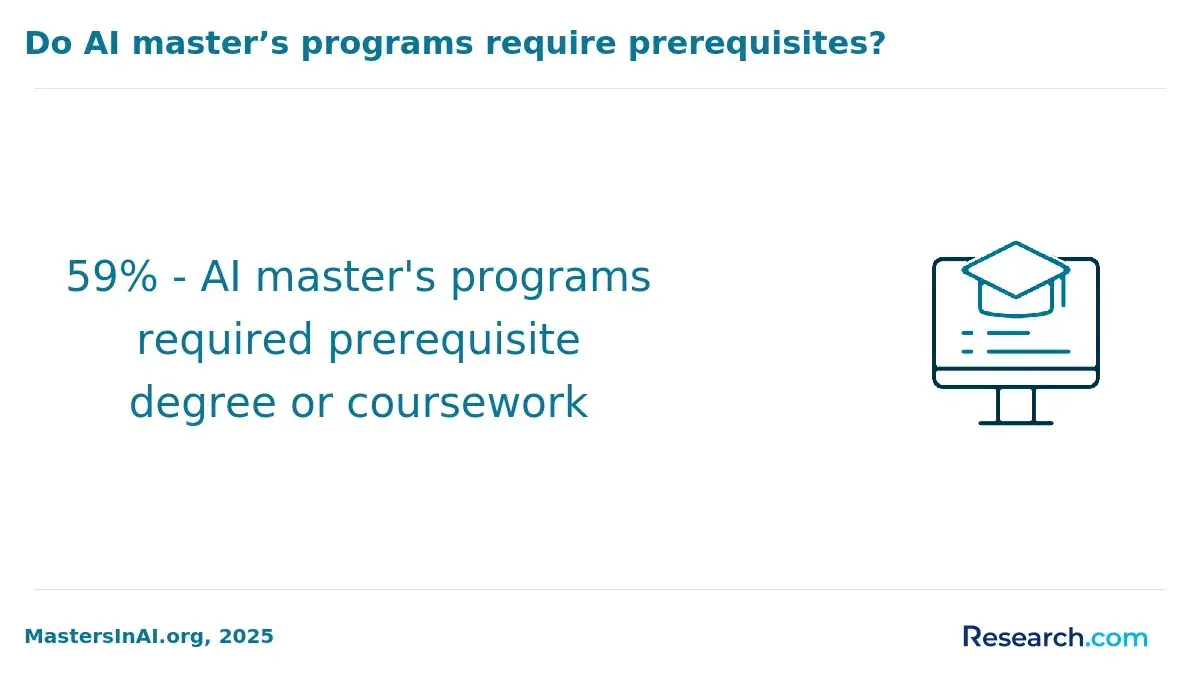
Admissions for AI degree programs in the U.S. require strong quantitative skills and relevant academic backgrounds. Most applicants have a bachelor's degree in computer science, engineering, mathematics, or related STEM fields. Official transcripts must show proficiency in subjects like linear algebra, calculus, statistics, and programming.
Standardized tests, particularly the GRE General Test, remain important for graduate admissions. ETS GRE data shows many test takers aim to study computer and information sciences, highlighting the value of high GRE quantitative scores in competitive applicant pools.
Applicants may also need to submit portfolios demonstrating practical experience through projects or research in machine learning, data science, or software development. These portfolios highlight skills beyond grades and test scores.
Letters of recommendation are universally required, typically from professors or industry professionals who know the applicant's technical abilities and research potential. Personal statements should clearly express motivation and relevant experience in AI.
Some programs expect prerequisite coursework or offer conditional admission for students from non-technical backgrounds. Work experience in AI-related roles or internships boosts applications, especially for master's or professional degrees.
How long do AI degrees take, and what do they cost?
AI degrees typically take two to four years depending on program level and structure. A bachelor's degree usually spans four years, covering core computer science, math, and specialized AI courses. Accelerated or portfolio-based bachelor programs can shorten this to about three years for students with prior experience. Master's degrees in AI often require one to two years with project-based or portfolio components focused on practical skills.
Costs vary widely between public and private institutions. Average in-state tuition and fees at public four-year universities are about $11,260 annually, serving as a baseline. Out-of-state and private school tuition often exceeds $30,000 per year. Graduate AI programs may charge $1,500 or more per credit hour.
Portfolio-based learning can reduce costs by awarding credit for prior work, accelerating degree completion. Online and part-time options help balance study with work, influencing both duration and expenses. Additionally, students should consider scholarships, assistantships, or employer tuition reimbursement as ways to offset costs.
Generally, bachelor AI degrees take about four years with total in-state tuition around $45,000, while master's programs cost between $15,000 and over $40,000 depending on the institution. Evaluating time, format, and financial aid options plays a crucial role in maximizing the value of an AI education.
What AI jobs can you get with a portfolio-based degree?
Portfolio-based degrees in artificial intelligence equip graduates with practical experience by showcasing real-world AI projects, vital for roles like AI engineer, machine learning engineer, data scientist, and AI research analyst. Employers increasingly seek candidates whose portfolios highlight comprehensive work-from data preprocessing to model deployment-demonstrating their ability to design and implement effective AI solutions.
Strong portfolios often include projects in areas such as computer vision, natural language processing, and predictive analytics, aligning with industry demands. Data scientists benefit from portfolios that emphasize statistical analysis and interpretation, supporting data-driven decision-making. According to LinkedIn's "Jobs on the Rise" and AI talent insights, AI engineer positions are among the fastest-growing job titles, highlighting the value of portfolios focused on applied AI tasks rather than theoretical knowledge.
Portfolios also boost prospects for AI product management or consulting roles by showcasing problem-solving, teamwork, and domain expertise. Graduates should tailor their portfolios to specific job descriptions and incorporate technologies like TensorFlow, PyTorch, and cloud AI services. Clear documentation and measurable outcomes increase employer confidence and demonstrate readiness for technical challenges.
What salaries and job outlook can AI graduates expect in the U.S.?
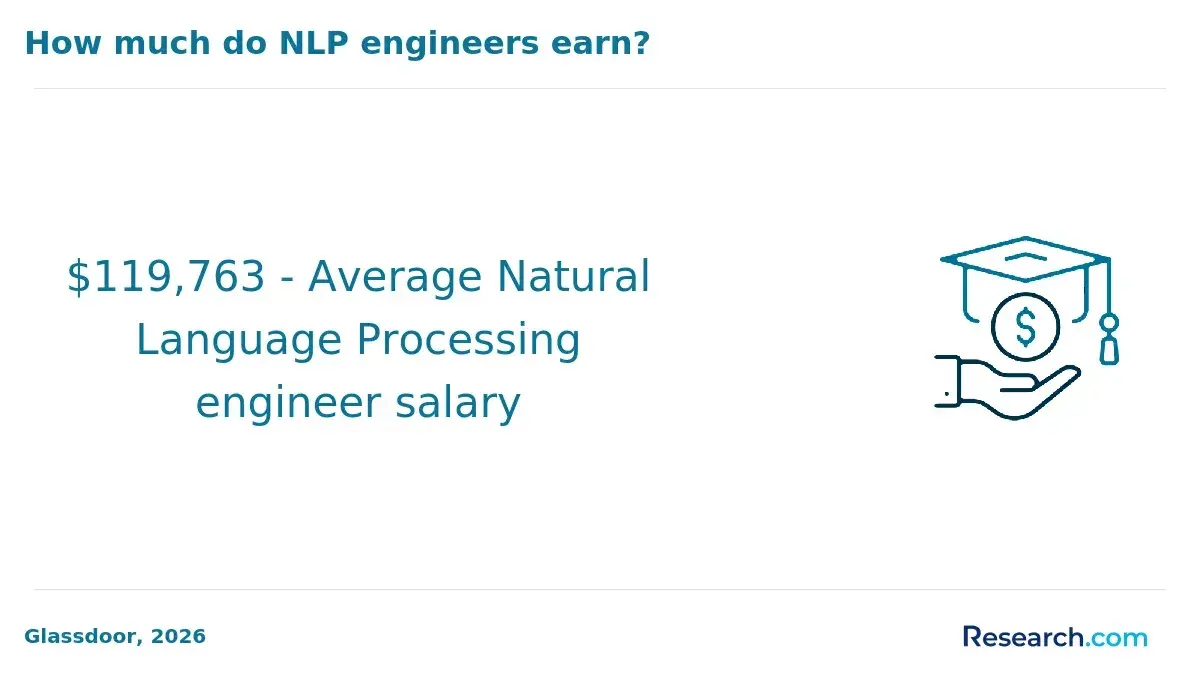
Graduates in artificial intelligence can expect lucrative salaries and robust job growth in various roles across technology, healthcare, finance, and autonomous systems. According to U.S. Bureau of Labor Statistics data, the median annual wage for Computer and Information Research Scientists was $145,080 as of May 2023, reflecting strong demand for advanced AI professionals.
The employment outlook for these roles is projected to grow 23% from 2022 to 2032, a rate much faster than the average for all professions. Entry-level positions such as machine learning engineers or data scientists typically offer starting salaries between $90,000 and $120,000 annually, depending on location and industry. Experienced professionals with expertise in natural language processing or computer vision can earn well above $150,000.
Building a portfolio with projects in neural networks, AI ethics, or real-world deployments increases competitiveness and aligns skills with employer needs. Professionals exploring roles in AI research, development, or application integration often see rapid advancement and salary growth.
Other Things You Should Know About Artificial Intelligence
Strong foundations in mathematics, especially linear algebra, calculus, and probability, are crucial for AI studies. Programming skills in languages like Python, proficiency in data structures, and problem-solving abilities are also important. Additionally, analytical thinking and familiarity with machine learning concepts enhance success in AI degree programs.
Yes, interdisciplinary knowledge can greatly benefit AI students. Fields like cognitive science, psychology, ethics, and domain-specific expertise (e.g., healthcare or finance) provide valuable context for AI applications. Understanding societal impacts and ethical considerations is increasingly emphasized in AI education.
Portfolio-based learning allows students to apply theory to real-world problems through projects, which sharpens technical skills and critical thinking. It also encourages iterative improvements and showcases tangible outcomes to employers. This hands-on approach bridges the gap between academic knowledge and industry expectations effectively.
The 2027 job market for AI degree graduates with portfolio-based learning is promising due to a growing demand in sectors like healthcare, finance, and autonomous vehicles. Building a robust portfolio can differentiate candidates in competitive fields such as the master’s in AI finance sector.
References
- A Complete 4-Year Course Plan for an Artificial Intelligence Undergraduate Degree https://www.mihaileric.com/posts/complete-artificial-intelligence-undergraduate-course-plan/
- Best Colleges for Artificial Intelligence (AI) Majors — Lantern College Counseling https://www.lanterncollegecounseling.com/insights/artificial-intelligence-ai-as-an-undergraduate-major-what-you-need-to-know
- Master of Artificial Intelligence https://wscs.eu/master-of-artificial-intelligence/
- Top Artificial Intelligence Courses: Fees and Duration https://collegevidya.com/blog/artificial-intelligence-course-fees-structure-duration/
- How to Turn Assignments into Portfolio-Ready Projects Using AI https://designingschools.org/beyond-traditional-assessment-using-portfolios-to-showcase-essential-skills-in-the-ai-era/
- Top 50 AI Project Ideas and Topics for Final Year Students https://lsmt.org.uk/blog/top-50-ai-project-ideas-and-topics-for-final-year-students
- These 14 colleges offer bachelor's degrees in AI—including one Ivy League school https://www.cnbc.com/2025/01/22/colleges-that-offer-bachelors-degrees-in-ai.html
- How to Build an AI Portfolio That Gets You Hired https://www.eduailast.com/blogs/how-to-build-an-ai-portfolio-that-gets-you-hired.php
- Best Colleges to Study Artificial Intelligence https://www.collegeadvisor.com/resources/study-artificial-intelligence/
- What Are the Career Paths After a Bachelor of Science in AI https://tetr.com/blog/what-are-the-career-paths-after-a-bachelor-of-science-in-ai