2027 AI Bachelor's Degree Programs That Include Reinforcement Learning

Co-Founder and Chief Data Scientist
Many individuals with degrees in unrelated fields face challenges when seeking to enter the fast-growing artificial intelligence sector. The lack of targeted training, especially in specialized areas like reinforcement learning, limits their job opportunities and career advancement. Traditional programs often lack flexibility or fail to provide hands-on experience with current industry techniques. Identifying bachelor's degree options that include reinforcement learning can bridge this gap, offering comprehensive curricula designed for those pivoting into AI. This article examines available AI bachelor's programs incorporating reinforcement learning, helping readers find accessible, accredited paths to gain relevant skills and enhance their career prospects.
Key Things You Should Know
- In 2027, over 40 U.S. bachelor's programs explicitly include reinforcement learning modules, reflecting increased academic focus on this AI specialization.
- Curricula emphasize practical skills in algorithms, Markov decision processes, and deep learning frameworks, aligning with industry demand for autonomous decision systems.
- Graduates with reinforcement learning expertise report starting salaries averaging 15% higher than general AI graduates, highlighting strong job market value.
Which bachelor's degree programs teach reinforcement learning within an AI major?
Bachelor's programs teaching reinforcement learning in AI majors are increasingly integrated into curricula at leading U.S. universities with strong computer science departments. Carnegie Mellon University's School of Computer Science includes reinforcement learning as a core part of courses such as "Machine Learning," "Foundations of Intelligent Systems," and specialized labs for autonomous systems. This thorough approach helps ensure career readiness; CMU's report shows 100% of its graduating AI students were employed or pursuing graduate studies within three months (CMU SCS "First Destination" Outcomes, 2024).
Other institutions like the University of California, Berkeley and the University of Washington offer reinforcement learning modules within their AI or machine learning elective courses. These programs balance theory and practical projects, providing hands-on experience with Markov decision processes, Q-learning, and policy optimization algorithms. Students in AI bachelor's degree programs with reinforcement learning courses often engage in projects involving robotics, gaming, or autonomous systems.
Typical program components include:
- Core AI principles such as search, logic, and probabilistic models
- Introductory statistical learning and supervised learning
- Advanced reinforcement learning algorithms and practical applications
- Capstone or research projects focusing on reinforcement learning
Prospective students should review curriculum details carefully, as reinforcement learning is often offered as an elective or advanced topic rather than a required class. Consulting course catalogs and advisors can confirm alignment with career paths in robotics, autonomous vehicles, or natural language processing. For more information on career opportunities, explore AI degrees and their pathways.
What is reinforcement learning, and why is it included in AI bachelor's programs?
Reinforcement learning is a specialized field within artificial intelligence where algorithms learn to make decisions by interacting with an environment and receiving rewards or penalties. This trial-and-error method enables systems to optimize actions and policies in complex, dynamic settings without explicit programming. Its importance is evident in reinforcement learning in AI bachelor's programs, which teach students how to build adaptive systems used in robotics, autonomous vehicles, game playing, and recommendation engines.
AI degrees that emphasize the importance of reinforcement learning in artificial intelligence degrees equip students with skills in decision-making under uncertainty and sequential problem-solving. Curricula often include concepts like Markov decision processes, Q-learning, policy gradients, and deep reinforcement learning. Students gain hands-on experience with frameworks such as TensorFlow and PyTorch to implement these models effectively.
Energy consumption concerns also underscore this field's relevance. The International Energy Agency reported that electricity use by AI systems and data centers might surpass 1,000 TWh by 2026, stressing the need to develop efficient algorithms that balance performance and resource use.
Students can expect coursework addressing exploration-exploitation tradeoffs, scalability, and safety challenges. Graduates with expertise in reinforcement learning contribute to sectors like finance, healthcare, and energy management. Prospective students interested in data science may explore the best universities for data science undergraduate programs for strong reinforcement learning education.
How can you verify accreditation for AI bachelor's programs with reinforcement learning?
To verify accreditation of AI bachelor programs with reinforcement learning components, begin by checking recognition from reputable accrediting bodies. ABET is the primary accrediting agency for computing-related programs in the United States, including artificial intelligence and its subfields. With over 4,600 accredited programs worldwide, ABET serves as a reliable benchmark.
Students should search the official ABET website's database by institution or program name to confirm whether the AI program or its broader computer science or engineering category is accredited. Some universities may include AI under electrical engineering or computer science accreditation rather than as a separate program.
Regional accreditation of the university itself is equally important, ensuring the institution meets comprehensive quality standards. Verification is possible through the U.S. Department of Education's Database of Accredited Postsecondary Institutions and Programs. Prospective students interested in reinforcement learning degrees should carefully review the curriculum details and faculty qualifications posted on program websites, as accredited programs usually provide transparent and updated course information aligned with industry standards.
The best methods to check accreditation for reinforcement learning degrees include:
- Confirming ABET accreditation for computing-related programs at the institution.
- Checking the university's regional accreditation status.
- Reviewing curriculum transparency regarding reinforcement learning content.
- Contacting admissions offices for accreditation documentation when needed.
Following these steps safeguards students against unaccredited institutions that may not meet educational or industry standards, preserving the degree's value for careers and advanced study. For options on affordable programs, consider exploring engineering degrees online that often include accredited AI and reinforcement learning courses.
What coursework and labs should you expect in an AI program covering reinforcement learning?
AI bachelor's degree programs that focus on reinforcement learning course curriculum in AI bachelor's programs offer both theoretical groundwork and practical experience. Foundational classes cover machine learning algorithms, probability theory, and optimization techniques essential for understanding Markov decision processes, value functions, policy gradients, and exploration-exploitation strategies.
Hands-on labs for AI and reinforcement learning techniques simulate real-world environments where students train agents using methods like Q-learning, Deep Q-Networks (DQN), and Actor-Critic algorithms. These experiments often require GPU acceleration or high-performance computing because reinforcement learning demands significant computational power. For perspective, the Frontier supercomputer leads the TOP500 list at 1.206 exaFLOPS (Rmax), illustrating the scale of resources needed for advanced RL research.
Students gain experience with popular frameworks such as TensorFlow, PyTorch, and OpenAI Gym to develop and test models. Electives may include advanced topics in deep learning, robotics, multi-agent systems, and natural language processing to expand real-world applications. Capstone projects typically involve designing and deploying RL algorithms for challenges like autonomous control, game strategies, and recommendation engines.
Those interested in affordable paths to technology careers might explore options like online cyber security degrees as a complementary or alternative field to bolster their skill set in computing and security domains.
Are online AI bachelor's programs with reinforcement learning comparable to campus programs?
Online bachelor's programs in artificial intelligence with a focus on reinforcement learning now closely match campus offerings in curriculum quality and access. Both formats typically cover essential topics like machine learning algorithms, neural networks, and hands-on reinforcement learning projects. Leading online programs replicate practical labs through virtual platforms and programming assignments that simulate on-campus experiences.
Key factors driving this parity include experienced faculty-often the same instructors as campus courses-and access to synchronous sessions for mentorship and collaboration. Advanced platforms enable students to perform simulations and manipulate data essential for mastering reinforcement learning concepts. Though networking and informal peer interaction may be more limited online, these programs provide robust technical training.
The growing acceptance of remote education is evident with 9.4 million U.S. students enrolled exclusively online (NCES, Digest of Education Statistics 2023). Students should carefully evaluate program accreditation, course rigor, and available support services when comparing online and campus options.
Consider these aspects when choosing a program:
- Does the program offer supervised projects or internships in reinforcement learning?
- Are instructors accessible for guidance and mentorship?
- What is the graduate employment record in AI-related roles?
- Are software tools and computing resources provided remotely?
Online degrees offer flexibility and technical depth valuable for those with relocation or scheduling constraints, while traditional programs may better suit students seeking immersive campus culture and immediate peer collaboration. Both pathways are credible for building expertise in reinforcement learning.
What admissions prerequisites help you succeed in reinforcement learning coursework?
Strong mathematical skills are crucial for success in reinforcement learning coursework within AI bachelor's degree programs. Proficiency in calculus, linear algebra, probability, and statistics forms the foundation for understanding key concepts like Markov decision processes and value function approximation. Admissions often require completion of courses similar to AP Calculus BC or equivalent college-level math.
Only 18% of AP Calculus BC test-takers score a 5, showing that extensive calculus preparation is uncommon among incoming students (College Board AP Program Results, 2024). This statistic explains why programs prioritize strong math abilities to help students tackle challenging reinforcement learning material.
Experience in computer programming, especially Python, is another important prerequisite. Reinforcement learning involves coding algorithms, running simulations, and data analysis, so familiarity with programming fundamentals lets students focus on advanced concepts rather than basic syntax.
Foundational courses in machine learning or artificial intelligence are often recommended or required. These courses introduce supervised and unsupervised learning before advancing to the mathematically intensive reinforcement learning topics.
Additional preparation in optimization theory and discrete mathematics benefits students, as these subjects support key reinforcement learning methods. Students should also demonstrate strong problem-solving and critical thinking skills, often reflected in prior STEM coursework or projects.
How long do these AI bachelor's programs take, and what do they cost?
AI bachelor's degree programs with reinforcement learning usually take four years of full-time study, matching the typical duration for U.S. undergraduate degrees. Some universities offer accelerated tracks that can reduce this to three years, although these require a heavier course load.
Tuition costs vary widely depending on the type of institution and residency status. Public four-year colleges charge an average of $11,260 annually for in-state students, totaling about $45,000 over four years. Private nonprofit schools average $41,540 per year, exceeding $166,000 in total tuition. Additional fees may include textbooks, lab costs, and software licenses needed for reinforcement learning courses, sometimes bundled into overall fees or billed separately.
Financial aid is an important consideration. Public universities making use of in-state tuition rates offer more access to AI specialization, while private institutions frequently provide scholarships aimed at STEM and AI-focused applicants to offset higher tuition.
Some programs integrate cooperative education or internships with AI coursework. Although this can extend program length, it provides practical industry experience, helping students balance time, cost, and education quality when choosing their path.
What careers use reinforcement learning skills after earning an AI bachelor's degree?
Careers involving reinforcement learning (RL) skills after earning a bachelor's degree in artificial intelligence are expanding rapidly across multiple industries. Many graduates pursue roles as machine learning engineers, designing RL algorithms that help systems learn optimal behaviors in robotics, autonomous vehicles, and recommendation engines.
In finance, healthcare, and marketing, data scientists utilize RL to analyze complex datasets and enhance decision-making models, including dynamic pricing and personalized treatment plans.
Software developers apply RL to create intelligent agents for applications such as video games, virtual assistants, and network optimization tools, turning theoretical models into scalable solutions.
Graduates working in research and development departments contribute by testing innovative RL algorithms in both simulated and real-world contexts, pushing the boundaries of AI capabilities.
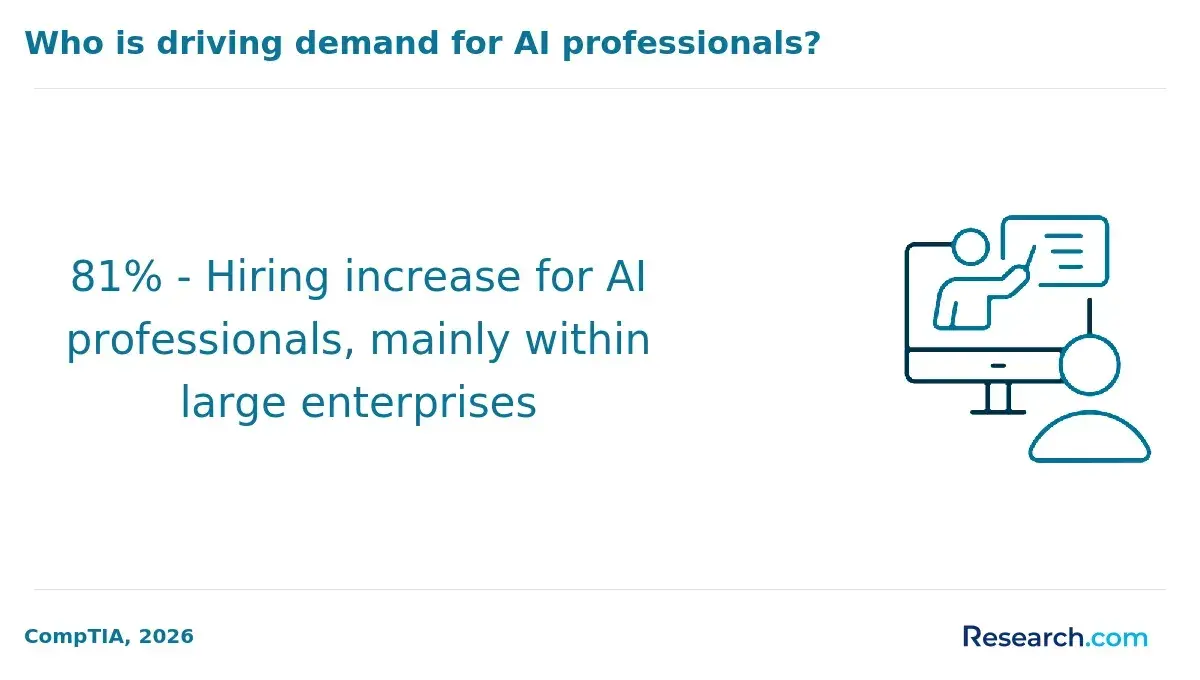
The demand for RL expertise is growing fast: job postings requiring these skills have increased nearly fourfold since 2019, demonstrating broader commercial adoption.
Additional career paths include automation engineering, improving manufacturing systems with RL-driven controls, and quantitative trading, where RL optimizes trading strategies.
Interdisciplinary roles combining RL with natural language processing or computer vision create opportunities to enhance chatbots and surveillance technologies.
Hands-on experience with RL frameworks like TensorFlow Agents and OpenAI Gym is highly valued by employers, who seek candidates with proven project portfolios that demonstrate applied problem-solving.
What salary ranges can AI graduates expect in roles using reinforcement learning?
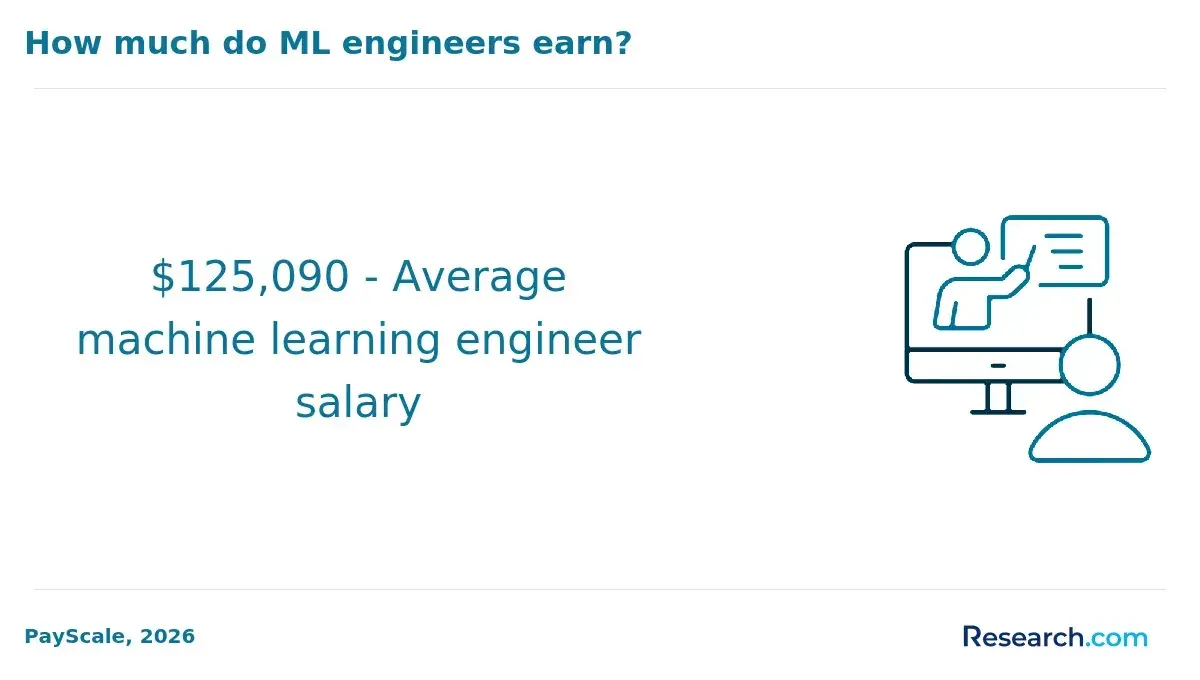
Graduates with a bachelor's degree specializing in reinforcement learning can expect competitive salaries that mirror the skill level needed in this field. According to the U.S. Bureau of Labor Statistics, the median wage for computer and information research scientists was $145,080 as of May 2024. Entry-level roles generally start between $80,000 and $100,000, influenced by location and industry.
Mid-career professionals working in reinforcement learning typically earn $120,000 to $160,000 annually, depending on project complexity, such as autonomous systems or robotics. Senior positions like machine learning engineer or research scientist often surpass $180,000, especially in major tech hubs.
Additional factors impacting salary include the type of employer and advanced degrees. Pursuing a master's or PhD in reinforcement learning, along with certifications and experience in tools like TensorFlow and PyTorch, raises earning potential. Geographic mobility toward AI-focused regions also improves job prospects.
- Internships and co-op experiences are proven to boost starting salaries.
- Specialization in industries like finance or healthcare can command premium wages due to niche applications.
- Keeping skills current with evolving algorithms and technologies is essential for career growth.
Targeting roles such as machine learning engineer, data scientist, or AI research scientist with reinforcement learning expertise maximizes salary opportunities and career progression.
Which certifications and portfolio projects strengthen reinforcement learning job prospects?
Certifications and portfolio projects are key assets for advancing careers in reinforcement learning. Earning recognized credentials shows employers both theoretical expertise and practical skills. Notable certifications include the Deep Reinforcement Learning Specialization by the University of Alberta on Coursera, which emphasizes core techniques such as Q-learning and policy gradients. The Reinforcement Learning Nanodegree from Udacity offers hands-on projects with PyTorch and OpenAI Gym, linking academic concepts to real industry challenges.
A strong GitHub portfolio strengthens job prospects by providing tangible proof of applied knowledge. Public repositories are highly valued; GitHub reported over 2 billion contributions and more than 420 million repositories, highlighting the importance of visible coding work in hiring.
Effective portfolio projects include:
- Developing agents for classic control environments like CartPole or MountainCar to demonstrate value-based methods understanding.
- Training robotic control models using continuous action spaces to show command of policy gradient algorithms.
- Applying reinforcement learning on real-world datasets in domains such as finance or healthcare to underscore transferable skills.
- Contributing to open-source reinforcement learning libraries to enhance community engagement and collaboration.
Documenting projects with clear README files, performance metrics such as cumulative reward plots, and reproducible code improves employer evaluation. Combining respected certifications with well-curated, interactive projects builds a competitive profile for AI-focused roles in reinforcement learning.
Other Things You Should Know About Artificial Intelligence
Python is the most widely used programming language in AI bachelor's degree programs because of its simplicity and extensive libraries for machine learning and reinforcement learning. Other languages such as Java, C++, and R might also be taught to help students build a well-rounded skill set for different AI applications. Familiarity with these languages is essential for implementing algorithms and developing AI models.
Mathematics is fundamental in AI education, especially in courses on reinforcement learning, which rely heavily on probability, statistics, linear algebra, and calculus. These mathematical concepts provide the foundation for understanding how AI algorithms optimize decision-making processes. Students generally take multiple math courses to ensure they can grasp the technical aspects of the subject.
Many AI bachelor's degree programs encourage or require research projects, sometimes in collaboration with faculty who specialize in reinforcement learning. These opportunities help students apply theoretical knowledge to practical problems and contribute to advancing AI technology. Research experience is also valuable for students considering graduate studies or careers in AI development.
Internships are often a key component of AI bachelor's programs, providing real-world experience in industries utilizing reinforcement learning, such as robotics, gaming, and autonomous systems. These internships help students develop professional skills, network with potential employers, and apply classroom learning to practical challenges. Many programs have partnerships with tech companies to facilitate these experiences.
References
- Reinforcement learning prerequisites https://community.deeplearning.ai/t/reinforcement-learning-prerequisites/331146
- Top degree programs for studying artificial intelligence https://www.techtarget.com/whatis/feature/The-top-20-programs-for-studying-artificial-intelligence
- Best AI Bachelor's Degrees - AIDegreeProgams.org https://aidegreeprograms.org/rankings/best-ai-bachelor-degrees/
- Top Artificial Intelligence Courses: Fees and Duration https://collegevidya.com/blog/artificial-intelligence-course-fees-structure-duration/
- What Can Students Expect to Learn in AI Courses? | University of Bridgeport https://www.bridgeport.edu/news/ai-course-expectations/
- ML and automation certifications that can boost your career - Spiceworks https://www.spiceworks.com/it-careers/ml-and-automation-certifications-that-can-boost-your-career/
- What Are the Career Paths After a Bachelor of Science in AI https://tetr.com/blog/what-are-the-career-paths-after-a-bachelor-of-science-in-ai
- Bachelor Artificial Intelligence https://www.ost.ch/en/degree-programs/computer-science/bachelor-computer-science-1
- What is reinforcement learning? deepsense.ai's complete guide - deepsense.ai https://deepsense.ai/blog/what-is-reinforcement-learning-deepsense-ais-complete-guide/
- AI Paygrades https://aipaygrad.es/