2027 Best AI Degrees at HBCUs

Co-Founder and Chief Data Scientist
Transitioning into the artificial intelligence field can be daunting, especially for those with undergraduate degrees in unrelated disciplines. Many prospective students face challenges finding accredited, flexible programs that recognize diverse academic backgrounds and offer culturally supportive environments. Historically Black Colleges and Universities (HBCUs) are emerging as vital institutions addressing these needs, providing tailored pathways into artificial intelligence education.
This article explores top HBCU programs that combine quality instruction with accessibility, helping career changers navigate their options and successfully enter the evolving AI workforce.
Key Things You Should Know
- HBCUs increasingly offer specialized degrees in artificial intelligence, with over 15 institutions launching programs by 2025 to enhance diversity in the tech workforce.
- Graduates from HBCU AI programs report employment rates exceeding 80% within six months, reflecting strong industry demand and effective career support.
- Federal and private funding boosts AI research at HBCUs, enabling cutting-edge projects and partnerships with major tech companies to advance innovation and student opportunities.
What are the best HBCUs for artificial intelligence degrees and specializations?
The best HBCUs for artificial intelligence degrees in the United States include Spelman College and Howard University, both highly ranked among top historically black colleges offering artificial intelligence specializations. Spelman and Howard secured the #1 and #2 spots overall in U.S. News & World Report's 2025 Best Colleges, reflecting their strong STEM offerings.
Howard University provides a Bachelor of Science in Computer Science with specialized courses in machine learning, data analytics, and AI algorithms. Its research centers collaborate with tech industries, giving students access to real-world AI applications and internships. Meanwhile, Spelman College emphasizes ethical AI and data science in its curriculum, preparing students to tackle both technical and societal challenges in the field.
Other notable programs at North Carolina A&T State University and Florida A&M University offer AI tracks focused on programming, neural networks, and robotics. These schools maintain partnerships with government and corporate labs to boost job placement for graduates.
When exploring an AI degree at an HBCU, consider factors like program accreditation, faculty expertise, research options, and industry connections. Strong programs also cover foundational topics and emerging areas such as natural language processing and computer vision, while supporting diverse populations in STEM through mentoring and networking.
For those curious about career paths, understanding what is applied AI engineering can clarify the practical skills gained. These considerations help students choose among the best HBCUs for artificial intelligence degrees and specializations tailored to their goals.
What accreditations should AI programs at HBCUs have for credibility?
AI programs at HBCUs benefit significantly from accreditation by ABET, the leading accreditor for computing, engineering, and technology disciplines. ABET certification ensures that programs meet stringent standards in curriculum quality, faculty expertise, facilities, and student outcomes. This accreditation is vital for AI-related Computer Science and Engineering degrees, serving as a mark of credibility recognized by employers and academia alike.
Regional accreditation of the institution is equally important, with bodies such as the Southern Association of Colleges and Schools Commission on Colleges (SACSCOC) and the Middle States Commission on Higher Education (MSCHE) verifying that the entire college adheres to broad academic standards. Students pursuing AI studies should confirm both programmatic and regional accreditation to ensure quality education and smoother credit transfers.
Although professional organizations like the Association for Computing Machinery (ACM) and the IEEE Computer Society provide valuable curriculum guidelines, they do not offer formal accreditation. Programs aligned with their standards typically incorporate industry-relevant content, enhancing graduates' technical preparedness.
Overall, verifying AI program accreditation standards at HBCUs and regional accreditation for AI degrees in the United States is critical for prospective students seeking recognized credentials and competitive jobs in AI fields. Additionally, prospective students may be interested in evaluating costs by reviewing mechanical engineering degree cost data, as engineering program expenses often parallel those of computing disciplines.
What AI degree options do HBCUs offer at undergraduate and graduate levels?
HBCUs offer an expanding selection of degree programs in artificial intelligence at undergraduate and graduate levels, often integrated within computer science, data science, or engineering majors. Many schools embed AI topics such as machine learning, robotics, and neural networks into their core curricula, providing students with essential AI skills alongside broader software development knowledge. This approach supports diverse career paths, including AI development and interdisciplinary applications.
At the graduate level, several HBCUs offer master's degrees in computer science or data analytics featuring AI and machine learning concentrations. Their research centers frequently sponsor projects and theses applying AI techniques to real-world challenges like healthcare and cybersecurity. Doctoral programs increasingly emphasize AI methodologies to prepare scholars for advanced research roles. Prospective students should explore specific courses and faculty expertise, since not all HBCUs maintain dedicated AI departments but incorporate AI content within broader STEM fields.
Short-term options such as certificate programs and workshops focusing on AI tools and ethics are also available, complementing degree programs for those seeking focused study. According to the U.S. Department of Education, 101 Title IV-eligible HBCUs exist, providing a substantial institutional base for AI education opportunities tailored to varied career goals. Students should verify accreditation and review graduate employment outcomes to align their education with industry demands and technological developments.
For individuals interested in closely related areas, exploring a video game development degree may provide additional pathways into AI-driven technologies.
How do online AI programs at HBCUs compare with on-campus options?
Online AI degree programs at HBCU institutions deliver flexibility and accessibility, appealing to working professionals and students managing multiple commitments. With growing acceptance of online education, over half of U.S. postsecondary students have taken at least one online course. Comparing on-campus and online AI education at HBCU schools shows that curriculum quality is generally consistent, as many institutions employ the same faculty and course materials for both formats. For instance, Howard University and North Carolina A&T State University offer online courses in AI fundamentals, machine learning, and ethics with the same rigor as in-person classes.
However, differences exist in networking and hands-on learning opportunities. On-campus students tend to access labs, research projects, and face-to-face mentorship more easily, while online learners may need to find virtual labs, internships, or AI research groups independently. Many HBCUs support remote students through virtual labs and occasional campus events, but experiences vary.
For those interested in affordable options, exploring recognized data science degrees can complement AI training and provide a well-rounded foundation for careers in this evolving field.
What coursework and skills are covered in HBCU artificial intelligence programs?
HBCU artificial intelligence programs provide a comprehensive mix of foundational and advanced coursework focusing on critical technical skills and problem-solving. Key programming languages include Python and Java, with Python emphasized for its versatility in AI development and data science. Students gain knowledge in data structures, algorithms, and software engineering principles essential for designing AI models.
Data management skills are central, with coursework covering database management, SQL, and data wrangling. These skills align with the 2024 Lightcast analysis, which identifies Python and SQL as top skills in AI job postings. Machine learning and deep learning classes teach neural networks, supervised and unsupervised learning, and natural language processing, enabling students to build predictive models used in various industries.
Mathematics courses in linear algebra, calculus, and statistics provide the theoretical basis for machine learning algorithms. Ethics and bias in AI are also integral, preparing students to handle real-world AI challenges responsibly. Practical experience through projects and internships further supports skill application in areas like computer vision, robotics, and AI-driven analytics.
Exposure to cloud computing platforms and AI toolkits such as TensorFlow and PyTorch equips students for rapid technological advancements. HBCU programs combine programming, data science, mathematics, and ethical training to meet employer demands in the growing AI job market.
What admission requirements and prerequisites do HBCU AI programs typically require?
HBCU AI programs generally expect applicants to have a solid academic background in mathematics and science. A high school GPA of at least 3.0 on a 4.0 scale is typically required, reflecting steady achievement in subjects such as algebra, calculus, physics, and computer science. Many U.S. colleges prioritize high school GPA heavily in admissions, which aligns with the strong math and science preparation encouraged by HBCU AI/CS tracks.
Standardized test requirements vary, with some HBCUs adopting test-optional policies. When tests are required, competitive scores often fall between 1100-1300 on the SAT or 22-28 on the ACT. Prospective students should check each institution's current testing rules.
Prerequisite courses often include:
- Introductory programming (Python, Java, or C++)
- Mathematics through precalculus or calculus
- Basic physics or engineering courses
For graduate AI programs at HBCUs, a bachelor's degree in computer science or a related field is usually required along with a minimum GPA of 3.0 and GRE scores. Essential prerequisites include data structures, algorithms, and linear algebra.
How long do HBCU AI degrees take, and what do they cost?
AI degree programs at HBCUs typically range from two to four years depending on the degree level. Associate degrees usually require two years of full-time study, while bachelor's degrees take about four years, with some students graduating earlier through credit transfers or accelerated tracks. Graduate programs, like master's degrees in AI, generally last one to two years beyond the bachelor's level.
Tuition varies notably between public and private institutions. For private nonprofit four-year colleges, average published tuition and fees hover around $43,350 per year, whereas public in-state tuition averages about $11,610 (College Board, Trends in College Pricing 2024). Most HBCUs follow these general patterns, with private institutions charging closer to private averages and public HBCUs aligning with public rates.
Additional expenses include textbooks, technology fees, and living costs, which may add several thousand dollars annually. Many financial aid opportunities, scholarships, and grants exist specifically for AI or STEM fields at HBCUs to help reduce expenses. Prospective students aiming to minimize debt should explore public HBCUs with in-state tuition benefits and cooperative education options that offer paid work experience during study.
What scholarships, financial aid, and employer tuition benefits support HBCU AI students?
HBCU students pursuing degrees in artificial intelligence can access a variety of scholarships, financial aid, and employer tuition benefits that help reduce education costs. Federal and state grants, including the Pell Grant and FAFSA-based programs, provide important foundational support. Many HBCUs also offer scholarships specifically for AI and STEM fields. Notable organizations like the United Negro College Fund and the Thurgood Marshall College Fund award scholarships to underrepresented minorities in technology disciplines.
Employers contribute significantly to educational funding, with tax-free assistance up to $5,250 per year available under IRS Publication 15-B / Section 127 guidance. Companies such as IBM, Google, and Microsoft often offer tuition reimbursement that covers part or all of AI program costs, frequently available to part-time and online students as well.
Students should verify eligibility criteria early since some scholarships require maintaining minimum GPAs or completing internships. Employer benefits often depend on continued employment during studies. Combining scholarships, federal and state aid, and employer programs maximizes funding opportunities.
Building relationships with scholarship foundations focused on minority AI students can uncover additional funding tied to research or innovation initiatives. Navigating these combined resources ensures stronger financial support throughout one's studies.
What jobs can you get with an AI degree from an HBCU?
An AI degree from an HBCU can lead to diverse, high-demand roles within multiple industries. Graduates become qualified for positions such as AI/machine learning engineer, data scientist, computer vision specialist, and natural language processing researcher. These roles involve creating and optimizing algorithms for applications including speech recognition and predictive analytics. According to the World Economic Forum's 2024 Future of Jobs Report, AI and machine learning specialists rank among the fastest-growing occupations globally through 2027, highlighting rapid growth in these areas.
Beyond technical careers, this degree also supports paths in AI ethics, AI product management, and AI cybersecurity. For instance, AI product managers convert complex AI capabilities into market-ready products, blending technical knowledge with strong communication skills. Many HBCU programs emphasize interdisciplinary approaches, preparing students for specialized roles in healthcare AI-developing diagnostic tools-and finance, where AI analysts improve risk models. Research opportunities exist as AI scientists in academia, government, or private labs.
Entry-level salaries typically range from $80,000 to $110,000 annually, with mid-career AI engineers earning above $150,000. Gaining internships and co-op experience is critical, given the competitive job market.
What are AI salary ranges and job outlook for HBCU graduates?
AI-related roles provide strong earning potential and significantly growing job opportunities for HBCU graduates. Starting salaries for entry-level positions in data science or machine learning generally range from $70,000 to $90,000 annually, influenced by employer size and location. Mid-career professionals with expertise in AI algorithms, natural language processing, or computer vision can anticipate salaries between $110,000 and $150,000. Senior positions such as AI research scientists or engineering managers often earn over $180,000.
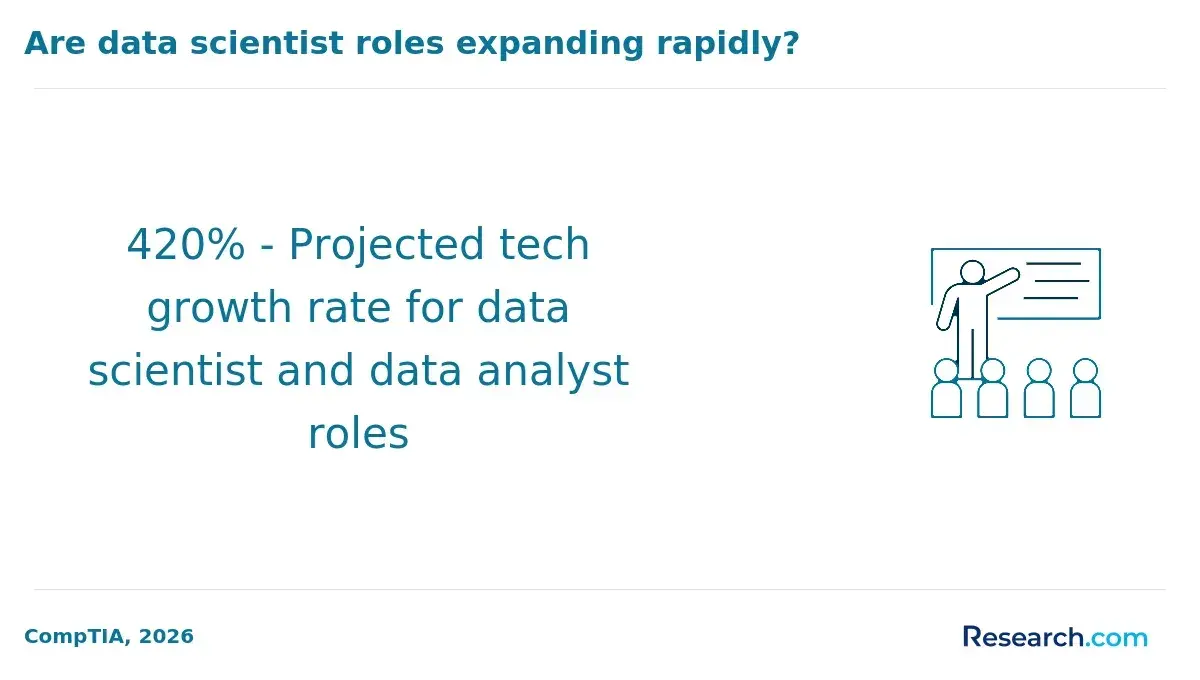
The U.S. Bureau of Labor Statistics forecasts a 35% employment growth for data scientists from 2022 to 2032, much faster than the average for all jobs. This trend is driven by increasing integration of AI across healthcare, finance, government, and technology sectors. HBCU graduates have particular advantages through diversity-focused hiring initiatives and should leverage internships and research projects to improve job placement.
Maintaining competitiveness in AI careers requires continuous learning and certifications in cloud computing, programming languages like Python, and AI frameworks. Beyond technical roles, opportunities include AI product management, ethical policy development, and auditing positions. Developing strong communication and leadership skills alongside technical proficiency can open pathways to management and strategic roles in AI deployment.
Other Things You Should Know About Artificial Intelligence
Graduates with Artificial Intelligence degrees from HBCUs often pursue careers in software development, data science, machine learning engineering, and AI research. Many also find opportunities in robotics, natural language processing, and cybersecurity. These fields leverage the programming, analytical, and problem-solving skills acquired during their studies.
In 2027, several HBCUs such as Howard University and North Carolina A&T State University are renowned for offering cutting-edge AI research opportunities. These institutions focus on innovative research in AI technologies, providing students with the chance to work alongside leading faculty in the field.
Ethics is a critical component of Artificial Intelligence education at many HBCUs, focusing on responsible AI development and deployment. Students learn about bias mitigation, data privacy, and the societal impacts of AI technologies. This prepares graduates to create AI systems that prioritize fairness and transparency.
Many HBCUs encourage Artificial Intelligence students to participate in internships, cooperative education, and research projects. These opportunities provide hands-on experience with real-world AI applications and enhance employability after graduation. Partnerships with tech companies and government agencies often facilitate such experiences.
References
- How HBCU Students Can Turn AI Training Into Job Offers — The HBCU Career Center https://www.thehbcucareercenter.com/blog/how-hbcu-students-can-turn-ai-training-into-job-offers
- AI and analytics from an HBCU perspective https://www.deloitte.com/us/en/what-we-do/capabilities/applied-artificial-intelligence/articles/ai-and-analytics-from-an-hbcu-perspective.html
- How to Apply to College | Legacy History Pride https://www.shoplhp.com/pages/hbcu-college-application-guide-what-you-need-to-know
- Howard University Rolls Out Intro To AI Course To Equip Students For Careers In AI-Powered Engineering - AfroTech https://afrotech.com/howard-university-rolls-out-intro-to-ai-course
- Artificial Intelligence - Meharry Medical College https://meharry.edu/program/artificial-intelligence/
- Leading the Way: Top HBCUs for Computer Science https://www.drkaidupe.net/leading-the-way-top-hbcus-for-computer-science
- Howard University Teams Up with Industry Experts to Launch Transformative Applied AI Course https://cea.howard.edu/articles/howard-university-teams-industry-experts-launch-transformative-applied-ai-course
- Preparing for Graduate School: What Students Need to Know https://wmsfranklinfoundation.org/preparing-for-graduate-school/
- HBCU Endowment Fund - Support Black College Education & Scholarships https://hbcuendowmentfund.org/scholarships
- North Carolina HBCU to Launch New Bachelor's Degree Program in Artificial Intelligence | The Journal of Blacks in Higher Education https://jbhe.com/2024/12/ncat-to-launch-new-bachelors-degree-in-artificial-intelligence/