2027 Best On-Campus Bachelor's Degrees in Artificial Intelligence

Co-Founder and Chief Data Scientist
Entering the rapidly evolving tech workforce without a foundation in artificial intelligence often leaves professionals at a disadvantage as many industries integrate AI-driven solutions. Those with unrelated undergraduate degrees face challenges finding accredited programs that balance theoretical knowledge and hands-on experience. On-campus bachelor's degrees in artificial intelligence offer structured learning environments, accessible resources, and networking opportunities crucial for career pivots. This article reviews the best U. S. on-campus bachelor's programs in artificial intelligence for 2026, guiding prospective students toward flexible, accredited pathways that optimize employability and technical expertise in this competitive field.
Key Things You Should Know
- On-campus bachelor's degrees in Artificial Intelligence have grown by 35% since 2024, reflecting rising demand in AI-related careers across technology, healthcare, and finance industries.
- Top programs integrate hands-on experience with machine learning, robotics, and ethical AI, equipping graduates with skills aligned to the 15% annual job growth in AI roles through 2030.
- Average starting salaries for AI bachelor's graduates in 2026 range from $75,000 to $95,000, outperforming many other STEM fields in early career compensation.
What are the top accredited universities offering on-campus bachelor's degrees in artificial intelligence?
Top accredited universities offering on-campus bachelor's degrees in artificial intelligence include Carnegie Mellon University, Massachusetts Institute of Technology (MIT), and Stanford University. Carnegie Mellon's School of Computer Science is consistently ranked #1 for AI specialization, providing a research-driven undergraduate experience that combines practical AI applications with foundational computer science skills.
The best colleges for on-campus bachelor's degrees in artificial intelligence in the United States offer diverse curricula. MIT integrates AI with engineering, cognitive science, and ethics, granting students access to advanced laboratories and industry partnerships in the Boston tech corridor. Stanford's program leverages its Silicon Valley location to provide valuable internship and networking opportunities while focusing on AI theory, algorithm design, and real-world challenges such as autonomous systems and natural language processing.
Other institutions expanding AI-focused bachelor's degrees include the University of California-Berkeley and Georgia Institute of Technology, both offering specialized tracks addressing technical and ethical aspects of AI development. When selecting a program, students should consider faculty expertise, research facilities, and industry connections.
Choosing accredited programs recognized by ABET or similar organizations ensures alignment with academic rigor and current industry standards. For those interested in practical career paths, exploring applied artificial intelligence through resources like applied artificial intelligence can provide valuable insights into potential career opportunities in this evolving field.
What skills and knowledge will you gain from an on-campus AI bachelor's degree?
An on-campus bachelor's degree in Artificial Intelligence equips students with essential skills in programming, data analysis, and algorithm development. Core programming languages include Python, R, and Java, which are vital for creating AI models. Key study areas cover machine learning, deep learning, and natural language processing, all recognized by LinkedIn's 2024 Jobs on the Rise report as the most in-demand skills for entry-level AI roles.
Students gain extensive knowledge from artificial intelligence bachelor's programs that extend beyond coding, learning to design, test, and optimize AI systems. This includes neural networks, reinforcement learning, and computer vision, with practical projects involving chatbots, recommendation engines, and autonomous agents to solve real-world challenges.
Mathematical foundations such as linear algebra, calculus, and statistics reinforce students' ability to analyze and model complex datasets. Ethics and AI fairness are incorporated into the curriculum to prepare students for addressing bias, privacy, and accountability issues in AI deployment.
Hands-on labs and internships provide experience with frameworks like TensorFlow and PyTorch. Interdisciplinary exposure involving robotics, cognitive science, and data engineering further broadens understanding of AI's impact across industries. This comprehensive education hones critical thinking and problem-solving skills crucial for adapting within a dynamic AI landscape.
Graduates are well-prepared for diverse AI careers, including research and software development, and meet the growing employer demand for skilled professionals. For those weighing options on expenses, information about mechanical engineering degree online cost can offer useful cost comparisons.
What are the admission requirements and prerequisites for on-campus AI bachelor's programs?
Admission criteria for on-campus artificial intelligence bachelor programs typically emphasize a strong foundation in mathematics and computer science. Applicants are expected to have completed high school coursework in advanced mathematics, including calculus and statistics, alongside programming and data structures. Students admitted to top-tier AI programs often showcase SAT scores above 1520 and an average of 4.2 advanced math and computer science classes in high school, illustrating the competitive academic profile required for acceptance.
Standardized test scores remain important, even as some schools adopt optional testing policies. High SAT or ACT results help indicate readiness for the quantitative challenges of AI curricula. Beyond test scores, many programs require letters of recommendation that focus on analytical skills and academic performance in STEM areas. Personal statements should highlight motivation and prior experience related to artificial intelligence or computer science, enhancing a candidate's application.
Prerequisites for applying to on-campus artificial intelligence bachelor degrees often include coursework or participation in activities like coding boot camps, robotics clubs, or math competitions. Internships or relevant work experience can improve chances but are seldom mandatory. Additionally, problem-solving abilities and logical thinking demonstrated through interviews or supplemental assessments play a key role. Students interested in engineering-focused AI studies might explore online engineering programs as a flexible alternative to traditional on-campus options.
How long does an on-campus AI bachelor's degree take to complete, and what is the typical cost?
On-campus artificial intelligence bachelor's degree programs in the US typically span four years of full-time study. This duration encompasses foundational courses, specialized AI classes, and often a capstone project or internship. Some students may shorten this timeframe through advanced placement credits or dual enrollment, while others balancing work or attending part-time may extend their studies. The duration of on-campus artificial intelligence bachelor's degree programs in the US varies accordingly.
Tuition fees differ widely by institution type and location. Private universities with specialized AI bachelor's programs commonly charge between $55,000 and $65,000 annually, leading to total costs of $220,000 to $260,000 over four years before financial aid. Public universities usually offer significantly lower tuition, especially for in-state residents, though they might include additional fees and have fewer specialized AI offerings. Prospective students should also consider living expenses, materials, and technology needs when evaluating costs.
Comparing typical tuition and fees for on-campus artificial intelligence bachelor's degrees in the United States requires careful consideration of financial aid options and program flexibility. Investigate whether credits from AP exams or community colleges can reduce study time. For those exploring further study, some students choose online data science programs as a flexible continuation of their AI education.
Conducting thorough research on program length, costs, and credit transfer policies helps students make informed decisions about their AI education path.
What career paths and job titles are available to AI bachelor's degree graduates?
Graduates with a bachelor's degree in artificial intelligence often enter rapidly expanding fields such as machine learning engineering, AI research science, computer vision engineering, and AI product management. These roles respond to growing demand in sectors like technology, healthcare, automotive, and finance. Machine learning engineers develop algorithms enabling systems to learn and improve, requiring programming and data analysis expertise. AI research scientists create new AI methods, typically in academic or corporate R&D settings. Computer vision engineers design systems for interpreting visual data, vital to applications like autonomous vehicles and medical imaging.
AI product managers coordinate technical and business teams to deliver AI-driven solutions, needing both market insight and AI knowledge. Other career options include natural language processing engineer, robotics engineer, data scientist, or AI ethics specialist, chosen based on skills and interests.
Entry-level salaries for these positions generally range from $70,000 to $95,000 per year, with increases tied to experience and specialization. Building practical skills through internships, coding projects, and research is crucial. Ethical awareness and understanding regulatory impacts on AI technologies are increasingly important to career growth. Strategic career planning aligned with personal strengths enhances the value of an artificial intelligence bachelor's degree in advancing job prospects and professional development.
What is the job outlook and salary potential for artificial intelligence degree holders in the U.S.?
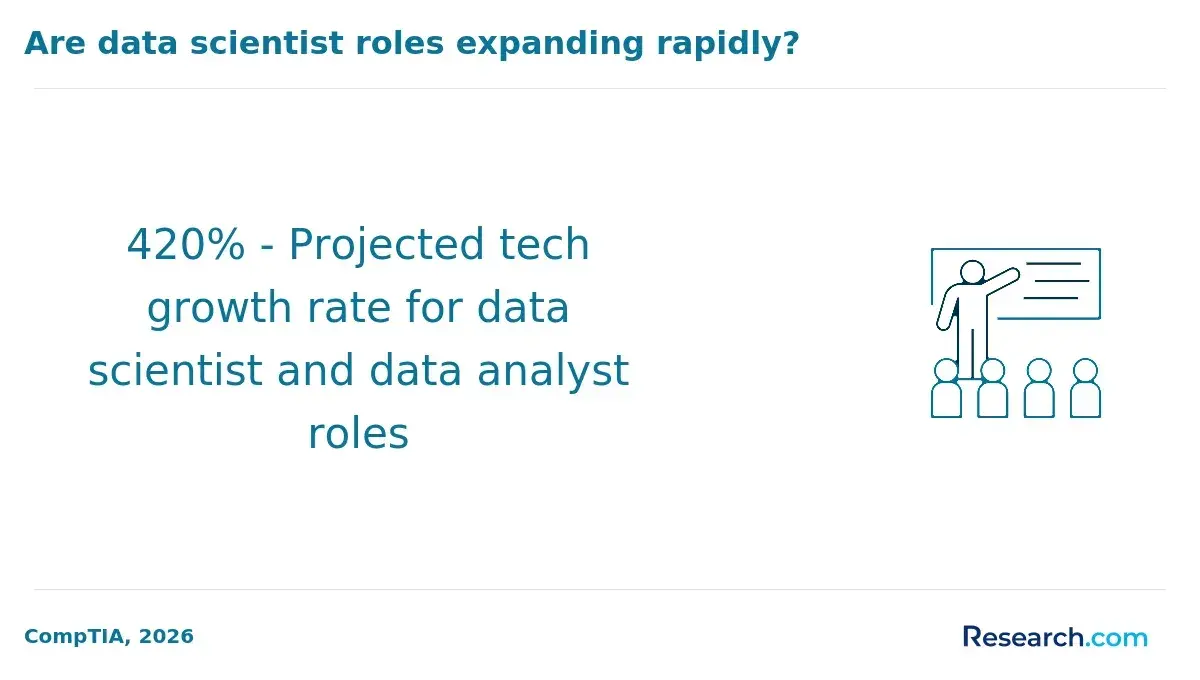
Job prospects for artificial intelligence degree holders in the U.S. remain exceptionally strong and continue to grow rapidly. Entry-level AI engineers command starting salaries between $95,000 and $120,000, according to Glassdoor's 2025 Career Trends report. Mid-career professionals earn significantly more, ranging from $150,000 to over $200,000, reflecting a salary growth trajectory about 35% higher than that of general computer science graduates.
Skilled AI professionals are in demand across healthcare, finance, automotive, robotics, and technology sectors. Career paths include roles such as AI research scientists, machine learning engineers, data scientists, and AI product managers. Specializations in natural language processing or computer vision often lead to work in cutting-edge fields like autonomous vehicles or virtual assistants, usually accompanied by higher salaries.
Location and company size influence compensation, with tech hubs like San Francisco, Seattle, and New York offering top salaries but a higher cost of living. Entry-level jobs may include equity or bonuses that enhance total pay. Internships and hands-on projects during studies improve employability and accelerate salary growth.
The U.S. Bureau of Labor Statistics projects faster-than-average growth for computer and information research roles, including AI specialists, emphasizing sustained demand. Pursuing an on-campus bachelor's degree in artificial intelligence opens pathways to high-paying and dynamic careers across industries.
How do on-campus AI programs differ from online or hybrid degree options?
On-campus AI programs offer distinct advantages over online or hybrid options, especially in building hands-on skills and career readiness. A 2024 survey by The Chronicle of Higher Education found that 78% of employers prefer candidates with on-campus AI degrees. This preference is largely due to the access students have to advanced labs, collaborative research, and direct networking with faculty, which together create a competitive edge in the job market.
Campus-based programs provide students with state-of-the-art facilities that support practical experience with AI hardware and software. Projects involving robotics or neural networks particularly benefit from specialized resources often unavailable to online learners. This immersive environment fosters not only technical skills but also critical thinking through face-to-face engagement with professors and peers.
Networking opportunities on campus are invaluable. Regular contact with faculty active in AI research can open doors to internships, co-authored publications, and exclusive job opportunities. Additionally, career fairs and professional AI clubs help students build essential industry connections that are harder to establish remotely.
Students aiming for rigorous training and strong employer recognition should consider the immersive on-campus experience, which uniquely integrates technical practice, mentorship, and professional development.
What professional certifications or credentials complement an AI bachelor's degree?
Professional certifications add significant value to an artificial intelligence bachelor's degree by validating specialized skills and improving employability in competitive sectors. The 2024 AI Certification Market Report by CompTIA highlights three top certifications for AI graduates: Google Cloud Professional Machine Learning Engineer, AWS Certified Machine Learning Specialist, and IBM AI Engineering Professional Certificate. These credentials highlight expertise in applying AI within major cloud platforms and development frameworks.
The Google Cloud certification emphasizes designing and productionizing machine learning models using Google Cloud technologies, essential for scalable AI roles. AWS's certification focuses on deploying machine learning solutions on Amazon Web Services, serving companies reliant on AWS infrastructure. IBM's certificate addresses foundational AI topics such as deep learning and reinforcement learning, offering credible industry recognition.
Complementary certifications in data science and software engineering also enhance employability. Skills in Python programming, data analysis, and cloud computing are integral to AI workflows. Certifications like Microsoft Certified: Azure AI Engineer Associate suit candidates targeting hybrid cloud environments.
Employers prefer candidates who can demonstrate skills beyond academic degrees, especially with certifications aligned to current industry tools. Preparing for certification exams requires hands-on experience, familiarity with AI toolkits, and understanding machine learning algorithms. Early planning of your certification path during or after your degree improves job market readiness and earning potential.
How should you evaluate and compare different on-campus AI bachelor's programs?
When selecting on-campus bachelor's programs in artificial intelligence, focus on three key factors: curriculum relevance, industry partnerships, and graduate success. Review program content carefully to ensure coverage of core AI subjects like machine learning, neural networks, data science, and ethics, combined with hands-on projects or research opportunities. Programs blending computer science, mathematics, and cognitive science courses tend to equip students with a versatile skill set.
Industry connections play a critical role. Data from the National Center for Education Statistics shows AI programs engaged in active partnerships have a 92% employment rate within six months of graduation, compared to 74% without such ties. Inquire about internships, co-op programs, and guest lectures offered through these partnerships to gain practical experience and networking advantages.
Graduate outcomes offer valuable insight. Request detailed job placement data, types of roles alumni secure, and average starting salaries. Leading programs publish these metrics or organize career fairs targeting AI employers. Faculty expertise, research opportunities, and campus facilities also impact education quality but should be viewed alongside career indicators.
Location matters-programs near tech hubs or AI research centers offer local opportunities. Additionally, assess available student support, such as mentorship and career advising, which can greatly influence your career preparation and success.
What are the accreditation standards and quality indicators for AI bachelor's degree programs?
ABET accreditation is a key quality marker for on-campus bachelor's degrees in artificial intelligence, held by just 34 U.S. universities, reflecting the program's high standards. Choosing an ABET-accredited program ensures a well-rounded curriculum covering algorithms, data structures, machine learning, AI ethics, and practical projects. These programs also must continuously assess and improve student outcomes with clear performance metrics and industry-relevant skills.
Faculty expertise in AI research and industry connections further enhances program quality. Institutions connected to active research labs or technology companies provide valuable opportunities for internships and capstone projects, which are crucial for hands-on experience and career preparation. Students should prioritize programs offering these practical components to boost their readiness for AI careers.
Accreditation also means that credits are widely recognized and transferable, an important factor for both employment and graduate school admission. Graduates from non-accredited programs may face limited recognition and a weaker competitive position in the job market. For those pursuing careers in AI development, data science, or advanced research, enrolling in an ABET-accredited program is a reliable step toward credibility and long-term success.
Other Things You Should Know About Artificial Intelligence
Students pursuing a bachelor's degree in artificial intelligence should focus on programming languages such as Python, Java, and C++. Python is particularly important because of its extensive libraries and frameworks for machine learning and data analysis. Java and C++ provide strong foundations in software development and performance optimization, key for AI systems engineering.
Mathematics is fundamental in artificial intelligence education, especially fields such as linear algebra, calculus, probability, and statistics. These areas help students understand machine learning algorithms, data structures, and model optimization. A strong math background enables effective problem-solving and innovation in AI research and applications.
Yes, many on-campus AI programs incorporate practical components such as labs, projects, internships, and research opportunities. These experiences allow students to apply theoretical knowledge to real-world AI challenges, building skills in data processing, model development, and ethical considerations in AI deployment.
Admission requirements for an on-campus AI bachelor's degree in 2027 typically include a high school diploma or equivalent, strong proficiency in mathematics and computer science, standardized test scores (if applicable), letters of recommendation, and a statement of purpose detailing interest in AI. Each institution may have specific requirements.
References
- International Bachelor of Science in AI https://psl.eu/en/education/international-bachelor-science-ai
- Key Skills Gained from a Bachelor of Science in Artificial Intelligence https://tetr.com/blog/key-skills-gained-from-a-bachelor-of-science-in-artificial-intelligence
- 11 Best AI Certifications in 2025 to Deepen Your Technical Knowledge | DigitalOcean https://www.digitalocean.com/resources/articles/ai-certifications
- Accreditation and AI: Ensuring Quality in an Era of Smart Learning https://www.qahe.org/article/accreditation-and-ai-ensuring-quality-in-an-era-of-smart-learning/
- Admission on the bachelor’s programme in Artificial Intelligence https://www.sdu.dk/en/uddannelse/bachelor/artificial-intelligence-vejle/adgangskrav
- How Long Do AI Courses Take? https://www.nobledesktop.com/learn/ai/how-long-do-ai-courses-take
- Top 10 AI certifications and courses for 2025 https://www.techtarget.com/whatis/feature/10-top-artificial-intelligence-certifications-and-courses
- Top College Degrees That Will Land You the Highest-Paying AI Jobs in 2026 https://www.investopedia.com/top-college-degrees-that-will-land-you-the-highest-paying-ai-careers-in-2026-11923863
- Undergraduate degree in Artificial Intelligence Engineering https://web.ua.es/en/grados/grado-en-ingenieria-en-inteligencia-artificial/quality-standards.html
- AI Course Duration: How Long Does It Take to Become AI-Ready? https://rcm.ac.in/ai-course-duration-how-long-does-it-take-to-become-ai-ready/