2027 Core Courses in AI Master's Programs Explained

Co-Founder and Chief Data Scientist
Many prospective graduate students with unrelated undergraduate degrees face uncertainty about which core courses will best prepare them for a career in AI. This challenge is especially pressing for those seeking flexible, accredited programs that effectively bridge knowledge gaps. Without clear guidance, navigating myriad course options can lead to wasted time and resources. Understanding the foundational subjects prioritized by top AI master's programs in 2027 helps clarify these choices.
This article examines the essential core courses featured in current AI curricula, offering insights to help readers identify programs aligned with practical industry demands and successful career transitions.
Key Things You Should Know
- Core courses in AI master's programs in 2026 emphasize machine learning fundamentals, ethical AI, and data management, reflecting demands of 45% more AI-related jobs since 2024.
- Programs integrate practical skills with theory, including hands-on projects in deep learning frameworks and natural language processing, vital for 80% of AI roles.
- Ethics and bias mitigation are mandatory, with 68% of institutions updating curricula to address AI's societal impacts and regulatory compliance by 2025.
What are the core courses typically required in AI master's programs across the United States?
Core courses in AI master's programs in the United States emphasize foundational and applied knowledge essential for success in the field. Students typically complete mandatory coursework in machine learning, covering algorithms, statistical models, and neural networks to develop systems that improve through data exposure. A required curriculum for AI master's degrees across the US also includes data structures and algorithms to ensure proficiency in designing efficient computational processes.
Mathematics courses, such as linear algebra, probability, and statistics, play a crucial role, providing theoretical foundations for AI models. Optimization techniques are often required to equip students with problem-solving skills for complex scenarios. Natural language processing (NLP) and computer vision courses are common, addressing the growing demand for language-based systems and image data analysis.
Many programs integrate AI ethics to discuss responsible technology deployment. Practical experience is gained through capstone projects or research seminars, allowing students to apply theory in real-world challenges and collaborate across disciplines. Those interested in exploring related fields may find valuable options through a computer science accelerated program.
According to LinkedIn's Jobs Report, AI and machine learning skills show a 74% year-over-year growth in demand, underlining the importance of mastering this curriculum for strong career prospects.
How do online and campus-based AI master's programs differ in their curriculum and delivery format?
Online and campus-based artificial intelligence master's programs vary significantly in curriculum design between online and campus-based artificial intelligence master's programs and delivery methods. Online programs often provide asynchronous learning, featuring recorded lectures and digital resources that suit working professionals and remote learners. By contrast, campus-based courses offer structured, synchronous classes with in-person interactions, enabling hands-on activities such as labs and group projects.
Both delivery methods cover essential topics like machine learning, neural networks, natural language processing, and AI ethics. Campus programs typically include more practical experiences through access to university research labs and direct mentorship. Online courses utilize virtual labs and cloud platforms to simulate hands-on environments, prioritizing scalability and accessibility. This difference in delivery methods and learning experiences in online versus traditional AI master's courses can influence the student experience significantly.
Enrollment in online computer science and related degrees has grown, representing 32% of all master's enrollments in the U.S. This trend reflects the increasing demand for flexible AI education options. Students should consider their learning style and career goals; those seeking immersive research and networking may favor campus programs, while self-motivated learners balancing work might prefer online offerings.
Assessments also differ: campus-based programs use timed exams and in-person presentations, whereas online courses emphasize project submissions and open-book tests to reduce academic dishonesty. For those interested in the cheapest online mechanical engineering degree and related flexible degrees, exploring online options could offer valuable insights.
What are the admission requirements and prerequisites for entering an accredited AI master's program?
Admission requirements for accredited AI master's programs generally include a bachelor's degree in computer science, engineering, mathematics, or a related technical field. Many applicants need foundational coursework in linear algebra, calculus, probability, statistics, and programming. A minimum GPA around 3.0 on a 4.0 scale is often expected. While some programs still request Graduate Record Examination (GRE) scores, many have made this optional or removed it entirely.
Work experience in STEM areas greatly enhances applications. The Council of Graduate Schools 2024 survey reveals that 68% of admitted students report relevant prior experience, such as software development, data analysis, machine learning projects, or internships. This practical background shows technical skills and preparedness for graduate-level study, a critical factor for prerequisites for entering a top AI master's degree.
Strong letters of recommendation and thoughtful statements of purpose are essential. Successful candidates highlight their interest in AI, career goals, and specific research or application areas. Some programs ask for portfolios with coding projects, research papers, or AI contributions. Prerequisites vary; some offer conditional admit with bridge courses for applicants lacking certain skills. A computer science background is usually required, but candidates with strong math and programming might be admitted with extra coursework.
International students must demonstrate English proficiency through TOEFL or IELTS scores. Overall, academic credentials, demonstrated technical expertise, and relevant experience form the core criteria for admission. For those exploring affordable pathways, reviewing degrees in ai can be helpful.
Which accreditation bodies and standards validate AI master's programs, and why does accreditation matter?
AI master's programs in the U.S. rely heavily on accreditation bodies for AI master's programs such as ABET (Accreditation Board for Engineering and Technology) and regional accreditors like the Higher Learning Commission (HLC). ABET accreditation, specifically tailored for computer science and closely related fields, ensures that a program meets stringent standards in curriculum design, faculty qualifications, and student outcomes. This accreditation significantly affects the perceived program quality and graduates' employability.
The importance of accreditation standards in AI education is clear from outcomes data: 94% of graduates from ABET-accredited computer science programs find employment within six months, compared to only 78% from non-accredited programs. Regional accreditors validate the institution's overall quality, which is critical for federal financial aid eligibility and credit transferability. Specialty accreditation like ABET's focuses on technical rigor in areas vital to AI, such as machine learning and algorithms, enhancing graduate readiness.
Prospective students should verify program accreditation but also consider industry partnerships and curriculum relevance. Some programs without ABET accreditation may still offer strong career support and specialized endorsements that improve outcomes. Those interested in related fields might explore affordable options like a cybersecurity degree online to broaden their expertise and job prospects.
How long does it take to complete an AI master's degree, and what are the typical costs?
Completing a master's degree in artificial intelligence typically requires 1.5 to 2 years of full-time study, though part-time or online programs may extend this to 3 or more years to accommodate working professionals. Curricula generally include 30 to 36 credit hours, combining core AI courses with electives and a capstone or thesis project.
Costs vary widely depending on whether the institution is public or private, residency status, and program format. The average total cost at private U.S. universities ranges from $80,000 to $120,000, covering tuition, fees, and related expenses but excluding living costs. Public universities often reduce costs by 30% to 50% for in-state students.
Return on investment usually breaks even within 3 to 4 years after graduation, driven by the strong demand for AI skills across industries. Financing options include federal student loans, employer tuition assistance, and fellowships to lessen out-of-pocket expenses. Prospective students should carefully weigh program length and costs against career objectives and personal circumstances.
Students managing employment alongside studies should expect longer completion times but benefit from spreading costs and maintaining income. Accelerated tracks or combined bachelor's-master's programs can allow completion in under two years with lower overall expenses.
What career roles and job titles do AI master's graduates typically pursue after graduation?
Graduates of AI master's programs often secure roles such as machine learning engineer, data scientist, AI research scientist, AI software developer, and AI product manager. Machine learning engineer positions lead the sector, showing a 35% year-over-year increase in job postings, according to Dice Tech Jobs Report. These engineers design and deploy models enabling systems to learn from data, making them essential in tech companies and research labs.
Data scientists utilize AI methods to analyze complex datasets across finance, healthcare, and marketing. AI research scientists develop new algorithms and theoretical frameworks, typically within academic or corporate research environments. AI software developers integrate AI models into applications, combining programming skills with neural networks and natural language processing knowledge.
Beyond technical roles, AI product managers merge technical expertise with business strategy to steer AI product development and deployment. Emerging roles in AI ethics and policy focus on responsible AI use and regulatory compliance. Industries require different specializations: autonomous vehicle engineers work on computer vision, while healthcare analysts emphasize predictive modeling. Tailoring skills toward reinforcement learning or computer vision enhances job prospects.
Building a strong portfolio alongside internships related to AI projects improves employability. Active involvement in research publications or open-source contributions bolsters candidacies for pioneering roles in AI innovation and development.
What is the current job outlook and salary potential for AI master's degree holders in 2027?
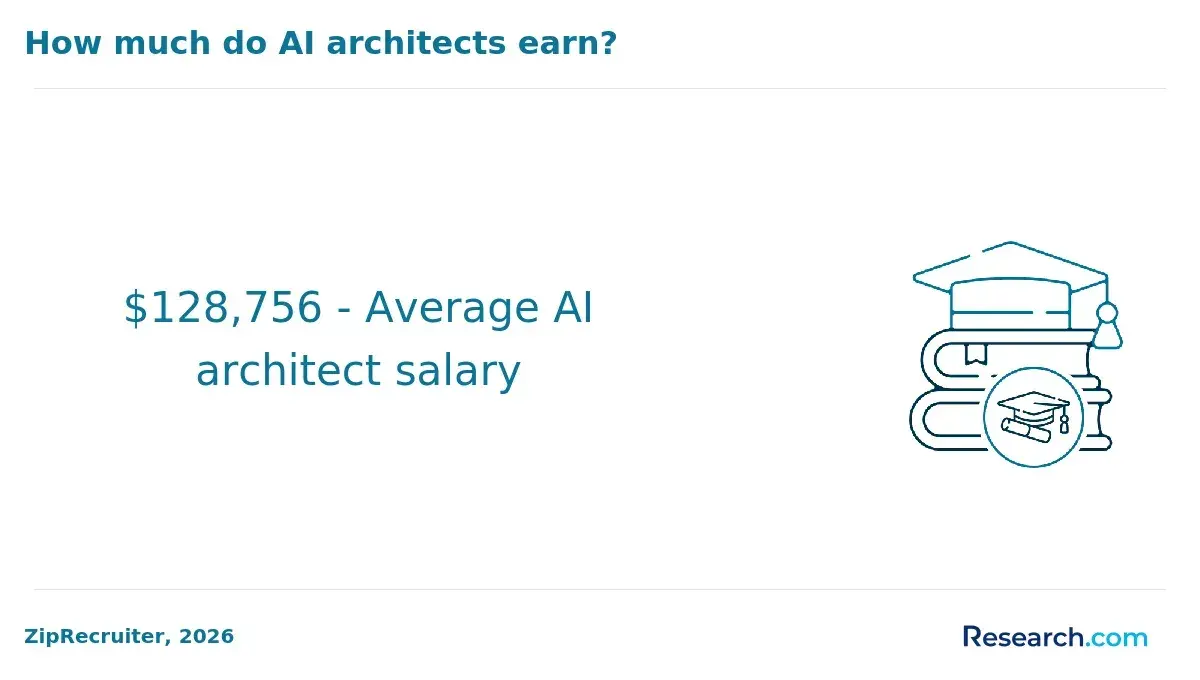
Job prospects for master's degree holders in artificial intelligence continue to grow strongly, driven by advances in machine learning, data analytics, robotics, and automation. Data from the U.S. Bureau of Labor Statistics indicates AI specialists with a master's degree earn an average annual salary of $156,000, a 28% premium over those holding only a bachelor's degree in similar roles. This underscores the high value employers place on advanced expertise and specialized training.
Growth in AI-related employment outpaces many other tech areas, supported by expanding AI efforts in healthcare, finance, autonomous vehicles, and cybersecurity. Master's graduates typically qualify for senior technical and research roles such as AI research scientist, machine learning engineer, and data scientist-positions that offer higher salaries and increased strategic responsibilities.
Location matters: tech hubs like San Francisco, Seattle, and Boston tend to offer salaries above the national average, though cost of living varies significantly. Professionals transitioning from software engineering or data analytics to an AI master's can expect notable boosts in earning potential. Maintaining skills with the latest AI frameworks and gaining real-world experience further enhance career and salary prospects.
Given these trends and salary insights, a master's degree in AI remains a valuable investment for those aiming to advance in this competitive, evolving sector.
How do AI master's programs incorporate machine learning, deep learning, and neural networks into their coursework?
AI master's programs typically sequence core courses starting with machine learning fundamentals, including algorithms like decision trees, support vector machines, and clustering methods. Students then progress to deep learning, studying convolutional and recurrent neural networks. This structured approach builds a strong theoretical foundation alongside practical skills before moving to advanced architectures.
Hands-on projects using frameworks such as TensorFlow or PyTorch are essential, allowing students to develop systems like image recognition or natural language processing models based on real-world data. Electives often cover specialized areas like reinforcement learning or generative adversarial networks that align with current industry demands.
Deep learning and neural networks are emphasized throughout programs, not as optional topics but as critical competencies. This focus matches the job market, where over 60% of AI roles require these skills, according to Indeed's AI Skills Report 2024. Graduates are prepared for careers involving speech recognition, autonomous systems, and other neural network applications.
Some programs integrate AI applications across disciplines such as healthcare and robotics, showing how neural networks underpin diverse fields. Prospective students should look for curricula that stay current with job market trends and offer practical training to bridge academic knowledge with real-world employment needs.
What professional certifications or industry credentials can complement an AI master's degree?
Professional certifications and industry credentials greatly increase the value of an AI master's degree in today's job market. Certifications like Google Cloud AI Engineer and AWS Certified Machine Learning Specialty are highly respected by employers. They demonstrate practical skills in deploying machine learning models and managing scalable AI solutions in cloud environments.
Additional credentials, such as Microsoft Certified: Azure AI Engineer Associate and IBM AI Engineering Professional Certificate, build on academic knowledge by emphasizing hands-on experience. These certifications often specialize in areas like natural language processing, computer vision, or automated decision-making, allowing graduates to target specific industry niches.
Combining a master's degree with relevant certifications can significantly enhance earning potential. Coursera's 2024 Skills Report highlights that professionals with both credentials earn about 22% more on average than those with only a degree. This premium reflects the growing demand for verified technical expertise beyond theoretical understanding.
For both graduates and working professionals, certifications address the gap between academic theory and real-world AI applications by providing structured learning paths and practical projects. Selecting certifications aligned with career goals-whether data scientist, AI engineer, or ML ops specialist-helps optimize job prospects.
Complementing an AI master's program with these industry-recognized certifications offers credible proof of skills essential for competitive positions in the evolving artificial intelligence job market.
How should prospective students evaluate and compare different AI master's programs based on faculty expertise and industry partnerships?
Prospective students aiming to advance in AI should carefully evaluate faculty expertise by reviewing professors' academic credentials, research contributions, and industry impact. Faculty involved in leading-edge AI studies or with strong publication records in reputable journals and conferences often deliver superior instruction and mentorship. Programs highlighting faculty participation in significant AI projects or patents typically indicate deeper academic and practical knowledge.
Industry partnerships further enhance skill development and employment opportunities. According to the Graduate Management Admission Council 2024 survey, AI master's programs with active industry collaborations report 89% of graduates employed in their field within three months, compared to 71% for programs lacking such ties. These partnerships frequently offer internships, sponsored projects, and direct connections to employers, improving career pathways.
It is important to investigate partner organizations and the collaboration types. Partnerships with major tech companies often provide internships or co-op experiences, while ties to startups and research labs offer chances to engage in innovative product development. Programs without strong industry links might focus on theory but place graduates at a disadvantage for immediate job placement.
Additional factors include faculty accessibility and mentoring roles, which contribute to personalized education. Reviewing professional networks and alumni outcomes can help gauge program effectiveness. Students should inquire about recent graduates' employment sectors and how industry ties support these results.
Combining faculty strength with robust industry partnerships offers strong assurance of quality education and career advancement for AI master's candidates. For more insights, visit the Graduate Management Admission Council.
Other Things You Should Know About Artificial Intelligence
Yes, most AI master's programs include coursework on the ethics of artificial intelligence. Topics typically cover bias in algorithms, privacy concerns, and the societal impact of AI technologies. This focus prepares students to develop responsible AI systems that align with legal and moral standards.
Graduate students often engage in research projects involving natural language processing, computer vision, robotics, and reinforcement learning. Many programs offer access to labs and partnerships with industry leaders, enabling hands-on experience with cutting-edge AI challenges. This research experience is critical for those considering doctoral studies or industry R&D roles.
Absolutely, AI's broad applicability allows graduates to work in fields like healthcare, finance, autonomous systems, and marketing analytics. The interdisciplinary nature of AI programs equips students with skills to collaborate across diverse sectors, combining domain knowledge with AI expertise for innovative solutions.
Prerequisites often include foundational knowledge in mathematics, statistics, and computer science. Some 2027 programs may also offer pathways for students lacking a technical background. For more information, explore our guide on pursuing an AI master’s without a technical background.
References
- Earn a Master’s in Artificial Intelligence in One Year - MastersInAI.org https://www.mastersinai.org/degrees/one-year-masters-in-ai/
- International Board for AI Accreditation | Professional Accreditation Body https://www.aiaccreditationboard.org/
- What You'll Learn in an AI MS Program | University of Bridgeport https://www.bridgeport.edu/news/masters-in-artificial-intelligence-program-curriculum/
- Artificial Intelligence and Academic Professions | AAUP https://www.aaup.org/reports-publications/aaup-policies-reports/topical-reports/artificial-intelligence-and-academic
- Application and admission - Master Artificial Intelligence https://www.uva.nl/shared-content/programmas/en/masters/artificial-intelligence/application-and-admission/international-prior-education/international-prior-education-foldout-menu.html
- New Use of Artificial Intelligence Accreditation Policy and Procedures - Middle States Commission on Higher Education https://www.msche.org/2025/07/02/new-use-of-artificial-intelligence-accreditation-policy-and-procedures/
- Artificial Intelligence and Accreditation: Does It Really Help Us? https://nac-us.org/2025/11/25/artificial-intelligence-and-accreditation-does-it-really-help-us/
- How Students Use AI: The Evolving Relationship Between AI and Higher Education https://www.digitaleducationcouncil.com/post/how-students-use-ai-the-evolving-relationship-between-ai-and-higher-education
- Top College Degrees That Will Land You the Highest-Paying AI Jobs in 2026 https://www.investopedia.com/top-college-degrees-that-will-land-you-the-highest-paying-ai-careers-in-2026-11923863
- ABET Accreditation and Artificial Intelligence - ABET https://www.abet.org/accreditation/ai-policy/