2027 Best AI Master's Degrees for Natural Language Processing Careers

Co-Founder and Chief Data Scientist
Many professionals with unrelated undergraduate degrees face challenges when trying to break into natural language processing (NLP) roles within the artificial intelligence sector. The rapidly evolving field demands expertise often rooted in specific technical training that traditional degrees may not provide. Bridging this gap requires flexible, accredited programs that equip learners with practical skills in NLP and AI technologies.
This article examines the best master's degrees tailored for NLP careers, focusing on programs that support career pivots through comprehensive curricula and accessible formats. It aims to guide readers toward informed decisions for advancing their careers in this dynamic industry.
Key Things You Should Know
- Master's programs in AI with a focus on natural language processing (NLP) have grown by 25% since 2024, reflecting industry demand for advanced language understanding and generation skills.
- Graduates in NLP-related AI fields report a median starting salary of $110,000 in 2025, with top employers including tech giants and research institutions.
- Curricula increasingly integrate interdisciplinary studies, combining AI theory, linguistics, and data science to meet evolving challenges in human-computer interaction and language technologies.
What are the best AI master's degrees for natural language processing careers?
The best master's degrees in AI for natural language processing careers combine strong theoretical foundations with access to significant industry partnerships. According to Stanford's AI Index 2025, 51 notable AI models released in 2024 came from industry, compared to only 15 from academia, highlighting the advantage of programs embedded in cutting-edge research and robust computational resources.
Top AI graduate programs for NLP professionals often maintain collaborations with leading technology companies, giving students hands-on experiences with real-world NLP projects. Schools such as Carnegie Mellon University and the University of Washington emphasize applied machine learning and industry lab partnerships that offer training on large datasets and advanced models.
Ideal programs feature specialized courses covering transformer architectures, deep learning, and language understanding while providing internships or research roles with industry partners. These experiences expose students to production-scale model deployment and optimization, increasing job market readiness.
Prospective students should also seek programs that list faculty actively engaged in NLP model development and offer resources like cloud computing credits or access to internal compute clusters. Without these, graduates might lack practical experience with frontier models.
Those interested in finding a best online computer science degree should consider these elements carefully to bridge academic study and practical application.
What should you look for in accreditation for AI and NLP master's programs?
Accreditation plays a pivotal role in selecting a master's program specializing in AI and natural language processing (NLP). Prospective students should prioritize programs holding accreditation from a U.S. Department of Education (USDE)-recognized accreditor. This institutional accreditation is vital not only for ensuring academic quality but also for qualifying students to access federal Title IV student aid.
According to the U.S. Department of Education's Database of Accredited Postsecondary Institutions and Programs (DAPIP), attending an institution without proper accreditation disqualifies students from this aid. Look for top regional accreditations for natural language processing graduate programs, such as the Higher Learning Commission (HLC) or Middle States Commission on Higher Education (MSCHE).
These agencies assess institutional quality, including faculty credentials, curriculum rigor, and student support services. While programmatic accreditations like ABET for computer science or engineering are less common in AI and NLP-specific degrees, programs demonstrating comprehensive, up-to-date coursework in core areas, such as machine learning and computational linguistics, along with hands-on research opportunities, indicate strong quality.
Verify accreditation status on official USDE or Council for Higher Education Accreditation (CHEA) websites to avoid unrecognized or international accreditors that may limit credit transfers and funding eligibility. For students seeking financial aid or future employer tuition reimbursement, institutional accreditation by a USDE-recognized body is essential.
Consider exploring options like the cheapest online master's mechanical engineering programs as part of broader STEM affordability choices.
What jobs can you get with an AI master's focused on NLP?
Graduates with an AI master's degree in natural language processing can find diverse roles across technology and data-driven sectors. Key positions include machine learning engineer, NLP scientist, data scientist, and software engineer specializing in language models. These experts develop algorithms that allow computers to interpret, understand, and generate human language effectively.
Natural language processing jobs with an AI master's degree also include chatbot developer, speech recognition engineer, and computational linguist. These roles focus on creating conversational agents, converting speech to text, and advancing language-based applications such as virtual assistants and sentiment analysis.
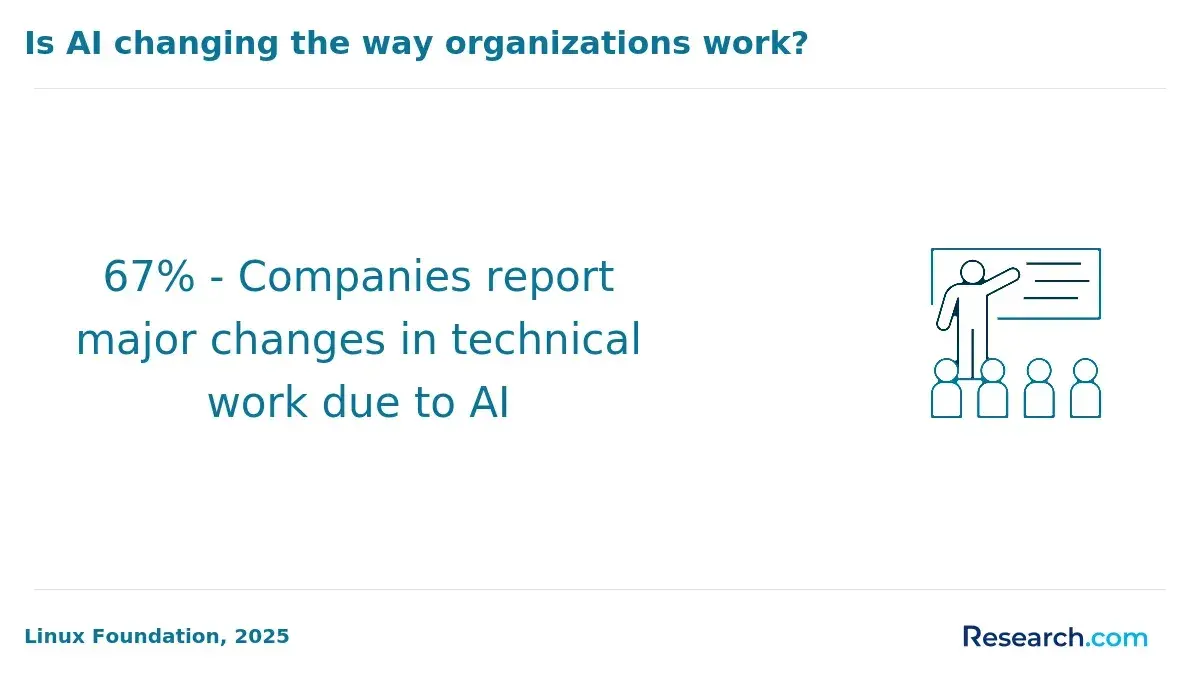
Industries like healthcare, finance, and marketing increasingly value NLP skills for tasks such as medical text mining, fraud detection, and targeted advertising. Demand for these competencies is growing rapidly; Lightcast's labor-market analytics note that "Generative AI" is a frequently requested skill in many U.S. job postings linked to software and data positions with an NLP focus.
Developing proficiency in Python and frameworks like TensorFlow or PyTorch, along with knowledge of transformer-based models such as GPT and BERT, significantly boosts employability. Students and professionals considering advanced study can explore a range of possibilities with AI degrees online to enhance their expertise.
What concentrations and courses matter most for natural language processing?
Concentrations critical for natural language processing master's degree specializations in AI programs include large language models (LLMs), retrieval systems, and multimodal NLP. Stanford's AI Index 2025 highlights language and multimodal model research as leading areas, making these essential in curriculum design.
Students should look for programs providing electives or special tracks focused on:
- Deep learning architectures for NLP, like transformers and attention mechanisms.
- Information retrieval and semantic search techniques that enable systems to grasp context and relevance.
- Multimodal processing that integrates text, speech, and visual inputs for complex data handling.
Core coursework must build strong foundations in machine learning, natural language understanding, and computational linguistics. Practical experience with large datasets and model fine-tuning using frameworks such as TensorFlow or PyTorch is vital. Given the fast-paced evolution of LLMs like GPT variants, courses covering prompt engineering, bias mitigation, and ethical AI use are increasingly important.
Essential topics also include sequence modeling, syntactic and semantic parsing, sentiment analysis, and dialog systems to prepare students for professional challenges. Graduates adept at managing ambiguous language, multilingual data, and real-time processing are highly sought after.
Programs incorporating hands-on projects with real-world datasets equip students to develop impactful NLP applications in sectors like healthcare, finance, and customer service. For those exploring AI education paths, it's helpful to compare offerings with those of related fields such as cybersecurity degrees.
Students seeking the best courses for NLP careers in AI should prioritize concentrations emphasizing cutting-edge neural models, multimodal integration, retrieval algorithms, and applied ethics to align with evolving research and industry needs.
How do online AI master's programs for NLP compare with on-campus programs?
Master's programs in artificial intelligence (AI) focusing on natural language processing (NLP) now offer quality and flexibility comparable to traditional on-campus options. Data from the U.S. Department of Education NCES indicates that most graduate students take at least one online course. This evolution benefits those managing professional, family, or geographic constraints without compromising curriculum depth.
On-campus AI programs provide direct use of facilities, in-person networking, and real-time faculty interaction, ideal for students valuing immersive collaboration or research. Alternatively, online programs utilize advanced digital platforms supporting live classes, forums, and virtual labs, delivering hands-on experience in NLP algorithms, machine learning, and programming with Python.
Consider the following when choosing between on-campus and online formats:
- Online programs often allow part-time study, suiting working professionals.
- On-campus programs typically offer quicker access to teaching assistants and face-to-face mentoring.
- Hybrid programs combine online coursework with on-site sessions for intensive projects.
Ensuring that an online AI master's program is accredited and offers essential NLP courses, such as computational linguistics and neural networks, is crucial. Aligning study choices with industry trends strengthens employability in the AI field. Both delivery modes prepare graduates well; the choice depends on learning style, career demands, and desired networking opportunities.
What are common admissions requirements for AI master's programs in NLP?
Admission into AI master's programs specializing in natural language processing (NLP) typically requires a blend of academic credentials, test scores, and language proficiency evidence. Most applicants hold a bachelor's degree in fields such as computer science, data science, linguistics, or mathematics, with proven quantitative skills through coursework in programming, algorithms, calculus, and linear algebra.
GRE scores are often requested, though some programs have waived this requirement recently. High performance in the GRE quantitative section can strengthen an applicant's profile. Letters of recommendation should emphasize research potential, technical expertise, or relevant professional experience in AI or NLP.
For non-native English speakers, meeting English-proficiency standards is essential. Many U.S. graduate programs set a minimum TOEFL iBT score around 90-100 to ensure students can manage the technical and linguistic demands of NLP studies. This aligns with ETS TOEFL program admissions requirement summaries for graduate admissions.
Additional application materials may include a statement of purpose, coding portfolios, research papers, or examples of practical experience in machine learning or language models. Selective programs might also expect prior research publications or internships in AI labs, reflecting the research-focused nature of the field.
How long do AI master's programs in NLP take, and what do they cost?
Master's programs in natural language processing (NLP) generally span 1 to 2 years of full-time study. Many universities offer part-time or online options, extending the duration to about 3 years to accommodate working professionals. Program length depends on curriculum depth, research components, and whether a thesis or project is required.
Tuition costs vary widely across institutions. According to the NCES "Trends in Graduate Education" tables, public universities typically charge between $10,000 and $25,000 annually for in-state students, while private non-profit schools often exceed $40,000 per year. For a 2-year public program, total costs usually range from $20,000 to $50,000, whereas private programs can reach $80,000 or more.
Additional fees for labs or technology access may apply, and living expenses vary by location. Financial aid options such as scholarships, assistantships, and employer tuition reimbursement can help offset costs, making private programs more accessible.
Prospective students should weigh affordability against program features like specialization and faculty expertise to align their educational choices with career goals in the field of artificial intelligence.
What programming and math prerequisites help you succeed in an NLP-focused master's?
Proficiency in Python plays a central role in succeeding in an NLP-focused master's program. According to GitHub's Octoverse 2024, Python remains the most-used language on the platform, making it essential for tasks such as implementing NLP algorithms, preprocessing data, and leveraging libraries like NLTK, SpaCy, and TensorFlow.
While knowledge of Java or C++ can help broaden understanding of NLP applications, it is seldom required. Strong mathematical foundations also contribute significantly to success. Key areas include:
- Linear algebra: Mastery of vectors, matrices, and tensors is vital for word embeddings and neural networks.
- Probability and statistics: Concepts like conditional probability and Bayes' theorem support language modeling and classification algorithms.
- Calculus: Understanding derivatives and gradients is necessary for optimizing machine learning models.
- Discrete mathematics: Graph theory and logic assist with parsing, syntax, and semantic tasks.
Developing practical skills in algorithm design and data structures enhances the handling of large text datasets efficiently. Experience with tools such as Jupyter notebooks, Git for version control, and cloud platforms adds real-world readiness. Prospective students and professionals transitioning to NLP benefit from preparatory coursework in machine learning, statistics, and programming, alongside targeted online courses focusing on Python and mathematics fundamentals.
Which certifications and credentials complement an NLP master's degree?
Certifications complementing an NLP master's degree increasingly emphasize emerging areas like generative AI and large language models (LLMs). Generative AI skills, highlighted by Coursera's 2025 Global Skills Report, are among the fastest-growing in demand, reflecting employer priorities.
Accredited certifications from industry leaders such as OpenAI and Google Cloud provide hands-on experience in prompt engineering, model fine-tuning, and deployment strategies. Professional certificates in machine learning and deep learning remain foundational, with programs like Stanford's Machine Learning certificate or Coursera's DeepLearning.AI specialization strengthening algorithmic expertise and practical skills critical for NLP roles.
Credentials in data engineering and cloud computing also play a key role. Certifications from AWS, Microsoft Azure, and Google Cloud Platform validate capabilities in building scalable data pipelines and automating infrastructure. Security certifications such as CISSP are increasingly relevant, particularly in industries like healthcare and finance, where data privacy and compliance are crucial for NLP applications.
In a competitive job market, employers seek candidates who blend theoretical knowledge with applied skills in state-of-the-art AI tools. Earning targeted, industry-recognized certifications enhances a graduate's profile and aligns with evolving labor market needs, as supported by credible data from technology providers and industry research.
What salary ranges and hiring demand can NLP master's graduates expect?
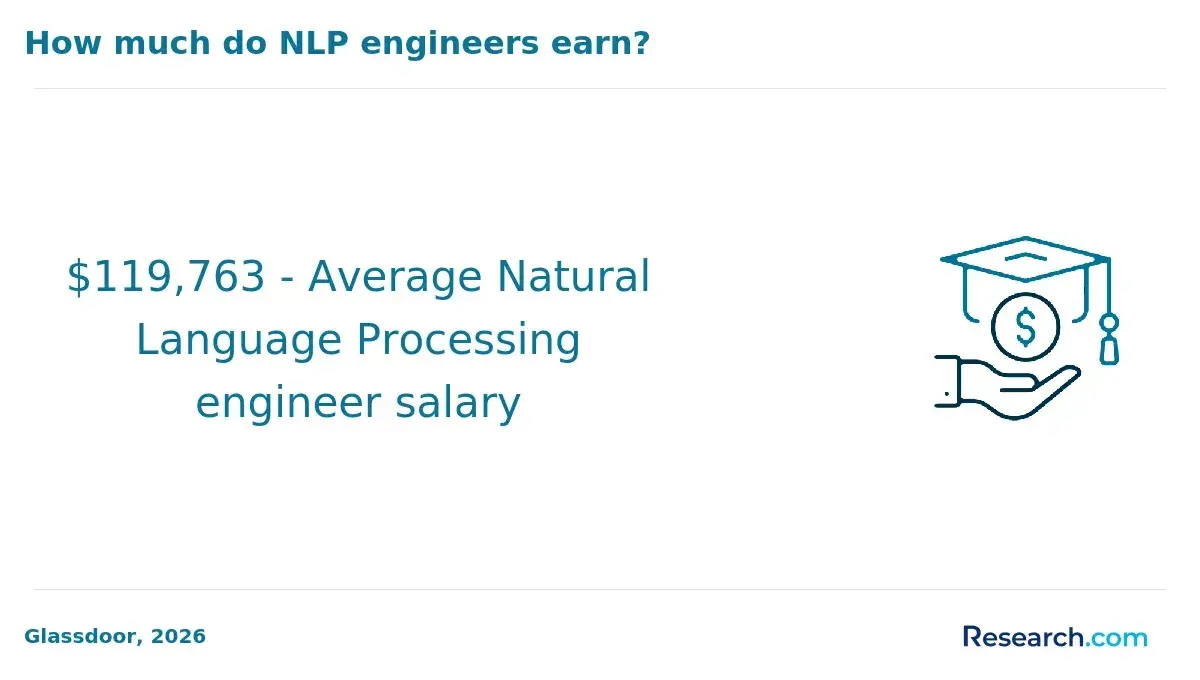
Graduates holding a master's degree with a focus on natural language processing (NLP) are entering a job market characterized by strong demand and competitive salaries. Computer and Information Research Scientists-a role closely tied to NLP and machine learning-earn a median annual wage of $145,080, according to the U.S. Bureau of Labor Statistics' Occupational Employment and Wage Statistics (May 2024). Entry-level NLP specialists typically receive salaries ranging from $90,000 to $110,000.
Industries actively hiring NLP professionals include technology, finance, healthcare, and government agencies. Job titles often vary, including research scientists, data scientists, and NLP-focused software engineers. Employers prioritize candidates skilled in Python programming, deep learning frameworks, linguistics, and algorithm design.
The expanding presence of conversational AI, automated text analysis, and language translation tools fuels growth in this sector. Virtual assistants and customer service chatbots frequently recruit NLP experts. Research-track positions in academia or industry labs can pay over $160,000 annually, especially for those with more than three years of experience.
Prospective students should seek internships and apply NLP projects to enhance their prospects. Combining NLP skills with adjacent disciplines in artificial intelligence typically improves salary potential and job versatility. High-paying opportunities tend to cluster in major tech hubs like Silicon Valley, Seattle, and Boston.
Other Things You Should Know About Artificial Intelligence
To stand out in a 2027 AI Master's program for NLP, students should focus on mastering deep learning frameworks like TensorFlow or PyTorch, acquiring strong Python programming skills, and gaining experience in data analysis. Familiarity with linguistics and domain-specific knowledge can further enhance career prospects in this field.
Many programs waive the GRE, but some still request it for admission or scholarship review. If required, schools usually list a minimum score and may accept scores from tests taken within five years. International applicants may also need TOEFL or IELTS results.
A typical AI master's program specializing in NLP in 2027 usually lasts 1 to 2 years. The duration may depend on the institution and whether the program is pursued full-time or part-time, affecting the overall completion timeline.
AI development requires attention to fairness, transparency, and privacy to prevent bias and misuse. Ethical AI ensures that algorithms do not reinforce discrimination and that users understand how decisions are made. Responsible AI also involves safeguarding data security and promoting accountability in automated systems.
References
- 9 Top NLP Certification Programs (2026 Rank, Cost, Pros, Cons + Guide) https://entrepreneurshq.com/nlp-certification/
- Natural Language Processing (NLP) - A Complete Guide https://www.deeplearning.ai/resources/natural-language-processing/
- Best AI Masters Online & On-Campus - AIDegreePrograms.org https://aidegreeprograms.org/rankings/best-ai-masters-programs/
- AI vs. Machine Learning: What You’ll Learn in an Online AI Master’s Program https://www.ucumberlands.edu/blog/ai-vs-machine-learning-online-masters-program
- 4 Top-Rated NLP Coaching Certifications to Take in 2026 https://paperbell.com/blog/nlp-certifications/
- Hiring an NLP Engineer in 2026: Skills to Look for | South https://www.hireinsouth.com/post/hiring-an-nlp-engineer-skills-to-look-for-and-average-salary
- Master of Artificial Intelligence https://wscs.eu/master-of-artificial-intelligence/
- NLP Certification Guide https://thoughtlabs.co/nlp-certification-guide/
- Choosing the right course for a Practical NLP Engineer https://airev.us/ultimate-guide-to-natural-language-processing-courses
- Nlp certification: Best Guide 2026 https://www.innerglowcircle.com/nlp-certification-ultimate-guide/