2027 How Much Students Pay for AI Degrees

Co-Founder and Chief Data Scientist
Many prospective students face uncertainty when deciding how much to invest in an artificial intelligence degree. The variation in tuition, fees, and program length complicates budgeting and planning, especially for those shifting careers or balancing work and study. Without clear information, candidates risk overpaying or choosing programs that don't match their financial constraints.
This article examines current costs for artificial intelligence degrees, compares options across institutions, and aims to help readers make informed decisions about financing their education and launching a career in this rapidly evolving field.
Key Things You Should Know
- The average tuition for AI-related degrees in the U.S. ranges from $30,000 to $60,000 annually, with private universities typically charging higher rates than public institutions as of 2025.
- Graduate programs in AI often cost more than undergraduate ones, with master's degrees averaging 15-25% above undergraduate tuition, reflecting specialized training and research resources.
- Financial aid and scholarships specifically for AI students are increasing but still cover less than 50% of total costs for most attendees, making student loans a common funding source.
How much do students typically pay for artificial intelligence degrees in the United States?
The cost of pursuing artificial intelligence degrees in the United States varies widely depending on the institution. Public universities typically charge around $15,000 per year for in-state students, equating to roughly $49,424 for a four-year degree. Out-of-state students pay more but still generally less than private institutions. Private universities, especially those featuring advanced AI research centers and renowned faculty, can charge $60,000 or more annually, bringing the total cost above $260,000.
These differences in the average tuition fees for artificial intelligence programs in US universities reflect variations in funding, facilities, and program prestige. While private programs often offer enhanced networking and internship opportunities, public universities can provide more affordable pathways to a quality AI education. Additional expenses such as textbooks, living costs, and technology fees should also be considered when planning financially.
Students may find financial relief through scholarships, grants, or qualifying for in-state residency rates. Evaluating both the financial commitment and the career benefits is essential before enrolling.
For those researching the best universities for data science undergraduate programs and related fields, exploring comprehensive rankings can provide useful insights to weigh affordability and program quality. One valuable resource is the best universities for data science undergraduate list, which can help in making informed decisions about AI education options.
What factors most influence the total cost of an artificial intelligence degree program?
The total cost of an artificial intelligence degree program varies widely depending on several factors affecting the total cost of an artificial intelligence degree program. Key components include the type of institution, program length, geographic location, and living expenses. According to College Scorecard data, the total cost of attendance for a typical 4-year AI degree ranges from about $80,000 at public universities to $280,000 at elite private schools, including tuition, fees, room, and board.
Public universities generally offer more affordable tuition, especially for in-state students, but they may have fewer specialized AI resources or networking opportunities. In contrast, private institutions command higher tuition reflecting their brand name, research capabilities, and industry connections. Geographic location also influences costs, as urban campuses in cities like New York or San Francisco typically have much higher living expenses than rural or suburban schools.
Additional key expenses influencing artificial intelligence degree tuition fees include mandatory fees, technology costs, textbooks, and internships, which can add thousands of dollars to the budget. Program lengths also vary, with some degrees combined with computer science or engineering majors, further increasing total costs. Financial aid and scholarships might offset some expenses but are inconsistent.
To plan finances effectively, students should consider attending an in-state public university in a lower-cost area, which can reduce expenses by over $150,000 compared to top-tier private schools. Prospective students interested in technology education may also explore affordable online options for engineering degrees to balance quality and cost.
How do tuition and fees for online artificial intelligence degrees compare to campus programs?
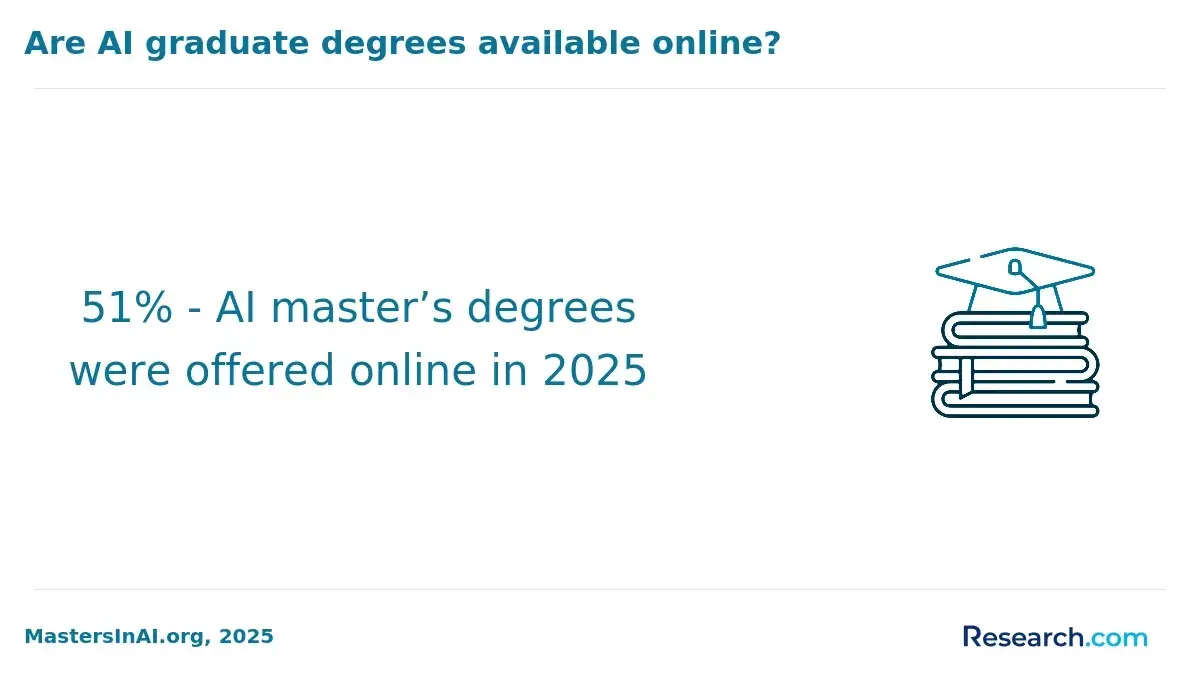
Online artificial intelligence degree cost comparison reveals that tuition for online programs is generally lower than campus-based options, varying significantly by residency and degree level. Undergraduate tuition averages approximately $12,356 for in-state students and $31,846 for out-of-state students, while graduate tuition tends toward $14,137 in-state and $32,704 out-of-state, according to CollegeTuitionCompare.
The tuition differences between online and campus ai programs often come from reduced fees in online formats, such as less spending on campus facilities, commuting, and housing. This especially benefits out-of-state students by minimizing traditionally higher non-resident tuition through online enrollment.
However, some well-known campus programs maintain higher fees regardless of delivery mode due to their brand recognition and resource availability. Students should confirm that online degrees have comparable accreditation and curriculum quality. Financial aid and scholarships often apply similarly to both formats but may vary by institution.
Many working professionals favor online ai degree programs for their flexibility and cost savings on ancillary expenses. Conversely, individuals seeking hands-on labs, direct faculty engagement, and networking opportunities might choose campus programs despite higher costs. Comparing specific schools can help align costs with educational goals. For more details on AI degree programs, visit AI degree programs.
What types of artificial intelligence degrees and certificates can students pursue?
Students pursuing degrees and certificates in artificial intelligence have various options tailored to different career goals. At the undergraduate level, many institutions offer bachelor's degrees in artificial intelligence or related fields like computer science with an AI focus. These programs cover machine learning, robotics, neural networks, and data analytics, equipping graduates for tech roles and research. The average AI bachelor's degree offers a faster return on investment, paying back its cost in about 4.2 years compared to 6.8 years for the average U.S. bachelor's degree, making AI a highly valuable STEM field.
Graduate options include master's degrees focused solely on AI or broader fields such as machine learning and data science that incorporate AI coursework. Doctoral programs provide deep specialization for careers in research, academia, or advanced industry positions. Certificate and diploma programs in artificial intelligence fields are ideal for professionals looking to upskill quickly or change career paths; these often include areas like AI programming, ethics, and applied machine learning and are typically available online.
Common qualifications include:
- Bachelor of Science in Artificial Intelligence
- Master of Science in Machine Learning
- Graduate certificates in AI or data science
- PhD in Artificial Intelligence or Robotics
Prospective students should evaluate program length and focus to align with their objectives. Certificates provide cost-effective, shorter pathways, while full degrees usually offer stronger long-term returns. For those interested in related fields, exploring cyber security courses online can also complement AI skills.
How can students verify that an artificial intelligence program is properly accredited and reputable?
Students can verify an artificial intelligence program's accreditation by checking recognized agencies like the Accrediting Board for Engineering and Technology (ABET) or regional accreditors such as the Middle States Commission on Higher Education. These bodies evaluate program quality, faculty qualifications, curriculum, and student outcomes to ensure academic rigor. Without proper accreditation, degrees may hold little value in the job market.
It's also important to consult the U.S. Department of Education's database or the Council for Higher Education Accreditation to confirm whether both the institution and its AI programs have legitimate accreditation. This helps avoid unaccredited schools that often offer nontransferable or subpar credits.
Review faculty credentials and course syllabi for greater insight into program depth. Look for instructors with relevant doctorates, industry experience, and active AI research in areas such as machine learning, robotics, or natural language processing. Partnerships with tech companies or research labs also signal real-world relevance.
Student outcomes like graduation rates and job placement are crucial. According to the Hakia analysis based on PayScale and College Scorecard data, AI graduates earn a median starting salary of $95,000 and mid-career salaries of $165,000. Over 20 years, graduates gain an estimated $1.8 million more than high school graduates.
Visiting campuses or virtual info sessions allow prospective students to ask about curriculum, resources, and accreditation firsthand. Engaging with current students or alumni and reviewing third-party rankings can provide additional perspective. Ultimately, verifying accreditation is key to ensuring credibility and return on investment.
What admission requirements do artificial intelligence degree programs commonly have?
Admission to artificial intelligence degree programs typically requires a high school diploma or equivalent with strong grades in mathematics and science, including calculus, linear algebra, and physics. Many competitive programs expect a minimum GPA around 3.0. Standardized tests like the SAT or ACT are often part of the application, though some schools have adopted test-optional policies.
Graduate AI programs usually require a bachelor's degree related to computer science, engineering, or mathematics. GRE scores might be required, especially for research-intensive tracks. Programming proficiency-commonly in Python, Java, or C++-is essential, demonstrated through coursework, projects, or internships.
- Letters of recommendation from academic or professional sources are standard for graduate admission.
- Personal statements should outline career goals aligned with AI and highlight relevant experience.
- Some programs ask for prior knowledge in machine learning, data structures, and algorithms, plus interviews or portfolios showcasing projects.
- International applicants must prove English proficiency via TOEFL or IELTS.
The strong earning potential in AI roles-averaging $129,523 annually for AI, ML, and NLP engineers-reflects in impressive degree ROI estimates, such as 8,361% for in-state students and 3,272% for out-of-state students over 30 years, based on research.com calculations.
How long do artificial intelligence degree programs usually take to complete?
Most artificial intelligence degree programs vary in length depending on the study level and format. A bachelor's degree usually requires four years of full-time study, covering foundational subjects like computer science, mathematics, and statistics, alongside specialized AI courses such as machine learning, natural language processing, and robotics.
Master's degrees typically take one to two years, focusing on advanced AI concepts, practical applications, and research projects. Many institutions offer accelerated or part-time formats, catering to working professionals by providing flexibility with extended completion times.
Doctoral programs in artificial intelligence generally span four to six years and prioritize original research and contributions to AI theory or technology. These programs demand considerable dedication beyond traditional coursework.
Certificate programs offer a faster path, usually completed within months, targeting professionals who want to expand their AI skills without committing to a full degree. These are ideal for those balancing work and study.
Given projections from the U.S. Bureau of Labor Statistics showing a 32% growth in AI-related jobs through 2032, choosing the right program duration is vital. Timely completion can help accelerate career entry into this rapidly expanding field.
What core courses and skills are covered in artificial intelligence degree curricula?
Core courses in artificial intelligence degree programs emphasize foundational knowledge and practical skills essential for an AI career. Key subjects include machine learning, data structures and algorithms, probability and statistics, and programming languages like Python, R, or Java. Machine learning classes typically cover supervised and unsupervised learning, neural networks, and deep learning, enabling students to develop predictive models.
Students also explore natural language processing, robotics, and computer vision to understand AI's interaction with real-world data. Coursework in data mining and big data analytics trains them to manage large datasets, a critical skill in AI applications. Ethics and AI safety are increasingly integral, addressing challenges such as algorithmic bias and privacy.
Applied projects help students implement AI algorithms and systems, reinforcing theory with hands-on experience. Electives may include reinforcement learning, AI hardware, or autonomous systems, allowing specialization aligned with career goals. Throughout the curriculum, students enhance mathematical reasoning and critical thinking skills.
DataUSA reports a median annual tuition for AI degree programs of $10,037 for in-state students at public universities versus $55,651 at private universities, representing over a fivefold cost difference by institution type (Intelligent.com 2024). Prospective students should consider these tuition variations alongside research opportunities and curriculum depth when selecting programs.
What entry-level and advanced career paths are available to artificial intelligence graduates?
Graduates in artificial intelligence have a broad spectrum of career opportunities, ranging from entry-level roles to advanced positions across various industries. Typical entry-level jobs include machine learning engineer, data scientist, AI software developer, and AI research assistant. These roles involve designing algorithms, developing AI models, and analyzing data patterns. Many newcomers begin by working on projects related to recommendation systems, natural language processing, or computer vision. Proficiency in programming languages such as Python and frameworks like TensorFlow or PyTorch is often essential.
Advanced career paths include roles like AI architect, AI product manager, senior research scientist, and AI ethics specialist. These positions focus on leading complex AI initiatives, building scalable infrastructures, ensuring AI policy compliance, and conducting innovative research in areas like autonomous systems and AI-driven healthcare. Collaboration with cross-functional teams and strategic leadership are common in these senior roles.
For students considering education in related fields in India, annual tuition for AI or machine learning-focused bachelor's degrees generally ranges from ₹8,20,000 to over ₹20,50,000. Master's degree programs can cost between ₹9,80,000 and over ₹28,50,000 per year, reflecting the increasing investment required for advanced specialization (Scaler 2026 fees analysis).
What salary ranges and job outlook can graduates of artificial intelligence programs expect?
Graduates with degrees in artificial intelligence can expect earning potential ranging from $90,000 to over $150,000 annually, depending on experience, role, and location. Entry-level jobs like AI research assistants or junior machine learning engineers typically start between $90,000 and $110,000. Mid-level AI engineers and data scientists earn around $110,000 to $130,000, while senior positions such as AI architects or deep learning specialists often surpass $150,000.
The job market for AI professionals remains robust, with the U.S. Bureau of Labor Statistics projecting a 22% growth in computer and information research scientist roles from 2020 to 2030. Key industries expanding their AI teams include healthcare, finance, robotics, and autonomous vehicles.
More affordable degree options have improved access to AI careers. For example, a self-paced AI master's through Udacity/Accenture costs about $4,000, much less than Georgia Tech's online MS in computer science with an AI focus at roughly $7,000, or Eastern University's online AI master's around $9,900. This cost-effectiveness helps reduce student debt burdens.
Practical experience is essential for higher salaries and strong job prospects. Graduates should seek internships, contribute to open-source projects, and develop portfolios involving natural language processing, computer vision, or reinforcement learning. Continuing education and certifications in emerging fields like generative AI further enhance employability.
Other Things You Should Know About Artificial Intelligence
In 2027, tuition fees for AI degrees vary significantly depending on the university. Public institutions typically charge between $10,000 to $30,000 annually for in-state students. Private universities can range from $40,000 to $70,000 per year. Factors influencing these costs include the school's reputation, location, and program specifics.
Yes, many institutions and organizations offer scholarships targeted at students pursuing artificial intelligence or related fields like computer science and data science. These scholarships aim to support underrepresented groups and encourage innovation in AI research. Students should check with their university financial aid offices and search for grants sponsored by tech companies and professional AI associations.
Students often find the mathematical rigor and programming demands challenging in artificial intelligence programs. Mastering algorithms, understanding complex neural network architectures, and managing large datasets require dedication and time. Additionally, keeping up with rapidly evolving AI technologies and frameworks can be difficult without continuous learning.
Absolutely. Artificial intelligence skills are increasingly valued across various sectors, including healthcare, finance, automotive, and manufacturing. Graduates can work on AI applications like medical imaging, fraud detection, self-driving cars, and process automation. The interdisciplinary nature of AI allows professionals to contribute to innovation beyond traditional tech companies.
References
- The True Costs of AI: Breakdown, Business Impact, and How to Reduce Them https://www.knack.com/blog/costs-of-ai/
- Blog https://admissiongoals.com/post/ai-machine-learning-programs-europe-admission-guide-international-students
- Here’s How an AI Degree Stacks Up Against Other Options https://www.aidegree.org/blog/comparison-table
- The Economics of AI: Explaining Pricing Components and Implementation Types https://intexsoft.com/blog/the-economics-of-ai-explaining-pricing-components-and-implementation-types/
- 14 Best Entry Level AI Jobs: A Beginners Guide | Mercor https://www.mercor.com/resources/experts/best-entry-level-ai-jobs-guide/
- Masters in Artificial Intelligence in USA: Universities, Fees & More https://internshala.com/blog/isa-masters-in-artificial-intelligence-in-usa/
- Major Required Courses https://fst.bnbu.edu.cn/ai_en/students/undergraduate_studies/curriculum.htm
- Understanding the Cost of AI Development https://www.outsystems.com/ai/ai-development-cost/
- The Latest AI in Education Statistics (2026) - Programs.com https://programs.com/resources/ai-education-statistics/
- what - Tłumaczenie po polsku - Słownik angielsko-polski Diki https://www.diki.pl/slownik-angielskiego