2027 AI Master's Degrees That Include Data Engineering Skills

Co-Founder and Chief Data Scientist
Professionals from unrelated fields often struggle to find graduate programs that offer both foundational artificial intelligence knowledge and practical data engineering skills. This gap hinders their ability to transition effectively into careers requiring robust data handling and AI model deployment. Without targeted training, mastering complex AI applications can remain out of reach, limiting job prospects in a competitive market.
This article explores master's degrees that integrate data engineering with artificial intelligence education. It aims to guide prospective students in identifying flexible, accredited programs designed to equip them with the technical expertise needed for successful career pivots in this evolving industry.
Key Things You Should Know
- Master's programs in AI integrating data engineering skills grew by 35% from 2024 to 2025, reflecting rising demand for experts who manage large-scale data pipelines and machine learning.
- About 60% of current AI master's degrees include coursework on cloud computing, data architecture, and real-time data processing, crucial for scalable AI applications.
- Graduates with combined AI and data engineering skills report 20% higher starting salaries than peers, emphasizing the value of interdisciplinary expertise in today's job market.
What is an AI master's degree that includes data engineering skills?
An advanced AI master's program with a data engineering focus trains students to design and optimize data pipelines critical for AI applications. These master's degree programs combining artificial intelligence and data engineering skills provide a blend of theoretical foundations, such as machine learning and natural language processing, alongside practical expertise in database architecture, data warehousing, and cloud-based infrastructure.
Core topics often include:
- Data ingestion and transformation using technologies like Apache Spark, Kafka, or Hadoop
- Deploying machine learning models within robust data pipelines
- Scalable cloud computing environments tailored for AI workloads
- Data governance and security to maintain compliance and integrity
As Gartner projects widespread adoption of generative AI APIs within organizations, demand rises for professionals who bridge AI modeling and data infrastructure-skills central to these programs. Students should explore curricula that integrate AI algorithms with data engineering, including courses on neural network development paired with real-time data streaming and cloud platform specializations.
This combination enhances career flexibility, enabling graduates to pursue roles like machine learning engineer, data infrastructure architect, or AI operations specialist. Those seeking such a comprehensive education may find value in programs like an accelerated computer science degree emphasizing this integration.
Which AI master's programs teach data engineering for ML pipelines and MLOps?
Master's programs in AI with data engineering for machine learning pipelines increasingly integrate core skills like designing, deploying, and maintaining scalable ML systems. Notable examples include Carnegie Mellon University's Master of Science in Artificial Intelligence and the University of California, Berkeley's Master of Information and Data Science, both emphasizing MLOps frameworks, cloud infrastructure, and data pipeline engineering.
These graduate degrees focused on ML and data engineering skills prepare students for high-demand roles by covering essential curriculum components.
- Data ingestion, cleaning, and transformation techniques critical for robust ML pipelines
- Use of cloud platforms such as AWS, Azure, or Google Cloud for deploying and orchestrating models
- Automation tools including Kubernetes, Docker, and CI/CD pipelines supporting MLOps practices
- Monitoring, logging, and version control of models in production environments
- Security and compliance considerations specific to data engineering workflows
Such training meets growing industry demands. The Linux Foundation's "State of Tech Talent" survey highlights MLOps, data engineering, and cloud skills as highly sought after. Programs usually balance theory with practical labs, using real-world tools to ensure graduates can manage end-to-end ML pipelines effectively.
Prospective students should confirm that courses offer hands-on experience with data engineering and CI/CD automation, or else consider supplementing with certifications or bootcamps. Choosing programs with industry partnerships or capstone projects focusing on these skills enhances practical expertise for future data engineering roles in AI-driven enterprises.
Those interested may also explore options for a mechanical engineering degree online as an alternative way to build technical skills complementary to artificial intelligence education.
How do you choose an accredited AI master's with strong data engineering?
Accredited AI master's programs with a data engineering focus often stand out by holding recognized accreditations like AACSB, which signals rigorous curriculum quality. The AACSB's business accreditation directory highlights institutions emphasizing analytics and AI, typically covering data engineering and governance essentials.
Top AI master's degrees emphasizing data engineering skills include courses on data pipelines, big data tools, cloud integration, and governance frameworks. Practical learning through capstone projects or industry partnerships enhances these skills, preparing students for real-world challenges.
When choosing a program, assess whether the curriculum dedicates substantial time to data engineering topics and if certificates or micro-credentials are available to supplement the master's degree. Faculty expertise and research that focus on data engineering add further assurance of quality.
Online and hybrid delivery options create flexibility, but verify that these formats maintain the same accreditation status and data engineering rigor as traditional on-campus programs. For those seeking flexible pathways, exploring the best online AI degree programs can offer accredited options integrating strong data engineering components suitable for working professionals.
What data engineering coursework should you expect in an AI master's curriculum?
Data engineering coursework in master's programs with data engineering courses for artificial intelligence typically centers on practical skills required to manage and transform raw data into usable formats. Core data engineering topics in artificial intelligence graduate degrees include extract, transform, load (ETL) and extract, load, transform (ELT) processes. Data modeling principles also feature prominently, covering data structuring, schema design, and warehousing methods.
Students gain expertise in data quality engineering to tackle challenges such as missing values, outliers, and pipeline monitoring. Industry research, such as Databricks' 2024 survey, shows data preparation and quality consume the largest share of time in AI/ML projects, underlining the importance of these areas in curricula.
Training often includes distributed computing with frameworks like Apache Spark or Hadoop and hands-on cloud experience with AWS, Azure, or Google Cloud to support scalable pipelines. Instruction may extend to real-time streaming tools such as Kafka or Flink, essential for AI systems needing current data inputs.
Additional focus areas include workflow orchestration using Apache Airflow, security, and compliance to address data governance and privacy concerns, alongside mastery of programming languages like Python and SQL. For students exploring technology fields, exploring cybersecurity programs can complement AI studies and career readiness.
What are the admission requirements for AI master's programs emphasizing data engineering?
Admission to AI master's programs focused on data engineering demands strong quantitative skills and programming proficiency. Applicants typically need a bachelor's degree in computer science, engineering, mathematics, statistics, or a related field, supported by coursework in algorithms, data structures, calculus, linear algebra, and probability.
GRE scores, especially in the quantitative section, remain a critical factor. ETS' 2024 score reporting highlights GRE Quantitative scores as key differentiators, with competitive programs often expecting applicants to score at or above the 75th percentile. Demonstrating advanced mathematical aptitude is essential.
Programming experience in languages like Python, Java, or Scala is usually required. Evidence can come from coursework, work experience, or projects. Familiarity with database systems, data processing frameworks such as Hadoop or Spark, and applied statistics may also be needed.
Essential application components include letters of recommendation from knowledgeable academic or professional supervisors and a statement of purpose that outlines motivations, experience, and career goals within AI and data engineering. Some programs ask for resumes detailing internships or relevant job experience, coding samples, or may accept standardized tests as alternatives to GRE scores.
Applicants from nontraditional backgrounds might have to complete prerequisite courses or prove competence via technical assessments. Many institutions offer preparatory pathways to help strengthen applicants' skills before full admission.
How long do AI master's programs with data engineering take, and what do they cost?
Master's programs in artificial intelligence that incorporate data engineering skills typically require 18 to 24 months of full-time study. Part-time schedules extend to three or more years, allowing professionals to balance work and education. Accelerated options may condense coursework into a single year but demand significant prior experience and heavier course loads.
The 2024 National Center for Education Statistics highlights the tuition gap between public and private nonprofit institutions. Public universities charge roughly $12,000 to $20,000 annually, while private nonprofits often exceed $40,000 per year. This disparity heavily influences the total cost and return on investment for an artificial intelligence or data engineering master's degree.
- In-state public university students might pay around $15,000 yearly, totaling $30,000 over two years.
- Out-of-state students at public institutions can face tuition fees 1.5 to 2 times higher, increasing costs above $45,000.
- Private nonprofit programs may exceed $80,000 for a two-year master's degree but often include specialized curricula or industry connections.
Additional factors like residency, program format (i.e., online or on-campus), and extra fees for technology, labs, or student services also affect overall expenses. Prospective students should carefully weigh program length and tuition differences to align financial planning with career goals in these fast-evolving fields.
How do online AI master's programs compare with on-campus for data engineering training?
Online AI master's programs now offer data engineering training comparable in depth and practicality to traditional on-campus degrees. The core distinction is in delivery format rather than content quality. Many online programs use advanced platforms to simulate real-world scenarios where students work with big data sets, cloud computing environments, and data pipeline development-skills.
Programs at institutions like Georgia Tech and the University of Illinois Urbana-Champaign incorporate cloud-based lab simulations and synchronous sessions. These elements provide remote students with hands-on experience with tools such as Apache Spark and Hadoop, narrowing the gap with in-person learning. Such immersive learning environments support skill acquisition in AI-focused data engineering.
Recent surveys highlight a strategic emphasis on expanding quality online learning options with rigorous curricula and improved infrastructure, making remote study increasingly viable for AI-related fields. Flexibility makes online AI master's degrees attractive to working professionals. Campus programs favor students seeking immersive community engagement.
What tools and platforms will you learn for data engineering in AI graduate programs?
Master's programs focusing on data engineering within artificial intelligence develop essential skills for managing large datasets. Python is central to the curriculum, widely recognized for its role in data pipelines and machine learning workflows. Students gain hands-on experience with Python libraries such as Pandas, Apache Airflow, and Dask to implement efficient ETL (extract, transform, load) processes.
Proficiency in relational databases like PostgreSQL, MySQL, and SQLite is emphasized, as these are crucial for structured data management. Familiarity with SQL dialects allows students to optimize queries, enhancing data retrieval for AI model training and analytics.
Cloud platforms such as AWS Glue, Google BigQuery, and Azure Data Factory prepare students for deploying data engineering pipelines in robust, scalable environments. Skills in containerization tools like Docker and orchestration with Kubernetes improve the management of distributed AI workflows.
Big data frameworks like Apache Spark and Hadoop are also covered, enabling the handling of massive datasets needed for advanced AI applications. Workflow automation and version control, using Git and Jenkins, ensure sustainable and reproducible data pipelines.
What jobs can you get with an AI master's plus data engineering skills?
Graduates holding a master's degree in artificial intelligence combined with data engineering skills have access to a broad range of high-demand roles that integrate AI development with big data infrastructure expertise. Key positions include data engineer, machine learning engineer, AI engineer, and data scientist. These roles focus on building and optimizing data pipelines.
Data engineers specialize in designing and maintaining systems that ingest, process, and store large datasets essential for machine learning workflows. Proficiency in cloud platforms like AWS, Azure, or GCP, alongside tools such as Spark, is critical. Machine learning engineers develop AI models and ensure their integration within big data environments and production systems.
AI engineers combine AI algorithm expertise with data engineering knowledge to deliver intelligent applications end-to-end. This hybrid skillset helps candidates bridge the gap between data architecture and AI solution delivery, enhancing their employability in a competitive market.
Labor market analytics from Lightcast reveal that roles like data engineer and machine learning engineer rank among the fastest-growing jobs requiring cloud data platform expertise and pipeline skills. Employers value professionals who can optimize data flow for real-time AI inference, scale AI model training on cloud infrastructure, and maintain data quality for reliable model outputs.
What salary and job outlook can AI and data engineering graduates expect?
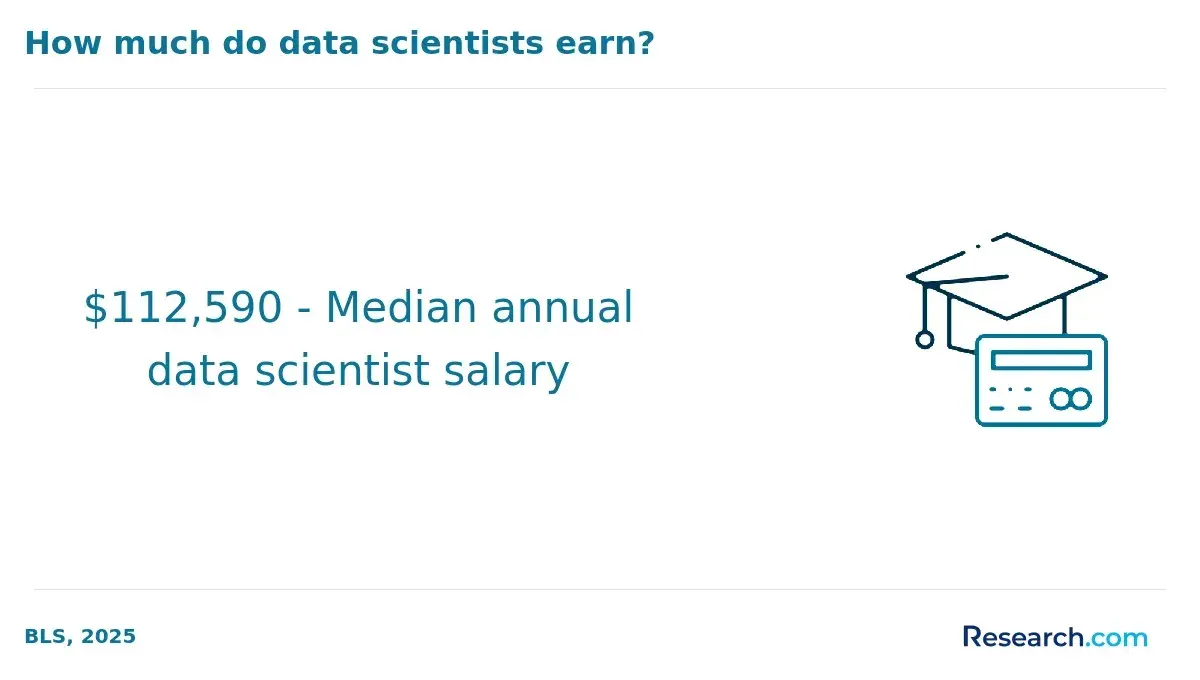
Graduates with a master's degree in artificial intelligence who also have data engineering skills can expect strong salary potential and promising job prospects. Data scientists, closely related to AI and data engineering roles, earn median annual salaries often exceeding $100,000, as reported by the U.S. Bureau of Labor Statistics (BLS). These figures highlight the high demand for specialists who manage and optimize data systems vital to AI applications.
The BLS forecasts that data scientist positions will grow faster than the average for all occupations through 2032. This surge comes from wider artificial intelligence adoption across industries such as finance, healthcare, manufacturing, and technology services. Skills in building data pipelines, cloud computing, and proficiency in programming languages like Python, SQL, and Scala greatly enhance employability.
Available roles include data engineer, machine learning engineer, AI specialist, and predictive analyst. Entry-level salaries range between $85,000 and $95,000 annually, increasing significantly with experience. Mid- to senior-level professionals often earn $130,000 to $160,000 or more, especially in tech-centric cities like San Francisco, New York, and Seattle.
Consulting and contract work also offer attractive hourly rates and flexible income opportunities. Graduates combining AI expertise with strong data engineering capabilities are well-positioned to meet the needs of a rapidly growing and well-compensated labor market.
Other Things You Should Know About Artificial Intelligence
Graduates with a 2027 AI master's degree that includes data engineering skills can expect strong job prospects in tech-driven industries. Roles such as data engineer, machine learning engineer, and AI specialist are in high demand, thanks to the growing need for AI-powered solutions across sectors like healthcare, finance, and technology.
Yes, prior experience in data engineering can significantly benefit AI graduate students by giving them practical insight into managing and processing large datasets, which is essential for AI applications. Such experience enhances their ability to design efficient data pipelines and work effectively with data storage and retrieval systems. It also helps in understanding the end-to-end workflow of AI projects, from data acquisition to model deployment.
Admission typically requires an undergraduate degree in computer science or a related field. Applicants may need coursework in linear algebra and programming. Some programs may request GRE scores and proof of English proficiency for international students.
Yes. Many 2027 AI master’s degrees with data engineering skills end with a 6- to 9-credit thesis or capstone in the final semester. Programs often require prior completion of core courses in machine learning, databases, and distributed systems before enrollment in the project.
References
- Choosing a master’s degree: data science or artificial intelligence | edX https://www.edx.org/resources/choosing-a-masters-degree-data-science-or-artificial-intelligence
- Opintopolku https://opintopolku.fi/konfo/en/toteutus/1.2.246.562.17.00000000000000035135
- Artificial intelligence and data engineering https://www.unipi.it/en/education/courses/master-degree/artificial-intelligence-and-data-engineering-wai-lm-en/
- M.Eng. in Data Science & Artificial Intelligence - Munich University of Digital Technologies & Applied Sciences https://uni-munich.de/programs/master-in-data-science-artificial-intelligence/
- LM in AI and Data Engineering https://computer.ing.unipi.it/en/masters-degree-in-artificial-intelligence-and-data-engineering/
- MLOps Course | Liora https://liora.io/en/courses/data-ai/mlops
- Free DataTalks.Club Courses: ML, Data Engineering, MLOps, LLM & AI Dev Tools Zoomcamps – DataTalks.Club https://datatalks.club/blog/guide-to-free-online-courses-at-datatalks-club.html
- Artificial Intelligence and Data Engineering MSc https://www.ucl.ac.uk/prospective-students/graduate/taught-degrees/artificial-intelligence-and-data-engineering-msc
- AI and Data Science https://th-deg.de/aid-m-en
- What Is An AI Data Engineer? 4 Important Skills, Responsibilities, & Tools https://www.montecarlodata.com/blog-what-is-an-ai-data-engineer/