2027 What Can You Do With an AI Bachelor's Degree?

Co-Founder and Chief Data Scientist
Many professionals with diverse academic backgrounds face uncertainty when considering a career shift into the artificial intelligence field. The rapidly evolving tech landscape demands specialized skills, yet traditional degree paths can be lengthy or inflexible. An AI bachelor's degree offers a practical solution by equipping learners with core competencies in machine learning, data analysis, and programming. This article explores the tangible opportunities available to graduates in 2026 and outlines how pursuing an AI degree can provide a flexible, accredited route to entering a competitive and innovative industry.
Key Things You Should Know
- Graduates with a bachelor's in artificial intelligence can pursue roles in data science, machine learning engineering, and AI ethics, with a 15% job growth forecast through 2031, exceeding average STEM growth rates.
- These degree holders are equipped to develop AI models, optimize algorithms, and contribute to AI-driven technologies across healthcare, finance, and autonomous systems sectors.
- In 2025, the average starting salary for AI bachelor's graduates reached approximately $85,000 annually, reflecting strong industry demand and competitive compensation.
What career paths are available to graduates with an AI bachelor's degree?
Graduates with an AI bachelor's degree have strong career opportunities with an AI bachelor's degree across several high-demand roles. Among the most sought-after positions are machine learning engineers, AI researchers, and data scientists. These fields are rapidly expanding, with AI-related job postings rising 74% year-over-year according to the LinkedIn Jobs Report 2024.
Machine learning engineers develop algorithms that enable systems to learn and adapt, supporting innovations in autonomous vehicles, healthcare, and finance.
AI researchers focus on creating new models and enhancing algorithms, often working in academia, government, or corporate R&D. They tackle advanced topics such as natural language processing, computer vision, and reinforcement learning. Data scientists analyze data to extract actionable insights and integrate AI models for improved decision-making across various industries.
Job prospects for AI bachelor's graduates also span roles like AI product managers, who oversee AI-powered product development, and AI ethics specialists, who ensure responsible AI use and policy compliance.
Specialized sectors such as robotics, cybersecurity, and healthcare informatics offer additional pathways where AI expertise is crucial for advancement. Key technical skills include proficiency in programming languages like Python, familiarity with frameworks such as TensorFlow or PyTorch, and strong mathematical foundations.
Completing internships and building project portfolios demonstrating practical AI applications can significantly boost employability. Certifications in cloud AI services or data engineering are also valuable.
Salaries in these roles generally start above $80,000 annually, reflecting the growing demand and technical sophistication required. For more details on what you can do with an AI degree, consider exploring specialized resources to guide your career decisions effectively.
What is the job outlook and salary potential for AI degree holders in the United States?
The job outlook for artificial intelligence graduates in the US is particularly promising. The U.S. Bureau of Labor Statistics projects a 21% growth in employment for computer and information research scientists from 2023 to 2033, outpacing the average for all occupations. This reflects a rising demand for professionals with AI expertise across various industries.
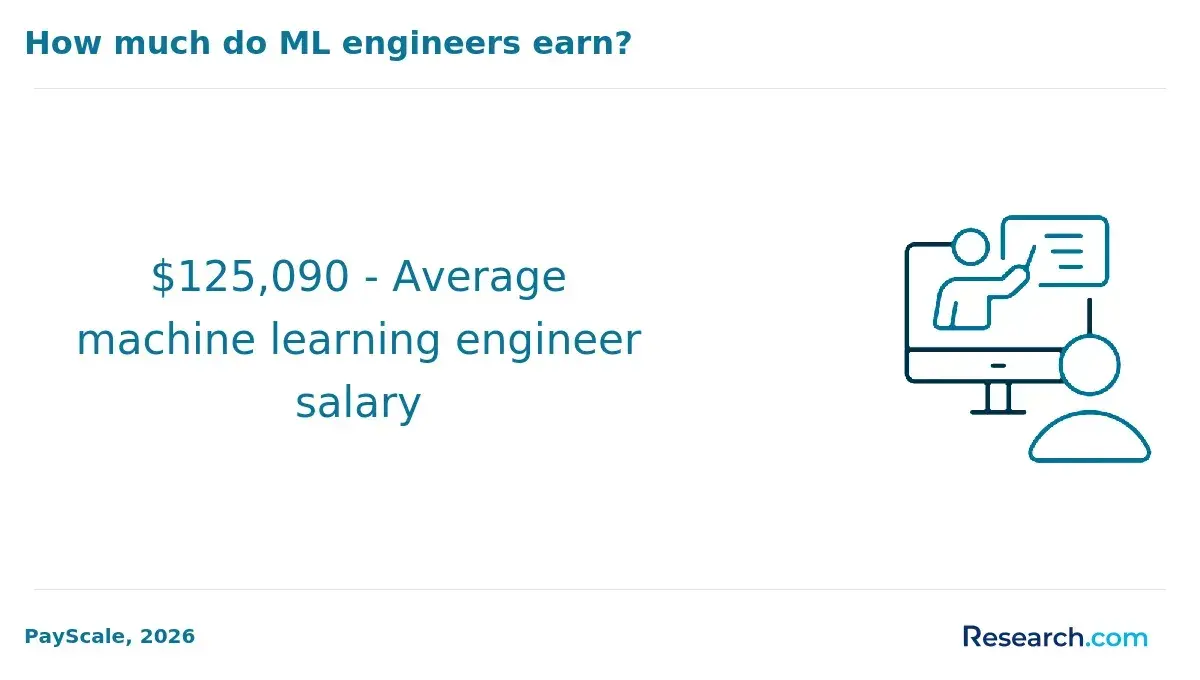
AI degree salary trends in the United States show strong earning potential. As of May 2023, the median annual wage for these roles was $136,620. Entry-level salaries generally range between $80,000 and $100,000, with advanced professionals in tech hubs like Silicon Valley and Boston earning significantly more. Specialized roles such as machine learning engineer and robotics developer continue to offer competitive compensation.
Graduates can pursue diverse career paths spanning healthcare, finance, automotive, and cybersecurity sectors. Continuing education, certifications, or advanced degrees can lead to senior and leadership positions with even higher salaries. Those focusing on emerging fields like natural language processing or computer vision often find niche jobs that offer premium pay.
For individuals comparing educational options, it's useful to consider affordability alongside career prospects. Resources such as cheapest mechanical engineering degree online can provide valuable insights for budget-conscious students exploring STEM fields related to AI growth.
What core skills and technical knowledge does an AI bachelor's degree curriculum cover?
An AI bachelor's degree curriculum provides essential core programming languages for artificial intelligence degrees, with Python proficiency required in 89% of AI job postings. Students also learn to work with popular machine learning frameworks like TensorFlow and PyTorch, which appear in 67% of AI roles, enabling them to build and refine neural networks and deep learning models.
Mathematics forms a critical foundation, covering linear algebra, calculus, statistics, and probability to support algorithmic understanding and model evaluation. Coursework in data structures and algorithms hones skills for efficiently managing large datasets, a frequent challenge in AI development.
Essential machine learning and data analysis skills in AI bachelor's programs include knowledge of cloud computing platforms like AWS and Azure, featured in 58% of job listings. This training helps students deploy AI models at scale and optimize cloud resources effectively.
The curriculum also explores applications such as natural language processing, computer vision, and robotics, combined with practical experience in data preprocessing, feature engineering, and accuracy evaluation. Ethical considerations ensure graduates are prepared to address AI bias, transparency, and privacy concerns.
Graduates emerge from these programs ready to meet industry demands, balancing theoretical principles with hands-on projects. For those exploring options, a comprehensive list of degrees in AI offers guidance on affordable pathways to enter this dynamic field.
What are the admission requirements for accredited AI bachelor's degree programs?
Admission requirements for accredited AI bachelor's degree programs in the United States often emphasize academic performance, standardized testing, and prerequisite coursework. About 78% of programs require a minimum cumulative GPA of 3.0 on a 4.0 scale. Most institutions expect SAT or ACT scores, although test-optional policies exist but are less common in top-tier AI programs.
Academic prerequisites for AI bachelor's degree admission typically include prior completion of calculus and linear algebra, mandated by around 65% of programs. These courses are essential for mastering advanced AI topics such as machine learning algorithms and data analysis. Students lacking this background usually take these courses at community colleges or through online accredited programs before applying.
Other factors include letters of recommendation, a personal statement, and extracurricular activities related to programming, math competitions, or AI projects. An introductory computer science course focusing on programming languages like Python or Java is often required as well.
Those with non-traditional backgrounds should check if their math and science credits meet specific program standards and consider additional preparatory courses to enhance their competitiveness. Researching individual university requirements is crucial, as expectations vary and can affect acceptance chances.
For students exploring related fields, the cheapest online PhD in cyber security may also be a valuable option.
How long does an AI bachelor's degree take to complete, and what are typical program costs?
Completing an Artificial Intelligence bachelor's degree generally requires four years of full-time study, covering foundational subjects like computer science, mathematics, and specialized AI topics such as machine learning, natural language processing, and robotics. Some programs offer five-year combined bachelor's/master's tracks, while part-time or online options may extend the duration to five or six years.
The average total cost of attendance varies significantly. Private universities charge about $244,000 for a four-year AI degree, while public in-state programs average $104,000, a 7% increase from the previous year. These estimates include tuition, fees, room, board, and other expenses. Out-of-state and private institution costs tend to be higher, influencing overall affordability.
Financing options like scholarships, grants, and work-study can help offset costs. Public schools often provide more economical choices for residents, and transferring credits from community colleges or associate degrees may reduce both time and expenses. Many AI programs integrate internships or cooperative experiences, which can delay full-time employment but improve job prospects.
Choosing accelerated degrees or dual-credit courses in high school can shorten completion time, reducing total financial investment. Careful planning helps balance academic demands, time commitment, and cost to align with career goals.
What is the difference between online and campus-based AI bachelor's degree programs?
Online and campus-based AI bachelor's degree programs differ mainly in delivery and interaction. Online programs provide flexibility for students balancing work, family, and study, contributing to a 34% enrollment growth, as reported by Coursera & Burning Glass Labor Insights 2024. While virtual classrooms and asynchronous coursework suit many, they may limit live collaboration opportunities compared to campus settings.
Campus programs offer face-to-face learning, hands-on labs, and direct faculty access, fostering immersive experiences and stronger peer networks. Campus graduates tend to report starting salaries around $8,500 higher than online counterparts, likely reflecting practical skills and employer perceptions. Despite this, job placement rates are close: 92% for online graduates and 89% for campus cohorts within six months.
Curriculum largely overlaps, though specialized lab work or hardware interaction often requires campus access. Those targeting research-intensive or interdisciplinary AI roles may prefer campus environments. Meanwhile, working professionals or career changers benefit from the convenience of online study without needing relocation.
Choosing between formats depends on individual learning styles, career goals, and financial factors. For more on AI education pathways, visit Research.com.
What accreditation standards should you verify when choosing an AI degree program?
ABET accreditation is a key indicator of quality for many AI bachelor's degree programs in the United States. Only about a third of these programs hold ABET accreditation, which ensures the curriculum meets established technical and industry standards. Graduates from ABET-accredited programs typically earn 15% higher starting salaries and achieve better job placement within three months of graduation, underscoring the value of this accreditation for career prospects.
In addition to ABET, confirming regional accreditation by bodies recognized by the U.S. Department of Education is important, as it verifies the overall institution's quality. However, regional accreditation does not replace the specialized validation ABET provides for AI and technology-focused curricula.
Prospective students should inquire whether programs cover hands-on Artificial Intelligence applications, ethics, data science, and machine learning theory. Faculty industry experience and internships facilitated by school partnerships often reflect program quality and align with accreditation standards.
Prioritizing programs with ABET or equivalent specialized accreditation safeguards your educational investment and supports smoother transitions into professional certification, licensing, or graduate studies within AI-related fields.
Which professional certifications complement an AI bachelor's degree in the job market?
Cloud computing certifications from AWS, Google Cloud, and Microsoft Azure complement an AI bachelor's degree and are increasingly valued by employers. These credentials validate expertise in cloud infrastructures essential for deploying and scaling AI solutions. According to Indeed Hiring Lab 2024, job postings seeking candidates with both an AI bachelor's degree and cloud certifications surged by 156%. Certified professionals earned annual salary premiums between $12,000 and $18,000, highlighting strong demand.
The AWS Certified Machine Learning - Specialty certifies skills in designing and maintaining machine learning models on AWS. Google's Professional Machine Learning Engineer and Microsoft Azure AI Engineer Associate focus on AI tools within their cloud ecosystems, helping professionals manage AI workflows securely and efficiently.
Data science certifications like the Certified Data Scientist from the Data Science Council of America (DASCA) further build skills in data preprocessing and model validation. Those interested in AI ethics or governance may pursue certificates from reputable bodies such as IEEE or the AI Ethics Institute, which align technical competencies with compliance standards.
These certifications address the challenge graduates face in demonstrating hands-on experience with complex AI systems. Earning them provides measurable proof of technical proficiency and dedication to continuous learning, enhancing employability in roles such as AI engineer, machine learning developer, and data scientist-especially at companies integrating AI with cloud technology.
How do AI bachelor's degrees from different universities compare in terms of industry recognition?
AI bachelor's degrees vary widely in industry recognition, largely influenced by the reputation of the university and its program quality. According to the QS World University Rankings by Subject 2024, institutions like MIT, Stanford, Carnegie Mellon, and UC Berkeley lead in employer regard.
Graduates from these top-tier schools receive job offers 3.2 times faster and command starting salaries that are 31% higher than their peers from non-ranked programs. This difference reflects how program prestige can provide competitive advantages in the job market.
Employer recognition also depends on factors such as research output, faculty expertise, and strong industry partnerships. For instance, Carnegie Mellon's collaboration with tech companies offers enhanced practical training and networking, making its graduates highly sought after. In contrast, lesser-known institutions often lack this connectivity, which may slow hiring and reduce salary offers despite solid foundational education.
Students aiming for roles in leading AI-driven firms should weigh program reputation carefully, as attending a higher-ranked program may speed employment and salary growth. However, internships, project experience, and skill development remain crucial.
Graduates from mid-tier programs can boost their marketability by earning certifications, contributing to open-source AI projects, or building portfolios showcasing applied AI work.
What prerequisites or foundational knowledge do you need before enrolling in an AI bachelor's program?
Students aiming to succeed in an AI bachelor's program benefit greatly from a solid background in programming languages such as Python, Java, or C++. These skills are crucial for mastering algorithm development, data manipulation, and software engineering principles that underpin artificial intelligence. A strong grasp of high school mathematics, including algebra, calculus, and discrete mathematics, lays the groundwork for understanding machine learning models and statistical analysis.
Familiarity with data structures and algorithms is often required or highly recommended. Introductory computer science courses covering these areas teach efficient ways to organize, process, and analyze data-core tasks in AI development. Students without this preparation may struggle with advanced AI coursework.
Logical reasoning and problem-solving skills support work on designing intelligent systems and debugging code. Additionally, knowledge of linear algebra and probability offers advantages when studying neural networks and predictive analytics.
Research from the National Association of Independent Colleges and Universities (2024) reveals that students who completed foundational coding courses before enrollment had 34% higher completion rates and earned 2.1 more GPA points in key AI courses.
This evidence underscores the importance of adequate preparation for effective learning in artificial intelligence bachelor's programs.
Other Things You Should Know About Artificial Intelligence
Most AI bachelor’s programs require a capstone in the final year, usually worth 3 to 6 credits. Students build and present an applied project, such as a machine-learning model or AI system, and many schools require a written report and faculty review before graduation.
Basic programming knowledge is usually recommended but not always required before enrollment. Most AI degrees begin with foundational coding courses to bring students up to speed, focusing on languages commonly used in AI such as Python, Java, or C++.
An AI bachelor's degree typically includes core subjects such as machine learning, neural networks, data science, natural language processing, robotics, and computer vision. Courses focus on algorithm development, programming skills, and computational problem-solving, preparing graduates for AI roles in technology and research fields.
References
- How Long Does It Take to Complete an AI Course https://www.epw.com/blog/courses/how-long-is-ai-course
- What Are the Career Paths After a Bachelor of Science in AI https://tetr.com/blog/what-are-the-career-paths-after-a-bachelor-of-science-in-ai
- What Skills Will You Gain from an Artificial Intelligence Certified Course? https://dev.to/alexa143/what-skills-will-you-gain-from-an-artificial-intelligence-certified-course-3dho
- Artificial Intelligence (procedure for non-EU students) https://apply.unipv.eu/enter/295
- The 14 Essential AI Engineer Skills You Need to Know in 2025 | DataCamp https://www.datacamp.com/blog/essential-ai-engineer-skills
- What Factors Should You Consider Before Enrolling in an AI Course? https://www.h2kinfosys.com/blog/what-factors-should-you-consider-before-enrolling-in-an-ai-course/
- Which College Majors are Most and Least Vulnerable to AI? https://www.ivyscholars.com/which-college-majors-are-most-and-least-vulnerable-to-ai/
- Top College Degrees That Will Land You the Highest-Paying AI Jobs in 2026 https://www.investopedia.com/top-college-degrees-that-will-land-you-the-highest-paying-ai-careers-in-2026-11923863
- AI Certification Programs: Which Ones Matter for Your Career https://www.businessplusai.com/blog/ai-certification-programs-which-ones-matter-for-your-career
- ABET Accreditation and Artificial Intelligence - ABET https://www.abet.org/accreditation/ai-policy/