2027 AI Bachelor's Degrees With Industry Mentorship

Co-Founder and Chief Data Scientist
Many professionals with non-technical backgrounds face challenges when transitioning into artificial intelligence careers. Traditional degrees often lack direct industry engagement, limiting practical experience. Without mentorship, navigating rapidly evolving AI fields becomes even more daunting.
This article explores bachelor's degree programs that combine academic rigor with structured industry mentorship. It highlights flexible, accredited paths designed to bridge educational gaps and facilitate career pivots into AI roles.
Readers will gain insight into how these programs provide hands-on learning, networking, and guidance to better prepare them for the dynamic demands of the artificial intelligence sector.
Key Things You Should Know
- In 2026, over 65% of AI bachelor's programs in the U.S. integrate mandatory industry mentorship, enhancing practical skills alongside theoretical knowledge.
- Programs emphasize applied learning with partnerships in tech companies, increasing graduate employment rates by approximately 30% within six months post-graduation.
- Curricula focus on ethics, machine learning, and data science, reflecting demand for well-rounded AI professionals capable of addressing real-world challenges.
What are AI bachelor's degrees with industry mentorship, and how do they work?
AI bachelor's degrees with industry mentorship programs blend traditional coursework with hands-on experience guided by professionals in tech companies. These programs embed real-world projects, enabling students to apply theory to practical challenges in areas like natural language processing, machine learning deployment, or robotics automation.
Students benefit from regular feedback and guidance from experienced mentors, who share industry standards and help develop essential problem-solving skills that employers highly value.
In fact, a National Association of Colleges and Employers survey found that 87% of employers prioritize problem-solving skills on candidates' resumes, highlighting the importance of mentored AI bachelor's degrees with professional mentorship.
Program formats can include semester internships, capstone projects co-created with industry partners, and virtual mentorship sessions. Students might be matched with mentors from AI startups, large tech firms, or research labs specializing in computer vision or ethical AI development.
Advantages include exposure to current AI tools, networking opportunities that can enhance job placement prospects, and building a portfolio demonstrating applied problem-solving outcomes.
Prospective students should carefully assess mentorship quality, company partnerships, and evaluation methods to ensure both practical skills and academic credentials.
Those interested in accelerated paths may also explore a 2-year computer science degree online as a complementary route to entering AI fields.
Which accredited U.S. colleges offer AI bachelor's programs with mentorship?
Several accredited U.S. colleges offer bachelor's programs focused on artificial intelligence combined with structured industry mentorship, providing hands-on experience through partnerships with leading tech companies.
Notable examples include Carnegie Mellon University's Bachelor of Science in Artificial Intelligence, which integrates mentorship via an extensive industry network, and Northeastern University's AI degree within their College of Computer and Information Science, offering co-op opportunities that serve as real-world mentorship.
Universities such as the University of Illinois Urbana-Champaign and Georgia Institute of Technology provide AI concentrations within their computer science degrees, enhanced by mentorship programs funded by industry sponsors.
These programs connect students with professional mentors for project feedback, career guidance, and networking, enriching the learning experience.
ABET accredits over 500 computing programs nationwide, establishing a baseline for legitimate AI-focused degrees that include essential mentorship layers.
Prospective students interested in accredited U.S. colleges offering AI bachelor's degrees with mentorship should verify accreditation status and inquire about the nature of industry partnerships, such as internships, collaborative research, or project supervision.
For students exploring options, programs with structured mentorship frameworks-mentor matching, clear communication, and measurable goals-are ideal. Those concerned about mentorship quality can also consider faculty-led research labs or industry project courses to supplement practical learning.
For a broader range of engineering studies, consider exploring a mechanical engineer degree online to complement your AI education path.
How do AI bachelor's career outcomes compare with computer science or data science?
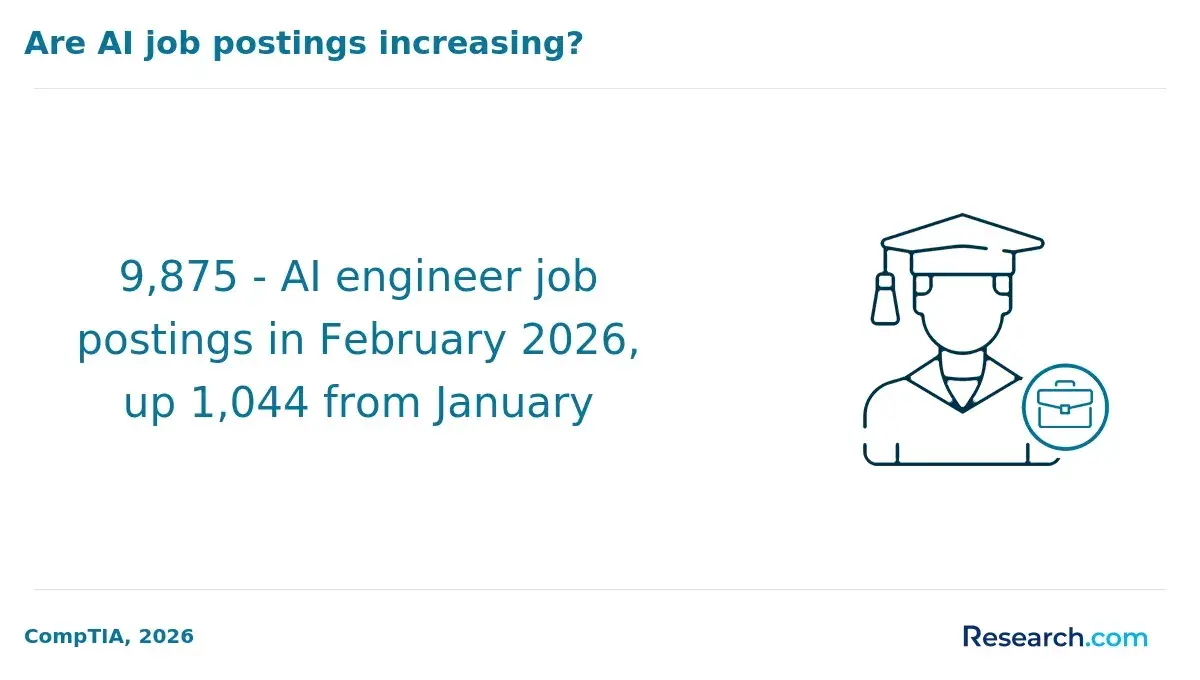
AI bachelor's degree career outcomes increasingly mirror those of computer science (CS) and data science programs, driven by growing industry demand. Graduates develop specialized skills in machine learning, natural language processing, and robotics, complementing the broader theoretical and programming foundations taught in CS.
Employment projections favor AI and data science roles. The U.S. Bureau of Labor Statistics predicts a 36% growth in data scientist jobs from 2023 to 2033, surpassing average job growth rates.
AI degree holders benefit since their skills overlap with data science tasks such as data modeling and predictive analytics. This trend positively impacts career outcomes for AI bachelor's graduates compared to computer science.
Typical career paths for AI graduates include AI research engineer, machine learning specialist, and AI product developer. CS graduates often fill roles like software engineers or systems architects, while data science professionals focus on analytics and big data challenges.
The AI degree offers focused training for niche roles in industries implementing intelligent automation and advanced algorithms.
Industry mentorship embedded in many AI and data science bachelor's careers enhances job readiness by providing real-world projects, internships, or co-op placements. This hands-on experience helps balance the narrower academic focus of AI compared to CS, giving students practical exposure that employers highly value.
Prospective students seeking broad software or systems roles may lean toward CS, while those interested in automated decision-making, robotics, or AI development will find AI degrees increasingly competitive.
For those interested in building interactive digital environments, consider exploring an online game development degree.
What curriculum and projects should a strong mentored AI bachelor's program include?
A strong mentored ai bachelor's programs curriculum design must balance foundational theory with practical, industry-driven ai bachelor's degree projects. Core courses should cover machine learning, data structures, algorithms, probability, statistics, natural language processing, and computer vision.
Complementary classes on software engineering, cloud computing, and AI ethics prepare students to navigate real-world AI challenges.
Since 82% of developers rely on AI tools according to the 2024 Stack Overflow Developer Survey, programs should integrate applied tooling workflows such as TensorFlow, PyTorch, and popular MLOps platforms.
Hands-on capstone projects involving datasets from healthcare, finance, or autonomous systems enhance skills through building, training, and deploying AI models under mentor supervision. Collaborative work with industry partners promotes teamwork and professional experience, with examples including recommendation systems, fraud detection, and AI-powered chatbots tailored to specific sectors.
Frequent code reviews, debugging sessions, and AI-assisted development techniques reflect evolving industry practices. Iterative projects with mentor feedback foster adaptive learning and skill assessment. Programs should also incorporate AI ethics discussions addressing bias, transparency, and accountability.
A robust mentorship component bridges academia and industry, guiding technical questions and project management. Internship or co-op opportunities alongside coursework maximize real-world exposure. Workshops on data sourcing, cleaning, and model interpretability prepare students for deployment challenges.
Prospective students interested in related fields may also explore the best online cyber security degrees for complementary career paths.
How do online mentored AI bachelor's programs compare with on-campus options?
Online mentored Artificial Intelligence bachelor's programs offer flexible schedules, personalized guidance, and access to industry experts, often surpassing the rigid structures of many on-campus options. These programs integrate mentorship directly, enabling students to have regular one-on-one sessions with professionals actively working in AI.
This approach improves job readiness by helping students apply theoretical knowledge to real-world challenges. While on-campus programs provide face-to-face interaction, they often lack consistent industry mentorship due to faculty workload and resource limitations.
The 2024 Wiley workplace learning survey revealed that 74% of employees find online learning better suited for working adults than traditional in-person methods. This supports the effectiveness of online programs for students balancing jobs or other commitments.
Key benefits of online mentored AI programs include:
- Flexible pacing accommodating students with employment or career changes.
- Mentors sharing up-to-date insights on AI tools, trends, and practical skills.
- Opportunities to build professional networks remotely with global mentors and peers.
Online mentorship also addresses concerns about limited interaction by scheduling mentor meetings and providing detailed project feedback. Many platforms offer extensive resources such as recorded lectures and AI simulation tools accessible anytime.
For those seeking intensive lab access or campus networking, blended programs combining online and on-site sessions are increasingly common. Evaluating mentorship models, communication frequency, and technological support is essential when choosing the best program for your career goals.
What are the admission requirements and prerequisites for an AI bachelor's degree?
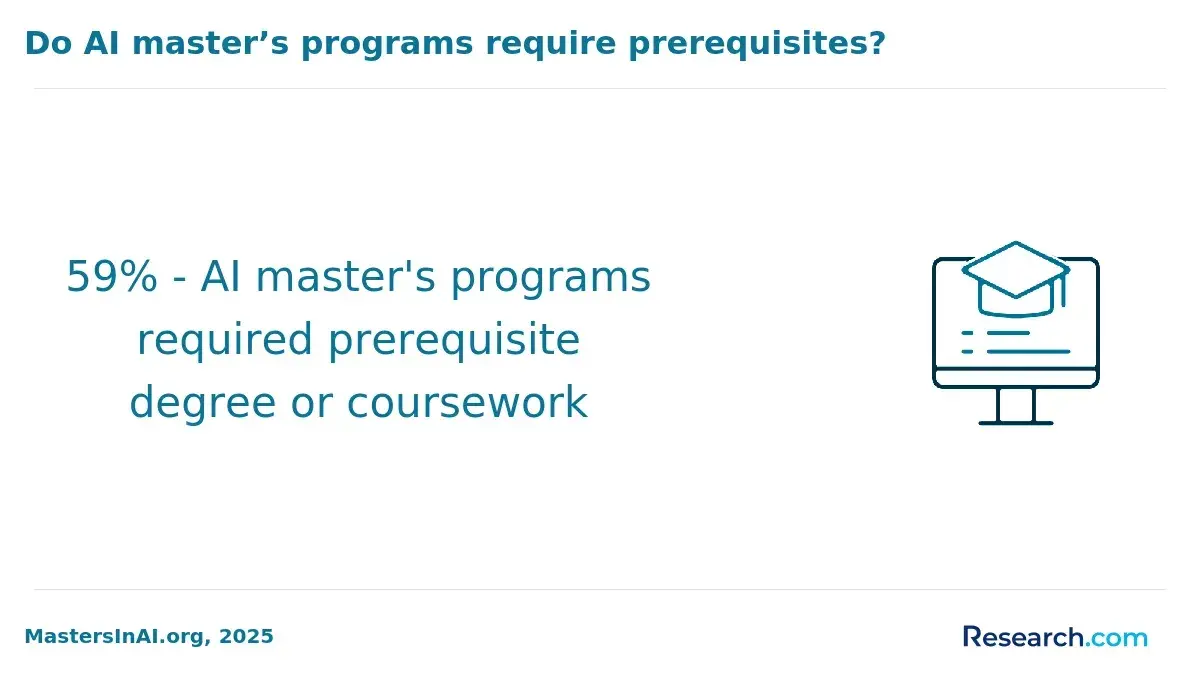
Admission criteria for a 2026 artificial intelligence bachelor's degree generally emphasize strong backgrounds in mathematics and science. Applicants usually need a high school diploma or equivalent with coursework in algebra, geometry, and often calculus.
Programming skills are increasingly important, with some programs favoring candidates who have completed computer science classes or coding projects. Standardized test scores such as the SAT or ACT may still be requested, though many universities are updating their admissions policies.
Currently, 28 states plus Washington, D.C. have automatic admission policies at public universities tied to GPA, class rank, or test scores, simplifying entry for high-achieving students.
For instance, in Texas, students ranking in the top 10% of their class may gain automatic admission to STEM-related degrees including artificial intelligence tracks.
Prerequisites for starting an AI bachelor's program often include:
- Completed high school math through precalculus or calculus
- Basic programming knowledge shown by coursework or projects
- Strong analytical skills demonstrated by science courses such as physics or statistics
- A satisfactory GPA, frequently above 3.0 (depending on the institution)
- Submission of test scores when required
Some universities require placement tests or letters of recommendation to assess readiness. Prior exposure to linear algebra or discrete mathematics can be advantageous, while remedial courses may be necessary if these are lacking.
Transfer students and working professionals might use college credits or relevant experience to fulfill prerequisites.
Consulting university websites and state education resources can help applicants align their qualifications with suitable programs. For more detailed information on college admissions policies, see the Education Commission of the States' "50-State Comparison: College Admissions."
How long does an AI bachelor's degree take, and what does it cost?
An AI bachelor's degree generally takes about four years to complete, similar to typical undergraduate programs in the U.S. Accelerated options can reduce this to three years, especially for students with prior credits or those in intensive schedules. Part-time and online formats may extend the timeline to five or six years to accommodate working professionals.
Tuition costs vary widely by school type and residency status. Public in-state tuition averages $11,610 annually, while out-of-state students often pay two to three times more. Private universities typically charge between $30,000 and $55,000 per year for AI degrees, influenced by their prestige and resources.
Additional expenses include textbooks, software licenses, and hardware needed for AI projects, potentially adding $1,000 or more each year. Some programs feature industry mentorship that can involve partnership fees or travel expenses for internships, so budgeting should account for these costs.
Scholarships, grants, and employer education benefits can significantly lower the net cost. Hands-on projects and mentorship from AI professionals often lead to paid internships that help offset living expenses. Prospective students should inquire about such support when comparing programs to balance cost, duration, and practical experience effectively.
What AI jobs can you get with a bachelor's degree and mentorship experience?
Graduates with a bachelor's degree in artificial intelligence who engage in mentorship programs gain a competitive edge in the job market. Practical experience through mentorship improves skills and job readiness for roles requiring hands-on knowledge. This combination of education and real-world exposure is highly valued by employers.
Key entry-level positions include AI engineer, machine learning engineer, data analyst, and AI software developer. AI engineers typically design and implement AI models, collaborating with data scientists to optimize algorithms. Machine learning engineers focus on creating scalable systems that bring theoretical models into production.
Mentorship often involves internships or live projects, offering experience with coding frameworks such as TensorFlow or PyTorch. These practical skills distinguish candidates beyond academic achievements.
Other accessible roles are data analyst, who interprets large datasets to support AI solutions, and AI product specialist, who acts as a liaison between technical teams and business units, ensuring AI applications meet market demands.
LinkedIn's Jobs on the Rise 2024 report ranks AI engineer among the fastest-growing jobs in the U.S., underscoring opportunities for bachelor's-level graduates equipped with mentorship and project experience.
What salaries can AI bachelor's graduates expect in common entry-level roles?
Graduates holding a bachelor's degree in artificial intelligence often start their careers with salaries that match or surpass the average starting pay reported for computer science graduates.
Entry-level roles such as AI engineer, machine learning developer, data scientist, and AI research analyst typically offer starting salaries ranging between $65,000 and $90,000. Location, employer size, and prior mentorship or internship experience greatly influence these figures.
For instance, AI engineers in major tech hubs like San Francisco or Seattle commonly earn between $80,000 and $90,000 due to high demand for skills in neural networks, natural language processing, and computer vision.
In smaller cities, data scientist roles may begin closer to $70,000 but increase rapidly with hands-on project experience. AI research analysts in academia or government sectors typically start near $65,000 and benefit notably from structured mentorship programs that accelerate career growth and compensation.
Mentorship integrated into AI bachelor's programs is a key factor in improving early career salary prospects. Employers report that graduates with documented mentorship or internship experience receive starting salaries 10-15% higher on average than those without.
- Entry-level AI engineer: $80,000 to $90,000
- Machine learning developer: $75,000 to $85,000
- Data scientist: $70,000 to $85,000
- AI research analyst: $65,000 to $75,000
Students aiming for competitive compensation should seek programs emphasizing industry projects and mentorship, which correlate strongly with higher salary offers in the evolving AI job market.
Which certifications and professional standards complement an AI bachelor's degree?
Adding certifications and adhering to professional standards significantly enhance the value of an AI bachelor's degree by demonstrating practical expertise and industry alignment.
Important certifications include the Certified Artificial Intelligence Practitioner (CAIP), which focuses on real-world AI model development and deployment, and the Google Professional Machine Learning Engineer credential, ideal for cloud-based AI solutions. Certifications like the Microsoft Certified: Azure AI Engineer Associate complement AI curricula centered on cloud services integration.
Expanding knowledge through adjacent fields is beneficial, especially with certifications in data science and machine learning. Notable examples are the IBM Data Science Professional Certificate and the TensorFlow Developer Certificate, which enhance skills in data handling and neural network frameworks.
Adherence to professional standards is crucial. Industry frameworks such as the IEEE Standards for AI highlight ethical development and governance, while familiarity with ISO/IEC JTC 1/SC 42 AI standards supports quality and risk management.
According to the 2024 Global Knowledge IT Skills and Salary Report, 86% of IT decision-makers value certified professionals for increasing team effectiveness. Prospective students and graduates benefit from strategically choosing certifications aligned with their career goals to strengthen both competence and marketability.
Other Things You Should Know About Artificial Intelligence
Students should have strong foundations in mathematics, particularly linear algebra, calculus, and probability. Programming skills, especially in languages like Python, are critical since they enable practical implementation of AI algorithms.
Analytical thinking and problem-solving abilities also help students grasp complex AI concepts and apply them in real-world contexts.
Mentorship plays a crucial role in bridging theoretical learning with practical industry experience. It provides personalized guidance, exposes students to current AI challenges, and often facilitates networking opportunities. Students with mentors tend to graduate with stronger portfolios and a clearer understanding of career paths in AI fields.
Yes, internships are commonly integrated into these programs to provide hands-on experience in professional AI environments. They allow students to apply classroom knowledge to real projects, build industry connections, and enhance employability after graduation.
Many programs have formal partnerships that guarantee internship placements for mentored students.
Students can specialize in areas like machine learning, natural language processing, computer vision, robotics, and ethical AI. These specialties reflect current industry trends and help tailor education to specific career goals.
Exploring different tracks also prepares students for diverse roles across sectors such as healthcare, finance, and autonomous systems.
References
- What Are the Career Paths After a Bachelor of Science in AI https://tetr.com/blog/what-are-the-career-paths-after-a-bachelor-of-science-in-ai
- Entry Level AI Roles With Highest Paying Salaries https://www.wsnmagazine.com/entry-level-ai-roles-with-highest-paying-salaries/
- Top 30 Artificial Intelligence Project Ideas for Students (Beginner to Advanced) https://sageuniversity.edu.in/blogs/top-30-artificial-intelligence-project-ideas-for-students
- 23 Top AI Certifications to Know | Built In https://builtin.com/articles/ai-certification
- Data Science vs. Computer Science: Which Path to Choose https://roadmap.sh/ai-data-scientist/vs-computer-science
- Best AI Bachelor's Degrees - AIDegreeProgams.org https://aidegreeprograms.org/rankings/best-ai-bachelor-degrees/
- Cost to Study Artificial Intelligence in 2026 https://checkmateittech.com/cost-to-study-artificial-intelligence-usa/
- Best AI Certifications to Boost Your Career in 2026 – Dataquest https://www.dataquest.io/blog/best-ai-certifications/
- MH Cognition https://mhcognition.com/blogs/core-ai-ml-subjects-bsc-cs
- These 14 colleges offer bachelor's degrees in AI—including one Ivy League school https://www.cnbc.com/2025/01/22/colleges-that-offer-bachelors-degrees-in-ai.html