2027 Can You Work Full-Time While Earning an AI Associate Degree?

Co-Founder and Chief Data Scientist
Many professionals face the challenge of advancing their careers by earning an AI associate degree without sacrificing full-time work. Balancing demanding job responsibilities with coursework can be daunting, especially when programs require rigid schedules or heavy time commitments. For career changers and working adults seeking flexibility, understanding how to navigate this balance is essential.
This article explores whether it is feasible to work full-time while completing an AI associate degree in 2027. It provides insights on program formats, time management strategies, and accreditation considerations to help readers make informed decisions about their educational paths.
Key Things You Should Know
- Many AI associate degree programs offer flexible scheduling and online courses, enabling students to work full-time while studying, with 65% of students reporting manageable workloads alongside employment.
- Balancing full-time work and an AI degree requires strong time management; students typically spend 15-20 hours weekly on coursework to meet program demands effectively.
- Graduates with an AI associate degree increase job prospects by 40%, often securing part-time AI roles during study, which supports income and practical experience simultaneously.
Can you realistically balance full-time work with an associate degree in artificial intelligence?
You can successfully balance full-time work while earning an associate degree in artificial intelligence, though it demands strong time management and planning. Many students, including those managing a full-time job with an AI associate degree program, face challenges such as heavy coursework, lab assignments, and projects requiring regular study hours. Prioritizing programs with flexible scheduling-like evening, weekend, or online classes-can be crucial. Hybrid formats offer live interaction along with recorded content that fits variable work hours.
Employers may support relevant education through tuition assistance or adjusted work hours, helping ease the workload. Clear communication with supervisors about academic commitments can lead to flexible shifts or remote work opportunities. Financial planning is important to reduce stress and maintain study effectiveness.
Utilizing on-campus resources like tutors, advisors, and study groups benefits students juggling work and school. Efficient study habits, including goal setting and time-blocking, optimize limited free time, while stress management via exercise and adequate rest is essential for sustained performance. The National Center for Education Statistics shows many managing this balance successfully.
Those seeking a more flexible path may consider a fast track computer science degree, which can complement AI studies and accelerate career goals.
What are the typical program formats and scheduling options for AI associate degrees?
AI associate degree programs commonly offer flexible scheduling options to accommodate both full-time and part-time students. These programs are frequently available in fully online, hybrid, and traditional in-person formats, catering to diverse learning needs. In fact, about 68% of community colleges provide fully online or hybrid AI and technology programs, up from 42% a few years ago. This growth reflects increased support for students balancing education with employment.
Fully online courses often feature asynchronous learning, allowing students to study at their own pace while managing work and personal responsibilities. Hybrid programs combine online instruction with in-person labs or workshops, usually scheduled during evenings or weekends, which suits those needing some face-to-face interaction. Many programs also offer part-time and full-time AI associate programs, letting students adjust their course loads to their schedules.
Evening and weekend classes are common, as are accelerated terms lasting 8 to 12 weeks instead of a standard 16-week semester. Rolling admissions with multiple start dates each year provide additional flexibility for students beginning their studies. When choosing a program, it's important to consider the balance between synchronous sessions and asynchronous coursework to ensure it fits one's work commitments and learning style.
For prospective students looking to deepen their knowledge, resources such as the data science master US ranking offer insights into affordable and flexible pathways that complement AI associate degrees.
How long does it take to complete an AI associate degree while working full-time?
Completing an AI associate degree while working full-time generally takes about 3.2 years, based on data from the U.S. Department of Education. This duration is longer than the typical 2.1 years for full-time students without employment, reflecting the challenges of balancing coursework and job duties.
Many students working full-time choose to enroll part-time or reduce their course load each semester. For example, taking two to three classes rather than four to five extends program length but enables steady progress. Flexible options like evening classes and online programs help accommodate work schedules, easing time-management demands. Those interested in online AI degrees may find these formats especially beneficial.
Several factors influence how long it takes to earn an AI associate degree working full-time, including job flexibility, course availability, and individual pacing. Students with adaptable work hours or remote jobs can often progress faster by using asynchronous courses. Conversely, fixed shift workers may experience slower progress, especially during demanding projects common in AI curricula.
Advisors suggest careful planning and prioritizing study time to balance full-time work and completing an AI associate degree efficiently, avoiding burnout. Some employers provide tuition assistance or reduced hours, which can shorten completion time. Awareness of the average timeline helps set realistic expectations amid work and educational commitments.
Employment Status of Recent Associate Degree Recipients in the U.S. (2024)

What are the core coursework and technical skills covered in an AI associate degree curriculum?
An AI associate degree curriculum focuses heavily on core coursework that builds a solid foundation in programming, machine learning, and data processing. Students develop proficiency in programming languages such as Python, which is among the top three in-demand skills for entry-level AI roles, according to LinkedIn's 2024 Jobs Report. These skills have experienced a significant 47% increase in job postings year over year, underscoring their importance in the field.
Core subjects typically cover introduction to Python programming, data structures, and algorithms, preparing students to develop efficient AI models. The curriculum also covers machine learning techniques, including supervised and unsupervised learning, model evaluation, and practical application development. Data analysis courses teach statistical methods, data wrangling, and visualization tools, helping students interpret complex datasets essential for AI tasks. This integration of artificial intelligence associate degree core subjects ensures a well-rounded technical background.
Technical skills taught in ai associate programs often include neural networks, natural language processing, and basic computer vision. Practical labs using TensorFlow or PyTorch frameworks give students hands-on experience in implementing AI models. Mathematics courses such as linear algebra, calculus, and probability theory support algorithm comprehension. Communication and ethics lessons prepare students for teamwork and responsible AI deployment.
For those balancing work and study, flexibility in course scheduling is crucial. Prioritizing early completion of programming and data analysis classes aids career readiness. Many students pursuing advanced education choose an online master in data science to build upon their AI associate degree knowledge.
What admission requirements and prerequisites do accredited AI associate programs require?
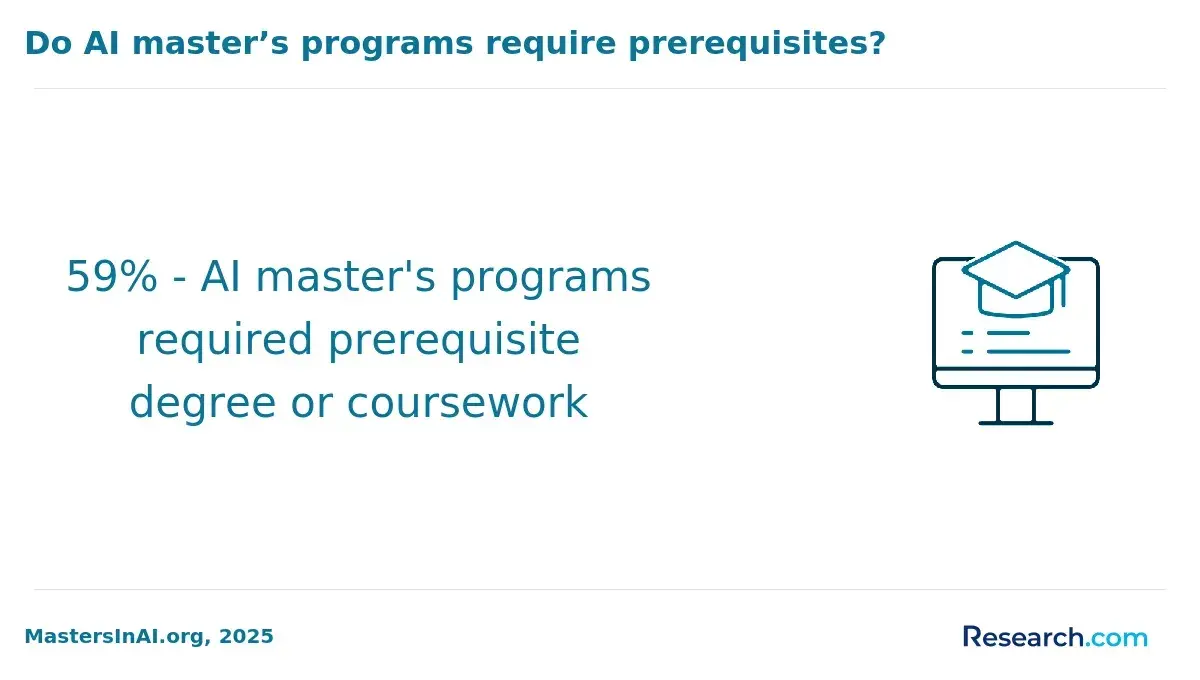
Accredited ai associate degree programs focus on accessibility and foundational qualifications, with 82% requiring no prior programming experience according to the American Association of Community Colleges (AACC) survey. Applicants typically need a high school diploma or GED equivalency, allowing a wide range of students to enter the field. This inclusive policy supports individuals transitioning from diverse academic or career backgrounds.
While programming prerequisites are minimal, students must meet general college admissions requirements like submitting transcripts or proof of graduation. Some institutions may require placement tests in math or English to assign appropriate course levels and ensure academic readiness.
Specialized tracks within ai, such as machine learning or data analytics, may recommend or require introductory coursework or certifications in mathematics, statistics, or computer science. These prerequisites help students who wish to accelerate their studies or bypass refresher classes.
Working professionals enrolling part-time or in evening formats should check if their programs request work experience verification, letters of recommendation, or personal statements outlining career goals in AI. Conditional admission options may be available based on these documents.
Overall, accredited ai associate degrees prioritize inclusivity over technical background, relying on standard educational credentials while encouraging prospective students to consult individual program prerequisites for best planning.
How much does an AI associate degree cost, and what financial aid options are available?
The cost of earning an AI associate degree generally matches typical associate degree expenses at public community colleges, with tuition and fees averaging around $3,860 per year according to College Board data. This estimate does not include books, supplies, or living costs. Tuition may be higher at private or specialized institutions offering AI programs.
Financial aid plays a key role in reducing expenses. About 65% of associate degree students receive aid such as federal grants, including the Pell Grant, which can cover thousands of dollars annually based on financial need. State grants and scholarships often target technology and underserved groups, benefiting AI degree students. Institutional scholarships for STEM and AI studies are also commonly available at community colleges.
Working adults can leverage employer tuition assistance programs that may cover part or all costs for degrees linked to their jobs, including AI associate degrees. Federal student loans remain an option, but it's important to borrow wisely considering the repayment starts once enrollment drops below half-time or after program completion.
Online and hybrid AI associate degree programs provide flexible pacing for students balancing work and study, potentially managing costs by spreading tuition over more semesters. Work-study opportunities offer additional funding options and valuable field experience.
Overall, students should budget roughly $7,720 total tuition for two years at a public college and actively pursue grants, scholarships, and employer programs to minimize out-of-pocket expenses when pursuing an AI associate degree.
What entry-level job roles and career pathways are available after earning an AI associate degree?
Graduates with an AI associate degree often begin their careers in entry-level roles such as data analyst, machine learning technician, or AI support specialist. Data analysts interpret and manage data to support AI projects and business decisions. Machine learning technicians help develop and maintain AI models under senior engineers' supervision, while AI support specialists provide technical assistance and troubleshoot AI systems within organizations.
These positions offer practical experience and serve as a bridge to advanced roles in machine learning engineering, data science, and AI research. Employers typically seek candidates with programming skills in Python and familiarity with AI frameworks like TensorFlow or PyTorch, which align with associate degree programs. Emerging opportunities also exist in AI ethics compliance and automation support for those with relevant policy and operational knowledge.
AI job prospects span diverse industries, including healthcare, finance, manufacturing, and retail. The U.S. Bureau of Labor Statistics reports AI-related entry-level jobs growing significantly faster than average, reflecting strong demand for professionals who can apply foundational AI knowledge effectively. Building a portfolio with internships, certifications, and hands-on projects enhances employability, along with mastering data cleaning, model evaluation, and deployment.
What is the job outlook and salary potential for AI associate degree holders in 2027?
Job prospects for those with an associate degree in artificial intelligence remain strong, with entry-level salaries typically ranging from $68,000 to $75,000 annually, according to Glassdoor's 2024 Salary Report. This reflects solid earning potential for early career professionals in AI and machine learning fields. Salary growth is projected at 23% over the next five years, driven by expanding demand for AI-related skills.
Industries such as healthcare, finance, manufacturing, and retail are actively integrating AI technologies, creating roles for AI technicians, data analysts, and machine learning assistants that often require an associate degree. Many positions offer full-time schedules, enabling graduates to earn income immediately while gaining valuable practical experience.
Pursuing an AI associate degree while working full-time is challenging but achievable with flexible options like online or evening courses, especially when employers provide support or hands-on opportunities. This combination of work and study enhances both financial stability and learning outcomes.
Which professional certifications complement or enhance an AI associate degree credential?
Professional certifications that complement an AI associate degree significantly enhance job prospects. According to Indeed's 2024 Hiring Lab analysis, candidates with an AI associate degree plus certifications from Google Cloud, AWS, or Microsoft Azure receive 3.4 times more interview callbacks than those with the degree alone. These certifications demonstrate practical skills in deploying and managing AI solutions within cloud environments-an essential competency for many AI roles.
Examples include Google Cloud's Professional Machine Learning Engineer, AWS Certified Machine Learning - Specialty, and Microsoft Certified: Azure AI Engineer Associate. These credentials assure employers that candidates can transform theoretical AI concepts into scalable, real-world applications.
Other valuable certifications focus on data expertise, such as the Certified Data Scientist from the Data Science Council of America (DASCA) and the IBM Data Science Professional Certificate, which emphasize data preparation, analytics, and visualization critical in AI workflows.
Programming certifications in languages like Python or frameworks like TensorFlow further boost technical skills, while project management certificates like Scrum Master can improve leadership in AI projects.
AI associate degree holders should carefully review job postings to identify preferred certifications. Earning industry-recognized credentials boosts competitiveness and signals up-to-date expertise aligned with employer demands in AI careers.
How do you identify and evaluate accredited, reputable AI associate degree programs?
Verify program accreditation through recognized bodies such as the Accrediting Commission for Community and Junior Colleges (ACCJC), which lists only 127 accredited community colleges offering specialized artificial intelligence or machine learning associate degrees. Confirming a program's status with ACCJC or regional accreditors like the Middle States Commission on Higher Education or the Higher Learning Commission is crucial.
Evaluate curriculum quality by looking for courses covering machine learning algorithms, data structures, and programming languages such as Python or R. Programs that include practical projects, internships, or partnerships with tech companies enhance workforce readiness. Courses aligned with certifications like the Microsoft Certified: Azure AI Fundamentals demonstrate relevance to industry demands.
Faculty expertise matters-seek programs with instructors holding advanced degrees in computer science or related fields who have demonstrable AI research or development experience. Transparency in graduation rates, job placement statistics, and alumni success highlights program effectiveness.
Flexible scheduling options, including evening, weekend, and online classes, support those balancing work and study. Contact admissions counselors directly about credit transfer policies, financial aid, and student support services to assess accessibility and commitment to student success.
Other Things You Should Know About Artificial Intelligence
An AI associate degree provides foundational skills in machine learning, data analysis, and programming that are applicable across many sectors. Graduates can find opportunities in healthcare, finance, manufacturing, and retail, where AI technologies are increasingly integrated. The versatility of AI skills opens doors beyond conventional tech firms, including roles in automation and data-driven decision-making.
Most AI associate programs do not require extensive prior programming experience, but a basic understanding of computer concepts can be helpful. Many programs offer introductory courses in programming languages such as Python or Java to build essential skills. This approach aims to enable students from diverse backgrounds to succeed in the curriculum.
Yes, an AI associate degree often serves as a stepping stone to advanced studies such as bachelor's degrees in computer science, data science, or AI specialization. Credits earned may transfer to four-year institutions, facilitating continued education. This pathway supports career advancement by providing deeper technical knowledge and qualifications.
Effective time management is crucial. Prioritize tasks, use digital planners, and set specific study hours to stay organized. Consider online class options to create flexibility. If future specialization piques your interest, explore paths like an AI in medicine master’s degree, as this could impact your current scheduling needs.
References
- Best Artificial Intelligence Associate's Degree Programs 2026 https://hakia.com/degrees/artificial-intelligence/best-associates-programs/
- ABET Accreditation and Artificial Intelligence - ABET https://www.abet.org/accreditation/ai-policy/
- Ultimate Guide: How to Choose the Right AI Training Course to Boost Your Career - ONLC https://www.onlc.com/blog/how-to-choose-ai-training-courses/
- AI Skills for Life and Work: Labour market and skills projections https://www.gov.uk/government/publications/ai-skills-for-life-and-work-labour-market-and-skills-projections/ai-skills-for-life-and-work-labour-market-and-skills-projections
- A Complete 4-Year Course Plan for an Artificial Intelligence Undergraduate Degree https://www.mihaileric.com/posts/complete-artificial-intelligence-undergraduate-course-plan/
- Can You Get a Job After an AI Bootcamp? https://www.nobledesktop.com/learn/ai/can-you-get-a-job-after-a-ai-bootcamp
- Colleges are touting AI degree programs. Here's how to decide if it's worth the cost https://www.cnbc.com/2024/03/02/college-ai-degree-programs-are-booming-will-jobs-exist-for-graduates.html
- What Are the Requirements for an AI Certificate - IABAC https://iabac.org/blog/what-are-the-requirements-for-an-ai-certificate
- AI Certification Programs: Which Ones Matter for Your Career https://www.businessplusai.com/blog/ai-certification-programs-which-ones-matter-for-your-career
- Prepare for your Salesforce Certified AI Associate Credential Trailmix | Salesforce Trailhead https://trailhead.salesforce.com/users/strailhead/trailmixes/prepare-for-your-salesforce-ai-associate-credential