2027 Rolling Admission AI Bachelor's Programs

Co-Founder and Chief Data Scientist
Many professionals with degrees in unrelated fields face challenges when trying to enter the fast-growing ai industry, especially when rigid application deadlines conflict with their work and personal commitments. This timing issue often delays career transitions and reduces opportunities to gain critical skills. Rolling admission programs for ai bachelor's degrees offer a flexible solution, allowing candidates to apply any time during the year without waiting for fixed deadlines. This article examines key 2026 rolling admission ai bachelor's programs, highlighting how they can streamline access to accredited education and accelerate entry into the ai workforce.
Key Things You Should Know
- Rolling admission AI bachelor's programs in 2026 offer flexible application timelines, allowing candidates to apply any time before enrollment deadlines, increasing accessibility for diverse student needs.
- Over 65% of U.S. institutions now provide rolling admission for AI degrees, reflecting growing demand and the urgency to fill AI-related workforce gaps projected to reach 2.3 million by 2025.
- Curricula focus on ethics, machine learning, and data science integration, preparing graduates for both technical roles and responsible AI deployment in various industries.
What are rolling admission AI bachelor's programs and how do they differ from traditional application cycles?
Rolling admission artificial intelligence bachelor's programs allow applicants to submit their materials anytime during the admission cycle, with decisions typically returned within weeks. This model offers greater flexibility compared to traditional application cycles for AI degrees, which have fixed deadlines and set decision dates. Students who decide later in the year or miss early deadlines benefit from the extended timeframe, reducing the "all or nothing" pressure associated with single deadlines.
Most four-year institutions now use rolling admissions, including many offering AI bachelor's degrees. This approach gives applicants more time to strengthen their academic profile or gain relevant experience before applying. Universities may review applications starting in the fall and continue accepting students until the class is filled, unlike traditional programs with a firm cutoff. However, applying early is advisable since spots are filled on a first-come, first-served basis.
Working professionals or recent graduates exploring an AI career find rolling admission particularly convenient, as many programs have multiple start dates annually. Prospective students should research each school's specific policies regarding application deadlines and enrollment. For a deeper look into career opportunities, see what can you do with an applied artificial intelligence degree.
Which universities offer accredited AI bachelor's degrees with rolling admission in 2027?
Several U.S. universities now offer accredited artificial intelligence bachelor's programs and rolling admissions, making it easier for students to start their education without rigid application deadlines. Schools like Arizona State University, Northeastern University, and the University of Central Florida provide ABET-accredited degrees in AI or related fields with continuous application acceptance. This structure supports students who balance work, family, or other commitments, enabling them to apply any time throughout the year.
The Accreditation Board for Engineering and Technology (ABET) has reported a 23% increase in accredited computer science and AI-related programs between 2022 and 2024. This growth reflects the rising industry demand and universities' commitment to expanding access through rolling admissions policies. For example, Arizona State University's program allows late decision-makers and full-time employees to enroll without waiting for traditional semester cycles.
Moreover, Northeastern University combines accredited AI coursework with cooperative education options to help students integrate practical experience alongside their studies. The University of Central Florida also offers an accredited computer science program with an AI concentration that accepts rolling applications to accommodate diverse student backgrounds. Prospective students should verify each program's admission schedule and ABET accreditation to ensure quality and relevance.
Students seeking flexibility can also explore disciplines beyond AI, such as a mechanical engineering degree online, which may similarly offer accredited programs with flexible admissions. Choosing accredited AI bachelor's degree programs accepting rolling admission secures recognized credentials while maintaining application convenience, an advantage in today's competitive tech job market.
What are the typical admission requirements for rolling admission AI bachelor's programs?
Typical admission criteria for rolling admission AI bachelor's programs emphasize strong academic preparation and standardized test performance. Applicants usually need high school coursework in mathematics, including algebra II, precalculus, and sometimes calculus, along with science classes like physics. This foundation prepares students for the quantitative and technical challenges of AI studies. Many programs require SAT or ACT scores; College Board 2024 SAT suite data shows admitted STEM students averaged a 1190 total score, with 610 in math, reflecting the rigorous math skills expected in AI fields.
In undergraduate ai programs with rolling admission, official transcripts demonstrating solid academic performance with a minimum GPA around 3.0 are typically required. Some schools value computer science coursework or programming experience, though requirements vary. Because rolling admissions review applications as they arrive, submitting early can improve chances in competitive programs with limited spots.
Applicants should prepare personal statements that describe their interest in AI and STEM, helping committees gauge motivation and alignment with program goals. Letters of recommendation, typically from math or science instructors, strengthen applications by highlighting academic ability and work ethic. Some programs also conduct interviews to assess communication skills and dedication.
Many programs waive standardized testing for applicants with substantial relevant experience or completed college-level STEM courses, showing a holistic approach to admissions. Prospective students should confirm specific prerequisites on each program's site to ensure timely compliance. For those exploring options, consider the AI degree opportunities available.
How long does it take to complete an AI bachelor's degree, and what is the average cost?
Completing a bachelor's degree in artificial intelligence typically takes four years of full-time study in the United States. This period includes general education, foundational computing, and specialized AI subjects like machine learning, robotics, and natural language processing. Part-time or accelerated programs may extend or shorten this timeline. Prospective students researching the time to complete an AI bachelor's degree in the United States should consider these flexible options when planning their education path.
The average cost for rolling admission AI bachelor's programs in the US varies widely. Public four-year universities report annual costs around $29,750, leading to about $119,000 for a full program. Private institutions average $60,000 per year, potentially reaching $240,000 total. Additional expenses like books, technology fees, and living costs can affect affordability. Students should explore financial aid, scholarships, and employer tuition reimbursement to reduce these amounts.
Some programs offer credit transfers or recognize prior work experience, helping reduce time to degree completion and total costs. Those interested in online options might find insights by reviewing the best online cybersecurity degree programs of 2025, which showcase affordability strategies relevant to tech-focused fields like AI.
Careful evaluation of program structures and costs can optimize both time and investment when pursuing an AI bachelor's degree in the US.
What coursework and technical skills are covered in AI bachelor's degree curricula?
AI bachelor's degree programs equip students with both foundational and advanced technical skills essential for today's job market. Core courses typically cover machine learning, data structures, algorithms, neural networks, and popular programming languages like Python, Java, and C++. In addition, students learn data analysis techniques, probability, statistics, and linear algebra, which are fundamental to many AI models.
Hands-on projects in natural language processing, computer vision, and robotics develop practical experience. For example, students build models that recognize images or process speech, mirroring real-world applications. Ethical AI and human-computer interaction courses are common to prepare students for challenges such as bias and usability.
The World Economic Forum's 2024 Future of Jobs Report highlights a 74% year-over-year increase in employer demand for skills in machine learning, data analysis, and neural networks. This shows how curriculum designs respond to current market needs.
Training includes software tools like TensorFlow, PyTorch, and cloud platforms such as AWS and Google Cloud for deploying models. Foundational topics like operating systems and databases support understanding AI infrastructures. Electives may cover reinforcement learning, deep learning architectures, and system optimization.
Practical problem-solving is fostered through capstone projects, internships, or research opportunities, enabling students to address complex AI challenges. This blend of theory and applied skills prepares graduates for careers in AI development, data science, or research.
Are AI bachelor's degrees available in online, hybrid, or campus-only formats?
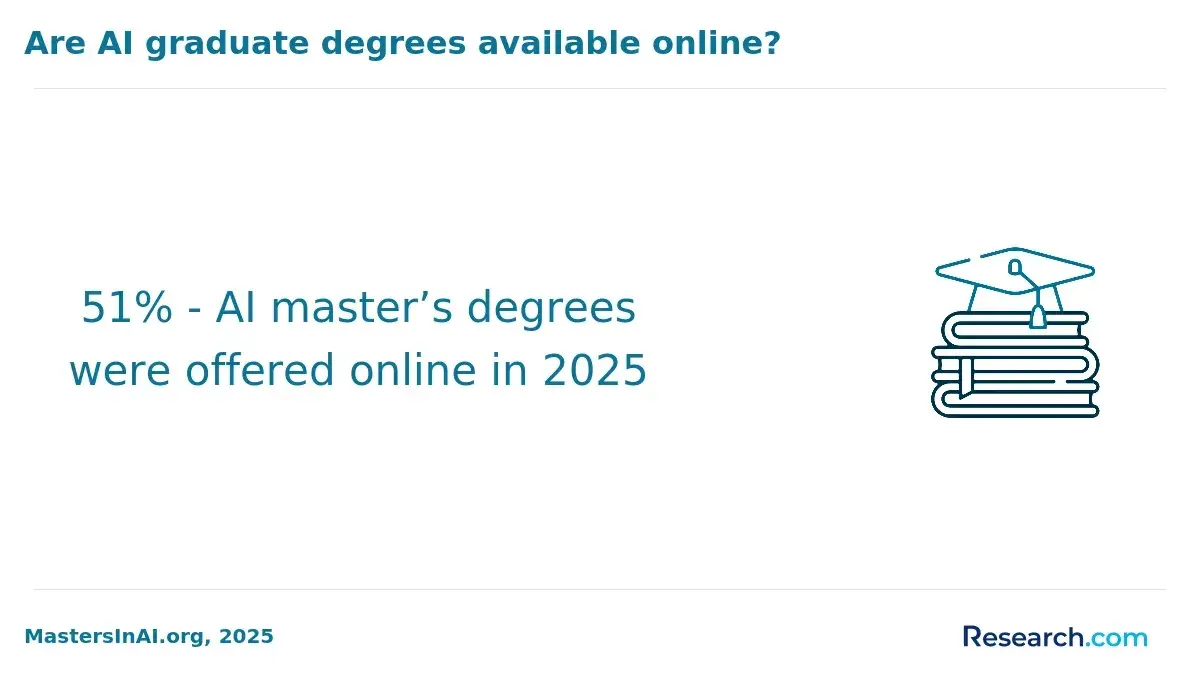
AI bachelor's degrees offer versatile delivery options including online, hybrid, and campus-only formats, catering to diverse student needs. Fully online programs provide flexibility for working professionals and those living far from universities, often hosted by computer science or engineering departments with a remote curriculum. This format requires strong self-discipline and excellent time management skills.
Hybrid programs combine online lectures with in-person labs or discussions, balancing hands-on experience and scheduling flexibility. They suit students seeking faculty interaction and collaboration while accommodating some remote learning. As reported by the National Center for Education Statistics, over 30% of undergraduates take at least one distance education course, highlighting the growing popularity of hybrid education in STEM, including AI.
Campus-only AI degrees emphasize immersive, face-to-face learning with direct access to resources, research labs, and networking opportunities. These programs often include capstone projects and close mentorship from AI faculty and industry experts but may be less accessible for nontraditional students or those balancing work obligations.
When choosing among these formats, prospective students should consider their learning preferences, professional commitments, and location. Selecting the right AI bachelor's degree pathway impacts academic success and career readiness by matching the format's demands to individual circumstances and goals.
What career paths and job titles are available to AI bachelor's degree graduates?
Graduates with a bachelor's degree in Artificial Intelligence can pursue a variety of roles such as AI engineer, machine learning engineer, data scientist, computer vision specialist, natural language processing engineer, and robotics engineer. These positions demand expertise in programming, algorithm design, and data analysis to build intelligent systems and automate decisions.
Other career options include AI consultant and AI product manager, which combine technical knowledge with business strategy to oversee AI-driven projects. Emerging roles like ethical AI analyst and AI safety engineer address the growing need for responsible AI deployment and governance.
The U.S. Bureau of Labor Statistics projects a 23% growth in computer and information research scientist jobs from 2023 to 2033, signaling strong demand for AI researchers and innovators. Graduates targeting research careers often pursue advanced studies or gain hands-on experimental experience.
Specializing in sectors such as healthcare AI, autonomous systems, cybersecurity, or finance technology enhances job prospects. Mastery of tools like Python, TensorFlow, and cloud computing frameworks is often required and reflects the need for continuous skill development.
Internships, project experience, and networking through organizations like the Association for the Advancement of Artificial Intelligence (AAAI) are vital strategies. Targeting companies with heavy investment in AI research improves opportunities for meaningful and advancing careers in this dynamic field.
What is the job outlook and salary potential for AI bachelor's degree holders in the U.S. job market?
The U.S. labor market shows strong demand for bachelor's degree holders in artificial intelligence, with growth expected across technology, healthcare, finance, and manufacturing sectors. Employment in related computer and information research science fields is projected to increase by 15% from 2022 to 2032, offering substantial opportunity for graduates.
Salary prospects are competitive, starting at an average of $118,000 annually for entry-level AI engineers, according to Glassdoor's 2024 data. Professionals often experience salary growth of about 40% within five years, reaching roughly $165,000 mid-career. This reflects the increasing value of AI skills aligned with market needs.
Career options include machine learning engineer, data scientist, AI software developer, and AI research analyst. Graduates with strong programming and data modeling skills tend to earn higher starting salaries. Further certifications or advanced education can accelerate career advancement and earnings.
Targeting AI applications in booming sectors like autonomous vehicles, cybersecurity, and natural language processing improves job prospects. Building a strong portfolio and engaging with professional AI communities are key strategies for standing out in this competitive field.
What professional certifications or credentials complement an AI bachelor's degree?
Professional certifications that complement an AI bachelor's degree significantly boost technical skills and employability. Key credentials include the Certified Artificial Intelligence Practitioner (CAIP), which emphasizes practical AI applications in business, and the Microsoft Certified: Azure AI Engineer Associate, essential for deploying AI on cloud platforms. These certifications validate expertise beyond formal education and signal readiness for industry roles.
Certifications in machine learning and data science also carry strong value due to their intersection with AI. For instance, the Google Professional Machine Learning Engineer credential verifies the ability to design and build ML models, while the IBM Data Science Professional Certificate covers crucial skills in data handling essential for AI development.
LinkedIn's 2024 Workplace Learning Report highlights AI and machine learning certifications as the fastest-growing credentials, with a 94% increase in pursuit by recent graduates. This surge reflects strong employer demand and underscores the strategic advantage of these certifications in a competitive market.
Beyond technical expertise, project management certifications such as PMP (Project Management Professional) or Agile Scrum Master enhance leadership qualifications for AI-focused teams. Hybrid professionals who combine AI knowledge with management skills are preferred for complex, interdisciplinary projects.
Students should choose certifications aligned with career goals: hands-on AI engineers focus on platform-specific credentials; data scientists select data-centric programs; and those targeting managerial roles prioritize project management certificates. It's advisable to prioritize certifications with verified exams and practical assessments to ensure industry recognition and credibility.
How should prospective students evaluate and compare rolling admission AI programs before enrolling?
Prospective students considering rolling admission AI bachelor's programs should prioritize curriculum quality and industry relevance. Evaluate courses covering machine learning, natural language processing, and robotics, as well as opportunities for hands-on experience through labs, capstones, or internships. Practical training is essential to job readiness and maximizes the strong return on investment these degrees can offer, with a median 20-year net return of $1.2 million, according to PayScale's 2024 College ROI Report.
Accreditation from recognized bodies like ABET is crucial to ensure academic rigor and credit transferability. Additionally, faculty expertise and active research or industry collaboration enrich the program, exposing students to cutting-edge developments and networking opportunities.
Rolling admissions require attention to acceptance rates, decision timelines, and necessary documentation. While offering flexible start dates, they demand early preparation to secure a place in competitive programs.
Tuition costs should be compared alongside scholarship availability and potential employer tuition assistance. Some universities provide lower rates for in-state students or online enrollees. Graduate employment data and alumni success reveal how effectively a program supports career advancement in AI fields.
Support services like academic advising, career counseling, and AI-focused job placement assistance help maintain comprehensive student support throughout the degree journey.
Other Things You Should Know About Artificial Intelligence
The 2027 rolling admission AI bachelor's programs typically require SAT or ACT scores. However, some programs may also consider GRE or TOEFL scores, especially for international candidates. It's essential to check each program's specific requirements for standardized tests.
The minimum GPA required for admission into 2027 AI bachelor's programs typically varies by institution, but most programs expect at least a 3.0 on a 4.0 scale. It’s crucial to check specific program details for any additional academic requirements.
Many 2027 rolling admission AI bachelor's programs accept AP and IB transfer credit for first-year courses such as calculus, programming, or general education. Schools usually require official score reports, and credit is often awarded only for scores of 4 or 5 on AP exams or 6 or 7 on higher-level IB exams.
References
- Undergraduate https://ai.seas.upenn.edu/academics/undergraduate/
- Three ways prospective students are using AI when applying to higher education https://wonkhe.com/blogs/three-ways-prospective-students-are-using-ai-when-applying-to-higher-education/
- Blog https://admissiongoals.com/post/ai-machine-learning-programs-europe-admission-guide-international-students
- Careers in AI: Opportunities and Pathways - ACS https://www.acs-college.com/careers-in-ai-opportunities-and-pathways
- AI Certification Programs: Which Ones Matter for Your Career https://www.businessplusai.com/blog/ai-certification-programs-which-ones-matter-for-your-career
- AI’s Impact on Job Growth | J.P. Morgan Global Research https://www.jpmorgan.com/insights/global-research/artificial-intelligence/ai-impact-job-growth
- 11 Best AI Certifications in 2025 to Deepen Your Technical Knowledge | DigitalOcean https://www.digitalocean.com/resources/articles/ai-certifications
- AI Is Reshaping How to Evaluate Applicants Fairly at Scale https://blog.kiratalent.com/ai-admissions-authentic-evaluation-scale/
- Top Artificial Intelligence Courses: Fees and Duration https://collegevidya.com/blog/artificial-intelligence-course-fees-structure-duration/
- AI Tools Are Driving Prospective Student Decisions, UPCEA and Search Influence Research Shows - UPCEA https://upcea.edu/ai-tools-are-driving-prospective-student-decisions-upcea-and-search-influence-research-shows/