2027 The Future of AI Degrees in Higher Education

Co-Founder and Chief Data Scientist
Many professionals with degrees unrelated to STEM face challenges entering the artificial intelligence field due to limited access to tailored, accredited programs. Traditional graduate pathways often require extensive prior knowledge, creating barriers for career changers seeking flexibility alongside work commitments. This gap leaves capable candidates unable to capitalize on booming AI job markets despite high demand.
This article explores emerging AI degree options designed for non-technical backgrounds, highlighting flexible, accredited programs. It aims to guide prospective students in identifying viable, practical routes into the industry, helping them navigate program selection and prepare for successful transitions.
Key Things You Should Know
- By 2026, over 40% of U.S. universities are expected to offer specialized AI degrees, reflecting growing demand for expertise in sectors like healthcare, finance, and autonomous systems.
- Curricula increasingly emphasize ethics, interdisciplinary skills, and hands-on experience, addressing workforce readiness and AI's societal impact amid evolving regulatory frameworks.
- Graduates in AI-related fields command median starting salaries around $95,000, with a projected 30% job growth rate through 2030, highlighting robust career prospects for degree holders.
What is an AI degree in higher education and how is it different from computer science?
An AI degree program in higher education focuses on specialized studies in machine learning, neural networks, natural language processing, robotics, and data analytics. It centers on designing intelligent systems to solve complex problems in automation, decision-making, and pattern recognition. In contrast, computer science degrees provide a broader foundation, including programming, algorithms, software engineering, computer architecture, and databases, with AI courses often offered as electives. This distinction highlights the differences between artificial intelligence and computer science studies, where AI degrees target careers in AI research, development, and implementation, while computer science graduates have flexibility across various IT roles.
Students pursuing an AI degree may work with deep learning frameworks and develop AI models for health diagnostics or autonomous vehicles. Computer science students, however, acquire versatile skills useful in areas like cybersecurity or network administration. AI degree programs in higher education also emphasize ethics, policy, and interdisciplinary approaches combining cognitive science and data ethics, areas usually less prominent in computer science curricula.
Prospective students should align their choice with career goals: AI-centric roles may be more accessible with an AI degree, while a computer science program offers broader opportunities. The rapid growth in this field is notable; according to the Stanford HAI AI Index, the number of English-language AI-related postsecondary degree programs worldwide tripled by 2025 compared to 2017. For those considering flexible learning options, an online computer science degree can provide a valuable pathway.
Are AI degree programs accredited, and how can students verify program quality and legitimacy?
Accredited artificial intelligence degree programs in higher education are recognized by regional or national accrediting agencies approved by the U.S. Department of Education or the Council for Higher Education Accreditation (CHEA). Accreditation confirms that these programs meet strict quality standards, including curriculum rigor, faculty qualifications, and resources. Students should verify program legitimacy through official sources such as the U.S. Department of Education's database or CHEA's website to avoid unrecognized or diploma mill programs with limited academic value.
Beyond institutional accreditation, some AI degree programs have program-specific recognition from reputable professional organizations such as IEEE or ACM, which ensures relevance and alignment with industry needs. Those pursuing applied AI specialties should check for such endorsements when available.
Program quality evaluation also involves reviewing graduate outcomes, faculty expertise, and research opportunities. Prospective students can use rankings, alumni employment data, and faculty publications to assess educational value. Given the rapid growth of U.S. master's programs in AI-including an increase of 167% from 116 to 310 programs between 2022 and 2025-careful vetting is essential.
How to verify legitimacy of AI degree programs includes key steps:
- Confirm institutional accreditation through recognized agencies.
- Check for program-specific recognitions from reputable professional bodies.
- Review official data on graduate success and faculty qualifications.
- Beware of programs not listed in authoritative educational databases.
For those seeking affordable options, a valuable resource to identify the cheapest online masters in artificial intelligence can help guide informed decision-making.
What types of AI degrees and specializations can students pursue at U.S. colleges and universities?
Students pursuing AI degree programs in U.S. colleges and universities can select from specialized tracks such as bachelor's and master's degrees in artificial intelligence, computer science with AI concentrations, or interdisciplinary areas mixing AI with data science, robotics, or cognitive science. These programs focus on foundational topics like machine learning, natural language processing, computer vision, and ethical AI considerations.
Specializations in artificial intelligence for higher education students typically develop applied skills in key fields such as:
- Machine learning engineering, centered on algorithm design and deployment
- Robotics and autonomous systems integrating AI with hardware control
- Data science and analytics, combining AI with big data techniques
- AI ethics and policy, exploring societal impact and regulations
- Healthcare AI, with applications in medical imaging and diagnostics
Many universities also offer certificates or minors in AI-related subjects to complement other disciplines. For working professionals, part-time and online AI master's degrees emphasize flexibility and hands-on projects. Aligning with industry demand is essential, as seen in the UK, where 75.7% of AI graduates secured employment within 15 months, highlighting strong job market absorption.
Practical experience through capstone projects, internships, or partnerships with tech companies is a critical factor in career readiness. Understanding which specializations suit emerging sectors like autonomous vehicles, finance, or cybersecurity can maximize employment prospects. Those interested in advanced tech fields may also consider options like the cheapest online PhD in cyber security for further specialization.
How do online AI degree programs compare with on-campus options in flexibility, cost, and outcomes?
Online AI degree programs provide a significant edge in flexibility compared to on-campus options, making them well-suited to students balancing work or family commitments. These programs often feature asynchronous lectures and modular course designs, which help learners in rural areas or with full-time employment access to education without fixed schedules. This flexibility is a key factor when comparing the flexibility of online AI degree programs and outcomes.
Cost differences between online and on-campus AI degrees show clear savings for online learners due to reduced commuting, housing, and campus fees. Tuition tends to be lower, and incidental expenses drop significantly. Despite 95% of students and educators using AI on campus, only 26% of institutions have formal AI policies, highlighting a gap between adoption and structured integration. Some online programs address this by incorporating AI-based tutoring and adaptive learning technologies, enhancing student support and curriculum delivery.
Graduates' outcomes are becoming increasingly comparable across delivery modes, with employers prioritizing skills over the pathway taken. However, on-campus programs may offer stronger hands-on labs and networking opportunities through industry partnerships. Prospective students should seek programs with practical experiences like internships and capstone projects to maximize career readiness.
Students interested in roles such as an what is an AI trainer can benefit from evaluating how programs align with career goals and integrate real-world AI applications.
What core courses and technical skills are typically taught in undergraduate and graduate AI programs?
Undergraduate and graduate programs in artificial intelligence emphasize a core curriculum to build foundational and advanced technical skills. Key courses often include machine learning, data structures and algorithms, statistics and probability, alongside programming languages like Python, Java, or C++. These subjects equip students with the knowledge to develop, optimize, and deploy AI models effectively.
Specialized topics cover natural language processing, computer vision, robotics, and neural networks. Ethics and policy coursework addresses responsible AI development and societal impacts. Training typically extends to software engineering practices tailored for AI, including version control and cloud computing.
Technical skills also encompass data mining, big data analytics, and database management systems, preparing students for large-scale datasets common in AI fields. Hands-on projects using frameworks such as TensorFlow or PyTorch reinforce practical model development and evaluation. Graduate programs deepen learning with research methodologies, reinforcement learning, and advanced optimization.
Many programs offer electives in emerging areas like explainable AI and AI security. Internships or capstone projects provide valuable real-world experience bridging theory and practice.
Applications to AI degrees in the UK increased by 15% between 2024 and 2025, while overall computing applications dropped 10%, highlighting AI's growing role. Currently, AI degrees account for 5% of full-time undergraduate computing applications, reflecting strong market demand for graduates with these specialized skills.
What are the typical admission requirements, prerequisites, and preparation needed for AI degree programs?
Admission requirements for artificial intelligence degree programs typically involve strong skills in mathematics, computer science, and programming. Applicants are usually expected to have completed coursework in calculus, linear algebra, statistics, and data structures. Proficiency in coding languages like Python, Java, or C++ is often necessary. Graduate programs commonly require a bachelor's degree in related fields such as computer science, engineering, or mathematics. For undergraduate applicants, advanced high school courses in math and science are essential.
Prerequisites differ by program level: undergraduate degrees focus on algebra and basic programming, while graduate studies demand experience with algorithms, machine learning, and sometimes prior research or projects in artificial intelligence or data science. Online courses, bootcamps, and certifications in machine learning and AI frameworks can strengthen applications by filling educational gaps.
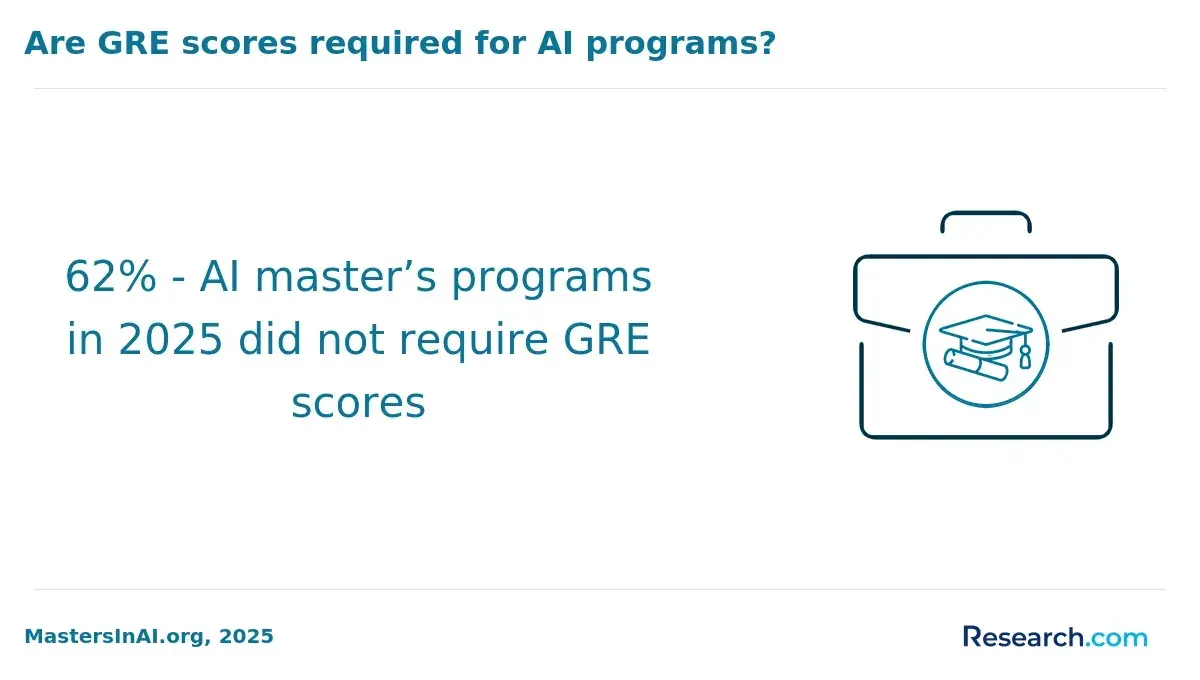
Many programs assess problem-solving and analytical skills through standardized tests like the GRE or custom evaluations. Portfolios showcasing AI projects or internships are increasingly valued. Notably, a Gallup survey found that 85% of U.S. college students utilize generative AI for coursework, though only 11% receive institutional encouragement, highlighting the need for self-guided study and ethical awareness.
Successful candidates combine rigorous STEM coursework, hands-on coding, and relevant projects, while staying informed about ethical considerations and emerging AI technologies, which are becoming integral to admissions assessments.
How long do AI degrees take to complete, and what tuition, fees, and hidden costs should students expect?
AI degree programs typically span two to four years, depending on the credential and study format. Associate degrees generally take about two years of full-time study, while bachelor's degrees often require four years, combining core computer science classes with specialized AI topics. Master's degrees usually require one to two years beyond a bachelor's, focusing on advanced AI theories, machine learning, and real-world applications.
Tuition varies significantly by type of institution and residency status. Public universities often charge $10,000 to $15,000 per year for in-state students, while out-of-state or private schools may charge more than $30,000 annually. Graduate programs tend to have higher tuition, with master's degrees costing between $15,000 and $45,000 in total. Online and part-time study options might alter these timelines and fees, but sometimes add per-credit surcharges.
Additional costs can include fees for technology access, software licenses, and lab equipment, typically ranging from $500 to $2,000 annually. Hidden expenses such as textbooks, GPU rentals, and conference attendance should also be budgeted. Financial aid, scholarships, and employer tuition reimbursement can help manage these costs but require proactive effort.
The global AI in education market is expanding rapidly, expected to grow from $7.05 billion to $136.79 billion in less than a decade, reflecting strong demand for qualified AI professionals and investment in AI-driven learning tools.
What entry-level and advanced career paths are available to graduates of AI degree programs?
Graduates with degrees in artificial intelligence can pursue diverse career paths ranging from entry-level to advanced roles. Early-career jobs often include AI software developer, data analyst, machine learning engineer, and AI research assistant. These roles involve designing algorithms, processing data, and implementing AI models in sectors like healthcare, finance, and technology.
Advanced positions tend to focus on leadership or specialization, such as AI architect, data scientist, machine learning scientist, and AI ethics officer. These roles demand expertise in scalable AI system development, project management, and ethical AI deployment. Academic and corporate research careers also provide opportunities to innovate in areas like generative AI and autonomous systems.
Key skills enhancing employment prospects include programming languages such as Python, familiarity with AI frameworks like TensorFlow and PyTorch, and a solid understanding of neural networks. Specialists applying AI to emerging domains such as natural language processing, robotics, and computer vision are especially in demand.
The growing use of generative AI in education highlights an increased need for professionals skilled in ethical integration and effective AI tool development. For example, in 2025, 92% of UK higher-education students reported using generative AI, indicating rising educational technology and AI policy roles (HEPI Student Generative AI Survey 2025, via Anara).
Certifications and graduate studies focusing on AI governance, advanced algorithms, or interdisciplinary applications help students and professionals qualify for senior roles in this competitive job market.
What salary ranges, earning potential, and factors influence pay for AI-related jobs in the U.S.?
Salary ranges for AI-related jobs in the U.S. vary significantly depending on role, experience, and location. Entry-level AI engineers or data scientists typically earn between $85,000 and $110,000 annually. Mid-level professionals with three to five years of experience usually see salaries ranging from $120,000 to $160,000. Senior positions, such as machine learning architects or AI research scientists, often command salaries above $180,000, with some exceeding $220,000, especially in tech hubs like Silicon Valley or New York.
Several factors affect salary levels in this rapidly evolving sector:
- Educational background: Advanced degrees, especially master's or PhDs in ai-related fields, usually boost earning potential.
- Industry: Finance, healthcare, and technology industries tend to offer higher pay due to complexity and demand.
- Skill specialization: Expertise in deep learning, natural language processing, or computer vision can yield premium compensation.
- Geographic location: Urban centers with dense tech ecosystems provide more opportunities and better salaries.
- Company size and funding: Startups may offer equity but often have lower base pay; established firms generally provide higher salaries.
A 2026 Coursera report shows that 80% of higher-education students globally say ai has positively supported their learning experience and improved academic performance. This highlights the strong educational ROI of pursuing ai degrees, reinforcing the value of combining quality academic programs with an understanding of salary factors to optimize long-term career growth.
What is the job outlook for AI professionals, and how is industry demand expected to evolve?
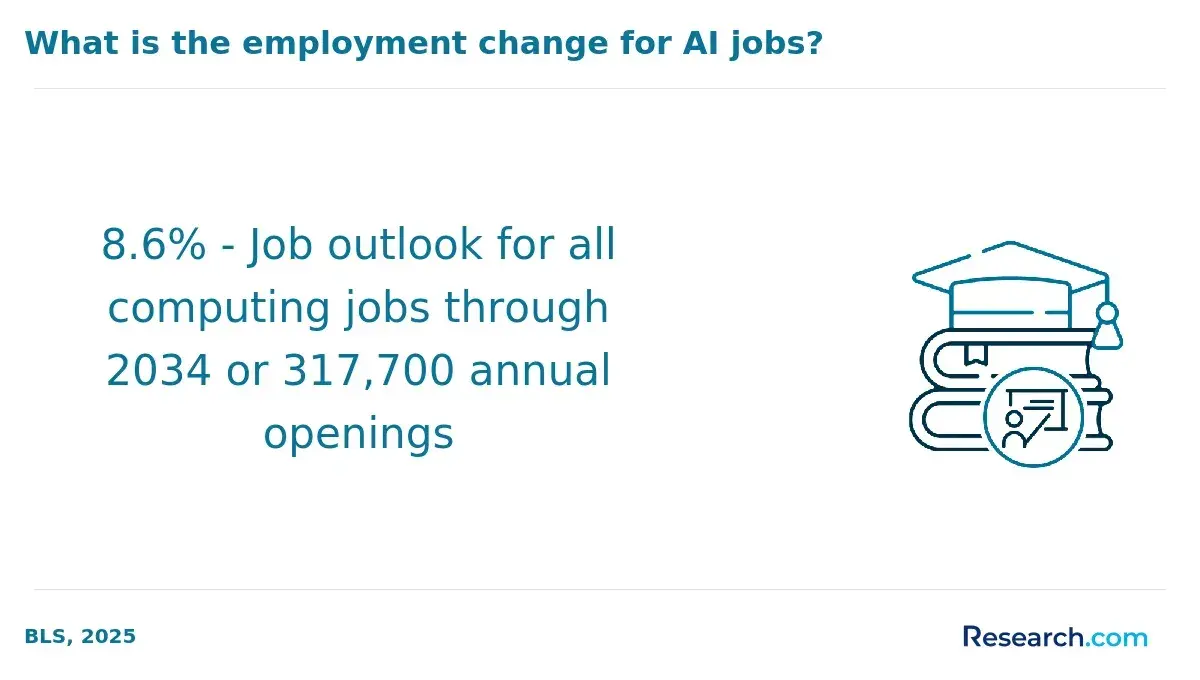
The outlook for AI professionals continues to grow steadily, supported by an annual 5% increase in AI-related degree conferrals at U.S. colleges since 2010, according to Georgetown CSET's analysis in Leading the Charge: A Look at the Top-Producing AI Programs. This trend reflects rising industry demand across healthcare, finance, automotive, and information technology sectors.
Career opportunities are expanding in roles such as machine learning engineer, data scientist, AI research scientist, and AI ethics specialist. Employers value solid foundations in AI concepts, programming, and applied machine learning combined with data engineering and domain expertise. Specialized certifications or dual skills in AI with cybersecurity or cloud computing enhance competitiveness.
Key industries leverage AI for:
- Diagnostics and patient monitoring in healthcare
- Fraud detection and risk assessment in finance
- Automation and decision-making tools across various sectors
Ongoing skills development addressing challenges like AI interpretability, fairness, and safety is crucial. Prospective students and professionals should seek practical experience through internships, research projects, or open-source contributions to stand out in a competitive job market. The rising supply of AI talent aligns with diverse, evolving market needs, encouraging continuous learning and adaptation.
Other Things You Should Know About Artificial Intelligence
To stay relevant in the evolving AI field by 2026, AI degree programs must integrate the latest technologies, emphasize interdisciplinary studies, and focus on practical skills through projects and internships. Regular curriculum updates, partnerships with tech companies, and a focus on ethical and societal impacts will ensure programs meet industry demands.
Interdisciplinary knowledge enhances AI study by integrating concepts from fields such as mathematics, cognitive science, psychology, and ethics. This broad approach equips students with a deeper understanding of how AI systems interact with real-world problems and human behaviors. It also fosters innovation and responsible AI development by addressing technical and societal challenges.
Yes, many AI degree programs now include courses focused on the ethical implications and social responsibilities of AI technologies. These courses cover topics like bias in algorithms, privacy concerns, and the impact of automation on employment. Including ethics helps prepare graduates to build AI systems that are fair, transparent, and accountable.
Internships provide crucial hands-on experience in applying AI theories and techniques to real-world projects. They often give students exposure to industry tools, collaborative environments, and professional networking opportunities. Completing internships can greatly improve employment prospects by demonstrating practical skills to future employers.
References
- 5 Benefits of an Online AI MS Degree | University of Bridgeport https://www.bridgeport.edu/news/benefits-of-online-ms-ai-degree/
- AI Salaries - How Much AI Jobs Pay https://www.tractionkeys.com/post/ai-salaries---how-much-ai-jobs-pay
- Future of AI in College Education | University of Phoenix https://www.phoenix.edu/articles/online-college/ai-in-online-college-education.html
- Choosing a master’s degree: data science or artificial intelligence | edX https://www.edx.org/resources/choosing-a-masters-degree-data-science-or-artificial-intelligence
- How Much Do AI Research Programs Cost? [2026 Pricing Guide] https://algoverseairesearch.org/blog/ai-research-program-cost-pricing
- Here’s How an AI Degree Stacks Up Against Other Options https://www.aidegree.org/blog/comparison-table
- Higher Education in the Age of AI: Adapting for the Future https://www.calmu.edu/higher-education-in-the-age-of-ai-adapting-for-the-future
- AI Engineer Salary Explained - What Impacts Your Pay https://zenvanriel.com/ai-engineer-blog/ai-engineer-salary-insights/
- The Impact of AI on the Future Job Market: Understanding the Changes https://www.exin.com/article/the-impact-of-ai-on-the-future-job-market-understanding-the-changes/
- Future of Jobs Report 2025: The jobs of the future – and the skills you need to get them | World Economic Forum https://www.weforum.org/stories/2025/01/future-of-jobs-report-2025-jobs-of-the-future-and-the-skills-you-need-to-get-them/