2027 Transfer-Friendly AI Degree Programs for Adult Learners

Co-Founder and Chief Data Scientist
Many adult learners with degrees in unrelated fields face barriers when seeking to enter the artificial intelligence workforce due to rigid academic pathways. Transferring credits and finding flexible, accredited programs that accommodate career changes can be challenging. This issue often delays career pivots or forces costly retraining. In 2027, transfer-friendly AI degree programs offer adaptable options tailored for working professionals aiming to reskill without starting over.
This article highlights such programs, focusing on flexibility, credit transfer policies, and alignment with industry demands, helping adult learners efficiently navigate education transitions and successfully enter the artificial intelligence sector.
Key Things You Should Know
- Transfer-friendly ai degree programs in 2026 prioritize credit acceptance from community colleges, allowing adult learners to accelerate completion and reduce costs by up to 40% compared to traditional four-year paths.
- Programs increasingly offer flexible online and hybrid formats tailored for working adults, with 65% of institutions reporting new course designs in 2024 to enhance accessibility.
- Industry-aligned curricula emphasize practical ai skills and certifications, with 72% of graduates securing relevant employment within six months, reflecting strong labor market demand.
What are transfer-friendly AI degree programs and how do they differ from traditional four-year programs?
Transfer-friendly artificial intelligence degree programs for adult learners offer a flexible approach that allows credits to move seamlessly between institutions, accelerating degree completion. These programs recognize coursework from community colleges, technical schools, or other universities, helping students avoid repeating courses and saving both time and money. This flexibility is especially valuable for adults balancing education with work or life commitments.
The differences between transfer-friendly and traditional four-year AI degree programs are significant. Traditional programs often have rigid curricula and limited credit acceptance, forcing transfer students to restart, lose progress, and incur additional costs. By contrast, transfer-friendly degrees build articulation agreements and credit evaluation systems that smooth transitions. Many offer 2+2 pathways, where foundational AI courses are completed at a community college before transferring to a university for advanced study.
According to the National Student Clearinghouse Research Center, 58% of bachelor's degree recipients attended more than one institution, underscoring the rising need for transfer pathways. These programs also often feature flexible formats like online or hybrid courses, making them ideal for adult learners. Prospective students should carefully review transfer policies, credit limits, and articulation agreements to ensure timely graduation and credit recognition.
For those considering career prospects, exploring the artificial intelligence degree salary can provide useful insights into the value of these programs in the workforce.
Which U.S. colleges and universities offer accredited AI degrees that accept transfer credits from community colleges?
Several U.S. colleges offer transfer-friendly accredited AI degree programs in the U.S. that accept community college credits, helping students advance efficiently. Schools such as Carnegie Mellon University, the University of Texas at Austin, and Northeastern University have established clear policies to evaluate and accept foundational coursework in computer science, mathematics, and statistics on a course-by-course basis. This approach reduces the time-to-degree and financial burdens for many students.
Institutions like UC San Diego and UC Berkeley permit transfers of up to 90 semester units from accredited community colleges, covering general education and prerequisite AI-related courses. Advising offices often have articulation agreements connecting community college courses directly to their AI degree requirements, aiding students in understanding which credits apply and what remains to complete their degree.
This pathway is a viable option for adult learners and is supported by statistics from the American Association of Community Colleges, which shows 64% of transfer students graduate within six years-comparable to native students. Prospective students should confirm the accreditation of both their community college and chosen institution while consulting admissions counselors to clarify credit transfer policies. Frameworks such as the National Association of Credential Evaluation Services (NACES) ensure consistent credit evaluation.
Those exploring options may also consider specialized programs highlighted in the data science master program ranking, which often include AI concentrations.
Many U.S. colleges with AI degrees accepting community college credits make these transitions accessible and structured to support student success.
What are the typical admission requirements and prerequisites for adult learners entering AI degree programs?
Admission requirements for adult learners entering AI degree programs emphasize academic readiness and relevant experience. Most schools require a high school diploma or equivalent, but many acknowledge diverse backgrounds by allowing alternative assessments or portfolios that show foundational math and computer science skills. Prerequisites often include calculus, linear algebra, statistics, and programming languages such as Python or Java. Some institutions offer bridge courses to help meet these requirements.
Transfer-friendly AI degree admission criteria for adult learners frequently include accepting prior college credits or professional certifications in technology, data science, or related fields. This can reduce the course load and program length. Adults with non-traditional education paths may also substitute relevant work experience for formal prerequisites, demonstrating practical expertise.
Entrance exams like the GRE are increasingly optional for master's programs targeting adult students, while personal statements, resumes, and recommendation letters remain important for gauging motivation and aptitude. According to the U.S. Bureau of Labor Statistics, individuals over 25 pursuing additional credentials increased by 41% between 2019 and 2023, highlighting growing demand for adaptable admission policies.
Adult learners should carefully examine prerequisites for adult learners enrolling in AI degree programs and connect with admissions counselors about fulfilling requirements. For those interested in related fields, exploring an online game development degree can offer complementary skills in programming and design.
How long does it take to complete an AI degree as an adult transfer student, and what is the average cost?
For adult transfer students pursuing an artificial intelligence degree, completion typically ranges from two to three years. The duration depends on factors such as transferable credits, enrollment status, and program design. Programs with flexible credit transfer policies, especially those accepting community college coursework or related STEM credits, often reduce the timeframe to about two years. These aspects are crucial for transfer-friendly adult learner AI degree duration and cost considerations.
Tuition fees vary significantly by institution type. According to the College Board's data, private four-year schools average $41,540 annually, while public in-state institutions charge around $10,260 per year, reflecting recent increases. Transfer students with prior associate degrees or completed courses in computer science or data science may cut total tuition by 30-50%, since fewer credits are required at costlier four-year universities.
Many universities now offer online or hybrid artificial intelligence degree options, which can make education more affordable and flexible. Adult learners should explore financial aid, scholarships, and grants tailored to transfer students. Searching for affordable AI degrees for adult transfer students in the US means considering these factors carefully, including programs that support credit articulation and offer career pathways.
Adult learners interested in technology fields may also find value in online data science programs, which often complement AI studies and provide additional flexibility and cost savings.
What is the difference between online, hybrid, and campus-based AI degree formats for working adults?
Online, hybrid, and campus-based AI degree programs each offer unique advantages tailored for working adults managing diverse schedules. Online programs provide full digital access to coursework, making them ideal for students balancing full-time jobs or family duties. This format eliminates commuting and allows flexible study hours. Data from the National Center for Education Statistics shows that online enrollment accounted for 28% of all postsecondary students, with 73% of these learners being working adults, highlighting its growing importance.
Hybrid programs combine online learning with some in-person sessions, such as weekend labs or monthly seminars. This flexible model suits those who want direct interaction with faculty and peers without sacrificing work or personal commitments. Campus-based formats involve in-person classes with fixed schedules, offering immersive experiences and hands-on lab access. However, this can be challenging for adults with inflexible work hours or geographic limitations.
When choosing a format, students should consider their time availability, preferred learning style, and access to campus resources. Online programs often offer the greatest scheduling freedom, while hybrid balances flexibility with personal engagement. Campus-based degrees provide more hands-on opportunities but require significant time and travel commitments. Additionally, it's important to review transfer-friendly credit policies and articulation agreements to ensure smooth degree progression when pursuing an AI degree.
What core courses and technical skills are covered in transfer-friendly AI degree curricula?
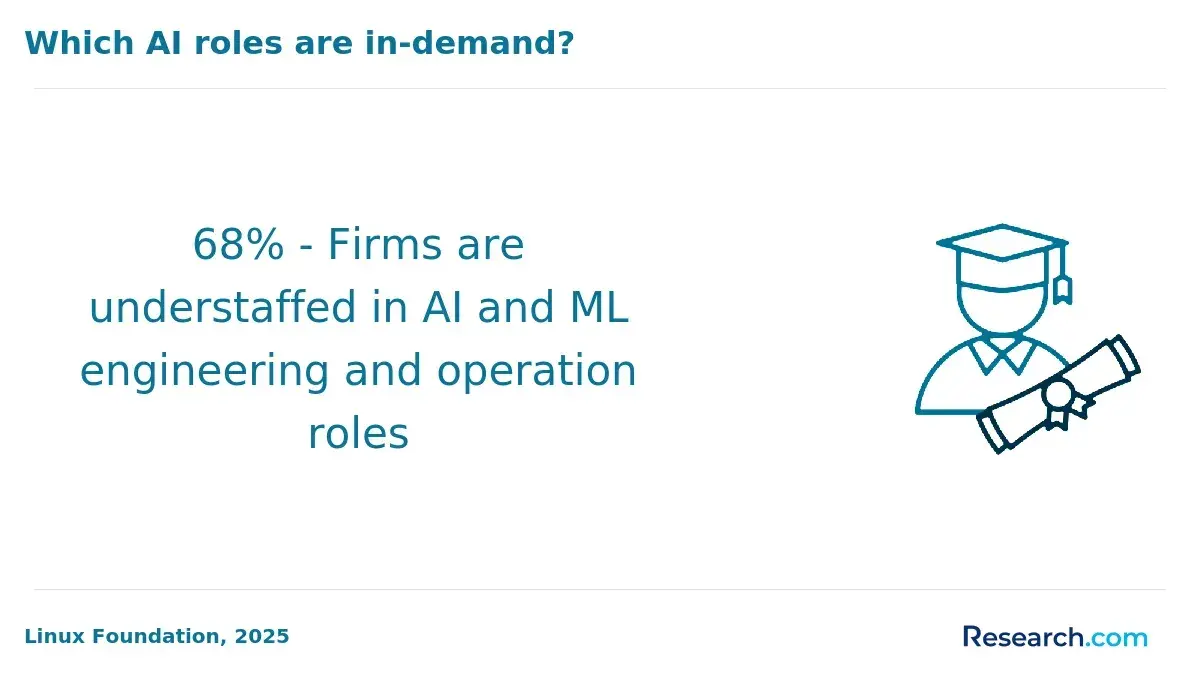
Transfer-friendly AI degree programs focus on core courses that build both theoretical knowledge and practical skills needed for the workforce. Essential subjects include machine learning, data structures, algorithms, statistical methods, and programming languages such as Python, R, and Java. These classes teach students how to develop models, manipulate data, and write efficient code for AI applications.
Specialized topics cover neural networks, natural language processing, computer vision, and robotics, allowing students to apply AI techniques in various fields like autonomous systems and speech recognition. Data science and big data analytics courses improve data management competencies, crucial as data volumes grow exponentially in AI projects.
Ethics in AI is an important area addressing bias mitigation, privacy, and legal challenges, preparing students to handle the societal impacts of AI technologies responsibly. According to LinkedIn's 2024 Jobs Report, roles in machine learning engineering, data science, and AI ethics have seen over 74% year-over-year hiring growth, highlighting these skills' demand.
Many transfer-friendly programs offer flexible credit evaluation policies to incorporate prior coursework in math, computer science, or engineering, accelerating degree completion without sacrificing rigor. Advanced courses in reinforcement learning, cloud computing for AI deployment, and software engineering enhance career readiness in a rapidly evolving job market.
Practical experience through labs, capstone projects, and internships is integral to ensure students apply their knowledge effectively in professional environments.
What professional certifications and credentials complement or enhance an AI degree for career advancement?
Professional certifications greatly enhance an AI degree by validating expertise, expanding skills, and boosting job marketability. Cloud computing credentials such as AWS Certified Solutions Architect, Google Cloud Professional Data Engineer, and Microsoft Azure AI Engineer are particularly valuable. According to Coursera's 2024 Skills Index, professionals holding a bachelor's degree plus cloud certifications earn 28% higher salaries than those without. These certifications equip graduates to deploy and manage AI models on scalable cloud platforms, an essential industry requirement.
Other vital credentials emphasize data science and machine learning, including the Certified Data Scientist from the Data Science Council of America (DASCA) and the TensorFlow Developer Certificate. These focus on data handling, algorithm development, and neural network implementation, core competencies for applied AI roles.
Project management certifications like the Project Management Professional (PMP) enhance an AI professional's capacity to lead teams and oversee intricate AI product lifecycles. Cybersecurity certifications such as Certified Information Systems Security Professional (CISSP) are increasingly important, reflecting the growing need for secure data practices in AI applications.
Specialized certifications in areas like natural language processing, computer vision, or robotics-offered by institutions like NVIDIA or IEEE-highlight niche skills, differentiating candidates in competitive markets. Pursuing multiple certifications aligned with career goals significantly affects earning potential and professional reputation in the expanding AI field.
What are the job titles, roles, and industries hiring AI degree graduates, and what are realistic salary expectations?
Graduates from AI degree programs have diverse career opportunities across many industries thanks to growing demands in machine learning and automation. Typical roles include data scientist, machine learning engineer, AI research scientist, software developer, and product manager. These positions generally involve designing algorithms, building predictive models, managing AI projects, and conducting experimental research.
Industries such as technology, healthcare, finance, automotive, manufacturing, and government sectors actively recruit AI professionals. For example, healthcare applications focus on diagnostics and personalized treatment, while finance leverages AI for fraud detection and trading algorithms. Manufacturing benefits from AI-driven predictive maintenance and robotics, illustrating AI's wide applicability.
Salary ranges vary by job and location. The U.S. Bureau of Labor Statistics reports a median wage of $136,620 for computer and information research scientists specializing in AI. In tech hubs like Silicon Valley and Boston, salaries can exceed $165,000. Entry-level roles usually start between $80,000 and $100,000, with senior positions surpassing $150,000. Graduates should develop expertise in programming languages like Python, neural networks, mathematics, data handling, and cloud platforms to enhance employability. Adult learners transferring credits can benefit by focusing on technical coursework to address skill gaps quickly.
The demand for AI skills spans startups to large enterprises, rewarding strong technical knowledge and project experience in this evolving field.
What is the job outlook and employment growth for AI professionals over the next five to ten years?
The job market for AI professionals is expected to grow significantly faster than average, with the U.S. Bureau of Labor Statistics forecasting a 15% rise in computer and information technology roles between 2023 and 2033. This surge is largely driven by expanded demand for expertise in machine learning, natural language processing, AI ethics, and AI systems development as industries embrace automation and data-driven decisions.
Opportunities will increase across sectors such as healthcare, finance, manufacturing, and cybersecurity. AI engineers working on diagnostic algorithms or fraud detection will find growing demand, alongside AI research scientists advancing next-generation models in both private and government sectors. Roles blending AI knowledge with software engineering or data science skills will be highly valued.
For adult learners, combining practical experience with theoretical education is essential. Transfer-friendly AI degree programs offer an effective path, especially when complemented by certifications and internships. Mastering ethical and regulatory frameworks surrounding AI enhances competitive advantage due to heightened public and legislative focus. Continuous upskilling is vital to thrive in this rapidly evolving field.
How should adult learners evaluate and compare AI degree programs to ensure quality and return on investment?
Adult learners evaluating AI degree programs should prioritize accreditation, curriculum relevance, faculty expertise, and career support services to ensure quality and strong return on investment. Accreditation from recognized bodies confirms that the program meets rigorous academic standards critical for employment. Curricula must address current AI technologies like machine learning, neural networks, data analytics, and ethical considerations. Hands-on projects and access to real-world datasets deliver practical skills essential for career readiness.
Faculty qualifications matter greatly; instructors engaged in active research or industry work provide insights into the latest advancements. Prospective students should also check for career services such as job placement, internships, and professional networking, with programs linked to tech industry partners offering enhanced employment opportunities.
Cost and time commitment are key factors. Comparing tuition, fees, and financial aid options helps determine affordability. Flexible formats like part-time or online study allow adults to balance education with other responsibilities. According to Georgetown University's Center on Education and the Workforce, AI and machine learning graduates typically recoup their education costs in about 3.2 years, with career boosts often exceeding $1.2 million in lifetime earnings. Strong alumni networks and employer demand correlate with faster return on investment.
Prospective students should inquire about program length, technology resources, and specialization options in areas such as natural language processing or robotics. Evaluating graduation rates and job placement data provides measurable insights into a program's effectiveness and long-term value.
Other Things You Should Know About Artificial Intelligence
Yes, many artificial intelligence degree programs offer foundational courses to help students without technical backgrounds build necessary skills. These programs often start with introductory classes in programming, mathematics, and data science to bridge gaps before advancing to specialized AI topics. Persistence and willingness to learn technical subjects are key to success.
For 2027 transfer-friendly AI degree programs, prerequisites typically include a high school diploma or GED, foundational courses in mathematics and computer science, and a minimum GPA requirement. Some programs may also require prior coursework in programming or a related field for transfer credit eligibility.
Yes, hands-on experience is a critical component of artificial intelligence education. Degree programs often include lab work, projects, internships, or capstone courses that involve real-world AI applications. This practical work helps students apply theoretical concepts to solve actual problems and build professional portfolios.
Yes. Many programs ask adult applicants to submit a programming portfolio or pass a coding placement test before granting advanced standing. Common checks include Python, calculus, and basic statistics, with some schools requiring completion of 30–60 prior credits before transfer review.
References
- The most future-proof IT degree programs that won’t be replaced by AI. https://itcompare.pl/en-us/articles/68/the-most-futureproof-it-degree-programs-that-won-t-be-replaced-by-ai
- Online vs. In-Person AI and Machine Learning Courses: Which is Better for You? https://orhanergun.net/online-vs-in-person-ai-and-machine-learning-courses-which-is-better-for-you
- B.Sc. in Artificial Intelligence https://www.studyinpoland.pl/en/programme
- Artificial Intelligence https://bristolcc.edu/learnatbristol/degreescertificatesandclasses/computerscience/artificialintelligence.html
- Core Curricula for AI-related roles - Arisa https://aiskills.eu/resource/core-curricula-for-ai-related-roles/
- Artificial Intelligence (A24710) https://brunswickcc.edu/program/artifical-intelligence-a24710/
- Assuring higher education’s quality in the age of AI is no easy task https://www.eua.eu/our-work/expert-voices/assuring-higher-educations-quality-in-the-age-of-ai-is-no-easy-task.html
- Top AI Certifications to Advance Your Career https://whitefiretechnologies.com/top-ai-certifications-to-advance-your-career/
- Key Skills Gained from a Bachelor of Science in Artificial Intelligence https://tetr.com/blog/key-skills-gained-from-a-bachelor-of-science-in-artificial-intelligence
- Online, On-Campus or Hybrid Learning: Which Degree to Choose in 2025? https://www.careers360.com/courses-certifications/articles/online-on-campus-or-hybrid-learning-which-degree-to-choose