2027 NLP Courses in AI Master's Programs

Co-Founder and Chief Data Scientist
Many prospective graduate students face challenges when transitioning into fields like natural language processing (NLP) without a technical background. Identifying relevant, up-to-date NLP courses within AI master's programs is critical for skill acquisition and career advancement. The evolving job market demands practical training that integrates theoretical knowledge with real-world applications.
This article reviews the NLP courses offered in accredited AI master's programs across the U.S., helping readers make informed decisions to successfully pivot into the AI industry.
Key Things You Should Know
- NLP courses in AI master's programs emphasize deep learning and transformer architectures, reflecting a 42% increase in enrollment since 2024.
- Top programs integrate ethical AI considerations with practical NLP applications like conversational agents and automated translation.
- Graduates with NLP expertise report a 30% higher average starting salary compared to other AI specializations in the U.S. job market.
What are NLP courses and why are they central to AI master's programs?
Natural language processing (NLP) courses in ai master's programs teach students how computers analyze, understand, and generate human language. These courses cover essential topics such as syntax parsing, semantic analysis, sentiment detection, and speech recognition.
Students gain experience with statistical models, deep learning architectures like transformers, and transfer learning techniques. Alongside theory, practical skills using programming frameworks such as TensorFlow or PyTorch prepare graduates to develop functional language models.
The importance of NLP training in artificial intelligence graduate studies is underscored by a rapidly growing market projected to reach $74.63 billion by 2030, with a CAGR of 13.1% from 2024 to 2030. This expansion highlights the increasing demand for language-centric AI skills across sectors like healthcare, finance, and customer service.
Addressing real-world challenges-such as reducing bias in models, handling multilingual data, and enhancing machine-human interaction-is a key focus of these courses.
These programs also equip students for research tasks, including question answering systems and automated summarization. Prospective AI professionals should consider AI graduate programs that emphasize NLP to build both theoretical knowledge and hands-on expertise aligned with industry growth and innovation.
Which accredited universities offer NLP courses as part of their AI master's degree?
Several accredited universities in North America offer natural language processing courses integrated into their artificial intelligence master's programs.
Leading U.S. institutions such as Stanford University, Massachusetts Institute of Technology (MIT), Carnegie Mellon University, and the University of California, Berkeley provide dedicated NLP curricula covering computational linguistics, machine learning for NLP, and advanced language models.
These programs equip students with skills for careers in language understanding, sentiment analysis, and conversational AI.
Top-ranked US universities providing NLP specialization in AI graduate degrees include the University of Washington and Georgia Institute of Technology, which embed NLP modules within broader AI or data science tracks.
Many programs allow selection of NLP electives or research projects focused on language AI. Globally, more than 280 universities offer AI master's degrees with NLP concentrations, reflecting a significant increase in demand for language technology experts.
Prospective students should confirm regional accreditation and review course catalogs to assess NLP offerings and faculty expertise. Working professionals benefit from part-time or online options, such as a mechanical engineering program online that demonstrates how flexible learning can be structured.
Evaluating programming language instruction (e.g., Python, TensorFlow) and course alignment with current NLP advancements is vital for informed choices.
The expanding presence of NLP within AI master's education in prominent U.S. universities provides diverse pathways to develop language AI skills academically and professionally.
What is the typical curriculum structure for NLP courses in AI master's programs?
Curriculum structures in natural language processing course curriculum in AI master's programs focus on foundational theories like syntax and semantics, alongside practical skills through programming assignments.
Advanced topics include transformer architectures and large language models (LLMs), reflecting their central role in current NLP applications. Approximately 68% of AI master's programs have dedicated NLP modules that cover these core topics.
Core topics covered in NLP classes for AI graduate degrees often include tokenization, attention mechanisms, and transfer learning. These courses combine theoretical knowledge with hands-on projects involving datasets in question answering, text summarization, and sentiment analysis, preparing students to build effective NLP systems.
Electives commonly explore dialogue systems, multilingual NLP, and ethical issues such as bias in language models. Complementary courses in machine learning and data science support understanding of algorithms underlying NLP technologies. Students typically engage with frameworks like PyTorch and TensorFlow, essential for model development and experimentation.
Those interested in expanding their skill set may find related fields worthwhile. For example, pursuing a game design online degree could complement AI expertise with creative and technical insights from interactive media development.
Verifying that programs emphasize current NLP tools and research trends is crucial for relevance and employability in this evolving area of artificial intelligence. Coursework aligned with transformers and LLMs substantially enhances practical expertise and career opportunities.
How do online and campus-based AI master's programs differ in NLP course delivery?
Online versus campus-based AI master's programs for NLP courses show distinct differences in how they deliver content. Online programs emphasize flexible, asynchronous learning through recorded lectures, interactive forums, and virtual labs, catering to students in diverse time zones and working professionals.
In contrast, campus-based programs provide structured schedules with direct, in-person interactions, fostering real-time discussions, collaborative projects, and immediate instructor feedback.
The differences in NLP course delivery between online and on-campus AI programs extend to practical experiences. Campus students benefit from hands-on work in AI labs, university resources, and face-to-face networking, while online students rely on advanced simulation tools and cloud platforms to replicate these functions remotely.
Peer collaboration tends to be less immediate online, although live webinars and group video sessions help bridge this gap.
Enrollment data from the National Center for Education Statistics reveals a 156% growth in online AI master's programs with NLP specializations from 2022 to 2024, far outpacing the 34% growth in campus-based programs. This trend highlights the increasing demand for accessible education suited to professionals balancing work and study.
Prospective students should weigh personal learning preferences and career goals when choosing a format. Those desiring personal interaction might prefer campus programs, whereas individuals seeking flexibility should consider accredited online options offering robust coursework and practical tools.
For those exploring alternatives, online cyber security degrees may also offer flexible, career-focused learning pathways.
What are the admission requirements for AI master's programs that emphasize NLP specialization?
Admission to AI master's programs specializing in natural language processing typically requires a strong quantitative and technical background. Most candidates hold bachelor's degrees in computer science, mathematics, engineering, or closely related STEM disciplines.
Data from top NLP programs indicates that 73% of admitted students have degrees specifically in computer science or mathematics. Proficiency in programming languages like Python or Java is usually mandatory.
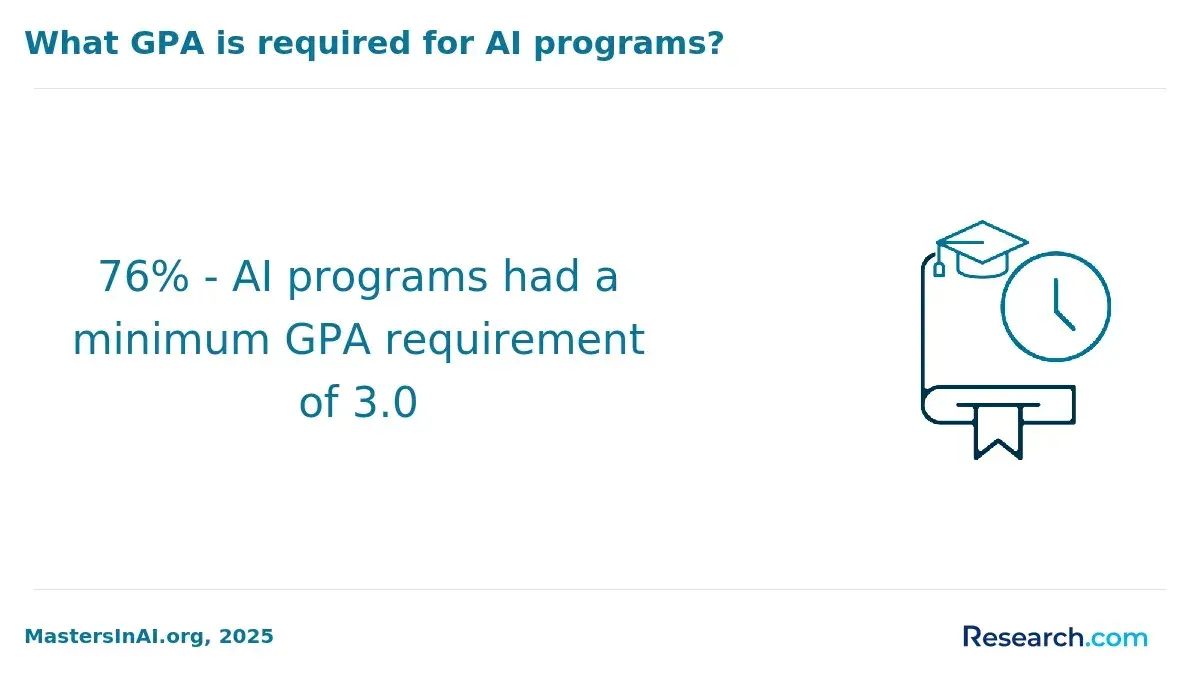
GRE quantitative scores generally fall between 162 and 170 for successful applicants, while a minimum undergraduate GPA of 3.7 is often expected. Some schools may accept GRE subject test scores in computer science in lieu of the general GRE, though requirements vary.
Applicants must provide letters of recommendation from professors or industry professionals with insight into their technical skills and research potential, alongside a statement of purpose focused on experience and interest in NLP.
Foundational knowledge in machine learning, statistics, and linguistics may be required through coursework or certification. Prerequisite classes could be necessary for applicants lacking these fundamentals.
International students must submit TOEFL or IELTS scores. Interviews often assess problem-solving abilities and candidate motivation.
Those without formal computer science education can boost their application by completing MOOCs or certificate programs covering AI basics and NLP techniques before applying.
How long does it take to complete an AI master's program with NLP focus, and what are typical costs?
The typical duration for completing a master's program in artificial intelligence with a specialization in natural language processing (NLP) is 1.5 to 2 years for full-time students. Part-time formats, designed for working professionals, extend the timeline to about 3 to 4 years.
Accelerated options at some universities can shorten full-time study to 12 months, though these often demand prior experience and an intense workload.
Costs vary notably based on the institution and location. On average, full-time programs range from $40,000 to $120,000, covering tuition and fees but excluding living expenses.
Public universities generally provide more affordable options, especially for in-state students, while private and elite research institutions tend to charge higher tuition.
Graduates benefit from strong salary prospects in the AI and NLP job markets. Data from the Bureau of Labor Statistics indicates that students typically recoup their educational investment within roughly 2.3 years after graduating.
This fast ROI reflects high demand for AI skills, including natural language understanding, speech recognition, and semantic analysis.
Additional expenses, such as textbooks, software licenses, and conference fees, can add $2,000 to $5,000 annually. Many programs now offer scholarships, employer tuition assistance, or income-share agreements. Researching financial aid options and program specifics is essential for effective budgeting and career planning.
What career roles and job titles do graduates of NLP-focused AI master's programs pursue?
Graduates of NLP-focused AI master's programs often secure specialized roles in natural language processing and broader machine learning fields. Common positions include NLP engineer, developing algorithms that allow machines to understand and generate human language, and machine learning engineer, implementing scalable models for text analysis and predictive tasks.
Many graduates also become AI Research Scientists, advancing NLP methodologies and enhancing state-of-the-art language models. The role of a data scientist remains prominent, where professionals analyze language data across sectors such as healthcare, finance, and technology.
Employment data shows that 62% of graduates from leading AI programs with NLP specializations land relevant roles within three months, highlighting strong demand for practical NLP skills combined with foundational machine learning expertise.
Additional roles include computational linguist, focusing on linguistic theory and model accuracy, and AI product manager, guiding NLP product development through technical insight. Specialized areas like voice technology offer roles such as speech recognition engineer and dialog systems developer.
Proficiency in programming languages like Python, experience with NLP frameworks such as Hugging Face and spaCy, and a solid grasp of transformer architectures enhance graduate employability. Internships and applied research closely aligned with industry needs significantly increase job prospects.
Prospective students should consult reputable AI education and career outcome resources to make informed decisions about their training and career pathways.
What is the job outlook and salary potential for NLP specialists in the current AI job market?
Positions for natural language processing (NLP) specialists are growing rapidly, with a projected annual increase of 23% through 2025. This surge is fueled by widespread adoption of NLP across sectors like technology, healthcare, finance, and marketing.
Employers look for experts capable of developing advanced chatbots, improving voice recognition, and analyzing large-scale textual data to enhance decision-making.
Median salaries for NLP specialists with a master's degree range from $165,000 to $210,000, particularly in tech hubs such as San Francisco, Seattle, and New York. These locations command higher compensation due to greater demand and living costs.
Recent graduates boosting their prospects should focus on internships or projects involving deep learning frameworks such as TensorFlow and PyTorch, along with strong Python and data engineering skills.
Expertise in transformer models and applied machine learning is highly valued by employers over broader AI theory. Job titles often include machine learning engineer, data scientist with an NLP emphasis, or research scientist in AI labs. Demonstrating practical success in tasks like sentiment analysis or customer support automation can set candidates apart.
Students aiming for a fast start and competitive salary should choose programs with dedicated NLP coursework and strong industry ties. Building a clear portfolio highlighting mastery of cutting-edge techniques directly influences employment opportunities and compensation offers.
What certifications or professional credentials complement an NLP specialization from an AI master's degree?
Certifications in deep learning frameworks like TensorFlow and PyTorch complement an NLP specialization from an AI master's degree by demonstrating hands-on skills highly valued by employers. These credentials show practical ability to implement advanced models in production environments, enhancing job readiness.
Additionally, cloud certifications from providers such as AWS and Google Cloud boost a graduate's profile by validating expertise in scalable deployment, data management, and model serving.
Data from Coursera and LinkedIn Learning indicate that 75% of NLP specialists pursue additional certifications within two years of graduation, highlighting the need for continuous learning.
Popular cloud certifications, including AWS Certified Machine Learning - Specialty or Google Cloud Professional Data Engineer, are aligned with industry demands for managing NLP pipelines and infrastructure effectively.
Other valuable certifications include data engineering, MLOps, and specialized training in transformer architectures or natural language understanding. These provide practical skills for system design and maintenance, going beyond theoretical knowledge from master's programs.
For example, MLOps certifications prepare candidates for model lifecycle automation, crucial for deploying NLP applications at scale.
Choosing certifications aligned with your target role and industry is essential. Recruiters often seek verified, project-based skills and formal recognition from leading technology providers.
Pairing NLP specialization with credentials in deep learning and cloud services significantly enhances employability and technical readiness in AI-driven NLP roles.
How should prospective students evaluate and compare different AI master's programs based on NLP course quality and faculty expertise?
When choosing ai master's programs, examine the range and depth of natural language processing (NLP) courses along with faculty expertise. Quality NLP curricula cover foundational topics such as language modeling, machine translation, information retrieval, and dialogue systems, while also addressing emerging areas like multimodal NLP and ethical AI.
Programs offering hands-on projects with real-world datasets provide essential practical experience.
Faculty strength is vital. Leading programs typically have 8-12 active NLP researchers who publish 15 or more peer-reviewed papers annually, reflecting a dynamic research culture. Reviewing faculty publications, grants, and conference activity helps prospective students align their interests with current research trends.
Mentorship accessibility varies by program size; smaller NLP groups often facilitate closer collaboration and personalized guidance, whereas larger departments may sacrifice individual attention for broader course offerings. Student testimonials and faculty profiles offer insight into these dynamics.
Interdisciplinary integration also matters-look for curricula linking NLP with computer vision or reinforcement learning to build versatile skills.
Consider financial aid options, internships, and industry partnerships that boost career prospects. Evaluating these factors supports well-informed decisions balancing academic rigor, research opportunities, and professional development.
Other Things You Should Know About Artificial Intelligence
In 2027 AI master's programs, emerging NLP trends like transformer-based models, multilingual NLP, and AI ethics in language processing are extensively covered. These programs also focus on practical applications of large language models (LLMs) and human-AI interaction, preparing students for cutting-edge developments in the field.
A solid understanding of mathematics, especially linear algebra, calculus, probability, and statistics, is essential for success in artificial intelligence master's programs. These mathematical foundations enable students to grasp AI algorithms and model training processes effectively. Programs typically include math refresher courses to support those needing a stronger background.
Most AI master's programs incorporate hands-on projects, internships, and research opportunities to provide practical experience. Students often work with real-world datasets and collaborate on developing AI models. This experience is critical for building a portfolio that demonstrates applied skills to future employers.
Many AI master's programs with an NLP focus accept students from diverse academic backgrounds but usually require foundational knowledge in programming and math. Some programs offer preparatory courses or recommend taking online classes before enrollment. Prospective students should review specific program prerequisites to ensure they are adequately prepared.
References
- List of NLP/CL courses https://www.aclweb.org/aclwiki/List_of_NLP/CL_courses
- International Association of NLP Institutes (IN) https://www.nlp-institutes.net/about/curricula
- How Long Does It Take to Complete an AI Course https://www.epw.com/blog/courses/how-long-is-ai-course
- Fastest AI Master’s Programs for 2026 (1 Year or Less) https://aidegreeprograms.org/rankings/fastest-ai-masters-programs/
- How an Online Master’s in AI Can Prepare You for the Future of Tech https://www.ucumberlands.edu/blog/how-online-masters-ai-can-prepare-you-future-tech
- AI Certifications That Offer Specialization in Natural Language Processing https://dev.to/georgiaweston/ai-certifications-that-offer-specialization-in-natural-language-processing-5cc7
- Master of Science in Natural Language Processing https://mbzuai.ac.ae/study/msc-programs/master-of-science-in-natural-language-processing/
- Top AI Certifications for 2026: A Guide to Advancing Your Tech Career | DataCamp https://www.datacamp.com/blog/top-ai-certifications
- Syllabus https://nlp2024.jeju.ai/en/syllabus/index.html
- AI Hiring Trends: Job Market Data, Salaries, and Industry Demand https://patentpc.com/blog/ai-hiring-trends-job-market-data-salaries-and-industry-demand