2027 What Can You Do With a Master’s in Nutrition?

Co-Founder and Chief Data Scientist
Choosing a nutrition career in 2026 means deciding between several paths: clinical dietetics, public health, food science, wellness coaching, sports nutrition, research, and healthcare leadership. The right route depends on how directly you want to work with patients, whether you plan to become a Registered Dietitian Nutritionist, how much graduate education you are willing to complete, and what type of work environment fits you best.
The field matters because diet-related health concerns remain widespread. A Gallup survey reports that 37% of adults are obese, pointing to ongoing challenges around calorie balance, food access, activity levels, and long-term health behavior. Nutrition professionals help individuals and communities make evidence-based food decisions, manage nutrition-related conditions, and build healthier systems in healthcare, schools, workplaces, and food organizations.
The U.S. Bureau of Labor Statistics describes dietitians and nutritionists as professionals who support prevention and treatment plans for conditions such as heart disease, obesity, autoimmune diseases, and other health issues. In many settings, they work as part of a broader healthcare team rather than as stand-alone advisors.
This guide explains what nutrition careers look like, when a bachelor’s degree may be enough, why a master’s degree now matters for aspiring registered dietitians, which certifications can help, what salaries are associated with common roles, and how to choose a practical education path without overpaying.
Quick answer: Is a nutrition career worth considering?
A nutrition career can be worth pursuing if you want work that combines science, counseling, public health, and healthcare decision-making. Entry-level roles may be available with an associate or bachelor’s degree, but many clinical and advanced positions require stronger credentials. The Commission on Dietetic Registration now requires candidates seeking the registered dietitian or registered dietitian nutritionist credential to earn a master’s degree before they can qualify for the national credentialing exam.
The field is not one-size-fits-all. Students who want direct patient care should look closely at accredited dietetics pathways, supervised practice requirements, and state rules. Those more interested in wellness, food product development, research, communications, or community programs may have more flexible degree and certification options.
- Why choose a career in nutrition?
- What is the nutrition career outlook for 2027?
- What skills do nutrition professionals need?
- Which nutrition certifications can support career growth?
- Can interdisciplinary education strengthen a nutrition career?
- What trends are changing nutrition careers?
- How do you start a nutrition career?
- How can you manage the cost of nutrition education?
- How can nutrition professionals advance?
- How can allied health experience and mentorship help?
- What alternative careers can nutrition professionals pursue?
- How can bioinformatics support nutrition research?
- How can complementary healthcare certifications help?
- How can health information management support nutrition work?
- How can a fast online health information management degree help?
- How can healthcare administration prepare nutrition leaders?
Why choose a career in nutrition?
Nutrition appeals to people who want to apply science to everyday health decisions. Unlike some healthcare roles that focus mostly on diagnosis or treatment after illness appears, nutrition work often sits at the intersection of prevention, behavior change, disease management, food systems, and education.
Career options are broad. Nutrition professionals may work in hospitals, long-term care facilities, private practices, schools, community programs, corporate wellness departments, food companies, research organizations, fitness environments, and public agencies. That range allows students to build a career around a specific population or specialty, such as athletes, children, older adults, patients with chronic conditions, or communities experiencing food insecurity.
The field is also changing quickly. Digital care models, food tracking tools, virtual coaching, electronic health records, and global digital health initiatives are influencing how nutrition services are delivered. Professionals who understand both nutrition science and digital health tools may be better prepared for hybrid clinical, coaching, and data-informed roles.
| Nutrition path | Best fit for | Important consideration |
| Clinical dietetics | Students who want to provide medical nutrition therapy and work with healthcare teams | Credentialing and supervised practice requirements matter; aspiring RDNs need a master’s for exam eligibility |
| Public health nutrition | People interested in community programs, food access, education, and policy | Program planning, communication, and population health skills are important |
| Sports nutrition | Professionals who want to support athletes, teams, and active clients | Specialized certification and exercise science knowledge can improve credibility |
| Food science and product development | Students drawn to research, food manufacturing, safety, and product innovation | Laboratory skills, regulatory awareness, and food technology knowledge are useful |
| Wellness coaching | Those who prefer behavior change, lifestyle education, and flexible service models | Scope of practice must be clear, especially when working without clinical credentials |
What is the nutrition career outlook for 2027?
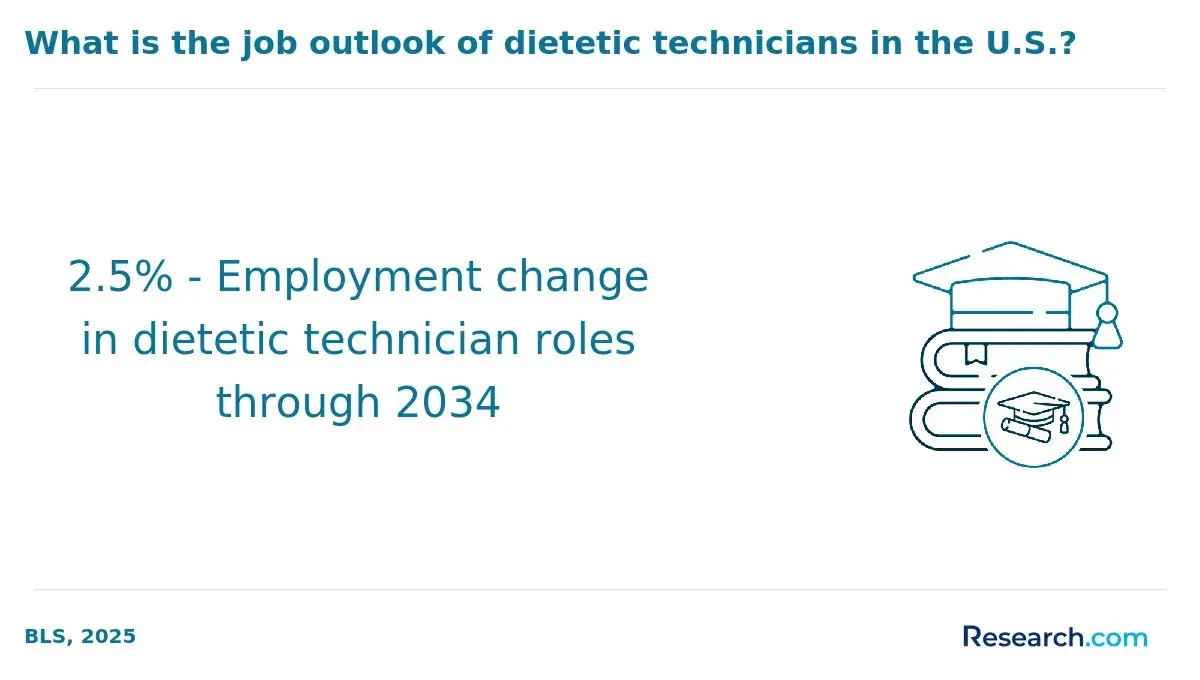
The nutrition job market is supported by healthcare demand, preventive health initiatives, growing interest in personalized wellness, and the need for evidence-based guidance in a noisy food information environment. Demand for qualified nutritionists and dietitians is projected to grow 5.5% through 2034.
Several forces are shaping that outlook. Healthcare organizations use nutrition services to help manage chronic conditions and improve patient outcomes. Schools, hospitals, long-term care facilities, and community health agencies need professionals who can design menus, educate populations, and address nutrition risks. Private practice and consulting have also become more visible as people seek help with weight management, performance, disease prevention, and food choices.
Technology is another driver. Telehealth, online coaching platforms, food-tracking apps, wearable devices, and DNA-based diet recommendations are changing how nutrition professionals collect information and communicate with clients. These tools do not replace scientific training, but they do reward professionals who can evaluate data carefully and avoid overpromising what technology can do.
The food industry also creates opportunities. Nutrition experts may contribute to product development, labeling, food safety, corporate wellness, regulatory work, and consumer education. Growing interest in plant-based diets, sustainable eating, and holistic health has widened the field, although professionals still need to separate evidence-based practice from trends that lack strong support.
Salary outcomes vary by role, degree level, credential, employer, location, and experience. The highest-paying states for dietitians and nutritionists include California and New Jersey, and the BLS reports that nutritionists and dietitians working in Merchant Wholesalers, Nondurable Goods services earn the highest at $96,520.
What skills do nutrition professionals need?
Successful nutrition professionals need more than an interest in healthy eating. The work requires scientific judgment, communication skills, cultural awareness, ethical decision-making, and the ability to translate research into practical recommendations a person or organization can realistically follow.
Core technical skills
- Nutrition science and human biology: Professionals need a strong understanding of metabolism, nutrient needs, dietary guidelines, food composition, and the relationship between diet and health. Students can build this foundation through campus programs or a nutritional degree online.
- Assessment and interpretation: Nutrition work often involves reviewing food records, medical histories, lab information, lifestyle factors, and client goals. Strong analytical skills help professionals avoid generic advice and tailor recommendations appropriately.
- Evidence-based practice: Diet trends change constantly. Nutrition professionals must evaluate research quality, identify unsupported claims, and explain uncertainty honestly.
Client-facing and workplace skills
- Communication: Clients, patients, athletes, caregivers, administrators, and healthcare providers may all need different explanations. Clear language is essential when discussing complex topics such as disease management, meal planning, supplements, or behavior change.
- Counseling and motivation: Nutrition goals often depend on habits, culture, finances, access, family routines, and stress. Empathy and active listening help professionals create plans people are more likely to follow.
- Technology use: Telehealth systems, nutrition apps, health data tools, electronic health records, and online coaching platforms are increasingly common. Digital literacy is now a practical career skill, not an optional extra.
- Business and marketing: Professionals in private practice, consulting, content creation, or coaching need skills in scheduling, pricing, client communication, compliance, branding, and referral-building.
| Skill area | Why it matters | How to build it |
| Clinical reasoning | Supports safe recommendations for people with medical needs | Complete dietetics coursework, supervised practice, and clinical rotations when required |
| Behavior change coaching | Helps clients turn advice into sustainable habits | Practice motivational interviewing, counseling, and goal-setting methods |
| Research literacy | Protects clients from misinformation and fad claims | Read peer-reviewed studies, learn research methods, and follow professional standards |
| Data and technology | Improves virtual care, tracking, documentation, and outcomes monitoring | Use telehealth tools, food analysis software, and health information systems |
Which nutrition certifications can support career growth?
Certifications can be useful when they match your role, scope of practice, and employer expectations. They are not a substitute for required licensure, supervised practice, or the RDN credential when those are needed, but they can help professionals demonstrate specialized knowledge in areas such as sports nutrition, clinical nutrition, health coaching, or holistic wellness.
Students and working professionals who need flexible options can compare accredited nutrition courses online to strengthen targeted skills without immediately committing to another full degree. Before enrolling, confirm who recognizes the credential, whether continuing education is required, and whether the program aligns with your state’s rules and your intended services.
| Credential or training area | Best for | Decision tip |
| CNS | Graduate-trained professionals focused on clinical nutrition practice and research | Useful for advanced practice goals when it fits your legal scope and employer expectations |
| Board Certified Specialist in Sports Dietetics (CSSD) | Dietitians and nutrition professionals working with athletes and active populations | Best when paired with sports nutrition experience and performance-focused practice |
| Certified Clinical Nutritionist (CCN) | Practitioners interested in medical nutrition therapy and functional approaches | Review recognition carefully before using it for clinical career planning |
| Certified Holistic Nutritionist (CHN) | Professionals interested in integrative wellness and lifestyle-centered nutrition | Clarify scope of practice and avoid presenting it as a clinical license |
| Registered Dietitian Nutritionist (RDN) | Professionals seeking one of the most recognized dietetics credentials | Requires an accredited pathway, supervised experience, and the national exam |
Can interdisciplinary education strengthen a nutrition career?
Nutrition rarely operates in isolation. Medication use, chronic disease, food access, behavioral health, electronic records, and healthcare administration all influence nutrition decisions. Interdisciplinary education can help professionals communicate better with pharmacists, physicians, nurses, public health workers, athletic trainers, and administrators.
For example, students interested in medication-nutrition interactions may study how pharmacy training is structured by reviewing options such as the easiest pharmacy school to get into. That does not mean every nutrition professional needs pharmacy school, but it shows how adjacent healthcare knowledge can sharpen clinical judgment and team-based care.
What trends are changing nutrition careers?
Several trends are reshaping nutrition work. Personalized nutrition, telehealth, wearable health trackers, food data platforms, DNA-based diet recommendations, plant-forward eating, and sustainability are all influencing client expectations and employer needs. These trends create opportunities, but they also require caution. A tool that collects data is not automatically accurate, and a popular diet is not automatically evidence-based.
Professionals who want to compete for advanced roles should build digital literacy, research evaluation skills, and specialty expertise. Those exploring higher-earning niches can compare roles in clinical leadership, product development, consulting, and specialized practice through resources on the highest paying jobs in nutrition.
How do you start a nutrition career?
The most practical starting point is to choose a career target first, then choose the education path that supports it. A student who wants to become an RDN needs a very different plan from someone who wants to work in wellness content, food service, or community education.
Many students begin with an Associate of Science or Associate of Applied Science in Nutrition or a related field, then transfer into a bachelor’s program. Others start directly in a bachelor’s program through campus or online study. Students comparing flexible options can review the best nutrition programs online, but they should also check accreditation, transfer policies, supervised practice options, and whether the program supports their intended credential.
Education paths in nutrition
| Education level | Typical career direction | Best for students who want |
| Certificate | Wellness support, health coaching, food service, or continuing education | A short credential for basic knowledge or a complementary skill |
| Associate degree | Entry-level roles in food service, wellness support, or healthcare support settings | A lower-commitment starting point before a bachelor’s degree |
| Bachelor’s degree | Public health, food science, wellness roles, and preparation for advanced dietetics pathways | A broader foundation in nutrition science, public health, and food systems |
| Master’s degree | Advanced clinical, research, public health, leadership, or RDN exam eligibility pathways | Career advancement or registered dietitian preparation |
| Doctorate | Research, university teaching, senior policy, and high-level leadership | Academic, research-intensive, or executive-level nutrition careers |
What can you do with an associate degree in nutrition?
Dietary aide: Dietary aides support meal preparation and service in hospitals, nursing homes, assisted living facilities, and related care settings. They help ensure meals follow dietary restrictions, food safety rules, and patient nutrition plans. Median salary: $30,889.
Health coach: Health coaches guide clients through lifestyle goals such as meal planning, exercise routines, and habit change. They may work in gyms, wellness centers, online coaching, or independent consulting. Median salary: $56,712.
Food service manager: Food service managers supervise cafeterias, restaurants, or healthcare food programs. Their work may include inventory, budgets, staff supervision, food safety, and compliance with nutrition standards. Median salary: $65,310.
What can you do with a bachelor’s degree in nutrition?
Registered Dietitian: Registered dietitians assess nutrition needs, create meal plans, and provide medical nutrition therapy in hospitals, clinics, public health settings, and private practice. Becoming an RD requires completing an accredited bachelor’s degree, supervised internship experience, and passing a licensing exam. Students considering online dietetics programs should verify that the program supports the required credentialing pathway. Median salary: $73,850.
Public health nutritionist: Public health nutritionists design and deliver nutrition education and wellness programs for communities. They may work with government agencies, nonprofits, schools, or public health organizations on concerns such as food insecurity and childhood obesity. Median salary: $60,112.
Sports nutritionist: Sports nutritionists help athletes and active clients use food and supplements to support performance, recovery, endurance, and health. Exercise science knowledge and sports nutrition certification can improve career prospects. Median salary: $54,137.
Food scientist: Food scientists study food safety, product formulation, nutrition content, and quality improvement. They often work in manufacturing, research laboratories, or regulatory settings. Median salary: $85,310.
Can you get a nutrition job with only a certificate?
A nutrition certificate can support entry-level work in health coaching, wellness education, or food service, especially when paired with experience. However, certificate-only training usually does not qualify someone for roles that involve medical nutrition therapy, complex nutrition assessment, or regulated dietetics practice. If your goal is clinical care, confirm degree, supervised practice, exam, and state requirements before choosing a certificate as your main credential.
Questions to ask before choosing a nutrition program
- Does the program support the credential or license I need for my intended role?
- Is supervised practice included, arranged separately, or not available?
- Will credits transfer if I begin at the associate level?
- What are the total costs beyond tuition, including technology, books, lab fees, travel, and exam costs?
- Does the curriculum include counseling, research methods, food science, public health, and clinical coursework relevant to my goals?
- Are online students eligible for the same career services, advising, and field placements as campus students?
How can you manage the cost of nutrition education?
Advanced nutrition education can be a smart investment, but only if the program supports a realistic career goal. Before enrolling, compare tuition, fees, program length, transfer credit policies, practicum costs, exam expenses, and the income range associated with your target role. Do not evaluate a program by tuition alone.
Look for scholarships, employer tuition assistance, payment plans, credit for prior coursework, and part-time options that allow you to continue working. If you are trying to build healthcare experience without committing immediately to a graduate nutrition program, compare lower-cost allied health credentials as well. For example, reviewing medical assistant certification online cost can help you understand whether a shorter healthcare credential fits your budget and career plan.
| Cost factor | Why it matters | How to reduce risk |
| Accreditation and credential alignment | A low-cost program may not support your licensing or credentialing goal | Confirm requirements before applying |
| Transfer credit | Lost credits can make an affordable option more expensive | Get transfer evaluations in writing |
| Supervised practice | Clinical pathways may require placements beyond coursework | Ask how placements are arranged and whether extra fees apply |
| Online learning expenses | Technology fees, software, travel, and proctored exams can add costs | Request a full cost breakdown |
| Career outcome fit | A degree should connect to a realistic job path | Compare curriculum with job postings and credential requirements |
How can nutrition professionals advance?
Career advancement in nutrition usually comes from one or more of four moves: earning an advanced degree, gaining supervised or specialized experience, adding a recognized credential, or moving into leadership, research, policy, or business roles. A master’s degree is especially important for aspiring RDNs because the CDR now requires a master’s for national credentialing exam eligibility.
Students who need flexibility can compare options for a masters in nutrition online. When evaluating programs, focus on accreditation, clinical or practicum requirements, faculty expertise, research opportunities, and whether the curriculum aligns with clinical nutrition, public health, sports nutrition, food science, or leadership.
What can you do with a master’s in nutrition?
Clinical nutritionist: Clinical nutritionists work with patients who have chronic or complex health needs, such as diabetes, heart disease, and gastrointestinal disorders. They often collaborate with healthcare providers in hospitals, rehabilitation centers, or private practice. Median salary: $71,314.
Food product development scientist: These professionals help create healthier food products, improve safety, refine flavor, and preserve nutritional value. They may work with manufacturers, regulators, or research teams. Median salary: $82,657.
Public health dietitian: Public health dietitians plan community nutrition programs, educate populations, support food access initiatives, and advocate for healthier policies. Median salary: $60,112.
Corporate wellness consultant: Corporate wellness consultants design employee nutrition and wellness programs, conduct assessments, provide counseling, and help organizations promote healthier workplace habits. Median salary: $63,428.
What can you do with a doctorate in nutrition?
Nutritional epidemiologist: Nutritional epidemiologists study links among diet, health, and disease across populations. They analyze large datasets and may contribute to public health policy. Median salary: $85,222.
Professor of nutrition: Nutrition professors teach, publish research, mentor students, and advance scientific knowledge at colleges and universities. A Ph.D. is typically required for this role. Median salary: $114,792.
Director of clinical nutrition: Directors of clinical nutrition manage nutrition departments in hospitals and healthcare organizations. They supervise teams, oversee programs, and help align nutrition services with medical and regulatory standards. Median salary: $112,077.
Senior food policy analyst: Senior food policy analysts research and recommend policies related to food safety, public health, agricultural sustainability, and food systems. Median salary: $104,779.
Which advanced nutrition credential is best?
The best credential depends on your intended scope of practice. The RDN is one of the most recognized credentials for dietetics roles. The CNS may fit graduate-trained professionals focused on advanced clinical nutrition. The CSSD is more targeted to sports dietetics, while the CCN and Certified holistic nutritionist pathways may appeal to professionals interested in functional or integrative wellness approaches. Always check state rules and employer expectations before relying on any credential for career mobility.
How can allied health experience and mentorship help?
Hands-on healthcare exposure can help nutrition students understand patient flow, documentation, care coordination, and the realities of clinical work. Mentorship is equally important. Experienced dietitians, nutrition researchers, public health leaders, and healthcare administrators can help you avoid weak programs, choose useful certifications, prepare for supervised practice, and identify realistic job targets.
Allied health experience can be especially useful for students who are still deciding whether they want a clinical path. Short, practical healthcare training options, including programs that explain how to become a medical assistant in 6 weeks, may provide exposure to patient care operations. These credentials do not replace nutrition training, but they can help build confidence and healthcare context.
What alternative careers can nutrition professionals pursue?
Nutrition training can lead beyond traditional dietitian and clinical roles. Professionals who understand food, behavior, health communication, and evidence-based wellness can work in media, sustainability, product development, research support, corporate wellness, entrepreneurship, and health education.
Health and wellness blogger: Nutrition-focused content creators explain meal planning, food trends, fitness, and healthy living through articles, videos, newsletters, and coaching offers. Those pursuing this route may benefit from training in digital communication, such as the cheapest online social media marketing degree programs. Strong content should be evidence-based and clear about credentials.
Sustainable food consultant: Sustainable food consultants help restaurants, schools, corporations, and organizations reduce waste, improve sourcing, and evaluate plant-forward menu options. This path fits professionals interested in food ethics, environmental impact, and organizational change.
Nutrition-focused product developer: Food and supplement companies hire professionals to help formulate protein bars, functional beverages, meal replacements, supplements, and other health-oriented products. This work requires attention to consumer needs, safety, regulations, labeling, and product quality.
Cost and access also influence this field. In a Pew Research Center survey, 90% of Americans say healthy food has become more expensive recently, and 62% consider cost before purchasing a food item. Nutrition professionals who understand affordability and real-world constraints are better positioned to give practical guidance.
How can bioinformatics support nutrition research?
Bioinformatics can help nutrition researchers analyze genetic, metabolic, and dietary data at a scale that traditional methods may not handle well. This is especially relevant for precision nutrition, where researchers study how diet, genes, microbiome patterns, biomarkers, and health outcomes may interact.
Nutrition professionals interested in data-heavy research can explore programs such as a bioinformatics masters online. This type of training can strengthen skills in computational analysis, research design, and interpretation of complex biological data, though it is most useful for professionals aiming at research, analytics, or precision health roles.
What graduates say about earning a master’s in nutrition online
-
: "
“Completing my master’s in nutrition online helped me keep my full-time job while deepening my knowledge of dietetics and wellness. The flexibility made the program manageable, and the coursework helped me move toward clinical nutrition and health coaching roles.” – Sandra
"
-
: "
“My online master’s program gave me access to faculty, current research, and case-based learning without relocating. The discussions and assignments were directly relevant to my public health work.” – Jason
"
-
: "
“Studying online allowed me to connect with professionals in different locations while focusing on sports nutrition. I could apply course concepts immediately with athletes, which made the degree feel practical.” – Emma
"
How can complementary healthcare certifications help?
Some nutrition professionals improve their career flexibility by learning adjacent healthcare systems. Medical billing, coding, compliance, and documentation knowledge can be useful for those working in clinics, private practice, or healthcare administration. Training through accredited medical billing and coding schools online can help professionals understand insurance workflows, claims language, and administrative processes that affect patient care and reimbursement.
This type of credential is most useful when it supports a clear goal, such as managing a practice, coordinating care, or moving into health operations. It is less useful if it distracts from required dietetics credentials or graduate coursework.
How can health information management support nutrition work?
Health information management can strengthen nutrition practice by improving how professionals use electronic health records, track outcomes, document interventions, and communicate with care teams. Nutrition professionals working in hospitals, clinics, public health agencies, or population health programs may benefit from understanding data privacy, reporting, coding systems, and quality improvement.
An affordable health information management degree may be useful for nutrition professionals who want to combine patient care knowledge with data, compliance, and healthcare operations.
How can a fast online health information management degree help?
A fast online health information management degree can help nutrition professionals move toward data-informed care, documentation leadership, and cross-functional healthcare roles. This path may be especially relevant for professionals who want to improve dietary assessment tracking, monitor outcomes, coordinate with clinical teams, or participate in quality improvement projects.
Before enrolling, compare the speed of the program with its accreditation, transfer policy, course depth, and workload. A faster program is only helpful if it still builds the competencies your target role requires.
How can healthcare administration prepare nutrition leaders?
Nutrition professionals who want to lead departments, manage community programs, direct wellness initiatives, or influence healthcare strategy may need administrative skills in budgeting, staffing, compliance, operations, and program evaluation. Clinical knowledge alone is not always enough for leadership roles.
A healthcare administration degree online accredited can support nutrition professionals who want to move into management or system-level decision-making. This route is most useful for those pursuing leadership in hospitals, long-term care, public health agencies, corporate wellness, or large healthcare organizations.
Common mistakes to avoid when planning a nutrition career
- Choosing a program before choosing a career goal: A general nutrition program may not meet dietetics, licensure, or supervised practice requirements.
- Assuming every online program leads to clinical eligibility: Online coursework can be legitimate, but students must confirm accreditation, practicum requirements, and credential alignment.
- Focusing only on tuition: Fees, lost transfer credits, unpaid fieldwork, technology costs, exam costs, and delayed graduation can change the real price.
- Confusing certificates with licenses or nationally recognized credentials: A certificate can build knowledge, but it may not authorize clinical practice.
- Relying only on rankings: Rankings can be a starting point, but the best program is the one that fits your credential goal, schedule, budget, and career target.
- Assuming salary outcomes are guaranteed: Salaries vary by employer, location, degree, credential, experience, specialty, and local demand.
Key Insights
- Nutrition careers span clinical care, public health, wellness, sports performance, food science, research, product development, communications, and healthcare leadership.
- A master’s degree is now especially important for aspiring registered dietitians or registered dietitian nutritionists because the CDR requires it for national credentialing exam eligibility.
- Demand for qualified nutritionists and dietitians is projected to grow 5.5% through 2034, but career outcomes depend heavily on credentials, setting, location, and specialization.
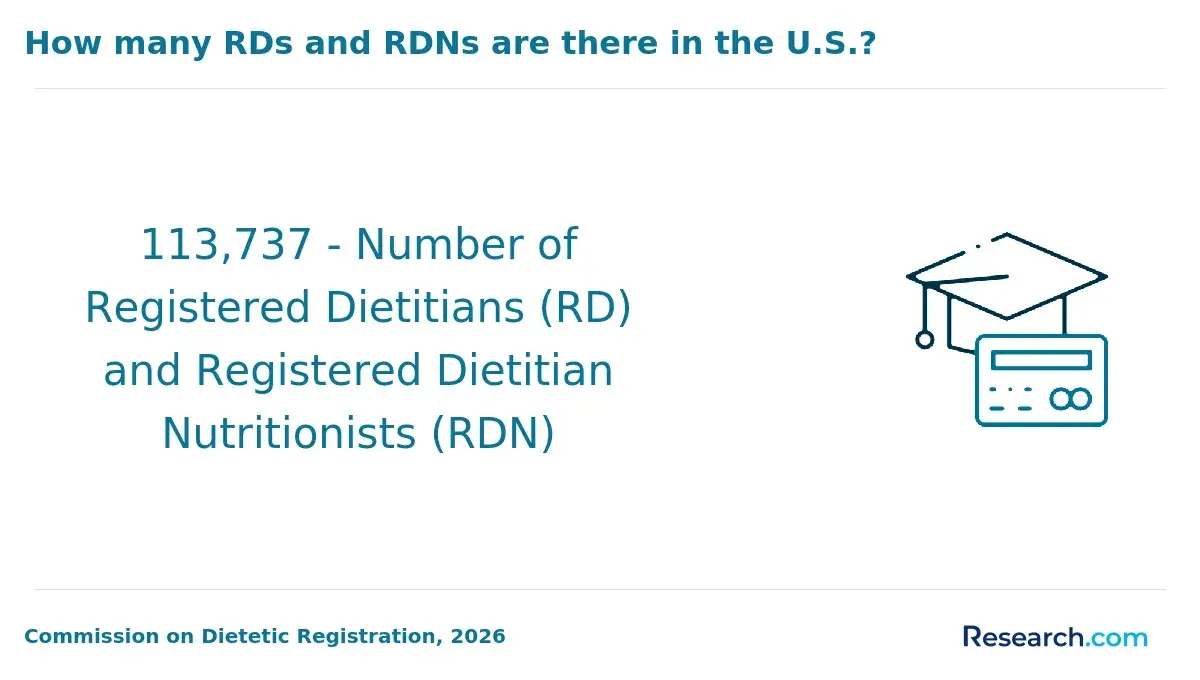
- There are 113,737 Registered Dietitians and Registered Dietitian Nutritionists in the U.S., showing that the credential remains a major professional pathway in the field.
- Entry-level roles may be possible with a certificate, associate degree, or bachelor’s degree, but clinical practice and advanced roles usually require more structured education and supervised experience.
- Technology, telehealth, personalized nutrition, wearable trackers, plant-based eating, sustainability, and data analytics are changing employer expectations.
- Students should verify accreditation, credential alignment, supervised practice requirements, total cost, transfer credit, and career services before enrolling in any nutrition program.
- The BLS reports that nutritionists and dietitians working in Merchant Wholesalers, Nondurable Goods services earn the highest at $96,520, while individual salary outcomes vary by many factors.
References:
- Brenan, M. (2025, December 29). Half of Americans want to lose weight. Gallup. https://news.gallup.com/poll/700112/half-americans-lose-weight.aspx
- Commission on Dietetic Registration. (2026, January 26). Registry Statistics. Retrieved January 2026, from https://www.cdrnet.org/registry-statistics
- Kikuchi, E., Pula, I., Tyson, A., & Yam, E. (2025, May 7). Americans on healthy food and eating. Pew Research Center. https://www.pewresearch.org/science/2025/05/07/americans-on-healthy-food-and-eating
- U.S. Bureau of Labor Statistics. (2025, August 28). Occupational projections and worker characteristics. Retrieved January 2026, from https://www.bls.gov/emp/tables/occupational-projections-and-characteristics.htm
- U.S. Bureau of Labor Statistics. (2024, May). Occupational Employment and Wage Statistics (OEWS) Profiles. Retrieved January 2026, from https://data.bls.gov/oesprofile/
- ZipRecruiter. (2026). Food Analyst Salary. Retrieved February 2026, from https://www.ziprecruiter.com/Salaries/Food-Analyst-Salary
- Dietary Guidelines for Americans, 2020–2025. https://www.dietaryguidelines.gov/sites/default/files/2021-03/Dietary_Guidelines_for_Americans-2020-2025.pdf
Other Things You Should Know About a Master's Degree in Nutrition
Prerequisites for a Master's in Nutrition program typically include a bachelor's degree in nutrition or a related field, along with coursework in biology and chemistry. Some programs may require relevant work experience or GRE scores for admission in 2027.
A master’s in nutrition can support eligibility for the Registered Dietitian Nutritionist credential if the program meets ACEND accreditation standards and includes a supervised practice pathway. In 2027, RDN candidates must also complete a graduate degree, pass the CDR exam, and satisfy state licensure rules where required.