2027 Best Careers To Pursue With a Nutrition Master’s Degree

Co-Founder and Chief Data Scientist
A master’s degree in nutrition can lead to several very different career paths: clinical patient care, public health, research, sports performance, corporate wellness, education, food safety, private practice, and policy work. The challenge is not whether the degree has career value. The real decision is which path matches your credentials, preferred work setting, salary goals, licensure requirements, and tolerance for clinical, administrative, or research-heavy work.
This guide explains what you can do with a nutrition master’s degree, how major career options compare, which industries hire nutrition graduates, what skills and certifications matter, and how to choose a path that fits your long-term goals. It is designed for graduate students, working dietitians, career changers, and professionals deciding whether advanced nutrition training is worth the investment.
Quick answer: What can you do with a master’s degree in nutrition?
With a master’s degree in nutrition, you can pursue roles such as clinical dietitian, public health nutritionist, corporate wellness consultant, research scientist, sports nutritionist, nutrition educator, food safety and quality specialist, nutritional epidemiologist, health coach, or pediatric nutritionist. Some roles require or strongly prefer additional credentials, such as Registered Dietitian Nutritionist (RDN), Certified Nutrition Specialist (CNS), state licensure, supervised practice, or specialized clinical experience.
Key things to know before choosing a nutrition career path:
- A nutrition master’s degree can support careers in hospitals, outpatient care, public health agencies, universities, private practice, corporate wellness, sports organizations, food companies, and nonprofits.
- Dietitians and nutritionists earn a median annual wage of $69,680, while some professionals earn around $98,830 depending on industry, experience, location, and specialization.
- Online nutrition master’s programs can be useful for working adults, but students should verify accreditation, supervised practice options, licensure alignment, and whether the program supports RDN or CNS goals.
- Best careers with a master’s degree in nutrition for 2027
- Requirements to become a nutritionist
- Industries that hire nutrition master’s graduates
- Nutritionist and dietitian salaries by industry
- Technical skills nutrition professionals need
- How a nutrition master’s supports clinical dietitian roles
- Research and academic opportunities in nutrition
- Government and nonprofit nutrition careers
- Becoming a Certified Nutrition Specialist with a nutrition master’s
- How professional development shapes a nutrition career
- Job outlook for nutritionists
- How an online nutrition degree supports long-term growth
- How digital innovation is changing nutrition work
- Nutrition industry trends to watch
- How interdisciplinary collaboration improves nutrition outcomes
- How continuing education strengthens nutrition careers
- How administrative and billing skills support nutrition practice
- How allied health certifications can complement nutrition work
- How health information management supports nutrition practice
- How clinical assistant training can improve practice operations
- How accelerated health information management programs relate to nutrition practice
- How bioinformatics can support personalized nutrition
- How healthcare administration skills improve nutrition services
Best Careers to Pursue With a Master’s Degree in Nutrition for 2027
The best career for a nutrition master’s graduate depends on whether you want to work directly with patients, analyze population-level health problems, design programs, conduct research, teach, manage food quality, or build a private practice. A graduate degree can make you more competitive for specialized roles, but some positions still require specific credentials, supervised experience, or state authorization.
| Career path | Best fit for | Common work settings | Cited salary |
| Clinical Dietitian | Professionals who want patient-facing medical nutrition work | Hospitals, clinics, long-term care, outpatient care, private practice | $69,680 |
| Public Health Nutritionist | Graduates interested in community health and food access | Government agencies, nonprofits, public health departments | $60,112 |
| Corporate Wellness Consultant | Nutrition professionals who like program design and employee health | Employers, wellness vendors, consulting firms | $94,000 |
| Research Scientist | Graduates who prefer evidence generation, data, and scientific inquiry | Universities, research centers, private labs, agencies | $99,798 |
| Sports Nutritionist | Professionals interested in performance, recovery, and athlete health | Sports teams, fitness centers, athletic departments, private practice | $72,087 |
| Nutrition Educator | Graduates who enjoy teaching, curriculum, and public education | Colleges, community organizations, technical schools, media | $61,044 |
| Food Safety and Quality Specialist | Professionals who want regulatory, product, and quality-control work | Food manufacturers, inspection firms, agencies | $71,279 |
| Nutritional Epidemiologist | Graduates who want to study diet patterns and population health outcomes | Research institutions, health agencies, policy organizations | $85,222 |
| Health Coach | Professionals who want lifestyle-change coaching and client support | Wellness centers, gyms, telehealth platforms, private practice | $59.865 |
| Pediatric Nutritionist | Graduates who want to work with infants, children, adolescents, and families | Children’s hospitals, clinics, schools, private practice | $54,137 |
Clinical Dietitian
Clinical dietitians use medical nutrition therapy to help patients manage conditions such as diabetes, hypertension, kidney disease, gastrointestinal disorders, eating disorders, and other health concerns affected by diet. Their work often includes nutrition assessment, care planning, patient counseling, documentation, and collaboration with physicians, nurses, pharmacists, and other care team members.
Average salary: $69,680
Public Health Nutritionist
Public health nutritionists focus on improving nutrition across communities rather than only treating individual clients. They may design food access programs, lead nutrition education campaigns, support school or community initiatives, evaluate program outcomes, or contribute to policies aimed at reducing diet-related disease and food insecurity.
Average salary: $60,112
Corporate Wellness Consultant
Corporate wellness consultants help employers build nutrition and wellness initiatives for employees. Their responsibilities may include workshops, healthy eating campaigns, meal-planning resources, wellness challenges, coaching programs, and vendor evaluation. This path is often a good fit for professionals who enjoy communication, program management, and business-facing work.
Average Salary: $94,000
Research Scientist
Nutrition research scientists investigate how diet, nutrients, food environments, supplements, metabolism, and health outcomes are connected. They may design studies, analyze data, prepare reports, publish research, support grant applications, or help translate scientific findings into practice guidelines and policy recommendations.
Average salary: $99,798
Sports Nutritionist
Sports nutritionists help athletes and active clients align nutrition with training, competition, recovery, body composition, hydration, and injury-prevention goals. This role may involve individualized meal planning, supplement evaluation, travel nutrition planning, and coordination with coaches, athletic trainers, and sports medicine teams.
If you are drawn to leadership roles in athletics beyond nutrition counseling, you may also want to compare this path with sports administration. Research.com’s guide on requirements to become a sports manager explains how that career differs from athlete-focused nutrition work.
Average salary: $72,087
Nutrition Educator
Nutrition educators teach students, clients, or community groups how food choices affect health. Some work in colleges or technical programs; others develop workshops, public-facing materials, training modules, media content, or community education programs. This path rewards strong communication skills and the ability to simplify complex nutrition science.
Average salary: $61,044
Food Safety and Quality Specialist
Food safety and quality specialists help ensure food products meet safety standards, quality expectations, labeling rules, and production requirements. Their work may include testing, audits, compliance documentation, contamination prevention, supplier review, and process improvement in food manufacturing or regulatory environments.
Average salary: $71,279
Nutritional Epidemiologist
Nutritional epidemiologists study relationships between diet patterns and health outcomes across populations. They may analyze large datasets, evaluate chronic disease risks, support public health guidelines, and identify trends related to obesity, diabetes, cardiovascular disease, cancer, food access, or dietary behavior.
Average salary: $85,222
Health Coach
Health coaches help clients turn nutrition knowledge into sustainable routines. Compared with clinical dietitians, health coaches may focus more on goal-setting, behavior change, accountability, lifestyle habits, and motivation. Scope of practice matters in this role, especially in states that regulate nutrition counseling.
Average salary: $59.865
Pediatric Nutritionist
Pediatric nutritionists work with children and families on growth, food allergies, feeding concerns, medical conditions, malnutrition, weight management, eating disorders, and healthy habit formation. This specialty requires strong counseling skills because successful nutrition care often depends on parent education, family routines, and child development considerations.
Average salary: $54,137
What are the requirements to become a nutritionist?
Requirements vary by state, employer, and job title. Some nutrition roles are open to graduates with a related degree and experience, while clinical dietitian positions often require more formal credentialing. Before enrolling in a program, check whether your target role requires state licensure, RDN eligibility, CNS preparation, supervised practice, or a specific type of accredited coursework.
- Earn an undergraduate degree in nutrition or a related science field. Many nutrition careers begin with a bachelor’s degree in nutrition, dietetics, food science, biology, chemistry, or a related discipline. Students who need a science foundation can explore Research.com’s guide to accessible biology degree options.
- Complete supervised experience when required. Clinical, credentialed, and licensed roles often require hands-on training through internships, practicums, supervised practice hours, or employer-based clinical experience.
- Choose the credential that matches your goal. Common pathways include Registered Dietitian Nutritionist (RDN) and Certified Nutrition Specialist (CNS). Each credential has its own education, supervised practice, and examination requirements.
- Consider graduate education for specialization. A master’s degree can help you move into clinical specialization, research, leadership, public health, teaching, consulting, or advanced private practice.
- Maintain continuing education. Nutrition science, clinical guidance, telehealth rules, food policy, and credentialing expectations change over time, so continuing education is part of staying competent and employable.
- Build counseling and communication skills. Nutrition work is not only technical. Professionals must translate scientific evidence into practical guidance that patients, athletes, families, employees, or communities can realistically follow.
According to the research cited in the original article, there will be about an average of 6,100 job openings for nutritionists each year over the next decade. That makes credential planning important: the strongest candidates usually combine graduate coursework, supervised experience, technical skills, and clear specialization.
| Goal | Typical preparation to investigate | Important question to ask |
| Clinical dietitian | Master’s degree, supervised practice, RDN pathway, state requirements | Does this program support the credential required for clinical practice? |
| CNS or advanced nutrition practice | Graduate nutrition coursework, 1,000 supervised practice hours, certification exam | Will my coursework and supervisor qualify for CNS requirements? |
| Public health nutrition | Nutrition master’s, program evaluation, community health, policy knowledge | Does the program include population health or applied public health experience? |
| Sports nutrition | Nutrition science, performance nutrition, counseling, athlete experience | Can I gain experience with athletes or sports medicine teams? |
| Research or academia | Research methods, statistics, lab or data experience, publications | Will I complete a thesis, research project, or faculty-led study? |
What industries hire graduates with a master’s degree in nutrition?
Nutrition master’s graduates are hired across healthcare, public health, education, food production, wellness, research, and global development. The right industry depends on whether you prefer one-on-one counseling, population-level work, product and regulatory work, scientific research, or business consulting.
- Healthcare and hospitals: Hospitals, outpatient clinics, long-term care facilities, and specialty practices hire nutrition professionals for assessment, diet planning, medical nutrition therapy, discharge education, and interdisciplinary care.
- Public health organizations: Government agencies and nonprofits need nutrition professionals to address food access, community education, chronic disease prevention, maternal and child nutrition, and program evaluation. Additional healthcare certifications may strengthen a resume for broader healthcare roles.
- Food and beverage companies: Food manufacturers and brands may hire nutrition graduates for product development, nutrition labeling, quality assurance, consumer education, regulatory support, and health-focused product strategy.
- Corporate wellness programs: Employers and wellness vendors use nutrition experts to create employee health initiatives, workshops, coaching services, and workplace nutrition resources.
- Research and academia: Universities, laboratories, research institutes, and policy organizations hire nutrition professionals to conduct studies, analyze findings, teach, and develop evidence-based materials.
- Sports and fitness organizations: Athletic departments, sports teams, training facilities, and fitness centers may hire nutritionists to support performance, recovery, weight goals, hydration, and supplement education.
- Pharmaceutical and supplement companies: Nutrition professionals may contribute to product research, claims review, customer education, scientific affairs, or evidence-based supplement development.
- International aid and development: Global health organizations may employ nutrition graduates to work on malnutrition, emergency food support, maternal and child nutrition, and food security programs.
- Holistic health and wellness centers: Wellness-focused organizations may hire nutrition professionals for lifestyle coaching, nutrition education, and client-centered wellness planning, though scope-of-practice rules should be checked carefully.
How much do nutritionists and dietitians earn in various industries?
According to the U.S. Bureau of Labor Statistics (BLS), the median annual wage for dietitians and nutritionists was $69,680. Pay varies by work setting, location, credential, years of experience, and specialization. The cited BLS industry figures show outpatient care centers at $77,740, hospitals at $72,320, government roles at $69,680, and nursing and residential care facilities at $65,690.
Salary comparisons should be interpreted carefully. A clinical dietitian in a high-cost metro area, a consultant with private clients, and a public health nutritionist in a grant-funded nonprofit may have very different compensation structures. Similar to how pay varies in Research.com’s social worker salary guide, nutrition salaries can shift by state, employer type, credentials, and experience. The chart below shows how much you can earn as a nutritionist in different top industries:
What technical skills does a nutritionist need?
Strong nutrition professionals combine scientific knowledge, assessment ability, counseling skill, data literacy, and documentation discipline. The exact technical skills depend on the setting: a hospital dietitian may rely heavily on lab interpretation and medical nutrition therapy, while a food quality specialist may focus more on labeling, regulation, and production standards.
- Nutrition assessment: Ability to evaluate dietary intake, health history, anthropometric measurements, symptoms, risk factors, and client goals using appropriate tools.
- Meal planning and analysis software: Familiarity with platforms such as NutriBase, MyFitnessPal, or Food Processor for analyzing intake and creating structured plans.
- Data interpretation: Skill in reviewing dietary data, laboratory results, health metrics, outcomes, and research findings to support evidence-based recommendations.
- Biochemistry and physiology: Understanding how nutrients are absorbed, metabolized, and used by the body, and how disease states affect nutrition needs.
- Food safety, labeling, and regulatory knowledge: Awareness of dietary guidelines, labeling requirements, food safety expectations, and compliance issues relevant to the role.
- Health monitoring tools: Competence with equipment such as glucose monitors, body composition analyzers, and blood pressure cuffs when these tools fall within the work setting and scope of practice.
- Research and public health tools: Ability to use databases such as PubMed and statistical tools such as SPSS can support evidence review, research projects, and program evaluation. Professionals who want broader healthcare operations knowledge may also review a low-cost online medical billing and coding program.
- Cultural competency: Ability to respect cultural food traditions, religious practices, economic constraints, and family routines when designing nutrition recommendations.
| Skill area | Why it matters | Where it is especially useful |
| Medical nutrition therapy | Supports nutrition care for diagnosed health conditions | Hospitals, outpatient clinics, specialty care |
| Program evaluation | Shows whether nutrition interventions are working | Public health, nonprofits, community programs |
| Nutrition counseling | Helps clients turn recommendations into behavior change | Private practice, health coaching, clinical care |
| Research literacy | Protects against unsupported claims and outdated advice | Academia, clinical practice, policy, consulting |
| Documentation | Supports continuity of care, compliance, and reimbursement | Healthcare, private practice, interdisciplinary teams |
How does a master’s degree in nutrition prepare you for clinical dietitian roles?
Online nutrition master’s programs and campus-based programs can help students build advanced knowledge in medical nutrition therapy, nutrient metabolism, chronic disease management, research interpretation, counseling, and clinical decision-making. For students pursuing clinical work, the most important question is whether the program aligns with the credential and supervised practice requirements needed for the job they want.
Clinical preparation often includes advanced coursework in biochemistry, pathophysiology, lifecycle nutrition, disease-specific nutrition care, nutrition assessment, and evidence-based practice. Applied experiences may involve case studies, practicums, simulations, or supervised clinical placements where students learn to assess patients, develop care plans, monitor progress, document services, and collaborate with healthcare teams.
| Clinical preparation area | How it helps in practice |
| Medical nutrition therapy | Prepares graduates to connect nutrition interventions with medical diagnoses and treatment goals. |
| Advanced biochemistry | Helps practitioners understand how disease, medications, and metabolism affect nutrient needs. |
| Evidence-based practice | Strengthens the ability to use current research rather than relying on trends or unsupported claims. |
| Supervised clinical experience | Builds real-world judgment through patient assessment, counseling, documentation, and care coordination. |
| Specialty exposure | May support future work in areas such as pediatric nutrition, oncology, renal care, or gastrointestinal nutrition. |
What are the opportunities in research and academics for those with a master’s degree in nutrition?
A nutrition master’s degree can be a strong foundation for research, teaching, program evaluation, and academic support roles. These careers are best suited to people who enjoy reading scientific literature, designing studies, analyzing data, writing clearly, and asking questions that improve nutrition practice or policy.
- Nutrition Researcher: Study how diet affects disease risk, health outcomes, nutrient metabolism, food behavior, or policy. This role may involve clinical trials, surveys, data analysis, literature reviews, and academic publication.
- University Professor or Lecturer: Teach nutrition, dietetics, food science, or public health courses at colleges, universities, or community colleges. Some positions may require additional graduate study or teaching experience.
- Research-Based Program Developer: Design and evaluate nutrition interventions for public health agencies, community organizations, schools, or healthcare systems.
- Academic Contributor to Dietary Guidelines: Support the evidence review and policy work that informs nutrition standards, public health recommendations, or educational resources.
- Grant Writer or Research Director: Help secure funding, manage projects, coordinate research teams, and guide studies in areas such as chronic disease, food security, clinical nutrition, or community health.
Earnings in related occupations vary by education, specialization, work setting, and experience. For example, the cited figures show health education specialists at around $62,860, registered nurses at an average of $86,070, and rehabilitation counselors at around $44,040. Credentials such as the Certified Nutrition Specialist (CNS) may also improve competitiveness for advanced nutrition roles.
The chart below shows how much you can earn in occupations that are similar to being a dietitian and nutritionist:
What role can you play in government or nonprofit organizations with a master’s degree in nutrition?
Government and nonprofit nutrition careers usually focus on population health, food access, prevention, education, and policy rather than fee-for-service client care. These roles can be meaningful for graduates who want to work with underserved communities, influence systems, or manage programs that reach large groups.
- Public Health Nutritionist: Develop and implement nutrition programs that address community needs such as food insecurity, maternal and child nutrition, obesity prevention, and chronic disease education. Professionals may also strengthen their qualifications with online certifications that support career advancement.
- Policy Advisor or Analyst: Review nutrition data, legislation, program outcomes, and public health trends to help shape nutrition standards, funding decisions, or community health policy.
- Community Outreach Coordinator: Organize workshops, screenings, food education events, resource referrals, and partnerships with schools, clinics, food banks, and local agencies.
| Government or nonprofit role | Primary focus | Good fit if you enjoy |
| Public health nutritionist | Community nutrition programs and prevention | Program design, education, and equity-focused work |
| Policy analyst | Nutrition policy, legislation, and standards | Research, writing, data review, and systems thinking |
| Outreach coordinator | Direct community engagement and education | Public speaking, partnerships, and practical problem-solving |
Can you become a certified nutrition specialist (CNS) with a master’s in nutrition?
Yes. A master’s degree in nutrition can be a major step toward the Certified Nutrition Specialist (CNS) credential, but the degree alone is not enough. Candidates must also satisfy supervised practice and examination requirements, and they should confirm that their coursework meets the credentialing body’s expectations before enrolling.
The CNS pathway requires 1,000 hours of supervised practice experience under a qualified professional, such as a CNS or licensed healthcare provider. After meeting the education and practice requirements, candidates must pass the CNS certification exam administered by the Board for Certification of Nutrition Specialists (BCNS). The credential can support advanced work in clinical nutrition, private practice, research, and specialized nutrition consulting.
| CNS requirement area | What to verify |
| Graduate education | Confirm the nutrition master’s curriculum includes required advanced coursework. |
| Supervised practice | Plan how you will complete 1,000 hours with an eligible supervisor. |
| Certification exam | Prepare for the BCNS exam after education and practice requirements are met. |
| State rules | Check whether your state regulates nutrition counseling, title use, or clinical practice. |
How can ongoing professional development shape your nutrition career trajectory?
Professional development is what keeps a nutrition career from becoming static. New research, changing clinical guidelines, digital health tools, telehealth practices, food policy updates, and employer expectations can all affect how nutrition professionals work. Targeted certifications, mentorship, conferences, continuing education, and professional association involvement can help you move from generalist roles into specialty practice, leadership, research, or consulting.
If you are still comparing nutrition career options, Research.com’s broader nutrition careers guide can help you evaluate roles, salary considerations, and career paths before committing to a specialization.
What is the job outlook for nutritionists?
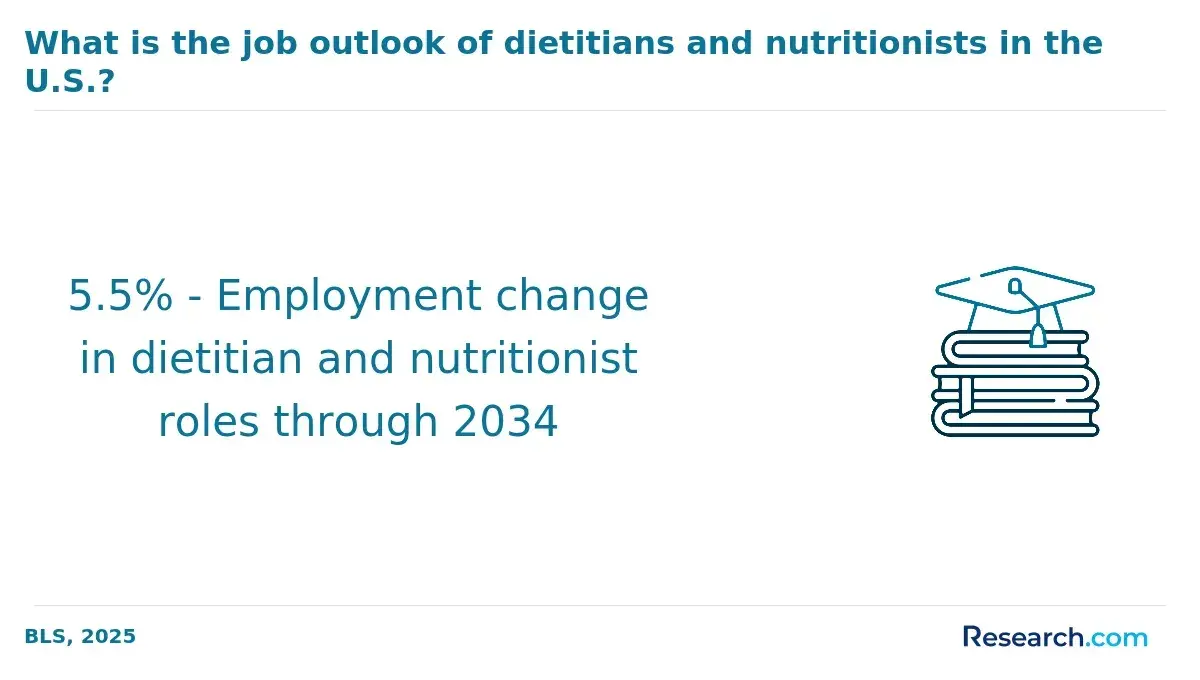
The employment outlook for dietitians and nutritionists is positive in the cited data. Based on the research referenced in the original article, employment of dietitians and nutritionists is projected to grow by 6% from 2024 to 2034, which is faster than the average for all occupations.
Several factors support demand: greater awareness of nutrition’s role in chronic disease prevention and management, expanded use of nutrition professionals in healthcare teams, interest in personalized nutrition, employer wellness programs, outpatient care growth, and private-practice opportunities. However, job availability and pay still depend heavily on location, credential, specialization, reimbursement structures, and employer type.
Additional credentials can improve competitiveness when they match your intended role. Research.com’s guide to the best online nutrition certifications can help you compare options before choosing a certification.
How can an online degree in nutrition support long-term career growth?
An online degree in nutrition can be a practical option for students who need flexibility because of work, family, military service, or location. Online study can also help career changers build a foundation in nutritional science before pursuing graduate school, credentialing, or specialized certifications.
The key is quality control. Students should check accreditation, faculty qualifications, lab or practicum requirements, supervised practice access, transfer policies, tuition and fees, and whether the program supports licensure or credential goals in their state. Flexibility matters, but it should not come at the expense of career eligibility.
How does digital innovation transform nutrition careers?
Digital tools are changing how nutrition professionals assess, counsel, monitor, and communicate with clients. Telehealth platforms, food-tracking apps, wearable devices, remote coaching tools, electronic health records, and data dashboards can make nutrition services more accessible and measurable. They also create new responsibilities around privacy, documentation, digital literacy, and evidence-based interpretation of client-generated data.
Professionals who want to stay current with food science and digital learning formats may compare flexible programs such as a food science degree online. The best choice depends on whether your goal is clinical care, food product work, public health, or research.
What are some upcoming industry trends in the field of nutrition?
Nutrition careers are being shaped by technology, chronic disease prevention, consumer demand for personalization, sustainability concerns, and broader use of remote health services. Working adults who want to reskill or advance may also compare flexible study options through Research.com’s guide to the best online degree programs for working adults.
- Personalized Nutrition: Wearables, health data, genetic testing, and microbiome research are increasing interest in individualized nutrition recommendations, though professionals must be careful not to overstate what the evidence can prove.
- Plant-Based Diets: Demand for vegetarian, vegan, and plant-forward eating patterns creates opportunities for nutrition professionals who understand nutrient adequacy, meal planning, sustainability, and client preferences.
- Sustainability in Nutrition: Clients and organizations increasingly ask about food waste, local sourcing, environmental impact, and practical ways to make healthier food systems.
- Digital Health and Tele-Nutrition: Virtual consultations, remote tracking, and app-based coaching are expanding how nutrition services are delivered.
- Specialized Diets for Chronic Diseases: More clients need evidence-based nutrition support for diabetes, cardiovascular disease, autoimmune conditions, gastrointestinal disorders, and other chronic health concerns.
- Global Food Security Initiatives: Nutrition professionals can contribute to programs that address malnutrition, emergency food support, food access, and community resilience.
How can interdisciplinary collaboration enhance patient outcomes in nutrition?
Nutrition care is often more effective when it is coordinated with other disciplines. A patient’s food choices may be shaped by medical diagnoses, medications, mental health, income, culture, mobility, family responsibilities, and access to food. Collaboration with physicians, nurses, psychologists, social workers, pharmacists, physical therapists, and community organizations can make care plans more realistic and safer.
For professionals interested in behavioral health connections, Research.com’s guide on what you can do with a master’s in clinical psychology offers useful context on how mental health expertise can intersect with nutrition, behavior change, and chronic disease support.
Here’s what graduates have to say about their nutrition master’s degree:
-
: "
My Master’s in Nutrition helped me move beyond general wellness advice and into public health work grounded in evidence. The advanced clinical and research coursework gave me the confidence to support community health programs and understand the bigger forces that shape nutrition access. – Marie
"
-
: "
The degree gave me the scientific foundation and practical confidence I needed to open a private nutrition practice. I learned how to connect research with real client needs, which changed how I counsel people and build care plans. – Jacqueline
"
-
: "
Graduate study introduced me to opportunities I had not considered before, including internships and professional networks in personalized nutrition. I now work in a role where science, coaching, and problem-solving come together every day. – Tomy
"
How can continuous education enhance your nutrition career?
Continuing education helps nutrition professionals keep pace with changing evidence, evolving care models, new technology, and stricter employer expectations. It can also help you move into a specialty such as diabetes care, sports nutrition, pediatric nutrition, renal nutrition, oncology nutrition, public health, food safety, or private practice management.
Cost and scheduling matter, especially for working adults. If you are comparing flexible nutrition programs, Research.com’s list of the best online registered dietitian programs can help you review affordability and program structure.
How can strong administrative and billing skills optimize your nutrition practice?
Nutrition professionals in private practice, outpatient care, or multidisciplinary clinics often need more than counseling skills. Scheduling, documentation, coding, billing, referrals, compliance, privacy practices, and insurance workflows can affect whether a practice is financially sustainable and easy for patients to use.
Practitioners who want stronger operational knowledge may review training options such as accredited online medical billing schools. These skills do not replace nutrition expertise, but they can help a practice run more smoothly.
How can allied health certifications complement your nutrition career?
Allied health training can help nutrition professionals understand clinical workflows, patient intake, documentation, care coordination, and communication with healthcare teams. This can be useful for graduates who work in clinics, outpatient practices, community health programs, or interdisciplinary care environments.
For professionals who want practical patient-care exposure, Research.com’s guide to affordable online medical assistant programs can help compare complementary training options.
How can leveraging health information management enhance your nutrition practice?
Health information management can improve how nutrition professionals document care, track outcomes, protect patient information, and coordinate with other providers. In clinical and telehealth settings, accurate records are essential for continuity of care, compliance, quality improvement, and reimbursement.
Nutrition professionals interested in data systems, records management, and healthcare operations may explore an online HIM degree as a complementary path.
How can clinical assistant training strengthen your nutrition practice?
Clinical assistant training can help nutrition professionals understand patient intake, basic clinical workflows, vital signs, scheduling, documentation, and team-based care. These skills may be especially useful in small practices, community clinics, or settings where nutrition services are integrated with broader healthcare operations.
Short-format options such as a 6 week medical assistant course may provide practical exposure to clinical support tasks, though students should verify program quality, scope, and whether the training fits their career goals.
How can accelerated health information management online programs transform your nutrition practice?
As nutrition services become more digital, practitioners may benefit from understanding patient data, electronic records, privacy rules, billing accuracy, and workflow design. These skills can support better care coordination, cleaner documentation, and smoother practice operations.
Professionals who want a faster route into these competencies can compare accelerated health information management online programs and decide whether HIM training complements their nutrition career plan.
How can bioinformatics transform your nutrition practice?
Bioinformatics can support advanced nutrition work by helping professionals interpret complex biological, genetic, and health data. This is most relevant for research, precision nutrition, nutrigenomics, data-heavy clinical projects, and roles where nutrition intersects with computational analysis.
Nutrition professionals interested in genetic data, computational tools, and personalized intervention research may explore interdisciplinary options such as the best online bioinformatics masters programs.
How can effective healthcare administration improve your nutrition practice?
Healthcare administration skills can help nutrition professionals manage teams, budgets, patient flow, compliance, quality improvement, and service delivery. These skills are especially valuable for practice owners, department leaders, clinic managers, and nutrition professionals moving into administrative roles.
If your goal is leadership rather than direct counseling alone, a healthcare administration degree online may be worth comparing with clinical nutrition, public health, or business-focused options.
Common mistakes to avoid when choosing a nutrition master’s career path
- Choosing a program before checking credential requirements: If you want to become an RDN, CNS, or licensed nutrition provider, confirm that the program supports that path before enrolling.
- Focusing only on tuition: Fees, supervised practice costs, travel, lost work hours, exam costs, and credential maintenance can affect total cost.
- Assuming every online program meets licensure rules: State requirements vary, and not every online nutrition degree prepares graduates for regulated practice.
- Ignoring supervised practice access: Clinical and advanced credential pathways may require placements that are difficult to arrange without program support.
- Relying only on salary averages: Salary figures do not guarantee individual outcomes. Location, employer, credential, specialty, and experience matter.
- Choosing a trendy specialty without evidence literacy: Personalized nutrition, supplements, and wellness coaching require careful interpretation of research and clear scope-of-practice boundaries.
- Overlooking documentation and business skills: Private practice and outpatient work often require billing, compliance, scheduling, and recordkeeping knowledge.
How to choose the right nutrition career path
- Define your preferred work setting. Decide whether you want hospitals, schools, public agencies, labs, sports teams, companies, private practice, or remote work.
- Check required credentials first. Review state rules and employer requirements for your target job before choosing a degree, certification, or practicum.
- Compare salary with lifestyle and workload. Higher-paying roles may involve consulting pressure, research demands, business development, or specialized experience.
- Look for applied experience. Internships, practicums, research assistantships, and clinical placements can matter as much as coursework.
- Build a specialization gradually. Start with strong fundamentals, then add focused training in areas such as clinical nutrition, sports, public health, pediatrics, renal care, food safety, or data analytics.
- Ask programs direct questions. Request information about accreditation, supervised practice, graduate outcomes, faculty expertise, licensure alignment, online support, and total cost.
Questions to ask before enrolling in a nutrition master’s program
| Question | Why it matters |
| Is the program accredited and recognized for my intended credential? | Accreditation and credential alignment can affect eligibility for clinical, licensed, or advanced practice roles. |
| Does the curriculum support RDN, CNS, public health, research, or another pathway? | Nutrition master’s programs are not all designed for the same career outcome. |
| How are supervised practice hours arranged? | Students may need placements for clinical practice, CNS preparation, or applied experience. |
| What are the full costs beyond tuition? | Fees, materials, exams, travel, and unpaid practicum time can change the real cost. |
| Can online students access faculty, advising, and career support? | Flexible delivery is valuable only if students still receive strong academic and professional guidance. |
| What jobs do graduates actually get? | Outcome data helps you judge whether the program fits your career goal. |
Key Insights
- A master’s degree in nutrition can lead to clinical, public health, research, education, wellness, food safety, sports, and policy careers, but the best path depends on credentials, work setting, and scope-of-practice rules.
- Salary figures vary by source and role. This guide references a BLS median annual wage of $69,680, selected career salaries ranging from $54,137 to $99,798, and a cited average salary of around $73,850 per year.
- The cited outlook projects 6% employment growth from 2024 to 2034, with the original article also referencing over 6,200 job openings each year.
- A nutrition master’s degree usually takes two years to complete, but total timeline can be longer if you need prerequisites, supervised practice, certification exams, or state licensure.
- Online nutrition programs can be worthwhile for working adults, but only if they align with accreditation, supervised experience, licensure, and credential requirements.
- Common career accelerators include CNS or RDN preparation, research experience, clinical specialization, telehealth skills, data literacy, public health program experience, and strong documentation or practice-management skills.
- The safest decision is to start with your target role, verify the required credential path, compare program outcomes and costs, and choose training that gives you supervised experience in the setting where you want to work.
Resources:
- Glassdoor. (2026). Corporate Wellness Consultant Salaries. https://www.glassdoor.com/Salaries/corporate-wellness-consultant-salary-SRCH_KO0,29.htm
- Indeed. (2026). Research scientist salary in the United States. https://www.indeed.com/career/research-scientist/salaries
- Salary.com. (2026). Sports Nutritionist Salary. https://www.salary.com/research/salary/posting/sports-nutritionist-salary
- U.S. Bureau of Labor Statistics. (2025). Occupational Outlook Handbook: Dietitians and Nutritionists. https://www.bls.gov/ooh/healthcare/dietitians-and-nutritionists.htm#tab-1
- ZipRecruiter. (2026). Public Health Nutritionist Salary. https://www.ziprecruiter.com/Salaries/Public-Health-Nutritionist-Salary
Other Things You Should Know About Careers to Pursue With a Master’s Degree in Nutrition
To advance in nutrition careers in 2027, certifications such as Certified Nutrition Specialist (CNS) or Certified Clinical Nutritionist (CCN) are highly recommended. These credentials are governed by respective bodies and show expertise beyond a master's degree, enhancing job prospects.
Yes. In states that license dietitians, clinical practice usually requires a state license plus the Commission on Dietetic Registration’s Registered Dietitian Nutritionist credential. To sit for the CDR exam, candidates need at least a graduate degree and an ACEND-accredited supervised practice pathway.