
2027 How to Become a Nutritionist in California

Co-Founder and Chief Data Scientist
Becoming a nutritionist in California is not one single pathway. The right route depends on whether you want to provide general wellness coaching, work in clinical nutrition, qualify for hospital roles, build a private practice, or become a Registered Dietitian Nutritionist. California does not license every person who gives nutrition advice, but credentials, education, supervised practice, and legal boundaries still matter—especially if you want employers, insurers, physicians, and clients to take your work seriously.
This guide explains the education, certification, cost, timeline, practical experience, legal limits, salary expectations, and career options for aspiring nutritionists in California. It is designed for students comparing nutrition degree programs, career changers deciding whether certification is enough, and current wellness professionals who want to move into more advanced nutrition roles.
Quick answer: How do you become a nutritionist in California?
To become a nutritionist in California, you typically complete coursework or a degree in nutrition, gain supervised or practical experience, choose a credential that matches your career goals, and follow California’s legal limits on nutrition advice. General nutritionists are not required to hold a California license, but those who want to work as Registered Dietitian Nutritionists must meet specific national education, supervised practice, and examination requirements. Certification is voluntary for many nutrition roles, but it can improve credibility and employment options.
Key Things You Should Know About Becoming a Nutritionist in California
- California does not require a state license for all nutritionists, but professionals using regulated dietetics titles or working as registered dietitians must meet formal credentialing requirements.
- The Registered Dietitian pathway requires nutrition-related education, supervised practice, and a passing score on the national exam administered by the Commission on Dietetic Registration.
- Voluntary credentials from groups such as the National Association of Nutrition Professionals and the American Nutrition Association can help nutritionists demonstrate professional preparation, especially in wellness, holistic nutrition, or private practice settings.
- Some certification bodies require ongoing professional education, including 30 hours of professional development every two years.
- Before enrolling in a program, compare accreditation, supervised practice options, credential eligibility, total cost, transfer policies, and whether the program supports your intended career setting.
- Education requirements for nutritionists in California
- California licensing rules for nutritionists
- How long the nutritionist pathway takes
- Certification options for California nutritionists
- Practical experience and supervised training
- Cost of becoming a nutritionist in California
- Salary and job outlook for nutritionists in California
- Career advancement options
- Adding substance abuse counseling knowledge to nutrition practice
- Using online certifications to strengthen a nutrition career
- Clinical certifications and interdisciplinary credibility
- Marketing a nutrition practice in California
- Digital tools for nutritionists
- Trends shaping nutrition practice
- Insurance and reimbursement considerations
- How nutrition regulation compares with other health fields
- Moving into advanced healthcare roles
- Transitioning from nutritionist to Registered Dietitian
- Nutrition specialization options
- Challenges California nutritionists should expect
- Legal responsibilities and scope of practice
- Working with other healthcare professionals
What are the educational requirements to become a nutritionist in California?
California does not set one statewide degree requirement for every person who calls themselves a nutritionist. In practice, however, your education determines what employers will consider you for, what credentials you can pursue, and whether you can safely work with clients who have complex health needs.
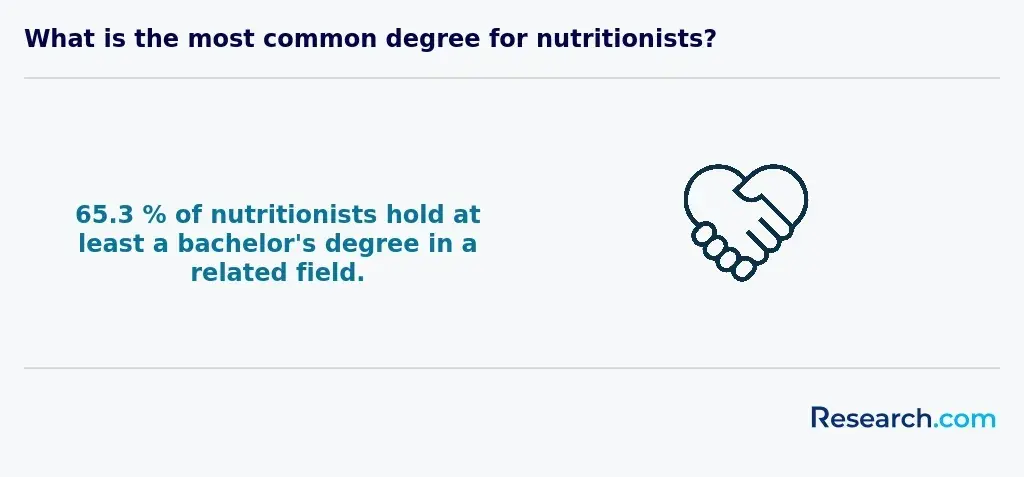
For general wellness roles, certificate programs or undergraduate coursework may be enough to begin building knowledge. For clinical, medical, research, community health, or dietetics roles, a bachelor’s or graduate degree is usually the stronger route.
| Education level | Best fit | What to check before enrolling |
| Certificate or short training program | Career changers, wellness coaches, fitness professionals, and people testing interest in nutrition | Whether the certificate is recognized by employers or qualifies you for any professional certification |
| Associate degree | Students seeking a lower-cost starting point before transferring to a bachelor’s program | Transfer agreements, science prerequisites, and whether credits apply toward a nutrition bachelor’s degree |
| Bachelor’s degree | Students who want stronger job options in nutrition education, food service, public health, wellness, or dietetics preparation | Accreditation, supervised experience opportunities, and alignment with future RDN or graduate study plans |
| Master’s degree | Students pursuing advanced clinical, research, policy, teaching, or specialized nutrition roles | Faculty expertise, practicum access, research requirements, and credential eligibility |
- Bachelor’s degree: Many nutritionists in California earn a bachelor’s degree in nutrition, food science, dietetics, or a closely related field. Examples of California programs include the Bachelor of Science in Nutrition Science at the University of California, Davis, and the Bachelor of Science in Nutrition and Food Science at California Baptist University. Students who need flexibility can compare online nutrition education programs to see which options fit their schedule and career goals.
- Graduate degree: A master’s degree can be useful for students who want deeper training, research experience, or eligibility for advanced credentials. Examples include the Master of Science in Human Nutrition at California State University, Northridge, and the Master of Science in Nutritional Biology at the University of California, Davis.
- Core coursework: Strong nutrition programs usually include human physiology, biochemistry, lifecycle nutrition, food systems, nutrition counseling, public health nutrition, research methods, food policy, and epidemiology. These courses help students move beyond general diet advice and learn how nutrition recommendations are evaluated and applied.
When comparing schools, do not focus only on the program name. A “nutrition” degree, “dietetics” degree, “food science” degree, and “health coaching” certificate can lead to very different outcomes. Ask whether the curriculum supports the credential or job you actually want.
Is there a licensing requirement to become a nutritionist in California?
California does not license general nutritionists in the same way it licenses many healthcare professions. This means a person may provide general nutrition education without holding a state nutritionist license, provided they do not misrepresent their qualifications, diagnose disease, claim to cure medical conditions, or use protected titles improperly.
The important distinction is between general nutrition advice and regulated dietetics practice. The Registered Dietitian Nutritionist credential is a national professional credential, and California recognizes specific dietetics-related standards for those using dietitian titles or practicing in settings where medical nutrition therapy is required. If your goal is to work in hospitals, long-term care, outpatient medical clinics, or insurance-reimbursed nutrition services, the RDN route is usually the most relevant.
Voluntary certification can still be valuable even when state licensure is not required. Credentials from recognized professional organizations can show that you completed structured education, passed an exam, and agreed to ethical standards. They may also help clients and referral partners distinguish you from untrained wellness influencers or informal diet coaches.
Continuing education is also part of maintaining professional credibility. Registered Dietitian Nutritionists are required to complete 75 hours of continuing education every five years. Other certification organizations may set their own professional development requirements.
| Practice situation | License or credential issue | Decision point |
| General wellness education | California does not require a general nutritionist license | Certification can still improve credibility and client trust |
| Clinical nutrition in healthcare settings | Employers commonly prefer or require RDN preparation | Choose a degree and supervised practice pathway that supports dietetics eligibility |
| Private practice nutrition coaching | Allowed within legal scope, but claims and titles must be accurate | Use clear client agreements and avoid diagnosing or treating disease unless properly qualified |
| Insurance-reimbursed nutrition services | Payer rules often depend on credentials and documentation | Verify reimbursement requirements before building a business model around insurance billing |
How long does it take to become a nutritionist in California?
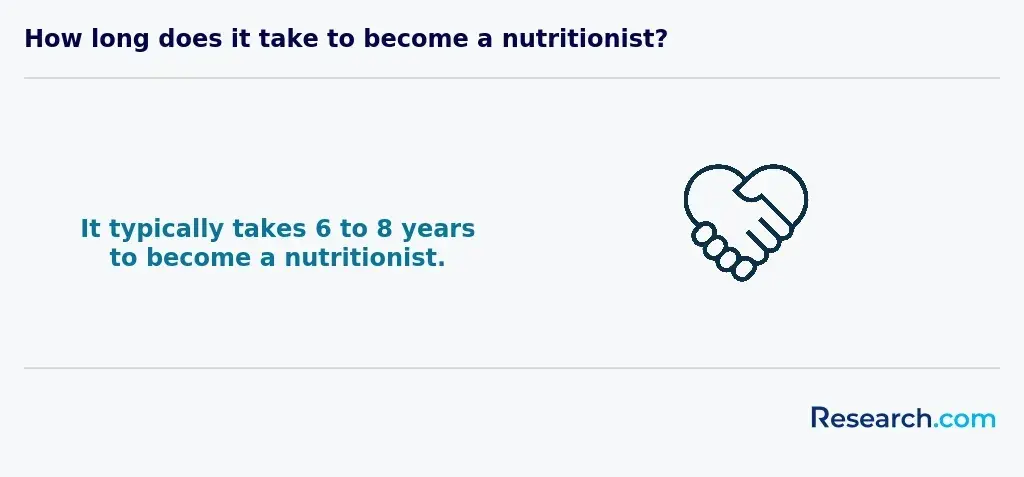
The timeline depends on whether you want a fast entry into wellness coaching, a degree-based nutrition career, or the more structured Registered Dietitian pathway. Short programs can help you start learning quickly, but clinical and advanced roles take longer because they require deeper science training and supervised experience.
| Pathway | Typical time commitment | Best for |
| Non-licensed nutritionist certificate route | Approximately six months to one year | Wellness education, fitness-adjacent nutrition coaching, or career exploration |
| Bachelor’s degree route | Usually four years | Nutrition education, public health, food service, graduate study, or dietetics preparation |
| Master’s degree route | Usually an additional two years after the bachelor’s degree | Advanced practice, research, teaching, specialization, or stronger professional positioning |
| Registered Dietitian Nutritionist route | Commonly six to seven years | Clinical nutrition, hospitals, medical nutrition therapy, and many healthcare roles |
| Certified Nutrition Specialist route | Often five to seven years | Advanced nutrition practice, integrative nutrition, and graduate-level nutrition work |
| Certified Clinical Nutritionist route | Often five to seven years | Clinical nutrition-focused practice where the credential is recognized by the intended employer or client base |
- Short certification route: Some students complete online nutrition coursework and a certification in about six months to one year. This can be useful for wellness coaching but may not qualify you for clinical positions.
- Undergraduate route: A bachelor’s degree in food and nutrition usually takes four years and gives students a broader academic foundation.
- Graduate route: A master’s degree often adds two years and may be important for advanced credentials or specialized work.
- RDN route: Becoming a Registered Dietitian Nutritionist requires graduate-level preparation, at least 1,000 hours of supervised practice, and a national exam. Students comparing online options can review online nutrition programs carefully, but should confirm whether each program supports dietetics requirements.
The fastest path is not always the best path. If you want to work in a regulated healthcare environment, a short certificate may not be enough. If you want to provide lifestyle education outside clinical care, a shorter credential may be a practical starting point.
What are the certification options for nutritionists in California?
Certification is not the same as a state license. In California, certifications are often voluntary unless a specific employer, professional role, or credentialing body requires them. The value of a certification depends on your intended practice area, the rigor of the credential, and whether employers or clients recognize it.
| Credential or certification | Common use | Key requirement noted in the article |
| Registered Dietitian Nutritionist | Hospitals, clinics, long-term care, public health, medical nutrition therapy, and many clinical roles | Nutrition-related degree preparation, supervised practice, and the national RDN exam |
| Certified Nutrition Specialist | Advanced nutrition practice, integrative nutrition, research-informed counseling, and graduate-level nutrition work | Master’s degree in nutrition or a related field plus 1,000 hours of supervised practice |
| Certified Nutrition Professional | Professional recognition through organizations such as the American Nutrition Association | Education, experience, and examination requirements vary by organization |
| Holistic or professional nutrition certifications | Wellness, health education, private coaching, and non-clinical nutrition support | Requirements vary; students should verify exam standards, ethics rules, and continuing education expectations |
The RDN credential is generally the strongest fit for students who want clinical nutrition authority and access to healthcare jobs. The CNS credential may appeal to students seeking graduate-level nutrition practice with an integrative or advanced science focus. Other certifications may be useful for wellness practice, but they should be evaluated carefully.
Before paying for any certification, ask three questions: Does it require meaningful coursework? Does it include an exam? Will employers, referral partners, or clients in your intended niche recognize it?
What practical experience is required to become a nutritionist in California?
Practical experience is where nutrition knowledge becomes usable. Coursework teaches science and counseling concepts, but supervised practice, internships, volunteering, and fieldwork help you learn how to communicate with real clients, document recommendations, adapt to cultural food patterns, and collaborate with healthcare or community teams.
Students looking for lower-cost academic options can compare affordable nutrition and dietetics degree programs, but they should also check whether those programs provide access to practicums, service learning, or supervised experiences.
- Clinical settings: Hospitals, outpatient clinics, and long-term care facilities expose students to interdisciplinary care and the limits of general nutrition advice. These settings are especially important for those considering dietetics.
- Community nutrition programs: Public health agencies, food access programs, schools, and nonprofit organizations can help students learn how nutrition education works across California’s diverse communities.
- Food service environments: Schools, hospitals, and institutional kitchens teach menu planning, food safety, dietary accommodations, and large-scale meal operations.
- Research projects: University-based research can strengthen skills in evidence evaluation, data interpretation, and nutrition science communication.
- Corporate wellness and private-sector work: Internships with wellness companies, fitness centers, startups, or employer health programs can prepare students for non-clinical nutrition careers.
If your goal is a formal credential such as RDN or CNS, verify that your experience meets that credentialing body’s rules. General volunteer work may be valuable, but it may not count as supervised practice for advanced credentials.
How much does it cost to become a nutritionist in California?
The cost of becoming a nutritionist in California depends heavily on the credential you want, the school you choose, whether you study online or on campus, and how much previous college credit you can transfer. Tuition is only one part of the total cost; students should also plan for books, supplies, commuting, technology, exam fees, certification fees, unpaid practicum time, and living expenses.
| Cost category | Amount stated in available sources | What it means for students |
| Associate degree in nutrition | Between $5,000 and $30,000 | A lower-cost starting point, especially for students planning to transfer |
| Bachelor’s degree in nutrition | Typically between $14,000 and $80,000 | The common degree route for broader nutrition career preparation |
| Example associate program | Long Beach City College offers an associate’s degree for approximately $5,500 | Community college can reduce early education costs |
| Example bachelor’s program | Eastern Michigan University costs around $14,300 for 58 credit hours | Transfer students should calculate cost by remaining credits, not sticker price alone |
| Master’s degree in nutrition | Between $20,000 and $65,000 | Often necessary for advanced roles or credentials, but ROI depends on career goals |
| Example graduate program | The University of the Pacific estimates tuition at about $15,525 per semester for its 16-month Master of Science in Clinical Nutrition program | Accelerated programs may reduce time away from work, but semester costs can be high |
| Living expenses | Estimated between $11,000 and $22,000 annually | Housing and transportation can change the real cost more than tuition differences |
Graduate students who need a flexible format can compare online master’s degrees in nutrition, but they should confirm whether the program meets their certification or dietetics goals.
Ways to reduce the cost
- Start at a community college and transfer only courses that apply to your target bachelor’s degree.
- Ask whether prior credits, military training, or professional coursework can reduce required credits.
- Compare total program cost, not just tuition per credit.
- Check whether practicums are paid, unpaid, local, or require relocation.
- Choose a program that directly supports your intended credential so you do not pay for extra coursework later.
What is the job outlook and salary for nutritionists in California?
Nutrition career prospects in California depend on credential level, location, employer type, specialization, and whether the role is clinical or wellness-focused. The U.S. Bureau of Labor Statistics projects employment of dietitians and nutritionists to grow by 6% from 2024 to 2034, faster than the average for all occupations. In California, demand is shaped by the state’s large population, chronic disease prevention efforts, public health programs, and consumer interest in wellness.
Students who want a degree-based entry point can compare online bachelor’s degrees in nutrition, but should remember that a bachelor’s degree alone may not qualify them for every clinical role.
- Population growth: A larger population can increase demand for food, wellness, healthcare, and public health nutrition services.
- Health awareness: Public concern about chronic conditions, obesity, and preventive care contributes to interest in nutrition guidance.
- Work setting variety: Nutritionists and dietitians may work in hospitals, schools, outpatient centers, public agencies, wellness companies, food service organizations, and private practice.
- Policy and public health programs: Nutrition education initiatives can create opportunities in community health and school-based settings.
The median annual wage for dietitians and nutritionists in California is approximately $77,000. Earnings can vary widely by city, employer, credential, experience, and specialization. Metropolitan areas such as San Francisco and Los Angeles may offer higher wages, but they also typically involve higher living costs.
Common job settings for California nutrition professionals
| Setting | Typical work | Credential considerations |
| Hospitals and clinics | Nutrition assessment, patient education, disease-related diet planning, care team collaboration | RDN preparation is often preferred or required |
| Schools and community programs | Nutrition education, menu support, public health outreach, food access programming | Degree and public health experience can be valuable |
| Corporate wellness | Employee wellness workshops, nutrition coaching, preventive health education | Certification and communication skills matter |
| Private practice | Client coaching, meal planning support, group programs, telehealth education | Clear scope, liability protection, and strong credentials help build trust |
| Government roles | Policy, public health nutrition, food assistance programs, community education | Relevant degree, public health background, and documentation skills are important |
About 11% of nutritionists in the U.S. work in government roles, showing that the field includes more than private coaching or hospital employment.
What are the career advancement opportunities for nutritionists in California?
Career growth in nutrition usually comes from one or more of the following: earning a stronger credential, choosing a specialization, gaining clinical or community experience, developing business skills, or moving into leadership. Some sources project job openings to rise by 5,000 approximately from 2024 to 9,500 by 2034, representing a growth rate of 15.9%, though students should compare projections by source and occupation definition before making enrollment decisions.
| Advancement path | What the role involves | When it makes sense |
| Registered Dietitian Nutritionist | Clinical nutrition, medical nutrition therapy, patient education, and work in healthcare or public health settings | Best for students who want the broadest access to clinical nutrition roles |
| Clinical dietitian | Patient-focused nutrition care in hospitals, clinics, and other medical facilities | Best for professionals who want to work directly with medical teams |
| Community nutritionist | Nutrition programs for schools, families, older adults, low-income communities, or public health initiatives | Best for professionals interested in prevention, education, and health equity |
| Private practice consultant | One-on-one coaching, group programs, specialty nutrition services, and client education | Best for entrepreneurial professionals who understand scope of practice and marketing |
| Corporate wellness consultant | Workplace health programs, employee education, workshops, and wellness strategy | Best for nutritionists who enjoy presentations, program design, and preventive health |
Nutrition professionals who are still comparing career tracks can use a broader nutrition career and salary guide to understand how roles differ by credential, work setting, and advancement potential.
Can nutritionists integrate substance abuse counseling into their practice in California?
Nutrition can support recovery, but nutritionists should be careful not to present themselves as substance abuse counselors unless they meet the separate training and credentialing expectations for that field. A nutritionist can contribute to a recovery-oriented care plan by addressing meal patterns, nutrient adequacy, hydration, weight changes, and behavior change support while collaborating with licensed mental health and addiction professionals.
If you want to move into behavioral health more formally, review the requirements for becoming a substance abuse counselor in California. This can help you understand where nutrition support ends and substance abuse counseling begins.
How can online certifications boost my career as a nutritionist in California?
Online certifications can help working adults learn new nutrition topics, prepare for a niche, or document continuing education without leaving a job. They are most useful when they come from a reputable provider, include clear learning outcomes, and align with your intended role.
However, an online certificate should not be treated as a replacement for a degree or supervised practice when those are required for clinical or dietetics roles. Before enrolling, compare cost, exam requirements, instructor qualifications, refund policies, continuing education recognition, and whether the credential is respected in California’s job market. Research.com’s guide to online nutrition certifications can help you compare options more carefully.
How can additional certifications elevate a nutritionist’s clinical practice in California?
Additional certifications can strengthen a nutritionist’s profile when they are targeted, evidence-based, and relevant to the clients served. For example, training in diabetes education, sports nutrition, eating behavior, culinary nutrition, or public health may help a professional communicate more effectively with clients and referral partners.
Clinical credibility also depends on understanding the standards used by more regulated healthcare fields. Reviewing requirements such as California nursing license requirements can help nutritionists appreciate how licensure, documentation, patient safety, and scope of practice work in interdisciplinary care environments.
How can nutritionists effectively market their services in California?
Marketing a nutrition practice in California requires more than social media visibility. Clients and referral partners need to understand what you do, who you serve, what credentials you hold, and where your legal scope begins and ends. Effective marketing should be accurate, ethical, and specific.
- Build a clear website that lists your education, certifications, services, pricing structure, and client fit.
- Avoid disease-cure claims or before-and-after promises that overstate what nutrition counseling can do.
- Use testimonials carefully and follow privacy and advertising rules.
- Develop referral relationships with physicians, therapists, fitness professionals, schools, and community organizations.
- Create educational content for a specific niche instead of trying to serve everyone.
- Use salary and career data, including information on nutrition career compensation, to price services realistically.
How can nutritionists integrate digital tools to streamline their practice in California?
Digital tools can make a nutrition practice easier to manage, especially for private practitioners and telehealth-based educators. Useful tools may include online scheduling, secure client forms, electronic records, video platforms, payment systems, nutrition analysis software, and automated follow-up reminders.
Administrative competence matters because poor documentation, billing mistakes, and disorganized client records can damage both revenue and client trust. Nutritionists who plan to work with insurance or healthcare teams may benefit from understanding related administrative pathways, such as how medical billing and coding careers work in California.
What future trends are shaping nutrition practice in California?
Nutrition practice is being shaped by technology, personalization, consumer wellness demand, public health priorities, and greater attention to culturally responsive care. Wearables, nutrition apps, telehealth platforms, and digital food tracking tools can help clients monitor behavior, but they do not replace professional judgment or evidence-based counseling.
Personalized nutrition is also gaining attention, especially when recommendations consider lifestyle, medical history, culture, food access, and client preferences. Nutritionists should be cautious with emerging tools that claim precision without strong evidence. As in other technical fields, professional standards and ongoing education matter; reviewing structured career requirements such as forensic scientist education requirements in California can illustrate how evidence, training, and documentation shape professional credibility.
How can nutritionists navigate insurance and reimbursement challenges in California?
Insurance reimbursement can be difficult for nutritionists because payer rules often depend on credentials, diagnosis codes, provider type, documentation, and medical necessity. Some nutrition services may be reimbursable when provided by properly credentialed professionals, while general wellness coaching is often paid out of pocket.
- Verify whether your credential qualifies you for payer enrollment before offering insurance-based services.
- Document services clearly and consistently.
- Understand referral requirements and medical necessity rules.
- Separate clinical nutrition services from general wellness coaching in your service descriptions.
- Consider whether cash-pay packages, employer contracts, or community partnerships are more realistic for your business model.
Nutritionists who want to understand advanced clinical practice and reimbursement systems can compare their path with other healthcare roles, such as becoming a nurse practitioner in California.
How does the regulation of nutritionists compare with other healthcare professions in California?
Nutritionists operate under more flexible rules than many licensed healthcare professionals in California. That flexibility can make the field easier to enter, but it also places responsibility on practitioners to avoid misleading claims, practice within their competence, and seek appropriate credentials.
Other healthcare careers have far more formalized licensure structures. For example, the pathway to pharmacist licensure in California involves rigorous education, examinations, and state oversight. Nutritionists who want to be viewed as serious health professionals should voluntarily adopt high standards for education, ethics, documentation, and referral practices.
How can nutritionists transition into advanced healthcare roles in California?
Nutritionists who want more clinical authority or leadership options can move into advanced healthcare roles by earning additional degrees, completing supervised clinical training, or developing expertise in care coordination, program management, or population health. Possible next steps include dietetics, public health, clinical nutrition management, nursing, physician assistant studies, or health administration.
Some professionals may choose a different clinical pathway entirely. For example, those interested in diagnosing, treating, and managing patient care at a higher level may compare nutrition training with the best accredited NP programs in California. This is a major career shift, not a simple certification upgrade, so students should compare prerequisites, licensure, clinical hours, and long-term goals carefully.
How can I transition from nutritionist to a Registered Dietitian in California?
Transitioning from nutritionist to Registered Dietitian Nutritionist usually requires additional academic planning, supervised practice, and exam preparation. The biggest mistake is assuming that any nutrition degree or certificate automatically qualifies you for the RDN exam. It may not.
- Review your completed coursework against current dietetics education requirements.
- Identify missing prerequisites, science courses, or graduate-level requirements.
- Apply to an eligible dietetics program or coordinated pathway.
- Complete the required supervised practice experience.
- Prepare for and pass the national credentialing exam.
- Maintain continuing education after earning the credential.
For a more detailed sequence, review Research.com’s guide to the requirements to become a registered dietitian in California.
What specialization options are available for nutritionists in California?
Specialization can make a nutrition career more focused and marketable. California’s large and diverse population creates opportunities in clinical care, public health, sports, aging, pediatrics, wellness, and food systems. The best specialization depends on your credential level and the clients you want to serve.
| Specialization | What it focuses on | Best fit |
| Clinical nutrition | Nutrition support for medical conditions and patient care | RDNs or graduate-trained professionals working with healthcare teams |
| Sports nutrition | Fueling, recovery, body composition, hydration, and performance support | Professionals working with athletes, teams, fitness clients, or active adults |
| Pediatric nutrition | Child and adolescent nutrition, growth, feeding patterns, and family education | Nutrition professionals who enjoy working with families, schools, or pediatric settings |
| Public health nutrition | Community programs, food access, nutrition education, and prevention initiatives | Professionals interested in population health and health disparities |
| Geriatric nutrition | Nutrition for older adults, chronic disease management, appetite changes, and healthy aging | Professionals serving senior centers, long-term care, community programs, or clinical teams |
For example, a sports nutritionist in the San Francisco Bay Area may work with local athletes on meal timing, recovery nutrition, and individualized fueling strategies. A public health nutritionist may instead design education programs for schools or underserved communities. California State University, Los Angeles offers a Master’s program in Nutritional Science with a focus on clinical and community nutrition, preparing students for multiple specialized directions.
What are the biggest challenges faced by nutritionists in California?
California offers many nutrition career opportunities, but new professionals should understand the practical challenges before investing in a program or launching a practice.
| Challenge | Why it matters | Better approach |
| Unclear regulation | Because general nutritionist licensure is not required, clients may not understand the difference between a coach, nutritionist, and RDN | Use accurate titles, disclose credentials, and define scope clearly |
| Competition | California has many wellness professionals, coaches, dietitians, fitness experts, and online influencers competing for attention | Choose a niche, build evidence-based authority, and develop referral relationships |
| Diverse dietary needs | California’s multicultural communities require culturally responsive recommendations | Learn food traditions, avoid one-size-fits-all meal plans, and ask clients about preferences and access |
| Cost of education | Degree and graduate costs can be significant | Compare total cost, transfer credits, credential eligibility, and expected career outcomes |
| Scope-of-practice risk | Nutritionists can create legal and ethical problems by diagnosing or treating disease without proper qualifications | Refer clients to licensed healthcare providers when concerns go beyond your training |
With a population exceeding 39 million, California includes many client communities and health needs. That diversity is an opportunity, but it also requires humility, research, and ongoing learning.
What are the legal regulations and responsibilities for nutritionists in California?
California’s nutrition practice rules are important because they define what a nutritionist can and cannot claim. General nutritionists may offer education about food, nutrients, meal patterns, and dietary supplements, but they must avoid presenting themselves as qualified to diagnose, treat, or cure disease unless they hold the appropriate professional credentials and authority.
Only individuals who meet the requirements for protected dietetics titles should use those titles. Nutritionists should also be aware of notice requirements, local ordinances, advertising rules, and professional liability risks. Cities such as San Francisco may have additional local requirements, so practitioners should verify both state and local expectations before offering services.
Legal and ethical responsibilities
- Use only titles and credentials you have actually earned.
- Do not claim that nutrition plans cure diseases or replace medical treatment.
- Refer clients to physicians, dietitians, therapists, or other licensed professionals when appropriate.
- Keep client information confidential and document services responsibly.
- Use clear informed consent forms and service agreements in private practice.
- Stay within your education, certification, and experience level.
Nutritionists who want complementary knowledge in movement, fitness, and wellness may also consider affordable online exercise science degrees, particularly if they plan to work with fitness clients or wellness programs.
How can nutritionists collaborate with other healthcare professionals in California to enhance client care?
Collaboration improves client care because nutrition rarely exists in isolation. Food choices can be affected by medical conditions, medications, mental health, physical activity, income, culture, family responsibilities, and access to safe cooking and storage. Nutritionists who build strong referral networks can help clients receive more complete support.
- Work with physicians when clients report symptoms, abnormal lab results, medication changes, or medical diagnoses.
- Partner with Registered Dietitian Nutritionists for medical nutrition therapy or complex clinical cases.
- Coordinate with therapists or substance abuse counselors when eating patterns are connected to mental health or recovery.
- Collaborate with nurses on patient education, care transitions, and wellness initiatives. Understanding how to become a nurse in California can clarify how nursing roles complement nutrition support.
- Refer to fitness professionals when clients need safe exercise programming outside the nutritionist’s expertise.
Common mistakes to avoid when becoming a nutritionist in California
- Choosing a program based only on convenience: Flexible online study can be helpful, but the program still needs to support your credential and career goals.
- Ignoring accreditation and credential eligibility: A nutrition program may sound impressive but still fail to meet RDN, CNS, or employer requirements.
- Assuming certification equals licensure: A certificate can improve credibility, but it does not automatically expand your legal scope of practice.
- Underestimating supervised experience: Practical training is essential for clinical, community, and counseling competence.
- Focusing only on tuition: Living expenses, commuting, exam fees, unpaid fieldwork, and lost work hours can change the true cost.
- Making medical claims in marketing: Avoid promises about curing disease, reversing conditions, or replacing medical care.
- Skipping business planning: Private practice requires pricing, documentation, legal forms, marketing, scheduling, and referral systems.
Here’s what graduates say about working as a nutritionist in California
-
: "
“Practicing in Los Angeles has shown me how much culture shapes food decisions. I work with clients from many backgrounds, so my plans have to respect family traditions, preferences, and access. That variety keeps the work challenging and meaningful.” — Maya
"
-
: "
“In San Diego, many clients are already interested in wellness, performance, and prevention. I support athletes, students, and older adults, and each group needs a different style of education. The work requires constant learning.” — Luis
"
-
: "
“My work in Sacramento has included school nutrition programs, and that has been especially rewarding. Helping children understand food choices early can influence families and communities over time.” — Rachel
"
Related Articles for Nearby States
- 2027 How to Become a Nutritionist in Nevada
- 2027 How to Become a Nutritionist in Oregon
- 2027 How to Become a Nutritionist in Arizona
- 2027 How to Become a Nutritionist in Idaho
- 2027 How to Become a Nutritionist in Utah
- 2027 How to Become a Nutritionist in Washington
- 2027 How to Become a Nutritionist in New Mexico
- 2027 How to Become a Nutritionist in Colorado
- 2027 How to Become a Nutritionist in Montana
- 2027 How to Become a Nutritionist in Wyoming
Key Insights
- California does not require a license for every general nutritionist, but credentials matter if you want clinical credibility, employer recognition, or referral relationships.
- The RDN pathway is the strongest option for students who want hospital, medical nutrition therapy, long-term care, or many healthcare-based nutrition roles.
- Short online certifications can help with wellness education, but they are not a substitute for degree-based preparation when a role requires advanced training.
- Costs vary widely: associate degrees can range from $5,000 to $30,000, bachelor’s degrees from $14,000 to $80,000, and master’s degrees from $20,000 to $65,000.
- The median annual wage for dietitians and nutritionists in California is approximately $77,000, but salary depends on credential, location, employer, experience, and specialization.
- Before choosing a program, verify accreditation, transfer credit policies, supervised practice access, total cost, and whether the curriculum supports your intended credential.
- Private practice can be rewarding, but it requires legal caution, ethical marketing, documentation systems, business planning, and a clear niche.
- The best path is not necessarily the fastest path. Choose the route that matches the work you want to do, the clients you want to serve, and the level of clinical responsibility you want to hold.
References:
- Become a Nutritionist. How Long Does It Take to Become a Nutritionist? https://becomeanutritionist.org/
- NutritionED. Becoming a Nutritionist in California. https://www.nutritioned.org/
- California State Polytechnic University, Pomona. Steps to Become a Registered Dietitian. https://www.cpp.edu/
- University of California, Berkeley. Becoming a Registered Dietitian Nutritionist. https://nst.berkeley.edu/
- Dietitian.org. Dietitian information and resources. https://dietitian.org/
- California State University, Long Beach. Career Options: RDN and NDTR. https://www.csulb.edu/
- CostHelper Education. Becoming a Nutritionist Cost. https://education.costhelper.com/
- Orange Coast College. Nutrition and Dietetics. https://orangecoastcollege.edu/
- University of the Pacific. Clinical Nutrition Tuition and Fees. https://www.pacific.edu/
- UC Davis Health. Career Path for the Registered Dietitian Nutritionist. https://health.ucdavis.edu/welcome/
Other Things You Should Know about Becoming a Nutritionist in California
The California Board of Registered Nursing does not issue this credential; California does not license “nutritionists” under one statewide nutritionist board. Instead, title protection and scope issues are handled through specific professional licenses and regulations, including the Clinical Nutritionist pathway under California law.
To become a nutritionist in California in 2027, you need at least a bachelor's degree in nutrition, dietetics, or a related field from an accredited institution. Additionally, hands-on experience through an approved internship program is typically required before you can pursue state certification.





