2027 How to Become a Nutritionist in Georgia

Co-Founder and Chief Data Scientist
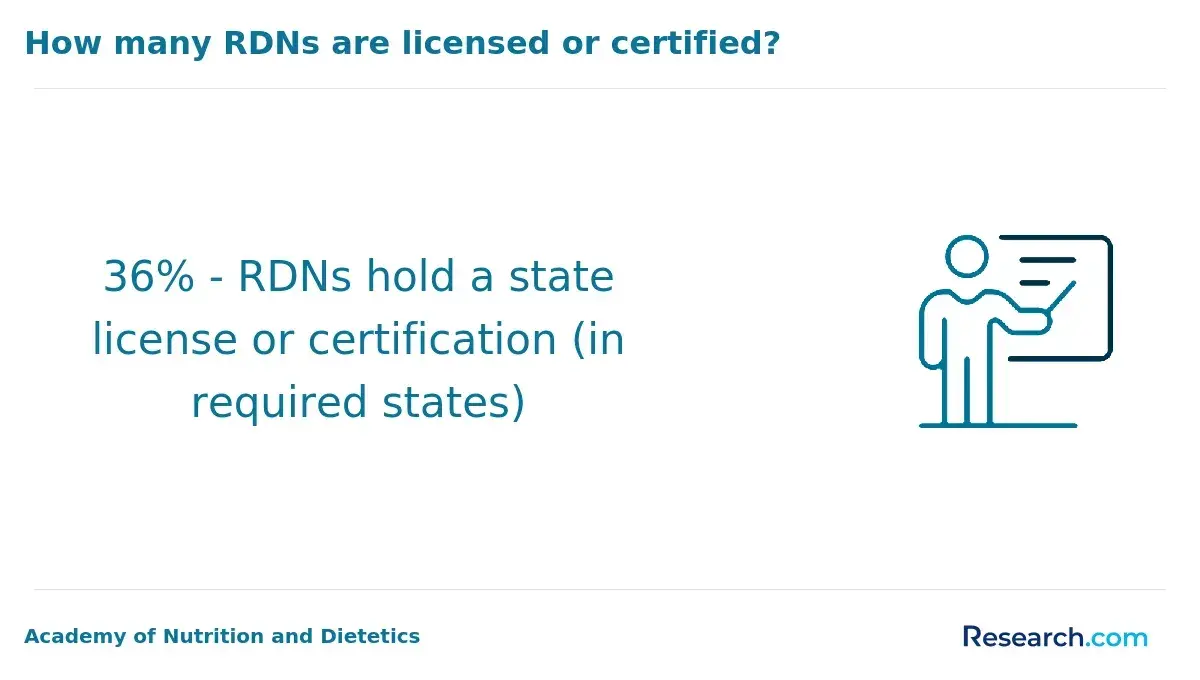
Choosing a nutrition career in Georgia requires one important distinction: giving general nutrition education is not the same as practicing as a licensed dietitian. If your goal is to counsel clients, work in hospitals, manage medical nutrition therapy, or pursue the Registered Dietitian Nutritionist pathway, you need to plan your education, supervised practice, exam preparation, and licensure steps carefully.
This guide explains how to become a nutritionist in Georgia, when dietitian licensure applies, what credentials can improve your credibility, how long the process can take, what it may cost, and how to evaluate whether this career path fits your goals. It is designed for students comparing nutrition degree programs, career changers entering health and wellness, and working professionals considering advanced education or specialization.
Quick answer: How do you become a nutritionist in Georgia?
Georgia does not require every person who offers general nutrition education to hold a nutritionist license. However, professionals who want to practice as dietitians must be licensed by the Georgia Composite Medical Board. The licensed dietitian pathway generally involves completing a nutrition or dietetics degree, finishing an ACEND-accredited supervised practice experience, passing the Commission on Dietetic Registration exam, and submitting the required licensure application and fee.
If you do not plan to become a licensed dietitian, you should still choose an accredited education pathway, understand Georgia’s scope-of-practice rules, avoid using protected titles or offering services beyond your qualifications, and consider voluntary credentials such as the Registered Dietitian Nutritionist or Certified Nutrition Specialist credential when they match your career goals.
Key things to know before you start
- Georgia regulates dietetics, not all general nutrition advice. Nutritionists are not required to be licensed in every setting, but dietitians must obtain licensure through the Georgia Composite Medical Board.
- The RDN pathway is the most recognized clinical route. Candidates must complete a bachelor’s degree in nutrition or a related area, complete accredited supervised practice, and pass the CDR exam.
- Professional organizations can help you navigate the field. The Georgia Dietetic Association offers career resources, networking, and information related to credentials such as the Registered Dietitian Nutritionist.
- Continuing education matters after licensure. Licensed dietitians must complete 75 hours of continuing education every five years to keep their license active.
- Licensure requires documentation. Applicants submit proof of education, supervised practice, CDR exam passage, a completed application, and the required fee to the Georgia Composite Medical Board.
- Education requirements for nutritionists in Georgia
- Georgia nutritionist and dietitian licensing rules
- Typical timeline to enter the field
- Certification options and when each one makes sense
- Practical experience you should build
- Cost of becoming a nutritionist in Georgia
- Salary, job outlook, and employment settings
- Career advancement options
- Nutrition support in substance abuse recovery
- How advanced degrees can affect career and salary options
- Continuing education and professional development
- Online education for Georgia nutrition professionals
- Specialization choices for nutritionists
- Interdisciplinary analytical techniques in nutrition practice
- Advanced clinical training options
- Lessons from pharmacy licensure standards
- Common challenges in Georgia nutrition practice
- Steps for earning accredited credentials
- Legal responsibilities and scope of practice
- Healthcare collaboration for nutritionists
- Working with nurse practitioners in patient care
- Digital tools changing nutrition services in Georgia
What education do you need to become a nutritionist in Georgia?
The education you need depends on the type of nutrition work you want to do. A person offering broad wellness education may take a different path from someone who wants to provide medical nutrition therapy, work in a hospital, or qualify for dietitian licensure. The safest approach is to choose a program that keeps future credential options open.
- Bachelor’s degree: A degree in nutrition, dietetics, food science, public health, exercise science, or a related field is the usual starting point. Strong programs include coursework in human nutrition, anatomy and physiology, biochemistry, food systems, community nutrition, and counseling.
- ACEND-accredited coursework: Students planning to become Registered Dietitian Nutritionists should prioritize programs accredited by the Accreditation Council for Education in Nutrition and Dietetics. ACEND accreditation is important because it connects academic preparation to the supervised practice and exam requirements used in the dietetics profession.
- Graduate study for the RDN exam route: A graduate degree will be mandatory for those wishing to take the Commission on Dietetic Registration Exam. Students should confirm current exam eligibility rules directly with their program and credentialing body before enrolling.
- Specialized electives: Areas such as clinical nutrition, nutrition education, sports nutrition, public health, and food systems management can help students build a clearer career direction before graduation.
Georgia students can find nutrition and dietetics preparation at institutions such as the University of Georgia, Georgia State University, and Georgia Southern University. The University of Georgia offers undergraduate study in dietetics, Georgia State University offers undergraduate and graduate nutrition options, and Georgia Southern University is known for dietetic internship preparation. Students who need flexibility can also compare online options for how to study nutrition through online degree programs.
| Education path | Best fit | What to check before enrolling |
| Bachelor’s in nutrition, dietetics, or related field | Students starting their first nutrition-related degree | Major requirements, science prerequisites, transfer credit policy, and whether the program supports future RDN eligibility |
| ACEND-accredited dietetics pathway | Students who want the Registered Dietitian Nutritionist credential | Accreditation status, supervised practice placement process, exam preparation, and graduate degree expectations |
| Master’s in nutrition or dietetics | Career changers, future RDN candidates, and professionals seeking advanced roles | Admission prerequisites, clinical or research focus, online format, internship compatibility, and total cost |
| Related degree such as exercise science or public health | Students interested in wellness, prevention, coaching, or community health | Whether the degree alone qualifies you for your target role or whether additional nutrition credentials are needed |
Is a license required to work as a nutritionist in Georgia?
Georgia does not treat every nutrition-related role the same way. General nutrition education, wellness coaching, and food education may not require the same authorization as dietetics practice. Dietitians, however, must meet state licensure requirements through the Georgia Composite Medical Board.
This distinction affects job eligibility, title usage, insurance reimbursement, clinical responsibilities, and the types of clients you can serve. Before you market your services, review Georgia’s dietetics laws and confirm whether the work you intend to perform falls within regulated practice.
| Role or credential | License required in Georgia? | Typical preparation | Common work settings |
| General nutrition educator or wellness nutritionist | Not always, depending on services offered and titles used | Nutrition-related education, experience, and voluntary certification | Fitness centers, corporate wellness, community programs, private wellness services |
| Licensed dietitian | Yes | Nutrition or dietetics degree, accredited supervised practice, CDR exam, and state application | Hospitals, clinics, long-term care, schools, public health agencies, private practice |
| Registered Dietitian Nutritionist | Credential plus state licensure when practicing dietetics in Georgia | ACEND pathway, supervised practice, CDR exam, continuing education | Clinical care, medical nutrition therapy, management, research, consulting |
| Certified Nutrition Specialist | Voluntary credential, not a substitute for dietitian licensure where licensure is required | Master’s degree in nutrition or a related field and 1,000 hours of supervised practice | Integrative nutrition, private practice, wellness, research, specialized consulting |
Voluntary certification can still be valuable even when a state license is not required for a specific role. Credentials such as the Certified Nutrition Specialist can signal advanced training, while professional membership through organizations such as the Georgia Academy of Nutrition and Dietetics can provide networking, mentoring, and continuing education resources.
How long does it take to become a nutritionist in Georgia?
The timeline depends on whether you want a general nutrition role, a voluntary certification, or the licensed dietitian pathway. A student entering college for the first time should expect a multi-year process, while someone who already has a related degree may move faster if prerequisites are complete.
- Bachelor’s degree: A nutrition or related bachelor’s degree typically takes four years for full-time students.
- Supervised practice: Dietetics candidates complete about 1,000 hours of practical training through an accredited supervised practice program. This portion may take six months to a year, depending on the program structure.
- Graduate degree: A master’s degree usually adds about two years. Students without the required prerequisites may need closer to three years.
- Part-time study: Working students often extend the timeline because they take fewer courses each term or complete supervised practice more gradually.
| Goal | Estimated time | Important planning note |
| Entry-level wellness or community nutrition role | About four years if a bachelor’s degree is required by the employer | Confirm whether the role requires a specific credential or only a related degree |
| Licensed dietitian pathway | Often four to six years or more | Plan for degree requirements, supervised practice, the CDR exam, and state licensure |
| CNS-style advanced credential preparation | Varies, but requires graduate education and supervised experience | The CNS route requires a master’s degree and 1,000 hours of supervised practice |
| Career change from another health field | Depends on transfer credits and prerequisites | Ask programs to evaluate your transcript before estimating completion time |
Students interested in adjacent healthcare roles may also compare nutrition training with nutrition nurse training, especially if they want direct patient care responsibilities beyond nutrition counseling.
What certifications can nutritionists earn in Georgia?
Certification is not one-size-fits-all. The right credential depends on whether you want clinical authority, private practice credibility, sports or wellness specialization, or a pathway into regulated dietetics work.
- Registered Dietitian Nutritionist: The RDN is the strongest fit for students who want clinical roles, medical nutrition therapy, hospital employment, or dietitian licensure. The pathway includes a nutrition-related degree, ACEND-accredited supervised practice, and the national exam.
- Certified Nutrition Specialist: The CNS can fit professionals interested in advanced, integrative, or specialized nutrition practice. It requires a master’s degree in nutrition or a related field and 1,000 hours of supervised practice.
- Specialty certifications: Nutrition professionals may later pursue focused training in areas such as sports nutrition, pediatric nutrition, diabetes education, food service management, or public health nutrition.
Students comparing health and performance pathways may also look at affordable online master’s in exercise science programs, but they should verify whether the curriculum meets their nutrition credential goals. A related degree can be useful, but it may not replace dietetics-specific requirements.
What practical experience do you need?
Practical experience is where classroom nutrition science becomes client care, meal planning, community education, research, and program management. It also helps students determine whether they prefer clinical, public health, food service, sports, or private practice work.
- Clinical exposure: Hospitals, clinics, and long-term care facilities can help students understand patient assessment, diet orders, chronic disease management, and interdisciplinary care. Georgia healthcare systems such as Emory Healthcare may offer volunteer or observation opportunities.
- Community nutrition: Public health programs, nonprofit food initiatives, and local wellness campaigns expose students to nutrition access, health education, and culturally responsive communication.
- Food service management: School cafeterias, healthcare kitchens, catering operations, and university partnerships can teach menu planning, food safety, budgeting, and staff coordination.
- Research experience: University-based projects can strengthen skills in data interpretation, literature review, dietary assessment, and evidence-based practice.
Students pursuing dietitian licensure should confirm that their experience meets accredited supervised practice requirements rather than assuming that any internship, volunteer role, or job will count.
How much does it cost to become a nutritionist in Georgia?
The cost depends on the degree level, institution type, residency status, living expenses, and whether you need graduate study or supervised practice. Tuition is only one part of the budget, so students should compare total program cost rather than choosing based on sticker price alone.
Tuition
For in-state students at public universities such as the University of Georgia, tuition averages between $10,000 and $30,000 annually. Out-of-state students may pay around $27,560 per year, while private institutions such as Emory University may charge upwards of $50,000 annually.
Books, labs, and course materials
Students should plan for textbooks costing between $500 and $1,000 per year. Lab fees, practical course supplies, and materials may add another $200 to $500 annually.
Exam and licensure costs
After completing the required education and supervised practice, candidates should budget approximately $200 for the registration exam. Georgia’s state licensure application fee is $85, and the renewal fee is $50 every two years.
| Cost category | Estimated amount stated | How to evaluate it |
| Public university tuition for in-state students | $10,000 to $30,000 annually | Compare tuition after scholarships, transfer credits, and required fees |
| Out-of-state tuition | Around $27,560 per year | Ask whether residency status can change after enrollment |
| Private institution tuition | Upwards of $50,000 annually | Review aid packages, graduation outcomes, and internship support |
| Textbooks | $500 to $1,000 per year | Check whether digital materials or used books can reduce costs |
| Lab fees and materials | $200 to $500 annually | Ask programs for a full fee schedule before committing |
| Registration exam | Approximately $200 | Budget for exam preparation materials as well |
| State licensure application and renewal | $85 application fee and $50 renewal fee every two years | Confirm the current fee schedule before applying |
If graduate education is part of your plan, compare curriculum, accreditation, supervised practice compatibility, and flexibility across online master’s degrees in nutrition.
What is the job outlook and salary for nutritionists in Georgia?
The U.S. Bureau of Labor Statistics projects employment for dietitians and nutritionists to grow by 7% through 2033, faster than the average for all occupations. Demand is tied to preventive healthcare, chronic disease management, wellness programs, aging populations, and public health nutrition initiatives.
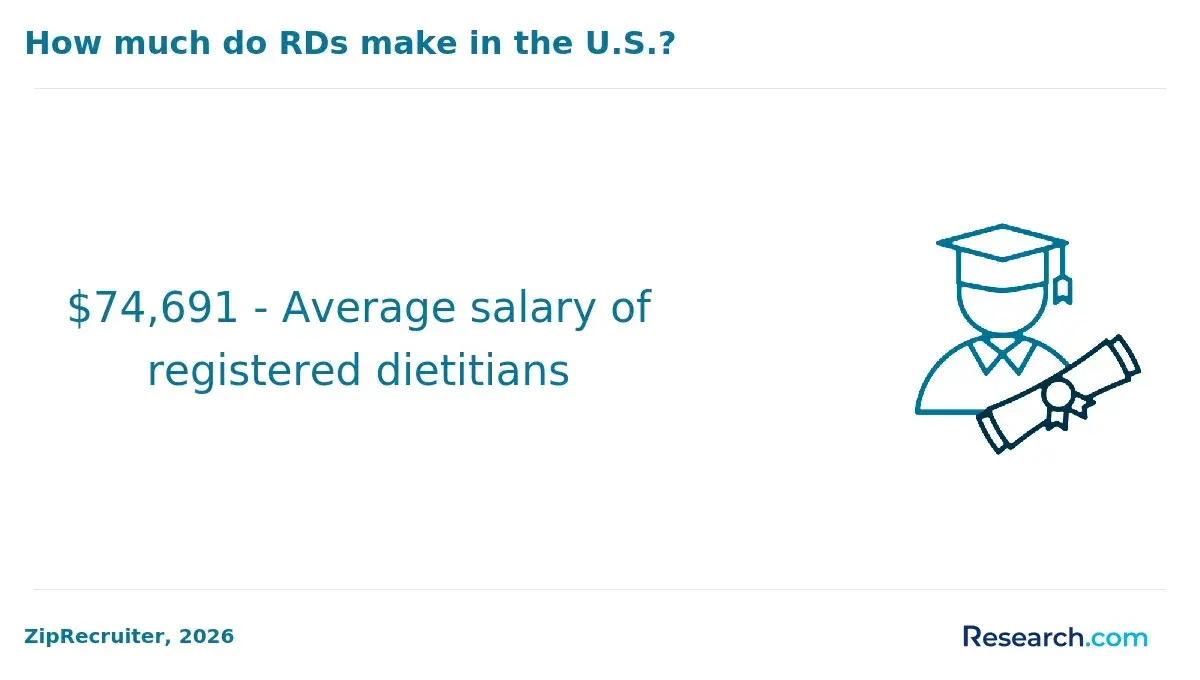
In Georgia, nutritionists earn a median annual wage of approximately $61,000, with pay varying by role, employer, location, credential, and experience. Urban areas such as Atlanta may offer higher salaries because of the concentration of hospitals, clinics, universities, corporate wellness programs, and specialty practices.
- Healthcare employers: Hospitals, outpatient clinics, long-term care facilities, and medical groups hire nutrition professionals for patient counseling and care planning.
- Schools and universities: Nutrition professionals may work in food service, wellness education, athletics, or student health.
- Public health agencies: Community programs need nutrition expertise for prevention, education, and food access initiatives.
- Private practice and wellness: Some nutritionists build client-facing businesses focused on weight management, sports performance, family nutrition, or preventive health.
How can nutritionists advance their careers in Georgia?
Career growth usually comes from a combination of credentials, specialization, clinical experience, leadership skills, and strong professional networks. The best advancement path depends on whether you want to remain client-facing, move into management, conduct research, or build a private practice.
| Advancement path | What the work may involve | When this path makes sense |
| Clinical dietetics | Assessing patients, creating care plans, supporting chronic disease management, and working with medical teams | You want healthcare roles and are willing to meet dietitian licensure requirements |
| Public health nutrition | Designing community programs, promoting healthy eating, and working with government or nonprofit organizations | You want population-level impact and enjoy education, outreach, and prevention work |
| Sports nutrition | Supporting athletes with fueling, recovery, hydration, and performance-focused nutrition strategies | You are interested in athletics, fitness, and performance environments |
| Food service or program management | Supervising staff, managing budgets, ensuring food safety, and planning menus | You want leadership responsibilities in schools, healthcare, or institutional food service |
| Private practice | Building a client base, setting service packages, managing compliance, and marketing nutrition services | You want autonomy and are prepared for business, legal, and administrative responsibilities |
Hospitals, government agencies, and nursing care facilities are among the major employers of nutrition professionals in Georgia. With projected growth of 7% for dietitians and nutritionists through 2033, professionals who combine recognized credentials with specialized experience may be better positioned for advancement.
How can nutritionists support clients in substance abuse recovery in Georgia?
Nutrition can play a supportive role in substance abuse recovery because clients may need help rebuilding regular eating patterns, addressing nutrient gaps, stabilizing energy, and improving overall health habits. Nutritionists working in this area should collaborate with licensed addiction counselors, physicians, behavioral health providers, and recovery programs rather than working in isolation.
Useful responsibilities may include nutrition screening, meal planning education, hydration guidance, group workshops, and referral coordination when a client needs medical or mental health care. Professionals interested in integrated recovery services can compare this work with how to become a substance abuse counselor in Georgia.
Can advanced degrees improve career and salary potential for Georgia nutritionists?
Advanced degrees can expand a nutrition professional’s options, especially for clinical practice, research, leadership, teaching, and specialized consulting. A graduate program may also be necessary for candidates pursuing the RDN exam pathway, depending on credentialing requirements.
Before enrolling, evaluate return on investment carefully. Compare tuition, financial aid, supervised practice access, completion time, employer requirements, and the types of roles graduates obtain. Salary outcomes are never guaranteed, but advanced preparation can improve eligibility for positions that require deeper clinical, research, or management training. For career planning, review salary-focused guidance on careers with a master’s in nutrition and dietetics.
What continuing education opportunities are available for nutritionists in Georgia?
Continuing education helps nutrition professionals stay current with nutrition science, counseling methods, telehealth practices, food safety expectations, and regulatory updates. Licensed dietitians must complete 75 hours of continuing education every five years, but ongoing learning is also valuable for non-licensed nutrition professionals who want to maintain credibility.
- Professional association events: State and national dietetics organizations offer conferences, webinars, practice updates, and networking opportunities.
- University-based courses: Academic programs can support advanced study in clinical nutrition, public health, food systems, or research methods.
- Interprofessional training: Workshops with nurses, physicians, behavioral health providers, and pharmacists can improve coordinated care skills.
- Online certificates and short courses: Flexible options can help working professionals study emerging topics without leaving their jobs.
Nutrition professionals who want to understand how other regulated healthcare fields manage professional standards can review board of nursing program requirements in Georgia for comparison.
How can online education support a nutrition career in Georgia?
Online nutrition education can be useful for working adults, career changers, rural students, and professionals who need flexible scheduling. The key is to verify whether the program is appropriately accredited and whether online coursework can connect to any required supervised practice, clinical experience, or credentialing requirement.
Strong online programs may include coursework in nutritional biochemistry, assessment, counseling, health data, telehealth, food systems, and research. Students comparing graduate options can review the best online masters in dietetics degree program options, but they should confirm fit with Georgia licensure and national credential requirements before applying.
What specialization options are available for nutritionists in Georgia?
Specialization can help nutrition professionals stand out, serve a defined population, and pursue roles that match their strengths. It can also clarify which degree, supervised practice, and certification pathway is worth the investment.
- Clinical nutrition: Focuses on nutrition care for patients managing conditions such as obesity, diabetes, cardiovascular disease, gastrointestinal concerns, and other chronic illnesses.
- Sports nutrition: Supports athletes and active clients with fueling, recovery, hydration, body composition goals, and performance nutrition.
- Pediatric nutrition: Helps children, adolescents, and families build healthier eating patterns and manage nutrition concerns during growth and development.
- Public health nutrition: Addresses community-wide nutrition challenges, food access, prevention programs, and nutrition education for underserved populations.
- Food service management: Combines nutrition knowledge with menu planning, safety standards, budgeting, procurement, and team leadership.
A clinical nutritionist in Atlanta, for example, might develop a community program focused on diabetes management through diet. That type of specialization can strengthen public health outcomes while also building a clear professional identity.
Can interdisciplinary analytical techniques improve nutrition practice in Georgia?
Nutrition practice increasingly benefits from analytical thinking beyond traditional meal planning. Professionals who understand food testing, data interpretation, ingredient verification, and quality control may be better prepared for roles in food safety, research, public health, and regulatory environments.
Methods used in laboratory science and forensic analysis can strengthen food quality evaluation, nutrient profiling, and investigation of food-related claims. Nutrition professionals interested in rigorous analytical work can compare these skills with forensic scientist education requirements in Georgia.
How can advanced clinical training expand nutrition career options?
Advanced clinical training can help nutrition professionals contribute more effectively to patient assessment, chronic disease management, therapeutic care planning, and interdisciplinary treatment. This is especially valuable for those working in hospitals, outpatient clinics, long-term care, behavioral health, and specialty practices.
Nutritionists should still remain within their legal scope of practice. Advanced training improves collaboration and judgment, but it does not automatically authorize medical diagnosis or treatment outside dietetics regulations. Professionals who want broader clinical authority may also compare nutrition roles with how to become a nurse practitioner in Georgia.
What can nutritionists learn from pharmacy licensure requirements in Georgia?
Pharmacy is a highly regulated field with structured expectations for education, examination, ethics, patient safety, and continuing education. Nutrition professionals can use that model as a reminder that credibility comes from documented competence, clear scope of practice, and consistent professional development.
Reviewing pharmacist licensure requirements in Georgia can help nutrition professionals think more carefully about recordkeeping, referral practices, client safety, and interdisciplinary accountability.
What challenges do nutritionists face in Georgia?
Nutrition professionals in Georgia may face challenges related to food access, public confusion about credentials, regulatory boundaries, reimbursement, and competition from unqualified wellness advice online. Planning for these challenges early can help you build a more ethical and sustainable career.
Limited access to healthy food
Nearly 1.5 million Georgians live in food deserts, where nutritious food options are limited. This makes nutrition counseling more complex because clients may understand healthy eating guidance but still struggle with cost, transportation, availability, or time.
Scope-of-practice confusion
Many clients do not understand the difference between a nutritionist, dietitian, health coach, personal trainer, and medical provider. Clear explanations of your qualifications and limits help protect clients and your professional reputation.
Regulatory complexity
Georgia’s dietetics rules can be confusing for new professionals. Anyone providing nutrition services should understand when dietitian licensure is required, what titles are protected, and when a client should be referred to a licensed provider.
Misinformation and diet culture
Clients may arrive with strong beliefs shaped by social media, fad diets, supplement marketing, or misleading food claims. Nutritionists need strong communication skills to correct misinformation without shaming clients or oversimplifying complex health issues.
| Common mistake | Why it creates risk | Better approach |
| Choosing a program without checking accreditation | The degree may not support RDN eligibility or supervised practice requirements | Confirm ACEND status and credential alignment before enrolling |
| Assuming “nutritionist” and “dietitian” are interchangeable | Georgia regulates dietetics, and title or service misuse can create legal problems | Understand the difference between general education and licensed dietetics practice |
| Comparing only tuition | Fees, books, labs, living costs, and supervised practice expenses can change total cost | Request a full cost estimate from each program |
| Ignoring supervised practice placement | Students may complete coursework but struggle to qualify for the exam pathway | Ask how the program supports internships, placements, and exam preparation |
| Expecting guaranteed salaries | Pay varies by credential, employer, region, specialization, and experience | Use salary data as a planning tool, not a promise |
What steps help nutritionists earn accredited credentials in Georgia?
The credentialing process is easier to manage when you work backward from your target role. A hospital dietitian, community nutrition educator, sports nutrition consultant, and private wellness coach may need different preparation.
- Define your target role. Decide whether you want licensed dietetics practice, general wellness education, public health, sports nutrition, research, or food service management.
- Check legal requirements. Review Georgia’s dietetics regulations and confirm whether your intended services require licensure.
- Select an accredited program. If the RDN pathway is your goal, choose education that aligns with ACEND and CDR requirements.
- Plan supervised practice early. Ask how placements are arranged, how many hours are required, and whether the program supports exam eligibility.
- Prepare for the exam. Use structured review resources and understand the application process before your final term or internship ends.
- Apply for licensure when required. Submit documentation, exam results, application forms, and fees to the Georgia Composite Medical Board.
- Maintain your credential. Track continuing education requirements and renew on time.
Students who want the formal dietitian pathway should review the requirements to become a registered dietitian in Georgia.
What legal responsibilities should Georgia nutritionists understand?
Georgia nutrition professionals need to understand what services they are qualified to provide, which titles they may use, and when clients should be referred to licensed dietitians or medical providers. Dietetics practice can include nutrition assessment, counseling, and care planning, and licensed dietitians are regulated under Georgia law.
Unlicensed professionals should be especially careful with medical claims, disease-specific treatment plans, supplement recommendations, and advertising language. If your work involves clinical conditions, medical nutrition therapy, or dietetics services, confirm licensure requirements before offering those services.
Nutrition also overlaps with fitness, coaching, wellness, public health, and food service. Students exploring broader health fields can compare nutrition with exercise science career paths.
How can nutritionists collaborate with other healthcare professionals in Georgia?
Nutrition care is often most effective when it is coordinated with other professionals. Physicians, nurses, nurse practitioners, pharmacists, therapists, social workers, and public health workers may all contribute to a client’s care plan.
- Shared care plans: Nutritionists can align diet education with medical diagnoses, medication considerations, physical activity guidance, and behavioral health goals.
- Referral networks: Knowing when to refer clients protects client safety and supports ethical practice.
- Case conferences: Interdisciplinary reviews help professionals coordinate care for chronic disease, recovery, pregnancy, pediatrics, aging, and complex health needs.
- Community partnerships: Schools, clinics, food banks, public health agencies, and fitness organizations can work together on prevention and wellness programs.
Professionals who want to understand nursing roles in collaborative care can review how to become a nurse in Georgia.
How can nutritionists work with nurse practitioners to improve patient outcomes?
Nurse practitioners often manage preventive care, chronic disease follow-up, medication management, and patient education. Nutritionists can complement that work by helping patients translate clinical recommendations into realistic eating patterns.
Collaboration may include shared diabetes education, hypertension nutrition counseling, weight management support, prenatal nutrition, geriatric care, and recovery planning. Joint workshops and case reviews can also help nutrition professionals better understand clinical priorities. Those interested in advanced clinical teams can explore the best accredited np programs in Georgia.
What digital tools and technologies are changing nutrition practice in Georgia?
Digital tools are reshaping how nutrition professionals communicate with clients, track progress, manage records, and deliver education. Telehealth platforms, food tracking apps, wearable devices, meal planning tools, secure messaging, and data dashboards can make care more accessible and personalized when used responsibly.
Technology does not replace professional judgment. Nutritionists still need to evaluate data quality, protect client privacy, document services appropriately, and avoid overpromising results from apps or algorithms. Administrative systems also matter, especially for billing, coding, scheduling, and compliance. Professionals who want to understand the administrative side of healthcare can review how to become a medical biller and coder in Georgia.
Questions to ask before choosing a nutrition program in Georgia
- Is the program accredited by the appropriate body for my target credential?
- Will this program help me qualify for the RDN exam, CNS credential, or another certification I want?
- Does the curriculum include supervised practice, or must I apply separately?
- What percentage of students complete the program and pass required exams?
- How much will I pay in tuition, fees, books, lab costs, and living expenses?
- Can I transfer previous credits or complete prerequisites before admission?
- Does the program offer online, hybrid, evening, or part-time options?
- What career services, internship support, and alumni connections are available in Georgia?
- Will the program prepare me for clinical practice, public health, sports nutrition, food service, or private practice?
- What licensure or certification steps will remain after graduation?
Graduate perspectives on nutrition education in Georgia
My nutrition studies in Georgia combined science courses with applied learning, which helped me understand how to support clients facing real food, health, and lifestyle challenges. The internships were especially useful because they showed me what the work looks like outside the classroom. - Kai
The program helped me see nutrition as both evidence-based science and human-centered care. I learned how to explain complicated concepts in a way clients can use, which has been essential in community health work. - Penelope
Studying nutrition in Georgia gave me a stronger foundation in food systems, diet trends, and nutrition research. The faculty support and peer network helped me build confidence as I moved from student to professional. - Wayne
Related Articles for Nearby States
- 2027 How to Become a Nutritionist in South Carolina
- 2027 How to Become a Nutritionist in Florida
- 2027 How to Become a Nutritionist in Alabama
- 2027 How to Become a Nutritionist in Tennessee
- 2027 How to Become a Nutritionist in North Carolina
- 2027 How to Become a Nutritionist in Mississippi
- 2027 How to Become a Nutritionist in Kentucky
- 2027 How to Become a Nutritionist in Virginia
- 2027 How to Become a Nutritionist in Louisiana
- 2027 How to Become a Nutritionist in West Virginia
Key insights
- Georgia does not require every general nutrition educator to be licensed, but dietitians must be licensed by the Georgia Composite Medical Board.
- The safest route for students who want clinical flexibility is an ACEND-aligned pathway that supports supervised practice, exam eligibility, and dietitian licensure.
- Becoming a licensed dietitian commonly takes four to six years or more, depending on degree level, prerequisites, supervised practice, and full-time or part-time enrollment.
- Costs vary widely. Students should budget for tuition, books, lab fees, exam fees, state licensure fees, and renewal costs rather than comparing tuition alone.
- The job outlook for dietitians and nutritionists is projected to grow by 7% through 2033, and Georgia nutritionists earn a median annual wage of approximately $61,000.
- Specialization in clinical nutrition, public health, sports nutrition, pediatrics, or food service management can improve career focus and marketability.
- Before enrolling in any program, verify accreditation, supervised practice options, credential alignment, transfer policies, total cost, and Georgia licensure implications.
References:
- Commission on Dietetic Registration. (2026, January 26). Nutrition Dietetics Technician, Registered (NDTR) and Dietetic Technician Registered by Region. Retrieved January 2026, from Commission on Dietetic Registration registry statistics
- Evans, M. C. (2025, August 18). U.S. adults rate their diet as healthy, worry about food safety. Gallup. Gallup report on diet and food safety perceptions
- Kikuchi, E., Pula, I., Tyson, A., & Yam, E. (2025, May 7). Americans on healthy food and eating. Pew Research Center. Pew Research Center report on healthy food and eating
- National Center for Health Workforce Analysis. (2025, December). State of the U.S. Health Care Workforce, 2025. State of the U.S. Health Care Workforce, 2025
- University of Georgia. (n.d.). Careers in nutrition and dietetics. University of Georgia careers in nutrition and dietetics.
- U.S. Bureau of Labor Statistics. (2024, August 29). Dietitians and nutritionists. U.S. Bureau of Labor Statistics occupational outlook.
- U.S. Bureau of Labor Statistics. (2025, August 28). Occupational projections and worker characteristics. Retrieved January 2026, from BLS occupational projections and characteristics
Other Things You Should Know About Becoming a Nutritionist in Georgia
In 2027, the career outlook for nutritionists in Georgia is promising due to increasing awareness of health and nutrition. Demand for nutrition services is expected to grow, with opportunities in hospitals, clinics, and private practice. Staying updated with the latest research and technology in nutrition will enhance career prospects.
In Georgia, you do not need a specific license to practice as a nutritionist, unlike dietitians who must be licensed by the Georgia Composite Medical Board. However, it is essential to understand that while you can provide general nutrition advice, you cannot offer medical nutrition therapy without the appropriate credentials.
For those interested in working as a nutritionist, cities like Atlanta present excellent opportunities due to their diverse population and health-conscious community. To enhance your credibility, consider obtaining certifications from recognized organizations, which can help you stand out in the competitive job market.
To select the best nutrition degree program in Georgia in 2027, consider accreditation, program curriculum, faculty expertise, and hands-on experience opportunities. Check the program's alignment with state licensing requirements if applicable. Reviews from current students and alumni can also provide valuable insights.