2027 How to Become a Substance Abuse Counselor in Georgia

Co-Founder and Chief Data Scientist
Becoming a substance abuse counselor in Georgia means choosing a career that combines addiction science, counseling skills, supervised fieldwork, and state-recognized certification. The path can be confusing because Georgia relies heavily on professional certification for addiction counseling, while broader counseling roles may involve separate licensure through professional counseling boards. This guide explains the practical route: what education you need, how certification works, where counselors work, what salaries look like, how to avoid common mistakes, and how to decide whether this career fits your goals.
This article is for students, career changers, peer support workers, and helping professionals who want a realistic roadmap into addiction counseling in Georgia. It also covers related credentials, telehealth, ethical issues, advancement options, and the workplace challenges you should understand before entering the field.
Quick answer: How do you become a substance abuse counselor in Georgia?
To become a substance abuse counselor in Georgia, you typically complete education in counseling, psychology, social work, or a related field; finish addiction-specific training; gain supervised experience in a substance use treatment setting; and apply for certification through a recognized organization such as the Alcohol & Drug Abuse Certification Board of Georgia (ADACBGA) or the Georgia Addiction Counselors Association (GACA). Georgia does not use one single substance abuse counselor license for every role, so the right credential depends on the job you want, your education level, and whether you plan to pursue broader counseling licensure later.
Key things to know before you start
- Georgia needs more substance abuse, behavioral disorder, and mental health counseling professionals. The U.S. Bureau of Labor Statistics projected a 23% increase in demand for substance abuse, behavioral disorder, and mental health counselors from 2021 to 2031.
- The average salary for substance abuse counselors in Georgia is approximately $47,000 per year, compared with a national average of around $50,000.
- Georgia’s cost of living index is 92.5, compared with the national average of 100, which can make the field more financially workable even when salaries are slightly below the national figure.
- Atlanta and other urban areas often have more treatment centers, hospitals, community organizations, and recovery programs, making internships and early-career networking especially valuable.
- Substance abuse counseling can be meaningful work, but it is emotionally demanding. Burnout, relapse management, documentation, ethical boundaries, and client resistance are real parts of the job.
- How can you become a substance abuse counselor in Georgia?
- What is the minimum educational requirement to become a substance abuse counselor in Georgia?
- What does a substance abuse counselor do?
- What is the certification and licensing process for a substance abuse counselor in Georgia?
- What legal and ethical considerations must a substance abuse counselor consider in Georgia?
- How much can you earn as a substance abuse counselor in Georgia?
- What is the job market like for a substance abuse counselor in Georgia?
- What career and advancement opportunities are available for a substance abuse counselor in Georgia?
- How do marriage counseling credentials enhance integrated care practices in Georgia?
- How can integrating faith-based approaches enhance substance abuse counseling in Georgia?
- What are the differences between substance abuse and mental health counseling in Georgia?
- How can behavior analysis enhance your counseling practice in Georgia?
- How can expanding your qualifications with marriage and family therapy enhance your counseling practice in Georgia?
- How can telehealth enhance your substance abuse counseling practice in Georgia?
- How can criminal psychology insights enhance substance abuse counseling effectiveness in Georgia?
- How can school psychology insights enhance substance abuse counseling outcomes in Georgia?
- What additional professional development resources can help advance your counseling career in Georgia?
- What professional development and continuing education opportunities are available for substance abuse counselors in Georgia?
- How can integrating forensic science insights enhance substance abuse counseling outcomes in Georgia?
- What challenges should you consider as a substance abuse counselor in Georgia?
How can you become a substance abuse counselor in Georgia?
The most practical path is to plan backward from the credential and job setting you want. A counselor working in a community treatment program may need a different level of education and supervision than someone who wants to become an LPC, clinical supervisor, program director, or private practitioner.
- Choose a relevant education path. Begin with an associate, bachelor’s, or graduate program in counseling, psychology, social work, human services, or a closely related discipline. Georgia State University and the University of Georgia are examples of institutions that offer relevant preparation for students interested in addiction counseling or related counseling careers.
- Complete addiction-focused coursework or training. Certification boards usually expect training in addiction theory, assessment, treatment planning, ethics, counseling techniques, relapse prevention, and co-occurring disorders.
- Gain supervised field experience. Work, internship, practicum, volunteer, or trainee roles in treatment centers, hospitals, community agencies, correctional settings, or recovery programs can help you build the required supervised hours.
- Prepare for competency exams. Candidates pursuing credentials through the Alcohol & Drug Abuse Certification Board of Georgia may need to pass exams that measure knowledge of substance use treatment, counseling functions, ethical practice, and client care.
- Apply for certification. Common credentials include Certified Alcohol and Drug Counselor (CADC) and Certified Advanced Alcohol and Drug Counselor (CAADC), with requirements varying by education, training, and supervised experience.
- Build a counseling-focused resume. Emphasize supervised experience, addiction training, crisis response, documentation, group facilitation, motivational interviewing, cultural competence, and case management.
- Apply strategically. Look at rehabilitation centers, outpatient clinics, residential programs, hospitals, community health agencies, justice-related programs, and nonprofit organizations. For a broader view of related roles, review Research.com’s guide to counseling career qualifications.
| Step | What to do | Why it matters |
| Education | Study counseling, psychology, social work, human services, or addiction-related subjects. | Employers and certification boards use education to evaluate readiness for counseling responsibilities. |
| Training | Complete substance use counseling courses, workshops, seminars, or college classes. | Addiction counseling requires specialized knowledge beyond general helping skills. |
| Supervised experience | Work under qualified supervision in a substance use treatment environment. | Supervision helps you develop clinical judgment, ethical decision-making, and documentation habits. |
| Certification | Apply through ADACBGA, GACA, or another recognized certifying body. | Certification signals that you meet defined professional standards for addiction counseling roles. |
| Career launch | Target entry-level counselor, case management, recovery support, or treatment program roles. | Early experience can lead to higher credentials, supervisory work, and specialized practice. |
What is the minimum educational requirement to become a substance abuse counselor in Georgia?
The minimum education depends on the credential and employer. For many substance abuse counseling roles, candidates begin with an associate or bachelor’s degree in a related field, while advanced counseling, supervisory, and clinical roles often require a master’s degree. A doctoral degree may be relevant for some leadership, academic, research, or clinical supervision positions.
| Education level | Typical use in the field | Best fit for |
| Associate degree | May support entry-level human services, recovery support, or supervised treatment roles. | Students seeking a lower-cost starting point before transferring or pursuing higher credentials. |
| Bachelor’s degree | Common foundation for substance abuse counseling, case management, and certification preparation. | Candidates who want stronger employment options and a pathway into graduate study. |
| Master’s degree | Often needed for advanced counseling roles, broader clinical practice, and pathways such as LPC preparation. | Professionals who want clinical responsibility, leadership, or expanded scope of practice. |
| Doctoral degree | May support clinical supervision, teaching, research, or senior leadership. | Counselors pursuing advanced academic, administrative, or specialized clinical roles. |
Core coursework should cover addiction theory, counseling methods, ethics, co-occurring disorders, assessment, group counseling, treatment planning, and relapse prevention. A bachelor’s degree typically takes about four years, while a master’s program generally adds two more years. Students who pursue a master’s-level qualification should plan for around six years of higher education.
Cost is another major factor. In Georgia, bachelor’s degree costs can range from $10,000 to $30,000 annually depending on whether the school is public or private. Graduate programs may cost between $15,000 and $40,000 per year. Because the cost range is wide, students should compare tuition, fees, transfer policies, internship placement support, financial aid, and whether the program’s coursework aligns with certification expectations.
Accreditation matters. An accredited institution is more likely to meet recognized academic standards and may affect certification, graduate admission, employer acceptance, and future licensure options. Georgia State University is one example of a school offering counseling-related preparation with relevance to substance abuse work. Students comparing counseling careers outside Georgia can also review this related guide to the licensed counselor job description Kentucky provides.
Questions to ask before choosing a program
- Does the curriculum include addiction counseling, ethics, assessment, and co-occurring disorders?
- Will the program help me qualify for CADC, CAADC, LPC preparation, or another target credential?
- Does the school help students find practicum, internship, or supervised field placements?
- Are online courses accepted by the certification body I plan to use?
- How much will the full degree cost after tuition, fees, books, transportation, and lost work time?
- Can previous credits transfer, and will transfer credits shorten my timeline?
What does a substance abuse counselor do?
Substance abuse counselors help people understand substance use patterns, reduce harm, build recovery skills, and connect with treatment and support systems. The role is not limited to giving advice. Counselors assess needs, document care, coordinate services, support relapse prevention, and often work with families, courts, medical providers, or community agencies.
| Responsibility | What it looks like in practice |
| Assessment | Evaluating substance use history, mental health concerns, risk factors, family context, and readiness for change. |
| Treatment planning | Creating measurable goals, counseling strategies, referrals, and relapse prevention plans. |
| Individual counseling | Helping clients identify triggers, build coping skills, strengthen motivation, and address barriers to recovery. |
| Group counseling | Facilitating structured sessions where clients discuss recovery skills, accountability, relapse risks, and support networks. |
| Family education | Explaining addiction, boundaries, communication, recovery expectations, and available resources. |
| Care coordination | Working with physicians, mental health clinicians, social workers, peer specialists, courts, schools, or housing agencies. |
| Progress monitoring | Reviewing goals, documenting sessions, adjusting plans, and responding to relapse or crisis concerns. |
The strongest counselors usually combine empathy with structure. Important skills include active listening, clear communication, motivational interviewing, crisis intervention, trauma-informed care, recordkeeping, ethical judgment, cultural awareness, and knowledge of community resources.
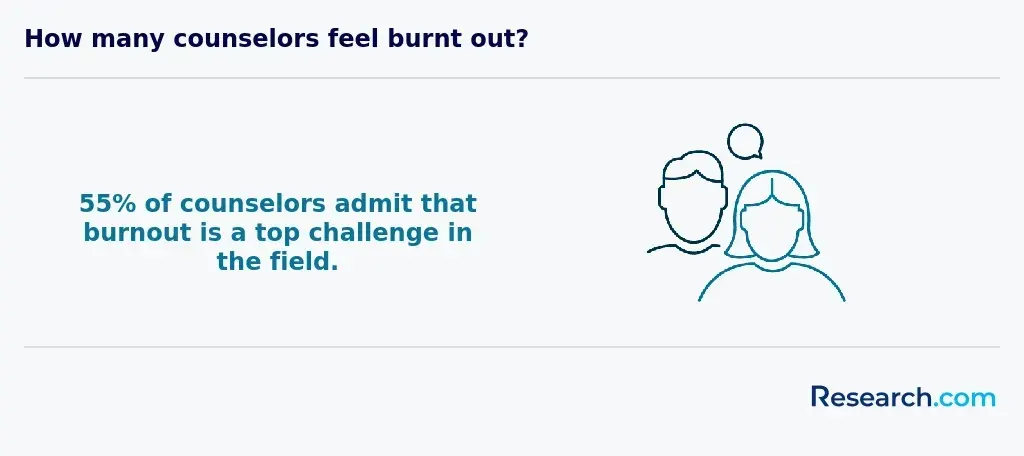
The work can also be demanding. Around more than half, or 55% of counselors, identify burnout as a major challenge in the profession, as shown below.
-
: "
One Georgia substance abuse counselor describes the work this way: “After finishing my studies at the University of Georgia, I realized I wanted to help people rebuild stability and hope. The progress is not always fast, but the moments when clients reconnect with their families, health, and purpose are powerful.”
"
What is the certification and licensing process for a substance abuse counselor in Georgia?
Georgia’s addiction counseling pathway is centered on certification through recognized professional organizations, especially the Alcohol and Drug Abuse Certification Board of Georgia (ADACBGA) and the Georgia Addiction Counselors Association (GACA). This is separate from broader professional counseling licensure, such as LPC licensure, which has its own education, supervised practice, and examination requirements.
Candidates should confirm the exact requirements for the credential they want before enrolling in a program or counting work hours. In general, certification may require addiction-related training, supervised experience, documentation, an application, fees, and an exam.
| Requirement area | Common expectation | Applicant tip |
| Training | Candidates are required to complete a minimum of 180 hours of training through relevant workshops, seminars, or college coursework. | Keep certificates, syllabi, transcripts, and attendance records in one file. |
| Supervised experience | Entry-level certification may require at least 4,000 hours of supervised work experience in substance abuse treatment settings. | Track hours regularly and obtain supervisor signatures before changing jobs. |
| Application | Applicants submit proof of education, training, experience, and other required documentation to the certifying body. | Review the application checklist before paying fees or scheduling exams. |
| Background screening | Georgia does not mandate fingerprinting or background checks for certification, but employers may require them. | Ask potential employers about screening standards early in the hiring process. |
| Fees | Certification-related costs can range from several hundred to a few thousand dollars depending on training, exam, and credential level. | Budget for application fees, study materials, renewal costs, and continuing education. |
The most common certification mistakes are preventable: assuming all experience hours count, failing to document supervision, choosing training that does not meet board standards, overlooking renewal requirements, and confusing substance abuse certification with broader counseling licensure. If you are also considering LPC licensure in another state, this overview of the South Carolina LPC certification process can help you compare how counseling pathways differ by state.
What legal and ethical considerations must a substance abuse counselor consider in Georgia?
Substance abuse counselors work with sensitive information, vulnerable clients, and high-risk situations. Ethical practice is not optional; it is central to client safety, employer trust, and professional credibility.
- Scope of practice: Counselors must understand what their credential allows them to do and when to refer clients to licensed mental health, medical, psychiatric, or emergency services.
- Confidentiality: Client records and disclosures must be protected under applicable privacy rules, including HIPAA. Counselors should only release information with proper consent unless a legal or safety exception applies.
- Informed consent: Clients should understand the purpose of counseling, limits of confidentiality, fees if applicable, documentation practices, and the counselor’s role.
- Dual relationships: Counselors must avoid personal, financial, romantic, or social relationships that could impair judgment or exploit the client.
- Mandatory reporting and safety: Counselors need clear procedures for imminent harm, abuse or neglect concerns, suicidal risk, and other legally reportable situations.
- Documentation: Notes should be accurate, timely, clinically relevant, and consistent with employer policies and ethical standards.
- Cultural competence: Counselors should account for culture, language, family structure, spirituality, stigma, poverty, trauma, and access barriers when developing treatment plans.
- Continuing education: Laws, treatment standards, and ethical expectations change. Regular training helps counselors remain current and reduce risk.
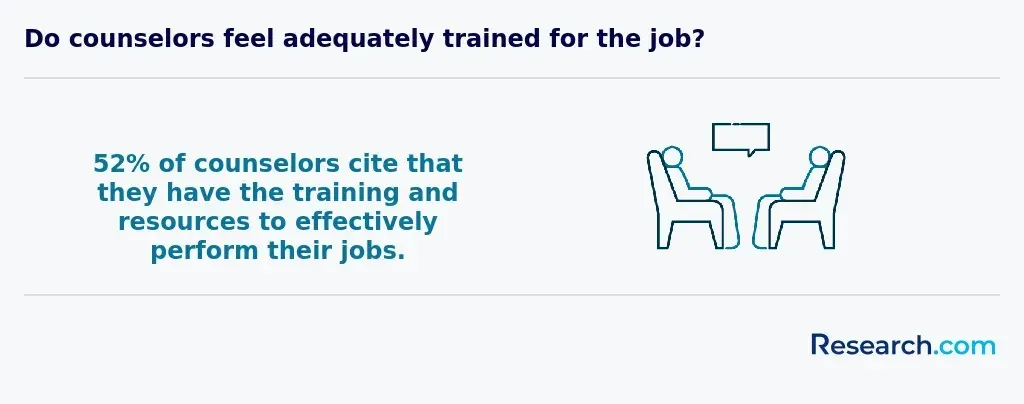
Only around half, at 52% of counselors, report that they have the training and resources needed to do their jobs effectively, as shown below.
How much can you earn as a substance abuse counselor in Georgia?
Substance abuse counselors in Georgia earn an average salary of approximately $47,000 per year, with a median salary around $45,000. The national average is about $50,000 annually. Actual pay depends on credentials, education, employer type, city, experience, caseload, shift requirements, and whether the role includes clinical, supervisory, or administrative duties.
Salary breakdown
| Salary measure | Amount |
| Average salary in Georgia | $47,000 |
| Median salary in Georgia | $45,000 |
| National average salary | $50,000 |
Top-earning career paths in Georgia
| Role | Typical earning potential stated | Why it may pay more |
| Clinical Director | Over $70,000 annually | Oversees treatment programs, staff, compliance, and service quality. |
| Substance Abuse Program Manager | Around $65,000 | Manages operations, scheduling, program goals, and service delivery. |
| Licensed Professional Counselor (LPC) | Between $60,000 and $75,000 | Additional credentials can expand clinical responsibilities and employment options. |
Top-earning locations in Georgia
| Location | Salary information stated | Career note |
| Atlanta | Many counselors earn between $50,000 and $60,000 | The larger treatment market may offer more specialized and supervisory roles. |
| Savannah | Around $48,000 | Opportunities may exist in community programs, healthcare, and regional treatment services. |
| Augusta | About $46,000 | Healthcare and public service settings may provide steady employment options. |
To improve earning potential, consider advanced certification, graduate education, dual-diagnosis training, supervision credentials, leadership experience, and roles in higher-demand urban markets. Salary outcomes are never guaranteed, so compare earnings against student debt, commuting costs, benefits, and advancement opportunities.
What is the job market like for a substance abuse counselor in Georgia?
The Georgia job market is supported by rising demand for addiction treatment, mental health care, behavioral health integration, and community-based recovery services. The U.S. Bureau of Labor Statistics projected employment for substance abuse counselors to grow by 23% from 2020 to 2030, which is much faster than the average for all occupations.
- Demand is strongest where services are concentrated. Urban areas such as Atlanta and Savannah often have more treatment providers, hospitals, community agencies, and nonprofit organizations.
- Credentials can improve competitiveness. Candidates with supervised experience, certification, graduate education, or co-occurring disorder training may stand out in crowded markets.
- Benefits matter. Compensation may include health insurance, retirement plans, paid time off, supervision support, and continuing education assistance.
- Advancement is possible. Experienced counselors may move into clinical supervision, program coordination, administration, specialized treatment, family services, or policy work.
- Georgia’s affordability can help. The state’s cost of living can make entry-level compensation more manageable than in higher-cost regions.
Students considering related Georgia counseling pathways can compare addiction counseling with the Georgia LPC career outlook. A Georgia counselor described the Atlanta market this way: “The need was clear, but so was the competition. I learned quickly that field experience, supervision, and professional relationships mattered just as much as my degree.”
In 2018, many Americans viewed substance use as a serious community problem. Prescription pain relievers such as Oxycontin, Percocet, and Vicodin were identified as significant problems by 43% of adults. Other drugs, including cocaine and methamphetamines, were cited by 42%. Heroin was viewed as a serious issue by 37%, alcohol by 34%, and marijuana by 26%, as shown below.
Those figures show why addiction counselors need broad preparation. Clients may present with alcohol use, opioid use, stimulant use, polysubstance use, mental health symptoms, legal problems, family strain, housing instability, or medical concerns.
What career and advancement opportunities are available for a substance abuse counselor in Georgia?
Substance abuse counseling offers several career stages. Some professionals begin in supervised support or case management roles, while others pursue graduate education, clinical licensure, advanced certification, or management positions.
| Career stage | Possible roles | How to move forward |
| Entry level | Substance abuse counselor trainee, recovery support worker, case management assistant, group support staff. | Build supervised hours, complete addiction training, and document experience carefully. |
| Certified counselor | CADC-level counselor, outpatient counselor, residential treatment counselor, community program counselor. | Pursue stronger clinical skills, co-occurring disorder training, and higher certification levels. |
| Mid-level leadership | Lead counselor, treatment coordinator, program manager, intake supervisor. | Develop supervision, compliance, documentation review, and team management experience. |
| Advanced practice or leadership | Clinical Supervisor, Program Director, CAADC-level counselor, Certified Clinical Supervisor. | Consider advanced credentials, graduate education, LPC preparation, or administrative training. |
| Alternative paths | Peer Recovery Coach, educator, trainer, policy advocate, prevention specialist. | Match your strengths to teaching, lived-experience support, advocacy, public health, or program development. |
Georgia professionals who want broader clinical options may also explore Georgia LPC careers. An online counseling master’s program may be useful for working adults, but students should verify accreditation, field placement support, and whether the program aligns with their intended credential.
How do marriage counseling credentials enhance integrated care practices in Georgia?
Substance use often affects partners, children, and family systems. Marriage counseling training can help addiction counselors recognize relational patterns that support or undermine recovery, including conflict, enabling behaviors, communication breakdowns, and trust repair. Counselors who want to expand into relational practice can review marriage counselor education requirements in Georgia to understand how marriage counseling credentials may complement addiction-focused work.
How can integrating faith-based approaches enhance substance abuse counseling in Georgia?
For some clients, faith and spirituality are important sources of meaning, accountability, forgiveness, and community support. Faith-based counseling should be client-centered and ethically appropriate, not imposed. When integrated with evidence-based addiction treatment, it may help clients connect recovery goals with values and support systems. Professionals interested in this area can explore guidance on how to become a Christian counselor.
What are the differences between substance abuse and mental health counseling in Georgia?
Substance abuse counseling focuses on substance use patterns, addiction recovery, relapse prevention, treatment engagement, and recovery supports. Mental health counseling has a broader scope that may include anxiety, depression, trauma, grief, relationship concerns, and severe mental health conditions. In practice, the two areas often overlap because many clients experience co-occurring disorders.
If you are deciding between these paths, compare scope of practice, education requirements, certification or licensure expectations, supervised experience, and the populations you want to serve. For a related pathway, review how to become a mental health counselor in Georgia.
How can behavior analysis enhance your counseling practice in Georgia?
Behavior analysis can strengthen addiction counseling by helping clinicians identify triggers, reinforcement patterns, avoidance behaviors, and measurable behavior-change goals. Data-informed treatment planning may be especially useful when clients need structured interventions, skill-building, or progress tracking. Counselors interested in this interdisciplinary skill set can learn more about how to become a behavior analyst in Georgia.
How can expanding your qualifications with marriage and family therapy enhance your counseling practice in Georgia?
Marriage and family therapy preparation can help substance abuse counselors work more effectively with family conflict, parenting stress, partner mistrust, and intergenerational patterns that affect recovery. This training can be especially helpful in programs that involve family sessions, adolescent clients, or couples affected by addiction. To compare credential pathways, see how to become an MFT in Georgia.
How can telehealth enhance your substance abuse counseling practice in Georgia?
Telehealth can make counseling more accessible for clients who live far from treatment centers, lack transportation, have work constraints, or need more flexible follow-up. It can also support continuity of care after residential treatment or during relapse-prevention planning. Counselors using telehealth must still protect confidentiality, use secure platforms, document care properly, and follow employer and regulatory requirements. If you are comparing faster counseling-entry options, review the quickest way to become a counselor in Georgia.
How can criminal psychology insights enhance substance abuse counseling effectiveness in Georgia?
Some clients enter treatment through probation, court referral, diversion programs, or correctional settings. Criminal psychology knowledge can help counselors understand risk factors, criminogenic needs, motivation, accountability, and the relationship between substance use and legal involvement. It can also improve communication with courts, probation officers, and case managers. Professionals interested in this specialty can explore how to become a criminal psychologist in Georgia.
How can school psychology insights enhance substance abuse counseling outcomes in Georgia?
School psychology concepts can be useful when counselors work with adolescents, young adults, or families connected to educational systems. Early screening, developmental awareness, behavior monitoring, and school collaboration may help identify substance use risks sooner and coordinate support. Counselors who want to understand education-based mental health pathways can review Georgia school psychologist certification requirements.
What additional professional development resources can help advance your counseling career in Georgia?
Professional growth should be planned, not treated as a renewal checklist. The most useful continuing education usually connects directly to your caseload, setting, and advancement goals. Topics worth prioritizing include ethics, trauma-informed care, co-occurring disorders, motivational interviewing, telehealth, group facilitation, suicide risk, documentation, cultural competence, medication-assisted treatment coordination, and supervision skills.
For a broader view of employment trends and career options, review the substance abuse counselor job outlook. Professional associations, conferences, webinars, certificate courses, employer trainings, and supervision groups can all help counselors stay current and build networks.
What professional development and continuing education opportunities are available for substance abuse counselors in Georgia?
- Substance abuse counselors in Georgia are required to complete 35 hours of continuing education every two years to maintain their licensure.
- The Georgia Addiction Counselors Association offers workshops and seminars on evidence-based practices, counseling ethics, and emerging substance use treatment topics.
- The Georgia Department of Behavioral Health and Developmental Disabilities provides training resources, webinars, and updates related to treatment approaches and regulatory issues.
- The National Association for Alcoholism and Drug Abuse Counselors offers online continuing education courses that counselors can complete at their own pace.
- Georgia community colleges and universities may offer certificate programs, workshops, and skill-building courses for addiction counseling professionals.
- National conferences, including the NAADAC Annual Conference, can provide continuing education credits and exposure to new practices in the field.
- Professional organizations such as the Georgia Association of Addiction Professionals can offer training resources, networking, and professional support.
- Industry journals and newsletters can help counselors follow research, treatment trends, ethics updates, and policy developments.
How can integrating forensic science insights enhance substance abuse counseling outcomes in Georgia?
Forensic science knowledge can help substance abuse counselors understand cases involving evidence, investigations, legal timelines, toxicology issues, and court-related documentation. This does not replace legal or forensic expertise, but it can improve collaboration when clients are involved with law enforcement, courts, probation, or mandated treatment. Counselors interested in this complementary knowledge can explore how to become a forensic scientist in Georgia.
What challenges should you consider as a substance abuse counselor in Georgia?
Substance abuse counseling can be deeply meaningful, but it is not an easy career. The work involves relapse, crisis, trauma, family conflict, legal issues, limited resources, and emotionally intense conversations. Preparing for those realities can help you last longer in the field and serve clients more effectively.
| Challenge | What it means | Better way to prepare |
| Client resistance | Some clients may deny the severity of their substance use or attend treatment only because of outside pressure. | Build skills in motivational interviewing, rapport-building, and stages-of-change work. |
| Co-occurring disorders | Around 25% of adults with mental health disorders also experience substance abuse. | Learn screening, referral, and collaboration practices for mental health concerns. |
| Relapse | Over 85% of individuals return to substance use within a year after treatment. | Treat relapse risk as part of planning, not as a personal failure by the counselor or client. |
| Burnout | Heavy caseloads, crisis work, and repeated setbacks can create emotional exhaustion. | Use supervision, peer consultation, boundaries, manageable scheduling, and self-care routines. |
| Ethical pressure | Confidentiality, dual relationships, documentation, and court involvement can create complex decisions. | Study ethical standards and consult supervisors before acting in uncertain situations. |
| Cultural differences | Georgia’s diverse communities may have different beliefs about addiction, treatment, family, faith, and stigma. | Practice cultural humility and adapt care without stereotyping clients. |
| Changing requirements | Credentialing, employer standards, and continuing education expectations can change. | Stay connected with ADACBGA, GACA, employers, and professional associations. |
Substance use among U.S. adults aged 18 and older remains widespread. Marijuana is the most commonly used substance at 18.7%. Opioids, prescription pain medications, and sedatives follow with usage rates ranging from 3.6% to 2.4%. Cocaine use is reported at 2.0%, while prescription stimulants, methamphetamines, and LSD have usage rates of 1.9%, 1.0%, and 1.0%, respectively. Heroin use is lower at 0.4%, as shown below.
These figures reinforce the need for counselors who can respond to different substances, different recovery barriers, and different levels of client risk.
Common mistakes to avoid
- Choosing a program without checking credential alignment. A degree may be valuable, but it should also support the certification or licensure path you want.
- Counting hours incorrectly. Supervised experience should be documented carefully, with dates, duties, settings, and supervisor verification.
- Assuming online programs automatically meet requirements. Online study can be convenient, but field placement and credential acceptance still matter.
- Looking only at tuition. Fees, books, transportation, unpaid internship time, exam costs, and renewal expenses affect total cost.
- Ignoring burnout risk. Counselors need boundaries, supervision, and sustainable workloads to remain effective.
- Confusing certification with licensure. Addiction counseling certification and broader clinical counseling licensure are related but not identical.
- Relying only on salary averages. Pay varies by city, setting, credential, shift, experience, and leadership responsibility.
What do substance abuse counselors say about their careers in Georgia?
-
: "
“This work has shown me how much change is possible when clients have consistent support. The difficult days are real, but watching someone rebuild trust, stability, and health makes the effort worth it.” Liam
"
-
: "
“Georgia’s need for addiction counselors is clear, and I value the collaboration among providers. When counselors share resources and coordinate care, clients benefit.” Maya
"
-
: "
“I entered this field to serve my community. The variety of settings, from treatment centers to schools and community programs, allows counselors to find the population and approach that fits them best.” Jordan
"
Related Articles for Nearby States
- 2027 How to Become a Substance Abuse Counselor in South Carolina
- 2027 How to Become a Substance Abuse Counselor in Florida
- 2027 How to Become a Substance Abuse Counselor in Alabama
- 2027 How to Become a Substance Abuse Counselor in Tennessee
- 2027 How to Become a Substance Abuse Counselor in North Carolina
- 2027 How to Become a Substance Abuse Counselor in Mississippi
- 2027 How to Become a Substance Abuse Counselor in Kentucky
- 2027 How to Become a Substance Abuse Counselor in Virginia
- 2027 How to Become a Substance Abuse Counselor in Louisiana
- 2027 How to Become a Substance Abuse Counselor in West Virginia
References:
- Addiction Counselors. (2020, November 13). Addiction Counselor Requirements in Georgia. Addiction Counselors.
- Alcohol & Drug Abuse Certification Board of Georgia. (n.d.). ADACBGA.
- CACJ Georgia. (n.d.). Addiction Counseling NAADAC Ethical Standards. CACJ Georgia.
- Careers Georgia. (2020, August 18). Substance Abuse Counselor. Careers Georgia.
- Georgia Education Requirements & Certification for Substance Abuse Counselors. (2018, June 22). Addiction-Counselor.org.
- Georgia Substance Abuse Certification. (2024, May 30). Center for Addiction Studies.
- Public Health Online. (2020, August 15). Georgia Substance Counselor Licensure & Certification. Public Health Online.
- Sober College. (n.d.). Requirements to Become a Substance Use Counselor in Georgia. Sober College.
Key Insights
- Georgia substance abuse counseling is usually built around education, addiction-specific training, supervised experience, and certification through organizations such as ADACBGA or GACA.
- A bachelor’s degree is a strong starting point, but advanced clinical, supervisory, or LPC-related roles often require graduate education and additional credentials.
- Certification requirements can include a minimum of 180 hours of training and at least 4,000 hours of supervised work experience for entry-level certification, so documentation is critical.
- Average pay in Georgia is approximately $47,000 per year, with higher earning potential in leadership roles such as Clinical Director, Substance Abuse Program Manager, and LPC-related positions.
- Atlanta, Savannah, and Augusta may offer stronger employment opportunities, but competition can be higher in major markets.
- The field is growing, but it is emotionally demanding. Burnout, relapse, client resistance, ethical pressure, and co-occurring disorders should be part of your career planning.
- The best program is not always the cheapest or fastest. Choose one that aligns with your credential goal, offers field placement support, is properly accredited, and fits your long-term career plan.
Other Things You Should Know About Becoming a Substance Abuse Counselor in Georgia
Yes, in Georgia, substance abuse counselors must earn certification through the Addiction Counselor Certification Board of Georgia (ACCBO). This involves completing supervised practice hours, passing a national certification exam, and adhering to their Code of Ethics.
To become a substance abuse counselor in Georgia, you must obtain a license. Practicing without a license can lead to serious legal ramifications, including fines, criminal charges, and the potential for civil lawsuits. For instance, if an unlicensed individual provides counseling services and a client suffers harm as a result, the counselor could face significant legal consequences.
In Georgia, there are specific pathways to licensure, including:
- Education Requirements: A minimum of a bachelor’s degree in a related field is typically required.
- Supervised Experience: Candidates must complete a specified number of supervised hours in a clinical setting.
- Examinations: Passing a state-recognized examination is essential for licensure.
While there are limited circumstances under which individuals may provide support without a license—such as peer support roles or volunteer positions—these do not equate to formal counseling. Therefore, pursuing licensure is crucial for those serious about a career in substance abuse counseling in Georgia.
In 2027, to become a substance abuse counselor in Georgia, you need a bachelor's degree in counseling, psychology, or a related field. You must also complete specific coursework in substance abuse, obtain supervised clinical experience, and fulfill continuing education requirements to achieve certification.