
2027 Fastest Way to Become a Counselor in Georgia

Co-Founder and Chief Data Scientist
If you want to become a counselor in Georgia as quickly as possible, the key decision is not whether you can skip requirements. You cannot. The real question is how to choose the right education path, avoid licensing delays, complete supervised experience efficiently, and enter the workforce in a role that matches your long-term goals.
Georgia has defined routes for aspiring Licensed Professional Counselors (LPCs), school counselors, substance abuse counselors, and bachelor’s-level behavioral health workers. This guide explains the fastest realistic path, what you can do with only a bachelor’s degree, how online and accelerated programs compare, what employers look for, and whether the fast route is worth the cost and workload.
Quick answer: What is the fastest path to counseling licensure in Georgia?
The fastest route to become a licensed professional counselor in Georgia is to complete a qualifying master’s degree, apply promptly for Associate Professional Counselor (APC) status, begin supervised clinical experience as soon as you are eligible, and pass either the National Counselor Examination (NCE) or the National Clinical Mental Health Counseling Examination (NCMHCE). A standard master’s degree generally requires three years of supervised experience, including at least two years under an LPC supervisor, while a specialist degree requires two years total, including one under an LPC.
Students who want the shortest timeline should prioritize programs that meet Georgia Board requirements, offer reliable practicum placement support, allow year-round enrollment when available, and prepare graduates directly for APC and LPC steps.
Key benefits of becoming a counselor in Georgia
- A Georgia Board-approved master’s program can help you meet LPC education requirements without taking unnecessary extra coursework.
- Georgia counseling roles show steady opportunity, with a median salary of around $63,654 and demand across schools, healthcare organizations, social service agencies, and private practice settings.
- The state’s APC-to-LPC structure gives aspiring counselors a defined sequence for moving from graduate education to supervised practice and full licensure.
- What is the fastest way to become a licensed counselor in Georgia?
- What counseling careers can you pursue in Georgia with only a bachelor’s degree?
- Are there accelerated counseling degree programs in Georgia?
- Are online counseling programs in Georgia faster than traditional ones?
- What challenges do fast-track counseling students face?
- How do employers in Georgia view fast-track counselors?
- Are fast-track and online counseling programs in Georgia more affordable?
- What specialized certifications can boost my counseling career in Georgia?
- What are the professional development opportunities for counselors in Georgia?
- What are the key LPC license requirements in Georgia?
- Is there a demand for counselors in Georgia?
- How much do counselors get paid in Georgia?
- Is taking the fast route to become a counselor in Georgia worth it?
- What distinguishes counseling and social work educational pathways in Georgia?
What is the fastest way to become a licensed counselor in Georgia?
The quickest legitimate path to LPC licensure in Georgia starts with a qualifying graduate degree and moves through two credentials: Associate Professional Counselor (APC) first, then Licensed Professional Counselor (LPC). The most common delay is not the coursework itself; it is poor planning around applications, practicum documentation, supervisor approval, and exam preparation.
A practical fast-track plan looks like this:
| Step | What to do | How to avoid delays |
| Choose the right graduate program | Enroll in a counseling or applied psychology master’s program that satisfies Georgia Board expectations. | Confirm licensure alignment before enrolling, not after graduation. |
| Prepare documents early | Gather transcripts, internship verification, reference materials, and other application records before you apply for APC status. | Use the Board’s online portal and respond quickly to missing-document requests. |
| Apply for APC status promptly | Submit your APC application as soon as you are eligible so supervised practice can begin without unnecessary waiting. | Check that your practicum and internship records match Board requirements. |
| Complete supervised experience | With a standard master’s degree, complete three years of supervised experience, including at least two years under an LPC supervisor. With a specialist degree, complete two years total, including one under an LPC. | Secure an eligible supervisor early and keep organized records of hours and supervision. |
| Pass the required exam | Prepare for the NCE or NCMHCE and schedule the exam strategically. | Begin studying before your final supervised-experience deadline instead of waiting until the end. |
Students often underestimate how much paperwork affects the total timeline. Before graduation, ask your program director how the school verifies practicum hours, whether graduates regularly qualify for APC status, and how quickly transcripts are issued. If you are still comparing the overall path, Research.com’s guide on how to become a counselor can help you understand the broader education and cost sequence.
What counseling careers can you pursue in Georgia with only a bachelor’s degree?
A bachelor’s degree alone usually does not qualify you for independent clinical counseling practice in Georgia. However, it can help you enter behavioral health, addiction services, case management, and community support roles while you decide whether to pursue graduate study.
| Role | Typical entry point | Best fit for | Limitations |
| Substance abuse counselor trainee | Georgia allows people with a bachelor’s degree, and in some cases a high school diploma, to work in trainee-level substance abuse counseling roles. | Students interested in addiction treatment who want direct exposure before pursuing advanced credentials. | Certification through the Georgia Addiction Counselors Association or the Alcohol & Drug Abuse Certification Board of Georgia may be needed to improve prospects, and trainees may work for up to three years while meeting requirements. |
| Behavioral health technician | A bachelor’s degree in psychology, social work, or a related field can support entry into treatment centers, community agencies, rehabilitation programs, and nonprofits. | People who want hands-on experience supporting licensed clinicians. | The role usually involves support duties rather than independent counseling. |
| Case manager or community support specialist | Many agencies hire bachelor’s-level workers to coordinate services, make referrals, and help clients navigate care plans. | Future counselors who want to understand client systems, resources, and social service coordination. | These jobs are related to counseling but are not the same as licensed clinical practice. |
Bachelor’s-level work can be a smart step if you need income, want to test your interest in the field, or plan to strengthen your graduate school application. If your long-term goal is independent practice, review what LPCs do, where they work, and how their credentials affect career options in this guide to LPC careers.
The following visual provides additional context on average lifetime earnings for mental and behavioral health professionals.
Are there accelerated counseling degree programs in Georgia?
Yes, Georgia students can find faster or more targeted counseling education options, but “accelerated” does not always mean the same thing. Some programs shorten the transition from undergraduate to graduate study, while others help people who already have a graduate degree complete only the additional courses needed for licensure or certification alignment.
| Program example | How it may save time | Who should consider it | Important caution |
| Agnes Scott College | The Agnes Accelerated Early Assurance Program lets undergraduates apply to the Clinical Mental Health Counseling Master of Arts program as early as junior year, reducing the gap between bachelor’s and graduate enrollment. | Current undergraduates who are confident they want a counseling master’s degree and prefer a cohort model with a social justice-oriented counseling focus. | Graduate coursework begins after the bachelor’s degree is completed, and tuition should be confirmed directly with the college because it is subject to change. |
| Albany State University | Advanced Counseling Certificate options may allow students who already hold a master’s degree in counseling or a related field to take only the courses they still need, often 1-3 classes. | Professionals updating credentials, filling licensure gaps, or changing specialization after graduate study. | Tuition depends on course load and should be verified with the university. |
When evaluating an accelerated option, do not focus only on the advertised completion time. Ask whether the program satisfies Georgia licensure coursework, how practicum placement works, whether field sites are available near you, and whether graduates are eligible to apply for APC status. Students considering relationship and family-focused counseling careers may also want to compare programs in this ranking of online marriage and family counseling master’s degrees.
Are online counseling programs in Georgia faster than traditional ones?
Online counseling programs can be faster for some Georgia students, but the format alone does not guarantee a shorter path. The advantage comes from scheduling flexibility, year-round coursework, reduced commuting, and the ability to continue working while completing classes. The clinical training requirements still matter, and practicum or internship availability can determine whether an online program actually saves time.
- Flexible course scheduling: Some online programs offer summer terms or shorter academic sessions, allowing students to keep earning credits instead of waiting for a traditional semester sequence.
- Asynchronous learning options: Programs with recorded or flexible coursework can help working adults manage heavier academic loads when their schedules allow.
- No commuting requirement: Time that would have been spent traveling to campus can be redirected to coursework, exam preparation, or field placement responsibilities.
- Licensure-focused design: Programs such as Albany State University’s counseling degrees are structured with Georgia licensing expectations and national exam preparation in mind.
Online study works best for disciplined students who can manage deadlines independently and communicate proactively with faculty and site supervisors. It may be a poor fit if you need frequent in-person structure, have limited access to approved practicum sites, or are unsure whether your state-specific licensing goals align with the program.
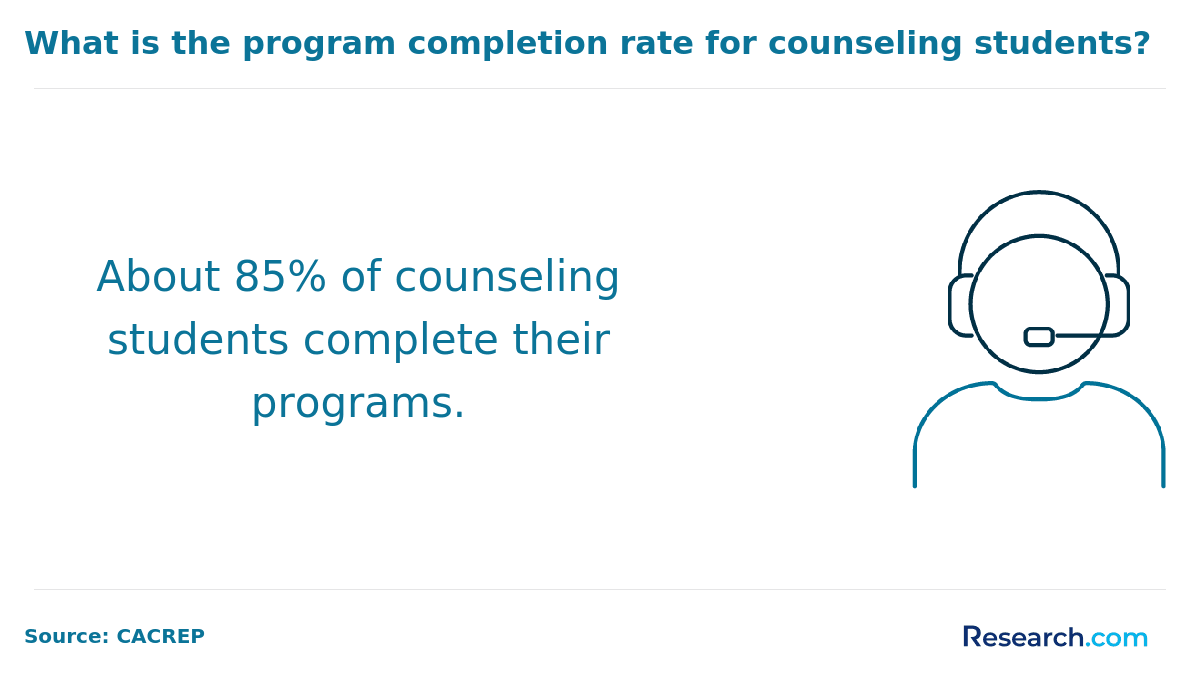
The image below shows program completion information for counseling students in Georgia.
What challenges do fast-track counseling students face?
Fast-track counseling students often move through difficult material, fieldwork expectations, and licensing preparation at the same time. A compressed master’s path of 12 to 18 months can be manageable for some students, but it requires strong planning and realistic expectations.
| Challenge | Why it matters | Better strategy |
| Heavy academic workload | Counseling theory, ethics, assessment, diagnosis, and clinical skills take time to absorb and practice. | Create a weekly study calendar and use active learning methods such as case review, role-play, and exam-style practice questions. |
| Practicum and internship bottlenecks | Clinical hours are still required even when coursework moves quickly. | Ask about placement timelines before enrolling and start site conversations early. |
| Work and family pressure | Accelerated coursework can conflict with job schedules, caregiving, and field placement hours. | Use time-blocking and set expectations with employers and family before the term begins. |
| Financial strain | A faster program may reduce total time in school but can also make part-time work harder. | Apply early for aid, compare payment plans, and calculate living costs as well as tuition. |
| Licensure exam readiness | The NCE or NCMHCE is required, and waiting too long to study can extend the timeline. | Begin exam preparation while completing supervised experience rather than treating it as a final separate step. |
How do employers in Georgia view fast-track counselors?
Georgia employers generally care less about whether a program was fast and more about whether the candidate is properly trained, eligible for the right credential, and ready for supervised clinical work. The Georgia Composite Board of Professional Counselors, Social Workers, and Marriage & Family Therapists sets baseline requirements, so fast-track graduates must still complete the relevant graduate education, supervised experience, and examination steps.
That said, some hiring managers may question whether an accelerated program allowed enough time for clinical maturity. Fast-track graduates can address this directly by highlighting practicum quality, internship settings, client populations served, supervision experience, and any additional clinical hours beyond the minimum.
Candidates with previous careers in teaching, healthcare, social services, corrections, ministry, or nonprofit work may have an advantage if they can clearly connect that background to counseling skills. Employers in schools, hospitals, community agencies, and behavioral health organizations often value maturity, crisis communication, cultural awareness, and experience working with vulnerable populations.
The graph below illustrates growth in graduates from CACREP-accredited programs between 2021 and 2023.
Are fast-track and online counseling programs in Georgia more affordable?
Fast-track and online counseling programs can reduce the total cost of becoming a counselor in Georgia, but affordability depends on more than tuition. Students should compare credit-hour cost, total credits, fees, practicum travel, technology expenses, lost income, transfer policies, and whether the program supports licensure in Georgia.
- Lower tuition at some programs: Fort Valley State University’s Clinical Mental Health Counseling master’s has been cited at $181 per credit hour, with a total cost near $10,860.
- Shorter enrollment period: Accelerated or year-round formats may reduce the number of months you pay student fees, transportation costs, or other school-related expenses.
- Ability to keep working: Asynchronous online coursework may allow students to maintain income while completing graduate study.
- Reduced commuting and housing costs: Online study can remove daily travel and campus housing expenses, which may be substantial for students who live far from campus.
- Financial aid and in-state pricing: Augusta University’s M.Ed. in Counselor Education has been cited at around $14,105 for in-state tuition, with grants, scholarships, and other aid potentially lowering out-of-pocket costs.
| Cost factor | What to ask before enrolling |
| Tuition | Is the advertised price per credit, per term, or total program cost? |
| Fees | Are online learning, technology, clinical placement, graduation, or exam-prep fees separate? |
| Clinical placement | Will I need to travel, reduce work hours, or find my own practicum site? |
| Licensure alignment | Will this program meet Georgia requirements for APC and LPC progression? |
| Financial aid | Can I use federal aid, scholarships, grants, employer tuition support, or payment plans? |
What specialized certifications can boost my counseling career in Georgia?
Specialized credentials can help Georgia counselors stand out in high-need practice areas, but they should be viewed as additions to—not substitutes for—licensure. Certifications in substance abuse counseling, trauma-informed care, crisis intervention, or related specialties may strengthen your resume and show employers that you have focused training with a specific population or treatment need.
Substance use treatment is one of the most common specialization paths. If you are considering that route, review Research.com’s guide on how to become a substance abuse counselor in Georgia to understand training, supervision, and credential expectations.
What are the professional development opportunities for counselors in Georgia?
Professional development is essential because counseling practice changes as laws, ethical standards, treatment methods, technology, and community needs evolve. Georgia counselors can build skills through continuing education, workshops, supervision groups, association events, mentorship, and specialized training in areas such as school counseling, addiction, trauma, telehealth, and crisis response.
If you want to work with students, families, and school systems, compare the education and credential route in this guide on how to become a school counselor in Georgia. School counseling has a different workplace context than private practice or community mental health, so the right preparation depends on where you want to serve.
What are the key LPC license requirements in Georgia?
Georgia’s LPC pathway requires graduate education, supervised clinical experience, and successful completion of a required examination. Candidates typically begin by completing an eligible master’s program, applying for APC status, gaining supervised practice, and then applying for full LPC licensure after meeting the experience and exam standards.
Because licensing rules are detailed and can affect your timeline, verify course requirements, supervision rules, documentation expectations, and exam options before choosing a school. For a focused breakdown, use Research.com’s guide to LPC license requirements in Georgia.
Is there a demand for counselors in Georgia?
Yes. Georgia shows strong demand for mental health counselors, especially in clinical, school, substance use, community agency, and underserved-area settings. Employment for mental health counselors in the state is projected to grow by approximately 32% between 2020 and 2030, rising from 6,270 to 8,290 positions. That projection equals around 870 openings each year.
Several forces contribute to the need for more counselors, including population growth, the opioid crisis, wider recognition of mental health needs, and access gaps in rural communities and underserved urban neighborhoods. School counseling is also important as districts respond to students’ academic, social, emotional, and career-planning needs.
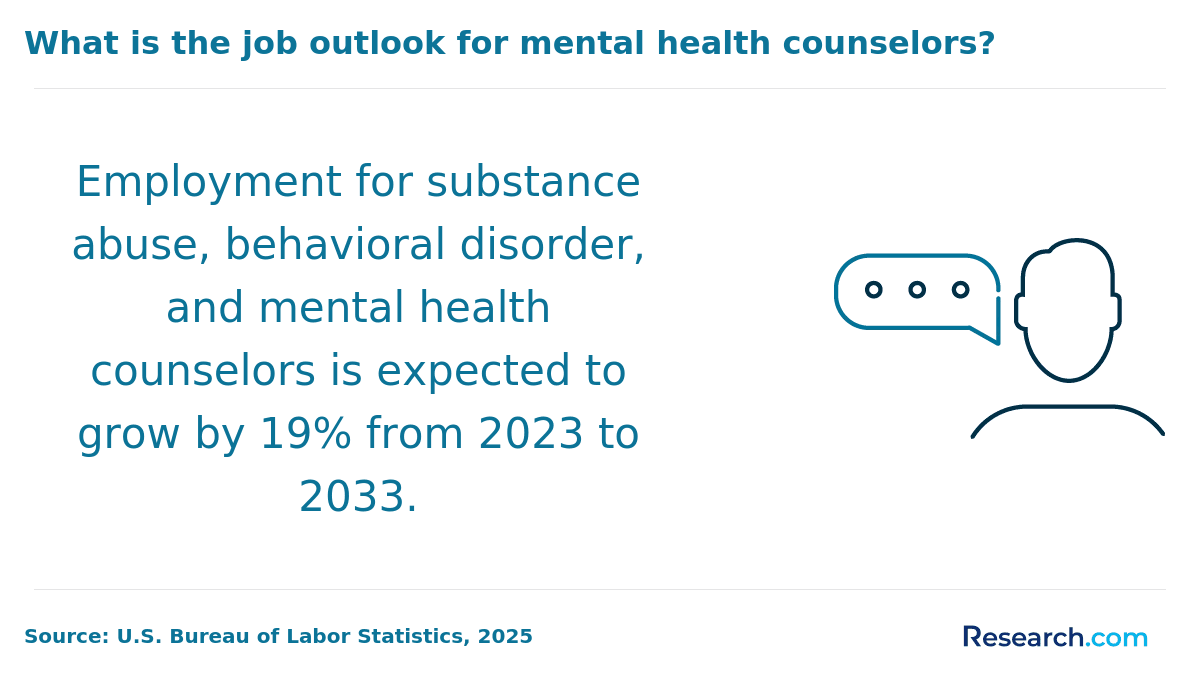
Students concerned about education cost should compare programs carefully before borrowing. Research.com’s list of the cheapest CACREP accredited programs online can help you identify lower-cost options that may still support licensure preparation. The image below provides additional job outlook context for mental health counselors in Georgia.
How much do counselors get paid in Georgia?
Counselor pay in Georgia depends on license level, specialty, employer type, years of experience, location, and whether the counselor works in an agency, school, hospital, nonprofit, or private practice. The average counselor salary in Georgia generally ranges between $63,329 and $68,816 annually, with many professionals earning between $47,285 and $52,351 depending on credentials and experience.
Licensed Professional Counselors often report higher income potential. Licensed professional counselor salary Georgia figures commonly fall between $70,000 and $80,000, while entry-level or rural roles may begin as low as $35,000. Counselors in urban areas or private practice may earn $130,000 or more, though those outcomes are not guaranteed and depend heavily on caseload, payer mix, specialization, and business structure.
| Role or setting | Georgia salary information stated | What can affect pay |
| School counselor | School counselors in Georgia earn about $58,094 on average, with most salaries between $51,178 and $64,495. | District pay scales, years of service, education level, and contract structure. |
| Substance abuse counselor | Substance abuse counselors and entry-level mental health counselors often start toward the lower end. | Certification, agency funding, supervision level, and treatment setting. |
| Metropolitan-area counselor | In areas such as Atlanta, some total compensation packages, including bonuses, may exceed $80,000 annually. | Urban demand, specialization, advanced credentials, and employer type. |
| Licensed Professional Counselor | LPCs typically earn between $70,000 and $80,000, with some private practice or urban salaries reaching $130,000 or more. | Licensure status, clinical niche, referral network, insurance participation, and leadership responsibilities. |
If salary growth is a major goal, plan beyond simply finishing school quickly. Choose clinical placements strategically, build experience in high-demand areas, pursue relevant certifications, and learn the business side of private practice if that path interests you. Students comparing related therapy routes may also review options such as a short online MFT program.
Is taking the fast route to become a counselor in Georgia worth it?
The fast route can be worth it if you are academically prepared, financially organized, and committed to completing every licensure requirement without shortcuts. It is not worth it if speed causes you to choose a poorly aligned program, miss practicum requirements, take on unaffordable debt, or graduate without enough clinical confidence.
| The fast route may be a good fit if... | A slower or more flexible path may be better if... |
| You already know you want LPC, school counseling, or another counseling-specific path. | You are still deciding between counseling, social work, psychology, education, or human services. |
| You can manage intensive coursework and field placement hours. | You need to work full time and cannot adjust your schedule for practicum or internship. |
| You have confirmed the program meets Georgia licensure expectations. | You are unsure whether the program supports APC or LPC eligibility in Georgia. |
| You have a plan for tuition, fees, exam costs, and reduced work hours if needed. | You would need to borrow heavily without a clear salary or repayment plan. |
| You are ready to begin supervised practice quickly after graduation. | You need more time to build foundational experience through bachelor’s-level behavioral health work. |
For many students, the strongest approach is not the absolute shortest program. It is the shortest program that still provides strong supervision, ethical training, licensure alignment, and realistic field placement support.
Common mistakes to avoid when becoming a counselor in Georgia
- Choosing a program before checking licensure fit: A fast degree is not useful if it does not support Georgia APC and LPC requirements.
- Looking only at tuition: Fees, commuting, lost work hours, exam preparation, and practicum travel can change the real cost.
- Assuming online means easier: Online counseling programs can be flexible, but clinical requirements, deadlines, and supervision expectations remain demanding.
- Waiting too long to secure field placements: Practicum and internship availability can slow your timeline more than coursework.
- Ignoring supervisor qualifications: Georgia’s requirements include specific supervised-experience expectations, so confirm that your supervisor meets the needed criteria.
- Relying only on rankings: Rankings can help you build a shortlist, but licensure alignment, placement support, affordability, and student outcomes matter more.
- Assuming salary outcomes are automatic: Pay depends on license status, location, specialization, employer, and experience.
What distinguishes counseling and social work educational pathways in Georgia?
Counseling and social work both serve people facing emotional, behavioral, family, and community challenges, but the training emphasis is different. Counseling programs typically focus more directly on therapeutic relationships, assessment, diagnosis, treatment planning, and counseling techniques. Social work programs often combine clinical training with advocacy, case management, policy, community systems, and access to social services.
If you want to spend most of your career providing therapy, a counseling pathway may fit better. If you are drawn to clinical care plus systems-level advocacy, community resources, and social service navigation, social work may be worth comparing. For a closer look at that route, review Research.com’s guide to Georgia social worker educational requirements.
Related Articles for Nearby States
- 2027 Fastest Way To Become a Counselor in South Carolina
- 2027 Fastest Way To Become a Counselor in Florida
- 2027 Fastest Way To Become a Counselor in Alabama
- 2027 Fastest Way To Become a Counselor in Tennessee
- 2027 Fastest Way To Become a Counselor in North Carolina
- 2027 Fastest Way To Become a Counselor in Mississippi
- 2027 Fastest Way to Become a Counselor in Kentucky
- 2027 Fastest Way To Become a Counselor in Virginia
- 2027 Fastest Way To Become a Counselor in Louisiana
- 2027 Fastest Way To Become a Counselor in West Virginia
References:
- Albany State University. (n.d.). Counselor education. https://www.asurams.edu/academic-affairs/college-of-business-education-professional-studies/school-of-education/counselor-education.php
- American Counseling Association. (2024). Counseling workforce report. https://www.counseling.org/resources/research-reports/counseling-workforce-report
- Bureau of Labor Statistics. (n.d.). School and career counselors and advisors: Occupational outlook handbook. U.S. Department of Labor. https://www.bls.gov/ooh/community-and-social-service/school-and-career-counselors.htm
- CACREP. (2024). CACREP VITAL STATISTICS 2023. https://www.cacrep.org/wp-content/uploads/2024/06/CACREP-2023-Vital-Statistics-Report.pdf
- CounselingPsychology.org. (n.d.). 2025 best master’s in counseling Georgia – Online & affordable options. https://www.counselingpsychology.org/counseling/schools/georgia
- Counseling Today. (2024). Bridging the gap. American Counseling Association. https://www.counseling.org/publications/counseling-today-magazine/article-archive/article/may-2024/bridging-the-gap
- Online Counseling Programs. (n.d.). How to become a licensed counselor (LPC) in Georgia. https://onlinecounselingprograms.com/become-a-counselor/counseling-licensure/how-to-become-a-counselor-in-georgia
- OnlineMFTPrograms.com. (n.d.). 30+ cheapest CACREP accredited counseling programs online. https://onlinemftprograms.com/cacrep-accredited-counseling-programs/cheapest
- University of North Georgia. (n.d.). Master of Science in Counseling. https://ung.edu/graduate-admissions/programs/master-of-science-in-counseling.php
- University of West Georgia. (n.d.). Majors and degree programs | UWG. https://www.westga.edu/academics/program_page.php
- ZipRecruiter. (2025). Licensed Mental Health Counselor Salary in Georgia. https://www.ziprecruiter.com/Salaries/Licensed-Mental-Health-Counselor-Salary--in-Georgia
Key Insights
- The fastest legitimate LPC path in Georgia is not a shortcut; it is a well-planned sequence of qualifying graduate education, APC application, supervised experience, and the NCE or NCMHCE.
- A standard master’s degree requires three years of supervised experience, including at least two years under an LPC supervisor; a specialist degree requires two years total, including one under an LPC.
- Bachelor’s-level roles such as substance abuse counselor trainee, behavioral health technician, and case manager can help you gain experience, but they do not replace graduate-level licensure requirements for independent counseling practice.
- Online and accelerated programs may save time and money, but only if they meet Georgia licensing expectations and provide reliable practicum or internship support.
- Georgia’s projected mental health counselor growth of approximately 32% between 2020 and 2030 signals strong opportunity, but salaries vary widely by license, specialization, location, and employer type.
- The best fast-track choice is the one that balances speed with clinical quality, affordability, supervision access, and long-term career fit.
Other Things You Need to Know About the Fastest Way to Become a Counselor in Georgia
Candidates must pass the National Counselor Examination for Licensure and Certification (NCE) in 2027 to qualify as a counselor in Georgia. This exam evaluates their knowledge in various counseling domains and is administered by the National Board for Certified Counselors (NBCC).
The Georgia Composite Board of Professional Counselors, Social Workers, and Marriage and Family Therapists approves counselor licenses in 2027. It sets the rules for licensure, reviews applications, and handles LPC and associate counselor credentials under Georgia law.


