
2027 Organizational Psychology Careers: Guide to Career Paths, Options & Salaries

Co-Founder and Chief Data Scientist
Organizational Psychology Careers: What They Are, What They Pay, and How to Start
If you are considering a career that blends psychology, business, and data, organizational psychology may be the right fit. Also called industrial-organizational (I/O) psychology, this field focuses on how people work, how teams function, and how organizations can improve performance without ignoring employee well-being. That makes it especially relevant now, as employers continue to prioritize retention, leadership development, mental health, hybrid work, and data-driven decision-making.
This guide explains what organizational psychologists do, which degrees and skills matter most, where they work, how much they can earn, and what to think about before choosing a program or career path. It also covers job outlook, professional organizations, ethical issues, and practical steps for evaluating your options.
Quick Answer: Is organizational psychology a good career?
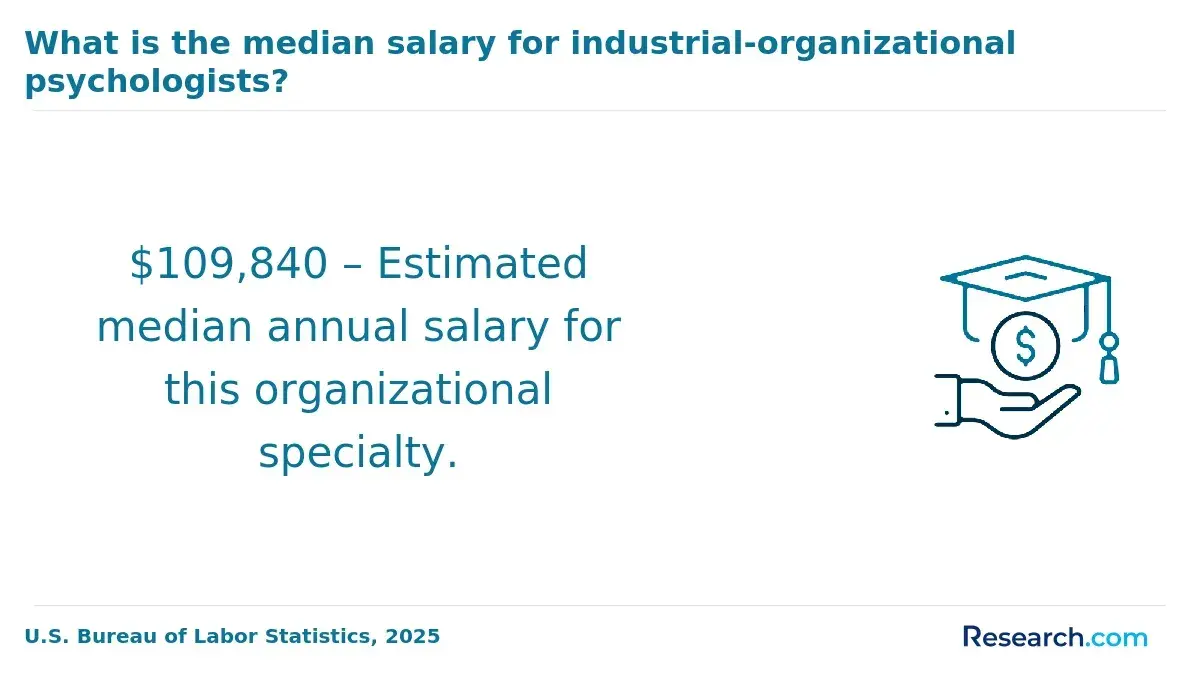
Yes, for people who want to use psychology in workplace settings. Organizational psychology can offer strong earning potential, meaningful work, and a wide range of career settings. In the US, I/O psychologists had a median annual wage of $109,840, and employment for psychologists is projected to increase by 6% through 2034 (US BLS, 2025). The field is a good match for people who enjoy research, problem-solving, communication, and helping organizations improve how they hire, lead, train, and support employees.
It is not the fastest route into psychology, though. Most roles in I/O psychology require graduate study, and many leadership or consulting positions benefit from advanced training, strong analytics skills, and relevant experience.
What graduates say about organizational psychology work
- Pursuing a career in organizational psychology has allowed me to transform workplace dynamics, fostering collaboration and innovation in ways I never imagined possible. The joy of seeing teams thrive and individuals reach their potential is incredibly rewarding. — Jamie
- As an organizational psychologist, I've had the privilege of helping companies navigate change and improve employee satisfaction, creating healthier work environments. The constant learning and growth in this field keep me engaged and passionate about my work. — Rebecca
- Working in organizational psychology has given me the unique opportunity to bridge the gap between management and staff, ensuring both sides feel heard and valued. The positive impact on company culture and the deep professional connections I’ve built are truly fulfilling. — Alyssa
Key points to know before choosing this career
- Organizational psychologists study workplace behavior, leadership, team dynamics, and employee performance.
- This field can lead to roles in consulting, human resources, training and development, research, government, education, and corporate strategy.
- Common related roles include human resources specialist, human resources manager, management analyst, and training and development manager.
- The median annual wage for I/O psychologists was $109,840, which is higher than the median for all psychologists in the US ($92,740) (US BLS, 2025).
- Employment for psychologists is projected to grow 6% through 2034, with related occupations for psychology graduates showing different growth rates depending on the role (US BLS, 2025).
What is organizational psychology?
Organizational psychology is the study of behavior in the workplace. It looks at how people are selected, trained, motivated, evaluated, led, and supported at work. Instead of focusing on therapy or diagnosis, I/O psychology uses research and applied methods to improve how organizations function and how employees experience work.
In practical terms, organizational psychologists help employers solve problems such as low engagement, turnover, weak leadership pipelines, poor team communication, unfair hiring practices, burnout, and low productivity. Their work must support both people and business goals, which is why the field sits at the intersection of psychology and management.
Common areas of work include:
- Workplace ergonomics
- Employee selection
- Hiring
- Placement
- Retention
- Training and development
- Work-life balance and quality-of-life policies
- Harassment prevention and response
- Workplace ethics
- Organizational development
- Performance evaluation
- Legal compliance with state and federal laws
Because the field overlaps with human behavior, research methods, and organizational change, students interested in this path often compare it with other psychology routes, including the four goals of psychology and broader options such as careers in educational psychology.
What degrees do you need for organizational psychology careers?
Most people who want to work directly as organizational psychologists need graduate education. A bachelor’s degree can help you enter related entry-level roles, but it usually is not enough for a specialized I/O psychology career. If you are exploring early options, it helps to review what you can do with a bachelor's degree in psychology and compare that with different psychology degrees.
A master’s degree is often the practical starting point for specialization. Doctoral study may be necessary for higher-level consulting, research, teaching, or advanced leadership roles. If your goal is licensure as a psychologist, make sure the program is aligned with the requirements of your state, because licensing rules vary.
Typical completion times vary by degree level:
- Associate degree: about 2 years
- Bachelor’s degree: about 4 years
- Master’s degree: 2 to 4 years
- Doctoral degree: 2 to 8 years
Those timelines can change based on transfer credits, part-time enrollment, course load, practicum requirements, and whether the program is online or on campus. If you want flexibility, some students compare options such as a online psychology degree or online counseling programs, but you should always confirm whether the curriculum matches your intended career path.
Common coursework for organizational psychology
- Statistics
- Psychology
- Psychometrics
- Behavioral psychology
- Research and experimental design
- Organizational psychology
Education path comparison
| Degree level | Best for | Typical outcome | Important limitation |
| Bachelor’s | Getting started in psychology or HR-adjacent roles | Entry-level support positions, general business roles | Usually not enough for a specialized I/O psychologist title |
| Master’s | Specialized preparation for I/O psychology or HR development | More focused job options and stronger earning potential | Some roles still expect experience or additional credentials |
| Doctoral degree | Advanced consulting, teaching, research, and leadership | Highest level of specialization and competitiveness | Longer time commitment and higher cost |
What skills matter most in organizational psychology?
Successful organizational psychologists need both analytical and interpersonal skills. The field is evidence-based, but the work still involves real people, competing priorities, and organizational politics. Strong technical ability alone is not enough.
- Analytical skills. You need to interpret research, evaluate employee data, and turn findings into practical recommendations.
- Conflict resolution skills. Workplace problems often involve disagreements, morale issues, or miscommunication, so you need to help people move toward workable solutions.
- Communication skills. Findings must be explained clearly to employees, managers, and executives who may not have a psychology background.
- Computer skills. Data analysis tools, survey platforms, assessment systems, and research software are central to modern I/O work.
These skills are especially important if you want to move into consulting, leadership development, HR strategy, or organizational assessment. If you are still deciding whether this broader profession fits you, review related psychologist career paths.
Which industries hire organizational psychologists?
Organizational psychologists work in many settings because nearly every industry needs better hiring, training, leadership, and retention strategies. The largest number of organizational psychologists in the US work in management, scientific, and technical consulting services, where around 570 professionals were employed according to US BLS data.
Other major employers include scientific research and development services, management of companies and enterprises, and higher education. In those environments, I/O psychologists may conduct research, advise leadership teams, improve employee systems, or teach future professionals.
The table below summarizes the kinds of industries that commonly hire organizational psychologists and the kind of work they typically do.
| Industry | Typical focus | Why employers hire I/O psychologists |
| Consulting services | Client assessment, leadership, workplace change | To improve performance, retention, and people systems |
| Scientific research and development | Studies on behavior, measurement, and effectiveness | To build evidence-based workplace solutions |
| Management of companies and enterprises | Internal operations and employee systems | To strengthen culture and organizational efficiency |
| Colleges, universities, and professional schools | Teaching and research | To train future psychologists and advance the field |
What jobs can you get with organizational psychology training?
Many graduates use organizational psychology to enter jobs that influence hiring, training, performance, and workplace structure. Some roles are direct I/O positions, while others use psychology skills in broader business or people operations settings.
- Human resources specialist. Focuses on recruiting, selection, onboarding, and training support.
- Human resources manager. Oversees HR strategy, employee relations, and department operations.
- Management analyst. Reviews business processes and recommends improvements based on data and feedback.
- Postsecondary psychology teacher. Teaches, researches, and mentors students in higher education.
- Industrial-organizational psychologist. Studies workplace behavior and designs interventions to improve performance and employee experience.
These roles differ in salary, educational requirements, and day-to-day work. If your goal is to enter the field quickly, HR-adjacent roles may be more accessible. If you want to lead research or consulting work, graduate study is usually the better path.
Which role fits which type of student?
| If you want to... | Consider this role | Why it may fit |
| Work directly on workplace behavior | I/O psychologist | Best match for applied psychology in organizations |
| Enter people operations or recruiting | HR specialist | Good bridge from psychology into employment systems |
| Manage teams and policy | HR manager | Combines leadership, compliance, and employee strategy |
| Analyze processes and improve efficiency | Management analyst | Strong fit for data-minded problem solvers |
| Teach and research | Psychology teacher | Best for academic and research-oriented careers |
How much do organizational psychologists earn?
According to the US Bureau of Labor Statistics, I/O psychologists had a median annual wage of $109,840 in the US. That is higher than the median annual wage for all psychologists, which was $92,740 (US BLS, 2025). For context, school psychologists had a median annual wage of $94,310, and clinical and counseling psychologists had a median annual wage of $95,830 (US BLS, 2025). PayScale listed the current average annual criminal psychologist salary as $74,106 (PayScale, 2026).
Salary can be attractive in this field, but earnings vary by role and industry. Related positions can also pay well: human resources specialists had a median annual wage of $72,910, while human resources managers had a median annual wage of $140,030 (US BLS, 2025).
In general, pay depends on:
- Location
- Industry
- Years of experience
- Education level
- Licensure or certification
- Type of employer
- Whether the role is consulting, research, internal HR, or leadership-focused
If salary is a major factor in your decision, compare program cost, time to completion, and likely job outcomes before choosing a degree. Resources on online Psy.D. degree programs in the U.S. and online doctorate degrees in psychology can help you evaluate advanced options, but make sure the degree matches your career goals.
Can organizational psychology reduce employee turnover?
Yes, it can help. Organizational psychology does not eliminate turnover entirely, but it can reduce avoidable turnover by improving the conditions that often cause people to leave: poor management, low engagement, weak communication, lack of growth, and burnout.
Common interventions include:
- Employee engagement programs. These improve connection, recognition, and involvement in decisions.
- Work-life balance policies. Flexible scheduling, remote work options, and wellness support can make jobs more sustainable.
- Career development opportunities. Training, mentoring, and advancement pathways help employees see a future with the organization.
These strategies work best when they are tied to real organizational needs and measured over time. A one-time training session is rarely enough. Sustainable change usually requires leadership support, follow-up data, and a willingness to adjust policies based on results.
What challenges do organizational psychologists face?
This career can be rewarding, but it is not always simple. Organizational psychologists often work in environments where people do not agree on the problem, the solution, or the priorities.
- Balancing stakeholder interests. Employees, managers, and owners may want very different outcomes.
- Keeping up with technology. New tools, platforms, and analytics systems change how workplace data is collected and used.
- Addressing mental health concerns. Organizations increasingly expect support for burnout, stress, and psychological safety, but solutions must be realistic and evidence-based.
Another challenge is proving impact. Leaders often want measurable results, so organizational psychologists must connect their work to retention, productivity, engagement, or other business outcomes.
What are the best education pathways for advancing in organizational psychology?
The best path depends on where you want to work and how far you want to go. For many students, the most practical sequence is a bachelor’s degree, followed by a master’s degree in I/O psychology or a related field. That path can prepare you for applied roles in HR, assessment, learning and development, or organizational consulting.
Doctoral study becomes more important if you want to teach at the university level, conduct advanced research, or compete for more specialized consulting roles. Some students consider an online Psy.D. format because of flexibility, but online delivery should never be the only factor. Accreditation, supervised experience, and licensure eligibility matter more.
Look for programs that include:
- Practicum, internship, or fieldwork opportunities
- Training in data analysis and research methods
- Coursework in leadership, motivation, selection, and organizational change
- Exposure to diversity, equity, and inclusion topics
- Attention to hybrid work, digital collaboration, and employee well-being
If you are comparing flexible doctoral options, review online PsyD programs accredited by recognized accrediting bodies and confirm that they align with your state’s professional requirements.
What is the job outlook for organizational psychology careers?
The outlook is generally positive, but the exact opportunity depends on which role you choose. The US Bureau of Labor Statistics projects employment for all psychologists to grow 6% through 2034, with 12,900 job vacancies annually during the decade (US BLS, 2025). For I/O psychologists specifically, projected growth is 6.3%.
Related careers for psychology graduates show a range of projected growth:
- School and Career Counselors and Advisors: 4%
- Human Resources Managers: 5%
- Training and Development Managers: 6%
- Human Resources Specialists: 6%
- Management Analysts: 9%
- Marriage and Family Therapists: 13%
That means organizational psychology can be a stable long-term option, but competition may still be strong in desirable locations or premium consulting roles. Experience, technical ability, and graduate credentials can make a major difference.
What professional organizations should organizational psychologists know about?
Professional organizations can help you stay current, build connections, and find research or career opportunities. They are especially useful if you want to move into consulting, publishing, leadership, or academic work.
- Society for Industrial and Organizational Psychology (SIOP). A major professional association dedicated to I/O psychology, offering conferences, journals, and networking.
- American Psychological Association (APA) - Division 14 (Society for Industrial and Organizational Psychology). A specialized division that supports research, publications, and professional advocacy for I/O psychologists.
- International Association for Applied Psychology (IAAP) - Division 1 (Work and Organizational Psychology). An international network for professionals interested in workplace psychology and global collaboration.
How can you advance your career in organizational psychology?
Career growth in this field usually comes from a mix of education, experience, networking, and visible results. Advanced degrees can open more doors, but employers also look for professionals who can demonstrate measurable impact in hiring, engagement, leadership, or performance improvement.
Useful advancement strategies include:
- Pursuing graduate education when needed
- Building a portfolio of research, case studies, or workplace projects
- Joining professional associations
- Finding mentors in HR, consulting, or academia
- Developing expertise in assessment, analytics, or leadership development
- Considering graduate options such as the cheapest online master's in psychology when cost is a concern
How does organizational psychology support diversity and inclusion?
Organizational psychology can make diversity and inclusion efforts more effective by turning broad goals into practical systems. Instead of treating inclusion as a slogan, it uses research, measurement, and organizational design to improve how people are recruited, supported, evaluated, and promoted.
Common strategies include:
- Bias reduction training. Helps people identify and reduce bias in hiring and promotion decisions.
- Inclusive leadership development. Trains managers to lead in ways that support belonging and fairness.
- Employee resource groups. Gives employees structured spaces for connection and feedback.
- Data-driven D&I metrics. Tracks whether initiatives are actually improving outcomes.
- Inclusive policies. Supports fair access to flexibility, advancement, and support systems.
The key is measurement. Without data, it is hard to know whether a program is improving representation, retention, or employee experience.
How does organizational psychology support employee mental health?
Organizational psychology helps improve mental health at work by addressing the environment that contributes to stress in the first place. Rather than focusing only on individual coping, it looks at workload, management style, job design, communication, and psychological safety.
Examples of support may include stress reduction initiatives, burnout prevention strategies, resilience training, regular feedback systems, and peer-support programs. These efforts work best when employees trust the organization and when leadership is willing to make meaningful changes instead of relying only on wellness messaging.
If you are considering other helping professions, you may also want to explore how to become licensed therapist.
What supplemental certifications and online programs can help?
Additional certifications can strengthen your resume, especially if you want to work in HR, assessment, behavior analysis, or training and development. The best add-on credentials are the ones that match your target role rather than the ones that simply look impressive.
Examples of useful options include training in analytics, leadership development, coaching, talent management, and applied behavior analysis. Some candidates also explore the cheapest BCBA programs online if they want to expand into behavior-focused work. That said, do not assume every supplemental credential will help your career in organizational psychology; relevance matters more than quantity.
How can you verify accreditation and program quality?
Program quality should be checked before you enroll, especially if you want licensure, federal financial aid, or a degree that employers will respect. Accreditation protects you from wasting time and money on a program that does not meet your career needs.
Before applying, confirm the following:
- The institution is accredited by a recognized accreditor
- The program’s curriculum matches your career goal
- Faculty members have relevant academic and professional experience
- The school offers supervised practice or applied learning when needed
- Graduates have outcomes that fit your expectations
- The program supports licensure if licensure is part of your goal
You can also compare program value by reviewing cost, flexibility, practicum access, and student support. Similar degree pages, such as cheap forensic psychology master's programs online, can help you build a more informed comparison strategy.
Could forensic psychology be a better fit for some students?
For some people, yes. Organizational psychology and forensic psychology both use behavioral science, but they serve very different settings. Organizational psychology focuses on workplaces, while forensic psychology is connected to legal and criminal justice systems.
If you are more interested in law, investigations, or legal decision-making than in business and employee systems, forensic psychology may be a better match. If your interest is improving hiring, leadership, retention, and workplace culture, organizational psychology is the stronger fit. Related reading such as forensic psychologist job growth can help you compare the two paths.
How can you choose an affordable organizational psychology path?
Cost matters, but the cheapest option is not always the best value. A lower-priced program is only useful if it is accredited, academically strong, and aligned with your career goals.
Smart ways to reduce education costs include:
- Start at a community college if you are working toward a bachelor’s degree.
- Choose a master’s program with a strong tuition-to-outcome balance.
- Apply for scholarships, grants, and work-study opportunities.
- Ask about employer tuition reimbursement if you are already employed.
- Compare online and campus formats, including living and commuting costs.
If you are researching budget-friendly graduate options, review the cheapest online master's in organizational psychology. Affordable options can be a smart move, especially if you want to keep debt low while building experience at the same time.
Questions to ask before choosing an affordable program
- Is the school properly accredited?
- Does the curriculum support my intended career path?
- Are internships or field placements available?
- What are the total costs, not just tuition?
- How well do graduates perform after finishing the program?
What determines an organizational psychologist's salary?
Salary depends on several variables, not just degree level. Location, industry, experience, specialization, and employer type all affect earning power. Leadership roles and consulting work may pay more than entry-level internal positions, especially when the professional can show measurable business impact.
To understand your likely earning range, compare the median wage for your target role, the amount of schooling required, and how quickly you can enter the field. If you want to compare this career with other psychology paths, review resources like highest paid psychologist.
What ethical and legal issues matter in organizational psychology?
Organizational psychologists work with sensitive employee data, employment decisions, and sometimes high-stakes organizational change. That means ethics and law are not side issues; they are central to the job.
Important considerations include confidentiality, informed consent, conflicts of interest, fairness in selection and evaluation, and compliance with employment and data-protection laws. Interventions should avoid discrimination and should be designed with respect for worker rights and organizational responsibility.
Advanced training, including online PhD industrial organizational psychology, may include ethical decision-making and legal accountability because these issues are essential in real workplace practice.
How does organizational psychology help leadership development?
Leadership development is one of the most practical uses of organizational psychology. The field helps organizations identify leadership potential, design better training, and measure whether managers are actually improving.
Common approaches include leadership assessments, coaching, feedback systems, succession planning, and training in emotional intelligence, strategic communication, and decision-making. These tools are more effective when they are customized to the organization rather than copied from a generic template.
Some students also look at accelerated graduate options such as 1 year psychology masters, especially if they want to move quickly into development-focused roles. As always, speed should not come at the expense of quality or fit.
What trends are shaping organizational psychology in 2026?
Several workplace trends are changing what employers expect from organizational psychologists. If you are entering the field now, these are the areas most likely to matter.
1. More use of analytics and AI
Organizations are increasingly using data tools to study performance, engagement, and turnover. That means I/O psychologists need to understand metrics, data interpretation, and the limits of algorithmic decision-making. AI can support analysis, but it cannot replace human judgment about ethics, culture, and context.
2. Greater focus on employee well-being
Employers are paying closer attention to burnout, stress, and psychological safety. Organizational psychologists are often asked to design practical supports, not just awareness campaigns.
3. Hybrid and remote work management
Flexible work has changed how teams communicate, collaborate, and stay connected. Psychologists in this area now need to consider remote leadership, digital fatigue, and inclusion across different work arrangements.
4. Stronger demand for measurable outcomes
Leaders want evidence that an intervention improved retention, engagement, or performance. This makes assessment and evaluation skills more valuable than ever.
If you want to build skills for these trends, an affordable online master's in organizational psychology may be one practical starting point, provided it is aligned with your goals.
Common mistakes to avoid when planning this career
- Choosing a program without checking accreditation
- Assuming any psychology degree automatically leads to I/O work
- Ignoring state licensure rules if you want to practice as a psychologist
- Focusing only on tuition and not on total cost, outcomes, or placement support
- Believing every online program is equally accepted by employers
- Assuming salary numbers are guaranteed instead of role-dependent
- Overlooking statistics and research methods, which are central to the field
How to decide whether organizational psychology is right for you
This career is a strong choice if you like solving workplace problems, interpreting data, and helping people succeed inside organizations. It is especially appealing if you want a role that can influence both employee experience and business results.
You may want a different path if you prefer direct counseling, clinical treatment, or a faster route into the workforce without graduate study. Before committing, compare the education time, cost, licensure requirements, and likely job outcomes with your long-term goals.
References
- PayScale. (2026). Average Criminal Psychologist Salary. https://www.payscale.com/research/US/Job=Criminal_Psychologist/Salary
- U.S. Bureau of Labor Statistics. (2025). Psychologists. https://www.bls.gov/ooh/life-physical-and-social-science/psychologists.htm
Key Insights
- Organizational psychology is best understood as the science of improving work behavior, team performance, leadership, and employee experience.
- Most direct I/O psychologist roles require graduate education, and licensure rules depend on the state and the job you want.
- The field offers strong earning potential, with a median annual wage of $109,840 for I/O psychologists in the US (US BLS, 2025).
- Employment prospects are steady, but competition and requirements vary by role, industry, and level of specialization.
- Program quality matters more than convenience alone. Accreditation, practicum access, and career alignment should guide your choice.
- The most valuable skills for this field are statistics, research, communication, conflict resolution, and the ability to turn data into practical workplace solutions.
- AI, hybrid work, mental health, and DEI are not side topics anymore; they are central to modern organizational psychology practice.
- If you want a career with both human impact and business relevance, organizational psychology can be a strong option — but only if you are ready for advanced study and evidence-based work.
Other Things You Should Know about Organizational Psychology Careers
Essential qualifications for a career in organizational psychology in 2027 include a master’s or doctoral degree in psychology, courses in research methods and statistics, and internships or practical experience. Certifications, such as a Professional in Human Resources (PHR), can enhance job prospects.
Most organizational psychologists are not required to hold a state psychology license unless they provide clinical or counseling services. In many states, licensure from the state psychology board is needed for independent practice, usually after a doctoral degree, supervised experience, and passage of the EPPP exam.


