2027 Most Affordable Online Interdisciplinary Studies Degrees

Co-Founder and Chief Data Scientist
An online interdisciplinary studies degree is designed for students who do not fit neatly into one major. It lets you combine fields such as business, psychology, communication, education, health, technology, public policy, or the humanities into one structured bachelor’s program.
This matters because many careers now reward people who can connect ideas across departments, communicate with different audiences, analyze problems from more than one angle, and keep learning as job requirements change. A broad degree is not automatically a weak degree, but it does require intentional planning. Graduates with liberal arts and interdisciplinary degrees have an unemployment rate of 3.5%, which shows that flexible academic paths can still lead to stable work when paired with marketable skills and experience.
This guide explains what to expect from an online interdisciplinary studies degree, how much it may cost, how long it can take, what jobs it can support, and how to choose a program that fits your goals instead of leaving you with a degree that feels too general.
Quick Answer: Is an Online Interdisciplinary Studies Degree Worth It?
An online interdisciplinary studies degree can be worth it for students who want a flexible bachelor’s degree, have transfer credits, need an online schedule, or want to combine multiple interests into a career-focused plan. It is strongest when students choose a clear theme, add internships or projects, and build skills employers can easily understand, such as writing, research, data analysis, project coordination, training, communication, or community outreach.
It may not be the best choice if your target career requires a specific licensed degree, such as nursing, engineering, accounting, social work, or K-12 teaching certification in certain states. In those cases, you should confirm whether the interdisciplinary program meets the exact licensing or certification requirements before enrolling.
What are the benefits of getting an online interdisciplinary studies degree?
- Career flexibility: Graduates can pursue opportunities in education, business, healthcare, information technology, public relations, counseling, project management, nonprofit work, and government because the degree can be shaped around several skill areas.
- Practical earning potential: Common roles connected to this degree include teachers with national average salaries of $45,468 per year and counselors with national average salaries of $52,203 per year, although actual pay depends on location, employer, credentials, and experience.
- Customizable coursework: Students can align their classes with personal interests and career goals while using online formats that may work better for adults, transfer students, caregivers, military students, and people working while in school.
What can I expect from an online interdisciplinary studies degree?
An online interdisciplinary studies degree usually combines general education, core interdisciplinary courses, concentration courses, electives, and a final capstone or applied project. Instead of following one department’s curriculum, you build a coherent academic plan across several fields.
Online courses are commonly delivered through learning platforms that include recorded lectures, live or asynchronous discussions, digital assignments, group work, presentations, and faculty feedback. The flexibility is useful, but online students still need strong time management because deadlines, research papers, exams, and team projects remain part of the experience.
Students may combine areas such as business, psychology, environmental science, digital culture, public policy, communication, health, education, or humanities. The best programs require academic advising so your selected courses form a purposeful plan rather than a random mix of unrelated classes.
Many programs include a capstone project. This may be a research paper, portfolio, policy proposal, multimedia project, podcast, community-based project, presentation, or performance that connects your chosen disciplines. Some programs also offer internships or field experiences, which can be especially valuable because they help employers see how your broad education applies to real work.
| Program Component | What It Usually Includes | Why It Matters |
| Core interdisciplinary courses | Introduction to interdisciplinary thinking, research methods, ethics, writing, and critical analysis | Helps you learn how to connect ideas across fields instead of simply taking unrelated electives |
| Concentrations or focus areas | Two or more academic areas such as business, education, psychology, communication, health, or technology | Creates a clearer career story for employers and graduate schools |
| Electives | Courses selected around personal interests or career goals | Lets you strengthen specific skills, such as data literacy, public speaking, writing, or leadership |
| Capstone or portfolio | A final project that integrates your coursework | Gives you a work sample to discuss in interviews or graduate applications |
| Internship or applied project | Hands-on experience with an employer, nonprofit, school, agency, or community partner | Helps turn a broad degree into practical experience |
Tuition varies widely, from about $8,000 per year at public universities to over $40,000 at private schools, so comparing the full cost before enrolling is essential.
Where can I work with an online interdisciplinary studies degree?
An online interdisciplinary studies degree can lead to work in fields that value communication, coordination, research, problem-solving, and adaptability. Graduates often look for roles in business operations, education, community programs, healthcare administration, human resources, marketing, public service, nonprofits, and project support.
Common entry-level titles may include project coordinator, marketing assistant, human resources specialist, training assistant, admissions counselor, community outreach manager, administrative coordinator, program assistant, or customer success associate. These positions can become stepping-stones to management, specialized graduate study, or professional certifications.
The U.S. Bureau of Labor Statistics projects 7% growth in business and financial jobs through 2032, with over 900,000 new jobs expected. That does not guarantee a job for every graduate, but it shows why pairing an interdisciplinary degree with business, data, communication, or operations skills can be useful.
How much can I make with an online interdisciplinary studies degree?
Pay varies because interdisciplinary studies graduates enter many different occupations. According to PayScale, the average salary for someone with an interdisciplinary studies degree is around $55,000 per year.
Entry-level positions may start near $40,000, particularly in administrative, nonprofit, education support, or community-facing roles. With experience, a stronger specialization, or added credentials, salaries can reach $70,000 or more in areas such as business, communications, technology-adjacent roles, and management. Location also affects compensation because many urban labor markets pay more than smaller or rural markets.
The degree’s financial value depends less on the title of the major and more on how well you build a focused profile. Students who add internships, software skills, writing samples, leadership experience, analytics coursework, or industry certifications often have an easier time explaining their value to employers.
- Best Online Interdisciplinary Studies Degrees for 2027
- How long does an online interdisciplinary studies degree take?
- Online vs. campus interdisciplinary studies programs
- Average cost of an online interdisciplinary studies degree
- Financial aid options for online interdisciplinary studies students
- Admission requirements for online interdisciplinary studies programs
- Common courses in an online interdisciplinary studies degree
- Specializations in online interdisciplinary studies programs
- Why accreditation matters for online interdisciplinary studies
- Networking and professional development opportunities
- Challenges of an online interdisciplinary studies degree
- How to fast-track career progress with this degree
- How to choose the best online interdisciplinary studies degree
- Career paths for interdisciplinary studies graduates
- Job market for graduates with an online interdisciplinary studies degree
List of the Best Online Interdisciplinary Studies Degrees for 2027
This list is meant to help students compare online interdisciplinary studies programs by cost, structure, accreditation, flexibility, and fit. Because interdisciplinary programs vary widely, the “best” option is not always the most recognizable school. The right program is the one that lets you build a coherent academic plan at a cost you can manage.
The ranking uses data from the IPEDS database, Peterson's database, the College Scorecard database, and The National Center for Education Statistics. These sources help evaluate degree programs using consistent education data. You can review more details on Research.com's methodology page.
1. Liberty University – B.S. in Interdisciplinary Studies
Liberty University offers a customizable online bachelor’s degree for students who want to combine two to three study areas. Options may include business, communications, education, psychology, and other fields. The program is built for flexibility and includes a Christian worldview approach. Courses use 8-week online formats.
- Cost per credit: $390 (full-time), $455 (part-time)
- Total cost of program: Approx. $46,800 (based on 120 credits, full-time rate)
- Accreditation: Southern Association of Colleges and Schools Commission on Colleges (SACSCOC)
2. Arizona State University - Bachelor of Interdisciplinary Studies
Arizona State University lets students pair two concentration areas, such as business, communication, psychology, or sustainability. The curriculum emphasizes collaboration, strategic thinking, and problem-solving. Students also complete an interdisciplinary capstone that applies their learning to practical situations.
- Cost per credit: $561–$661
- Total cost of program: Approx. $67,320–$79,320 (based on 120 credits)
- Accreditation: Higher Learning Commission (HLC)
3. Louisiana State University - Bachelor of Interdisciplinary Studies
The Louisiana State University Bachelor of Interdisciplinary Studies allows students to select three focus areas from more than a dozen options, including business, social sciences, and humanities. The program supports students who want a broad academic foundation connected to career entry or future graduate study.
- Cost per credit: $399
- Total cost of program: Approximately $47,880 (based on 120 credits)
- Accreditation: Southern Association of Colleges and Schools Commission on Colleges (SACSCOC)
4. Eastern Oregon University - Bachelor’s in Interdisciplinary Studies
Eastern Oregon University gives students the option to build a degree around two or three academic areas. The structure can work well for transfer students and learners with academic interests that do not fit one traditional major. A senior capstone brings the selected disciplines together and can support employment or graduate school goals.
- Cost per credit: $278
- Total cost of program: Approximately $33,360 (based on 120 credits)
- Accreditation: Northwest Commission on Colleges and Universities (NWCCU)
5. Georgia State University - Interdisciplinary Studies Online (B.I.S.)
Georgia State University offers online interdisciplinary study options with tracks such as social entrepreneurship, human learning and development, and global studies. The degree structure is intended to help students connect academic interests to personal and professional objectives across multiple fields.
- Cost per credit: $299
- Total cost of program: Approximately $35,880 (based on 120 credits)
- Accreditation: Southern Association of Colleges and Schools Commission on Colleges (SACSCOC)
6. University of Arkansas - Bachelor of Arts in Interdisciplinary Studies
The University of Arkansas allows students to create a degree plan by combining three study areas from different academic departments. This can be a strong fit for adult learners and transfer students who want to finish a bachelor’s degree while shaping coursework around career and personal goals.
- Cost per credit: $328.12
- Total cost of program: Approximately $39,374 (based on 120 credits)
- Accreditation: Higher Learning Commission (HLC)
7. University of Virginia - Bachelor of Interdisciplinary Studies Degree
The University of Virginia offers concentrations that may include business, cybersecurity analysis, health care management, and liberal arts. The program is designed for working adults who have completed at least 45 transferable college credits and want a flexible path to degree completion.
- Cost per credit: $497
- Total cost of program: Approximately $29,820 (based on 60 credits required for completion)
- Accreditation: Southern Association of Colleges and Schools Commission on Colleges (SACSCOC)
8. University of Central Florida - Interdisciplinary Studies B.A. or B.S.
The University of Central Florida lets students select focus areas from fields such as social sciences, communication, education, and environmental studies. The B.A. or B.S. structure gives students room to connect interests while developing critical thinking and problem-solving skills.
- Cost per credit: $179.19 (in-state); $715.80 (out-of-state)
- Total cost of program: Approximately $21,500 (in-state); $86,000 (out-of-state)
- Accreditation: Southern Association of Colleges and Schools Commission on Colleges (SACSCOC)
9. Oklahoma State University - Interdisciplinary Studies Bachelor of Arts
Oklahoma State University allows students to design a curriculum that draws from two or more academic fields. Advisors help students shape a practical plan that can support career advancement, career change, or personal academic goals.
- Cost per credit: $360 (undergraduate online tuition estimate)
- Total cost of program: Approximately $43,200 (based on 120 credits)
- Accreditation: Higher Learning Commission (HLC)
10. East Tennessee State University - Bachelor of Science in Interdisciplinary Studies
East Tennessee State University serves students who want a flexible bachelor’s degree that combines areas such as education, communication, business, or health. The program is especially relevant for adult learners, transfer students, and students who want a broad degree with a professional direction.
- Cost per credit: $422 (in-state); $480 (out-of-state)
- Total cost of program: Approximately $50,640–$57,600
- Accreditation: Southern Association of Colleges and Schools Commission on Colleges (SACSCOC)
How long does it take to complete an online interdisciplinary studies degree?
Most online interdisciplinary studies bachelor’s degrees take about four years for full-time students who start without prior college credit. The timeline can be shorter or longer depending on transfer credits, course load, program format, and how many credits the school requires for graduation.
Many students choose interdisciplinary studies because they already have credits from previous majors or institutions. In that case, a degree-completion program may help them finish faster than starting a new major from the beginning.
Factors that affect completion time
- Transfer credits: Previously earned college credits can shorten the path to graduation if the school accepts them toward general education, electives, or concentration requirements.
- Self-paced or asynchronous courses: Flexible online formats may allow motivated students to move more quickly, while working students can spread coursework out.
- Part-time enrollment: Students taking fewer courses each term may need 5–6 years to graduate.
- Accelerated formats: Some programs offer fast-track options that may be completed in as little as 2.5 to 3 years.
| Student Situation | Possible Timeline | Best Fit |
| First-time full-time student | About four years | Students who can take a traditional full course load |
| Transfer student with many credits | Potentially shorter, depending on accepted credits | Adults returning to finish a bachelor’s degree |
| Part-time student | 5–6 years | Students balancing school with work, caregiving, or military service |
| Accelerated student | As little as 2.5 to 3 years | Students who can handle heavier or year-round coursework |
How does an online interdisciplinary studies degree compare to an on-campus program?
An online interdisciplinary studies degree can cover the same academic outcomes as an on-campus program when it comes from an accredited institution. Both formats may include core coursework, electives, advising, a capstone project, and internships or applied learning opportunities.
The main difference is delivery. Online programs are often better for students who need flexibility, while campus programs may work better for students who want in-person classes, structured schedules, and immediate access to campus activities. Students comparing flexible online options may also look at other low-cost online programs, such as a cheap online animation degree, to understand how online learning formats differ across disciplines.
Online vs. on-campus comparison
| Factor | Online Program | On-Campus Program |
| Schedule | Often asynchronous or partly asynchronous, which helps working students | Usually follows set class times and campus calendars |
| Interaction | Uses discussion boards, video meetings, group tools, and instructor feedback | Offers face-to-face classroom discussion and campus events |
| Cost considerations | May reduce transportation, housing, and relocation costs | May include more campus-based fees and living expenses |
| Networking | Requires intentional participation in online events, alumni groups, and internships | Networking may happen more naturally through campus organizations and in-person events |
| Career outcomes | Can lead to the same types of jobs if the school is accredited and the student builds experience | Can lead to similar jobs, with more in-person campus support for some learners |
Learning experience
Online programs rely on digital learning tools, recorded or live lectures, discussion forums, peer collaboration, and independent assignments. This format can be convenient, but students must be disciplined enough to keep up without the routine of commuting to class.
Campus programs offer in-person instruction, more structured daily routines, and direct access to physical campus resources. For some students, that structure is worth the extra time and cost. For others, online learning makes a bachelor’s degree possible.
Career outcomes
Graduates from both formats can qualify for similar roles if the program is properly accredited and the student has relevant experience. According to the Bureau of Labor Statistics, interdisciplinary fields support over 657,000 jobs, with about 16% working part-time—often by choice.
Students who like combining business and human behavior may also explore the business psychologist career path, where cross-disciplinary training can be helpful for understanding organizations, teams, and behavior.
What is the average cost of an online interdisciplinary studies degree?
The average cost of an online interdisciplinary studies degree ranges from $6,000 to $20,000 per year, depending on the institution. Public universities may offer lower in-state tuition, while private colleges can cost more. Some online programs may be comparable in affordability to options such as an affordable online master's in business law, although undergraduate and graduate pricing structures differ.
Online students may save money on housing, commuting, parking, and relocation. However, tuition is only one part of the full cost. Technology fees, books, course materials, graduation fees, and out-of-state rates can change the total price significantly.
The median wage for professionals with this degree is around $59,000 per year, based on national averages. Salaries may be higher or lower depending on occupation, industry, geography, experience, and credentials.
Some graduates use interdisciplinary training as a foundation for more specialized work. For example, students who build skills in data, business, and communication may later consider careers in business analytics.
| Cost Factor | What to Check Before Enrolling |
| Tuition rate | Ask whether online students pay in-state, out-of-state, flat-rate, or per-credit tuition. |
| Transfer credit policy | Confirm how many credits the school will accept and whether they apply to degree requirements. |
| Fees | Look for technology, online learning, course, graduation, and student service fees. |
| Books and materials | Ask whether courses use open educational resources or paid textbooks. |
| Time to completion | A lower per-credit price may not save money if the school accepts fewer transfer credits. |
What are the financial aid options for students enrolling in an online interdisciplinary studies degree?
Online interdisciplinary studies students at eligible accredited schools can often access the same major financial aid categories as campus-based students. These may include federal grants, federal student loans, scholarships, institutional aid, employer tuition assistance, military benefits, and work-study opportunities when available.
The first step is completing the Free Application for Federal Student Aid, or FAFSA. This form helps determine eligibility for federal aid and may also be used by states and colleges when awarding need-based aid.
Common financial aid options include:
- Federal grants: Need-based aid that does not have to be repaid when eligibility rules are met.
- Federal student loans: Loans that usually offer more borrower protections than private loans.
- Scholarships: Awards from colleges, community organizations, employers, foundations, and private groups based on need, merit, background, major, or career goals.
- Work-study: Part-time employment that may help eligible students pay education expenses.
- Employer tuition assistance: A workplace benefit that can reduce out-of-pocket costs for working adults.
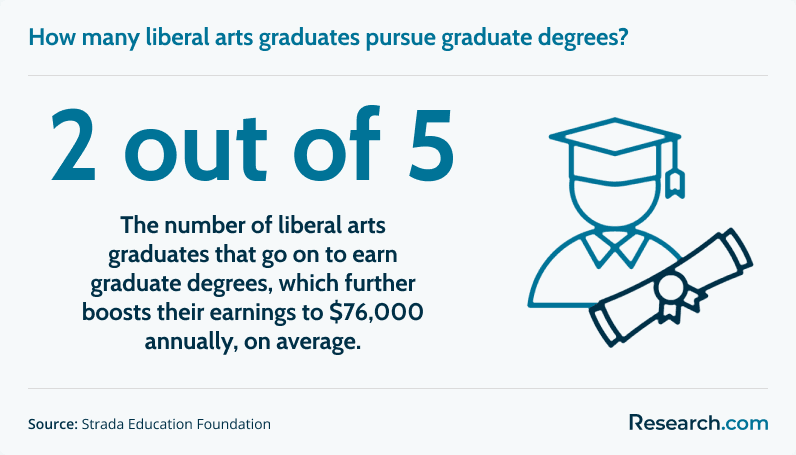
Many interdisciplinary studies graduates continue their education. About 42 percent pursue advanced degrees, compared to 38 percent across all majors. Graduate-level funding may include fellowships, assistantships, scholarships, employer support, or loans, depending on the program.
What are the prerequisites for enrolling in an online interdisciplinary studies degree?
Most online interdisciplinary studies bachelor’s programs require a high school diploma or GED. Some schools request standardized test scores, but many colleges have test-optional policies.
Typical admission requirements include:
- High school diploma or equivalent (GED)
- Minimum GPA, often around 2.0–2.5
- Completed application
- Official high school and college transcripts
- Personal statement or essay, if required
- Letters of recommendation for more selective programs
Transfer students should pay close attention to credit evaluations. A program that accepts more of your prior coursework can save time and money, but you should confirm whether those credits apply to major, concentration, elective, or general education requirements.
Graduates with this degree enter many employment areas. Around 15 percent work in management, another 15 percent work in healthcare roles, about 14 percent are employed in education or library positions, 10 percent work in business and financial operations, and 8 percent take administrative roles. The remaining 38 percent work in other industries, which reflects the degree’s broad application.
What courses are typically in an online interdisciplinary studies degree?
An online interdisciplinary studies degree usually blends humanities, social sciences, business, health, communication, technology, and applied courses. The exact curriculum depends on the concentrations you choose and the school’s degree requirements.
Like an affordable online GIS degree, an interdisciplinary program may combine technical, analytical, and communication-focused coursework. The difference is that interdisciplinary studies usually gives students more room to build a custom academic pathway.
Common course areas
- Introduction to Interdisciplinary Studies
- Research Methods
- Ethics and Critical Thinking
- Communication or Writing in the Disciplines
- Leadership or Organizational Behavior
- Social Science, Humanities, Business, Health, or Technology Electives
- Capstone or Senior Project
Students interested in health may add courses in nutrition, wellness, psychology, or health administration. This helps explain why about 25,200 interdisciplinary studies graduates work as dietitians and nutritionists, more than in many other majors.
Custom pathways
The strongest course plans are built around a goal. A student interested in human services might combine psychology, sociology, communication, and nonprofit management. Someone planning to pursue counseling or mental health work may later compare graduate options such as a cheap online master’s in psychology.
What types of specializations are available in an online interdisciplinary studies degree?
Specializations help turn a broad degree into a clearer professional pathway. Instead of choosing random electives, students should select focus areas that connect to a field, population, skill set, or graduate school goal.
| Specialization | Common Course Mix | May Fit Students Interested In |
| Health and Wellness | Nutrition, psychology, health science, wellness promotion | Health education, community wellness, healthcare support, graduate health programs |
| Business and Management | Marketing, finance, management, organizational behavior | Operations, human resources, entrepreneurship, project coordination |
| Education and Learning | Teaching methods, learning theory, curriculum design, educational psychology | Training, education support, instructional design, school-related roles |
| Social and Behavioral Sciences | Sociology, anthropology, psychology, human development | Human services, community programs, advocacy, public service |
| Arts and Humanities | Literature, history, philosophy, cultural studies, writing | Communication, nonprofit work, publishing, public programs |
| Technology and Innovation | Information technology, data analysis, digital communication | Tech support, digital operations, analytics-adjacent roles, product or project support |
Many graduates also use the degree as preparation for graduate school. In fact, 24.4 percent of interdisciplinary studies majors go on to earn a master’s degree. Another 4.8 percent pursue professional degrees, while 2.7 percent complete a PhD.
Choose a specialization by working backward from your next step: the job you want after graduation, the graduate program you may apply to, or the industry where you want to build experience.
How important is accreditation for an online interdisciplinary studies degree?
Accreditation is one of the most important checks when evaluating an online interdisciplinary studies program. It affects whether you can access federal financial aid, transfer credits, apply to many graduate programs, and present your degree confidently to employers.
Look for institutional accreditation from a recognized accreditor. For a broad degree like interdisciplinary studies, programmatic accreditation is usually less central than it is in fields such as nursing, education licensure, counseling, engineering, or accounting. However, if you plan to enter a regulated profession, you must confirm whether your course plan meets that profession’s requirements.
Accreditation also matters if you later pursue graduate business education, including pathways such as the cheapest online MBA programs. Graduate admissions offices commonly review whether your bachelor’s degree came from an accredited institution.
What networking and professional development opportunities can strengthen my career prospects?
Networking is especially important for interdisciplinary studies students because the degree is broad. You need to show employers how your courses, projects, and experiences connect to a specific role.
Look for online programs that offer virtual career fairs, internship support, resume reviews, mock interviews, employer panels, alumni networks, mentorship programs, student organizations, and portfolio-building assignments. These services can help you convert a flexible academic plan into job-ready evidence.
Students aiming for management or executive leadership may later compare graduate options such as the best value executive MBA programs. If that is your long-term direction, use your bachelor’s degree to build leadership, finance, communication, and analytics experience early.
What are the potential challenges of an online interdisciplinary studies degree?
The main challenge is clarity. Some employers may not immediately understand what “interdisciplinary studies” means or how it compares with a traditional major. That does not make the degree unusable, but it does mean you must explain your focus clearly.
Students may also need additional certifications, internships, portfolios, licensure, or graduate education for certain roles. A broad bachelor’s degree alone may not be enough for specialized careers that require technical training or state-regulated credentials.
This is why applied experience matters. Internships, capstones, volunteer work, research projects, and industry-recognized tools can help translate your broad education into evidence of job readiness. Students interested in business ownership or startup work may also want to understand outcomes connected to entrepreneurship jobs salary before choosing electives.
Can I fast-track my career with an online interdisciplinary studies degree?
You can use an online interdisciplinary studies degree to move more quickly toward career goals if you are strategic. The fastest path is not simply taking more credits; it is choosing the right credits, using transfer work, building experience, and adding targeted credentials.
Some students accelerate by transferring previous college credits, enrolling year-round, choosing 8-week courses, or selecting a degree-completion program. Others combine the degree with certificates in areas such as project management, data analysis, human resources, digital marketing, healthcare administration, or finance.
For example, students who want a stronger finance background may compare options such as accelerated finance degrees while using interdisciplinary studies to preserve flexibility across business, communication, and analytics.
How to Choose the Best Online Interdisciplinary Studies Degree
To choose the best online interdisciplinary studies degree, start with your goal and then evaluate the program’s flexibility, cost, transfer policy, accreditation, advising, and career support. In 2022, 117,737 interdisciplinary degrees were awarded, marking a 1.59% increase from the year before, so students have many options to compare.
Step-by-step checklist
- Define your career direction: Choose two or three target fields, such as business, healthcare, education, communication, technology, or public service.
- Build a coherent theme: Make sure your chosen disciplines connect. “Psychology + communication + human resources” is easier to explain than unrelated electives with no clear purpose.
- Verify accreditation: Confirm that the institution is accredited by a recognized accreditor before applying.
- Request a transfer credit review: Ask how many prior credits will count and where they apply in the degree plan.
- Compare total cost: Look beyond tuition and include fees, books, lost transfer credits, and time to completion.
- Review capstone and internship options: Prioritize programs that help you graduate with work samples or applied experience.
- Check career services: Ask whether online students receive the same advising, job search support, alumni access, and internship help as campus students.
- Plan for graduate school if needed: If your goal requires a master’s degree, confirm that your undergraduate coursework meets prerequisites.
Common mistakes to avoid
| Mistake | Why It Can Hurt You | Better Approach |
| Choosing a program only because it is flexible | Too much flexibility can lead to an unfocused transcript | Select concentrations that support a specific career story |
| Ignoring accreditation | Credits, financial aid, graduate school options, and employer recognition may be affected | Confirm institutional accreditation before enrolling |
| Comparing tuition only | Fees and lost transfer credits can make a cheaper-looking school more expensive | Compare total program cost and time to completion |
| Assuming online means easier | Online courses still require deadlines, research, writing, and exams | Choose a course load that fits your schedule realistically |
| Skipping internships or projects | A broad degree may be harder to explain without experience | Graduate with a portfolio, capstone, internship, or work samples |
| Assuming the degree meets licensure rules | Some careers require specific approved programs | Check state or professional requirements before choosing concentrations |
Good program selection is about fit, not just rankings. Choose the school that helps you turn a flexible degree into a focused plan with evidence employers can understand.
What career paths are available for graduates of an online interdisciplinary studies degree?
Graduates can work in education, communications, human resources, administration, community services, business support, healthcare support, nonprofit programs, and public-facing roles. Some outcomes are similar to broad liberal arts or faith-based programs, including affordable Christian studies programs online, where graduates may apply communication, service, leadership, and administrative skills in multiple settings.
Common career paths
Education is one of the most common areas for interdisciplinary studies graduates. About 21.65% become elementary or middle school teachers, earning around $46,000. Others work as preschool or kindergarten teachers (2.58%, average $31,000) or teacher assistants (2.00%, average $22,000).
| Career Area | Share or Example Listed | Average Income Listed |
| Elementary and middle school teaching | 21.65% | $46,000 |
| Preschool or kindergarten teaching | 2.58% | $31,000 |
| Teacher assistant roles | 2.00% | $22,000 |
| Customer service | 2.53% | $37,000 |
| Office administration | 2.47% | $33,000 |
| Human resources and training | 2.32% | $49,000 |
| Retail management | 2.22% | $47,000 |
| Sales and retail | 2.03% | $34,000 |
| Childcare | 2.04% | $23,000 |
Students can also use the degree as a base for creative or specialized work. Someone interested in writing, publishing, education content, or storytelling may later compare a creative writing degree online or related graduate programs.
What is the job market for graduates with an online interdisciplinary studies degree?
The job market for interdisciplinary studies graduates is broad, but it is also competitive. The degree can open doors in several fields, yet employers typically want evidence that you can perform a specific function. That evidence may come from internships, technical skills, writing samples, certifications, leadership roles, capstone projects, or prior work experience.
Graduates commonly pursue roles in education, business, healthcare support, human services, customer service, communications, training, and program coordination. Employers may value the communication, research, problem-solving, and cross-functional thinking that interdisciplinary students develop.
Job growth varies by occupation. For example:
- Human resources roles are projected to grow 6% from 2022 to 2032, according to the U.S. Bureau of Labor Statistics (BLS).
- Elementary and middle school teacher positions are expected to grow by 4% over the same period.
- Social and community service managers may see 9% growth, which is faster than average.
The best job-market strategy is to choose electives in areas with employer demand, build a portfolio, and learn to describe your degree clearly. Instead of saying you studied “a little of everything,” say you combined specific fields to solve a specific type of problem.
Current trends affecting interdisciplinary studies students
Interdisciplinary studies programs are becoming more relevant as workplaces rely on cross-functional teams. Many jobs now sit between departments: marketing uses analytics, healthcare uses communication and technology, education uses data and design, and business operations require both people skills and software fluency.
AI and automation also change the value of broad skills. Routine administrative tasks may become more automated, but workers who can interpret information, communicate with people, manage projects, and adapt across tools may remain useful in many settings. Students should not rely on broad knowledge alone; they should pair interdisciplinary coursework with digital literacy, writing ability, data awareness, and applied experience.
Employer expectations are also more skills-focused. A degree can help you qualify, but hiring managers often look for proof: projects, portfolios, internships, certificates, software experience, and examples of problem-solving. Online students should use every course project as a potential career asset.
Questions to ask before enrolling
- Is the institution accredited by a recognized accreditor?
- How many of my transfer credits will apply directly to degree requirements?
- Can I choose concentrations that align with my target career?
- Will the program help me complete an internship, capstone, portfolio, or applied project?
- Do online students receive career advising, resume help, and access to networking events?
- What is the total cost after tuition, fees, books, and transfer credit decisions?
- If I need licensure or certification, does this degree meet those requirements?
- What graduate programs have past students entered, and what prerequisites do they require?
References
- Bureau of Labor Statistics. Occupational outlook handbook. U.S. Department of Labor. https://www.bls.gov/ooh/
- National Center for Education Statistics. Digest of Education Statistics. U.S. Department of Education. https://nces.ed.gov/programs/digest/
- PayScale. Average salary by degree. PayScale degree salary data
- U.S. Department of Education, Federal Student Aid. Types of aid. https://studentaid.gov/understand-aid/types
- EducationData.org. Average cost of college & tuition. https://educationdata.org/average-cost-of-college
- Georgetown University Center on Education and the Workforce. The college payoff: More education doesn’t always mean more earnings. https://cew.georgetown.edu/cew-reports/collegepayoff2021/
- Inside Higher Ed. Trends in online learning and nontraditional education. https://www.insidehighered.com/news
Key Insights
- An online interdisciplinary studies degree is best for students who want flexibility but are willing to build a focused plan around clear career goals.
- The degree should not be treated as “general studies without direction.” The strongest students combine related fields, complete applied projects, and graduate with a portfolio or work experience.
- Cost can vary widely, with online programs ranging from $6,000 to $20,000 per year and some public universities costing less than private institutions.
- The median wage for interdisciplinary studies graduates is approximately $59,000, while PayScale reports an average salary of around $55,000 per year for someone with this degree.
- Education is a common pathway: 21.65% of interdisciplinary studies graduates work as elementary and middle school teachers, earning an average income of $46,000.
- Graduate school is common among interdisciplinary studies majors: 24.4% earn a master’s degree, 4.8% pursue a professional degree, and 2.7% complete a PhD.
- Accreditation, transfer credit acceptance, total program cost, career services, and capstone or internship options should be major decision factors.
- The degree may not meet requirements for licensed professions unless the program is specifically designed for that pathway, so students should verify licensure rules before enrolling.
Other Things You Should Know About Online Interdisciplinary Studies Degrees
Yes. Many regionally accredited programs accept up to 90 transfer credits for a 120-credit bachelor’s degree, including general education and prior college coursework. Schools usually require official transcripts and often set a minimum grade of C or better for transfer courses.
Admission requirements typically include a high school diploma or GED, meeting minimum GPA standards, and submitting standardized test scores where required. Some programs might also ask for letters of recommendation or a personal statement to assess eligibility.
In 2027, students pursuing affordable online interdisciplinary studies degrees can access federal financial aid, scholarships, and grants. These options vary by program, so it's essential to check each institution's website for specific aid opportunities and eligibility criteria.