
2027 What Can You Do With an Entrepreneurship Degree?

Co-Founder and Chief Data Scientist
An entrepreneurship degree is for people who want to build, finance, grow, or improve businesses—not only for students who already have a startup idea. In a workforce where 18.86% are entrepreneurs, the degree can support several paths: launching a company, joining a startup, moving into consulting, leading product or growth teams, managing a franchise, or using entrepreneurial thinking inside an established organization.
This guide explains what you can do with an entrepreneurship degree in 2026, which roles and industries commonly fit this background, when the degree is worth it, and when another business credential may be a better choice. You will also learn how to compare entrepreneurship programs, avoid costly mistakes, and decide whether an MBA, finance degree, economics graduate program, DBA, or executive program makes sense later.
Quick Answer: What Can You Do With an Entrepreneurship Degree?
With an entrepreneurship degree, you can start your own business, work in startup operations, become a business consultant, move into product management, enter corporate strategy, manage e-commerce operations, support social enterprises, or pursue finance-related roles such as financial analyst or venture capital associate. The degree is most useful when it includes practical experience—business planning, market validation, internships, pitch competitions, incubators, consulting projects, or a capstone venture.
| Best fit | Possible path | Why entrepreneurship training helps |
| Future founder | Small business owner, startup founder, franchise owner | Builds skills in market research, budgeting, pricing, customer discovery, and risk management. |
| Corporate career seeker | Product manager, operations manager, marketing manager, corporate strategist | Shows employers you can identify opportunities, test ideas, and work across business functions. |
| Advisor or analyst | Business consultant, financial analyst, startup advisor | Develops problem-solving, financial analysis, and business model evaluation skills. |
| Mission-driven professional | Social entrepreneur, nonprofit consultant, impact investment analyst | Combines revenue strategy with measurable social or environmental goals. |
Key Things to Know Before Choosing This Career Path
- Entrepreneurial careers reward persistence. Failed tests, rejected pitches, and changing customer needs are part of the learning curve.
- The field changes quickly, so graduates need to keep improving their knowledge of technology, digital marketing, finance, operations, and customer behavior.
- Relationships matter. Mentors, alumni, investors, founders, suppliers, and industry peers can create opportunities that coursework alone cannot.
- The core of entrepreneurship is not simply “starting a business.” It is finding a problem, proving that people will pay for a solution, and building a model that can survive.
- A degree provides structure, but experience is essential. Internships, freelance work, side businesses, startup weekends, incubators, and consulting projects often make the credential more valuable.
- What can you do with an entrepreneurship degree in 2026?
- Which industries hire entrepreneurship graduates?
- How does an entrepreneurship degree prepare you for business consulting?
- Can an entrepreneurship degree lead to venture capital?
- Which advanced degrees can strengthen an entrepreneurship career?
- Is an entrepreneurship degree worth the investment?
- What trends are changing entrepreneurship careers?
- What challenges should entrepreneurship graduates expect?
- Can this degree help you move into executive leadership?
- How does the cost compare with an MBA? Compare this with executive leadership options
- How can the degree improve long-term career resilience?
- What can entrepreneurship graduates do in social enterprises?
- How does entrepreneurship training build financial skills?
- Should you add graduate-level economics training?
- How can project management improve entrepreneurial execution?
- What freelance careers fit an entrepreneurship degree?
- What kinds of employers value entrepreneurship graduates?
- Should you earn an MBA after an entrepreneurship degree?
- How can executive development programs improve entrepreneurial leadership? Review MBA considerations first
What can you do with an entrepreneurship degree in 2026?
An entrepreneurship degree can lead to founder, management, consulting, finance, marketing, product, operations, and strategy roles. It is not a guarantee of business success, but it can give you a structured way to evaluate opportunities, manage money, understand customers, build teams, and make decisions under uncertainty. For students comparing options, entrepreneurship may also appear alongside business-focused pathways and shorter degree options that can lead to strong earnings.
In the U.S., 62% of adults consider entrepreneurship a good career choice because of the personal and broader benefits associated with it. Still, the best outcome depends on how you use the degree. Graduates who combine coursework with sales experience, financial literacy, digital skills, and real business projects tend to have more flexible options.
Common career paths and salary outlook
The roles below show how entrepreneurship training can translate into employment or self-employment. Salaries vary by location, experience, industry, business performance, and employer size, so use these figures as planning benchmarks rather than promises.
| Role | What the role does | Median annual salary | Projected job growth | Typical education requirement |
| Business Consultant/Management Consultant | Studies business problems, recommends operational or strategic improvements, and helps clients implement changes. | $95,290 | 10% | A bachelor’s degree in entrepreneurship, business administration, or a related field; some employers prefer an MBA. |
| Product Manager | Guides product planning, customer research, launch strategy, performance tracking, and coordination across engineering, sales, and marketing. | $127,000 | 6% | A bachelor’s degree in entrepreneurship, business, or a related field; product experience or an MBA can help. |
| Financial Analyst | Reviews financial data, market conditions, business performance, and investment opportunities to support financial decisions. | $96,220 | 8% | A bachelor’s degree in entrepreneurship, finance, economics, or business administration. |
| Marketing Manager | Plans campaigns, manages branding, studies target markets, and connects marketing strategy with business growth goals. | $140,040 | 6% | A bachelor’s degree in entrepreneurship, marketing, or business administration; digital marketing and branding experience are often useful. |
| Sales Manager | Leads sales teams, sets targets, analyzes performance, improves sales processes, and supports revenue growth. | $127,490 | 4% | A bachelor’s degree in entrepreneurship, business, or marketing; employers usually expect proven sales experience. |
| Corporate Strategist/Business Strategy Manager | Builds long-term growth plans, studies competitors, evaluates markets, and identifies ways a company can gain advantage. | $120,130 | 7% | A bachelor’s degree in entrepreneurship, business, or economics; an MBA may be useful for advancement. |
| Franchise Owner | Operates a business under an established brand, managing staffing, customer service, marketing, operations, and finances. | $80,000–$200,000+ | Dependent on industry trends | No formal degree is required, but entrepreneurship training can help with business management. |
| Operations Manager | Improves daily workflows, staffing, supply chain processes, productivity, and service delivery. | $98,100 | 5% | A bachelor’s degree in entrepreneurship, business, or operations management. |
| E-commerce Manager | Manages online sales channels, site performance, inventory coordination, customer experience, and digital marketing. | $105,000 | 10% | A bachelor’s degree in entrepreneurship, digital marketing, or business. |
| Small Business Owner | Creates and manages a business, including sales, budgeting, hiring, product decisions, compliance, and growth planning. | $70,000 - $250,000+ | High potential but dependent on market trends | No formal degree is required, but entrepreneurship coursework can provide essential business knowledge. |
Who should consider an entrepreneurship degree?
- Students who want flexibility: The degree can support self-employment, startup work, corporate roles, consulting, and nonprofit innovation.
- Future business owners: It can help you learn how to test demand, manage cash flow, price products, and avoid common startup mistakes.
- Professionals who like ambiguity: Entrepreneurship careers often involve incomplete information, changing priorities, and fast decisions.
- People who want practical business exposure: Programs with incubators, internships, competitions, and client projects are especially useful.
Who may be better served by another degree?
- Students seeking a highly specialized finance career: A finance or accounting degree may be more direct for roles requiring deep technical finance preparation.
- Students pursuing licensed professions: Entrepreneurship alone does not meet licensure requirements for fields such as accounting, law, healthcare, or real estate licensing where specific rules apply.
- Students who want a predictable career ladder: Entrepreneurship can open many doors, but the path is often less linear than accounting, nursing, engineering, or teaching.
Which industries hire entrepreneurship graduates?
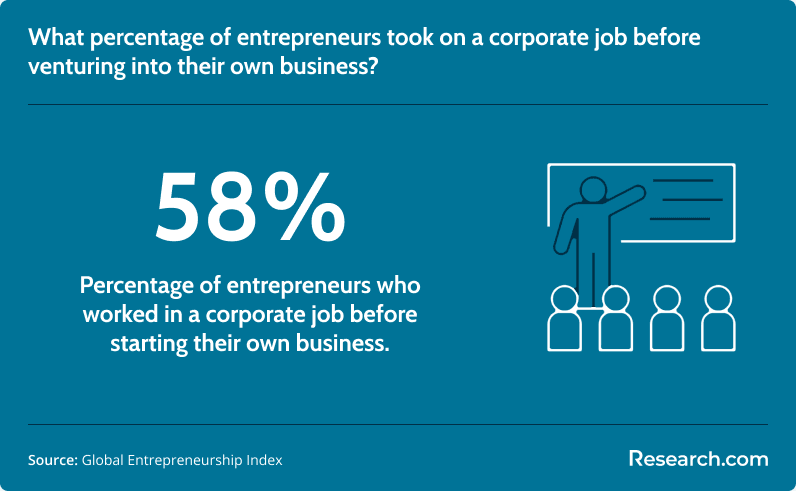
Entrepreneurship graduates can apply their skills in almost any sector because most organizations need people who can identify market opportunities, improve operations, control costs, win customers, and build new revenue streams. Among entrepreneurs, 58% worked in a corporate job before starting their own business, which shows that many founders develop industry knowledge before launching independently.
If you are still comparing fields of study, entrepreneurship can be evaluated alongside other flexible online degree options, especially if you need a program that fits around work or family responsibilities.
| Industry | Common roles | Best fit for graduates who enjoy |
| Technology and software | Startup founder, product manager, tech consultant | Building scalable products, testing software ideas, and working with technical teams. |
| E-commerce and retail | E-commerce business owner, retail startup founder, Amazon FBA seller | Digital sales, product sourcing, customer acquisition, and brand development. |
| Finance and venture capital | Venture capitalist, financial consultant, fintech entrepreneur | Evaluating business models, studying investments, and helping companies raise or manage capital. |
| Healthcare and biotechnology | Healthtech founder, medical device innovator, healthcare consultant | Solving complex service, technology, or patient-access problems in regulated environments. |
| Real estate and property development | Real estate investor, property management entrepreneur, real estate tech founder | Asset management, local market analysis, negotiation, and operations. |
| Marketing and digital media | Digital marketing agency owner, content creator, brand strategist | Audience building, storytelling, analytics, paid advertising, and client work. |
| Hospitality and food services | Restaurant or café owner, food and beverage entrepreneur, hospitality tech founder | Customer experience, service design, operations, and local market positioning. |
| Green energy and sustainability | Sustainable business founder, renewable energy entrepreneur, recycling startup operator | Environmental problem-solving, resource efficiency, and mission-driven business models. |
| Education and EdTech | Online course creator, educational technology founder, tutoring or coaching business owner | Learning design, digital products, training, and student support. |
| Entertainment and creative industries | Media production founder, gaming entrepreneur, event planning startup owner | Creative production, audience engagement, sponsorships, and project coordination. |
How to choose the right industry
- Start with a problem you understand: Founders and consultants are more credible when they know the customer’s pain points.
- Study the cost structure: A software startup, restaurant, consulting practice, and real estate venture require very different amounts of capital.
- Check regulation and licensing: Healthcare, finance, education, real estate, and food services may involve rules beyond a business degree.
- Test before committing: Use internships, freelance projects, prototypes, preorders, customer interviews, or part-time work to validate your interest.
How does an entrepreneurship degree prepare you for business consulting?
An entrepreneurship degree can be a strong foundation for business consulting because consultants are paid to diagnose problems, evaluate opportunities, and recommend practical improvements. Programs that include case studies, financial modeling, market research, and live client projects can be especially valuable. Students comparing cost-conscious routes may also want to review affordable online college options before choosing a program.
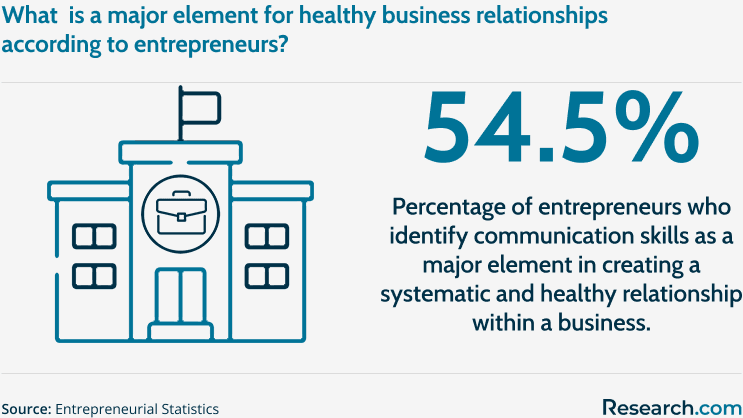
Communication is a central consulting skill. Among entrepreneurs, 54.55% identify communication skills as a major element in creating a systematic and healthy relationship within a business. In consulting, that skill shows up in client interviews, presentations, written recommendations, change management, and stakeholder buy-in.
Consulting skills developed through entrepreneurship coursework
| Skill area | How the degree helps | How consultants use it |
| Business strategy | Students learn competitive analysis, business models, customer segmentation, and growth planning. | Consultants identify why a company is underperforming and recommend realistic growth options. |
| Problem-solving | Coursework often requires students to test assumptions and work with incomplete information. | Consultants break broad business issues into specific, measurable problems. |
| Financial analysis | Programs typically cover budgeting, forecasting, pricing, cost controls, and capital needs. | Consultants evaluate profitability, cash flow, resource allocation, and return on proposed changes. |
| Operations improvement | Students study lean processes, workflows, vendor relationships, and efficiency. | Consultants help clients reduce waste, improve service delivery, and streamline processes. |
| Market research | Entrepreneurship training emphasizes customer discovery, trend analysis, and demand validation. | Consultants support product launches, expansion plans, and customer acquisition strategies. |
| Leadership and communication | Pitching, negotiation, team projects, and presentations build practical communication habits. | Consultants present findings, lead meetings, and help teams adopt recommendations. |
| Risk management | Students learn to evaluate financial, legal, operational, and competitive risks. | Consultants help clients prepare for disruption, avoid costly assumptions, and plan contingencies. |
How to become a stronger consulting candidate
- Build a portfolio with sample business plans, market analyses, financial models, process maps, or client projects.
- Gain experience through internships, student consulting groups, freelance projects, or small business advising.
- Learn spreadsheet modeling, presentation design, data visualization, and basic analytics tools.
- Choose a consulting focus, such as startups, operations, marketing, e-commerce, nonprofit sustainability, or franchise growth.
- Practice explaining recommendations clearly. A smart analysis has limited value if clients cannot act on it.
Can an entrepreneurship degree lead to venture capital?
An entrepreneurship degree can help you move toward venture capital, but it is rarely the only requirement. Venture capital firms usually look for a mix of financial analysis ability, startup experience, deal exposure, industry knowledge, and a strong professional network. Many VCs come from finance, consulting, technology, or founder backgrounds; entrepreneurship training can be useful because it teaches you how startups are built and why many fail.
Among small-business owners, 59% use loans for business expansion. That detail matters because venture capital is only one form of startup funding. A good investor understands debt, equity, bootstrapping, grants, revenue financing, crowdfunding, and founder incentives.
If you want to finish your undergraduate credential faster before gaining startup or investment experience, you may want to compare accelerated bachelor’s degree options.
How entrepreneurship training supports venture capital work
- Startup evaluation: You learn how founders define customers, test demand, position products, and search for scalable business models.
- Financial and investment thinking: Coursework in forecasting, capital planning, equity financing, IPOs, and exit strategies can support deal analysis.
- Network development: Entrepreneurship programs may connect students with incubators, accelerators, mentors, alumni founders, and local investors.
- Due diligence: Training in market research, competitive analysis, contracts, intellectual property, and business law helps you evaluate startup risk.
- Founder empathy: Launching a project yourself helps you understand product pivots, fundraising pressure, hiring constraints, and cash flow stress.
Typical steps from entrepreneurship degree to venture capital
- Develop strong finance skills through coursework, internships, or a finance-related role.
- Work with startups as a founder, operator, analyst, consultant, accelerator intern, or product team member.
- Build a public record of startup insight through investment memos, market maps, pitch reviews, or sector research.
- Network with founders, angel investors, accelerator leaders, and alumni who work in early-stage investing.
- Consider graduate study only if it fills a real gap in finance, strategy, leadership, or network access.
Which advanced degrees can strengthen an entrepreneurship career?
Advanced education can be useful when it solves a specific career problem: moving into executive leadership, improving finance skills, entering consulting, teaching business, conducting applied research, or expanding your network. It is less useful if you are using another degree to delay testing a business idea.
A Doctor of Business Administration may fit experienced professionals who want to move into senior strategy, consulting, research-informed leadership, or business education. If that aligns with your goals, compare online DBA programs carefully by accreditation, faculty expertise, research requirements, residency expectations, and total cost.
| Advanced option | Best for | When it may not be necessary |
| MBA | Professionals who want broader leadership training, stronger networks, corporate advancement, or help scaling an existing business. | If you need immediate startup validation more than another credential. |
| DBA | Experienced leaders who want applied research depth, consulting credibility, or senior strategic roles. | If you are early in your career and still need operating experience. |
| Finance bachelor’s or graduate finance training | Entrepreneurs who need deeper capital budgeting, valuation, investment, or risk analysis skills. | If your business model does not require advanced financial analysis. |
| Economics master’s | Professionals focused on markets, pricing, policy, forecasting, or quantitative strategy. | If you need practical sales, operations, or customer acquisition skills first. |
| Project management degree | Founders and operators who struggle with execution, timelines, resources, and cross-functional teams. | If your role is primarily investment analysis or early-stage ideation. |
Is an entrepreneurship degree worth the investment?
The return on investment depends on cost, school quality, transfer credit, time to completion, work experience, and how clearly the program connects to your goals. The degree can be worthwhile if it helps you gain practical business skills, build a portfolio, access mentors, and qualify for roles in management, consulting, product, operations, marketing, finance, or startup support.
It may be a weaker investment if the program is expensive, offers little experiential learning, has unclear accreditation, lacks career support, or does not help you build skills employers and customers will pay for. Some graduates later choose MBA programs to add broader training in finance, leadership, operations, and strategy.
Questions to ask before enrolling
- Is the institution accredited, and is the business school recognized by employers in my target region or industry?
- Does the program include internships, incubators, competitions, client consulting, or a venture capstone?
- What is the total cost after fees, books, technology charges, and lost work time?
- Can I transfer credits or earn credit for prior learning?
- Does the curriculum include accounting, finance, marketing analytics, business law, operations, and sales?
- What career outcomes do graduates report, and are those outcomes verified by the school?
- Will the degree help me get a job if my startup does not work?
What trends are changing entrepreneurship careers?
Entrepreneurship careers are being reshaped by digital tools, AI-supported workflows, remote teams, changing consumer expectations, sustainability pressures, and more competition for attention and capital. These trends do not eliminate the need for business fundamentals; they make fundamentals more important. A founder still needs to understand customers, cash flow, unit economics, distribution, hiring, compliance, and execution.
AI tools can help entrepreneurs draft marketing copy, analyze customer feedback, summarize research, automate support, and prototype ideas faster. However, graduates should not rely on AI as a substitute for customer interviews, financial discipline, legal review, or market testing. Professionals who want a broader structured business credential for navigating disruption may compare online accredited MBA programs.
Employer expectations in 2026
- Digital fluency: Graduates should understand e-commerce platforms, CRM tools, analytics dashboards, automation tools, and AI-assisted workflows.
- Evidence-based decisions: Employers and investors expect market research, financial models, customer data, and measurable results.
- Cross-functional work: Entrepreneurial roles often sit between marketing, finance, product, operations, and leadership.
- Adaptability: Business models change quickly, so graduates need to learn continuously rather than relying only on classroom knowledge.
- Ethical and sustainable thinking: Many customers, funders, and employees pay attention to social impact, transparency, and environmental practices.
What challenges should entrepreneurship graduates expect?
Entrepreneurship graduates may face heavy competition, limited access to early-stage capital, uncertain demand, fast-changing technology, regulatory complexity, and pressure to prove results quickly. A degree can help you think through these problems, but it cannot remove risk.
If you want a stronger general business foundation before specializing, reviewing the cheapest business administration degree online options can help you compare lower-cost alternatives.
| Common challenge | Why it matters | Better approach |
| Launching without validating demand | A product can be well designed and still fail if customers do not want it or will not pay enough. | Interview customers, test landing pages, run small pilots, and measure willingness to pay. |
| Underestimating cash flow | Profitable-looking businesses can fail when payments arrive late or expenses rise. | Build conservative forecasts and track cash weekly, not only monthly. |
| Choosing a program only by tuition | A cheap program can become costly if it lacks accreditation, support, transfer policies, or practical learning. | Compare total cost, accreditation, outcomes, curriculum, faculty, and experiential opportunities. |
| Assuming rankings guarantee results | Rankings do not determine your network, skills, internship quality, or business execution. | Use rankings as one input, then verify fit, cost, and career support. |
| Ignoring legal and regulatory issues | Licensing, contracts, taxes, employment rules, and intellectual property can create expensive problems. | Use qualified legal and tax guidance when decisions carry risk. |
| Over-relying on motivation | Passion helps, but businesses need repeatable sales, margins, systems, and customer retention. | Build routines around sales, operations, financial tracking, and customer feedback. |
Can this degree help you move into executive leadership?
An entrepreneurship degree can support leadership development because it trains students to make decisions, manage risk, identify opportunities, and coordinate people around business goals. Those skills are relevant to executive roles, especially in growth strategy, product innovation, operations, business development, and corporate transformation.
However, executive advancement usually also requires years of measurable results, people management, financial responsibility, and industry credibility. Professionals who want deeper leadership preparation may explore affordable doctoral programs in leadership to compare whether advanced study fits their long-term goals.
How does the cost of an entrepreneurship degree compare with an MBA?
An undergraduate entrepreneurship degree usually focuses on foundational business knowledge, opportunity recognition, early-stage venture planning, and practical management. An MBA is typically designed for professionals seeking broader strategic training, leadership development, and network access. The better choice depends on your career stage, cost tolerance, and goals.
Before committing to graduate school, review the average cost of MBA degree information and compare it with the total cost of your entrepreneurship degree. Include tuition, fees, books, technology costs, travel or residency requirements, financing charges, and income you may lose if you reduce work hours.
| Option | Often makes sense when | Be cautious if |
| Entrepreneurship bachelor’s degree | You need a first business credential, want broad career flexibility, or plan to build practical startup skills early. | The program lacks accreditation, career services, or hands-on venture experience. |
| MBA | You already have work experience and want leadership roles, stronger networks, advanced strategy, or corporate mobility. | You expect the MBA alone to create a business idea, funding, or guaranteed salary increase. |
| Executive MBA | You are an experienced professional seeking leadership growth while continuing to work. | You do not yet have the management experience needed to benefit from executive-level coursework. |
How can an entrepreneurship degree improve long-term career resilience?
Career resilience comes from being able to adapt when markets, employers, technology, or customer needs change. Entrepreneurship training supports that adaptability by teaching opportunity recognition, resourcefulness, risk assessment, experimentation, and business model thinking.
Graduates can use these skills to move between self-employment and employment, shift industries, build side income, lead innovation inside companies, or recover from a failed venture. Some professionals later add graduate business training, such as AACSB accredited online MBA programs, to deepen leadership, operations, and strategy expertise.
What can entrepreneurship graduates do in social enterprises?
Entrepreneurship graduates can help social enterprises build financially sustainable models around social, environmental, or community goals. A social enterprise is not simply a charity and not simply a traditional business; it must balance mission impact with revenue, operations, accountability, and long-term viability. For a broader definition, review this explanation of roles in social enterprises.
Social enterprise roles that fit entrepreneurship graduates
- Social entrepreneur: Starts a mission-driven venture that addresses issues such as poverty, education, healthcare access, sustainability, or community development while working toward financial stability.
- Impact investment analyst: Evaluates organizations that aim to generate both financial returns and measurable social or environmental outcomes.
- Nonprofit consultant or advisor: Helps nonprofits improve fundraising, earned revenue, grant strategy, operations, donor engagement, and impact measurement.
- Product innovation and sustainable development specialist: Designs products or services that reduce waste, improve access, or serve communities with unmet needs.
- Policy and advocacy leader: Works with governments, NGOs, and coalitions to support funding, incentives, standards, and public awareness for mission-driven businesses.
How to evaluate a social enterprise opportunity
- What social or environmental outcome is the organization trying to measure?
- How does the business earn revenue, and is that revenue reliable?
- Does the mission create operational complexity or competitive advantage?
- Who benefits, and how is impact verified?
- Can the organization grow without weakening its mission?
How does entrepreneurship training build financial skills?
Entrepreneurship programs usually include budgeting, pricing, cash flow planning, funding strategy, financial forecasting, and risk management. These skills are useful whether you own a business, advise clients, lead a department, or evaluate startups.
Financial literacy is especially important for founders because poor cash management can damage even a promising business. If you want a more finance-focused credential, compare best online finance bachelor’s degree programs to see whether a dedicated finance path better fits your goals.
Should you add graduate-level economics training?
Economics can strengthen an entrepreneurship background when your goals involve market forecasting, pricing strategy, policy analysis, competitive dynamics, or quantitative decision-making. It can also help founders understand how inflation, interest rates, labor markets, regulation, and consumer behavior affect business strategy.
Graduate economics may be less necessary if your immediate need is sales experience, product testing, marketing execution, or operations management. If you want deeper market and analytical training, review affordable online master economics options and compare prerequisites, quantitative expectations, and career fit.
How can project management improve entrepreneurial execution?
Many business ideas fail not because the idea is weak, but because execution is disorganized. Project management helps entrepreneurs manage timelines, budgets, teams, vendors, risks, and deliverables. It is especially useful for product launches, client services, construction, technology implementation, events, and operations-heavy ventures.
If you want a structured credential focused on delivery, an accelerated project management degree can add practical tools for planning, scheduling, resource management, agile workflows, and stakeholder communication.
What freelance careers fit an entrepreneurship degree?
There are more than 31 million entrepreneurs in the US alone, and freelancing is one way to apply entrepreneurial skills without immediately building a larger company. Freelancers still need to sell, price services, manage clients, track finances, deliver quality work, and create systems. In that sense, freelancing can function as an entrepreneurial career path.
Freelance opportunities for entrepreneurship graduates
| Freelance path | Example services | Skills that matter most |
| Business consulting and startup advising | Startup consulting, small business coaching, market research analysis, business planning | Strategy, interviewing, market research, financial modeling, and client communication. |
| Digital marketing and social media | SEO consulting, social media management, content strategy, PPC ad management | Analytics, copywriting, campaign testing, platform knowledge, and reporting. |
| E-commerce and dropshipping support | Dropshipping operations, Amazon FBA support, Etsy or Shopify consulting, product sourcing | Supplier research, product positioning, fulfillment, pricing, and customer experience. |
| Financial and business planning | Business plan writing, budgeting support, cash flow planning, fundraising preparation | Financial literacy, presentation skills, forecasting, and investor communication. |
| Branding and design-related services | Logo and brand identity coordination, website design, packaging consulting | Brand strategy, project management, customer research, and creative vendor coordination. |
How to turn freelancing into a stronger business
- Choose a narrow client problem instead of offering “general business help.”
- Create a simple portfolio with measurable examples, even if they come from school projects or volunteer work.
- Set prices based on value, scope, timeline, and expertise—not only hours worked.
- Use contracts, clear deliverables, and payment milestones.
- Track client acquisition cost, repeat business, referrals, and profit margin.
What kinds of employers value entrepreneurship graduates?
Entrepreneurship graduates are not limited to owning businesses. Many employers want people who can act with initiative, spot inefficiencies, test ideas, and support growth. If speed and flexibility are priorities while earning your credential, you may also compare fast online degrees.
- Startups and technology companies: These employers value adaptability, problem-solving, customer focus, and comfort with fast change.
- Consulting firms: Entrepreneurship graduates can bring useful skills in analysis, business development, market research, and practical recommendations.
- Corporate innovation and strategy teams: Large organizations often need employees who can evaluate new markets, test products, and challenge slow internal processes.
- Franchise companies: Franchisors and franchisees need people who understand operations, marketing, financial controls, and local market growth.
- Nonprofits and social enterprises: Mission-driven organizations need entrepreneurial leaders who can improve funding models, partnerships, and sustainability.
- Business incubators and accelerators: These organizations support early-stage founders and may hire people who can mentor, analyze business models, and coordinate programming.
Entry-level job titles to search
- Business development associate
- Startup operations coordinator
- Market research analyst
- Product operations associate
- Sales development representative
- Marketing coordinator
- Founder associate
- Program coordinator at an incubator or accelerator
- Junior business analyst
Should you earn an MBA after an entrepreneurship degree?
An MBA can be valuable after an entrepreneurship degree if it supports a clear goal: scaling a company, moving into senior management, entering consulting or finance, strengthening your network, or filling major gaps in strategy, accounting, operations, or leadership. It is not automatically necessary for every founder.
There are accelerated MBA programs online for students who want a faster graduate pathway. Education can also provide an advantage even when business ownership has no formal qualification requirement. In fact, 54% of small business owners attained a bachelor’s degree or higher.
When an MBA may be worth it
- You are ready to scale: MBA coursework in finance, operations, strategy, and leadership may help you manage a growing company more effectively.
- You want corporate leadership roles: Some consulting, investment banking, corporate strategy, and senior management paths favor or require MBA-level training.
- You need a stronger network: MBA programs can connect students with alumni, investors, founders, recruiters, and potential partners.
- You have skill gaps: If you lack depth in finance, supply chain management, global strategy, analytics, or leadership, an MBA may provide structure.
When an MBA may not be the best next step
- You have not yet tested your business idea with real customers.
- You would need to take on debt without a clear career or business plan.
- You need technical skills, industry experience, or sales practice more than broad management coursework.
- You are choosing graduate school mainly because you are unsure what to do next.
How can executive development programs improve entrepreneurial leadership?
Executive development programs can help experienced entrepreneurs and managers sharpen strategic decision-making, team leadership, negotiation, innovation management, and organizational change skills. These programs are most useful when you already manage people, budgets, clients, investors, or a growing operation.
Professionals who want graduate-level leadership training with a management focus may compare affordable executive MBA programs. Before enrolling, confirm the program format, cohort experience, employer recognition, time commitment, and total cost.
How to choose the right entrepreneurship program
The best entrepreneurship program is not always the most famous or the most expensive. It is the one that matches your goals, teaches marketable skills, offers practical experience, and fits your budget.
- Verify accreditation: Confirm institutional accreditation and, when relevant, business school accreditation.
- Look for applied learning: Prioritize programs with internships, incubators, pitch competitions, consulting projects, or a venture-building capstone.
- Review the full curriculum: Make sure it includes accounting, finance, marketing, sales, business law, operations, analytics, leadership, and strategy.
- Compare total cost: Include tuition, fees, books, software, travel, and the opportunity cost of time away from work.
- Ask about outcomes: Request data on internships, job placement, business launches, alumni support, and employer partnerships.
- Check flexibility: Online, hybrid, part-time, accelerated, and transfer-friendly formats can affect completion time and affordability.
- Evaluate support: Strong advising, mentoring, career services, alumni access, and networking events can make the degree more practical.
Common mistakes to avoid
- Assuming the degree alone will make you an entrepreneur: A credential helps, but business results come from testing, selling, learning, and executing.
- Ignoring accreditation: Unaccredited programs may create problems with transfer credits, graduate admissions, employer recognition, or financial aid.
- Choosing only by tuition: A low-cost program with weak support or limited experiential learning may not deliver the best value.
- Skipping financial planning: Founders need to understand cash flow, taxes, funding options, and realistic startup costs.
- Relying only on rankings: Rankings can help with research, but your decision should also consider fit, outcomes, cost, and hands-on learning.
- Assuming online programs are all the same: Compare interaction, faculty access, project requirements, networking, and career services.
- Waiting too long to gain experience: Start building proof of skill through internships, freelance work, part-time ventures, or student consulting before graduation.
Questions to ask alumni or current students
- Which courses were most useful after graduation?
- Did the program help you build a real business, consulting portfolio, or employer-ready project?
- How accessible were faculty, mentors, and career advisors?
- Did classmates build useful professional relationships?
- What do you wish you had known before enrolling?
- Did the program help with internships, funding introductions, competitions, or job opportunities?
References
- Outsource Accelerator. (n.d.). Entrepreneurship statistics.
- Practical Ecommerce. (n.d.). Charts: Global unicorn trends.
- Search Logistics. (n.d.). Entrepreneurial statistics.
- TeamStage. (n.d.). Entrepreneurship statistics.
- USPAACC. (2025). BLS: Strategic thinking for entrepreneurs.
Key Insights
- An entrepreneurship degree can lead to founder, consulting, product, marketing, operations, finance, social enterprise, franchise, and corporate strategy roles.
- The degree is most valuable when it includes practical experience, not just theory. Look for internships, incubators, pitch competitions, consulting projects, and capstone ventures.
- Entrepreneurship is a flexible path, but it is not risk-free. Graduates need financial discipline, market validation, customer research, and strong execution habits.
- Salary outcomes vary widely. Roles such as marketing manager, product manager, sales manager, and corporate strategist can offer strong pay, while founder income depends heavily on business performance.
- An MBA, DBA, finance degree, economics master’s, project management credential, or executive MBA can help—but only when it fills a clear skill, leadership, or network gap.
- Before enrolling, compare accreditation, total cost, transfer credit, curriculum depth, career support, alumni access, and real-world learning opportunities.
- The smartest entrepreneurship students do not wait until graduation to begin. They test ideas, build portfolios, talk to customers, freelance, intern, and learn from small failures early.
Other Things You Should Know About an Entrepreneurship Degree
In 2027, an entrepreneurship degree offers diverse career opportunities. Graduates can pursue careers as startup founders, business consultants, or innovation managers. Additionally, they can work in corporate entrepreneurial roles, helping established companies innovate and grow. The degree provides essential skills for navigating dynamic business environments and launching successful ventures.
In 2026, the average starting salary for entrepreneurship degree graduates varies by industry and location, typically ranging from $50,000 to $70,000 annually. Roles in tech startups and venture capital tend to offer higher initial compensation compared to social enterprises and nonprofit sectors.


