
2027 Certificate vs. Degree in Human Resources: Explaining the Difference

Co-Founder and Chief Data Scientist
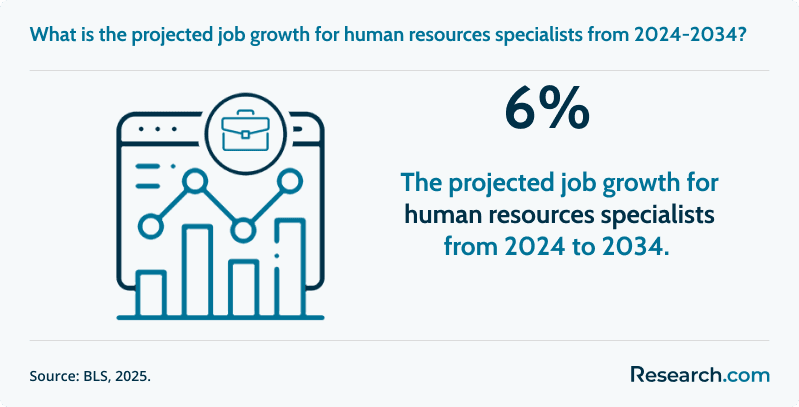
Job seekers and current employees often face the difficulty of discerning the functional difference between a human resources certificate and a human resources degree, specifically, which credential provides a greater advantage for career growth. Choosing the right educational path is critical, especially since employment of human resources (HR) specialists is projected to grow 6% until 2034, highlighting the field's sustained demand.
The Research.com team, leveraging over ten years of expertise in career planning and using only credible sources, has prepared this comprehensive analysis. By detailing the difference in depth, duration, cost, and career impact of each option, this article will equip you with the strategic information needed to make an informed choice for your professional future.
Key Things You Should Know About Certificate vs. Degree in Human Resources
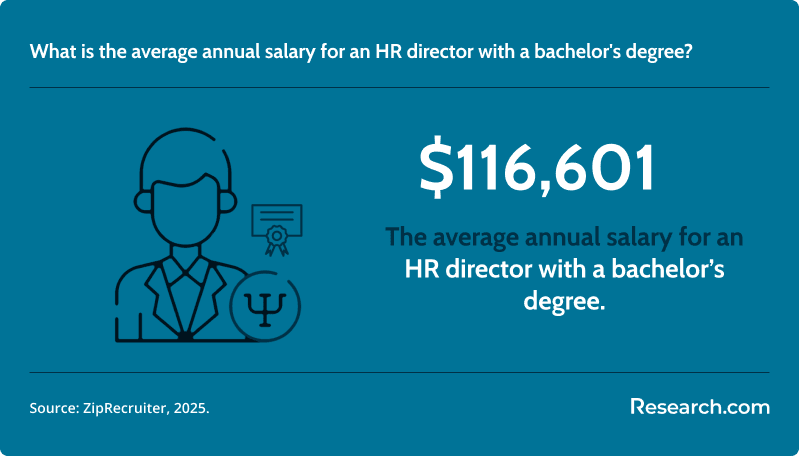
- HR degrees offer comprehensive, multi-year education for senior roles, providing a pathway to management positions where professionals with a bachelor's degree can earn an annual average of about $116,601, while certificates are shorter, focused programs for specialized skills or career pivoting.
- While a bachelor's degree provides a stronger foundation for senior leadership, a certificate serves as a valuable, quicker entry point for career changers, and credits from a certificate program are often transferable to a full degree.
- The credibility of both credentials relies heavily on institutional reputation, especially for online degrees, with 87.4% of employers hiring graduates with online degrees, and both options must align with accreditations like regional and professional standards (e.g., SHRM) to ensure market respect.
- What is the difference between a human resources certificate and a human resources degree? HR Certificate vs. Degree
- How does an HR degree vs. an HR certificate impact advancement to senior-level roles? How does an HR degree vs. an HR certificate impact advancement to senior-level roles?
- Is the average HR professional salary higher with a bachelor's degree or a certificate in HR? Average Salary
- Are online HR certificate programs equally respected by employers as in-person programs? Online vs. Traditional Degrees
- Which HR credential is better for transitioning careers into human resources? Which HR credential is better for transitioning careers into human resources?
- What is the typical cost for an HR certificate program vs. an HR degree? Cost Comparison
- How do HR certificate prerequisites differ from HR degree requirements? Program Prerequisites
- Can I complete an HR graduate certificate faster than a full master's degree in HR? Can I complete an HR graduate certificate faster than a full master's degree in HR?
- Can combining an HR credential with an MBA accelerate my career advancement? Can combining an HR credential with an MBA accelerate my career advancement?
- If I already have a non-HR bachelor's degree, is an HR certificate enough to pivot my career? If I already have a non-HR bachelor's degree, is an HR certificate enough to pivot my career?
- Can I transfer credits from an HR certificate program to a future degree program in a related field? Credit Transfers
- What accreditation should I look for to ensure my HR certificate or degree is credible? Accreditation
HR certificate vs. HR degree: which credential fits your career goal?
Choosing between a human resources certificate and a human resources degree is really a decision about speed, depth, cost, and long-term mobility. A certificate can help you build HR-specific skills quickly, especially if you already have work experience or a degree in another field. A degree provides broader business, legal, organizational, and strategic training that is more often expected for management and director-level HR roles.
This guide explains how HR certificates and HR degrees differ, when each option makes sense, how employers may view online programs, what costs and prerequisites to expect, and how to evaluate whether a credential can support a career change, promotion, or future graduate study.
Quick answer
An HR certificate is usually shorter, more targeted, and less expensive than a degree. It is best for career changers, early-career professionals, and workers who need practical training in areas such as compliance, recruiting, employee relations, or HR software. An HR degree takes longer and costs more, but it provides broader preparation for HR generalist, specialist, manager, director, and strategic leadership roles.
| Credential | Best for | Typical length | Main advantage | Main limitation |
| HR certificate | Career changers, working professionals, entry-level HR candidates, and people updating specific skills | A few weeks to several months | Fast, focused, and often more affordable | Usually not enough by itself for senior HR leadership roles |
| Bachelor’s degree in HR or a related field | Students building a long-term HR career foundation | About four years | Broad preparation across HR, business, law, and organizational topics | Requires a larger time and financial commitment |
| Master’s degree in HR, HR management, or organizational development | Professionals pursuing senior, strategic, or director-level roles | One to two years | Stronger preparation for leadership, analytics, strategy, and organizational decision-making | Higher cost and usually requires a completed bachelor’s degree |
The core difference is scope. A human resources degree usually covers a full academic curriculum that may include organizational behavior, labor relations, strategic management, recruitment, employee development, compensation, employment law, ethics, and business operations. A certificate narrows the focus to immediate HR competencies, such as talent acquisition, compliance, employee relations, benefits administration, or HR technology.
This distinction is similar to credential decisions in other fields, such as comparing a paralegal degree vs certificate. In both cases, the degree offers broader academic preparation, while the certificate is designed for faster, job-specific training.
How an HR degree or certificate affects advancement into senior HR roles
For senior HR manager, director, and executive-track positions, a degree usually carries more weight than a standalone certificate. Employers hiring for leadership roles often look for candidates who can connect people strategy with business strategy, manage risk, interpret employment law, advise executives, and lead teams across the organization.
Why a degree usually helps more for advancement
- Senior HR manager and director roles commonly list a bachelor’s degree in HR, business administration, or a related field as a minimum requirement.
- For more strategic positions, many employers prefer candidates with master’s degrees in HR, organizational development, or a related business field.
- Degree programs usually include broader coursework in HR strategy, organizational behavior, employment law, finance, and business operations.
- HR professionals with master's degrees tend to earn significantly higher salaries, often $25,000 to $30,000 more than those with only bachelor's degrees.
- Advanced education may help some professionals reach leadership positions sooner and recoup educational costs through increased earnings within 5-6 years.
- Corporate recruiters often value graduate-level HR education for roles requiring strategic planning, workforce analytics, employee relations leadership, and organizational design.
Where an HR certificate can still support advancement
- A certificate can demonstrate current knowledge in a specific HR function, such as compliance, talent acquisition, benefits, employee relations, or HR systems.
- It can strengthen the profile of a professional who already has a degree but lacks formal HR training.
- It may help an HR assistant, coordinator, or specialist qualify for broader responsibilities.
- It is usually best viewed as a complement to experience or a degree, not as a full replacement for the education often expected in senior HR leadership.
| Career goal | More suitable credential | Why |
| Enter HR quickly from another field | HR certificate | Builds practical HR vocabulary and skills without requiring a second full degree |
| Become an HR generalist | Certificate plus experience, or bachelor’s degree | Generalist roles require broad HR understanding, but entry paths vary by employer |
| Move into HR management | Bachelor’s degree, often with certification or experience | Management roles usually require broader business and employment law knowledge |
| Compete for HR director roles | Bachelor’s or master’s degree | Director roles often involve strategy, budgeting, executive advising, and organizational leadership |
| Specialize in learning and development | Degree or certificate, depending on role level | Specialist roles may value targeted training, while leadership roles often require broader credentials |
Some professionals move between HR, education management, training, and organizational development. If you are comparing credential systems across fields, the distinction between a teaching license vs. credential can help clarify how required licenses, optional certifications, and academic degrees serve different purposes.
Does an HR bachelor’s degree lead to higher pay than an HR certificate?
In general, HR professionals with bachelor’s degrees have stronger access to higher-paying HR roles than professionals who hold only a specialized HR certificate. The reason is not simply the credential itself; it is the type of roles each credential tends to support. Degree holders are more likely to qualify for management, director, and broader business-facing HR positions.
For example, a human resources director with a bachelor's degree can make an annual average of about $116,601. By comparison, specialized HR certifications are often pursued after someone has already gained education and experience, so their salary value depends heavily on job title, seniority, industry, and scope of responsibility.
- SHRM Certified Professionals, or SHRM-CP holders, often work in entry-to-mid-level generalist roles and make an average of $60,920.
- SHRM Senior Certified Professionals, or SHRM-SCP holders, are typically associated with more strategic or senior roles and earn an average of about $90,079 per year.
Professional credentials from the Society for Human Resource Management, or SHRM, can improve marketability when they match the candidate’s role and experience level. However, salary comparisons should be interpreted carefully. Certification salary figures reflect specific credential holders and job categories; they do not automatically represent what every certificate graduate will earn.
The pattern is similar in other fields where higher credentials can expand role options. For example, the comparison of LPN vs RN vs BSN shows how education level, licensure, role scope, and employer requirements can all influence pay and career mobility.
Are online HR certificates respected as much as in-person programs?
Employers usually care more about the institution, curriculum, accreditation, and relevance of the credential than whether the coursework was completed online or in person. Still, there is an important distinction: an online HR certificate is not usually viewed as equivalent to a full HR degree. It is typically seen as targeted training, not a substitute for a multi-year academic program.
Evidence suggests that online delivery itself does not automatically weaken the value of a full degree. According to the 2024 NACE Job Outlook survey, 87.4% of employers who track degree modality have hired new college graduates with an online degree. In the same report, 100% of these employers said they pay new hires who earned online degrees the same as those with in-person degrees.
That finding is strongest for full degrees from credible institutions. Employers may be more cautious about online-only providers, especially when a school lacks a recognizable reputation, physical campus, strong student outcomes, or transparent accreditation. For certificates, the safest choice is a program offered by an accredited college, a reputable university, or a widely recognized HR organization.
| Program feature | Why it matters to employers | What to verify before enrolling |
| Institutional reputation | Signals academic quality and employer familiarity | Whether the school is accredited and recognized in your region or industry |
| Curriculum relevance | Shows whether the training matches real HR work | Courses in employment law, recruiting, compensation, employee relations, compliance, analytics, or HR technology |
| Professional alignment | May help prepare for recognized HR certifications | Whether coursework aligns with SHRM or HRCI knowledge areas |
| Transferability | Can reduce future degree time and cost | Whether credits can apply to a bachelor’s or master’s degree |
| Career support | Can help career changers translate training into employment | Resume help, networking, internships, employer partnerships, and alumni support |
Online HR certificates are most useful when paired with experience, a prior degree, or a clear career plan. This is also true in other skill-based fields. For example, learners comparing a UX design certificate vs degree often find that practical work samples, employer reputation, and prior education shape how much value a certificate adds.
Which HR credential is better for changing careers into human resources?
If your main goal is to move into HR from another field, an HR certificate is often the faster and more practical starting point. This is especially true if you already have a bachelor’s degree in another discipline and do not want to spend several years earning a second undergraduate degree.
Choose an HR certificate if you need a faster pivot
- You already have a non-HR degree and need HR-specific knowledge.
- You want to test whether HR is the right field before committing to a degree.
- You are targeting HR assistant, HR coordinator, recruiting coordinator, payroll assistant, benefits assistant, or entry-level employee relations roles.
- You need training in practical topics such as talent acquisition, compliance, labor relations, benefits, or HR systems.
- You want a credential that can later support professional certification or graduate study.
Choose an HR degree if you want a deeper career foundation
- You do not yet have a bachelor’s degree and want long-term access to a wider range of HR roles.
- You are aiming for HR manager, HR business partner, compensation manager, training and development manager, or HR director roles.
- You want structured study in business, employment law, organizational behavior, strategic HR management, compensation, ethics, and analytics.
- You are willing to make a longer time and financial investment for broader career flexibility.
| Your situation | Recommended first step | Reason |
| You have no college degree | Consider an associate or bachelor’s pathway in HR, business, or a related field | A degree may be important for long-term advancement |
| You have a bachelor’s degree in another field | Start with an HR certificate or entry-level professional credential | You can add HR knowledge without repeating a full degree |
| You already work near HR, such as in operations, payroll, administration, or recruiting | Use a certificate to formalize and expand your HR skills | Your adjacent experience can make the credential more valuable |
| You want senior HR leadership | Plan for a bachelor’s or master’s degree, plus experience and possible certification | Leadership roles require strategic, legal, financial, and organizational competence |
Credential speed matters in many career transitions. Students comparing paths in creative fields may look at the top digital cinematography degrees online for a similar reason: they want to understand which program format can help them build credible skills without wasting time on the wrong option.
How much does an HR certificate cost compared with an HR degree?
HR certificates are usually much less expensive than HR degree programs because they require fewer courses and take less time to complete. However, the lowest advertised price is not always the best value. Students should compare total cost, transferability, employer recognition, included exam preparation, and whether the program supports their target role.
| Credential type | Typical cost stated | Typical completion time stated | Best value when... |
| HR certification course | $300 to $1,350 | A few weeks to several months | You need exam preparation or a targeted professional credential |
| University HR certificate | $500 to $5,400 total | A few weeks to several months | You want college-backed training that may carry academic credit |
| Bachelor’s degree in HR or a related business field | $20,000 and $50,000 in total at public universities, and considerably more at private institutions | About four years | You need a full undergraduate credential for long-term HR mobility |
| Master’s degree in HR or HR management | $15,000 to $60,000+ | 1-2 years | You are preparing for advanced, strategic, or leadership roles |
Cost factors to compare before enrolling
- Tuition per course or per credit
- Application, technology, graduation, and transcript fees
- Books, software, HR information system tools, or exam-prep materials
- Whether certification exam fees are included or separate
- Whether credits can transfer into a degree later
- Whether employer tuition assistance or reimbursement applies
- Whether part-time study allows you to keep working while enrolled
How do HR certificate prerequisites differ from HR degree requirements?
Certificate programs usually have simpler admission requirements than degree programs. Many are designed for working adults, career changers, or professionals who need specific HR skills without completing a full academic sequence.
Common HR certificate prerequisites
- Some programs require only a high school diploma or equivalent.
- Other programs may ask for a bachelor’s degree, professional experience, or prior exposure to HR or business topics.
- Advanced certificates and professional certifications such as SHRM-CP or CHRP may recommend or require foundational HR knowledge or work experience.
- Applicants may need to submit transcripts, an application, and sometimes an application fee.
- The coursework usually emphasizes practical HR concepts, compliance issues, recruiting, employee relations, and other applied skills.
Common HR degree requirements
- Undergraduate HR degree programs typically require a high school diploma or equivalent for admission.
- Graduate HR programs generally require a completed bachelor’s degree, often with additional application materials.
- Students complete general education courses, such as English, math, social sciences, and other foundational subjects, before or alongside specialized HR courses.
- Degree curricula usually cover organizational behavior, labor law, recruitment, compensation, performance management, strategic HR management, and ethics in greater depth.
- Degrees are designed to build both broad business understanding and specialized HR competence over multiple years.
The prerequisite gap is one reason many students look for the fastest credible route to a new field. In other disciplines, prospective students may compare options such as the online bachelor's in applied sciences or the fastest Christian studies online degree programs to understand how quickly they can complete an academically recognized credential.
Can you finish an HR graduate certificate faster than a master’s degree?
Yes. A human resources graduate certificate can usually be completed much faster than a full HR master’s degree. Graduate certificates often include about 9 to 12 credit hours, commonly structured as three to four courses. Many students finish in about six months to one year if enrolled full time, while part-time students may take up to around 18 months.
Some graduate certificate programs are designed to be stackable, meaning the courses may also count toward a related master’s degree if the student continues at the same institution or another school that accepts the credits. One program can be finished in as little as 24 weeks, or about six months, fully online.
A full HR master’s degree is usually more extensive. These programs commonly require 30 to 36 credit hours and take 1.5 to 2 years full time. Part-time students may need three years or longer, depending on course load, employer demands, and program structure.
| Graduate option | Credit hours stated | Typical completion time stated | Best for |
| HR graduate certificate | About 9 to 12 credit hours | About six months to one year full time; up to around 18 months part time | Professionals needing graduate-level HR training quickly |
| HR master’s degree | 30 to 36 credit hours | 1.5 to 2 years full time; three years or longer part time | Professionals seeking deeper preparation for strategic or senior HR roles |
This same speed-versus-depth trade-off appears in other career-focused training markets. For instance, professionals seeking technical credentials may compare the shortest CCSP training online programs when they need a focused route to a specialized cybersecurity skill set.
Can an HR credential plus an MBA improve career advancement?
Combining HR expertise with broader business training can be useful for professionals who want to move from operational HR into strategic leadership. HR leaders often need to understand workforce planning, compensation strategy, organizational finance, analytics, risk management, and executive communication. An MBA can help strengthen those business-side capabilities when paired with HR experience or an HR credential.
This path is not necessary for every HR professional. It may be most useful if you want to become an HR business partner, HR director, chief human resources officer, organizational development leader, or people operations executive. It may be less necessary if your goal is a specialized individual-contributor role in recruiting, benefits administration, payroll, or compliance.
If cost is a major concern, compare tuition, accreditation, employer reimbursement, course flexibility, and concentration options carefully. Researching an cheapest MBA online program can be a starting point, but affordability should be weighed against quality, accreditation, schedule fit, and whether the curriculum supports HR leadership goals.
If you already have a non-HR bachelor’s degree, is an HR certificate enough?
For many career changers, yes. If you already hold a bachelor’s degree in another field, an HR certificate can provide enough HR-specific preparation to pursue entry-level or adjacent HR roles, especially when paired with transferable skills and practical experience.
HR certificates can help you learn the language of the field: employment law basics, employee relations, recruitment, onboarding, performance management, compensation, benefits, compliance, and HR technology. Employers often recognize that HR professionals come from many academic backgrounds, including business, psychology, communications, education, administration, and operations.
Some beginner-friendly HR credentials, such as the Associate Professional in Human Resources, or aPHR, require no prior HR experience or degrees. This can make the transition more accessible for people who are trying to prove baseline HR knowledge before applying for their first HR role.
How to make a certificate stronger when changing careers
- Target entry-level roles that match your previous experience, such as recruiting coordinator, HR assistant, benefits assistant, payroll assistant, training coordinator, or employee relations support.
- Rewrite your resume around transferable skills, including communication, confidentiality, documentation, conflict resolution, scheduling, data accuracy, process improvement, and stakeholder support.
- Look for volunteer, internship, or project-based HR experience, even if it begins inside your current employer.
- Join HR professional groups, attend webinars, and build a network before you start applying.
- Consider a recognized professional certification after you gain enough HR exposure to meet eligibility or preparation expectations.
Fast credentialing can be valuable when the goal is a focused career pivot. In technology, for example, professionals may compare the shortest Microsoft Azure dual certification programs online when they want to build specialized cloud skills quickly. The same principle applies to HR: a short program works best when it is targeted, credible, and connected to a realistic job goal.
Can HR certificate credits transfer into a future degree?
Sometimes. HR certificate credits may transfer into a future HR, business, management, or organizational development degree, but transfer is never automatic. It depends on the school that granted the certificate, the school where you later enroll, the academic level of the courses, accreditation, grades earned, and whether the courses match degree requirements.
Many universities design graduate certificates so that credits can apply to a related master’s degree. A graduate certificate in human resource management may include about 12-15 credit hours, which can count toward a master’s program if the student continues in an eligible program. Some undergraduate HR certificates may also transfer into bachelor’s degree programs, sometimes counting as up to one year of coursework, depending on the institution and its articulation agreements.
Questions to ask before assuming credits will transfer
- Are the certificate courses credit-bearing or noncredit continuing education courses?
- Is the institution accredited by a recognized accreditor?
- Will the credits apply only at the same school, or can they transfer elsewhere?
- Do the courses meet specific degree requirements, or will they count only as electives?
- Is there a minimum grade required for transfer?
- Is there a time limit on how old credits can be?
- Will you need to apply separately to the degree program?
The safest approach is to contact the admissions office, registrar, or academic advisor at the degree program you may later attend. Ask for written confirmation of how the certificate credits would be evaluated.
What accreditation makes an HR certificate or degree credible?
Accreditation is one of the most important quality checks when choosing an HR credential. It affects employer trust, credit transfer, graduate school eligibility, and sometimes access to financial aid. For HR degrees, institutional accreditation is essential. For certificates and certifications, credibility also depends on whether the program aligns with recognized HR standards.
Institutional accreditation for HR degrees
For a degree-granting college or university, look for accreditation from an agency recognized by the U.S. Department of Education or an equivalent authority in another country. Examples include regional accreditors such as the Middle States Commission on Higher Education, or MSCHE, depending on the institution’s location.
Professional HR alignment
For HR certificates, check whether the curriculum aligns with respected professional frameworks. Programs connected to SHRM competencies may be useful for students planning to pursue SHRM-CP or SHRM-SCP certification. The HR Certification Institute, or HRCI, offers credentials such as the Professional in Human Resources, or PHR, which emphasize HR knowledge and employment law. International or standards-based credentials from organizations such as the Global Skills Development Council, or GSDC, and the American National Standards Institute, or ANSI, may add credibility for certain global HR contexts.
Curriculum standards to look for
- Employment law and compliance
- Recruitment and selection
- Compensation and benefits
- Employee relations
- Performance management
- HR ethics
- Strategic HR management
- Workforce analytics or HR technology
Current trends affecting HR education and credentials
HR education is changing because the profession itself is changing. Employers increasingly expect HR professionals to combine people skills with legal awareness, data literacy, technology fluency, and business judgment. A credential is most valuable when it prepares you for those expectations rather than only covering basic administrative tasks.
AI and HR technology are changing the skill set
Recruiting platforms, applicant tracking systems, workforce analytics tools, and AI-supported screening systems are now part of many HR environments. HR professionals need to understand how to use these tools responsibly, protect candidate privacy, reduce bias, and interpret data without relying blindly on automation.
Compliance knowledge remains critical
Employment law, workplace investigations, wage and hour issues, benefits rules, leave policies, and documentation standards continue to be central to HR work. A strong program should not treat compliance as an afterthought.
Employers value business partnership
Modern HR teams are often expected to help leaders plan staffing, manage change, improve retention, support employee development, and align workforce decisions with organizational goals. This is one reason degrees and graduate credentials can matter for senior roles.
Common mistakes when choosing between an HR certificate and degree
| Mistake | Why it can hurt you | Better approach |
| Choosing based only on the shortest timeline | A fast credential may not meet employer expectations for your target role | Start with the job postings you want, then match the credential to those requirements |
| Ignoring accreditation | Credits may not transfer, and employers may question the credential | Verify institutional accreditation and professional alignment before enrolling |
| Assuming every online program has the same reputation | Employers may distinguish between recognized institutions and low-quality providers | Check the school’s reputation, outcomes, curriculum, and career support |
| Confusing certificates with certifications | A certificate program and a professional certification serve different purposes | Know whether you are buying coursework, exam preparation, or a recognized professional credential |
| Looking only at tuition | Fees, books, exam costs, and nontransferable credits can change the true cost | Compare total cost and long-term value |
| Expecting salary gains to be guaranteed | Pay depends on role, location, experience, industry, and employer | Use salary data as a guide, not a promise |
What graduates say about HR certificates and degrees
- Manny: "My HR degree gave me a wider strategic foundation than I could have built through short courses alone. The coursework in labor law, compensation, and organizational behavior helped me understand complex workplace decisions and prepared me for future management responsibilities."
- Elvis: "I came from a non-HR bachelor’s background, so the certificate route made sense. It gave me focused training in recruiting and compliance, helped me speak the language of HR, and made my move into an entry-level specialist role much more realistic."
- Martina: "After several years of HR experience, earning a professional certification helped validate what I already knew on the job. It strengthened my credibility and gave me more leverage when applying for a more strategic title and higher pay."
How to choose the right HR credential
- Identify your target role. Review job descriptions for the positions you want, not just general HR career advice.
- Separate short-term and long-term goals. A certificate may help you enter the field quickly, while a degree may matter more for leadership.
- Check credential requirements. Look for required degrees, preferred certifications, experience expectations, and software skills.
- Verify accreditation and reputation. Avoid programs that are vague about accreditation, outcomes, faculty, or credit status.
- Ask about transfer credits. If you may pursue a degree later, confirm whether certificate coursework can apply.
- Compare total cost. Include fees, books, exam costs, lost work time, and financing options.
- Look for applied learning. Strong programs include case studies, employment law scenarios, HR documentation, analytics, or workplace projects.
- Plan how you will gain experience. A credential is stronger when paired with internships, volunteer HR work, internal projects, or related administrative experience.
Key Insights
- An HR certificate is best for fast, focused training, especially for career changers or professionals who already have a degree in another field.
- An HR degree provides broader preparation and is usually more useful for long-term advancement into HR management, director, and strategic leadership roles.
- Online HR credentials can be respected when they come from credible, accredited, and employer-recognized institutions.
- Salary outcomes depend on job title, experience, industry, location, and role level. A credential can improve positioning, but it does not guarantee a specific salary.
- Graduate certificates are much faster than master’s degrees and may be a smart bridge if the credits can later apply to a degree.
- Before enrolling, verify accreditation, total cost, transfer policies, curriculum relevance, and whether the credential matches the HR jobs you actually want.
References:
- Director Of Human Resources Salary. (2025). ZipRecruiter. Retrieved October 8, 2025, from https://www.ziprecruiter.com/Salaries/Director-Of-Human-Resources-Salary
- Employers see online degrees as comparable to in-person degrees. (2024, January 30). Default. https://www.naceweb.org/talent-acquisition/candidate-selection/employers-see-online-degrees-as-comparable-to-in-person-degrees
- Hanson, M., & Hanson, M. (2024, August 31). Cost of Online Education vs. Traditional Education [2024]: Comparison. Education Data Initiative. https://educationdata.org/cost-of-online-education-vs-traditional-education
- Human Resources Manager Demographics and Statistics [2025]: Number of human resources managers in the US. (2025, January 8). https://www.zippia.com/human-resources-manager-jobs/demographics
- Human Resources Specialists. (2025, August 28). Bureau of Labor Statistics, U.S. Department of Labor. Retrieved October 8, 2025, from https://www.bls.gov/ooh/business-and-financial/human-resources-specialists.htm
- SHRM Certified Professional Salary. (2025). ZipRecruiter. Retrieved October 8, 2025, from https://www.ziprecruiter.com/Salaries/Shrm-Certified-Professional-Salary#Yearly
- SHRM SCP salary. (2025). ZipRecruiter. Retrieved October 8, 2025, from https://www.ziprecruiter.com/Salaries/Shrm-Scp-Salary#Yearly
Other Things You Should Know About Certificate vs. Degree in Human Resources
A 2027 HR certificate usually covers wage and hour rules, anti-discrimination law, employee records, hiring procedures, and workplace safety basics. Many programs also include FLSA, Title VII, ADA, and FMLA concepts, often in 3 to 6 courses or about 9 to 18 semester credits.
In 2027, a degree in Human Resources is generally recognized as providing more comprehensive knowledge and broader career advancement opportunities compared to a certificate. However, a certificate can be a quicker, cost-effective way to gain specialized skills, potentially enhancing short-term career prospects in specific HR areas.


