
2027 Fastest Online Christian Studies Degree Programs

Co-Founder and Chief Data Scientist
Feeling a strong call to serve but having no clear starting point is a common challenge for many aspiring leaders. With over 2.6 billion Christians globally, the demand for leadership has created a confusing educational market, making it hard to find the right path. This is where a foundational degree becomes the essential first step.
This guide, crafted by career planning experts, is more than just a list. It's a clear roadmap to understanding the value of an online Christian studies degree and choosing a program that builds true confidence and credibility for your calling.
What are the benefits of getting a fast online Christian studies degree program?
- This degree opens doors to meaningful careers in church leadership, non-profit organizations, and other professions where you can make a direct, positive impact on your community.
- It provides a pathway to stable earnings, with certain denominations like the Presbyterian Church (USA) reporting a median effective salary of $70,000 for clergy.
- You gain the ability to fit a rigorous academic program into your life on your own schedule, making deep theological study accessible to busy adults.
What can I expect from a fast online Christian studies degree program?
You should expect a serious academic program that goes far beyond simple devotional reading. This is a common point of confusion, so it's an important one to clarify. The curriculum is designed to give you a strong intellectual foundation for your faith.
You'll dive into subjects like church history, systematic theology, and the principles of biblical interpretation. The goal is to move from having scattered pieces of knowledge to possessing a coherent, well-structured understanding of Christian thought.
Because the program is online, it demands a high degree of self-discipline. Success depends on your ability to manage your time effectively and engage deeply with the material on your own. It's a challenging path, but one that builds a truly solid base for any form of ministry or service.
Where can I work with a fast online Christian studies degree program?
You can think of the career paths for this degree falling into two main arenas. The first, and most obvious, is direct ministry and non-profit work. This includes roles like youth director, missions coordinator, or program manager for a faith-based community organization.
The second arena is the secular workforce, and this is where people are often surprised. The degree cultivates highly sought-after skills in critical thinking, complex communication, and ethical reasoning. These are valuable in any field. Graduates find success in roles like teaching, corporate training, or human resources, where a strong ethical framework and an ability to understand people are significant assets.
How much can I make with a fast online Christian studies degree program?
Salaries for graduates vary widely, and that's an important reality to understand from the start. Your earning potential depends entirely on the path you choose.
For instance, in a ministry role, the Presbyterian Church (USA) reports a median effective salary of around $70,000 for its clergy. While roles in ministry offer stability, they are primarily driven by a sense of calling. If you leverage the degree's transferable skills in a secular profession, your earning potential can be significantly higher and competitive with other liberal arts graduates. This degree is almost always a decision driven by purpose, not by a desire to maximize income.
- List of the Fastest Online Christian Studies Degree Programs for 2027 List of Programs
- How long does it take to complete a fast online Christian studies degree program? Completion Time
- How does a fast online Christian studies degree program compare to an on-campus program? How does a fast online Christian studies degree program compare to an on-campus program?
- What is the average cost of a fast online Christian studies degree program? Program Cost
- What are the financial aid options for students enrolling in a fast online Christian studies degree program? Financial Aid
- What are the prerequisites for enrolling in a fast online Christian studies degree program? Requirements
- What courses are typically in a fast online Christian studies degree program? What courses are typically in a fast online Christian studies degree program?
- What types of specializations are available in a fast online Christian studies degree program? What types of specializations are available in a fast online Christian studies degree program?
- How to Choose the Best Fast Online Christian Studies Degree Program How to Choose the Best Fast Online Christian Studies Degree Program
- What career paths are available for graduates of a fast online Christian studies degree program? What career paths are available for graduates of a fast online Christian studies degree program?
- What is the job market for graduates with a fast online Christian studies degree program? Job Market
- Can a Fast Online Christian Studies Degree Accelerate Advanced Academic Pursuits? Can a Fast Online Christian Studies Degree Accelerate Advanced Academic Pursuits?
- How does a fast online Christian studies degree compare to an online anthropology bachelor's degree? How does a fast online Christian studies degree compare to an online anthropology bachelor's degree?
- Could This Degree Open Doors to Interdisciplinary Advanced Studies? Could This Degree Open Doors to Interdisciplinary Advanced Studies?
Fastest Online Christian Studies Degree Programs for 2027
Choosing an online Christian studies degree is usually about more than earning a credential quickly. Many students are trying to prepare for ministry, strengthen their biblical knowledge, qualify for graduate theological education, or bring a stronger ethical and faith-based framework into work they already do. The challenge is finding a program that is flexible and efficient without choosing a school that lacks academic quality, theological fit, or credible accreditation.
This guide explains how fast online Christian studies programs work, which options may help students finish sooner, what these degrees usually cost, and how to compare schools before enrolling. It also covers curriculum, admissions, financial aid, specializations, career paths, job market realities, and common mistakes to avoid. If you are comparing Christian studies with related pathways such as accelerated online theology degrees, use this guide to decide which route best matches your calling, schedule, and long-term goals.
Quick Answer: What Is the Fastest Way to Earn an Online Christian Studies Degree?
The fastest path depends on your starting point. Students with no college credit usually need about 4 years to complete a 120-credit bachelor’s degree, while transfer students may finish sooner if a school accepts prior coursework. Associate degrees commonly take 2 years, and some master’s options can be completed in 1-2 years. The most time-saving features to look for are generous transfer credit policies, accelerated 7- or 8-week courses, year-round enrollment, multiple start dates, and clear advising for degree completion.
Speed should not be the only deciding factor. A fast program is only worth considering if it is properly accredited, academically rigorous, financially realistic, and aligned with the theological tradition or ministry setting where you plan to serve.
How We Rank Schools
Because a degree is a major financial and personal commitment, our ranking process emphasizes transparent, data-informed evaluation rather than promotional claims. Research.com uses information from established sources such as the IPEDS database, Peterson's database, the College Scorecard database, and The National Center for Education Statistics. These sources help assess college-level information consistently across institutions. To learn more about how programs are evaluated, visit Research.com’s methodology page.
Featured Fast Online Christian Studies Programs
The programs below offer online Christian studies, biblical studies, or closely related ministry-focused degrees with flexible formats. Use the details as a starting point, then confirm current tuition, transfer rules, course availability, and admissions requirements directly with each school before applying.
| School and Program | Degree Level | Typical Length | Credits | Cost per Credit | Accreditation |
| Oklahoma Baptist University - Online Bachelor of Arts in Christian Studies | Bachelor’s | 3-4 years | 120 | $350 | Higher Learning Commission (HLC) |
| Palm Beach Atlantic University - B.A. in Christian Studies | Bachelor’s | 4 years | 120 | $410 | Southern Association of Colleges and Schools Commission on Colleges (SACSCOC) |
| Cairn University - B.S. in Christian Studies | Bachelor’s | 4 years | 120 | $425 | Middle States Commission on Higher Education (MSCHE) |
| Hobe Sound Bible College - B.A. in General Christian Studies | Bachelor’s | 4 years | 120 | $240 | Association for Biblical Higher Education (ABHE) |
| Crown College - M.A. in Christian Studies | Master’s | 1-2 years | 36 | $635 | The Association of Theological Schools (ATS) |
| Campbellsville University - Associate of Science in Christian Studies | Associate | 2 years | 62 | $410 | Southern Association of Colleges and Schools Commission on Colleges (SACSCOC) |
| Colorado Christian University - Associate of Arts in Biblical Studies | Associate | 2 years | 60 | $494 | Higher Learning Commission (HLC) |
1. Oklahoma Baptist University - Online Bachelor of Arts in Christian Studies
The Oklahoma Baptist University online Christian studies program is built for students who want biblical and theological preparation within a Christian liberal arts framework. The degree emphasizes Scripture, theology, reasoning, and communication so students can apply Christian thought in ministry, community leadership, professional settings, and personal discipleship.
- Program Length: 3-4 years
- Required Credits to Graduate: 120
- Cost per Credit: $350
- Accreditation: Higher Learning Commission (HLC)
2. Palm Beach Atlantic University - B.A. in Christian Studies
Palm Beach Atlantic University offers a Christian studies degree focused on Scripture, Christian thought, ethics, discipleship, and faith-informed engagement with contemporary issues. Students strengthen interpretation, writing, and analytical skills while learning to connect biblical principles with real-world service and leadership.
- Program Length: 4 years
- Required Credits to Graduate: 120
- Cost per Credit: $410
- Accreditation: Southern Association of Colleges and Schools Commission on Colleges (SACSCOC)
3. Cairn University - B.S. in Christian Studies
Cairn University gives students a flexible Christian studies curriculum that combines biblical foundations with electives tied to personal interests and career goals. The program is designed to help students communicate theological ideas clearly, evaluate issues from a biblical perspective, and serve effectively in ministry or non-ministry professions.
- Program Length: 4 years
- Required Credits to Graduate: 120
- Cost per Credit: $425
- Accreditation: Middle States Commission on Higher Education (MSCHE)
4. Hobe Sound Bible College - B.A. in General Christian Studies
The online B.A. from Hobe Sound Bible College pairs a Bible-centered major with a ministry-oriented minor. This structure can be useful for students who want broad biblical training while also developing focused preparation in an area such as pastoral work, counseling, intercultural ministry, education, theology, or biblical literature.
- Program Length: 4 years
- Minors: Pastoral Ministries; Christian Counseling; Intercultural Studies; Christian Education; Theological Studies; and Biblical Literature
- Required Credits to Graduate: 120
- Cost per Credit: $240
- Accreditation: Association for Biblical Higher Education (ABHE)
5. Crown College - M.A. in Christian Studies
Crown College offers an online master’s program for students who already have undergraduate preparation and want deeper theological study with practical ministry application. The program may fit current or aspiring leaders in churches, missions, parachurch organizations, Christian nonprofits, or other faith-based settings.
- Program Length: 1-2 years
- Required Credits to Graduate: 36
- Cost per Credit: $635
- Accreditation: The Association of Theological Schools (ATS)
6. Campbellsville University - Associate of Science in Christian Studies
Campbellsville University offers an associate degree that introduces students to Christian history, ministry, values, and global or social issues from a faith-informed perspective. It can serve as an entry credential for ministry support roles or as a transfer-friendly first step toward a bachelor’s degree.
- Program Length: 2 years
- Required Credits to Graduate: 62
- Cost per Credit: $410
- Accreditation: Southern Association of Colleges and Schools Commission on Colleges (SACSCOC)
7. Colorado Christian University - Associate of Arts in Biblical Studies
Colorado Christian University offers an associate program that integrates Christian values across the curriculum and emphasizes biblical understanding, service, and spiritual formation. Students can use the degree as preparation for ministry, social service, church leadership, or continued undergraduate study.
- Program Length: 2 years
- Required Credits to Graduate: 60
- Cost per Credit: $494
- Accreditation: Higher Learning Commission (HLC)
How Long Does a Fast Online Christian Studies Degree Take?
A standard bachelor’s degree in Christian studies usually requires 120 credit hours and is commonly completed in about four years by full-time students. A “fast” online format does not remove academic requirements; instead, it may help students move through courses more efficiently through shorter terms, transfer credits, continuous enrollment, and flexible scheduling.
Students with previous college coursework often have the best opportunity to shorten their timeline. If a program accepts enough transfer credits, a student may reduce the remaining degree requirements and potentially finish in two or three years. Students starting from scratch can still move efficiently by taking accelerated 7- or 8-week classes, enrolling during summer terms, and working with an advisor to avoid unnecessary electives.
| Degree Option | Typical Credits | Common Timeline | Best For |
| Associate degree in Christian or biblical studies | 60 or 62 | 2 years | Students seeking an affordable starting point, ministry support roles, or transfer preparation |
| Bachelor’s degree in Christian studies | 120 | 3-4 years or 4 years | Students preparing for ministry, graduate school, nonprofit work, education, or faith-based leadership |
| Master’s degree in Christian studies | 36 | 1-2 years | Students with a bachelor’s degree who want advanced theological and ministry training |
The Educational Pathway to Ministry
For many students, a bachelor’s degree in Christian studies is not the final academic step. It often functions as the foundation for later graduate study, especially for students pursuing pastoral leadership, chaplaincy, teaching, denominational credentials, or seminary admission. In many traditions, a Master of Divinity is the expected pathway for ordination, while other students may pursue specialized graduate education in leadership, counseling, education, or ministry.
Planning ahead matters. A student who wants to teach, lead a congregation, work in a denominational setting, or pursue doctoral-level study should choose an undergraduate program that will be respected by graduate schools. Some education and ministry leaders eventually compare options such as the most affordable online EdD programs to expand their leadership impact. The faster route is not always the shortest-looking route; it is the one that avoids wasted credits and keeps you eligible for your next step.
Online vs. On-Campus Christian Studies Degrees: Which Format Fits You?
At a properly accredited institution, an online Christian studies degree should carry the same academic legitimacy as the campus-based version. The key difference is not the name of the degree but how you learn, interact, manage your schedule, and build community. Online programs work especially well for working adults, parents, ministry volunteers, military-connected students, and students who cannot relocate.
Campus programs may be a better fit for students who want in-person chapel life, face-to-face mentoring, residential community, and structured daily routines. The decision is similar to comparing an online Christian studies program with a related option such as a fast online Christian leadership degree: the right choice depends on your goals, learning style, and support needs.
| Factor | Online Christian Studies Program | On-Campus Christian Studies Program |
| Schedule | Usually more flexible, with coursework that can often be completed around work, family, or ministry commitments. | Usually follows set class times, campus calendars, and in-person attendance expectations. |
| Community | Requires intentional participation through discussion boards, video meetings, group work, advising, and online chapel or ministry activities when offered. | Builds naturally through residence life, campus events, chapel, classroom discussions, and informal conversations. |
| Learning style | Best for self-motivated students who can manage deadlines, reading, writing, and online communication independently. | Best for students who benefit from routine, face-to-face accountability, and immediate classroom interaction. |
| Cost factors | May reduce relocation, commuting, housing, and some campus-related expenses, though technology and fees still matter. | May include added costs for room, board, transportation, relocation, and campus fees. |
| Ministry networking | Can be strong if the program includes online cohorts, faculty mentoring, field ministry, or connections to churches and organizations. | Often easier to access through local church partnerships, campus ministries, internships, and in-person faculty relationships. |
Why Accreditation Should Be Non-Negotiable
Accreditation is the strongest basic safeguard for academic quality. Recognized accreditation signals that the institution or program has been reviewed against established standards. It can affect transfer credit, graduate school admission, employer recognition, and access to certain types of financial aid. Whether you study online or on campus, accreditation should be verified before you apply.
For Christian studies students, it is also important to distinguish institutional accreditation from theological alignment. Accreditation can tell you whether a school meets academic standards, but it does not tell you whether the school’s doctrine, worship tradition, or ministry philosophy fits your convictions.
How Much Does a Fast Online Christian Studies Degree Cost?
Cost varies widely by school, degree level, transfer credits, fees, course load, and financial aid. Many private online bachelor’s programs can cost between $40,000 and $60,000 over four years. The bachelor’s programs reviewed in this guide have total tuition costs ranging from about $28,000 to $51,000 before aid is applied.
That sticker price is not always the amount a student pays. Grants, scholarships, church support, employer assistance, military benefits, and transfer credits can lower the final cost. When comparing Christian studies with related programs such as accelerated online religious studies programs, calculate the full cost of completion, not just the per-credit tuition.
| Cost Item | Why It Matters | Question to Ask |
| Tuition per credit | This is the most visible cost but not the only one. | Is the listed rate the same for online students, transfer students, and part-time students? |
| Required credits | A lower per-credit rate may not save money if the program accepts fewer transfer credits. | How many credits must I complete at this institution? |
| Fees | Online, technology, graduation, course, and student service fees can add to the bill. | What fees are charged each term or each course? |
| Books and digital materials | Theology and biblical studies courses may require multiple texts. | Are course materials included, discounted, or billed separately? |
| Transfer credits | Accepted credits can shorten time and reduce total tuition. | How will my prior college, military, or ministry training be evaluated? |
| Financial aid | Aid can significantly change affordability. | What grants, scholarships, and payment plans are available for online students? |
Is a Christian Studies Degree Worth the Investment?
The value of a Christian studies degree depends on your goals. If your primary objective is a high-income career path, this degree may not offer the most direct return compared with some professional majors. If your goal is ministry preparation, theological literacy, ethical leadership, graduate theological study, or service-oriented work, the value may be measured in readiness, credibility, discernment, and long-term vocational alignment.
Christian studies degrees awarded fell by about 10% in 2023. That decline should make prospective students thoughtful, not automatically discouraged. It may indicate a smaller and more focused student population, but it also means students should ask sharper questions about career outcomes, institutional stability, denominational fit, and how the program supports graduates after completion.
Financial Aid Options for Online Christian Studies Students
Most students make an online Christian studies degree affordable by combining several funding sources. Start early, because some scholarships and church-based support programs have deadlines that arrive before admission decisions are finalized.
- Federal aid: Many students begin with the Free Application for Federal Student Aid (FAFSA). Depending on eligibility, federal aid can include Pell Grants, which do not have to be repaid, and federal student loans, which must be repaid under federal loan terms.
- Institutional scholarships: Colleges may offer awards based on academics, leadership, ministry involvement, financial need, transfer status, or program of study. Ask whether online students qualify for the same awards as campus students.
- Church and denominational support: Some churches, associations, and denominations provide scholarships, matching grants, or education funds for students preparing for ministry or service.
- Employer or nonprofit assistance: Students already working for churches, schools, ministries, or nonprofit organizations should ask whether professional development or tuition support is available.
- Transfer credit savings: Credit for prior coursework can be one of the biggest cost reducers because it lowers both tuition and time in school.
Practical Ways to Reduce the Total Cost
- Complete the FAFSA as early as possible and review every aid offer carefully.
- Request an unofficial transfer credit evaluation before committing to a school.
- Compare total program cost instead of choosing based only on cost per credit.
- Ask whether scholarships renew automatically or require a minimum GPA.
- Look for tuition discounts for ministry workers, military-connected students, or partner churches if available.
- Avoid taking more courses per term than you can complete successfully; repeated courses add time and cost.
Admissions Requirements for Fast Online Christian Studies Programs
Undergraduate Christian studies programs are typically accessible to students who have a high school diploma or an equivalent credential such as a GED. Applicants are not usually expected to enter as theology experts. Schools are more likely to evaluate academic readiness, writing ability, spiritual goals, and whether the student’s expectations fit the institution’s mission.
Some programs may request transcripts, a personal essay, references, a statement of faith, or a description of ministry experience. For transfer students, the transcript review is especially important because it determines how many credits count toward the degree and how quickly the student can finish.
| Requirement | What It Usually Shows | Why It Matters |
| High school diploma or GED | Basic academic eligibility for undergraduate study | Required for most associate and bachelor’s applicants |
| College transcripts | Prior coursework, grades, and transferable credit | Can shorten the program and reduce cost |
| Personal essay or statement of faith | Motivation, calling, beliefs, and writing ability | Helps the school understand fit with its mission |
| Recommendations | Character, leadership, ministry involvement, or academic readiness | May be important for ministry-focused programs |
| Graduate prerequisites | Prior bachelor’s-level preparation | Needed for master’s-level Christian studies programs |
Align Admissions Choices With Long-Term Requirements
Before enrolling, identify the requirements for the role you eventually want. If you plan to pursue ordination, ask your denomination which degrees, seminaries, field experiences, and theological commitments are expected. If you want to work in counseling, social services, education, or chaplaincy, confirm whether additional degrees, supervised hours, certifications, or licenses will be required.
This same planning principle applies outside ministry. Someone considering school social work, for example, would need to research school social worker requirements by state before assuming a Christian studies degree alone is enough. A Christian studies degree can be a strong foundation, but it may need to be paired with graduate or professional preparation depending on the career.
Courses You Can Expect in an Online Christian Studies Degree
Christian studies curricula vary by school and denomination, but most credible programs build a foundation in Scripture, theology, church history, interpretation, ethics, ministry practice, and communication. The goal is not only to accumulate biblical knowledge but also to learn how to interpret texts responsibly, think theologically, and apply Christian convictions in real situations.
| Course Area | What Students Study | How It Helps |
| Old Testament Survey | Major books, themes, history, covenants, genres, and theological developments in the Old Testament | Builds context for biblical interpretation and teaching |
| New Testament Survey | Gospels, Acts, epistles, Revelation, early Christian communities, and major theological themes | Supports preaching, discipleship, teaching, and ministry leadership |
| Systematic Theology | Core doctrines such as God, Christ, salvation, the church, humanity, and last things | Helps students organize beliefs into a coherent framework |
| Church History | The development of Christian belief, practice, institutions, movements, and controversies over time | Provides historical perspective for current ministry questions |
| Biblical Interpretation | Methods for reading Scripture responsibly across genre, culture, language, and context | Reduces shallow proof-texting and improves teaching quality |
| Christian Ethics | Moral reasoning, social issues, vocation, discipleship, and applied Christian thought | Prepares students to engage complex decisions with care |
| Ministry Practice | Leadership, pastoral care, missions, education, worship, or discipleship depending on the program | Connects classroom learning with service and leadership |
The Global Context of What You Study
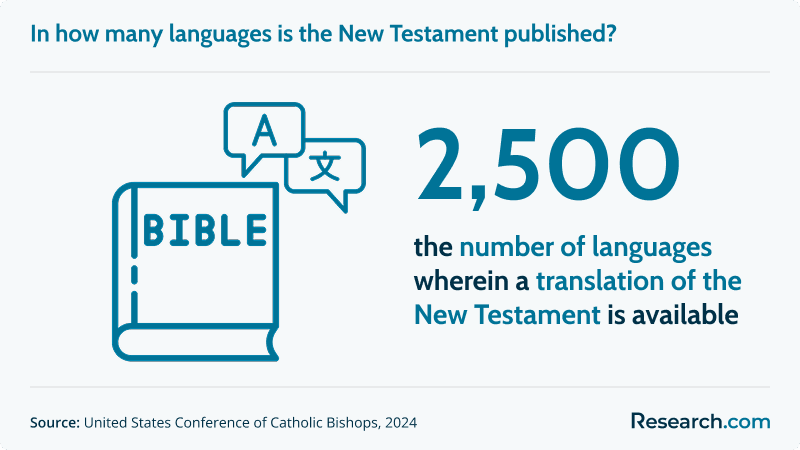
Christian studies is not only a private devotional discipline. It introduces students to texts, traditions, communities, and movements with global influence. The New Testament alone has been translated into over 2,500 languages, which shows how widely Christian Scripture has shaped communities across cultures and regions.
Students who understand this global and historical context are better prepared for ministry in diverse settings. This perspective is especially important for students who may later pursue advanced preparation through programs such as accelerated online Master of Divinity programs, where biblical, theological, pastoral, and cultural formation are typically studied in greater depth.
Christian Studies Specializations and Concentrations
Many online Christian studies programs allow students to shape part of the degree through electives, minors, or concentrations. A specialization does not replace the core biblical and theological curriculum. Instead, it helps students connect that foundation to a particular form of ministry, leadership, or service.
| Specialization | Best For | Skills Students May Build |
| Youth ministry | Students called to serve teens, families, camps, or student ministries | Discipleship, teaching, mentoring, event planning, and adolescent ministry awareness |
| Pastoral ministry | Students preparing for church leadership or future seminary study | Preaching foundations, pastoral care, leadership, worship planning, and congregational service |
| Christian counseling or pastoral care | Students interested in care ministry, recovery support, or referral-based helping roles | Listening, crisis awareness, spiritual care, boundaries, and referral judgment |
| Intercultural studies or missions | Students interested in missions, global ministry, nonprofit work, or cross-cultural service | Cultural awareness, mission history, communication, and service planning |
| Christian education | Students interested in teaching, curriculum, discipleship, or church education programs | Lesson design, biblical instruction, educational leadership, and learner engagement |
| Apologetics or theological studies | Students who want to address difficult questions about faith, doctrine, and culture | Argument analysis, theological reasoning, worldview comparison, and communication |
Current Trend: Ministry Requires More Focused Preparation
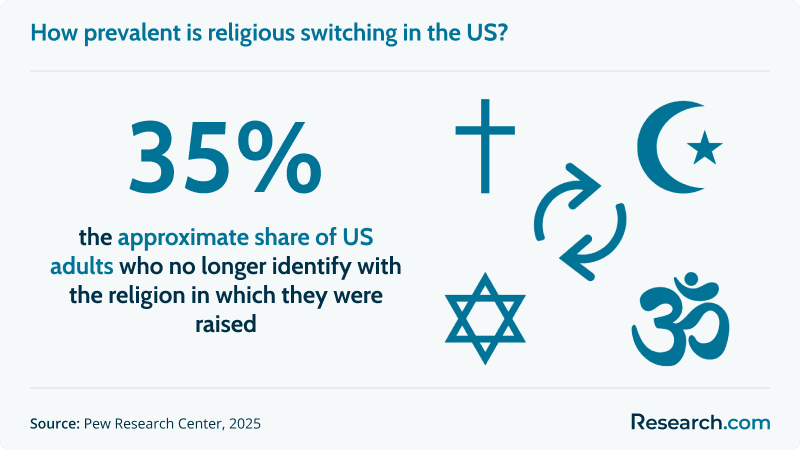
Religious affiliation and participation patterns are changing. Research shows that about 35% of adults in the U.S. no longer identify with the religion they were raised in. That makes ministry more complex. Leaders may need to answer deeper questions, serve people with varied backgrounds, and communicate clearly with those who have left, changed, or questioned religious commitments.
Specializations can help students prepare for that reality. A pastoral care focus may support students who want to walk with people through grief, family stress, or recovery. An apologetics focus can help students respond to difficult questions with humility and clarity. Some students who discover an interest in care-related work may later explore professional pathways such as becoming an addiction counselor, though licensure-focused careers require separate professional preparation.
How to Choose the Best Fast Online Christian Studies Degree Program
The best program is the one that fits your academic needs, theological convictions, schedule, finances, and next-step goals. Rankings can help you build a shortlist, but they should not replace your own review of accreditation, curriculum, transfer credits, faculty, doctrinal alignment, and student support.
Use This Checklist Before You Apply
| Decision Factor | What to Check | Why It Matters |
| Accreditation | Confirm the school’s status through recognized sources, including directories such as the Association for Biblical Higher Education directory when relevant. | Protects academic credibility, transfer options, and graduate school eligibility. |
| Theological fit | Read the statement of faith, doctrinal statement, denominational affiliation, and required theology courses. | Prevents conflict between your beliefs, your church tradition, and the school’s teaching commitments. |
| Transfer policy | Ask how many credits can transfer and which courses must be completed at the school. | Can significantly affect timeline and cost. |
| Faculty background | Review faculty education, ministry experience, publications, and areas of expertise. | You are learning from both their scholarship and their practical judgment. |
| Online support | Ask about advising, tutoring, library access, spiritual formation, career services, and technical support. | Online students need structured support, not just uploaded course materials. |
| Field experience | Find out whether internships, ministry practicums, or local church engagement are required or available. | Practical experience can strengthen employability and ministry readiness. |
| Graduate pathway | Ask whether graduates are admitted to seminaries, MDiv programs, or related graduate degrees. | Important if you plan to pursue ordination, chaplaincy, teaching, or advanced leadership. |
The Most Important Document to Read: The Statement of Faith
If you review only one non-academic document before applying, make it the school’s statement of faith or doctrinal statement. This document explains the theological commitments that shape the curriculum, faculty expectations, chapel life, ministry philosophy, and classroom discussions.
Skipping this step can create serious frustration later. A program may be accredited, affordable, and convenient but still be a poor fit if its theological assumptions conflict with your convictions or denominational requirements. Read the statement carefully, compare it with your church tradition, and ask admissions or faculty members direct questions if anything is unclear.
Common Mistakes to Avoid
- Choosing speed over legitimacy: A shorter timeline is not helpful if the degree is not properly accredited or respected by your intended graduate school or employer.
- Looking only at tuition: Fees, transfer limits, books, course sequencing, and repeated courses can change the real cost.
- Assuming online means easier: Accelerated online courses often require disciplined reading, writing, and weekly participation.
- Ignoring theological fit: Accreditation confirms academic review, not doctrinal agreement.
- Failing to verify ordination or licensure requirements: Churches, denominations, schools, counseling boards, and chaplaincy organizations may require additional credentials.
- Relying only on rankings: Rankings are useful for research, but they cannot decide your calling, church context, budget, or learning style.
Career Paths With an Online Christian Studies Degree
Christian studies graduates often pursue two broad categories of work: ministry-related roles and careers where communication, ethics, leadership, and cultural understanding are valuable. The degree is most directly aligned with churches, missions, parachurch organizations, Christian schools, and nonprofits. It can also support careers in service-oriented environments when paired with the right experience or additional training.
| Career Path | How the Degree Helps | Additional Preparation to Consider |
| Youth pastor or youth ministry leader | Provides biblical knowledge, discipleship training, and ministry communication skills. | Church experience, mentoring, child safety training, and denominational requirements. |
| Pastoral ministry support | Builds foundations in Scripture, theology, leadership, and pastoral care. | Seminary, MDiv study, ordination requirements, or supervised ministry experience. |
| Missions or intercultural ministry coordinator | Supports cross-cultural awareness, theological reflection, and service leadership. | Language study, missions training, nonprofit experience, and cultural preparation. |
| Christian education director | Develops biblical teaching, curriculum awareness, and discipleship planning skills. | Teaching experience, education coursework, or graduate study depending on setting. |
| Nonprofit program coordinator | Strengthens ethical reasoning, communication, community engagement, and mission-driven leadership. | Grant writing, project management, volunteer coordination, and data reporting skills. |
| Service or justice-related roles | Provides a moral framework and communication skills useful in human services or correctional support settings. | Role-specific requirements; for example, students may compare requirements for a parole officer career path. |
Beyond Church Roles
A Christian studies degree is not limited to pulpit ministry. Graduates develop transferable liberal arts skills: reading carefully, writing clearly, interpreting complex texts, leading discussions, thinking ethically, and understanding people in religious and cultural context. Those abilities can support work in education, nonprofit administration, communications, social services, community outreach, and organizational leadership.
Still, students should be realistic. Some careers require specific majors, licenses, graduate degrees, or supervised experience. Christian studies can be a strong foundation, but it does not automatically qualify graduates for licensed counseling, public school teaching, clinical social work, chaplaincy, or legal professions without additional steps.
Job Market Outlook for Christian Studies Graduates
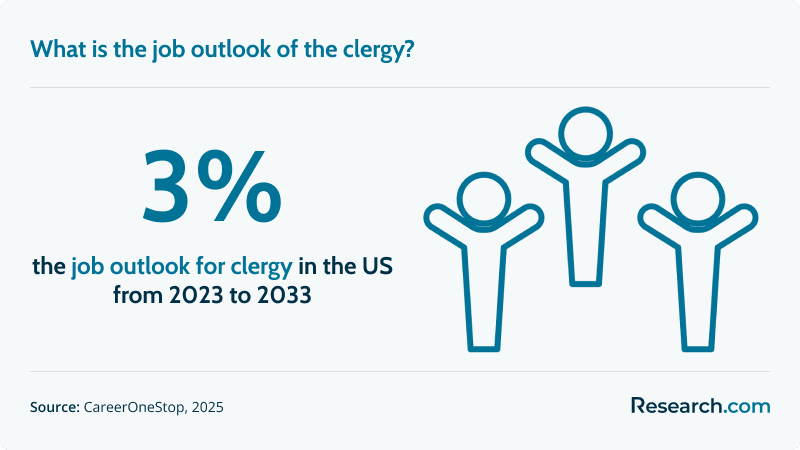
The job market for clergy is projected to grow by about 3% over the next decade, which suggests stable but not rapid growth. This means graduates should approach the field with both commitment and flexibility. Traditional full-time ministry roles may be available, but many communities also rely on lay leaders, part-time ministry staff, nonprofit professionals, and bi-vocational ministers who combine church service with another career.
An online Christian studies degree can be useful for students preparing for these flexible roles. It may also complement service careers that require ethical judgment, communication, and work with people under stress, including pathways such as the probation officer career path. However, role-specific hiring rules still apply, so students should verify requirements before assuming the degree is sufficient.
The Ministry Labor Market Is Changing
Recent surveys show that only 45% of American adults now consider religion to be “very important” in their lives. That shift affects churches and faith-based organizations. Some institutions may face declining attendance, tighter budgets, or changing staffing models. At the same time, communities still need resilient leaders who can teach clearly, care wisely, build trust, and serve across generational and cultural differences.
Prospective students should enter the field with open eyes. Ministry can be deeply meaningful, but it can also involve emotional strain, public expectations, irregular hours, conflict, and compassion fatigue. A strong program should help students develop not only theological knowledge but also maturity, boundaries, communication skills, and realistic expectations.
Can a Fast Online Christian Studies Degree Support Advanced Study?
Yes, a Christian studies degree can be a strong bridge to graduate education if the program is accredited and academically rigorous. Students may use the degree as preparation for seminary, a Master of Divinity, Christian leadership programs, ministry-focused master’s degrees, education programs, or interdisciplinary graduate study. The key is to confirm that the undergraduate curriculum meets prerequisites for the specific graduate pathway you want.
Students interested in educational leadership or senior nonprofit leadership may eventually compare options such as the quickest online EdD programs. Others may move into counseling, chaplaincy, library and archival studies, public administration, or nonprofit management. Christian studies can provide a foundation in research, interpretation, ethics, and communication, but advanced programs may require specific undergraduate courses or professional experience.
Christian Studies vs. Online Anthropology: Which Degree Makes More Sense?
A fast online Christian studies degree and an online anthropology bachelor’s degree answer different academic questions. Christian studies focuses on Scripture, theology, Christian history, ministry, discipleship, ethics, and faith-based leadership. Anthropology studies human cultures, social systems, language, history, and human behavior through social science methods.
| Comparison Point | Online Christian Studies Degree | Online Anthropology Bachelor’s Degree |
| Main focus | Christian Scripture, theology, church history, ethics, ministry, and spiritual formation | Human cultures, societies, evolution, language, archaeology, and social patterns |
| Best fit | Students preparing for ministry, church leadership, faith-based service, or seminary | Students interested in culture, research, social science, fieldwork, policy, or global issues |
| Methods | Biblical interpretation, theological reasoning, historical study, ministry application | Ethnography, comparative analysis, qualitative research, cultural interpretation |
| Career direction | Churches, ministries, Christian nonprofits, missions, education, service roles | Research, museums, nonprofits, international organizations, public policy, user research, education |
| Decision rule | Choose this if your primary goal is Christian ministry or faith-based leadership. | Choose this if your primary goal is studying human culture through a social science lens. |
What Graduates Say About Online Christian Studies Programs
- : "Serving as a deacon, I was often asked questions that deserved more than quick answers. My program gave me better tools for research, interpretation, and pastoral conversation. I now serve my church with more depth and confidence. — Leonard"
- : "Before enrolling, my biblical knowledge felt scattered. Courses in theology and church history helped me connect the pieces and understand how major doctrines developed over time. That clarity changed the way I read and teach. — Patrick"
- : "The biggest difference was confidence. When I lead a small group now, I can explain context, doctrine, and application instead of relying only on personal impressions. The training made my leadership more grounded. — Letitia"
Can Christian Studies Lead to Interdisciplinary Graduate Options?
Christian studies can prepare students for more than traditional ministry when it is combined with strategic graduate education and relevant experience. The degree develops careful reading, research, writing, ethical analysis, historical awareness, and communication skills. Those abilities can support interdisciplinary work in nonprofit leadership, education, archival research, information organization, community service, and faith-based scholarship.
Students interested in preserving religious texts, managing archives, supporting theological libraries, or working in information services may compare options such as affordable online MLIS degree programs. As with any career shift, students should check admissions requirements and employment expectations before assuming that a Christian studies degree alone is enough.
References
- CareerOneStop. (2025). Occupation profile: Clergy. Retrieved July 24, 2025, from https://www.careeronestop.org/Toolkit/Careers/Occupations/occupation-profile.aspx?keyword=Clergy&onetcode=21-2011.00
- Data USA. (2025). Christian studies. Retrieved July 24, 2025, from https://datausa.io/profile/cip/christian-studies
- Data USA. (2025). Divinity & ministry. Retrieved July 24, 2025, from https://datausa.io/profile/cip/divinity-ministry
- Data USA. (2025). Religious studies. Retrieved July 24, 2025, from https://datausa.io/profile/cip/religious-studies-380201
- Gallup News. (2024, March 25). Church attendance has declined in most US groups. Retrieved July 24, 2025, from https://news.gallup.com/poll/642548/church-attendance-declined-religious-groups.aspx
- Gordon Conwell Theological Seminary. (2025). Status of Global Christianity, 2025, in the context of 1900–2050. Retrieved July 24, 2025, from https://www.gordonconwell.edu/wp-content/uploads/sites/13/2025/01/Status-of-Global-Christianity-2025.pdf
- Pew Research Center. (2025, June 9). How the global religious landscape changed from 2010 to 2020. Retrieved July 24, 2025, from https://www.pewresearch.org/religion/2025/06/09/how-the-global-religious-landscape-changed-from-2010-to-2020/
- Pew Research Center. (2025, June 10). Video: How much ‘religious switching’ is there in the U.S.? Retrieved July 24, 2025, from https://www.pewresearch.org/religion/2025/06/10/video-how-much-religious-switching-is-there-in-the-us/
- Population Education. (2024, January 12). World population by religion: A global tapestry of faith. Retrieved July 24, 2025, from https://populationeducation.org/world-population-by-religion-a-global-tapestry-of-faith/
- Statista. (2025, April 4). Self-described religious identification of Americans 2023. Retrieved July 24, 2025, from https://www.statista.com/statistics/245478/self-described-religious-identification-of-americans/
- The Board of Pensions of the Presbyterian Church (USA). (2025). Median and effective salary. Retrieved July 24, 2025, from https://www.pensions.org/what-we-offer/employer-guidance/effective-salary
- The Catholic World Report. (2025, February 17). Diocesan priestly vocations in the United States: A look at the numbers. Retrieved July 24, 2025, from https://www.catholicworldreport.com/2025/02/17/diocesan-priestly-vocations-in-the-u-s-a-look-at-the-numbers/
- United States Conference of Catholic Bishops. (2024, April 15). New survey of men being ordained to the priesthood underscores the significant influence of parents on children’s vocational discernment. Retrieved July 24, 2025, from https://www.usccb.org/news/2024/new-survey-men-being-ordained-priesthood-underscores-significant-influence-parents
- United States Conference of Catholic Bishops. (2025). Clergy and religious. Retrieved July 24, 2025, from https://www.usccb.org/offices/public-affairs/clergy-and-religious
- ZipRecruiter. (2025). Salary: Minister (July 2025). Retrieved July 24, 2025, from https://www.ziprecruiter.com/Salaries/Minister-Salary; see also CareerOneStop clergy profile
Key Insights
- A fast online Christian studies degree is fastest when the school accepts transfer credits, offers accelerated 7- or 8-week courses, provides year-round scheduling, and keeps degree planning simple.
- Accreditation is essential. It affects credit transfer, graduate school eligibility, employer recognition, and overall degree credibility.
- Theological fit matters as much as convenience. Read the statement of faith before applying, especially if you plan to pursue ordination or serve within a specific denomination.
- Costs can vary substantially. Compare total completion cost, fees, transfer credit rules, and financial aid rather than focusing only on cost per credit.
- A Christian studies degree can support ministry, nonprofit work, education-related roles, service careers, and graduate study, but some careers require additional credentials, licensure, or supervised experience.
- The ministry landscape is changing, with stable but modest clergy growth and shifting patterns of religious affiliation. Students should prepare for flexible, resilient, and often bi-vocational forms of leadership.
- The right program is not simply the shortest one. It is the program that helps you finish efficiently while preserving academic quality, spiritual formation, financial responsibility, and long-term vocational options.
Other Things You Should Know About the Fastest Online Christian Studies Degree Programs
Most accelerated online Christian Studies degrees allow 60 to 90 transfer credits toward a 120-credit bachelor’s degree. Some programs require at least 30 upper-division credits to be completed at the school, and ministry-focused majors may restrict the transfer of theology courses.
Students need a reliable internet connection, a computer with updated software, and access to a webcam and microphone. Some programs may also require specific learning management systems, so checking individual program requirements for technical specifications is recommended.
In 2027, some accelerated online Christian Studies programs allow students to earn their degree in as little as 12 to 18 months, depending on transfer credits and course load. Students can choose from various institutions offering flexible scheduling to fit their personal and professional commitments.


