2027 Best Online Affordable Degree in Theology Programs

Co-Founder and Chief Data Scientist
Choosing an online affordable degree in theology is not only a question of convenience. It is a decision about formation, doctrine, ministry preparation, cost, accreditation, and whether the program will support the kind of service or career you want after graduation. Many students considering theology are already serving in churches, parachurch ministries, schools, chaplaincy settings, or nonprofit organizations, so the right online program must fit real life without weakening academic or spiritual preparation.
Theology examines religious belief, sacred texts, doctrine, ethics, ministry practice, and the nature of the divine. Online divinity schools now offer undergraduate degrees, graduate degrees, certificates, and postgraduate programs in this field. According to the Association of Theological Schools, 12,608 students enrolled in master's degree programs in divinity in 2025, showing that advanced theological education remains an active pathway for ministry and faith-based leadership.
This guide explains how online theology degrees work, how they compare with traditional campus programs, what they may cost, what admissions requirements to expect, how accreditation affects value, and how to decide whether this path fits your ministry, education, or nonprofit career goals. If you are still comparing formats, you can also review Research.com’s guide to taking up a theology degree online.
Online Affordable Degree in Theology Table of Contents
- Can you get a degree completely online?
- Will employers take my online degree seriously?
- Are online degrees recognized all over the world?
- Online vs. Traditional Affordable Theology Degrees
- How much does an online affordable theology degree cost?
- What are the requirements for an online affordable theology degree?
- Courses to Expect in Online Affordable Theology Degrees
- Things to Look for in an Online Affordable Theology Degree
- What career support resources are available for online theology students?
- How to Succeed in an Online Theology Program
- How Important is Accreditation When Choosing an Online Theology Degree?
- Can Online Theology Education Cultivate Strong Leadership Skills?
- How Can Online Theology Programs Bridge Theological Studies with Practical Ministry?
- Should I Consider Pursuing a Doctorate After an Online Theology Degree?
- How Can Advanced Educational Leadership Complement My Online Theology Degree?
- Can an Online Theology Degree Support a Career in Education?
- Accelerated Paths to Earning an Online Theology Degree
- Financial Aid Opportunities for Online Theology Students
- Are There Any Specialized Online Theology Programs for Specific Groups, Such as Military Personnel?
- Can an Online Theology Degree Boost Earning Potential?
Quick Answer: Is an Online Affordable Theology Degree a Good Option?
An online affordable theology degree can be a strong choice if you need flexible study, want to continue serving or working while enrolled, and choose a properly accredited institution whose doctrine, curriculum, and fieldwork expectations match your goals. It is especially practical for students preparing for ministry, church leadership, religious education, nonprofit work, or further graduate study.
The main risks are choosing a program without verifying accreditation, assuming online study is always cheaper, overlooking technology and residency requirements, or enrolling in a degree that does not match your denomination, ordination pathway, or career plan.
| Best fit for | Be cautious if | What to check first |
| Working adults, ministry staff, church volunteers, and students who need schedule flexibility | You need frequent in-person mentoring, campus worship life, or local field placement support | Accreditation, doctrinal alignment, tuition, financial aid, practicum rules, and transfer credit policies |
| Students pursuing pastoral preparation, religious education, nonprofit leadership, or advanced theological study | Your career requires a specific licensure, ordination, or denominational credential not automatically provided by the degree | Whether the program meets your church, employer, or graduate school requirements |
Can you get a degree completely online?
Yes. Many colleges and universities now offer degrees that can be completed fully online, although some theology programs may still include optional or required residencies, supervised ministry placements, intensives, or local fieldwork. Students should confirm the delivery format before enrolling instead of assuming “online” always means no campus visits.
Online learning has expanded because institutions now use learning management systems, video conferencing tools, discussion boards, digital libraries, and collaborative software to deliver courses at scale. Online options are no longer limited to business programs; they now include humanities and religion-related fields, including online philosophy courses. According to the CHLOE 10 (2025) report, 46% of chief online learning officers said that around half of their undergraduate learners were taking fully online asynchronous classes. Public, private, and nonprofit institutions also use online delivery to give students more scheduling options.
For theology students, the difference between fully online and partly online matters. A fully asynchronous class may allow you to complete readings, lectures, and assignments on your own weekly schedule. A synchronous online course may require live attendance at set times. A hybrid program may require campus sessions, local ministry placements, or in-person assessments.
Will employers take my online degree seriously?
Many employers focus more on the school’s credibility, the degree level, the applicant’s experience, and the relevance of the curriculum than on whether the courses were online or on campus. This is especially true when the institution is accredited and the program includes meaningful preparation in communication, leadership, ethics, research, and ministry practice.
The rapid shift to remote instruction during the COVID-19 pandemic made virtual learning more familiar to students, faculty, and employers. Online exams, video lectures, virtual advising, and collaborative applications became routine across higher education. As a result, the question is less about whether online learning is legitimate in general and more about whether a specific program is rigorous, recognized, and aligned with the student’s goals.
For graduate-level study, employers and admissions committees are typically more interested in academic fit and qualifications than in outdated assumptions about delivery format. Recruiters are increasingly familiar with online education, including advanced credentials such as what is a PhD degree. Jones (2020) also notes that students who complete online programs often demonstrate independence and self-direction, qualities that can translate well to professional settings. In addition, corporations are leveraging online learning to reduce operating costs and support employee upskilling.
| What employers or churches may evaluate | Why it matters |
| Institutional and program accreditation | Accreditation signals that the school or program has gone through an external quality review. |
| Practical experience | Churches, nonprofits, and schools often value ministry, teaching, counseling, outreach, or leadership experience alongside the degree. |
| Doctrinal or denominational fit | Some roles require agreement with specific theological traditions, statements of faith, or ordination standards. |
| Communication and leadership ability | Theology graduates often teach, preach, counsel, write, lead programs, or guide communities. |
Are online degrees recognized all over the world?
Online degrees can be recognized internationally when they come from reputable and accredited institutions, but recognition is not automatic in every country, denomination, employer, or graduate school. Students planning to work abroad, seek ordination, or pursue further study outside the United States should ask the receiving organization how it evaluates online credentials.
Well-known universities now offer online undergraduate and graduate programs in many areas. Harvard University, Michigan State University, and California Institute of Arts all provide online programs across different fields. Students can also find widely available online options in fields such as affordable online bachelor’s degree programs and online counseling programs. The school’s reputation can help, but students should still verify whether a particular theology degree is accepted for their intended use.
- If you plan to serve in a church: Ask whether the degree satisfies ordination, commissioning, or ministry credential requirements.
- If you plan to teach: Ask whether the degree is acceptable for the school level, country, or institution where you want to work.
- If you plan to pursue graduate study: Ask whether credits and prerequisites will transfer or meet admissions expectations.
- If you plan to work internationally: Ask about credential evaluation requirements before enrolling.
Online vs. Traditional Affordable Theology Degrees
The best format depends on your schedule, finances, learning style, ministry responsibilities, and need for in-person formation. Online theology degrees are often attractive to students already working in churches, nonprofits, schools, or community organizations. Campus programs may offer stronger face-to-face mentoring, chapel life, peer formation, and immediate access to faculty and institutional resources.
| Factor | Online affordable theology degree | Traditional campus theology degree |
| Schedule | Often better for working adults, parents, and ministry staff who need flexible study blocks | Usually follows a fixed campus timetable with regular in-person attendance |
| Cost | May reduce commuting, housing, and meal costs, but tuition and fees still vary by school | May include additional living, transportation, campus, and relocation expenses |
| Community | Can include virtual discussions, online prayer groups, digital cohorts, and remote mentoring | Often provides stronger daily in-person interaction, chapel participation, and campus community |
| Field experience | May use local churches or community organizations for supervised ministry practice | May have established local placements close to campus |
| Best for | Students who need flexibility and can manage independent study | Students who learn best through face-to-face instruction and structured campus life |
Is an online degree cheaper?
An online theology degree can be less expensive overall, but it is not automatically cheaper in every case. Some online students avoid major costs such as relocation, campus housing, daily commuting, and meals away from home. However, tuition policies vary, and some schools still charge different rates for in-state and out-of-state students even when the program is delivered online.
Students should compare the full cost of attendance, not just tuition. Online learning may reduce facility-related and commuting expenses, but learners still need technology, internet service, books, course materials, and possible exam or fieldwork fees. Financial aid can also change the true out-of-pocket cost.
Some universities offering affordable theology degrees report high levels of financial aid participation. Moody Bible Institute in Chicago has 92% of financial aid recipients, while Huntsville Bible College in Alabama and Apex School of Theology both have a 100% rate of financial aid recipients.
Is an online degree as good as a regular degree?
An online theology degree can be academically comparable to a campus degree when it is offered by a credible institution, taught by qualified faculty, supported by strong student services, and designed for meaningful interaction. Quality depends on the program, not simply the format.
Online education has improved substantially as institutions have gained experience with virtual instruction. Working professionals can now study subjects ranging from theology to a bachelor’s degree in English online while continuing employment or ministry service. Online programs can also bring in guest lecturers, digital library resources, and students from different regions, creating learning environments that are not limited by geography.
The main limitation is reduced face-to-face interaction. Theology is not only an academic subject; it often involves spiritual formation, pastoral discernment, worship, mentoring, and community practice. Still, online programs can support collaboration when faculty intentionally design group projects, discussions, and synchronous sessions. In a study by Marelize Malan (2021), technology-supported collaboration was found to be effective when educators monitored time and connectivity challenges.
-
: "
“Within the online learning environment, cooperative learning can be equally effective if time and connectivity challenges are closely monitored by the educator[…]. In this study, although adequate guidance was given to students on how to manage and work within their groups, they were able to navigate the online environment with minimal input from the educator and found ways to connect, meet and share their ideas. Social media platforms and online meeting software played a significant role in achieving their connectedness.”
"
How much does an online affordable theology degree cost?
Costs vary widely by institution, degree level, residency status, and financial aid package. In general, online degrees offered by private institutions in the US cost over $45,000, while public institution tuition and fees cost $11,950 for in-state students and $31,880 for out-of-state learners (College Board, 2025). Some theology programs can charge as low as $3,500 a year.
Students should build a realistic budget before enrolling. The sticker price may not reflect scholarships, grants, employer support, church assistance, or federal aid. At the same time, the advertised tuition may exclude technology expenses, course fees, digital resources, proctoring fees, language exams, textbooks, and required ministry travel.
| Cost category | What to look for |
| Tuition and mandatory fees | Confirm whether rates differ for undergraduate, graduate, in-state, out-of-state, part-time, or full-time students. |
| Technology | Budget for a reliable computer, webcam, microphone, software, and high-speed internet. |
| Books and digital materials | Theology courses may require Bible editions, commentaries, language tools, journals, and e-books. |
| Exams and assessments | Biblical language exams, proctoring, or assessment fees may add costs. |
| Residency or practicum travel | Hybrid programs may require campus visits, ministry placements, or local fieldwork expenses. |
| Financial aid | Compare scholarships, grants, payment plans, loans, church support, and employer reimbursement. |
Is an online affordable theology degree worth it?
An online affordable theology degree may be worth it if it helps you qualify for ministry, deepen biblical and doctrinal knowledge, strengthen leadership skills, or move into a faith-based education or nonprofit role without taking on unnecessary debt. The value is strongest when the program matches your theological tradition, career plan, and financial situation.
Universities such as Belhaven University and Campbellsville University offer online theology degrees designed for students who need flexibility. This matters because many theology students already have church, family, work, or volunteer responsibilities. For the right learner, online study can make formal theological education possible without requiring relocation.
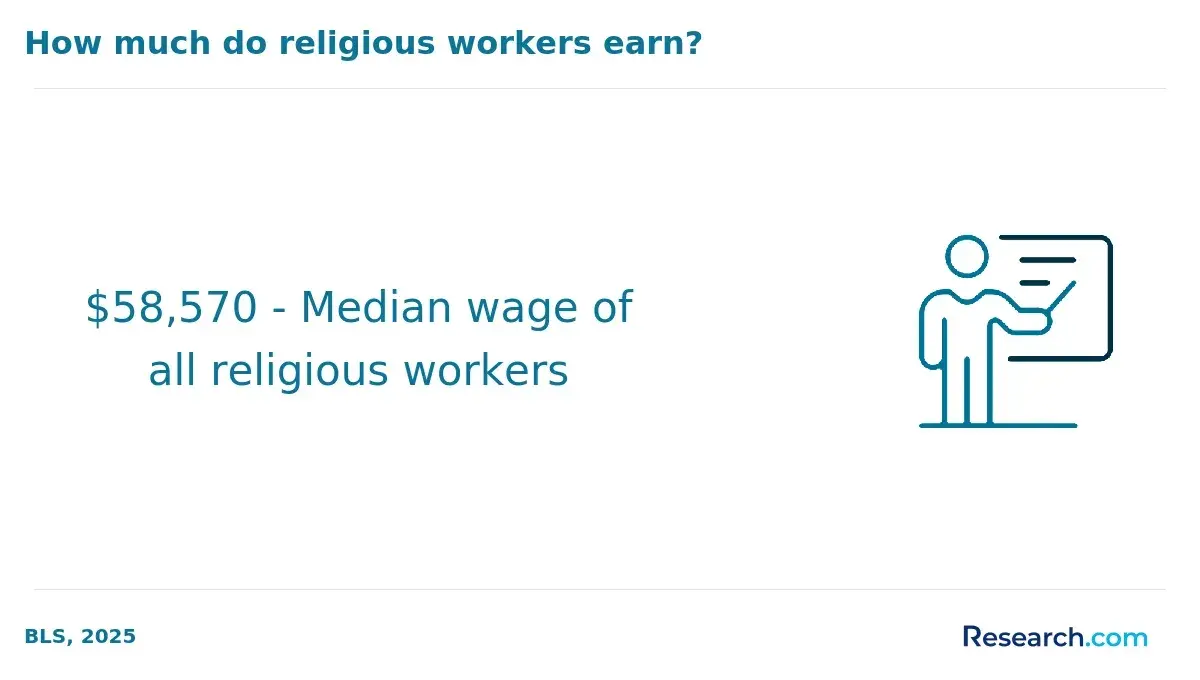
Career outcomes vary. Graduates may become religious leaders, pursue roles in nonprofit organizations, teach religious education, or continue into academic study. According to the Bureau of Labor Statistics, the employment estimate for clergy is 262,000, while employed religious workers are at 88,400.
What are the requirements for an online affordable degree in theology?
Online theology programs usually require the same core admissions materials as campus programs. Applicants may need transcripts, standardized tests, essays, recommendation letters, interviews, prerequisite courses, or evidence of ministry experience. Graduate programs commonly require a completed bachelor’s degree, and some may evaluate prior coursework or professional experience for possible credit.
Admission Requirements
- Educational background: Many online theology options are graduate programs, so applicants often need a bachelor’s degree before admission. A cumulative GPA of 2.0 and above is commonly expected, along with official college transcripts.
- Personal essay: Some schools ask applicants to explain their goals, ministry calling, faith background, or reasons for pursuing theological education. This helps admissions teams evaluate fit with the program’s mission.
- Recommendation letters: A pastor, ministry supervisor, professor, or other qualified recommender may be asked to describe the applicant’s character, academic readiness, leadership potential, and suitability for theology study.
- Interview: Some programs require a conversation with a dean, faculty member, or admissions committee. This is especially common when a school has a defined doctrinal identity or ministry focus.
- Application fee: Some institutions charge an application fee, while others may waive it for eligible applicants, including military veterans and service members.
General Requirements
- Communication skills: Theology graduates often teach, preach, counsel, write, and lead discussions. Clear speaking and writing are essential for explaining complex biblical, doctrinal, and ethical ideas.
- Leadership ability: Pastors, ministers, educators, and nonprofit leaders must build trust, make sound decisions, guide teams, and serve communities with integrity.
- Critical thinking: Theology requires careful reading of sacred texts, historical sources, doctrinal arguments, and ethical questions. Students should be prepared to analyze competing interpretations respectfully.
- Research skills: Strong theology students know how to locate, evaluate, cite, and synthesize books, articles, biblical commentaries, historical documents, and theological scholarship.
What are the technological requirements of students for online learning?
Online theology students need dependable technology because lectures, discussions, assignments, advising, library access, and assessments may all happen through digital systems.
- Personal computer: A desktop or laptop is needed for classes, research, paper writing, video meetings, and access to course materials. A device with at least 256GB of storage and 8GB RAM is generally sufficient for common academic tasks.
- High-speed internet: A stable connection is essential for live video sessions, recorded lectures, discussion forums, and online submissions. Internet speed of at least 25 Mbps can support typical online coursework without frequent interruption.
- Software: Students should use a compatible operating system and browser. The latest Windows or Mac system is ideal, though at least Windows 8.1 or Mac OSX 10.3 can still be sufficient in some cases. Schools may use Canvas or another learning management system.
- Web camera and microphone: Courses may require video participation for class discussions, identity verification, presentations, or online assessments. A working microphone is also important for live interaction with faculty and classmates.
Courses to Expect in an Online Affordable Degree in Theology
Theology curricula differ by denomination, degree level, and institutional mission, but most programs combine biblical interpretation, historical study, doctrine, ethics, and ministry application. Some programs emphasize pastoral ministry, while others focus on academic theology, biblical languages, apologetics, religious education, or leadership.
| Course area | What students usually study | Why it matters |
| Biblical Studies | Old Testament, New Testament, biblical interpretation, literary analysis, historical context, and theological themes | Builds the foundation for preaching, teaching, research, and doctrinal understanding |
| Religious History | Christian history and, in some programs, traditions such as Judaism and Islam | Helps students understand how religious communities, doctrines, and practices developed over time |
| Belief and Ethics | The relationship between theology, morality, and contemporary issues such as politics, justice, family, sex, and marriage | Prepares students to address real-world questions with theological depth and pastoral care |
| Ministry Preparation | Preaching, teaching, pastoral communication, interpretation, leadership, and applied ministry projects | Connects academic learning with service in churches, schools, nonprofits, and communities |
Because ministry requires strong public and interpersonal communication, many programs also emphasize written assignments, presentations, discussion facilitation, and pastoral conversation. Students who want to strengthen these abilities can review guidance on written and oral communication skills.
Things to Look for in an Online Affordable Theology Degree
The right online theology program should be affordable, credible, accessible, and aligned with your beliefs and goals. Do not choose only by tuition or name recognition. Theology is a field where doctrinal fit, accreditation, mentoring, field experience, and community support can matter as much as price.
Location
Even an online program may be affected by location. Some institutions limit admission to certain states, charge different tuition for out-of-state students, or participate in different pricing for those out-of-state. International students should also confirm whether the school accepts overseas applicants and whether the degree will be recognized where they plan to serve or work.
Accessibility
Students should verify whether the program is fully online, hybrid, synchronous, asynchronous, or cohort-based. Some programs include in-person intensives, library visits, chapel participation, internships, or supervised ministry experiences. These requirements may be valuable, but they can also affect travel costs and scheduling.
Reputation
Reputation should be evaluated through accreditation, faculty qualifications, student support, curriculum depth, doctrinal transparency, and graduate outcomes. In the United States, the Association of Theology Schools (ATS) is responsible for accrediting theology schools in the country. ATS reviews areas such as institutional mission, faculty, programs, learning resources, library services, and student support.
Admission Requirements
Admissions policies can affect how quickly and affordably you complete the degree. Some students bring prior ministry experience or earlier theology coursework. According to a study by Education Dynamics (2026), 17% of online students have three to four years of experience. Ask whether your background may count toward transfer credit, advanced standing, waived prerequisites, or portfolio review.
Financial Aid
Financial aid can make a major difference in affordability. Many schools accept aid through the Free Application for Federal Student Aid (FAFSA), a program developed by the Federal Student Aid to help eligible students pay for college. Students should also ask about institutional scholarships, church scholarships, grants, loans, payment plans, and employer or ministry reimbursement.
What career support resources are available for online theology students?
Career support is especially important in theology because many roles depend on relationships, denominational networks, supervised experience, and service history. A strong online program should help students connect academic preparation with practical next steps.
- Career counseling: Advisors can help students connect theological interests with pastoral ministry, nonprofit work, education, chaplaincy-adjacent roles, counseling-related pathways, or further graduate study.
- Job boards and ministry networks: Some universities maintain listings for churches, religious organizations, schools, internships, volunteer roles, and nonprofit openings.
- Mentorship: Alumni, faculty, pastors, and ministry leaders can offer practical advice about ordination, local church leadership, community service, teaching, and career transitions.
- Internships and fieldwork: Programs may place online students in local churches, community organizations, or faith-based agencies so they can apply coursework in real settings.
- Workshops and webinars: Resume sessions, interview preparation, vocation discernment events, and guest lectures can help online students prepare for professional opportunities.
- Alumni connections: Virtual alumni events may introduce students to graduates working in churches, schools, missions, nonprofits, and administrative roles.
- Labor market resources: Some schools provide salary guides, job market information, and occupation-specific advising so students can make realistic plans.
How to Succeed in an Online Theology Program
Online theology study requires more than completing readings and discussion posts. Students must manage time, stay spiritually and academically engaged, build relationships, and actively seek feedback. The most successful online learners treat the program as a structured commitment rather than an activity squeezed into leftover time.
- Plan your week before classes begin: Block time for lectures, readings, writing, prayer or reflection, discussions, and assignments. Theology courses often require sustained reading and careful interpretation.
- Participate in discussions with substance: Online forums work best when students ask thoughtful questions, cite course materials, respond respectfully, and connect doctrine with lived ministry questions.
- Create a dependable study environment: Use a quiet space with reliable internet, needed texts, note-taking tools, and minimal interruption.
- Use faculty and advisor support early: Attend virtual office hours, ask for clarification, request feedback on writing, and contact advisors before small problems become major delays.
- Build community intentionally: Join study groups, attend virtual events, message classmates, and maintain contact with local mentors or pastors who can support your formation.
- Master the technology: Learn the learning management system, file submission process, video platform, library database, and communication tools before deadlines arrive.
- Avoid procrastination: Use weekly milestones for major papers, language assignments, and ministry projects. Long theological writing tasks are difficult to complete well at the last minute.
- Keep your purpose visible: Whether your goal is ministry, teaching, nonprofit service, or further study, revisit that purpose when motivation drops.
Students comparing accredited options can also explore accredited online colleges that match their academic and professional goals.
How Important is Accreditation When Choosing an Online Theology Degree?
Accreditation is one of the most important checks before enrolling in an online theology program. It can affect academic credibility, transfer credit, eligibility for federal financial aid, employer confidence, and admission to future graduate or doctoral study. For ministry students, accreditation may also matter when churches, denominations, or religious organizations evaluate educational preparation.
Students should confirm both institutional accreditation and, where relevant, theological school accreditation. Accrediting bodies review whether a school has the faculty, curriculum, mission, resources, governance, and student support needed to deliver quality education. Accreditation does not guarantee a job or ordination, but it reduces the risk of earning a degree that is not respected or transferable.
Some students later combine theological education with leadership, administration, or doctoral study. For example, an advanced credential such as the cheapest online EdD may complement theology for students interested in academic or organizational leadership.
Can Online Theology Education Cultivate Strong Leadership Skills?
Yes, an online theology program can help develop leadership when the curriculum includes applied ministry, ethical decision-making, communication, conflict resolution, organizational planning, and supervised practice. Theology students often prepare to lead congregations, teach groups, manage volunteers, guide community programs, or serve in nonprofit settings.
Online learning can also strengthen digital leadership. Students learn to collaborate across distance, facilitate discussions online, use communication tools, and adapt ministry or educational practices to virtual environments. These abilities are increasingly useful for churches and organizations that use livestreamed worship, digital outreach, online discipleship, and remote teams.
Students who want to pair theology with broader organizational leadership may also compare affordable doctoral programs in leadership.
How Can Online Theology Programs Bridge Theological Studies with Practical Ministry?
The strongest online theology programs connect doctrine and biblical study with real ministry practice. This may happen through virtual mentoring, supervised local ministry, preaching assignments, pastoral case studies, community engagement projects, leadership simulations, or applied capstone work.
Practical integration matters because theology graduates are often expected to do more than understand texts. They may lead worship, teach adults or youth, counsel congregants within appropriate boundaries, manage programs, organize outreach, and respond to ethical questions in their communities. Online programs can support this preparation when they require students to apply learning in churches, schools, nonprofits, or local service settings.
Some students also combine theology with fields that strengthen research, information organization, and community learning. For example, the cheapest MLIS online degree programs may interest students who want to work with archives, libraries, theological collections, or educational resources.
Should I Consider Pursuing a Doctorate After an Online Theology Degree?
A doctorate may make sense if your goals require advanced research, academic teaching, high-level leadership, or specialized scholarship. It is not necessary for every ministry role, and students should weigh time, cost, academic readiness, and career payoff before applying.
Doctoral study can deepen research ability, theological analysis, writing, and leadership preparation. It may also support work in higher education, seminary teaching, academic administration, or advanced ministry leadership. Students interested in academic leadership pathways can review PhD in higher education online programs as one possible direction.
| Consider a doctorate if | Consider another path if |
| You want to teach at an advanced level, conduct research, publish scholarship, or lead in academic settings | Your main goal is local ministry practice and a master’s degree or certificate meets your needs |
| You have a clear research interest and can commit to long-term writing and study | You are unsure about the cost, time commitment, or career benefit |
| Your denomination, employer, or institution values doctoral preparation for senior leadership roles | You need immediate practical training, supervised ministry, or a shorter credential |
How Can Advanced Educational Leadership Complement My Online Theology Degree?
Educational leadership can be a useful complement to theology for students who want to manage schools, direct religious education programs, supervise curriculum, lead faculty or volunteers, or serve in academic administration. This combination can connect spiritual formation, teaching, organizational strategy, and institutional management.
Theology helps students think about ethics, meaning, doctrine, and community formation. Educational leadership adds tools for planning, assessment, budgeting, supervision, policy, and program improvement. Students pursuing administrative roles in faith-based schools, seminaries, nonprofits, or church education ministries may find the combination especially relevant.
Those comparing leadership-focused doctoral options can examine the cheapest online doctoral degree in educational leadership.
Can an Online Theology Degree Support a Career in Education?
An online theology degree can support education-related work, especially in religious schools, church education, curriculum development, adult discipleship, youth ministry, or nonprofit training. It can strengthen ethical reasoning, communication, interpretation, and leadership skills that are valuable in teaching environments.
However, a theology degree alone may not qualify a graduate for every teaching position. Public school roles, state-regulated teaching positions, and some private school jobs may require teacher certification or additional credentials. Students who want a teaching career should verify requirements in their state, school system, or institution before enrolling.
Professionals who want to move into teaching may consider pairing theological study with an affordable alternative teacher certification program.
Accelerated Paths to Earning an Online Theology Degree
Accelerated online theology programs may help students finish faster by using shorter terms, intensive course schedules, transfer credits, prior learning review, or year-round enrollment. These pathways can be useful for adults who already have ministry experience or prior college credit.
Speed should not be the only priority. Theology requires deep reading, reflection, writing, and formation, so students should be realistic about workload. A faster program may be valuable if it is accredited, academically sound, and manageable alongside work, family, and ministry responsibilities.
Students still building an undergraduate foundation may compare options such as the fastest bachelor's degree before moving into advanced theological study or ministerial preparation.
- Ask about transfer credits: Prior college coursework may shorten the time to completion.
- Ask about ministry experience: Some schools may evaluate professional or volunteer experience for placement or credit.
- Ask about course load: Intensive terms can save time but may increase weekly workload.
- Ask about sequencing: Some required courses may be offered only in certain terms, which can affect graduation timing.
Financial Aid Opportunities for Online Theology Students
Financial aid can make an online theology degree more accessible, but students need to understand which programs qualify and what aid must be repaid. Options may include federal aid, institutional scholarships, grants, church support, private scholarships, payment plans, employer reimbursement, or ministry organization assistance.
Students can begin by asking whether the institution participates in federal aid programs and whether the specific online theology program is eligible. Research.com’s guide to FAFSA-approved online certificate programs may help students understand how FAFSA participation fits into online education planning.
Churches, religious foundations, and private organizations may also sponsor scholarships for theology students. These awards may consider financial need, academic performance, ministry commitment, denominational affiliation, or community service. Working professionals should ask employers or ministry organizations whether tuition reimbursement is available and whether continued service is required after graduation.
Are There Any Specialized Online Theology Programs for Specific Groups, Such as Military Personnel?
Yes. Some colleges design online theology programs or student services for specific populations, including military personnel, veterans, adult learners, ministry workers, and transfer students. Military-affiliated students may need flexible scheduling, deployment-aware policies, credit for prior learning, dedicated advising, and support for military education benefits.
Students with military backgrounds can compare military friendly online colleges to find institutions that understand their needs. Before enrolling, ask about tuition assistance, veteran services, transfer credit for military training, leave policies, and whether the program format can accommodate unpredictable schedules.
Can an Online Theology Degree Boost Earning Potential?
An online theology degree may support earning potential when it helps graduates qualify for leadership, education, nonprofit, administrative, or ministry roles that require formal theological training. However, salary outcomes vary by role, employer, region, denomination, experience, and degree level. Students should not assume that the degree alone guarantees higher income.
Theology graduates may use their training in pastoral ministry, religious education, community program management, nonprofit leadership, academic administration, or further graduate study. The degree can also strengthen transferable skills such as analysis, writing, public speaking, ethics, and leadership.
Students who want to compare graduate pathways with stronger salary potential can review masters degrees that pay well and decide whether theology should stand alone or be paired with another credential.
Common Mistakes to Avoid When Choosing an Online Theology Degree
| Mistake | Why it can hurt you | Better approach |
| Choosing only by lowest tuition | A cheap program may still be a poor value if it lacks accreditation, support, or doctrinal fit. | Compare total cost, aid, accreditation, curriculum, and career support together. |
| Ignoring accreditation | Credits may not transfer, aid may be limited, and employers or graduate schools may not respect the credential. | Verify institutional and relevant theological accreditation before applying. |
| Assuming online means no in-person requirements | Residencies, fieldwork, intensives, or local placements can affect time and cost. | Ask for a full list of required campus visits, practicums, and synchronous sessions. |
| Overlooking denominational requirements | A degree may not satisfy ordination or ministry credential expectations in your tradition. | Confirm requirements with your church, denomination, or ministry organization first. |
| Underestimating workload | Online theology involves extensive reading, writing, discussion, and reflection. | Create a weekly study plan before enrolling and start with a manageable course load. |
| Failing to ask about transfer credits | You may spend more time and money than necessary. | Request a transcript evaluation and ask about prior learning or ministry experience credit. |
Questions to Ask Before Enrolling
- Accreditation: Is the institution accredited, and is the theology school or program reviewed by a recognized theological accreditor?
- Doctrinal fit: Does the curriculum align with my faith tradition, ministry goals, or denominational expectations?
- Format: Is the program fully online, synchronous, asynchronous, hybrid, cohort-based, or residency-based?
- Fieldwork: Are internships, practicums, ministry placements, or local supervisors required?
- Total cost: What will I pay after tuition, fees, books, technology, travel, and financial aid?
- Financial aid: Is the program eligible for FAFSA, scholarships, grants, or payment plans?
- Faculty access: Can online students meet with professors, advisors, and mentors virtually?
- Career support: Does the school help with ministry placement, nonprofit careers, teaching roles, or graduate study?
- Transfer credit: Will prior coursework, military training, or ministry experience reduce my time to completion?
- Next credential: Will this degree prepare me for seminary, doctoral study, ordination, certification, or employment?
Honing Future Religious Leaders
Students often pursue theology because they want deeper understanding, stronger faith formation, and better preparation to serve others. For Christians and other religious communities, theological education can support preaching, teaching, discipleship, ethical reflection, and congregational leadership. It can also prepare graduates to serve in nonprofits, schools, missions, chaplaincy-adjacent environments, or academic settings.
Online delivery expands access for students who cannot relocate or pause their responsibilities. The key is to choose carefully. A well-selected online theology degree program should be affordable, accredited, mission-aligned, academically rigorous, and practical enough to support the kind of service or career you are pursuing.
Key Insights
- Online theology degrees can be legitimate and respected: The strongest programs come from credible institutions, use qualified faculty, and provide real academic and ministry support.
- Affordability depends on total cost, not tuition alone: Compare tuition, fees, technology, books, residency travel, exam costs, and financial aid before deciding.
- Accreditation is a nonnegotiable check: It can affect transfer credit, federal aid eligibility, graduate study, and employer or ministry recognition.
- Doctrinal alignment matters: Theology programs differ significantly by tradition, mission, and interpretation, so students should confirm fit before applying.
- Online does not always mean fully remote: Some programs require synchronous classes, practicums, intensives, or local ministry placements.
- Career value depends on your goal: Theology can support ministry, religious education, nonprofit leadership, and further study, but salary and job outcomes are not guaranteed.
- Successful online students are proactive: Time management, faculty engagement, peer connection, and technology readiness are essential for completing the program well.
References:
- Association of Theological Schools. (2025). 2025 - 2026 Annual Data Tables. https://www.ats.edu/files/galleries/2025-26-annual-data-tables.pdf https://www.bls.gov/oes/current/oes251126.htm https://online.campbellsville.edu/online-degrees/masters-theology/ https://upskillwise.com/online-learning-statistics/ https://datausa.io/profile/cip/theology https://scs.georgetown.edu/news-and-events/article/8050/is-an-online-degree-as-good-as-a-traditional-one
- Jones, J. (2020, November 30). Will online degrees become more ‘legitimate’? The Life Project. https://www.bbc.com/worklife/article/20201125-will-online-degrees-become-more-legitimate https://www.liberty.edu/online/divinity/
- Malan, M. (2021). The Effectiveness of Cooperative Learning in an Online Learning Environment Through a Comparison of Group and Individual Marks. The Electronic Journal of e-Learning. https://files.eric.ed.gov/fulltext/EJ1330706.pdf
- Education Dynamics. (2026). Modern Learner 2.0 The New Enrollment Model. https://insights.educationdynamics.com/rs/183-YME-928/images/EDDY-Modern-Learner-Report-2026.pdf
- Hrynowski, Z. & Marken, S. (2026, February 24). College Students, Grads See Strong Career Value in Degree. Gallup. https://news.gallup.com/poll/702284/college-students-grads-strong-career-value-degree.aspx https://insights.educationdynamics.com/rs/183-YME-928/images/EDDY-Modern-Learner-Report-2026.pdf
- Ma, J., Pender, M., & Hu, X. (2025). Trends in College Pricing and Student Aid 2025. College Board. https://research.collegeboard.org/media/pdf/Trends-in-College-Pricing-and-Student-Aid-2025-final_2.pdf
- National Student Clearinghouse Research Center. (2026, January 15). Final Fall Enrollment Trends. https://nscresearchcenter.org/final-fall-enrollment-trends
- Simunich, B., Garrett, R., Fredericksen, E. E., & Gay, K. (2025). CHLOE 10 Meeting the Moment: Navigating Growth, Competition, and AI in Online Higher Education. Quality Matters. https://qualitymatters.org/qa-resources/resource-center/articles-resources/CHLOE-10-report-2025
- Townsend, R. (2025). From Matriculation to Completion: How College Students Move Between Majors. American Academy of Arts & Sciences. https://www.amacad.org/bulletin/winter-2025/matriculation-completion-how-college-students-move-between-majors
- U.S. Bureau of Labor Statistics. (2025, August 28). Occupational projections, 2024–2034, and worker characteristics. Retrieved March 2026, from https://www.bls.gov/emp/tables/occupational-projections-and-characteristics.htm https://nces.ed.gov/programs/digest/d21/tables/dt21_311.33.asp
Other Things You Should Know About Online Affordable Degree in Theology Programs
Admission requirements for online theology programs in 2027 typically include a high school diploma or equivalent, a minimum GPA of 2.5, and letters of recommendation. Some programs may also require a personal statement and completion of standardized tests like the ACT or SAT.
In 2027, most online theology degree programs can be completed in approximately 2-4 years for a bachelor's degree, depending on course load and enrollment status (full-time or part-time). Accelerated programs may take less time, while part-time study may extend the duration.
Yes. For transfer, graduate study, and employer recognition, the school should hold regional accreditation, and the theology program may also have faith-based accreditation from bodies such as ABHE, ATS, or TRACS. These accreditors publish approved-status lists and standards for curriculum and faculty.
Online theology programs in 2027 typically require a stable internet connection, a computer with updated software, and a webcam for virtual meetings. Some programs recommend a headset for clear audio. Specific technical requirements may vary between institutions, so it's essential to check each program's guidelines.
Yes, many institutions offering online theology degrees provide financial aid options, including scholarships, grants, and flexible payment plans. Students can also apply for federal financial aid through the Free Application for Federal Student Aid (FAFSA).