2027 Online Digital Photography Degrees That Prepare Students for Creative Business Paths

Co-Founder and Chief Data Scientist
Choosing a photography degree now means weighing creative training against business, technology, and income realities. The U. S. Bureau of Labor Statistics reported a May 2024 median photographer wage of $42,520, which shows why students need more than camera skills: portfolio strategy, editing fluency, client management, and marketing matter. This guide is for aspiring photographers, career changers, and working creatives comparing online options. You will learn how programs differ, what they cost, which credentials matter, and how to choose a degree that supports a sustainable creative business path.
Key Things You Should Know
- Online photography degrees are best for students who want structured portfolio development, digital editing, visual storytelling, and creative business training without relocating.
- Cost varies widely: College Board's 2024-2025 data shows average published tuition and fees of $11,610 for in-state public four-year colleges and $43,350 for private nonprofit four-year colleges.
- Career outcomes depend heavily on portfolio quality, location, specialization, and self-employment skills; BLS May 2024 data places photographers' median wage at $42,520, not a guaranteed graduate salary.
What is an online digital photography degree?
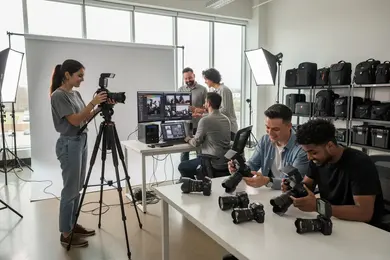
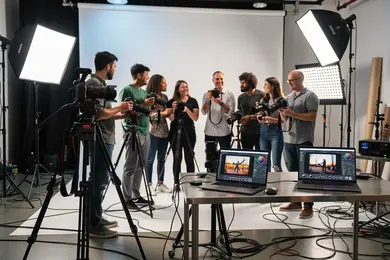
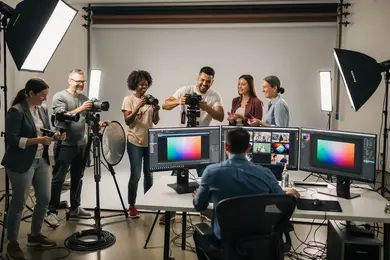
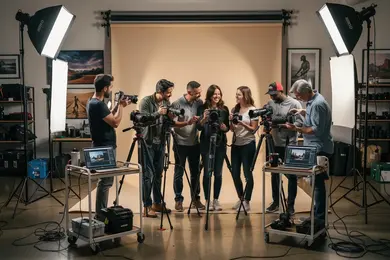
An online digital photography degree is a college program that teaches students to create, edit, manage, and sell photographic work using digital tools. Depending on the school, it may be offered as an associate degree, bachelor's degree, bachelor of fine arts, or completion program for students who already have credits. The strongest programs combine image-making with critique, lighting, color correction, file management, visual culture, branding, and client-facing business skills.
A digital photography degree online can make sense if you need schedule flexibility, already own or can access photography equipment, and are comfortable submitting work digitally for faculty critique. It may be less ideal if you need frequent studio access, extensive darkroom work, or in-person production facilities for fashion, product, or commercial shoots.
The table below compares common degree levels so you can match the credential to your goals instead of assuming that the longest program is automatically the best choice.
| Program type | Typical focus | Best fit | Decision note |
| Certificate | Camera operation, editing software, portfolio basics, or a specific niche | Beginners, hobbyists, working adults adding a skill | Fast and lower cost, but usually not equivalent to a degree for transfer or some employer requirements |
| Associate degree | Foundational photography, composition, digital workflow, and general education | Students seeking entry-level skills or a transfer pathway | Useful if you want to test the field before committing to a bachelor's program |
| Bachelor's degree | Advanced portfolio development, visual communication, business, art history, and electives | Students pursuing professional photography, media, brand, or creative business roles | Usually offers the broadest mix of technical, creative, and career-building coursework |
| BFA or studio-intensive bachelor's | Critique, concept development, exhibition practice, and advanced studio work | Students pursuing fine art, editorial, commercial, or graduate-school pathways | Strong for portfolio depth, but may require more intensive project work and critique participation |
A practical way to evaluate fit is to ask whether the program helps you build a market-ready body of work. A degree can teach structure and feedback, but clients and employers will still judge your ability through your portfolio, consistency, communication, and reliability.
Which digital photography programs are accredited?
Accreditation is one of the first things to verify because it affects credit transfer, federal financial aid eligibility, graduate school options, and employer confidence. For online photography degrees, the school should hold institutional accreditation from an agency recognized by the U.S. Department of Education or the Council for Higher Education Accreditation.
Some art and design programs may also hold specialized accreditation, such as accreditation associated with art and design education. Specialized accreditation can be valuable, but it is not a substitute for institutional accreditation when federal aid and transferability are priorities.
The table below separates the accreditation signals that matter from the ones that can sound impressive but may not protect your investment.
| Accreditation item | What to check | Why it matters |
| Institutional accreditation | Confirm the college or university appears in recognized accreditation databases | Supports federal financial aid eligibility, credit transfer, and general academic legitimacy |
| Program or art-school accreditation | Look for recognized art, design, or discipline-specific review where available | May indicate external review of curriculum, faculty, facilities, and student work |
| State authorization | Ask whether the school can enroll online students from your state | Online enrollment rules can vary by student location |
| Transfer agreements | Request written policies for transfer credits, prior learning, and portfolio review | Can reduce cost and time if you have previous college credits or professional experience |
Common red flags include schools that describe themselves as "accredited" without naming the accreditor, programs that pressure you to enroll before you review costs, and credits that are unlikely to transfer. Before applying, verify accreditation independently rather than relying only on admissions materials.
How do online and campus photography programs compare?
Online and campus photography programs can lead to similar academic credentials, but the learning experience differs. The best choice depends on your schedule, equipment access, learning style, and career goals.
The comparison below highlights where each format tends to be stronger. Use it to decide whether flexibility or physical studio access should matter more in your school search.
| Factor | Online photography degree | Campus photography degree | Best choice when... |
| Schedule | Often asynchronous or hybrid, with digital critique submissions | Set class, lab, and studio times | Online works better for working adults or students balancing caregiving |
| Studio access | May require students to use home, local, or rented spaces | Often includes lighting labs, studios, print labs, and equipment checkout | Campus works better for students who need regular access to specialized facilities |
| Critique | Usually through learning platforms, video, annotated files, and discussion boards | Often live, in-person critique with classmates and faculty | Online works if you can accept feedback remotely and revise independently |
| Networking | Can include virtual communities, remote guest lectures, and online portfolio reviews | May offer local exhibitions, campus events, and regional employer connections | Campus may be stronger if your target market is local and relationship-driven |
| Cost structure | May reduce commuting and housing costs, but equipment costs remain | May include more campus fees, housing, transportation, and supply costs | Online may lower total cost if you already have equipment and a suitable workspace |
Do not choose online study only because it seems easier. Strong online programs still require shooting assignments, critique participation, editing time, reshoots, portfolio revisions, and professional presentation. A good rule is to choose online if you are self-directed and have access to subjects, locations, lighting, and internet bandwidth; choose campus if you learn best through in-person critique and hands-on studio support.
What courses are included in a digital photography degree?
Digital photography degree curricula usually blend technical production, visual communication, art context, and business preparation. A business-oriented program should help you understand not only how to make strong images, but also how to price work, license images, manage clients, and build a recognizable brand.
Students comparing photography with other design-centered degrees may also look at an architecture online degree if they are more interested in spatial design, building systems, and technical drawing than image-based visual storytelling.
The table below shows common course areas and how each one supports a creative business path.
| Course area | What students learn | Business value |
| Digital camera fundamentals | Exposure, lenses, sensors, focus, file formats, and shooting workflows | Reduces technical errors and improves consistency for client work |
| Lighting | Natural light, studio light, flash, modifiers, and lighting diagrams | Supports portrait, product, fashion, event, and commercial photography |
| Digital editing | Color correction, retouching, compositing, batch editing, and non-destructive workflows | Speeds delivery and helps maintain a professional visual style |
| Visual storytelling | Sequencing, narrative, documentary practice, and editorial decision-making | Helps photographers pitch stories, campaigns, and brand concepts |
| Art and media history | Historical movements, ethics, representation, and visual culture | Improves concept development and helps students discuss their work professionally |
| Business of photography | Contracts, pricing, licensing, taxes, client communication, and marketing | Directly supports freelance, studio, and small-business goals |
| Portfolio or capstone | Curated body of work, artist statement, website, and presentation materials | Creates evidence for employers, clients, galleries, or graduate programs |
AI-assisted editing and image-generation tools are also influencing coursework. Responsible programs should teach students to use automation for workflow efficiency while still addressing authorship, disclosure, copyright risk, consent, and ethical representation. If a curriculum treats AI only as a shortcut and not as a professional issue, ask more questions before enrolling.
What admission requirements do photography programs use?
Admissions requirements vary by school and degree level. Many online photography programs are more accessible than highly selective studio conservatories, but stronger programs still want evidence that you can complete college-level work and respond to creative feedback.
The table below summarizes common requirements so you can prepare before speaking with admissions staff.
| Requirement | Common expectation | How to prepare |
| Application form | Basic personal, academic, and program information | Confirm deadlines and whether the program has rolling admissions |
| High school diploma or equivalent | Usually required for undergraduate admission | Request transcripts early, especially if you attended multiple schools |
| College transcripts | Required for transfer or degree-completion applicants | Ask for a preliminary transfer credit evaluation in writing |
| Portfolio | May be optional for some entry programs and required for selective programs | Submit cohesive work that shows control, curiosity, and editing judgment |
| Personal statement | May ask about goals, creative interests, or prior experience | Connect the program to your career plan instead of writing only about passion |
| Technology readiness | Camera, computer, editing software, storage, and internet access may be expected | Budget for gear and confirm whether software subscriptions are included |
Before applying, take these practical steps to avoid preventable delays and unexpected expenses:
- Ask whether a portfolio is required for admission, scholarship review, or placement into advanced courses.
- Request a written list of required equipment, software, printing, cloud storage, and studio-related costs.
- Confirm how transfer credits apply to the major, not just to general electives.
- Ask whether online students must attend any campus sessions, exhibitions, internships, or residencies.
- Review sample student work or capstone projects to see whether the program's style aligns with your goals.
A common mistake is assuming that open or flexible admission means the program will be easy. Photography degrees can be time-intensive because assignments often require planning, shooting, editing, critique, revision, and professional presentation.
How long does an online photography degree take?
The length of an online photography degree depends on degree level, transfer credits, course load, and whether the program runs on semesters, quarters, or accelerated terms. Full-time students move faster, while part-time students may need more calendar time but can keep working while enrolled.
The table below gives realistic planning ranges. Actual timelines vary, so use these as a framework rather than a promise.
| Credential | Common credit range | Typical full-time timeline | Who it fits |
| Certificate | About 12 to 30 credits | Several months to 1 year | Students seeking focused skills without a full degree |
| Associate degree | About 60 credits | About 2 years | Students starting college or planning to transfer |
| Bachelor's degree | About 120 credits | About 4 years | Students seeking broad creative, technical, and business preparation |
| Degree-completion bachelor's | Varies after transfer review | Often 1 to 3 years | Students with prior college credits or an associate degree |
If speed matters, do not look only at advertised completion time. Ask how often required photography courses are offered, whether prerequisites can slow progress, and whether capstone courses are available every term. Accelerated programs can be efficient, but they may be difficult for students who need time to shoot high-quality portfolio work around jobs or family responsibilities.
How much does an online digital photography degree cost?
The cost of an online digital photography degree includes more than tuition. Students may need a camera body, lenses, lighting, memory cards, backup drives, calibrated displays, editing software, printing, books, portfolio hosting, and occasional travel for shoots or exhibitions.
For broad context, College Board's 2024-2025 data reported average published tuition and fees of $11,610 for in-state students at public four-year institutions and $43,350 at private nonprofit four-year institutions. Those figures are not photography-specific, but they help you benchmark whether a school's tuition is unusually low, typical, or high before financial aid is applied.
Use the following cost categories when comparing programs. A school with higher tuition may still be the better value if it includes software, equipment access, career support, and strong transfer credit policies.
- Tuition and mandatory fees, separated by in-state, out-of-state, online, and private-school rates
- Camera, lens, lighting, tripod, storage, color calibration, and printing requirements
- Software subscriptions for editing, cataloging, design, video, or portfolio presentation
- Course materials, books, portfolio hosting, domain registration, and website expenses
- Travel costs for shoots, exhibitions, internships, campus residencies, or required events
- Lost income or reduced work hours if the program requires intensive studio or capstone work
To reduce cost, ask about transfer credits, prior learning assessment, equipment checkout for online students, subscription discounts, institutional scholarships, and whether general education courses can be completed at a lower-cost accredited college before transfer. Avoid choosing a program only because the per-credit tuition looks low; total cost depends on credits required, fees, supplies, and time to completion.
What careers can a digital photography degree support?
A digital photography degree can support several creative business paths, especially when students build a portfolio around a specific market. The degree itself is rarely the only hiring factor; employers and clients usually look for a strong body of work, editing skill, reliability, and communication.
Students who discover that they want a more research-based, studio-art, teaching, or advanced critique path after a bachelor's degree may compare photography employment options with online MFA programs, especially if they are considering college-level teaching, fine-art practice, or advanced interdisciplinary work.
The table below connects photography-related career paths with typical responsibilities and the preparation that can make a degree more useful.
| Career path | Typical responsibilities | Helpful preparation |
| Portrait or wedding photographer | Plan shoots, direct clients, edit galleries, manage contracts, deliver images | Lighting, posing, client communication, pricing, workflow automation |
| Commercial or product photographer | Create images for brands, catalogs, ecommerce, advertising, and campaigns | Studio lighting, color accuracy, retouching, usage licensing, art direction |
| Photojournalist or documentary photographer | Cover news, communities, events, social issues, and editorial stories | Ethics, captioning, visual storytelling, field workflow, media law basics |
| Real estate or architectural photographer | Photograph interiors, exteriors, properties, spaces, and built environments | Wide-angle composition, lighting balance, editing discipline, scheduling |
| Digital content creator | Produce still images, short-form visuals, brand assets, and social media content | Photography, video basics, platform strategy, analytics, brand consistency |
| Photo editor or digital asset coordinator | Select, organize, retouch, archive, tag, and manage image libraries | Editing software, metadata, visual judgment, copyright awareness |
| Studio owner or freelance creative | Market services, manage clients, price projects, hire assistants, handle operations | Business planning, bookkeeping, contracts, sales, customer experience |
This degree is usually worth considering if you want structured feedback, a guided portfolio, and business training. It may not be the best investment if you already have a strong professional portfolio, need only one technical skill, or want a career where a different credential is required. In those cases, targeted certificates, workshops, apprenticeships, or business courses may offer a better return.
What salaries do photography graduates earn?
Photography-related earnings vary widely because many professionals are self-employed, work project-to-project, or combine photography with editing, design, marketing, or video. The most useful way to read salary data is as a labor-market benchmark, not as a prediction of what any one graduate will earn.
The U.S. Bureau of Labor Statistics reported a May 2024 median annual wage of $42,520 for photographers. That benchmark is important because it shows why students should evaluate debt carefully and consider programs that teach pricing, licensing, marketing, and client management in addition to image production.
The table below uses U.S. BLS May 2024 wage data for selected roles that may connect to photography, visual content, or adjacent creative work. Some roles may require additional experience, specialized portfolios, or broader design and media skills beyond a photography degree.
| Role | May 2024 median annual wage | How to interpret the figure |
| Photographers | $42,520 | Most directly aligned with photography degrees, but income can vary by niche, client base, region, and self-employment |
| Graphic designers | $61,300 | Relevant for graduates who combine photography with layout, branding, and digital design skills |
| Film and video editors and camera operators | $70,980 | Relevant for students who add motion, editing, and production skills to their visual portfolio |
| Art directors | $111,040 | Typically requires substantial experience and leadership, not just an entry-level degree |
To evaluate return on investment, compare the program's total net cost with the type of work you actually want to do. A student aiming for freelance portrait work should look closely at business support and local market demand, while a student aiming for brand content or art direction should build complementary skills in design, video, marketing, and project management.
What certifications strengthen a photography career?
Photography is not generally a licensed profession in the way nursing, teaching, or architecture can be, but certifications can still strengthen credibility and workflow skills. The most useful certifications are usually software, drone, business, or niche-specific credentials that support the kind of work you want to sell.
Creative students who are comparing credential value across fields may notice that some programs are designed around employer-recognized technical pathways, such as an online cybersecurity bachelor degree for veterans. Photography is different: the portfolio remains central, and certifications work best as supporting evidence rather than the main proof of ability.
The table below summarizes certifications and credentials that may complement a digital photography degree.
| Credential | Best for | Value to a photography career |
| Adobe Certified Professional | Students using Photoshop, Lightroom-related workflows, design tools, or digital production software | Signals software fluency for editing, retouching, and content production roles |
| FAA Part 107 Remote Pilot Certificate | Photographers offering commercial drone imagery in the U.S. | Required for many commercial drone operations and useful for real estate, events, construction, and media work |
| Professional Photographers of America credentials | Portrait, wedding, commercial, and studio photographers | Can support professional credibility, continuing education, and client trust |
| Business or entrepreneurship certificate | Freelancers, studio owners, and independent creatives | Helps with pricing, contracts, bookkeeping, marketing, and client management |
| Digital marketing or analytics certificate | Content creators and brand photographers | Connects image-making to campaigns, audience behavior, and measurable business goals |
Choose certifications based on your revenue model. A drone credential may be valuable for real estate or commercial site work, while software certification may matter more for editing, retouching, and in-house content roles. Avoid collecting credentials without a portfolio strategy; clients and employers need to see what the credential helps you produce.
Other Things You Should Know About Digital Photography
Not always. Many programs publish minimum camera specifications, and some introductory courses may allow an entry-level interchangeable-lens camera. Before buying equipment, ask the school for its current gear list so you do not purchase items that will not meet course requirements.
Yes. Many programs ask for a 10–15 image portfolio, plus a short artist statement and proof of high school completion or a GED. Some schools also request a minimum 2.0 GPA and review the portfolio before offering conditional admission or advanced standing.
It depends on your goal. Free tutorials and workshops can teach specific techniques quickly, while a degree provides structured critique, academic credit, portfolio sequencing, and broader business or visual culture training. Students who need accountability and a credential may prefer a degree; self-directed learners may start with targeted courses.
Yes, online digital photography degrees in 2027 are designed to be flexible, allowing students to manage coursework alongside full-time jobs. Programs often include asynchronous learning and personalized scheduling, making it feasible for students to balance their education with professional commitments.
References
- Would you do a photography degree later in life? — StreetSnappers Street Photography Workshops https://streetsnappers.com/street-photography-blog/a-photography-degree-later-in-life
- Do Professional Photographers Need to Be Certified? https://www.nyip.edu/photo-articles/business/do-professional-photographers-need-to-be-certified
- College Certificate vs Online Photography School | Cameraderie https://cameraderie.org/threads/college-certificate-vs-online-photography-school.56322/
- Online Course v College: Best Value for Money for Photographers? https://www.iphotography.com/blog/online-course-college-degree/
- Diploma in Digital Photography and Photoshop | Free Course | Alison https://alison.com/course/diploma-in-digital-photography
- What careers can you do with a Photography degree? | University for the Creative Arts https://www.uca.ac.uk/blogs/careers-with-a-photography-degree/
- Photographer Certifications: Best Credentials to Advance Your Career | Teal https://www.tealhq.com/career-paths/photographer-certifications
- FULL-TIME | WINNIPEG LOCATIONS PROPF-CT Professional Photography https://catalogue.rrc.ca/Programs/WPG/Fulltime/PROPF-CT/PrinterFriendly
- Photography Course Toronto: Online Training vs In-Person School Comparison https://www.canadianphotographyschool.ca/blog/photography-course-toronto-online-vs-inperson-comparison/
- How Photography Skills will Boost your Career - Learn Photography Canada https://learnphotographycanada.com/photography-careers/