2027 Online Digital Photography Degrees With Fashion Photography Focus

Co-Founder and Chief Data Scientist
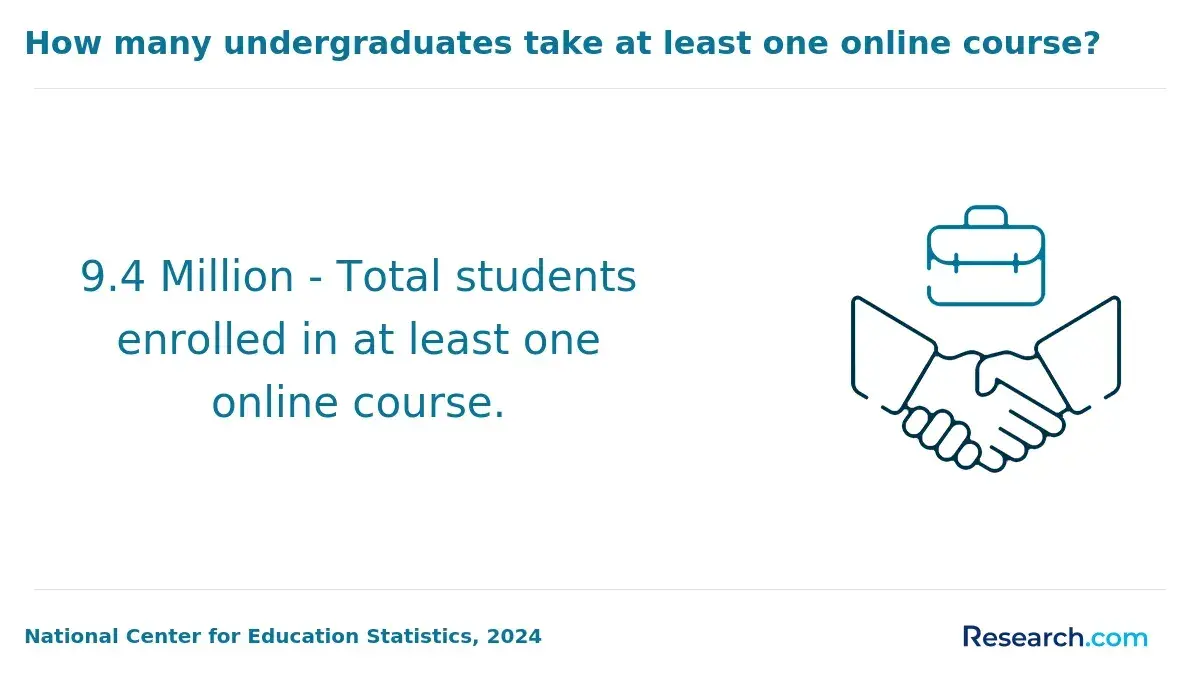
Choosing an online digital photography degree with a fashion photography focus means weighing creativity, cost, portfolio development, and career fit. NCES reported in 2024 that more than half of U.S. postsecondary students took at least one distance education course, making online arts education a mainstream option rather than a backup plan.
This guide is for aspiring fashion photographers, working creatives, career changers, and students comparing degree paths. You will learn what these programs teach, how online study works, what they cost, and how to choose a program that supports real career goals.
Key Things You Should Know
- Online fashion-focused photography degrees are best for students who can build a strong portfolio independently; employers usually evaluate creative work, lighting skill, editing quality, and production experience as much as the degree title.
- According to the U.S. Bureau of Labor Statistics, photographers had a median annual wage of $42,520 in May 2024, but fashion, commercial, freelance, and editorial income can vary widely by market, client base, and business skills.
- For cost planning, the College Board reported 2024-25 average published tuition and fees of $11,610 for in-state public four-year colleges and $43,350 for private nonprofit four-year colleges, so transfer credits, equipment expenses, and financial aid can materially change the real price.
What is an online digital photography degree with a fashion photography focus?
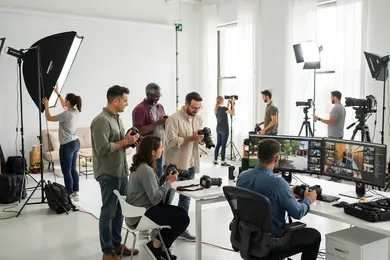
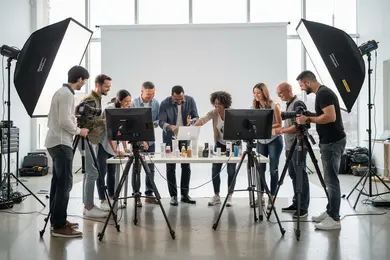
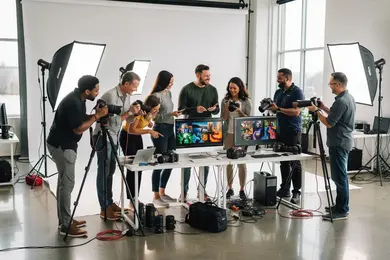
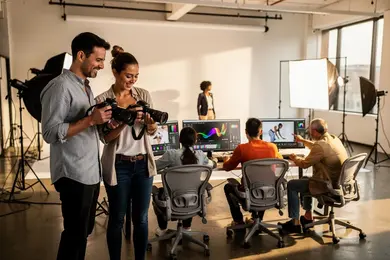
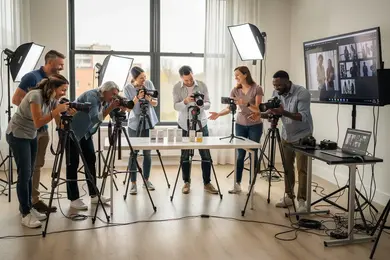
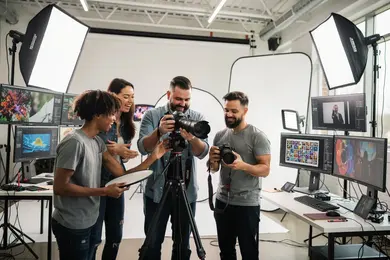
An online digital photography degree with a fashion photography focus is a college program that teaches photography fundamentals through a fashion, editorial, commercial, or beauty-image lens. Students usually study camera operation, studio lighting, image editing, visual storytelling, art direction, fashion styling, portfolio development, and the business side of creative work.
The "digital photography" part matters because most contemporary fashion images are planned, captured, edited, delivered, and archived through digital workflows. The "fashion photography focus" means assignments often revolve around garments, accessories, models, beauty concepts, brand identity, lookbooks, editorials, e-commerce images, campaigns, and social media content.
These programs are usually a good fit for students who want structured creative training but need flexibility for work, family, military service, internships, assisting work, or freelance projects. They may not be the best fit for students who need constant access to campus studios, want daily in-person critique, or do not yet have reliable access to a camera, lighting tools, models, locations, and editing software.
Because fashion photography is portfolio-driven, the value of the degree depends heavily on what the student produces during the program. A strong program should help students graduate with a polished portfolio, a basic production network, an understanding of client workflows, and enough business knowledge to price work, license images, and manage shoots responsibly.
How do online fashion photography degrees compare with campus-based programs?
Online and campus-based fashion photography programs can lead to similar creative outcomes, but they create very different learning experiences. The right format depends on how much structure, studio access, peer interaction, and scheduling flexibility a student needs.
The table below compares the main decision factors students should weigh before choosing an online or campus-based route. It is especially useful for applicants who are deciding whether flexibility is worth the trade-off of having less built-in studio access.
| Factor | Online fashion photography degree | Campus-based fashion photography program |
| Schedule | Often more flexible, with asynchronous lectures, remote critiques, and deadline-based projects | More structured, with scheduled studio labs, workshops, and in-person critiques |
| Studio access | Student may need to create or rent a home, local, or shared studio setup | Program may provide lighting bays, backdrops, equipment cages, and controlled studio environments |
| Networking | Requires intentional outreach to stylists, models, makeup artists, designers, and local clients | Often easier to meet collaborators through campus productions and local industry events |
| Portfolio development | Can be strong if assignments are rigorous and students can organize shoots independently | Can be strong when campus resources support frequent, supervised productions |
| Best fit | Working adults, remote students, military-connected students, and self-directed creatives | Students who learn best through in-person instruction and need direct access to equipment |
Online study can work well when students treat assignments like real productions rather than simple homework. That means planning mood boards, booking collaborators, securing locations, testing lighting, editing consistently, and requesting critique. Students with military backgrounds or frequent relocation needs may also want to compare programs designed around credit mobility and benefits, such as a photography degree online for veterans.
The common mistake is assuming "online" means cheaper, easier, or less professional. In creative fields, a weak online program can leave students with few usable portfolio pieces, while a strong one can push students to build a local production network and graduate with client-ready work.
What types of online digital photography degrees specialize in fashion photography?
Fashion photography can appear as a concentration, elective track, certificate stack, or self-designed portfolio emphasis within a broader photography or visual arts degree. The best option depends on the student's career goal, prior credits, budget, and need for a recognized credential.
The table below summarizes common degree types and how they usually fit different student goals. It helps applicants avoid choosing a credential that is either too narrow for long-term growth or too broad for fashion-specific portfolio needs.
| Program type | Typical focus | Best for | Main limitation |
| Associate degree in digital photography | Camera technique, editing, lighting basics, visual design, and introductory portfolio work | Beginners seeking affordable training or transfer preparation | May not provide enough advanced fashion production experience on its own |
| Bachelor's degree in photography or digital media | Advanced imaging, art history, studio practice, commercial work, professional portfolio, and electives | Students seeking a deeper credential and broader creative foundation | Takes longer and usually costs more than shorter credentials |
| BFA in photography | Intensive studio practice, critique, concept development, exhibitions, and portfolio refinement | Students who want an art-school-style experience and strong creative identity | May emphasize fine art more than commercial fashion unless electives align |
| Certificate in fashion or commercial photography | Targeted skills such as lighting, posing, retouching, styling collaboration, and portfolio projects | Working photographers adding fashion skills quickly | May not carry the same academic weight as a degree |
| BA or BS in digital media with photography electives | Photography plus video, social content, branding, design, and media production | Students interested in fashion content creation beyond still images | May offer fewer advanced photography-specific courses |
A degree makes the most sense when a student wants structured feedback, financial aid eligibility, transferable credits, and a broader academic credential. A certificate may make more sense for someone who already has a degree, already shoots professionally, or needs a shorter path to improve lighting, retouching, or fashion portfolio quality.
Students should also look closely at course titles. A program that advertises fashion photography but offers only one fashion-related elective may not provide enough depth. A better signal is a curriculum that includes commercial lighting, fashion editorial production, post-production, portfolio critique, business practices, and opportunities to create several finished fashion stories or campaigns.
Which accreditation and institutional approvals should online fashion photography programs have?
Accreditation is one of the most important checks before enrolling because it affects federal financial aid eligibility, transfer credit, graduate school options, and employer trust. In the U.S., students should first confirm that the institution is accredited by an agency recognized by the U.S. Department of Education or the Council for Higher Education Accreditation.
Programmatic accreditation is less universal in photography than in fields such as nursing or engineering, so institutional accreditation usually matters most. Art and design schools may also hold specialized recognition from organizations such as the National Association of Schools of Art and Design, but not every reputable photography program has that approval.
Students should verify these approvals directly before applying because school websites can be confusing and accreditation status can change. The following checks are especially important for online students who may never visit campus:
- Confirm institutional accreditation through the accreditor's public directory, not only through the school's marketing materials.
- Check whether the online program is included under the institution's accredited scope and distance education approval.
- Ask whether credits can transfer to public universities, graduate programs, or other art schools if plans change.
- Review state authorization if you live outside the school's home state, since online enrollment permissions can vary.
- Confirm whether portfolio courses, internships, or local field experiences have location-based requirements.
A major red flag is a school that promises quick career success, avoids direct accreditation questions, or pressures students to enroll before they can review tuition, refund policies, and credit-transfer rules. Accreditation does not guarantee a great portfolio or a strong career, but lack of recognized accreditation can create avoidable financial and academic risk.
What courses and skills are taught in fashion-focused digital photography programs?
Fashion-focused digital photography programs combine technical image-making with creative direction and business preparation. The strongest curricula help students understand not only how to take a compelling fashion image, but also how to plan a shoot, collaborate with a team, edit consistently, and deliver work for commercial use.
Students can expect a mix of foundation, production, and professional courses. These subjects matter because fashion photography rarely happens alone; it depends on coordination among photographers, models, stylists, makeup artists, art directors, designers, editors, and clients.
- Digital camera technique, exposure control, lens selection, file formats, and image workflow
- Studio lighting, natural light, location lighting, flash, reflectors, modifiers, and color consistency
- Fashion editorial concepts, mood boards, visual references, shot lists, and story development
- Posing, model direction, movement, garment presentation, and communication on set
- Retouching, color grading, skin editing, compositing basics, and non-destructive editing workflows
- Fashion styling collaboration, beauty photography, product details, e-commerce imagery, and lookbook production
- Copyright, licensing, releases, contracts, pricing, client communication, and professional ethics
- Portfolio sequencing, personal branding, website presentation, critique, and capstone production
Technology is changing the workflow. AI-assisted editing, automated background cleanup, image culling, generative concepting, and metadata tools can speed up production, but students still need strong judgment, lighting fundamentals, ethical standards, and client communication skills. Photographers interested in the technical side of machine learning, image generation, or computer vision may eventually explore fields far beyond photography, including an online PhD in artificial intelligence USA.
The practical takeaway is that software shortcuts cannot replace a well-developed eye. A student should leave the program able to explain creative choices, direct a team, troubleshoot lighting, protect client files, and produce a coherent set of images that look intentional rather than accidental.
What are typical admission requirements for online fashion photography degree programs?
Admission requirements vary by school and degree level, but online photography programs typically look for evidence that applicants can succeed academically and creatively. Some programs are open admission or test-optional, while more selective art schools may require a portfolio, statement of purpose, or prior studio coursework.
The table below outlines common requirements by credential level. Students should use it to estimate readiness before spending time and application fees on programs that may expect more preparation than they currently have.
| Credential level | Common admission requirements | Portfolio expectations |
| Certificate | Application form, proof of high school completion or prior college enrollment, and sometimes a short statement | Often optional, though samples may help with placement |
| Associate degree | High school diploma or equivalent, transcripts, placement assessment, and basic technology access | Usually optional for community colleges and open-access programs |
| Bachelor's degree | High school or transfer transcripts, application essay, recommendation letters, and possibly minimum GPA standards | May require 10 to 20 images showing composition, concept, technical control, and creative potential |
| BFA or selective art-school program | Academic records, artist statement, portfolio review, interview, and sometimes prior art coursework | Usually central to admission and scholarship decisions |
Applicants should prepare early if a portfolio is required. A fashion-focused portfolio does not need celebrity models or expensive locations, but it should show careful lighting, styling awareness, clean editing, and intentional direction. Admissions reviewers generally prefer a smaller group of strong images over a large set of inconsistent work.
Online students should also confirm technology requirements before enrolling. A typical program may expect a DSLR or mirrorless camera with manual controls, a computer capable of editing high-resolution files, calibrated or reliable display quality, external storage, fast internet, and access to editing software. Some programs offer equipment discounts or loaner options, but students should not assume those are included.
How long do online fashion photography degrees take, and what do they cost?
Program length depends on the credential, transfer credits, course load, and whether the student attends full time or part time. A certificate may take a few months to one year, an associate degree usually takes about two years of full-time study, and a bachelor's degree commonly takes about four years for first-time students. Transfer students may finish faster if prior credits apply cleanly to the curriculum.
Cost varies widely, so students should compare the total cost of attendance rather than tuition alone. The College Board reported the following 2024-25 average published tuition and fee benchmarks for U.S. four-year institutions, which can help students understand the broader pricing environment:
- $11,610 for in-state students at public four-year colleges
- $30,780 for out-of-state students at public four-year colleges
- $43,350 for private nonprofit four-year colleges
Online photography students should budget beyond tuition because creative programs often require equipment and production expenses. These may include a camera body, lenses, tripod, lighting kit, backdrops, memory cards, external drives, editing software, printing, portfolio website hosting, wardrobe pulls, model fees, makeup artists, location fees, and transportation to shoots.
Students trying to control costs should follow a clear comparison process before enrolling:
- Ask for a full cost estimate that includes tuition, fees, software, equipment, portfolio costs, and any required campus visits.
- Confirm how many transfer credits the school will accept and whether photography courses from another institution count toward major requirements.
- Compare financial aid packages by net price, not by scholarship amount alone.
- Find out whether the school has equipment lending, software discounts, veterans benefits support, payment plans, or local partner studios.
- Estimate likely freelance or assistant income conservatively and avoid borrowing based on best-case career assumptions.
The affordability trade-off is straightforward: a lower-cost program can be a smart choice if it still provides strong critique, portfolio direction, and career support. A more expensive program may be worth considering when it offers exceptional faculty access, industry connections, equipment resources, or a track record of student work that matches the applicant's goals.
What careers can graduates of fashion-focused digital photography degrees pursue?
Graduates of fashion-focused digital photography degrees can pursue several creative and commercial paths. The degree itself is rarely the only hiring factor; employers and clients usually want to see a strong portfolio, consistent editing style, professionalism, and evidence that the photographer can deliver under real production constraints.
The table below summarizes common roles connected to fashion photography training. It is meant to clarify career direction, not to imply that every graduate will enter one of these roles immediately.
| Career path | Typical responsibilities | Portfolio evidence that helps |
| Fashion photographer | Plan and shoot editorials, lookbooks, campaigns, model tests, and brand imagery | Editorial stories, studio fashion images, location shoots, and consistent model direction |
| Commercial photographer | Create images for brands, retailers, agencies, and marketing campaigns | Clean lighting, product detail, lifestyle imagery, and client-ready image sets |
| E-commerce photographer | Photograph apparel, accessories, models, and product details for online retail | Accurate color, repeatable lighting, garment clarity, and efficient workflow |
| Photo assistant or digital tech | Support lighting setup, file management, tethering, backups, and on-set workflow | Technical reliability, behind-the-scenes experience, and software competence |
| Retoucher or post-production artist | Edit images, refine skin and fabric, color grade, composite, and prepare files for delivery | Before-and-after samples, natural retouching, color consistency, and detail control |
| Content creator for fashion brands | Produce stills, short-form video, social assets, and campaign visuals | Multi-platform projects, brand storytelling, reels, and social campaign examples |
Fashion photography careers often start through assisting, test shoots, internships, small brand work, e-commerce production, or local editorial collaborations. Students who want to advance beyond shooting into brand management, campaign strategy, or creative leadership may later consider business-oriented education such as a marketing masters.
This degree may be worth it for students who need structured feedback, want a recognized credential, and are willing to build a portfolio aggressively while enrolled. It may not be worth it for students who expect the credential alone to create paid fashion work, dislike self-promotion, or are unwilling to handle the business side of freelancing.
What salary ranges and job outlook can fashion photographers expect in the U.S.?
The U.S. Bureau of Labor Statistics reported a median annual wage of $42,520 for photographers in May 2024. This figure is useful as a national benchmark, but it does not isolate fashion photographers specifically and does not capture the uneven income patterns of freelance, editorial, luxury, advertising, and e-commerce work.
Salary outcomes in fashion photography can vary because the field includes many business models. A full-time e-commerce photographer may have steadier pay but less creative control. A freelance fashion photographer may have higher project fees at times but also unpaid marketing time, equipment costs, irregular bookings, taxes, insurance, and production expenses.
The table below shows how different work settings can affect income stability and career strategy. It helps students understand why one national salary figure cannot fully describe the field.
| Work setting | Income pattern | Career considerations |
| Retail or e-commerce employer | More predictable wages or salary | Good for workflow speed, production discipline, and steady experience |
| Commercial studio | Varies by role, market, and client volume | Can build technical skill and expose graduates to larger productions |
| Freelance fashion photography | Highly variable project-based income | Requires marketing, client management, pricing, contracts, and consistent outreach |
| Editorial work | Often lower or inconsistent pay, depending on publication and assignment | Can build visibility and creative credibility but should be balanced with commercial work |
| Retouching or digital tech work | Can be freelance or staff-based | Useful for technically strong graduates who enjoy post-production and on-set workflow |
For job outlook, the BLS projects photographer employment to grow 4% from 2024 to 2034, which is about as fast as the average for all occupations. Students should interpret that cautiously: demand for visual content remains strong, but competition is intense because digital tools have lowered barriers to entry.
The best way to improve career resilience is to combine creative skill with business and technical capabilities. Graduates who can shoot, retouch, manage files, direct small teams, produce short-form content, communicate with clients, and deliver consistent brand imagery may have more options than those who focus only on taking attractive individual photos.
How can students choose a reputable online fashion photography program that fits their goals?
Choosing a reputable online fashion photography program requires more than comparing tuition and course names. Students should evaluate whether the program can actually help them build the kind of portfolio, network, and professional habits needed for their target market.
A practical program review should include both academic checks and creative-output checks. Use the steps below before submitting a deposit or borrowing for a program:
- Verify institutional accreditation and online learning authorization through official directories.
- Review student portfolios, capstone projects, alumni work, or virtual exhibitions to see whether the program's output matches your fashion goals.
- Ask how critiques work, including whether feedback is live, recorded, written, peer-based, faculty-led, or industry-led.
- Confirm equipment expectations and calculate what you must buy, rent, or borrow before the first production course.
- Compare faculty experience in fashion, commercial, editorial, beauty, e-commerce, or advertising photography.
- Ask whether the program includes business training in contracts, licensing, estimates, invoices, copyright, and client communication.
- Check career support, including internship guidance, portfolio reviews, alumni connections, freelance preparation, and job-search help.
- Read refund policies, transfer policies, leave-of-absence rules, and graduation requirements before enrolling.
Common red flags include vague portfolio expectations, no clear faculty access, outdated software requirements, no explanation of how studio assignments work online, unrealistic income claims, and pressure to enroll quickly. Another mistake is choosing a school only because it is well known; the better question is whether its curriculum and student work align with the applicant's desired niche.
Students with military benefits or career-transition needs should also compare online support services across fields, not just within photography. For example, reviewing how schools structure advising, transfer credit, and benefits support in an online cyber security degree for veterans can give veteran students a useful benchmark for what strong online student support should look like.
The smartest choice is usually the program that balances recognized accreditation, manageable net cost, rigorous critique, relevant faculty, portfolio depth, and realistic career preparation. A fashion photography degree can be a strong investment when it helps students produce better work, make industry connections, and understand the business of images.
Other Things You Should Know About Digital Photography
No, but location still matters for portfolio-building. Students outside major fashion markets can work with local boutiques, designers, models, salons, theater groups, and stylists to create strong images. For internships and larger productions, travel or occasional work in bigger markets may help.
A smartphone may be acceptable for some introductory visual assignments, but most degree programs expect a DSLR or mirrorless camera with manual controls. Fashion photography courses often require interchangeable lenses, controlled lighting, RAW files, and tethered or high-resolution editing workflows.
Most programs require access to Adobe Photoshop and Lightroom, plus a reliable laptop or desktop that can run them smoothly. Some courses also ask for basic file-management software and a calibrated monitor for accurate color work, especially for retouching fashion images and preparing professional portfolios.
References
- Unlock Success with fixmycareer: Your Pathway to Career Brilliance https://www.fixmycareer.in/career/arts-design-communication/design/fashion-photographer
- Vogue Fashion Photography | Vogue College of Fashion https://www.voguecollege.com/courses/fashion-photography/
- Accredited Online Photography Degree Programs https://www.accreditedonlinecolleges.org/photography/
- Fashion Photography BA(Hons) https://www.falmouth.ac.uk/study/undergraduate/fashion-photography
- Fashion Styling & Digital Art Direction | Fashion Courses | Istituto Marangoni https://www.istitutomarangoni.com/en/fashion-courses/intensive-course-one-year/fashion-styling/fashion-styling-digital-art-direction
- Institutional Recognition https://www.ifaparis.com/the-school/institutional-recognition
- How to Choose a Photography School? Spéos https://speos-photo.com/en/how-to-choose-a-photography-school/
- What's the Outlook for Photographer Jobs? | All Art Schools https://www.allartschools.com/photography/outlook-photography-jobs/
- Do you need a degree in Fashion Photography? | London College Of Style https://londoncollegeofstyle.com/are-fashion-photography-courses-needed/
- The Photography Institute https://www.thephotographyinstitute.com/us/en/accreditations