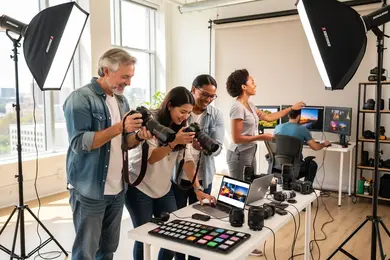
2027 Online Digital Photography Degrees for Students Who Want Brand Photography Careers

Co-Founder and Chief Data Scientist
Choosing an online digital photography degree is really a career investment question: will the program help you build images that sell products, shape visual identity, and win clients? The U. S. Bureau of Labor Statistics' 2024 outlook projects 4% growth for photographers from 2023 to 2033, but brand work is competitive and portfolio-driven. This guide is for students who want commercial, product, lifestyle, social media, or personal-brand photography careers. You'll learn how to compare programs, costs, accreditation, projects, and career outcomes before enrolling.
Key Things You Should Know
- An online photography degree can support brand photography careers when it includes commercial lighting, product photography, image editing, visual storytelling, client workflow, and a portfolio built around real brand use cases.
- Cost varies widely: College Board's 2024 pricing data lists average published tuition and fees at $4,050 for public two-year in-district colleges and $11,610 for public four-year in-state colleges in 2024-25, before aid.
- The BLS 2024 occupational outlook lists photographers' median pay at $42,520 based on May 2023 wage data and projects 4% employment growth from 2023 to 2033, so specialization, marketing skill, and portfolio quality matter.
What is an online digital photography degree and how does it prepare you for brand photography?
An online digital photography degree is a college program that teaches camera operation, lighting, composition, editing, visual communication, and professional production workflows through remote coursework. In a brand photography context, the goal is not just to take attractive images; it is to create photographs that support a company's identity, campaign goals, product positioning, and customer trust.
Brand photography usually includes product photos, lifestyle campaigns, founder portraits, ecommerce images, social media visuals, behind-the-scenes storytelling, and content libraries for websites or advertising. A strong online program prepares students by combining technical photography with business, marketing, and creative direction. That combination matters because many brand photographers work with small businesses, agencies, creators, and ecommerce teams that expect both visual skill and strategic thinking.
Students should expect an online format to use project submissions, critique boards, video demonstrations, editing assignments, cloud-based portfolio platforms, and instructor feedback. Some programs may require students to buy or borrow a DSLR or mirrorless camera, lenses, lighting equipment, memory cards, editing software, and color-calibrated display tools. The best fit is usually a program that turns each course into portfolio evidence, not just graded exercises.
For brand photography careers, the degree is most useful when it helps you prove three things: you can produce consistent commercial-quality images, you understand how brands communicate visually, and you can manage client expectations from concept to delivery.
How do online digital photography programs compare to campus-based options for brand photography careers?
Online and campus-based photography programs can both lead to brand photography work, but they differ in access, equipment, networking, and how students practice production. The better choice depends on your schedule, budget, local resources, and learning style.
The table below summarizes the most important trade-offs for students who want commercial and brand-focused photography skills. Use it to identify where you may need to supplement an online program with local studios, assistant work, rentals, or internships.
| Factor | Online digital photography degree | Campus-based photography degree | Best fit for brand photography students |
| Schedule | Often more flexible, with asynchronous critiques and assignment deadlines | More fixed class, lab, and studio times | Online is better for working students or freelancers building clients while studying |
| Studio access | May require students to create home setups or rent local studios | Often includes lighting labs, backdrops, and shared equipment | Campus can be stronger for students without any gear or studio access |
| Portfolio building | Can be highly practical if assignments are client-style and location-flexible | Can offer more structured in-person shoots and peer collaboration | Either works if projects resemble real brand deliverables |
| Networking | Depends on virtual critiques, alumni groups, local internships, and social media presence | May provide easier peer, faculty, and local creative-community access | Campus may help early networkers; online students must be intentional |
| Cost control | May reduce relocation and commuting costs, but equipment expenses still apply | May include lab access but can add housing, transportation, and campus fees | Online can be more affordable if the school is accredited and transfer-friendly |
Online programs make the most sense for students who can self-manage shoots, find local subjects or products, and ask for critique. Campus programs may be better for students who need structured studio access, in-person collaboration, and hands-on demonstrations before they feel confident.
A common mistake is assuming online means easier. In photography, online students often need more initiative because they must arrange locations, models, products, lighting practice, and reshoots on their own. If you choose online study, look for programs that provide frequent critique, clear equipment guidance, and assignments tied to commercial briefs.
Which types of digital photography degrees best support brand photography career goals?
The best degree type depends on how quickly you want to enter the field, whether you need a broad bachelor's credential, and how much business or marketing preparation you want. Brand photography is portfolio-driven, but the right academic path can still shape your technical range, creative judgment, and career options.
The table below compares common degree and credential paths for students focused on brand photography. It is especially useful if you are deciding between a fast, affordable credential and a longer program with broader creative or business training.
| Program type | Typical focus | Brand photography advantage | Potential limitation |
| Certificate in digital photography | Camera basics, editing, lighting, and portfolio samples | Fast way to build technical skills or test career interest | May not provide enough business, branding, or general education depth |
| Associate degree in photography | Foundational photography, editing, visual design, and general education | Good entry-level path with lower cost at many community colleges | May require transfer to a bachelor's program for broader advancement |
| Bachelor's degree in digital photography | Commercial photography, visual storytelling, art direction, business, and portfolio development | Strongest all-around option for students seeking agency, in-house, or advanced freelance work | Higher total cost and longer time commitment |
| BFA or BA in photography | BFA is usually studio-intensive; BA may be broader and more interdisciplinary | BFA can strengthen creative production; BA can pair well with marketing or communications | Not every program emphasizes commercial brand work |
| Related media degree | Digital media, visual communication, graphic design, advertising, or marketing | Helpful for students who want to combine photo work with campaigns and content strategy | May include fewer advanced photography studios |
A photography bachelor's degree is often the strongest option if you want in-house creative roles, agency collaboration, or a polished commercial portfolio. An associate degree or certificate can make sense if your goal is to start freelancing quickly, reduce cost, or transfer later.
Students interested in broader creative technology careers may also compare photography with adjacent programs such as an online game design degree, especially if they enjoy visual storytelling, digital environments, and interactive media. That path is not a substitute for commercial photography training, but it shows how different creative degrees can lead to very different portfolios and hiring markets.
What courses and projects should a digital photography program include for brand photography skills?
A brand-focused photography program should teach students to make images that solve a communication problem. Beautiful photographs matter, but clients usually pay for images that help sell a product, clarify a message, or create a recognizable visual identity.
Before enrolling, review the curriculum and sample student work. The following course and project areas are especially important because they map directly to brand photography assignments.
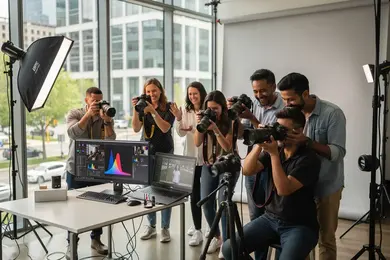
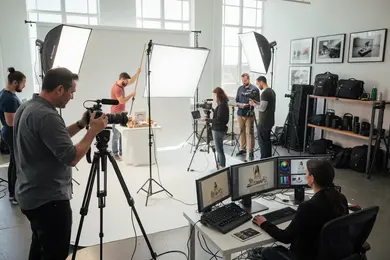
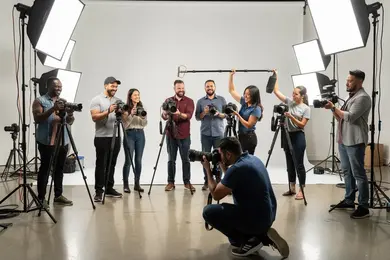
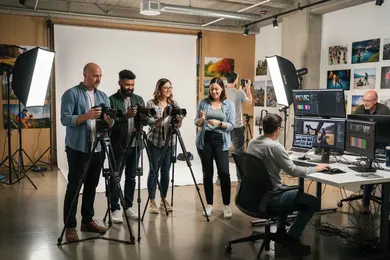
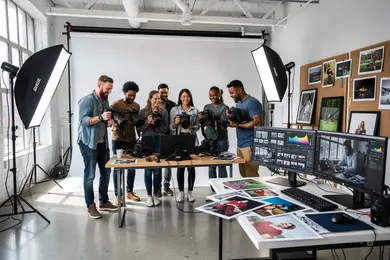
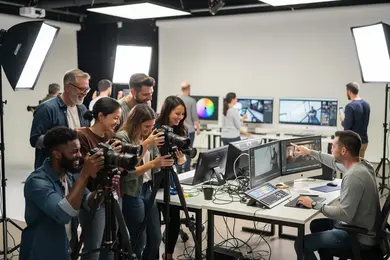
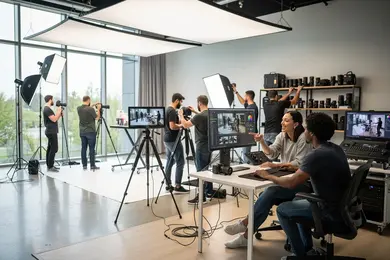
- Commercial lighting and studio photography: students should practice one-light, multi-light, softbox, reflector, background, and product-table setups.
- Product and ecommerce photography: assignments should include clean product shots, packaging, texture, scale, and consistent image sets for online stores.
- Lifestyle and environmental portraiture: students should learn to photograph people, workspaces, founders, teams, and brand moments in natural or staged settings.
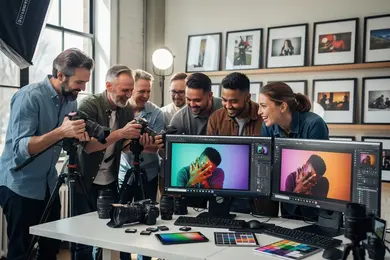
- Digital editing and color workflow: coursework should cover RAW processing, retouching, masking, color correction, file organization, export formats, and nondestructive editing.
- Visual branding and art direction: students should learn mood boards, shot lists, audience analysis, brand guidelines, and campaign consistency.
- Business practices for photographers: projects should include estimates, licensing terms, client communication, contracts, invoices, usage rights, and delivery systems.
- Portfolio and capstone development: the final portfolio should show complete brand stories, not isolated single images.
AI-assisted editing is now part of many creative workflows, but students should treat it as a tool rather than a substitute for lighting, composition, and client judgment. Programs that teach ethical image manipulation, content authenticity, and responsible disclosure can be more useful than programs that simply chase software trends.
If you are drawn to AI-heavy creative production, comparing photography coursework with a masters in AI online can clarify the difference between using AI tools as a photographer and pursuing technical AI development as a primary career path.
How can students evaluate accreditation and program quality for online digital photography degrees?
Accreditation is one of the first quality checks for any online degree. In the United States, institutional accreditation from an agency recognized by the U.S. Department of Education or the Council for Higher Education Accreditation can affect transfer credit, federal financial aid eligibility, employer recognition, and graduate school options.
Photography programs may not always have a separate specialized accreditation, so students should evaluate both institutional legitimacy and program-level evidence. A school can be accredited while still offering a photography curriculum that is weak for brand work, so both checks matter.
Use the following steps before you apply or pay an enrollment deposit. They are designed to help you avoid programs that look polished online but do not provide enough academic or career value.
- Confirm the institution's accreditation through official federal or accreditor databases, not only through the school's marketing page.
- Review the photography curriculum and verify that it includes commercial lighting, editing, portfolio development, and business practices.
- Ask whether online students receive individual critique from faculty with commercial, editorial, advertising, or brand photography experience.
- Request examples of recent student portfolios, capstones, exhibitions, or client-style projects.
- Check transfer-credit policies, especially if you may begin at a community college or already have general education credits.
- Ask about required equipment and software before comparing tuition because gear can materially change total cost.
- Look for career support that fits photography, such as portfolio reviews, internship help, alumni networks, and freelance business guidance.
Important red flags include vague accreditation language, pressure to enroll immediately, unclear refund policies, no faculty bios, no portfolio samples, and programs that promise specific salaries or guaranteed photography jobs. No school can guarantee a brand photography career because outcomes depend on portfolio quality, market, networking, pricing, and client acquisition.
What are typical admission requirements, program length, and graduation timelines for online photography majors?
Admission requirements for online digital photography programs vary by degree level. Certificate and associate programs are often more accessible, while bachelor's programs may ask for transcripts, a statement of purpose, and sometimes a creative portfolio. Selective art programs may evaluate visual potential even if applicants are still developing technical skills.
The table below outlines common timelines and entry requirements. Use it as a planning tool, but confirm details with each school because transfer credits, course loads, and academic calendars can change your actual graduation date.
| Program level | Common admission requirements | Typical full-time length | Who it fits best |
| Certificate | Application, high school diploma or equivalent, and sometimes basic computer skills | Several months to 1 year | Students testing the field or adding photography to marketing, design, or business skills |
| Associate degree | High school diploma or equivalent, transcripts, placement requirements, and possible portfolio for some programs | About 2 years | Cost-conscious students seeking entry-level skills or future transfer |
| Bachelor's degree | Transcripts, application, personal statement, possible portfolio, and transfer-credit review | About 4 years, or shorter with transfer credits | Students seeking deeper creative, business, and portfolio preparation |
| Degree completion program | Prior college credits, minimum GPA, transcripts, and sometimes portfolio review | Often 1 to 2 years after transfer | Students with completed general education or an associate degree |
Part-time study can help students balance work, family, military service, or freelance assignments, but it can also delay portfolio development. Full-time study may help you build momentum faster, although it requires more weekly time for shooting, editing, critique, and reshoots than many students expect.
Students using military education benefits should ask whether the school participates in relevant benefit programs and how online course loads affect housing allowances or enrollment status. Veterans comparing technical online degrees may find similar planning issues in resources on an online electrical engineering bachelor degree for veterans, especially around accreditation, transfer credits, and benefit alignment.
How much do online digital photography degrees cost, and what financial aid options are available?
The cost of an online digital photography degree includes more than tuition. Students should calculate tuition, fees, camera equipment, lenses, lighting, software subscriptions, storage, printing, portfolio hosting, transportation for shoots, and possible studio rentals.
College Board's 2024 pricing data gives a useful baseline for comparison: average published tuition and fees for 2024-25 were $4,050 at public two-year in-district colleges, $11,610 at public four-year in-state institutions, and $43,350 at private nonprofit four-year institutions. These are published prices, not necessarily what students pay after grants, scholarships, or institutional aid.
- Public community college route: often the lowest-cost starting point for certificates, associate degrees, and transferable general education courses.
- Public four-year online route: may offer a balance of recognized credentials, lower in-state tuition, and bachelor's-level portfolio development.
- Private nonprofit or private art school route: may offer specialized creative instruction but requires careful net-price and debt comparison.
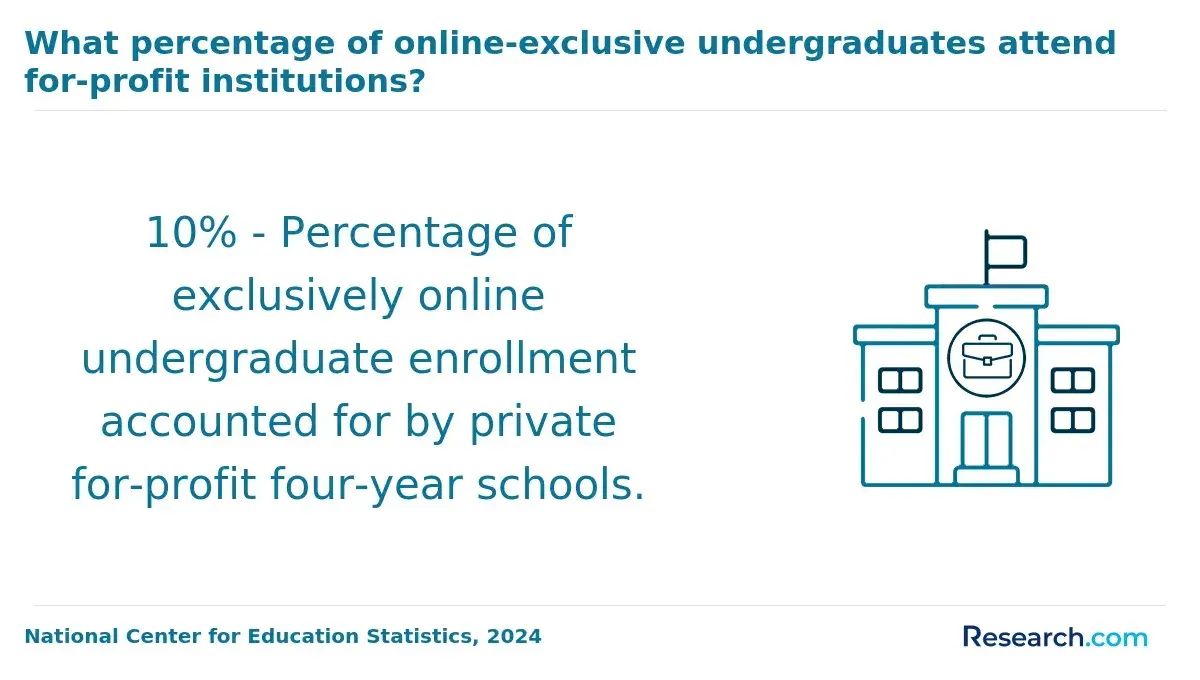
- For-profit route: may be convenient, but students should closely review accreditation, graduation outcomes, transferability, and total borrowing.
Financial aid options may include the FAFSA, Pell Grants, federal student loans, state grants, institutional scholarships, military education benefits, employer tuition assistance, payment plans, and transfer pathways that reduce the number of credits you pay for at a four-year school. The maximum Federal Pell Grant for 2024-25 is $7,395, which can meaningfully reduce costs for eligible students but may not cover equipment or all tuition.
Because brand photographers often need business and marketing skills, some students compare a photography degree with marketing-related graduate or certificate options later. Reviewing MS in digital marketing degree cost USA information can help students understand how tuition, duration, and earnings comparisons work in adjacent online programs.
A common budgeting mistake is comparing tuition only. A lower-tuition program can become expensive if it requires costly gear, has limited transfer credit, or offers weak career support. Ask each school for a complete cost estimate before enrolling.
What brand photography jobs can graduates pursue and what skills do employers expect?
Brand photography graduates can pursue freelance, agency, studio, ecommerce, content, and in-house creative roles. Many early-career photographers combine several income streams, such as product shoots, portraits, social media retainers, event content, and assisting established commercial photographers.
The table below connects common brand photography roles with their responsibilities and expected skills. This can help you choose electives, portfolio projects, and internships that match your target role.
| Role | Typical responsibilities | Skills employers or clients often expect |
| Brand photographer | Create image libraries for websites, campaigns, social media, founders, teams, and products | Visual storytelling, client discovery, lighting, posing, editing consistency, and usage licensing |
| Product photographer | Photograph products for ecommerce, catalogs, advertising, packaging, and marketplaces | Studio lighting, detail control, color accuracy, retouching, file naming, and repeatable workflows |
| Commercial photography assistant | Support lead photographers with lighting, equipment, sets, files, and production logistics | Gear handling, problem-solving, professionalism, tethering, and set etiquette |
| Content creator or visual content specialist | Produce photos and short-form visual assets for brand channels | Photography, basic video, social media formats, editing speed, and brand consistency |
| In-house studio photographer | Create recurring product, lifestyle, or campaign assets for one company | Workflow efficiency, collaboration with marketing teams, asset management, and production planning |
| Photo editor or retoucher | Edit, retouch, color-correct, and prepare files for publication or commerce | Advanced editing, color management, attention to detail, and non-destructive workflows |
Employers and clients increasingly expect hybrid skills. A photographer who understands branding, ecommerce image requirements, social media crops, basic video, and client communication can be more competitive than someone who only knows camera settings.
Students should build a portfolio around the job they want. For example, a product photographer needs consistent product sets, while a personal-brand photographer needs portraits that show personality, setting, and brand tone. A general portfolio with unrelated images is less persuasive than a focused portfolio with clear commercial intent.
What salary ranges, freelance income potential, and job outlook exist in brand photography?
Photography income varies because the field includes salaried employees, part-time freelancers, high-end commercial specialists, wedding and portrait businesses, ecommerce studios, and content creators. The BLS 2024 occupational outlook lists median pay for photographers at $42,520 using May 2023 wage data and projects 4% employment growth from 2023 to 2033. That makes photography a realistic but competitive field where specialization and business execution strongly influence outcomes.
Brand photography can pay differently from broad occupational averages because many assignments are project-based. A freelancer may price by half-day, full-day, image license, retainer, product count, or campaign scope. Income can rise with stronger clients and repeat contracts, but it can also fluctuate with seasonality, local demand, marketing effort, and business expenses.
Use the following factors to judge earning potential more realistically. They matter because two photographers with the same degree can have very different income depending on market position and business model.
- Market and niche: ecommerce, beauty, food, hospitality, fitness, real estate, personal branding, and corporate content can have different budgets and expectations.
- Portfolio strength: clients usually evaluate whether your previous work looks like the images they need.
- Licensing and usage: commercial usage rights, advertising placement, and campaign duration can affect pricing.
- Production complexity: models, props, stylists, studio rentals, assistants, and retouching time can change project value and expenses.
- Client acquisition: referrals, local networking, search visibility, social media presence, and agency relationships influence booking volume.
- Business discipline: contracts, deposits, invoicing, backups, delivery timelines, and clear scope boundaries protect profitability.
Students should avoid treating salary data as a promise. BLS figures are useful benchmarks, but they do not isolate brand photography, freelance profit, regional cost of living, or the difference between revenue and take-home income. A smarter approach is to compare program cost against realistic entry-level roles, your local market, and the portfolio you can build before graduation.
How do certifications, portfolios, and internships help digital photography graduates stand out in branding work?
Certifications, portfolios, and internships can help graduates prove job-ready skills beyond the degree itself. In brand photography, employers and clients often care less about course titles and more about whether you can deliver consistent images under real constraints.
A strong portfolio should be organized like a commercial proof of ability. It should show complete projects, not just individual favorites. For example, a skincare brand concept might include product flats, lifestyle images, ingredient textures, social crops, website banners, and founder portraits in a consistent color palette.
Use the following steps to strengthen your market position before graduation. These actions help turn academic work into evidence that clients and hiring managers can understand quickly.
- Create 3 to 5 brand-style case studies that explain the client goal, visual direction, production choices, and final deliverables.
- Include product, people, and environment-based work so your portfolio shows range within a brand context.
- Seek internships, assistant roles, or volunteer projects with small businesses only when the scope, usage, and expectations are clear.
- Earn software or platform certifications when they support your workflow, such as editing, digital asset management, or marketing tools.
- Ask instructors, working photographers, art directors, or marketing professionals for portfolio critique before publishing your final site.
- Build a simple business toolkit that includes a rate structure, contract template, invoice process, backup system, and delivery workflow.
Common mistakes include posting too many unrelated images, using only personal art projects for commercial applications, ignoring usage rights, and offering unpaid work without clear boundaries. Internships and test shoots can be valuable, but they should build skills, contacts, or portfolio pieces that move you closer to paid brand work.
Certifications are helpful supplements, not replacements for a strong book of work. A concise portfolio with relevant brand projects will usually make a stronger impression than a long list of credentials with no clear commercial examples.
Other Things You Should Know About Digital Photography
No. You need a camera that allows manual control, RAW capture, and lens flexibility if possible. Many students start with an entry-level DSLR or mirrorless camera and invest gradually in lighting, lenses, storage, and editing tools as their coursework becomes more advanced.
A 2027 Online Digital Photography Degree for brand photography careers focuses on technical skills in camera operation, proficiency in editing software, and understanding brand aesthetics. Students also learn about visual storytelling, marketing strategies, and creating cohesive brand identities through imagery, preparing them for dynamic career opportunities in the field.
Yes, especially for social media content, behind-the-scenes assets, scouting, and quick brand updates. However, many commercial assignments still require dedicated cameras, controlled lighting, high-resolution files, and consistent color management.
Students should learn Adobe Lightroom and Adobe Photoshop, plus basic color management and file export settings. Many programs also expect proficiency in metadata tagging, non-destructive editing, and preparing images in RGB and CMYK for web, social media, and print deliverables.
References
- What Can You Do With A Photography Degree? - What Career Live https://www.whatcareerlive.co.uk/what-can-you-do-with-a-photography-degree/
- Top 5 reasons to study a photography degree online https://www.falmouth.ac.uk/news/top-5-reasons-study-photography-degree-online
- Crafting a Digital Marketing Portfolio: Essential Components for Aspiring Interns https://www.premiumgraduate.com.au/resources/crafting-a-digital-marketing-portfolio-essential-components-for-aspiring-interns
- Best Online Photography Degrees https://www.onlineu.com/degrees/photography
- What Can You Do With a Photography Degree? https://pnca.willamette.edu/academics/bfa/photography/career-options
- Resumes, Portfolios, and Marketing Know-How: How to Stand Out in 2025 - Odeo Academy https://odeoacademy.com/resumes-portfolios-and-marketing-how-to-stand-out-in-2025/
- How To Get Student Loans and Financial Aid for Photography ... https://www.credible.com/student-loans/student-loans-for-photography-school
- Professional Photography - College for Arts and Technology https://collegeforartsandtech.com/programs/professional-photography/
- The Photography Institute https://www.thephotographyinstitute.com/id/en/blog-evaluating-online-courses
- How to Choose the Right Photography Program https://nossi.edu/how-to-choose-the-right-photography-program/