2027 Online Digital Photography Degrees With Social Media Content Focus

Co-Founder and Chief Data Scientist
Choosing a photography degree now means preparing for a market where images, short-form video, branding, and analytics increasingly overlap. The U.S. Bureau of Labor Statistics projects photographer employment to grow 4% from 2024 to 2034, so technical skill alone may not be enough to stand out.
This guide is for students, career changers, creators, and working photographers comparing online programs. You will learn how these degrees work, what they cost, how accreditation affects value, and which career paths may justify the investment.
Key Things You Should Know
- Online digital photography degrees with a social media content focus usually combine camera technique, editing, visual storytelling, content strategy, branding, analytics, copyright basics, and portfolio development.
- Accreditation matters more than delivery format: regional or institutional accreditation affects transfer credits, federal financial aid eligibility, and employer confidence, while specialized art accreditation can add program-level credibility.
- For cost planning, use total program cost rather than tuition alone; College Board data for 2024-25 shows average published tuition and fees of $11,610 at public four-year in-state institutions, $43,350 at private nonprofit four-year institutions, and $4,050 at public two-year colleges.
What are online digital photography degrees with social media content focus?
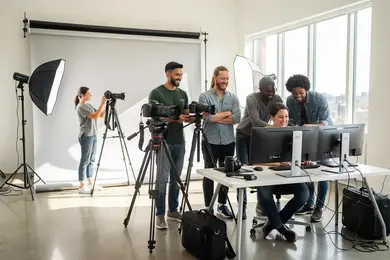
An online digital photography degree with a social media content focus is a college program that teaches photography as both a visual art and a digital communication tool. Instead of studying only lighting, composition, editing, and print production, students also learn how photographs function on platforms such as Instagram, TikTok, Pinterest, LinkedIn, brand websites, email campaigns, and e-commerce pages.
These programs may appear under names such as digital photography, photography and visual communication, digital media, content creation, commercial photography, or media arts. The social media focus may be a formal concentration, a set of electives, or a portfolio direction inside a broader photography or digital media degree.
The right program depends on the outcome you want. A student who wants gallery practice may need a stronger fine arts curriculum, while a student who wants brand work should look for commercial lighting, product photography, short-form video, copywriting, and marketing analytics. If your broader goal is bilingual media work rather than photography itself, comparing this path with an online degree in Spanish can help clarify whether language, media, or visual production should be your primary credential.
The table below compares common degree levels. Use it to match the credential to your current experience, budget, and career target rather than assuming that the longest degree is automatically the best choice.
| Program type | Typical focus | Best fit | Limitations to consider |
| Certificate | Camera skills, editing software, content basics, portfolio samples | Beginners testing the field or working adults adding practical skills | May not carry the same transfer or degree value as an associate or bachelor's program |
| Associate degree | Technical photography, general education, introductory media production | Students seeking a lower-cost entry point or transfer pathway | May not cover advanced branding, strategy, or management in depth |
| Bachelor's degree | Photography, visual storytelling, marketing, media theory, business, portfolio capstone | Students seeking broader creative, commercial, or communications roles | Higher cost and longer timeline; return on investment depends heavily on portfolio quality and career execution |
| Master's degree | Advanced visual practice, research, creative direction, teaching preparation | Experienced photographers, educators, or creative leaders | Usually unnecessary for many entry-level social media content roles |
Students who benefit most from this degree are those who enjoy creating visual content, can accept critique, and want to build a portfolio for commercial or communication settings. Students who mainly want platform management, paid advertising, or marketing analytics may be better served by a marketing, communications, or digital media degree with photography electives.
Are online digital photography programs accredited and reputable?
Online photography programs can be reputable when they are offered by properly accredited institutions and provide meaningful portfolio development, faculty feedback, and access to relevant software or equipment standards. Online delivery does not make a program weaker by itself; the bigger issue is whether the school has recognized accreditation, transparent outcomes, qualified instructors, and a curriculum aligned with your goals.
In the United States, institutional accreditation is usually the first credential to verify because it affects federal financial aid eligibility and credit transfer. Some art and design programs may also hold specialized accreditation from field-specific accreditors, but that is not always required for photography jobs. Employers in creative fields often weigh the portfolio, client experience, and technical proficiency more heavily than the program label.
Before enrolling, verify the school and program carefully. These checks help you avoid programs that look polished online but may not support your academic or career goals:
- Search the school in the U.S. Department of Education's accreditation database and confirm that the accreditor is recognized.
- Ask whether online students receive the same transcripted degree as campus students, with no wording that weakens the credential.
- Review faculty portfolios, commercial experience, publication credits, or creative work in the areas you want to enter.
- Request examples of recent student portfolios, capstone projects, internship partners, or employer-connected assignments.
- Confirm transfer credit policies before enrolling, especially if you may later move from an associate to a bachelor's program.
- Check whether required software, equipment, studio access, printing, or portfolio hosting costs are included in tuition estimates.
A common mistake is assuming that a well-known social media presence means a school is academically strong. Treat marketing materials as a starting point, not proof. The most reputable programs can explain how students are evaluated, how portfolio reviews work, how online critiques are conducted, and what support exists for internships or freelance business development.
What coursework is included in a social media photography degree?
Coursework in a social media photography degree should build both image-making ability and content decision-making. A strong curriculum helps students move from "taking good photos" to planning, producing, editing, publishing, and measuring visual campaigns for real audiences.
The table below summarizes the kinds of courses you are likely to see and why each area matters for career readiness. Use it to identify whether a program is balanced or overly narrow.
| Course area | What students learn | Why it matters |
| Digital camera technique | Exposure, lenses, focus, white balance, file types, workflow | Builds technical control needed for consistent professional-quality images |
| Lighting and studio practice | Natural light, flash, continuous lighting, product setups, portraits | Supports commercial work, brand campaigns, events, and e-commerce content |
| Photo editing and retouching | Color correction, masking, compositing, skin retouching, batch processing | Prepares students for client-ready delivery and platform-specific image standards |
| Social media content strategy | Audience planning, content calendars, platform formats, engagement goals | Connects photography to brand communication rather than isolated image creation |
| Short-form video and motion | Reels, vertical video, basic audio, editing, transitions, captions | Reflects employer demand for creators who can produce both still and motion content |
| Branding and visual identity | Style guides, campaign consistency, mood boards, art direction | Helps students create cohesive content instead of one-off images |
| Copyright and media ethics | Usage rights, releases, AI disclosure, attribution, privacy | Reduces legal and professional risk for freelance and employer-based work |
| Business and portfolio development | Pricing, client communication, contracts, portfolio sequencing, self-promotion | Supports employability and freelance sustainability |
Current programs may also include AI-assisted editing, automated masking, generative fill tools, content scheduling platforms, and analytics dashboards. These tools can improve workflow, but they do not replace judgment about lighting, composition, audience, ethics, and client expectations. A good program teaches students when automation is useful and when it can create quality, copyright, or authenticity concerns.
When comparing curricula, look beyond course titles. Ask to see project descriptions, critique formats, and capstone requirements. A strong social media photography program should require you to produce campaign-ready work, not just standalone assignments.
How do online and campus photography programs differ?
Online and campus photography programs can lead to similar academic credentials, but the learning experience differs. Photography is hands-on, so the best online programs compensate for distance through structured assignments, recorded demonstrations, live critiques, equipment guidance, and portfolio reviews.
The table below compares the most important practical differences. Use it to decide whether online learning fits your work habits, location, and access to equipment.
| Factor | Online program | Campus program | Decision point |
| Schedule | Often more flexible, with asynchronous lectures and remote critiques | More fixed class times and studio sessions | Online may work better for working adults or caregivers |
| Studio access | May require students to build a home setup or rent local space | Usually provides campus studios, lighting labs, and print facilities | Campus may be stronger if you need intensive studio infrastructure |
| Critique experience | Video submissions, discussion boards, live virtual reviews | In-person critiques and immediate group feedback | Online students should confirm critique frequency before enrolling |
| Networking | Remote faculty, online peers, local client-building | Campus events, nearby agencies, exhibitions, student organizations | Campus can help students who need local creative community |
| Portfolio building | Can be strong if assignments are project-based and feedback is detailed | Can be strong with studio access and in-person collaboration | The portfolio matters more than the format printed on the course schedule |
Online learning makes the most sense if you are disciplined, have access to a camera and editing setup, and can find people, products, events, or local businesses to photograph for assignments. Campus learning may be a better fit if you need frequent in-person accountability, shared studio equipment, darkroom or print labs, or close collaboration with other artists.
Veterans and military-connected students should also compare advising, transfer credit for military training, housing allowance implications, and online support services. A veteran friendly online photography degree can be especially useful when the program offers flexible pacing and clear benefit guidance.
What admission requirements do photography programs usually require?
Admission requirements vary by school and degree level, but most online photography programs evaluate academic readiness, creative potential, and basic technical access. Highly selective art programs may require a portfolio, while open-admission or career-focused programs may allow beginners to start with foundational courses.
The table below shows common requirements by credential level. Use it to prepare early and avoid missing application items that can delay enrollment.
| Program level | Common admission requirements | Portfolio expectation |
| Certificate | Application form, proof of age or education level, basic computer access | Often not required, especially for beginner certificates |
| Associate degree | High school diploma or equivalent, transcripts, placement assessment in some schools | Usually optional or used for course placement |
| Bachelor's degree | High school diploma or equivalent, transcripts, application essay, possible recommendations | May be required for art-focused programs or advanced standing |
| Transfer bachelor's program | College transcripts, minimum transferable credits, GPA review, general education completion | May be required to enter upper-level studio courses |
| Master's degree | Bachelor's degree, statement of purpose, portfolio, recommendations, resume | Typically required and often central to admission |
If a portfolio is required, admissions teams usually want to see visual awareness rather than perfection. A smaller set of strong, intentional images is better than a large folder of unrelated snapshots. Include variety only when it supports the program's focus, such as portraits, products, documentary work, brand-style images, or social media campaign samples.
Students should also check technology requirements before applying. Many programs expect access to a DSLR or mirrorless camera, a computer that can run editing software, reliable internet, cloud storage, and sometimes lighting equipment. If those costs are not included in the tuition page, ask admissions for a realistic first-year equipment estimate.
How long does an online photography degree take?
An online photography degree can take a few months to four years or more, depending on the credential, transfer credits, course load, and whether the program uses standard semesters, accelerated terms, or self-paced modules. The fastest option is not always the best one if it leaves too little time for portfolio development.
The table below provides typical completion ranges. Use these ranges as planning estimates, then confirm the exact pacing rules with each school.
| Credential | Typical full-time timeline | Typical part-time timeline | Best use case |
| Certificate | 3 to 12 months | 6 to 18 months | Skill building, portfolio refresh, career testing |
| Associate degree | About 2 years | 3 to 4 years | Lower-cost entry point or transfer pathway |
| Bachelor's degree | About 4 years | 5 to 6 years or more | Broader creative, communications, or commercial preparation |
| Bachelor's completion program | 1 to 2 years after transfer | 2 to 3 years after transfer | Students with prior college credits |
| Master's degree | 1 to 3 years | 2 to 4 years | Advanced practice, teaching, or creative leadership |
Transfer credits can reduce the timeline, but only if the receiving school accepts them toward your degree requirements. General education credits often transfer more easily than studio credits because photography courses may be evaluated by portfolio, software version, or learning outcomes.
To choose the right pace, consider your weekly availability and production needs. A photography course may require shooting, editing, reshooting, critique participation, and final submission. Students who work full time should be cautious about taking multiple studio-heavy courses in the same term.
How much do online digital photography degrees cost?
Online digital photography degree costs vary widely by institution type, residency status, credit requirements, equipment needs, and whether the program is a certificate, associate, bachelor's, or graduate degree. Tuition is only one part of the calculation; cameras, lenses, lighting, software, printing, portfolio hosting, and travel for optional residencies can materially change the total cost.
College Board data for 2024-25 lists average published tuition and fees of:
- $4,050 at public two-year in-district colleges
- $11,610 at public four-year in-state institutions
- $30,780 at public four-year out-of-state institutions
- $43,350 at private nonprofit four-year institutions
These figures are not specific to photography programs, but they give a useful benchmark for comparing school types. A lower-tuition public or community college pathway can make sense if credits transfer cleanly, while a higher-cost private program needs stronger evidence of portfolio support, faculty access, internship connections, or career alignment.
The table below summarizes major cost drivers. Use it to ask schools for a complete cost estimate rather than relying only on the advertised per-credit rate.
| Cost factor | Why it matters | Question to ask |
| Tuition and fees | Largest direct academic cost | Is the rate different for online, out-of-state, part-time, or upper-division students? |
| Camera and lenses | Some programs require interchangeable-lens cameras or specific technical capabilities | What minimum equipment is required in the first term? |
| Lighting and accessories | Portrait, product, and commercial work may require more than natural light | Can students rent, borrow, or substitute equipment? |
| Software | Editing, asset management, design, and video tools may require subscriptions | Are student licenses included or discounted? |
| Printing and portfolio output | Some capstones require physical prints, books, or exhibition materials | Are print costs required for online students? |
| Residencies or travel | Some online art programs include optional or required in-person sessions | Are there any campus visits, and what costs are not included? |
Financial aid may be available if the institution and program are eligible. The maximum Federal Pell Grant for the 2024-25 award year is $7,395, but actual eligibility depends on federal formulas, enrollment intensity, and school cost of attendance. Military-connected students comparing creative and technical programs may also want to review electrical engineering programs online for veterans to understand how cost, benefits, and career outcomes differ across fields.
A practical return-on-investment test is to compare total net cost with the kinds of roles you realistically plan to pursue. If your goal is freelance photography, ask how the program teaches pricing, client acquisition, contracts, and portfolio marketing. If your goal is a social media job, verify that coursework includes content planning, video, analytics, and brand communication.
What careers can you pursue with this degree?
This degree can support several creative and communications careers, but titles vary by employer. Some graduates pursue photography-first roles, while others use photography as part of broader content, marketing, e-commerce, or brand communication work.
The table below connects career paths with typical responsibilities. Use it to identify which program features matter most for your preferred direction.
| Career path | Typical responsibilities | Program features to prioritize |
| Commercial photographer | Creates portraits, product images, lifestyle visuals, event coverage, or advertising assets | Lighting, client workflow, retouching, contracts, portfolio development |
| Social media content creator | Produces still images, short-form video, captions, content calendars, and platform-ready assets | Short-form video, platform strategy, branding, analytics, audience planning |
| Brand content specialist | Develops visual content for campaigns, websites, email, and social channels | Visual identity, campaign planning, copywriting, marketing fundamentals |
| E-commerce photographer | Photographs products for online retail, catalogs, marketplaces, and brand stores | Product lighting, color accuracy, workflow speed, file management |
| Photo editor or digital asset coordinator | Selects, edits, tags, organizes, and prepares images for publication or internal use | Editing software, metadata, digital asset management, copyright basics |
| Creative assistant or studio assistant | Supports shoots, lighting setup, equipment handling, client preparation, and post-production | Studio practice, production etiquette, lighting, collaboration skills |
Employers increasingly expect creators to understand both production and performance. That does not mean every photographer must become a data analyst, but social content roles often involve knowing which images fit a platform, how to crop for different formats, how to maintain brand consistency, and how to interpret basic engagement signals.
AI is also changing creative workflows. Automated selection, background removal, captioning, and generative editing can speed up production, but employers still need people who can plan shoots, work with clients, make ethical decisions, and create original visual direction. Students interested in deeper AI research or technical leadership should understand that an online PhD artificial intelligence is a very different path from a photography degree and is usually unnecessary for content production roles.
This degree may not be the best investment if you want a career with highly standardized licensure, predictable salary ladders, or minimal freelance uncertainty. It can be a better fit if you are comfortable building a portfolio, networking, adapting to platform changes, and combining creative work with business discipline.
What salaries do photography and social content jobs pay?
Salaries in photography and social content vary significantly by job title, location, employer, portfolio strength, industry, and whether the work is freelance or salaried. A degree can help build skills and credibility, but salary outcomes are not guaranteed and often depend on experience, specialization, and business development.
The U.S. Bureau of Labor Statistics reported a May 2024 median annual wage of $42,520 for photographers. This figure is a national median, so it includes many types of photography work and does not isolate social media-focused roles. It is useful as a baseline, but students should compare it with local job postings and the pay ranges for content, marketing, and media roles in their target region.
The table below gives a decision-oriented view of related roles rather than promising specific outcomes. Use it to understand how responsibilities and earning potential may differ across career directions.
| Role category | Pay context | What can improve prospects |
| Photographer | BLS May 2024 median annual wage: $42,520 | Strong niche portfolio, lighting skill, client base, editing speed, business practices |
| Social media specialist | Often falls under marketing, communications, or media job families depending on employer | Platform strategy, analytics, copywriting, short-form video, campaign experience |
| Content creator | May be salaried, freelance, contract-based, or creator-platform dependent | Multi-format production, audience fit, brand partnerships, consistent publishing workflow |
| E-commerce imaging specialist | Often tied to retail, product, studio, or catalog production environments | Product lighting, color management, high-volume workflow, file naming, retouching |
| Creative coordinator | May combine production support, scheduling, vendor coordination, and content delivery | Project management, communication, asset organization, brand guideline knowledge |
For ROI, do not compare the degree only with the photographer median. If your program builds strong marketing and video skills, your job search may include content specialist, brand assistant, social media coordinator, studio assistant, or digital media roles. If the curriculum is narrowly focused on artistic photography without business or platform training, your career options may be more dependent on freelance growth.
Students can improve salary resilience by choosing a specialization with clear market use. Product photography, real estate media, healthcare or higher education content, nonprofit storytelling, corporate headshots, and local business social media packages can be more practical than a general "I can shoot anything" portfolio.
What certifications improve digital photography career prospects?
Certifications are not usually required for photography jobs, but they can strengthen your profile when they validate software skills, marketing knowledge, project management, or platform-specific capabilities. They are most useful when paired with a portfolio that proves you can apply the skill in real work.
The table below summarizes certification options that may complement an online photography degree. Use it to choose credentials that fill gaps rather than collecting badges that do not match your career target.
| Certification or credential area | What it signals | Best for |
| Adobe creative software certification | Validated skill in tools such as Photoshop, Lightroom, Illustrator, or Premiere Pro | Photo editing, retouching, content production, junior creative roles |
| Google Analytics certification | Ability to understand web and campaign performance data | Social media, content marketing, brand content roles |
| Meta or platform advertising credentials | Familiarity with paid social campaigns and platform tools | Creators who want to support social media managers or small business clients |
| Project management microcredentials | Basic ability to coordinate timelines, deliverables, and stakeholders | Creative coordinators, studio assistants, content production teams |
| Drone pilot certification | Legal authorization for certain commercial drone operations under FAA rules | Real estate, tourism, events, construction, and commercial visual media |
Choose certifications strategically. A photographer who wants product work may benefit more from advanced retouching and lighting workshops than from advertising credentials. A social media specialist may benefit more from analytics and platform training than from a fine art printing workshop.
Before paying for a certification, take these steps to avoid wasting time and money:
- Review job postings for your target roles and list the software, platforms, and skills that appear repeatedly.
- Compare those requirements with your current portfolio to identify the most visible gap.
- Choose one credential that helps close that gap and produces a portfolio artifact, such as a campaign report or edited image set.
- Update your resume, portfolio site, and LinkedIn profile with both the credential and examples of applied work.
The most common mistake is using certifications as a substitute for a portfolio. In visual fields, a hiring manager or client usually wants to see what you can produce. Certifications are most persuasive when they make your work faster, more professional, more measurable, or legally usable.
Other Things You Should Know About Digital Photography
Yes, but it requires planning. Online students need to create their own shooting opportunities, such as portraits, product setups, local events, small business projects, or self-directed campaigns. The strongest portfolios show consistent style, technical control, and a clear audience or client purpose.
It can be realistic if you start small and stay within your skill level. Student photographers often begin with low-risk projects such as personal branding images, campus-style portraits, product samples for local sellers, or social content packages for small organizations. Clear contracts, realistic timelines, and honest communication are essential.
For Instagram, export sRGB JPEGs at 1080 pixels wide for standard posts and 1080 × 1920 for Reels or Stories. For TikTok, use 1080 × 1920 vertical video or image sequences. Keep files under platform compression limits and add alt text, captions, and clear credit lines.
References
- How Much Does it Cost to Learn Photography? https://blog.nobledesktop.com/learn/photography/photography-cost-to-learn
- Photography https://www.oca.ac.uk/subject-areas/photography/
- Content Creator Course Australia | Online Visual Content Training https://www.australianphotographyschool.com.au/blog/content-creator-course-building-your-visual-brand-in-australias-digital-landscape/
- Would you do a photography degree later in life? — StreetSnappers Street Photography Workshops https://streetsnappers.com/street-photography-blog/a-photography-degree-later-in-life
- Photography BA(Hons) (Online) https://www.falmouth.ac.uk/study/online/undergraduate/photography
- Digital Photography https://www.stcc.edu/explore/programs/dpho.as/
- Online Photography Degree | Associate Degree (AOS) https://www.sessions.edu/online-degrees/digital-photography/
- Admission requirements master Photography & Society https://www.kabk.nl/en/programmes/master/master-photography-society/admission-requirements
- Online course - Photography for Social Media: Lifestyle Branding on Instagram (BOND) https://www.domestika.org/en/courses/156-photography-for-social-media-lifestyle-branding-on-instagram
- Content Creation and Social Media For Photographers (Online) - Maine Media Workshops + College https://www.mainemedia.edu/workshops/item/content-creation-and-social-media-for-photographers-online/