2027 Online Digital Photography Degrees With Low Total Student Debt Potential

Co-Founder and Chief Data Scientist
Choosing an online digital photography degree is a cost-and-career decision, not just a creative one. College Board's 2024 pricing data shows average published in-state tuition and fees at public four-year colleges reached $11,610, making debt control essential for visual arts students.
This guide is for aspiring photographers, career changers, and working creatives comparing accredited online programs. You will learn how to evaluate cost, accreditation, transfer credit, financial aid, career value, and salary outlook so you can choose a program that fits your goals without overborrowing.
Key Things You Should Know
- Low-debt potential usually comes from a combination of regional or recognized accreditation, generous transfer credit, lower per-credit tuition, federal aid eligibility, and minimal residency or studio travel requirements.
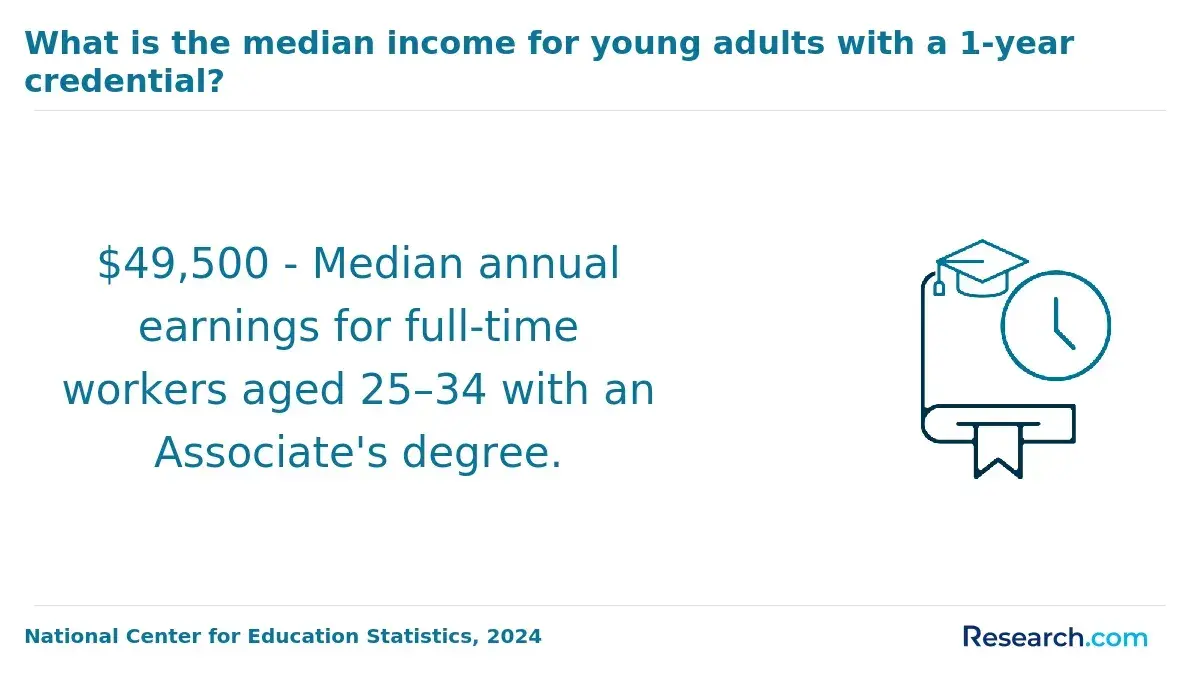
- The Bureau of Labor Statistics reported a May 2024 median annual wage of $42,520 for photographers, so borrowing should be kept proportionate to realistic early-career earnings.
- Online bachelor's programs typically require about 120 credits, but students with associate degrees, prior college credit, AP credit, or portfolio-based credit may reduce both time in school and total borrowing.
What are online digital photography degrees and how can they help reduce student debt?
An online digital photography degree is a college program that teaches image capture, lighting, editing, composition, visual storytelling, digital workflow, and professional portfolio development through remote coursework. Programs may be offered as an associate degree, bachelor's degree, Bachelor of Fine Arts, or a photography concentration inside a broader art, design, or media degree.
The main debt advantage of an online program is flexibility. Students can often keep working, avoid relocation costs, use their own camera equipment, and complete general education courses at lower-cost institutions before transferring. That matters because the financial return in photography can vary widely by location, niche, business skills, and whether the graduate pursues freelance, salaried, or hybrid creative work.
This degree can make sense if you want structured critique, a credential, access to faculty, a guided portfolio, and broader media training. It may not be the best first step if you already have a strong portfolio, need only a specific technical skill, or plan to work in a niche where clients care more about demonstrated results than a degree.
Digital photography also overlaps with adjacent creative fields. For example, students interested in image-based storytelling for interactive media may compare photography programs with pathways toward becoming a video game designer, where visual composition, lighting, and digital asset creation can support broader production roles.
Which accredited online digital photography programs offer the lowest total student debt potential?
No public ranking can guarantee the lowest debt for every student because net cost depends on transfer credits, residency rules, aid eligibility, scholarships, equipment needs, and how quickly a student finishes. The most useful approach is to compare accredited programs by total cost drivers rather than tuition alone.
The table below highlights online or substantially online photography-related degree options that students commonly evaluate for debt-conscious planning. Use it as a shortlist for further verification, not as a substitute for checking each school's current tuition, accreditation, transfer policy, and College Scorecard debt data.
| Program or institution type to compare | Credential focus | Accreditation consideration | Why it may lower debt potential | Debt caution |
| Southern New Hampshire University | Online BA in Digital Photography | Regionally accredited institution | Designed for online adult learners and commonly structured around transfer-friendly bachelor's completion | Students should confirm total credits still needed and current per-credit tuition before estimating borrowing |
| Arizona State University Online | Online art or photography-related bachelor's pathway | Regionally accredited public university | Public-university online infrastructure and broad course availability may help students plan steady progress | Online tuition can differ from campus tuition, so residency status alone may not predict cost |
| Rocky Mountain College of Art + Design | Online photography or commercial photography-oriented BFA pathway | Institutional accreditation should be verified before enrollment | Career-focused art curriculum may suit students seeking a portfolio-intensive path without relocating | Private art-school pricing can raise debt if scholarships or transfer credits are limited |
| Academy of Art University | Online photography degree options | Institutional accreditation should be confirmed through official databases | Online studio model may appeal to students needing remote access to a specialized art school | Total cost can rise if the program requires many major credits after transfer evaluation |
| Community college plus online bachelor's completion | Associate degree or transfer pathway into a bachelor's program | Both institutions should be accredited and transfer-compatible | Completing general education and introductory photography courses at lower tuition can reduce total borrowing | Credits may not transfer as expected unless the student confirms course equivalencies in writing |
The lowest-debt option is often not the school with the cheapest advertised tuition. It is the program that lets you graduate with the fewest paid credits, the least duplicated coursework, and the strongest portfolio for your target market.
How do online and campus-based digital photography degrees compare for cost and value?
Online and campus-based photography degrees can both provide value, but their cost structures are different. Online programs usually reduce living and relocation costs, while campus programs may provide studio access, equipment labs, gallery space, and in-person networking that can be expensive to replicate independently.
The comparison below shows where the value trade-offs usually appear. It is especially useful for students deciding whether the added cost of a campus art environment is justified by their career goals.
| Factor | Online digital photography degree | Campus-based digital photography degree | Best fit |
| Living costs | Often lower because students can stay where they live | Often higher if relocation, housing, parking, or commuting is required | Online may fit working adults and debt-conscious students |
| Equipment access | Students may need to own or rent more gear | Schools may provide studios, lighting labs, printers, and checkout equipment | Campus may fit students who need regular access to specialized facilities |
| Schedule flexibility | Often stronger for part-time learners and working students | Usually more fixed because of studio schedules and critiques | Online may fit students balancing work or family obligations |
| Creative community | Built through virtual critique, discussion boards, and remote collaboration | Built through physical studios, exhibitions, clubs, and local events | Campus may fit students who thrive in face-to-face critique |
| Portfolio development | Can be strong if assignments require real clients, shoots, and critique | Can be strong if the school offers exhibitions, faculty mentoring, and studio resources | Either can work if the curriculum produces market-ready work |
For many students, online study has stronger debt-control potential. However, a campus program may be worth considering if your target career depends on access to studio facilities, local creative networks, or high-end production equipment you cannot reasonably access on your own.
What admission requirements and prerequisites do online digital photography bachelor's programs have?
Admission requirements vary by school, but online digital photography bachelor's programs usually combine standard undergraduate admissions with creative review elements. Selective art programs may ask for a portfolio, while broader liberal arts programs may not require one for admission.
Before applying, students should separate required admissions items from items that improve placement, transfer credit, or scholarship consideration. Common requirements include the following:
- High school diploma, GED, or equivalent completion documentation.
- Official transcripts from high school and any colleges previously attended.
- Minimum GPA requirement or alternative review for applicants with lower grades.
- Portfolio of photographs, design work, or visual projects when required by the program.
- Personal statement explaining creative goals, academic readiness, or career direction.
- English proficiency documentation for applicants whose prior education was not in English.
- Technology readiness, including access to a capable computer, camera, editing software, and reliable internet.
Prerequisites are usually modest, but students should check whether the program expects prior coursework in drawing, design foundations, art history, media literacy, or basic digital imaging. Even when not required, these courses can help students avoid struggling in critique-based and software-intensive classes.
How long do online digital photography degrees take and what do they typically cost?
Most online bachelor's degrees in digital photography require about 120 semester credits. Full-time students often finish in about four years, while transfer students may finish faster if the school accepts prior general education, elective, or studio credits.
Cost depends on the number of credits remaining, tuition rate, fees, software, camera equipment, printing, storage, and whether the student can keep working while enrolled. College Board's 2024 data places average published tuition and fees at $11,610 for in-state public four-year students and $43,350 for private nonprofit four-year students, which shows why institution type and net price can make a large difference.
The table below summarizes common timelines and cost factors. It is designed to help you estimate your own total cost instead of relying on one advertised annual tuition figure.
| Path | Typical time to completion | Main cost drivers | Debt-control potential |
| First-time bachelor's student | About four years full time | 120 credits, equipment, software, fees, and living expenses | Moderate if the student uses aid, works part time, and avoids excess credits |
| Associate-to-bachelor's transfer student | About two years after transfer, depending on accepted credits | Remaining major credits, portfolio courses, and upper-division requirements | High if credits transfer cleanly and the student avoids repeating coursework |
| Part-time working adult | Often four to six years depending on course load | Longer enrollment period, technology costs, and possible fee changes | High if continued employment reduces borrowing |
| Certificate-to-degree pathway | Varies by stackable credit policy | Whether certificate credits apply to the degree | Moderate if credits are stackable; low if they do not transfer |
A practical borrowing rule is to compare expected debt with realistic first-year earnings in photography or related media work. Since the BLS reported a May 2024 median annual wage of $42,520 for photographers, students should be cautious about borrowing amounts that would require unusually high early-career income to repay comfortably.
What core courses and technical skills are taught in online digital photography programs?
Online digital photography programs combine creative training with technical production skills. The best programs do more than teach camera settings; they help students build a coherent portfolio, understand visual communication, manage digital files, and prepare images for print, web, social platforms, and client delivery.
Core courses typically cover the following areas because they connect directly to employable skills and portfolio quality:
- Digital camera operation, exposure, lenses, focus control, and file formats.
- Composition, color theory, visual design, and photographic storytelling.
- Studio lighting, natural light, portrait lighting, and product photography techniques.
- Photo editing, retouching, color correction, and nondestructive workflow.
- Digital asset management, metadata, backup systems, and archiving.
- History of photography, contemporary visual culture, and ethics in image-making.
- Commercial photography, editorial photography, branding, and client communication.
- Portfolio development, critique, artist statements, and professional presentation.
- Business practices, pricing, contracts, copyright basics, and marketing for photographers.
Current trends make technical adaptability especially important. Employers and clients increasingly expect photographers to understand video snippets, social media formats, AI-assisted editing tools, licensing boundaries, and fast digital delivery workflows. Students who want to use visual work in counseling or human-services settings should understand that a photography degree is not the same as an art therapy degree, which has different graduate-level training and professional requirements.
What financial aid, scholarships, and tuition-saving strategies can lower debt in this field?
Debt reduction starts before enrollment. Students should build a funding plan that combines grants, scholarships, employer support, transfer credit, and careful course sequencing rather than assuming loans will cover every cost.
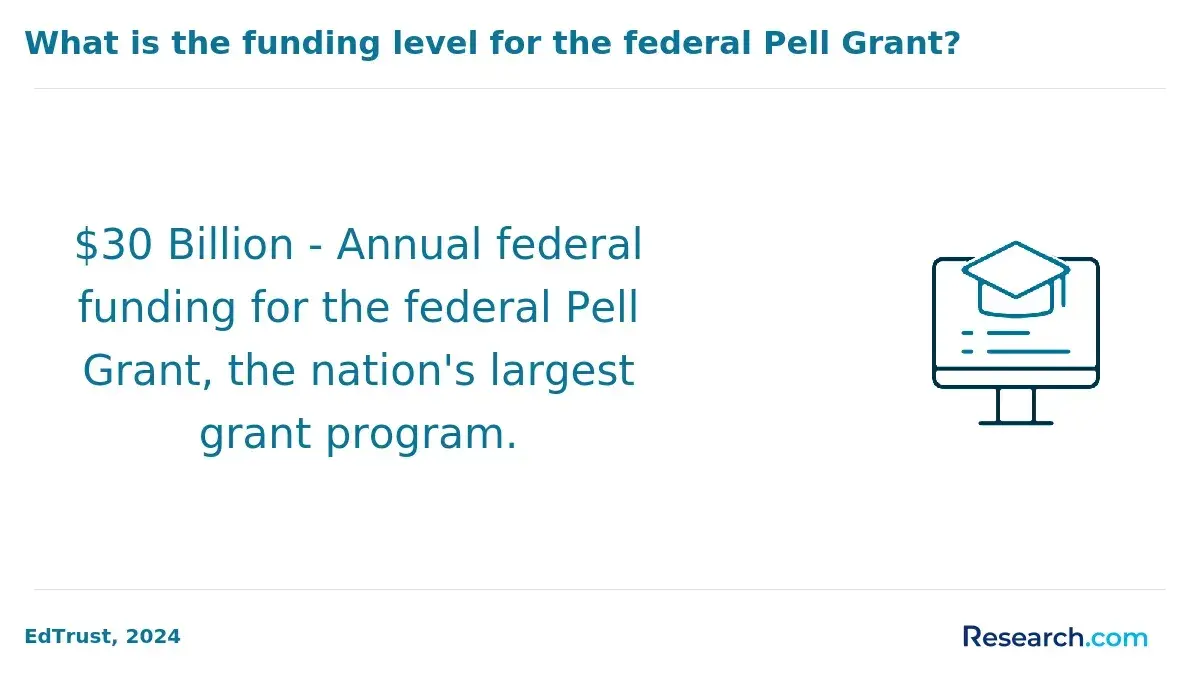
The federal Pell Grant remains one of the most important need-based aid sources for undergraduate students, with a maximum award of $7,395 for the 2024-25 award year. For eligible students, grant aid can directly reduce the amount that must be borrowed.
Use the following steps to lower total debt before and during an online digital photography degree:
- Complete the FAFSA early and review the full aid package, separating grants, scholarships, work-study, and loans.
- Ask each school for a degree audit before enrolling so you know exactly how many credits remain.
- Complete transferable general education courses at a lower-cost community college when the bachelor's program confirms acceptance in writing.
- Apply for art, photography, first-generation, adult learner, military, employer, and local creative scholarships instead of relying only on institutional aid.
- Buy used or previous-generation camera gear when it meets course requirements, and avoid upgrading equipment only for appearance.
- Choose courses in a sequence that prevents delays, because extra terms can add fees and living costs even when tuition looks manageable.
- Use paid internships, assistant roles, campus media jobs, or freelance assignments carefully to offset expenses and build a portfolio at the same time.
Students should also watch loan limits. Federal undergraduate borrowing limits are lower than many full-price art degrees, so a high-cost program may require private loans or out-of-pocket funding. That raises risk because private loans generally have fewer protections than federal student loans.
What digital photography careers can graduates pursue and which roles have the best earnings?
Graduates can pursue photography careers directly or use their visual skills in broader creative media roles. The strongest earnings often come from combining photography with business, editing, marketing, art direction, e-commerce, video, or specialized industry knowledge.
The table below compares common career directions. Salary figures should be treated as labor-market reference points, not guaranteed outcomes, because earnings vary by region, experience, niche, employer, and freelance client base.
| Career path | Typical responsibilities | Earnings context | Best fit |
| Portrait or event photographer | Photograph individuals, families, weddings, schools, or events and manage client delivery | Often freelance or small-business based; income depends heavily on bookings and pricing | Students who want client-facing work and are comfortable with entrepreneurship |
| Commercial or product photographer | Create images for brands, catalogs, advertising, restaurants, and e-commerce | Can exceed general photography earnings when paired with lighting, retouching, and client-management skill | Students interested in business-to-business creative services |
| Photo editor or retoucher | Select, edit, color-correct, composite, and prepare images for publication or campaigns | Often benefits from advanced software skill and a polished before-and-after portfolio | Students who enjoy post-production and detail-oriented image work |
| Media producer or visual content specialist | Create photo, short-form video, and social content for organizations | May offer steadier employment than freelance photography alone | Students who want a hybrid creative communications role |
| Art director or creative lead | Guide visual concepts, campaigns, teams, brand systems, and production quality | BLS May 2024 data reported a median annual wage of $111,040 for art directors | Experienced creatives who build leadership, branding, and campaign strategy skills |
Some graduates eventually pursue graduate study if they want to teach, develop a fine-art practice, or move into advanced creative leadership. Students considering that route should compare costs and outcomes carefully, including affordable online MFA programs, before adding graduate debt.
What is the job outlook for digital photographers and related creative media roles?
The photography job market is mixed: demand exists, but competition is real, and many photographers operate as freelancers or small-business owners. The Bureau of Labor Statistics projected photographer employment to grow 4% from 2023 to 2033 in its 2024 outlook release, which is about as fast as the average for all occupations.
That projection means students should not view the degree as a simple employment ticket. Instead, they should build a career strategy around portfolio strength, niche selection, local market demand, business development, and adjacent skills such as editing, video, social media production, and digital marketing.
Several trends shape the outlook for digital photography graduates. AI-assisted editing is speeding up workflows, but it also raises expectations for speed, originality, licensing awareness, and ethical image use. Short-form video has pushed many photographers to add motion skills. E-commerce, real estate, branding, sports, healthcare, higher education, and local businesses continue to need visual content, but employers often prefer candidates who can produce multiple media formats.
Students interested in sports content should compare photography roles with broader sports media careers, including research on sports analyst salary, because pay and required skills differ substantially across photography, analytics, broadcasting, and digital content roles.
How can students evaluate and choose a reputable, accredited online digital photography program?
A reputable online digital photography program should be accredited, transparent about cost, realistic about outcomes, and strong enough to help students produce a professional portfolio. Accreditation matters because it can affect federal aid eligibility, transfer credit, graduate school admission, and employer confidence.
Before enrolling, take these steps to evaluate a program carefully:
- Verify institutional accreditation through the U.S. Department of Education-recognized accreditation databases or the accreditor's official site.
- Ask for the full cost of attendance, including tuition, fees, software, camera equipment, printing, storage, and optional residencies.
- Request a written transfer evaluation before committing if you have prior college credit.
- Review student work, faculty portfolios, critique formats, and senior portfolio requirements.
- Check whether the curriculum includes business, copyright, marketing, and client communication, not only technical camera instruction.
- Ask how online students access advising, career services, tutoring, software support, library resources, and portfolio reviews.
- Compare College Scorecard data for graduation rates, median debt, and typical earnings where available.
Common red flags include vague accreditation claims, pressure to enroll quickly, unclear equipment requirements, no visible student portfolio examples, limited transfer transparency, and career promises that sound guaranteed. A strong program should help you understand both the opportunity and the financial risk before you sign an enrollment agreement.
Finally, make sure the degree matches your actual goal. A student who wants to run a local portrait studio may need a lower-cost degree plus business training, while a student aiming for academic teaching, fine-art exhibition, or creative leadership may eventually need graduate study. The right choice is the one that aligns cost, credential level, portfolio development, and career direction.
Other Things You Should Know About Digital Photography
Most photographers do not need a state license to work in the U.S. However, business registration, sales tax rules, drone certification, permits, insurance, and venue requirements may apply depending on the services offered.
A certificate may be enough for students who need specific skills such as lighting, editing, or business basics. A degree may be more useful for students who want broader education, transfer options, teaching preparation, or a structured portfolio experience.
Yes, but it requires planning. Students should create regular shooting projects, use local clients or models, rent studio time when needed, and seek detailed critique from instructors and peers.
The program should be offered by a school with institutional accreditation from a U.S. Department of Education-recognized agency. That accreditation is the key requirement for federal aid, including Pell Grants, Direct Loans, and FAFSA submission, and it also helps with credit transfer and employer recognition.
References
- Should you Study Photography at College or are There Better Options Now? https://digital-photography-school.com/should-you-study-photography-at-college-or-are-there-better-options-now/
- 5 Ways to Lower the Cost of Tuition Before Considering a Student Loan https://www.elementfcu.org/5-ways-to-lower-the-cost-of-tuition-before-considering-a-student-loan/
- Top 5 reasons to study a photography degree online https://www.falmouth.ac.uk/news/top-5-reasons-study-photography-degree-online
- Photographers: Salary, career path, job outlook, education and more - RaiseMe https://www.raise.me/careers/media-and-communication/photographers/
- Online Photography Degree | Associate Degree (AOS) https://www.sessions.edu/online-degrees/digital-photography/
- The 8 Best Online Photography Classes | ProGrade Digital https://progradedigital.com/the-8-best-online-photography-classes/
- Maximizing Your Aid Eligibility - Finaid https://finaid.org/financial-aid-applications/maximize/
- What Can You Do With A Photography Degree? - What Career Live https://www.whatcareerlive.co.uk/what-can-you-do-with-a-photography-degree/
- How To Get Student Loans and Financial Aid for Photography ... https://www.credible.com/student-loans/student-loans-for-photography-school
- How to lower the cost of college tuition: Smart ways to save | Dupaco https://www.dupaco.com/learn/blog/5-ways-to-lower-the-cost-of-tuition