
2027 How to Become a Sports Analyst: Education, Salary, and Job Outlook

Co-Founder and Chief Data Scientist
Becoming a sports analyst means choosing between several related careers: team performance analysis, scouting and recruitment, sports media commentary, fantasy and betting analysis, or business analytics for leagues, teams, and sports brands. The path you take affects the degree you choose, the software you learn, the internships you target, and the salary range you can realistically expect.
This guide explains the credentials, skills, work settings, career stages, earning potential, and challenges associated with sports analyst roles. It is designed for students, career changers, and working professionals who want a practical view of what the job requires and how to build a competitive profile in a field where sports knowledge alone is not enough.
What are the benefits of becoming a sports analyst?
- The sports analyst field is expected to grow by 8% in 2025, reflecting increasing demand for data-driven sports insights.
- Average salaries range between $55,000 and $85,000 annually, with potential for higher earnings in major media markets.
- Pursuing this career offers opportunities in broadcasting, sports management, and analytics, combining passion for sports with analytical expertise.
What credentials do you need to become a sports analyst?
Most sports analyst roles require a bachelor’s degree, practical experience with data or sports reporting, and evidence that you can turn information into useful recommendations. There is no single required major, so the best credential depends on whether you want to work with teams, media outlets, sportsbooks, agencies, or technology firms.
- Bachelor's degree: A bachelor's degree from an accredited institution is the common entry credential. Relevant majors include sports management, statistics, data science, business, economics, communications, journalism, and broadcasting. Students interested in team analytics should prioritize statistics, programming, and sports science coursework. Those aiming for media roles should combine sports knowledge with reporting, writing, and on-camera or audio presentation skills.
- Master's degree: A master's degree is not mandatory for every role, but it can help candidates compete for advanced analytics, leadership, research, or specialized performance positions. Options such as a Master's in Sport Administration, Sports Analytics, or Data Science can strengthen technical depth and signal commitment to the field.
- Licensure and certification: There are currently no state or federal licensing requirements specific to sports analysts in the U.S. Certifications are also not universally required for entry-level positions. However, focused training in analytics tools, coding, visualization, scouting methods, or sport-specific performance systems can make a candidate more competitive.
- Professional development: Sports analytics changes quickly as teams and companies adopt new platforms, tracking systems, and modeling methods. Short courses, portfolio projects, and targeted credentials can be useful, especially for professionals who need to fill a specific skill gap. Some learners also compare short certificate programs that pay well online when evaluating flexible options for career advancement.
The strongest credential mix is usually a relevant degree, applied technical skills, and a portfolio that proves you can analyze real sports data clearly and responsibly.
What skills do you need to have as a sports analyst?
A sports analyst needs more than knowledge of teams and players. The job requires technical ability, sport-specific judgment, and communication skills strong enough to influence coaches, executives, editors, broadcasters, or consumers. The exact skill set varies by role, but the following abilities are widely useful.
- Data analysis and statistical modeling: Analysts often work with performance metrics, player tracking data, historical results, injury information, scouting reports, or fan engagement data. Tools such as Excel, Python, R, and SQL are commonly useful for cleaning data, identifying trends, testing assumptions, and building predictive models.
- Video analysis: Many team-facing roles require analysts to review game footage, tag key events, evaluate tactical decisions, and connect visual evidence with statistical findings. This skill is especially important in performance analysis, scouting, and coaching support.
- Data visualization: A good model has limited value if decision-makers cannot understand it. Analysts should be able to present findings through clear charts, dashboards, and reports using tools such as Tableau, Power BI, or Matplotlib.
- Mathematical competency: Statistics, probability, and basic modeling concepts help analysts separate meaningful patterns from noise. This is essential when comparing players, evaluating matchups, or estimating future performance.
- Technical adaptability: Sports organizations continue to adopt new analytics software, tracking systems, and AI-enabled tools. Analysts who can learn new platforms quickly are better positioned for long-term growth.
- Tactical and game theory knowledge: Data must be interpreted within the rules, strategy, and context of the sport. A metric that matters in one system, league, or position may be less useful in another.
- Communication and collaboration: Sports analysts frequently work with coaches, athletes, executives, editors, producers, or product teams. They must explain findings without overcomplicating the message and be willing to adjust recommendations based on stakeholder needs.
The best analysts combine evidence with judgment. They know when a number is persuasive, when it is incomplete, and when context changes the conclusion.
What is the typical career progression for a sports analyst?
Sports analyst careers usually begin with support roles and progress toward specialized analysis, strategic decision-making, or management. Advancement depends on technical skill, sport expertise, communication ability, and the quality of the analyst’s professional network and portfolio.
- Entry-level roles: New analysts often begin as analytics assistants, data interns, video analysts, research assistants, or junior reporters. These roles involve collecting data, building reports, tagging film, preparing scouting materials, or supporting senior analysts. A bachelor's degree and strong quantitative skills are commonly expected.
- Early-career advancement: With 2-5 years of experience, professionals may move into roles such as Performance Analyst or Scouting Coordinator. At this stage, the work typically becomes more independent and may include player evaluation, opponent analysis, model development, or regular communication with coaches and decision-makers.
- Senior analytical roles: After 5-10 years, analysts may become a Lead Data Analyst, Data Strategy Lead, senior performance analyst, or senior media analyst. These roles often involve larger datasets, more complex modeling, and direct input into roster, strategy, coverage, or business decisions. A master's degree or advanced credentials can be advantageous.
- Management roles: Experienced professionals may become Analytics Manager or lead an analytics department. These positions require hiring, project planning, stakeholder management, and the ability to connect analysis with organizational goals.
- Specialized paths: Analysts may focus on player performance metrics, sports technology, scouting systems, fan engagement, media analysis, or betting and fantasy projections. Specialization can help candidates stand out in a crowded field.
- Lateral moves: Skills from sports analysis can transfer into fantasy sports, sports betting analysis, product analytics, consulting, journalism, broadcasting, and data roles outside sports.
Progression is rarely automatic. Analysts who document their work, build repeatable methods, and communicate results clearly tend to have more options than those who rely only on general sports knowledge.
How much can you earn as a sports analyst?
Sports analyst pay varies widely because the title covers several job types, including broadcast analysis, team performance analysis, scouting support, sports data analysis, and betting or fantasy modeling. Experience, employer type, location, education, visibility, and specialization all affect compensation.
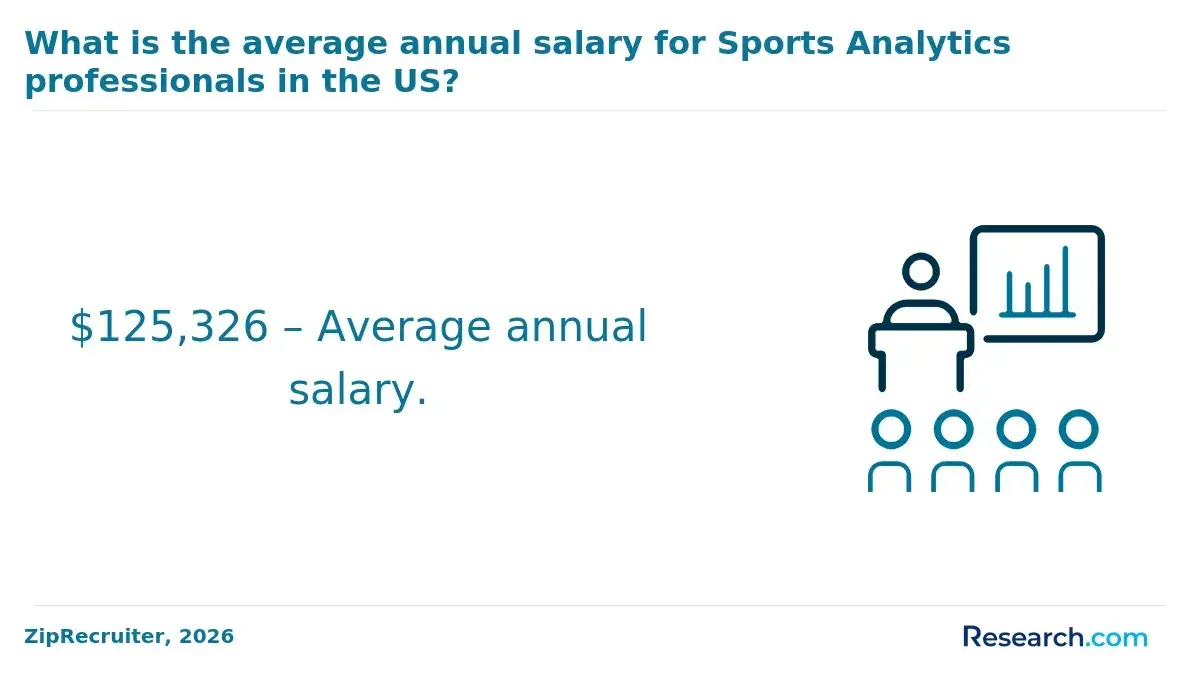
In the United States, salaries typically range from $55,000 to $103,000 annually, with the average falling between $65,000 and $93,000 per year, or approximately $31 to $45 per hour. Entry-level positions commonly start near $55,000, while seasoned experts with over a decade of experience may command salaries exceeding $73,000. Professionals with only a few years in the industry may earn closer to $58,000, while those specializing in broadcasting or data analytics often receive higher compensation.
Education can influence earning potential, particularly when a degree aligns with the target role. Degrees in journalism, sports communication, broadcasting, or sports management can support media and industry-facing positions, while statistics, data science, economics, or business can be valuable for technical roles. Students comparing programs and wondering what is the easiest bachelors degree to get should still prioritize relevance, accreditation, internship access, and portfolio opportunities over convenience alone.
Specialization also matters. Sports performance analysts who focus on data analytics and player optimization can earn around $75,000 annually. Geographic location, employer type, and industry segment further influence compensation, so candidates should compare salary expectations for the specific role they want rather than relying on the sports analyst title by itself.
What internships can you apply for to gain experience as a sports analyst?
Internships are one of the most effective ways to enter sports analytics because they give candidates access to real data, real deadlines, and real decision-making environments. A strong internship can also help build a portfolio, references, and industry contacts.
- University athletic departments: College programs can offer direct exposure to teams, coaches, and athlete performance data. For example, the Charlotte Athletics Analytics Internship Program (NinerStats) allows interns to support collegiate teams through data analysis, reporting, and communication while earning academic credit.
- Professional sports organizations: Major leagues such as the NBA, NFL, and Major League Baseball offer structured internships in strategy, analytics, and business operations. These sports analytics intern positions NBA NFL and beyond may involve data collection, performance evaluation, internal reporting, and exposure to industry software. They are often paid, highly competitive, and valuable for networking.
- Private firms and sports agencies: Agencies and analytics firms may offer internships in scouting, player evaluation, contract analysis, analytics research, and digital media metrics. These roles are useful for students interested in representation, talent management, or business-side sports analysis.
- Nonprofits, healthcare providers, and educational institutions: These internships may focus on athlete health analytics, youth sports program evaluation, academic research, or performance monitoring. They can be especially useful for candidates interested in sports science, injury prevention, or community sports programs.
When evaluating internships, look beyond the title. Ask whether the role includes access to data, mentorship, portfolio-ready projects, and opportunities to present findings. Students seeking lower-cost academic pathways can also compare the most affordable online associate's degree programs while building practical experience through internships, volunteer projects, or campus athletics work.
How can you advance your career as a sports analyst?
Career advancement as a sports analyst depends on becoming more useful to decision-makers. That means improving your technical range, deepening sport-specific expertise, building credibility, and showing that your analysis changes outcomes or improves understanding.
- Acquire specialized education: Degrees or certifications in statistics, data science, sports management, sports analytics, or a related field can strengthen your ability to interpret complex sports data. Choose programs that include applied projects, not just theory.
- Develop technical proficiency: Build confidence with Python or R, SQL, spreadsheet modeling, and data visualization tools. Analysts who can collect, clean, analyze, and present data without heavy supervision are more valuable to teams and organizations.
- Create a portfolio: Publish or organize examples of your work, such as player evaluation models, match previews, scouting dashboards, video breakdowns, or written analysis. A portfolio helps employers judge how you think, not just what credentials you hold.
- Engage with industry networks: Internships, conferences, professional organizations, university athletics departments, alumni networks, and online sports analytics communities can lead to opportunities that are not always widely advertised.
- Stay current with industry trends: Sports organizations continue to adopt new data sources, tracking technologies, AI applications, and visualization methods. Ongoing learning helps analysts remain relevant as expectations change.
- Gain practical experience: Work with sports teams, media outlets, analytics firms, fantasy platforms, or independent research projects. Practical experience sharpens judgment and teaches analysts how to operate under deadlines and incomplete information.
Promotion often comes from trust. Employers need to see that your work is accurate, timely, understandable, and connected to decisions that matter.
Where can you work as a sports analyst?
Sports analysts work in many settings, and each one rewards a different mix of skills. Some roles focus on public commentary, while others support private decisions inside teams, leagues, betting companies, technology firms, or athletic departments.
- Major sports media networks: ESPN, NBC Sports, Fox Sports, and CBS employ analysts for commentary, statistical breakdowns, game previews, studio discussions, and live-event coverage. These roles often require strong communication skills and credibility with audiences.
- Professional sports teams and leagues: Organizations connected to the NFL, NBA, MLB, and MLS hire analysts to support coaching, scouting, player development, roster decisions, and strategy. These roles usually require technical skill, discretion, and close collaboration with coaches and athletes.
- Sports journalism outlets: Publications such as The New York Times, Bleacher Report, or Sports Illustrated use analysts to produce written reports, statistical explainers, rankings, previews, and long-form analysis from press boxes, offices, or remote locations.
- Sports betting and fantasy sports companies: DraftKings, FanDuel, and BetMGM use analysts to build predictive models, evaluate player performance, support odds-related analysis, and create data-driven content for users.
- Technology and data analytics firms: Companies such as Catapult and Deloitte Sports Analytics work on software, data interpretation, athletic performance, marketing, and fan engagement. These roles may blend sports knowledge with product, consulting, or technical analytics skills.
- Colleges and universities: Athletic departments hire analysts to support performance analysis, recruiting, operations, and academic research. These roles can be a strong entry point for students and early-career professionals.
- Consulting agencies: Sports management and analytics consulting firms advise organizations on operations, strategy, fan engagement, performance, and data-driven decision-making.
Remote analysis and digital collaboration have become more common, allowing analysts to work across locations when the role does not require daily presence with a team or broadcast crew. Candidates searching for sports analytics jobs in Michigan or nationwide should compare job descriptions carefully because the same title can refer to very different responsibilities. Those seeking faster academic pathways may also evaluate quick degrees with high pay, while still making sure the program supports the skills required for sports analyst career opportunities 2025.
What challenges will you encounter as a sports analyst?
Sports analysis can be rewarding, but it is not an easy field to enter or sustain. Candidates should understand the pressure, competition, and uncertainty before committing to the career path.
- High competition: Roles with well-known teams, leagues, broadcasters, and digital outlets attract many applicants. A general love of sports is not enough. Candidates need technical ability, portfolio evidence, sport-specific knowledge, and professional contacts.
- Demanding workload and emotional strain: Sports schedules often include nights, weekends, holidays, travel, and tight turnaround times. Analysts may need to produce accurate insights quickly while dealing with public scrutiny, internal pressure, or high-stakes decisions.
- Continuous technological advancement: New analytics tools, AI applications, data platforms, and tracking systems can change how work is done. Analysts must keep learning or risk falling behind.
- Industry volatility and regulatory adaptation: Broadcasting rights, streaming services, sports betting regulations, and organizational budgets can affect job stability and the types of roles available. Flexibility is important.
- Data limitations: Not every dataset is complete, clean, or meaningful. Analysts must avoid overstating conclusions and should be transparent about uncertainty, sample size, and context.
- Communication gaps: Technical findings can be ignored if they are not explained in terms coaches, executives, athletes, or audiences can use. The ability to simplify without distorting is a major career advantage.
What tips do you need to know to excel as a sports analyst?
To excel as a sports analyst, focus on building skills that translate directly into better decisions, clearer reporting, or stronger predictions. The most successful analysts are not only accurate; they are useful, trusted, and able to adapt.
- Master the core tools: Build practical ability in Python, R, SQL, Excel, and Tableau or similar visualization tools. You do not need to use every tool in every job, but you should be able to work confidently with data from collection to presentation.
- Learn the sport deeply: Understand rules, tactics, positions, coaching styles, league structures, and common biases in evaluation. Strong technical skills are much more valuable when paired with real sport context.
- Communicate for the audience: A coach, general manager, editor, broadcaster, and fantasy user may all need different explanations. Practice turning complex analysis into concise recommendations or storylines.
- Build a portfolio before you need one: Create sample scouting reports, dashboards, prediction models, written breakdowns, or video-supported analysis. Employers often want proof that you can do the work, not just a list of courses.
- Seek feedback from practitioners: Share work with coaches, analysts, professors, journalists, or data professionals who can identify weak assumptions and help you improve.
- Use networking strategically: Connect with sports teams, media professionals, analysts, alumni, and internship supervisors. Many opportunities emerge through relationships and demonstrated reliability.
- Consider advanced education selectively: A Master's degree in Sport Administration or a related field can be useful, but it should support a clear goal. Compare curriculum, cost, career services, and applied project opportunities before enrolling.
- Stay current without chasing every trend: Follow developments in sports technology and analytics methods, but prioritize tools and techniques that solve real problems in your target role.
How do you know if becoming a sports analyst is the right career choice for you?
A sports analyst career may be a good fit if you enjoy sports, evidence-based reasoning, and communicating under pressure. It may not be the right path if you want a predictable schedule, dislike quantitative work, or prefer analysis without deadlines, travel, or public scrutiny.
- Passion for sports: You should be genuinely interested in how games are played, how teams make decisions, and how performance can be measured. Casual fandom helps, but professional analysis requires deeper curiosity.
- Analytical thinking: You need comfort with numbers, patterns, uncertainty, and tools such as Python, R, or Tableau. You should also be willing to question assumptions, including your own.
- Communication skills: Analysts must explain findings to coaches, managers, athletes, producers, editors, or audiences. Clear writing, speaking, and visualization skills are essential.
- Work environment fit: Many roles move quickly and follow game schedules. Irregular hours, travel, nights, weekends, and tight deadlines can be part of the job.
- Resilience to change: Team priorities, media formats, software tools, and league conditions can shift. Analysts who adapt are more likely to stay satisfied and employable.
- Career stability: Job prospects remain favorable with increasing reliance on data-driven decision-making expected through 2025, offering strong growth potential.
If you are asking, is a sports analyst career right for me, compare your strengths with the daily work rather than the public image of the job. If you are building skills while working or managing other responsibilities, cheap online schools for working students may offer a practical way to study while gaining experience.
What Professionals Who Work as a Sports Analyst Say About Their Careers
- : "The sports analyst career path has consistently offered me remarkable job stability, even in fluctuating market conditions. With the growing demand for data-driven insights in sports, the salary potential is very promising, making it a rewarding field for those passionate about athletics and analytics. Kenneth"
- : "Working as a sports analyst presents unique challenges daily, from interpreting complex statistics to predicting outcomes under pressure. These experiences have sharpened my decision-making skills and exposed me to exciting collaborations with teams and broadcasters worldwide. Quentin"
- : "The opportunities for professional development in sports analysis are abundant, with many specialized training programs and certifications that have helped elevate my expertise. Progressing in this field means constant learning and new roles emerging as the industry evolves. Tristan"
Other Things You Should Know About Becoming a Sports Analyst
The average salary for a sports analyst in 2027 ranges from $60,000 to $85,000 annually, depending on experience and location. Entry-level positions start lower, while experienced analysts in metropolitan areas tend to earn towards the higher end of this spectrum.
In 2027, aspiring sports analysts typically need a bachelor’s degree in journalism, communications, sports management, or a related field. Additionally, gaining experience through internships and developing strong analytical skills is crucial to enhance your employability in this competitive field.
References
- The Role of a Sports Analyst: Career Path, Skills & Job Trends – fundaspring https://fundaspring.com/blogs/careers/sports-analyst-career-guide
- Sports Analyst Salary in the United States (2025) - SalaryExpert https://www.salaryexpert.com/salary/job/sports-analyst/united-states
- Sports Analyst Skills in 2025 (Top + Most Underrated Skills) https://www.tealhq.com/skills/sports-analyst
- How to Become a Sports Analyst: What to Know https://news.miami.edu/uonline/stories/2025/09/how-to-become-a-sports-analyst.html
- Methodology and evaluation in sports analytics: challenges, approaches, and lessons learned | Machine Learning https://link.springer.com/article/10.1007/s10994-024-06585-0
- Top 10 Excel Tricks for Sport Science - Complementary Training http://complementarytraining.com/top-10-excel-tricks-for-sport-science/
- 10 Tips for getting started as data analysts in football https://english-programs.sportsdatacampus.com/tips-getting-started-data-analysts-football-sports/
- Charlotte Athletics Analytics Internship Program - Sports Analytics https://sportsanalytics.charlotte.edu/about-us/sports-analytics-club/
- Sports Analyst Career Path Guide | aiApply https://aiapply.co/careers/sports-analyst
- Data Analytics in Sports: Opportunities and Challenges https://ripenapps.com/blog/business-opportunities-for-data-analytics-in-sports/


