2027 Easiest Bachelor’s Degree Programs

Co-Founder and Chief Data Scientist
Choosing an “easy” bachelor’s degree usually does not mean choosing a degree with no work. It means looking for a program with a manageable academic load, fewer advanced math or lab science requirements, flexible scheduling, and coursework that matches your strengths. For working adults, transfer students, parents, and students returning to college after a break, that difference can determine whether a degree is actually finishable.
This guide explains which bachelor’s degree programs are commonly considered easier to complete, what makes them more manageable, how online and campus formats compare, what they may cost, and how to choose a program that is respected by employers. You will also learn how to evaluate accreditation, financial aid, return on investment, career services, graduate school pathways, and common mistakes to avoid before enrolling.
Quick answer: What are the easiest bachelor’s degrees to complete?
The easiest bachelor’s degrees are usually broad, writing-focused, communication-heavy, or applied programs that do not require extensive advanced mathematics, laboratory science, engineering, or highly technical coursework. Common examples include business, communications, criminal justice, English, history, graphic design, liberal arts, general psychology, human resources, and criminology.
These degrees can still lead to useful career options, but the best choice depends on your goals. A degree is only “easy” in a practical sense if the subject fits your abilities, your schedule, your budget, and the job market you plan to enter.
- A bachelor’s degree can support entry into fields such as business, education, technology, public administration, communications, social services, and management.
- Occupations requiring a bachelor’s degree are projected to grow 7.2% from 2023 to 2033.
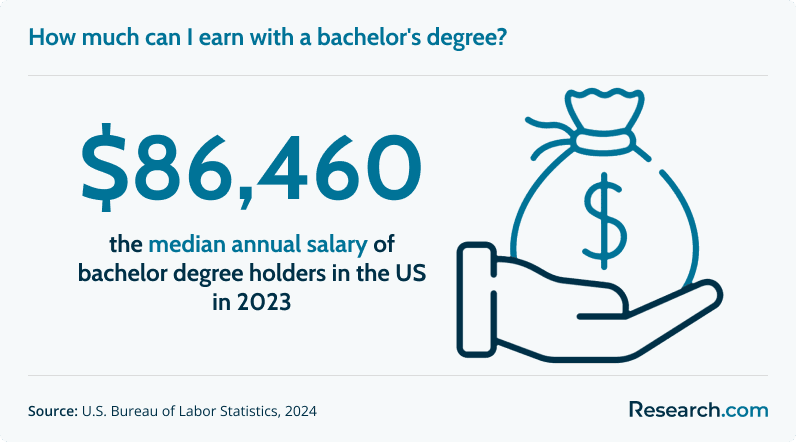
- In 2023, the median annual salary for bachelor’s degree holders in the U.S. was $86,460.
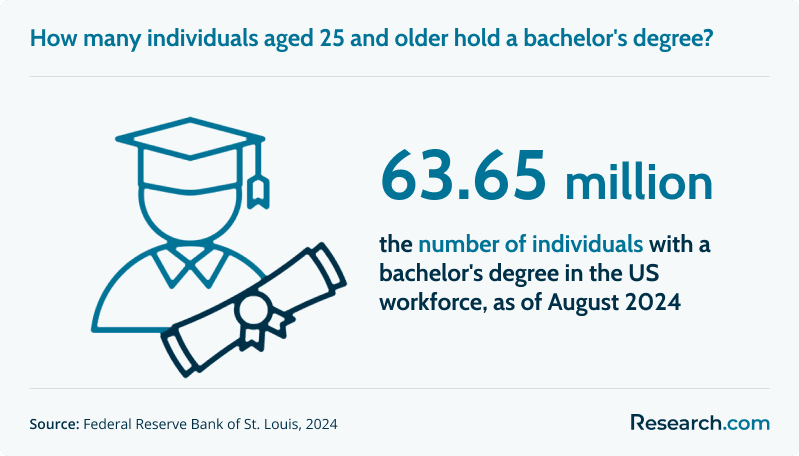
- As of August 2024, 63.65 million people aged 25 or older in the U.S. workforce held a bachelor’s degree.
- Online bachelor’s programs can make completion easier for students balancing school with work, caregiving, military service, or other responsibilities.
- 2027 10 Easiest Bachelor's Degree Programs
- What factors contribute to a degree being classified as easy?
- How does an online bachelor's degree compare to an on-campus program?
- Are online degrees typically easier than traditional programs?
- What is the average cost of the easiest bachelor's degree program?
- What are the financial aid options for students enrolling in the easiest bachelor's degree program?
- What are the prerequisites for enrolling in the easiest bachelor's degree program?
- How to choose the best easiest bachelor's degree program?
- How does self-paced learning enhance academic outcomes in easy bachelor's degree programs?
- Is an Easy Bachelor's Degree a Smart Investment?
- Is Further Education Beneficial After Completing an Easy Bachelor's Degree?
- What are the potential challenges of an easy bachelor's degree program?
- Do employers value an easy bachelor's degree?
- How can an easy bachelor's degree facilitate a smooth transition to a master's program?
- Are there specific strategies for succeeding in an easy online bachelor's degree program?
- Can FAFSA support help fund my easy online bachelor's degree?
- What are the career growth opportunities for graduates of the easiest bachelor’s degree programs?
- How can complementary short-term credentials further enhance my career outcomes?
- How do easy bachelor's degrees compare with trade school programs?
- How can dedicated career services boost my job prospects after an easy bachelor's degree?
- What is the return on investment of an easy bachelor's degree?
- Can an easy bachelor's degree pave the way to high-earning opportunities?
- How can an easy bachelor's degree pave the way for doctoral studies?
- How can dual degree programs online expand my academic opportunities?
- Can an accelerated associate's degree online complement my easy bachelor's degree?
- How can I verify the credibility and recognition of an easy bachelor's degree program?
- What are the trends in bachelor’s degree programs?
What can you expect from an easier bachelor’s degree program?
An easier bachelor’s program is typically built around accessible prerequisites, flexible electives, applied assignments, and skills such as writing, communication, analysis, creativity, and people management. These programs may still require research papers, presentations, exams, group projects, portfolios, internships, or capstone courses, but they usually avoid the most intensive quantitative or laboratory sequences found in fields such as engineering, physics, advanced computer science, or pre-medical study.
Good programs also provide academic advising, tutoring, writing support, library access, career coaching, and clear degree maps. Those services matter because a degree that looks simple on paper can become difficult if courses are poorly scheduled, transfer credits are rejected, or students receive little help planning their path to graduation.
Where can you work with a bachelor’s degree?
A bachelor’s degree can qualify graduates for roles across business, education, healthcare administration, technology support, marketing, government, nonprofit work, public administration, communications, human resources, and social services. Depending on the major, graduates may pursue positions such as marketing coordinator, business analyst, recruiter, case manager, public relations specialist, administrative manager, communications associate, probation officer, or training coordinator.
Many employers value the transferable abilities that bachelor’s programs are designed to build: written communication, information evaluation, teamwork, project management, ethical reasoning, and problem-solving. Career outcomes still vary by major, location, work experience, internships, licensure rules, and whether the student adds marketable skills or certifications.
How much can you earn with a bachelor’s degree?
In 2023, the median annual salary for bachelor’s degree holders in the U.S. was $86,460. That figure should be used as a broad benchmark, not a promise. Salaries can differ widely by occupation, industry, region, employer, experience level, and specialization. Business, technology-adjacent, analytics, management, and certain healthcare-related roles often have stronger earnings potential than some arts, humanities, or social service roles, but individual outcomes are never guaranteed.
The degree can also help with long-term mobility. Many bachelor’s graduates later move into supervisory, specialist, compliance, training, communications, or administrative leadership roles after gaining experience or completing additional credentials.
2027 10 Easiest Bachelor's Degree Programs
The following majors are often considered more manageable because they emphasize communication, applied knowledge, reading, writing, creativity, social science, or general professional skills rather than advanced technical sequences. The right program is not simply the one with the lightest workload. It is the one you are most likely to complete and use.
| Degree | Why students may find it manageable | Best fit for students who want to | Possible career directions |
| Business | Broad curriculum with practical courses and many elective options | Work in management, operations, sales, finance support, or entrepreneurship | Business analyst, marketing coordinator, sales manager |
| Communications | Focuses on writing, speaking, media, and audience strategy | Build careers around messaging, content, public relations, or media | Public relations specialist, content creator, media planner |
| Criminal Justice | Applied study of policing, courts, corrections, and public safety | Enter law enforcement, corrections, legal support, or public safety work | Police officer, probation officer, crime scene investigator |
| English | Reading- and writing-intensive rather than math- or lab-heavy | Develop advanced writing, editing, analysis, and interpretation skills | Copywriter, editor, high school teacher |
| History | Research and writing focus with limited technical coursework | Study society, policy, culture, institutions, and evidence-based analysis | Historian, archivist, policy analyst |
| Graphic Design | Project-based creative work using design tools and portfolios | Create visual content for digital, print, branding, and advertising channels | Graphic designer, web designer, multimedia artist |
| Liberal Arts | Flexible interdisciplinary plan with broad course selection | Customize a degree around writing, social sciences, humanities, and general skills | Administrative assistant, writer, community outreach coordinator |
| General Psychology | Behavior-focused social science with introductory research requirements | Understand people, motivation, mental health, development, and workplace behavior | Case manager, mental health technician, human resources specialist |
| Human Resources | Applied business and people-focused coursework | Work in recruiting, employee relations, training, benefits, or workplace policy | Human resources specialist, recruiter, training and development coordinator |
| Criminology | Social science approach to crime, law, and justice systems | Study criminal behavior, crime prevention, policy, and social causes of crime | Criminologist, probation officer, crime analyst |
1. Business
A bachelor’s degree in business gives students a broad introduction to how organizations operate. Courses often cover management, accounting, marketing, business ethics, finance fundamentals, operations, entrepreneurship, and leadership. Many students find this major manageable because it is practical and flexible, with room to choose electives that match career interests.
Business can be a strong option for students who want a versatile degree rather than a narrow technical path. Graduates may pursue entry-level roles in finance support, sales, marketing, human resources, operations, or administration. Common job paths include business analyst, marketing coordinator, and sales manager.
2. Communications
Communications programs train students to create, evaluate, and deliver messages for different audiences. Coursework usually emphasizes writing, public speaking, media analysis, digital content, persuasion, campaign planning, and organizational communication. The major is often more approachable for students who prefer language, media, and people-centered assignments over advanced quantitative work.
Graduates may work in public relations, journalism, digital media, social media management, corporate communications, event planning, or nonprofit outreach. Possible roles include public relations specialist, content creator, and media planner.
3. Criminal Justice
Criminal justice degrees examine law enforcement, courts, corrections, public safety, and the structure of the legal system. Courses may include criminology, policing, criminal procedure, corrections, ethics, juvenile justice, and homeland security topics. Many students consider this program accessible because it is applied and career-oriented.
This degree can support roles in law enforcement, corrections, legal support, probation, security, and public safety. It may also help students prepare for further study in law, forensic science, public administration, or related fields.
4. English
An English degree is a good fit for students who enjoy reading, writing, interpretation, and argument. Programs often include literature, composition, rhetoric, linguistics, creative writing, literary theory, and professional writing. The workload can be significant because of the amount of reading and writing, but it is usually less technical than science, engineering, or mathematics-heavy majors.
English majors can use their skills in education, publishing, editing, marketing, content development, communications, public relations, and law-related pathways. Common roles include copywriter, editor, and high school teacher.
5. History
A history degree teaches students how to evaluate evidence, understand change over time, interpret primary and secondary sources, and write persuasive research-based arguments. Coursework may focus on specific regions, time periods, governments, social movements, wars, cultural developments, and historical methods.
Students who enjoy reading and writing may find history more manageable than technical majors. Graduates may work in education, museums, archives, government, policy research, libraries, public history, or nonprofit organizations. Possible titles include historian, archivist, and policy analyst.
6. Graphic Design
Graphic design combines visual creativity with practical software and communication skills. Students typically learn layout, typography, branding, digital illustration, web design, advertising concepts, user-centered design, and portfolio development. The program can feel easier for visually oriented students who prefer projects over exams, but it still requires deadlines, critique, revision, and technical tool proficiency.
Graduates may work in advertising, publishing, marketing, digital media, web design, or freelance creative services. Common job titles include graphic designer, web designer, and multimedia artist.
7. Liberal Arts
Liberal arts degrees allow students to study across humanities, social sciences, communication, and sometimes natural sciences. The flexibility can make the degree more manageable because students may select courses that align with their strengths and avoid a highly specialized sequence.
This major is best for students who want a broad education and plan to pair it with internships, work experience, certificates, or graduate study. Graduates may pursue administration, writing, community outreach, public service, education-related work, or communications roles. Possible jobs include administrative assistant, writer, and community outreach coordinator.
8. General Psychology
General psychology introduces students to human behavior, cognition, emotion, learning, development, personality, mental health, and social interaction. Programs usually include research methods and statistics, but they generally do not require the same level of laboratory intensity or advanced mathematics found in some science majors.
Graduates may work in human services, case management, human resources, behavioral health support, community programs, or social services. Possible roles include case manager, mental health technician, and human resources specialist. Students interested in clinical practice, counseling, or psychology licensure should expect to pursue graduate education.
Students who want a more specialized communication-health pathway may also compare psychology with the best accelerated speech pathology programs online, which can help prepare learners for careers related to speech, language, and communication disorders.
9. Human Resources
A human resources degree focuses on recruiting, employee relations, compensation, benefits, workplace law, performance management, organizational behavior, conflict resolution, training, and leadership. It can be a practical choice for students who prefer interpersonal and administrative work over technical fields.
Graduates may work in corporate HR departments, staffing agencies, government offices, healthcare organizations, universities, or nonprofit employers. Typical paths include human resources specialist, recruiter, and training and development coordinator.
10. Criminology
Criminology examines why crime occurs, how societies respond to it, and how policy, inequality, psychology, law, and institutions shape criminal behavior. Unlike criminal justice, which often focuses on systems and procedures, criminology usually takes a broader social science approach.
Students may study sociology, psychology, criminal behavior, crime prevention, research methods, and justice policy. Graduates may pursue law enforcement, corrections, victim services, public policy, research support, or social services roles, including criminologist, probation officer, and crime analyst.
What factors contribute to a degree being classified as easy?
A degree is usually described as easier when its requirements are more predictable, less technical, and more flexible. Programs in English, history, communications, liberal arts, and related fields are often grouped among the easiest college majors because they rely heavily on reading, writing, discussion, presentations, and applied projects rather than advanced calculus, chemistry labs, engineering design, or intensive programming sequences.
That does not mean these majors require little effort. Reading-heavy and writing-heavy programs can be demanding for students who dislike essays, research, revision, or public speaking. The better question is not “Which degree is easy for everyone?” but “Which degree is easiest for my strengths, schedule, and career plan?”
| Factor | Why it can make a program easier to complete | What to check before enrolling |
| Fewer advanced math requirements | Students who struggle with quantitative work may avoid repeated bottleneck courses | Review general education and major-specific math requirements |
| Flexible electives | More choice lets students build a plan around strengths and interests | Ask how many electives are available and how often they are offered |
| Clear degree map | A predictable sequence reduces delays and missed prerequisites | Request a semester-by-semester plan before committing |
| Transfer-friendly policies | Accepted credits can reduce time, cost, and repeated coursework | Get an official transfer evaluation in writing |
| Online or asynchronous options | Students can fit coursework around work and family obligations | Confirm whether classes are fully asynchronous or require live attendance |
| Strong academic support | Tutoring, advising, and writing help can prevent small problems from becoming degree delays | Ask about tutoring availability, advisor ratios, and online student support |
As of August 2024, there were more than 63 million individuals in the US workforce, aged 25 or older, that have a bachelor's degree.
How does an online bachelor's degree compare to an on-campus program?
An online bachelor’s degree can be the better fit for students who need flexibility. It may reduce commuting, make it easier to keep working, and allow students to complete assignments outside traditional classroom hours. Many online programs use learning management systems, recorded lectures, discussion boards, virtual advising, digital libraries, and remote tutoring.
An on-campus program may work better for students who want face-to-face interaction, a structured weekly routine, campus activities, in-person faculty access, or facilities such as labs, studios, libraries, or career fairs. Some students also stay more motivated when they physically attend class and study with peers.
The best degrees to get are often available in both online and campus formats, but format matters less than fit, accreditation, cost, support, and career alignment.
| Format | Best for | Possible advantages | Possible drawbacks |
| Online bachelor’s degree | Working adults, parents, military students, rural learners, and students needing schedule flexibility | Less commuting, flexible pacing, access from anywhere, easier to combine with work | Requires self-discipline, fewer spontaneous interactions, some students feel isolated |
| On-campus bachelor’s degree | Students who want structure, in-person networking, campus life, and hands-on facilities | Direct classroom interaction, easier peer connection, access to campus events and services | Less scheduling flexibility, commuting or housing costs, fixed class times |
| Hybrid bachelor’s degree | Students who want online convenience with some in-person engagement | Balanced flexibility and campus access | Travel may still be required, schedules vary by program |
Experts predict that the bachelor degrees awarded per year will grow for the next decade. See the chart below for the projection for the next four years.
Are online degrees typically easier than traditional programs?
Online degrees are not automatically easier. Accredited online programs are expected to cover comparable learning outcomes to their campus-based versions. The difference is usually delivery, not academic legitimacy.
Some students find online learning easier because they can replay lectures, study during their most productive hours, avoid commuting, and move through familiar material efficiently. That can be true across many fields, from online business programs to options at affordable online colleges for psychology.
Other students find online learning harder because it requires consistent self-management. Without a classroom routine, it is easier to miss deadlines, underestimate assignments, or delay asking for help. If you need regular accountability, choose an online program with live sessions, proactive advising, frequent instructor feedback, and structured weekly deadlines.
What is the average cost of the easiest bachelor's degree program?
The cost of a bachelor’s degree depends on institution type, residency status, delivery format, transfer credits, fees, books, living expenses, and how long you take to finish. Public institutions are usually less expensive for in-state students, while private colleges often charge higher tuition.
As of recent data, the average annual tuition for a public four-year college is approximately $10,000 for in-state students and about $27,000 for out-of-state students. Private colleges may charge an average of around $37,000 per year. Online programs vary widely, and some accelerated bachelor's degree online options may reduce total cost by shortening the time to completion or accepting more prior credits.
Do not compare programs by tuition alone. A lower tuition rate can still lead to higher total cost if the school rejects transfer credits, charges substantial fees, offers required courses infrequently, or provides weak advising that delays graduation.
| Cost factor | Why it matters | Question to ask the school |
| Tuition rate | Sets the base price per year, term, or credit | Is tuition charged per credit, per term, or as a flat rate? |
| Transfer credits | Accepted credits can reduce both time and cost | How many of my credits will apply directly to my major and graduation requirements? |
| Fees | Technology, distance learning, graduation, course, and student service fees can add up | What fees are mandatory for online and campus students? |
| Books and materials | Course materials can affect affordability | Are open educational resources or digital materials used? |
| Time to completion | Extra semesters can raise the total cost | How often are required courses offered? |
| Financial aid eligibility | Aid can reduce out-of-pocket cost | Is the program eligible for federal financial aid? |
Student debt repayment depends on borrowing, interest, income, family obligations, and career progression. In 2023, the median annual salary of bachelor degree holders in the country was $86,460.
What are the financial aid options for students enrolling in the easiest bachelor's degree program?
Students in easier bachelor’s degree programs may be eligible for the same major types of aid as other eligible undergraduate students, as long as the institution and program meet aid requirements. Start with federal aid, then compare state, school-based, private, and employer options.
- Federal Student Aid: Students can submit the Free Application for Federal Student Aid (FAFSA) to be considered for federal aid, including Pell Grants and federal student loans.
- State Grants and Scholarships: Many states offer grants, scholarships, or tuition assistance programs for residents. Eligibility rules vary, so students should check their state higher education agency.
- Institutional Aid: Colleges may award scholarships or grants based on financial need, academic record, transfer status, major, military affiliation, or other criteria.
- Private Scholarships: Community organizations, employers, foundations, and professional associations may offer awards. Students researching easy degrees that pay well should also search for scholarships tied to their intended field.
- Work-Study Programs: Eligible students may be able to work part time through a school-supported work-study position while enrolled.
- Employer Tuition Assistance: Working adults should ask whether their employer reimburses tuition, pays for job-related courses, or partners with specific colleges.
Before borrowing, ask the financial aid office for a full cost-of-attendance estimate and a clear explanation of grants, scholarships, loans, and repayment obligations.
What are the prerequisites for enrolling in the easiest bachelor's degree program?
Most bachelor’s degree programs require a high school diploma or an equivalent credential such as a GED. Applicants may need transcripts, a minimum GPA, an application form, and sometimes a personal statement or recommendation letters. Some colleges may request SAT or ACT scores, although many schools now offer test-optional admissions policies.
Transfer students should prepare transcripts from every college previously attended. Adult learners may also ask whether the school offers credit for prior learning, military training, professional certifications, workplace training, or standardized exams.
Program-specific requirements can still apply. For example, education, social work, criminal justice, healthcare-related, or public safety programs may have background checks, fieldwork requirements, minimum grade requirements, or state-specific rules. Always review the admissions page and speak with an advisor before assuming a program is easy to enter or complete.
If you are comparing public safety programs, you may also want to explore what can you do with a Homeland Security degree. Homeland security pathways can lead to roles such as intelligence analyst, emergency management coordinator, and border security specialist.
Jobs only requiring a high school diploma or equivalent are projected to grow at just 2.5% from 2023 to 2033, which is lower than average. See the chart below for more details.
How to choose the best easiest bachelor's degree program?
The best easier bachelor’s degree is the one that you can finish, afford, and explain clearly to employers or graduate schools. Avoid choosing only by reputation for being simple. Instead, compare programs based on accreditation, transfer policy, total cost, student support, curriculum, career relevance, and schedule fit.
- Start with your career target. Choose a major that points toward real roles you would accept, not just a subject that sounds easy.
- Check accreditation first. Make sure the institution is accredited by a recognized agency and that the program meets any field-specific requirements.
- Request a transfer evaluation. If you have prior credits, ask how many apply to graduation requirements, not just how many the school will accept.
- Compare total cost. Include tuition, fees, books, technology requirements, commuting, housing, and extra semesters.
- Review course difficulty honestly. A writing-heavy major may be difficult if you dislike essays. A design major may be difficult if you dislike critique and software work.
- Ask about career outcomes and services. Look for resume help, internships, employer connections, portfolio support, and alumni networking.
- Confirm scheduling flexibility. For online programs, ask whether courses are asynchronous, synchronous, hybrid, or self-paced.
- Plan for the next credential if needed. Some fields require certifications, graduate school, licensure, or supervised experience beyond the bachelor’s degree.
Questions to ask before enrolling
| Question | Why it matters |
| Is the institution accredited by a recognized accreditor? | Accreditation affects credibility, transfer options, graduate school eligibility, and financial aid access. |
| How many credits do I need after transfer evaluation? | The answer determines your realistic time and cost to finish. |
| Are required courses available every term? | Limited course availability can delay graduation. |
| Does the program include internships, projects, or portfolio work? | Applied experience can make a broad degree more marketable. |
| What support do online students receive? | Remote learners need advising, tutoring, library access, tech support, and career services. |
| Will this degree meet licensure or certification requirements in my state? | This is essential for fields connected to teaching, counseling, social services, or public safety. |
How does self-paced learning enhance academic outcomes in easy bachelor's degree programs?
Self-paced learning can help motivated students move through familiar material more efficiently while spending extra time on difficult topics. It can be especially useful for working adults, students with caregiving responsibilities, and learners who already have professional experience related to their major.
However, self-paced does not mean no deadlines. Strong programs still provide milestones, instructor access, feedback, assessments, and academic support. Students considering a self paced online college should ask whether courses have final completion dates, how quickly instructors respond, and what happens if a student falls behind.
Is an Easy Bachelor's Degree a Smart Investment?
An easier bachelor’s degree can be a smart investment when it helps you finish faster, avoid unnecessary debt, and qualify for roles that match your goals. It is a weaker investment if the program is expensive, poorly recognized, disconnected from your career plans, or too broad without internships, certifications, or practical experience.
Working adults should pay special attention to schedule flexibility, employer tuition benefits, transfer credit, and program length. Comparing options such as the best online degree programs for working adults can help students identify programs designed around adult learner needs.
Is Further Education Beneficial After Completing an Easy Bachelor's Degree?
Further education can be valuable when your target career requires advanced knowledge, licensure, or stronger specialization. A bachelor’s degree in psychology, English, history, liberal arts, or communications may open entry-level opportunities, but graduate study can help students move into counseling, teaching, leadership, research, law, administration, or specialized professional roles.
Students who want a faster graduate pathway may compare 1 year masters programs online, especially if they already know the field they want to enter. Before enrolling, confirm admissions requirements, accreditation, practicum expectations, and whether the program aligns with licensure or employer requirements.
What are the potential challenges of an easy bachelor's degree program?
The main risk of choosing an easier bachelor’s degree is underestimating the job market. Some broad degrees require students to be more proactive about internships, portfolios, certifications, networking, and career planning. Employers may not care whether a degree is considered easy, but they will care whether you can show relevant skills and results.
Another challenge is specialization. A broad major can be flexible, but it may not prepare you for highly technical or licensed roles without additional training. Students who want to strengthen their long-term earning potential may later consider graduate programs, including options associated with the highest paying masters degrees.
Common mistakes to avoid
| Mistake | Better approach |
| Choosing a major only because it sounds easy | Choose a major that fits your abilities and leads to roles you would actually pursue. |
| Ignoring accreditation | Verify institutional accreditation before applying or submitting deposits. |
| Comparing tuition but not total cost | Include fees, books, living costs, transfer credit loss, and extra time in school. |
| Assuming online means easier | Evaluate deadlines, workload, instructor access, and your own self-discipline. |
| Skipping internships or projects | Use applied experiences to show employers what you can do. |
| Assuming salary outcomes are guaranteed | Research roles, locations, requirements, and advancement paths in your field. |
Do employers value an easy bachelor's degree?
Employers generally care less about whether a major is considered easy and more about whether the degree is credible, relevant, and backed by skills. A degree from an accredited institution, combined with internships, work experience, strong communication, digital skills, leadership examples, and industry credentials, can be valuable in many fields.
If you are worried that your degree may seem too broad, strengthen it with a focused minor, certificate, portfolio, professional association involvement, or graduate study. Some students later pursue quick master degree programs to add depth and improve competitiveness.
How can an easy bachelor's degree facilitate a smooth transition to a master's program?
An easier bachelor’s degree can still prepare students for graduate school if it builds the skills graduate programs expect: critical reading, research, writing, analysis, presentations, time management, and independent learning. Students should choose upper-level courses carefully, build relationships with faculty, maintain strong grades, and complete projects that demonstrate readiness for advanced study.
Before applying to graduate programs, check whether your bachelor’s degree meets prerequisite requirements. Some master’s programs require specific undergraduate coursework, minimum grades, entrance exams, field experience, or licensure-related preparation. Students comparing accessible graduate options may find What is the simplest master's degree to get? helpful for understanding how graduate difficulty can vary by field.
Are there specific strategies for succeeding in an easy online bachelor's degree program?
Online bachelor’s programs reward consistency. The students who succeed are usually not the ones with the easiest courses; they are the ones who build a routine, communicate early, and use support services before they fall behind.
- Create a weekly study schedule: Block time for reading, discussion posts, assignments, exams, and long-term projects.
- Track every deadline: Use a calendar, planner, or task app so asynchronous courses do not disappear from view.
- Participate early: Introduce yourself to instructors, join discussions, and ask questions before confusion builds.
- Use tutoring and writing support: Easier majors still involve research papers, presentations, and analysis.
- Build a portfolio: Save strong writing samples, design projects, campaign plans, presentations, or research work.
- Connect coursework to career goals: Choose assignments, electives, and projects that support the jobs you plan to pursue.
- Protect study time: Treat online learning like a fixed commitment, not something to fit in only when convenient.
If convenience is a priority, you may also compare online colleges no application fee, especially if you want to reduce upfront application costs while evaluating multiple options.
Can FAFSA support help fund my easy online bachelor's degree?
FAFSA can help eligible students access federal financial aid for qualifying online bachelor’s programs. The key is confirming that the school and program are eligible, accredited, and recognized for federal aid purposes. Students should submit the FAFSA as early as possible and review the aid offer carefully before enrolling.
Online learners comparing affordability may want to review affordable online colleges that accept FAFSA. Federal aid can make an online degree more manageable, but students should still compare total cost, borrowing needs, graduation timelines, and credit transfer policies.
What are the career growth opportunities for graduates of the easiest bachelor’s degree programs?
Graduates of easier bachelor’s programs can grow into stronger roles by combining the degree with experience, certifications, industry knowledge, and measurable accomplishments. Business graduates might move from coordinator roles into management. Communications graduates can build careers in content strategy, public relations, or digital marketing. Human resources graduates may advance through recruiting, employee relations, training, or benefits administration.
Accreditation is an important foundation. Choosing from online accredited colleges can help protect the value of your credential when applying for jobs, transferring credits, or pursuing graduate school.
Students should also look for programs with internship options, career advising, alumni networks, employer partnerships, and portfolio support. A manageable degree becomes more powerful when it produces evidence of skills employers can evaluate.
How can complementary short-term credentials further enhance my career outcomes?
Short-term credentials can make a broad bachelor’s degree more job-ready. Certificates, associate-level coursework, software credentials, industry training, and professional exams can help students demonstrate specific skills in areas such as analytics, human resources, project coordination, design tools, digital marketing, public safety, or office technology.
Some students may use an accelerated associates degree to add targeted training before, during, or after a bachelor’s program. The best add-on credential is one that connects directly to job postings in your intended field.
How do easy bachelor's degrees compare with trade school programs?
Easy bachelor’s degrees and trade school programs serve different goals. A bachelor’s degree usually provides a broader academic foundation and may support management, communication, administrative, policy, or graduate school pathways. Trade school programs generally focus on specific technical skills and faster workforce entry.
| Option | Best for | Main advantage | Main limitation |
| Easy bachelor’s degree | Students who want broad career options, advancement potential, or graduate school pathways | Versatile credential with transferable skills | May require extra credentials for specialized roles |
| Trade school program | Students who want focused hands-on training for a specific occupation | Direct preparation for a technical job path | Less broad academic preparation for management or graduate study |
Students open to non-degree alternatives should compare outcomes, licensing requirements, cost, completion time, and local demand. For occupation-focused options, review trade school programs that pay well.
How can dedicated career services boost my job prospects after an easy bachelor's degree?
Career services can turn a general degree into a stronger employment strategy. Look for programs that provide resume reviews, interview practice, internship placement, employer events, job boards, alumni mentoring, portfolio coaching, and career planning by major.
Students should use these services early, not just near graduation. First-year and transfer students can ask which electives, minors, projects, or credentials pair best with their target roles. Some learners also supplement their bachelor’s plan with an affordable credential such as the cheapest online associate degree to broaden skills or document a related specialty.
What is the return on investment of an easy bachelor's degree?
The return on investment of an easy bachelor’s degree depends on the total cost, time to completion, debt, career outcomes, and whether the credential helps you access jobs that would otherwise be unavailable. A lower-cost program with strong transfer credit acceptance and practical career support may provide better value than a more expensive program with the same major.
Use ROI as a personal calculation. Compare your expected total cost with realistic job opportunities in your region and field. Then consider whether the program gives you internships, portfolio work, certifications, or employer connections that improve your chances. Students comparing accessible paths can also review easy online degrees to get.
Graduate perspectives on easier bachelor’s degree programs
Deirdre described her online liberal arts program as a flexible way to study multiple subjects while strengthening critical thinking and communication skills she later used at work.
Mike said his online psychology coursework helped him connect classroom concepts to his social services job, especially through discussions with classmates from different backgrounds.
Lucas chose online history because it worked with his schedule and allowed him to explore historical topics in depth while building confidence in research and interpretation.
Can an easy bachelor's degree pave the way to high-earning opportunities?
An easier bachelor’s degree can support higher-earning opportunities, but usually not by itself. Students improve their prospects when they choose a career-relevant major, gain experience, build technical or industry-specific skills, pursue internships, and document results through portfolios or projects.
For example, business, communications, psychology, human resources, and graphic design can connect to stronger career paths when paired with analytics, project management, digital marketing, compliance, training, UX tools, or leadership experience. Students interested in long-term income potential can compare degrees that lead to 100k salary jobs, while remembering that no degree guarantees a specific salary.
How can an easy bachelor's degree pave the way for doctoral studies?
A manageable bachelor’s degree can still lead to doctoral study if students prepare intentionally. Doctoral programs usually expect evidence of research ability, academic writing, analytical thinking, faculty recommendations, and a clear reason for pursuing advanced scholarship.
Students who may want a doctorate should take research-focused courses, complete substantial writing projects, seek faculty mentorship, maintain strong grades, and consider graduate-level prerequisites early. Some learners may later compare short online PhD programs, but they should carefully review accreditation, dissertation or capstone expectations, faculty expertise, and career relevance.
How can dual degree programs online expand my academic opportunities?
Online dual degree programs can help students combine complementary fields, such as business and communications, public administration and criminal justice, or psychology and human resources. This can create a more focused professional profile than a broad bachelor’s degree alone.
Because dual degree plans can increase workload, students should compare credit sharing, total cost, time to completion, admissions requirements, and whether both credentials are useful for their target career. Learn more about dual degree programs online if you want a broader academic path without starting over later.
Can an accelerated associate's degree online complement my easy bachelor's degree?
An accelerated associate’s degree can complement a bachelor’s degree when it adds a practical skill set, improves transfer standing, or helps a student enter the workforce sooner. For example, a student pursuing a broad bachelor’s degree may use associate-level coursework to build skills in business, technology, design, healthcare administration, or criminal justice support.
Before adding another credential, confirm that credits will transfer, the subject aligns with your goals, and the extra cost is justified. Students considering this route can compare accelerated associate's degree online options.
How can I verify the credibility and recognition of an easy bachelor's degree program?
Start with accreditation. A credible bachelor’s degree should come from an institution accredited by a recognized agency. Then review the curriculum, faculty qualifications, student support services, transfer policies, career outcomes, employer partnerships, graduation requirements, and whether the school is transparent about tuition and fees.
Be cautious with programs that promise unrealistic completion times, guaranteed jobs, guaranteed salaries, or unusually low prices without clear accreditation. Students looking for shorter completion routes can review a fast track degree option, but speed should never replace credibility.
What are the trends in bachelor’s degree programs?
Bachelor’s degree programs are changing as students demand more flexibility, affordability, and direct career relevance. These trends are especially important for students seeking manageable degree paths.
- More online and hybrid options: Business, liberal arts, communications, psychology, and similar majors are widely available online. Students comparing flexible prices may review the most affordable online bachelor's degree programs.
- Greater attention to career readiness: Programs increasingly emphasize internships, career coaching, portfolios, certifications, and employer-aligned assignments.
- Accelerated completion pathways: Some schools offer condensed terms, transfer-friendly policies, and credit for prior learning to help adult learners finish sooner.
- Technology in coursework: Graphic design, communications, psychology, business, and HR programs often incorporate digital tools, online collaboration, data dashboards, or media platforms.
- Specializations inside broad majors: Students may be able to add concentrations such as digital marketing, data analytics, health informatics, public safety, or organizational leadership.
- Affordability pressure: Students are comparing online tuition, public options, employer benefits, FAFSA eligibility, and accelerated formats more closely.
- Soft skills remain important: Communication, teamwork, leadership, adaptability, and problem-solving continue to be central strengths of many easier bachelor’s programs.
Key Insights
- The easiest bachelor’s degree is not the same for every student. A program is easier when its subject matter, schedule, assignments, and support systems fit your strengths and life circumstances.
- Business, communications, criminal justice, English, history, graphic design, liberal arts, general psychology, human resources, and criminology are often manageable because they rely less on advanced math, lab science, or highly technical sequences.
- Occupations requiring a bachelor’s degree are projected to grow 7.2% from 2023 to 2033, and the median annual salary for bachelor’s degree holders in 2023 was $86,460.
- As of August 2024, 63.65 million people aged 25 years or older in the U.S. workforce held a bachelor’s degree, and the number of bachelor’s degrees awarded in the U.S. is expected to rise, reaching approximately 2.32 million by 2028.
- Online programs can make degree completion more practical, but they are not automatically easier. They require time management, self-discipline, and consistent communication.
- Accreditation, transfer credit, total cost, financial aid, career services, and course availability matter more than a program’s reputation for being easy.
- Broad degrees become more valuable when paired with internships, portfolios, certifications, short-term credentials, graduate study, or focused work experience.
- Before enrolling, ask whether the program is credible, affordable, career-aligned, and realistic for your schedule. The best easy degree is one you can complete and use.
References:
- Federal Reserve Bank of St. Louis. (2024, September 6). Employment level - Bachelor's degree and higher, 25 Yrs. & over. Retrieved September 20, 2024, from FRED.
- Orrell, B., & Veldran, D. (2024, January 31). The value of a bachelor’s degree. American Enterprise Institute - AEI.
- Projections Central. (2024). Long-term occupational projections (2022-2032). Retrieved September 20, 2024, from Projections Central.
- U.S. Bureau of Labor Statistics. (2024). Occupations that need more education for entry are projected to grow faster than average. Retrieved September 20, 2024, from BLS.
Other Things You Should Know About Bachelor's Degree Programs
Yes. Many low-requirement bachelor’s programs are offered online through regionally accredited universities, often with asynchronous classes and 120 credit hours total. Students should verify that the accreditor is recognized by the U.S. Department of Education, especially if the degree will be used for licensure or graduate school.
The easiest bachelor's degree programs in 2027 often require a high school diploma or equivalent for admission. Some programs may accept a minimum GPA of 2.0 with no standardized test scores needed, simplifying the entry process significantly.