2027 How to Become an FBI Agent

Co-Founder and Chief Data Scientist
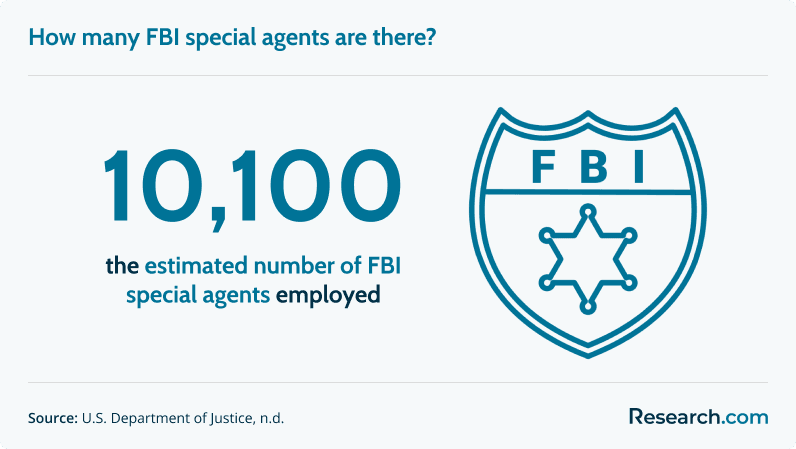
The path to becoming an FBI special agent is more selective and more complicated than choosing a criminal justice major and submitting an application. The Federal Bureau of Investigation recruits from a wide range of fields, including law, accounting, cybersecurity, intelligence, foreign languages, psychology, military service, forensic science, and local law enforcement. Because the Bureau has only about 10,100 FBI special agents, candidates need to understand the eligibility rules, degree expectations, professional experience requirements, fitness standards, security clearance process, and academy training before building their plans around this career.
This guide is designed for college students choosing a major, professionals considering a move into federal law enforcement, and career changers who want to know whether their background matches FBI hiring needs. It explains what special agents do, who qualifies, which degrees and skills are most relevant, how the application process works, what happens at Quantico, how salaries and benefits are structured, and which related careers may offer a similar investigative path.
Quick Answer: How do you become an FBI agent?
To become an FBI special agent, you need U.S. citizenship, a qualifying age range, a bachelor’s degree, relevant professional experience, a record that meets FBI conduct standards, strong physical fitness, successful completion of testing and interviews, a Top Secret Sensitive Compartmented Information clearance, and graduation from the FBI Academy in Quantico, Virginia. The hiring timeline can be lengthy because the background investigation can take six to 18 months by itself.
- The FBI special agent track is highly competitive. With only about 10,100 FBI special agents, applicants are evaluated on education, work history, judgment, ethics, physical readiness, communication, and security suitability.
- There is no required “FBI major.” Criminal justice and law can help, but the Bureau also needs expertise in cybersecurity, accounting, forensic science, psychology, intelligence, foreign languages, and other mission-focused areas.
- Training is rigorous. New agents complete preparation at Quantico, including the Basic Field Training Course described in this guide as an 18-week program with over 850 hours of instruction; some overviews describe the larger training period as 20 weeks.
- The clearance review can determine whether you move forward. Candidates must qualify for a Top Secret SCI clearance, which may involve a polygraph exam, urinalysis, drug testing, fingerprinting, credit and arrest record checks, and interviews with employers, references, associates, and other contacts.
- Pay can be strong, but the job is demanding. New agents begin at approximately $74,733 at GL-10, while experienced senior roles can reach $162,672 at GS-15 before considering locality and availability pay.
- What do FBI agents do?
- Who qualifies to become an FBI agent?
- What degree is best for FBI special agent applicants?
- How to Become an FBI Agent in 2027: Step-by-Step Process
- What training do FBI agents complete at Quantico?
- What skills do FBI agents need most?
- What FBI specializations and career tracks are available?
- What is day-to-day FBI work really like?
- How much do FBI agents make?
- What benefits are available to FBI agents?
- What careers are similar to FBI special agent jobs?
- Can legal certifications strengthen FBI preparation?
- Why is interagency collaboration important in FBI work?
- Can a graduate degree in legal studies support FBI advancement?
- How do FBI agents move into higher-level roles?
- How manageable is work-life balance for FBI agents?
- Are shorter legal credentials worth pursuing?
- How can technology education support investigative work?
What do FBI agents do?
An FBI special agent is a federal law enforcement officer who investigates federal crimes, gathers intelligence, supports national security operations, and works with other agencies to address threats affecting the United States. Assignments may involve counterterrorism, counterintelligence, cybercrime, public corruption, organized crime, civil rights violations, financial crimes, violent crime, and other federal matters.
The role is much broader than the dramatic version shown in films and television. Some agents conduct interviews, serve warrants, make arrests, and perform surveillance. Others spend significant time analyzing evidence, reviewing financial records, preparing reports, coordinating with prosecutors, interpreting digital data, or contributing to intelligence assessments. Specialized assignments can involve behavioral analysis, hostage negotiation, tactical response, forensic science, cyber operations, and other advanced investigative work.
Every special agent must meet the same baseline hiring standards and complete FBI training before taking on field responsibilities. Over time, agents may transfer squads, build expertise, complete advanced training, or move into supervisory and specialized roles. In that sense, the career resembles other senior public safety paths: candidates researching how to become a prison warden will also find that formal qualifications matter, but judgment, leadership, and performance under pressure matter just as much.
| FBI Agent Work Area | What It Can Include | Relevant Backgrounds |
| Criminal investigations | Conducting interviews, organizing evidence, preparing reports, making arrests, and coordinating with prosecutors | Law enforcement, criminal justice, law, forensic science |
| National security | Counterterrorism, counterintelligence, intelligence sharing, and threat evaluation | Foreign languages, military service, intelligence, international relations |
| Cyber and digital investigations | Investigating hacking, ransomware, online exploitation, cybercrime, and digital evidence | Cybersecurity, computer science, digital forensics, data analytics |
| Financial and white-collar crime | Tracing money, reviewing complex records, investigating fraud, corruption, embezzlement, and illicit transactions | Accounting, finance, law, forensic accounting |
| Behavioral and forensic support | Assisting with offender behavior analysis, evidence interpretation, laboratory support, and specialized case review | Psychology, forensic science, biology, criminal psychology |
Who qualifies to become an FBI agent?
The FBI applies strict eligibility standards before candidates advance into deeper testing and review. These rules are designed to screen for people who can handle classified information, exercise federal law enforcement authority, follow ethical standards, and manage the physical and psychological demands of special agent work.
- Citizenship and age. Applicants must be U.S. citizens and are generally required to be between 23 and 36 years old at the time of application. Age waivers may be possible for candidates with federal law enforcement experience or veteran’s preference.
- Legal and financial responsibility. Applicants cannot have felony convictions and must be in good standing on student loans, taxes, and child support obligations.
- Drug-use compliance. The FBI enforces strict rules on prior drug use, including restrictions related to recent marijuana use and other illegal substances.
- Selective Service requirement. Male applicants must have registered with the Selective Service System unless they are exempt.
- Security clearance suitability. Candidates must be eligible for a Top Secret Sensitive Compartmented Information clearance after a background investigation that includes records checks, interviews, urinalysis, and a polygraph examination.
Meeting the minimum eligibility requirements only gets a candidate to the starting line. Strong applicants also bring a bachelor’s degree, relevant work experience, clear writing and speaking ability, physical readiness, mature judgment, and a personal record that supports the Bureau’s trust standards. If you are weighing FBI work against local law enforcement, reviewing what are the requirements to be a police officer can help you compare the overlap and the differences between local policing and federal investigative careers.
| Requirement Area | What to Confirm Before Applying | Why It Matters |
| Age and citizenship | Make sure you meet the U.S. citizenship requirement and fall within the eligible age range | These are threshold standards, so ineligible applicants may be removed from consideration early |
| Education | Confirm that you have at least a bachelor’s degree from an acceptable institution | A bachelor’s degree is required for special agent applicants |
| Professional background | Document full-time employment, military service, specialized expertise, or advanced education | The Bureau reviews whether your experience prepares you for the work |
| Personal conduct | Review your finances, taxes, criminal history, drug history, and required obligations | Clearance decisions depend on honesty, reliability, and trustworthiness |
| Physical fitness | Begin training before the official Physical Fitness Test rather than waiting until late in the process | A failing score can delay or end an application |
What degree is best for FBI special agent applicants?
A bachelor’s degree is the minimum education requirement for FBI special agents. The Bureau does not require one specific major, and the best academic path depends on the expertise a candidate can bring to FBI mission areas. Criminal justice, criminology, and homeland security are common choices, but the FBI also needs people trained in cybersecurity, accounting, foreign languages, law, psychology, forensic science, intelligence, and data-focused work.
Students should evaluate a degree by the skills it builds, not just by the title printed on the diploma. A competitive applicant should be able to explain how coursework, internships, language ability, research, technical projects, military experience, professional certifications, or work history connect to federal investigations. For instance, someone with a criminal psychology degree may be drawn to violent crime or behavioral analysis, while a finance or accounting graduate may be better aligned with fraud, corruption, or white-collar crime investigations.
Graduate education may also help in some cases. Applicants with a master’s degree or PhD may qualify with less required work experience, and advanced study can support later specialization. Still, additional education is not automatically valuable unless it strengthens investigative, analytical, technical, legal, or communication skills. Students comparing undergraduate options can review the best bachelor degrees for broader career planning, but FBI preparation should be judged by mission fit and skill development rather than salary potential alone.
| Degree or Study Area | How It Connects to FBI Work | Strong Fit For Candidates Interested In |
| Criminal justice or criminology | Introduces policing, courts, corrections, criminal behavior, and investigative systems | General investigations, law enforcement, violent crime, public safety |
| Cybersecurity or computer science | Supports cybercrime investigations, digital evidence work, network analysis, and data recovery | Cybercrime, digital forensics, technology-driven investigations |
| Accounting or finance | Builds the ability to follow financial trails, interpret records, and understand fraud schemes | White-collar crime, public corruption, financial investigations |
| Law or legal studies | Strengthens knowledge of legal process, evidence rules, documentation, and federal procedure | Case preparation, compliance-heavy investigations, supervisory roles |
| Foreign languages or international studies | Supports interviews, translation, cultural context, intelligence work, and international matters | Counterintelligence, counterterrorism, international investigations |
| Psychology or forensic psychology | Develops insight into behavior, risk, decision-making, victim patterns, and offender patterns | Behavioral analysis, violent crime, threat assessment |
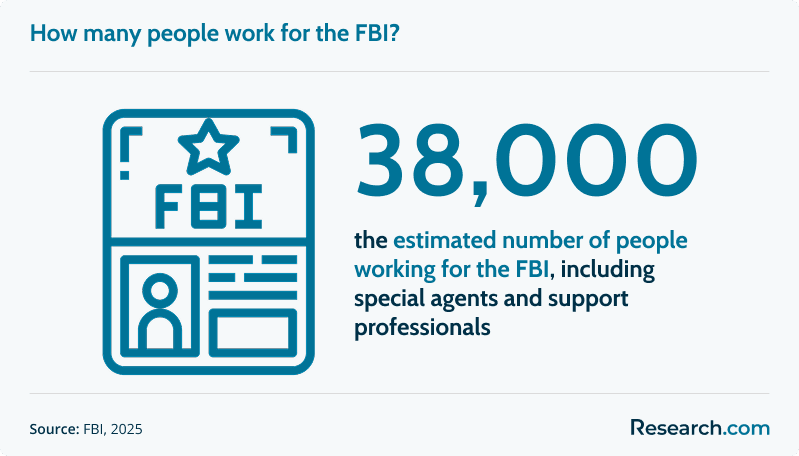
The FBI has approximately 38,000 employees, including special agents and professional support staff. That broad workforce helps explain why the Bureau draws talent from many academic and professional pathways.
How to Become an FBI Agent in 2027: Step-by-Step Process
The FBI special agent selection process is structured and sequential. Each stage examines a different part of the applicant’s readiness, including minimum qualifications, reasoning ability, writing, communication, interview performance, fitness, medical suitability, background history, and ability to complete academy training.
- Submit the application package. Candidates begin by providing a complete application, including a federal resume, transcripts, and supporting records such as military documentation or prior federal employment materials. Targeted credentials, including relevant short certificate programs in areas such as cybersecurity or language study, may help show focused preparation. The FBI typically provides a minimum qualification decision within 10 days after a complete submission is received.
- Take the Phase I Test. Applicants who move forward complete a three-hour computerized exam that measures logic-based reasoning, situational judgment, personality-related traits, and other cognitive areas. Candidates must schedule and complete the test within 21 days of the invitation and receive results within one hour of finishing it.
- Complete a Physical Fitness Test self-assessment. Before the Meet and Greet, candidates evaluate their readiness using FBI fitness protocols. This step helps applicants see whether they are likely to meet the official standard.
- Attend the Meet and Greet. This session is held at a Processing Field Office and gives applicants a more realistic understanding of the special agent role and selection process. Candidates must attend within 60 days after passing Phase I.
- Pass the official Physical Fitness Test. Within 60 days after the Meet and Greet, applicants must earn at least 9 total points, with at least 1 point in three of the four events. Candidates who score 12 points or higher may not need to retest for up to a year before Quantico.
- Complete Phase II testing. Phase II includes a structured panel interview with FBI special agents and a computerized writing assessment. Results are usually provided within two weeks.
- Receive a Conditional Appointment Offer. Applicants who pass Phase II may receive a Conditional Appointment Offer, often within seven days. This is not a final job offer because it still depends on medical review, polygraph testing, and the full background investigation.
- Complete the background investigation. This review includes fingerprinting, a personnel security interview, drug testing, credit and arrest checks, and interviews with personal and professional contacts. Depending on the candidate’s background, the investigation may take six to 18 months.
- Pass the Pre-Quantico Physical Fitness Test. Unless exempt because of a previous score of 12 points or higher within the applicable period, candidates must score at least 9 points within 120 days of arriving at the FBI Academy.
- Graduate from the Basic Field Training Course. The final pre-service stage is the 18-week program at the FBI Academy in Quantico, Virginia. Trainees study investigative methods, intelligence operations, legal issues, defensive tactics, firearms, and practical case scenarios. They must also pass a final Physical Fitness Test to graduate as FBI special agents.
Every step reduces the applicant pool by testing whether candidates are ready for the authority, pressure, and responsibility of federal law enforcement. The FBI’s training role also extends beyond its own special agents; more than 55,790 public safety professionals have graduated from the FBI National Academy (NA) since its inception in 1935.
Common mistakes that can weaken an FBI application
- Picking a major only because it sounds related to law enforcement. A broadly named program is less useful than one that builds writing, analysis, technical ability, legal understanding, or language skills.
- Delaying fitness preparation. The Physical Fitness Test is a serious screening point, so applicants should train for months rather than wait until they receive an official invitation.
- Overlooking personal conduct and financial issues. Tax problems, unpaid obligations, credit concerns, undisclosed behavior, and drug history can create clearance problems.
- Submitting a generic federal resume. The Bureau needs specific evidence of responsibility, leadership, measurable results, specialized knowledge, and sound decision-making.
- Assuming graduate education guarantees selection. A master’s degree or PhD may help, but it cannot substitute for experience, integrity, fitness, communication, and investigative potential.
What training do FBI agents complete at Quantico?
New FBI special agents train at the FBI Academy in Quantico, Virginia, before receiving full field responsibilities. The Basic Field Training Course is described in this guide as an 18-week program with over 850 hours of instruction. Training blends classroom study, legal and ethical instruction, firearms practice, operational skill development, physical conditioning, scenario exercises, and performance evaluation under stress.
- Academic training. Trainees study investigative techniques, ethics, leadership, forensic science, interviewing, and other subjects required for federal casework. Visits to the U.S. Holocaust Memorial Museum and the Martin Luther King, Jr. Memorial emphasize civil rights responsibilities and the consequences of abusing government authority.
- Firearms instruction. More than 100 hours are devoted to firearms safety, marksmanship, tactical decision-making, and responsible use of Bureau-issued weapons.
- Operational preparation. Training covers surveillance, defensive tactics, tactical driving, physical fitness, arrest procedures, and field operations.
- Scenario-based casework. Trainees practice gathering information, conducting interviews, analyzing evidence, and responding to simulated investigative situations.
- Hogan’s Alley. This mock town, created with help from Hollywood set designers, includes a bank, post office, hotel, and storefronts. Professional actors portray suspects, victims, and bystanders so trainees can practice communication and decision-making in realistic conditions.
- Ongoing professional training. Quantico graduation is not the end of development. Agents return for advanced instruction as threats, technology, investigative methods, and operational priorities evolve.
The point of FBI training is not just to teach tactics. It also tests judgment, restraint, ethics, teamwork, communication, and the ability to make sound decisions under pressure.
What skills do FBI agents need most?
The FBI assesses applicants through core competencies because agents handle complex investigations, sensitive information, high-risk operations, and legally significant decisions. Candidates can demonstrate these strengths through employment, military service, academic projects, volunteer leadership, technical work, or public safety experience.
| Skill | How It Shows Up in FBI Work | Ways to Develop It |
| Collaboration | Coordinating with federal, state, local, international, and private-sector partners | Team projects, public safety work, military service, cross-agency assignments |
| Communication | Writing reports, interviewing witnesses, briefing supervisors, and testifying clearly | Writing-heavy courses, public speaking, legal writing, investigative documentation |
| Adaptability | Adjusting to shifting threats, changing assignments, and unpredictable case demands | Emergency response, fieldwork, complex projects, high-pressure environments |
| Initiative | Pursuing leads, taking ownership, and solving problems without constant direction | Leadership roles, independent research, investigative projects, entrepreneurial work |
| Interpersonal ability | Building trust with victims, witnesses, colleagues, informants, and community partners | Interviewing, counseling, teaching, sales, service roles, community engagement |
| Leadership | Guiding teams, making decisions, and staying composed in stressful situations | Supervisory roles, military leadership, team captain experience, project management |
| Organization and planning | Managing evidence, case notes, deadlines, meetings, and investigative priorities | Case management, legal support, compliance work, research coordination |
| Problem solving and judgment | Interpreting evidence, assessing risk, and making decisions that can withstand scrutiny | Analytical coursework, forensic work, intelligence analysis, technical troubleshooting |
Technical ability is increasingly valuable, but it does not replace judgment. Agents must be able to explain what they found, how they found it, why it matters, and which legal steps are appropriate.
What FBI specializations and career tracks are available?
All special agents start with foundational training, but FBI careers can move into many different specialties. Assignments depend on performance, Bureau needs, prior expertise, training access, and willingness to accept challenging roles. Some agents pursue advanced education, including online doctoral programs in areas such as criminal psychology, cybersecurity, or forensic science, but graduate study should be selected for strategic value rather than prestige alone.
Law enforcement and tactical assignments
Some agents work in assignments that support high-risk arrests, armed incidents, crisis response, and dangerous field operations.
- SWAT Team Members. These agents assist with high-risk search warrants, arrests, and tactical responses, using training in weapons, close-quarters operations, and team tactics.
- Hostage Rescue Team. The Hostage Rescue Team is an elite unit that responds to hostage crises and counterterrorism operations in domestic and international settings.
- Bomb Technicians. These specialists evaluate, disarm, and neutralize explosive threats, including improvised explosive devices and hazardous materials.
- Tactical Helicopter Pilots. These agents provide aviation support for surveillance, transportation, and operational response.
Intelligence and analysis
FBI national security work depends on collecting, connecting, and interpreting information from many sources.
- Intelligence Analysts. Analysts review information, identify patterns, and support investigative and strategic decisions.
- Cybercrime Experts. These specialists focus on hacking, cyberterrorism, ransomware, financial cybercrime, and other digital threats.
- Behavioral Analysts. Behavioral specialists assist with offender behavior analysis, criminal profiling, violent crime, and counterterrorism-related questions.
Forensic science and technology
Scientific and technical specialists help agents understand evidence that cannot be resolved through interviews, observation, or conventional records alone.
- DNA Analysts. These professionals examine biological evidence and support identity-related findings.
- Cryptanalysts. Cryptanalysis specialists work with coded communications, encrypted material, financial records, and messages used by criminal organizations.
- Evidence Examiners. Examiners support fingerprint review, firearms identification, document analysis, and other evidence-focused work.
- Digital Forensic Specialists. These specialists preserve, recover, analyze, and explain data from computers, phones, networks, and online platforms.
Specialized investigations
Many agents develop deep expertise in one threat area over the course of their careers.
- Counterterrorism Agents. These agents identify, prevent, and disrupt terrorism-related threats.
- Cybercrime Investigators. These investigators focus on identity theft, online exploitation, financial cybercrime, infrastructure attacks, and other digital offenses.
- Organized Crime Specialists. These agents target criminal enterprises involved in drug trafficking, human smuggling, illicit finance, and related activity.
- White-Collar Crime Experts. These specialists investigate fraud, embezzlement, corruption, and corporate misconduct, often working with financial analysts and forensic accountants.
Career progression
Agents can advance by building specialized expertise, leading teams, teaching, or advising on complex investigative issues.
- Supervisory leadership. Agents may move into management roles, including positions such as special agent in charge or section chief.
- Training and mentoring. Experienced agents may instruct at the FBI Academy or help develop new personnel.
- Specialized advisory work. Senior agents may advise on counterterrorism, cyber strategy, legal coordination, tactical operations, or intelligence priorities.
What is day-to-day FBI work really like?
FBI work is driven by cases, so schedules and routines vary widely by assignment. A typical workweek is around 50 hours, but surveillance, emergencies, travel, search warrants, interviews, court deadlines, and crisis response can extend the schedule. One agent may review case files in the morning and interview witnesses later in the day. Another may analyze digital evidence, meet with prosecutors, prepare a briefing, or support a local law enforcement task force.
The work can be meaningful for people who want serious investigative responsibility, but candidates should be realistic about the lifestyle. The job can involve relocation, irregular hours, traumatic material, administrative documentation, physical risk, and long periods of careful evidence review. It is not a standard 9-to-5 office role, but it is also not constant tactical action.
Balancing education with FBI responsibilities
Some agents pursue additional education while working, especially when their assignments allow predictable study windows. Flexible options such as a PhD part time may support long-term specialization, research, or teaching goals, but demanding assignments can make graduate study difficult. Agents considering another degree should examine schedule demands, cost, skill transfer, and whether the credential supports a specific goal inside or outside the Bureau.
How much do FBI agents make?
FBI special agents are paid using the federal General Schedule (GS) pay scale. New special agents start at GL-10, and earnings can increase through steps, promotions, locality adjustments, and advancement into higher-grade leadership roles. More senior positions can fall under GS-14 and GS-15 because they involve greater responsibility and supervision.
The salary chart below uses 2025 base salary figures for FBI agents.
Locality pay and availability pay
Base salary is only part of FBI agent compensation. Agents also receive locality pay, which adjusts earnings based on the cost of living in the assigned area. In addition, they receive availability pay, which adds 25% of base salary because agents must be ready for irregular hours and operational needs.
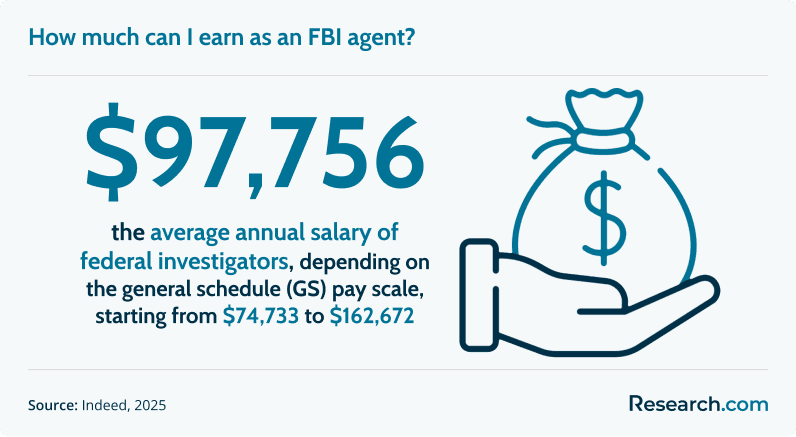
On average, an FBI special agent earns around $100,000 per year, although actual pay depends on location, grade, step, time in service, assignment, and leadership level. The range cited in this guide places FBI special agents between $74,733 and $162,672, depending on rank and experience.
What benefits are available to FBI agents?
FBI agents receive federal employee benefits, along with compensation elements tied to law enforcement availability and mobility. Benefits can support health care, retirement, relocation, education, leave, and long-term financial planning.
Core benefits
- Health insurance. Agents can choose from federal employee health plans, including medical, dental, and vision coverage, with family options available.
- Retirement plans. Agents participate in the Federal Employees Retirement System, which includes a pension, Social Security, and the Thrift Savings Plan with agency matching contributions.
- Pension and annuity benefits. FBI agents may be eligible for retirement benefits after 20 years of service, with calculations based on salary history and years of service.
Additional compensation and support
- Locality and availability pay. Agents receive locality adjustments and 25% availability pay because of unpredictable schedules and law enforcement readiness requirements.
- Paid leave. New agents receive 13 days of annual leave, with increases based on tenure, plus 13 days of sick leave per year and 11 federal holidays.
- Student loan repayment. Eligible employees may qualify for student loan repayment assistance through FBI programs.
- Relocation support. Agents required to move for assignments may receive financial assistance for relocation expenses.
- Continuing education. The FBI provides specialized training and leadership development and may offer tuition assistance when available and approved.
In Bureau of Labor Statistics data, FBI agents are included under “Detectives and Criminal Investigators,” which belongs to the broader “Police and Detectives” category. The following chart compares compensation across protective service roles.
What careers are similar to FBI special agent jobs?
Not every strong investigator will become an FBI special agent, and not every candidate should choose that path. Some professionals want a different mission, fewer relocation demands, more technical specialization, private-sector flexibility, or a clearer route into state or local work. If the FBI path does not fit your goals or timeline, related careers can use many of the same skills.
Federal law enforcement alternatives
- Drug Enforcement Administration. DEA agents investigate drug trafficking, controlled substance offenses, and international narcotics activity.
- Bureau of Alcohol, Tobacco, Firearms and Explosives. ATF agents focus on firearms trafficking, explosives, arson, and criminal organizations connected to those areas.
- Secret Service. Secret Service agents combine protective responsibilities with financial crime investigations involving fraud and counterfeiting.
- U.S. Marshals Service. Deputy marshals work in fugitive apprehension, witness protection, prisoner transport, and court security.
Private-sector investigative roles
- Corporate security specialists investigate internal misconduct, fraud, cyber threats, and organizational risk.
- Private investigators perform surveillance, background checks, insurance investigations, and legal support work.
- Risk management consultants help organizations reduce fraud, theft, cybercrime, and operational security failures.
Education-based specialization
Professionals who want to move toward cybersecurity, forensic psychology, intelligence analysis, or criminal justice can compare programs from regionally accredited online colleges. Accreditation is important because it can affect transfer credit, employer recognition, financial aid eligibility, and graduate study options.
Detectives and criminal investigators are projected to see 4% job growth from 2023 to 2033, which equals around 2,600 new jobs by the end of that period. That outlook shows continuing demand for investigative skills, though competition can differ by agency, location, budget, and specialization.
Some professionals find that their strongest skills point outside law enforcement. For example, people with scientific knowledge, persuasive communication, and relationship-building strengths may review the pharmaceutical sales rep career path. Those who value public service, physical activity, and education may compare teaching options and salary factors by reviewing PE teacher salary. These are not replacements for FBI work, but they show how discipline, communication, and analysis can transfer across careers.
| Career Option | Who It Fits Best | Main Trade-Off |
| FBI special agent | Candidates who want federal investigative authority, national security responsibilities, and a broad public safety mission | Highly selective hiring, possible relocation, long hours, and extensive background review |
| Other federal agent roles | Applicants focused on missions such as drugs, firearms, fugitives, protection, or financial crimes | Agency culture, duties, training, and hiring standards vary widely |
| Local or state law enforcement | People who want community-based policing or a faster entry path into sworn law enforcement | Jurisdiction, pay, training quality, and advancement options differ by department |
| Cybersecurity or digital forensics | Technically skilled professionals who prefer digital investigations or private-sector options | May offer less sworn law enforcement authority |
| Corporate investigations | Professionals interested in fraud, compliance, internal investigations, or security risk | The mission is employer-centered rather than public law enforcement-centered |
Can legal certifications strengthen FBI preparation?
Legal training can help applicants and agents who work with evidence, subpoenas, case documentation, court preparation, regulatory matters, or prosecutors. A focused option such as an ABA approved online paralegal certificate can build practical ability in legal research, case organization, and document review. It does not replace FBI training or guarantee selection, but it may strengthen preparation for law-heavy investigative work.
Why is interagency collaboration important in FBI work?
FBI investigations frequently require coordination with local police, state agencies, federal partners, prosecutors, intelligence organizations, and international counterparts. Collaboration helps agencies share information, reduce duplicated work, combine specialized capabilities, and respond more effectively to complex threats. Candidates interested in national security can also benefit from understanding other federal pathways, including the process described in CIA case officer requirements.
Can a graduate degree in legal studies support FBI advancement?
A graduate degree in legal studies can strengthen understanding of federal law, administrative procedure, evidence, compliance, and legal communication. An online master in legal studies may be practical for working professionals who need flexibility. Its value depends on the agent’s goals; it may be most relevant for legal coordination, policy work, compliance-heavy investigations, supervisory roles, or positions requiring careful interpretation of legal documents.
How do FBI agents move into higher-level roles?
FBI advancement depends on performance, experience, leadership, training, agency needs, and readiness for more responsibility. Agents may progress from field investigations into specialized squads, supervisory roles, headquarters assignments, training positions, or strategic advisory work. Some add formal education, such as an online criminal justice degree, when it supports a defined career objective or fills a specific skills gap.
Before paying for another credential, agents should ask whether it improves a concrete capability, such as cyber analysis, legal writing, forensic interpretation, leadership, data analysis, or intelligence work. Education is most useful when it connects directly to job performance and future assignments.
How manageable is work-life balance for FBI agents?
FBI agents often work irregular schedules, handle stressful cases, and respond to urgent operational needs. Work-life balance varies by assignment, field office, travel schedule, family responsibilities, and career stage. Agents may use resilience training, peer support, mental health resources, physical fitness, structured routines, and family communication to manage stress.
Some agents eventually compare FBI work with other criminal justice careers that offer different missions, schedules, or earning potential. If long-term lifestyle is a major factor, it can help to evaluate what criminal justice job pays the most alongside non-salary issues such as stress, mobility, risk, retirement, and family impact.
Are shorter legal credentials worth pursuing?
Short legal credentials can make sense for applicants or agents who want targeted training without committing to a full degree. A program such as the fastest paralegal certification may build familiarity with legal terminology, procedural concepts, case files, and evidence organization. The credential is most useful when it is paired with relevant experience and a clear reason for earning it.
How can technology education support investigative work?
Technology now affects many FBI investigations. Agents may need to understand digital evidence, encrypted communications, cyber threats, mobile devices, online exploitation, financial transactions, data patterns, and emerging analytical tools. Education in cybersecurity, data analytics, machine learning, or digital forensics can help agents work more effectively with technical specialists and interpret evidence responsibly.
Programs focused on intelligence and technology, such as the best online masters in artificial intelligence, may be useful for professionals pursuing cyber operations, intelligence analysis, or technology-intensive investigations. As with any graduate program, the key question is whether the coursework builds mission-relevant skills rather than simply adding another credential.
Questions to ask before pursuing the FBI special agent path
- Do I currently meet the FBI’s citizenship, age, education, conduct, and fitness standards?
- Can I connect my background to an FBI mission area such as cybercrime, financial crime, intelligence, foreign languages, forensic science, law, or law enforcement?
- Am I prepared for a background investigation that reviews finances, drug history, work history, relationships, travel, and personal conduct?
- Can I accept relocation, unpredictable hours, stressful cases, and the possibility of dangerous field assignments?
- Would another federal agency, local law enforcement role, cybersecurity position, or private investigative job better match my goals?
- If I earn another degree or certificate, what exact skill will it add to my application or long-term career plan?
Key Insights
- Becoming an FBI special agent requires strict eligibility, a bachelor’s degree, professional experience, testing, interviews, physical fitness, security clearance approval, and training at Quantico.
- The FBI does not require one specific major. Criminal justice can be useful, but cybersecurity, accounting, law, psychology, foreign languages, forensic science, and intelligence-related fields can be just as relevant when they connect to Bureau needs.
- The hiring process is selective and slow by design. The background investigation alone can take six to 18 months, so candidates should address fitness, documentation, finances, conduct history, and resume quality early.
- FBI pay can be competitive, especially with locality and availability pay. This guide cites FBI special agents as earning between $74,733 and $162,672 depending on rank and experience, with an average around $100,000 per year.
- The Bureau employs approximately 38,000 people, including 10,100 special agents and many professionals in cybersecurity, intelligence, laboratory science, operations, and administrative support.
- Detectives and criminal investigators are projected to grow by 4% from 2023 to 2033, adding around 2,600 new jobs, but federal investigative openings remain competitive.
- Protective services pay varies by role and employer. Police officers and detectives earn a median salary of $74,910, while private detectives and investigators earn $49,540.
- Detectives and criminal investigators in federal, state, and local government roles average $121,770, followed by the Postal Service at $111,930 and psychiatric and substance abuse hospitals at $89,490.
- The strongest FBI preparation strategy is targeted. Choose education, work experience, fitness preparation, and credentials that support a real mission area and can be clearly explained in an application.
References:
- Bureau of Labor Statistics. (2024). Occupational employment and wages, May 2023 - 33-3021 detectives and criminal investigators. U.S. Department of Labor. Retrieved March 21, 2025, from BLS.
- Bureau of Labor Statistics. (2024). Police and detectives. U.S. Department of Labor. Retrieved March 21, 2025, from BLS.
- Federal Bureau of Investigation. (2025). A brief history. Retrieved March 21, 2025, from FBI.
- Federal Bureau of Investigation. (2025). Application and evaluation process. Retrieved March 21, 2025, from FBI.
- Federal Bureau of Investigation. (2025). Behavioral analysis. Retrieved March 21, 2025, from FBI.
- Federal Bureau of Investigation. (2025). How many people work for the FBI? Retrieved March 21, 2025, from FBI.
- Federal Bureau of Investigation. (2025). Intelligence. Retrieved March 21, 2025, from FBI.
- Federal Bureau of Investigation. (2025). Laboratory division. Retrieved March 21, 2025, from FBI.
- Federal Bureau of Investigation. (2025). Science and technology. Retrieved March 21, 2025, from FBI.
- Federal Bureau of Investigation. (2025). Special agent. Retrieved March 21, 2025, from FBI.
- Federal Bureau of Investigation. (2025). Tactical/Hogan's Alley. Retrieved March 21, 2025, from FBI.
- Federal Bureau of Investigation. (2025). Tactics. Retrieved March 21, 2025, from FBI.
- Federal Bureau of Investigation. (2025). What is the FBI? Retrieved March 21, 2025, from FBI.
- Federal Bureau of Investigation. (2025). What it takes to join the FBI. Retrieved March 21, 2025, from FBI.
- Federal Bureau of Investigation. (2025). What kind of training does an agent go through? Retrieved March 21, 2025, from FBI.
- Indeed. (2024). How much do FBI agents make? (Including requirements). Retrieved March 21, 2025, from Indeed.
- Indeed. (2025). Federal investigator salary in United States. Retrieved March 21, 2025, from Indeed.
Other Things You Should Know About How to Become an FBI Agent
The FBI uses a Tier 5 background investigation for special agent candidates, which is the most detailed federal background check. It reviews criminal history, credit, foreign contacts, drug use, employment, education, and references. Applicants must also complete fingerprinting, a polygraph, and the Security Clearance process.
Candidates must be between 23 and 36 years old at the time of their appointment. Exceptions exist for veterans who can waive the maximum age limit if they meet certain conditions, allowing them to apply beyond 36 years.
In 2027, FBI agent applicants must pass a Physical Fitness Test consisting of sit-ups, a 300-meter sprint, push-ups, and a 1.5-mile run. Each component is scored, and candidates must meet minimum scores to be considered.
Yes, a background check is mandatory for aspiring FBI agents in 2027. This comprehensive process involves reviewing criminal records, credit history, and personal associations to ensure candidates meet the stringent security standards required by the Bureau.