2027 Cheapest Accredited Online Child Psychology Degree Programs: Tuition, Fees, and Financial Aid

Co-Founder and Chief Data Scientist
Choosing an affordable online child psychology degree is harder than comparing tuition ads. College Board's latest pricing data shows average published tuition and fees at public four-year colleges reached $11,610 for in-state students and $30,780 for out-of-state students, making cost transparency essential.
This guide is for students comparing accredited online psychology, child development, and child/adolescent psychology programs. You'll learn how tuition, fees, aid, accreditation, transfer credits, and net price affect the real cost, so you can identify genuinely affordable options and avoid expensive surprises.
Key Things You Should Know
- The lowest published online tuition among commonly available accredited child/adolescent psychology options is often found at schools such as University of the Cumberlands at about $220 per credit and Fort Hays State University at about $257.33 per credit, before program-specific fees, books, and transfer-credit adjustments.
- A 120-credit bachelor's degree can range from roughly $26,400 in tuition-only cost at a $220-per-credit school to more than $60,000 at higher-priced online private universities; mandatory technology, graduation, course, and proctoring fees can change the final ranking.
- Net price matters more than advertised tuition because Pell Grants, state grants, institutional scholarships, employer tuition benefits, military benefits, and accepted transfer credits can reduce what a student actually pays.
What Are the Cheapest Accredited Online Child Psychology Degree Programs?
The cheapest accredited online child psychology degree programs are usually bachelor's programs in psychology, developmental psychology, child and adolescent development, or child and family psychology offered by regionally accredited nonprofit universities.
A bachelor's degree in this area can prepare students for entry-level human services, behavioral health support, youth programming, case management, and graduate study, but it generally does not qualify someone to become a licensed psychologist without graduate education.
The table below compares affordable online options using published online undergraduate tuition as the main sortable cost metric. Because schools define mandatory fees differently, treat the estimated program cost as a starting point and request a written, student-specific cost sheet before enrolling.
| Rank by Published Tuition | School | Accreditation | Relevant Online Program | Published Online Tuition | Estimated 120-Credit Tuition | Cost Notes to Verify |
| 1 | University of the Cumberlands | SACSCOC | Online psychology degree with child and adolescent development coursework or concentration options | About $220 per credit | About $26,400 | Confirm technology, course, and graduation fees; transfer credits can sharply reduce remaining cost. |
| 2 | Fort Hays State University | Higher Learning Commission | Online psychology bachelor's degree with child, development, and family-related electives | About $257.33 per credit | About $30,880 | Strong low-tuition public option; confirm whether a formal child psychology concentration is required for your goals. |
| 3 | Pennsylvania Western University | Middle States Commission on Higher Education | Online psychology bachelor's pathway with child development or child psychology-related study options | About $322 per credit for many online undergraduate students | About $38,640 | Ask whether tuition differs by residency, campus designation, or online program format. |
| 4 | Southern New Hampshire University | NECHE | BA in Psychology with Child and Adolescent Development concentration | About $330 per credit | About $39,600 | Large online transfer-credit capacity may lower cost for students with prior college credits. |
| 5 | Liberty University | SACSCOC | Online BS in Psychology: Developmental Psychology | About $390 per credit for full-time online undergraduate study | About $46,800 | Part-time rates, course fees, military pricing, and institutional aid can change net price. |
| 6 | Bay Path University | NECHE | Online psychology bachelor's degree with child psychology-focused study | About $410 per credit | About $49,200 | Confirm whether the listed tuition includes online fees and whether scholarships renew automatically. |
| 7 | Eastern Kentucky University | SACSCOC | Online BS in Psychology with Child and Family Psychology concentration | About $434 per credit | About $52,080 | Ask about textbook policies, online fees, and whether the concentration adds any course-specific costs. |
| 8 | UMass Global | WSCUC | Online psychology bachelor's degree with child psychology-related concentration options | About $500 per credit | About $60,000 | May be competitive after employer tuition benefits or transfer credit, but advertised tuition is higher than the lowest-cost options. |
The best low-cost shortlist for many students starts with University of the Cumberlands, Fort Hays State University, Pennsylvania Western University, and Southern New Hampshire University. However, the "cheapest" final choice depends on how many credits transfer, whether the student receives grants or scholarships, and whether required fees are included in the published tuition quote.
How Were the Cheapest Online Child Psychology Degree Programs Ranked?
The ranking emphasizes affordability, but it does not treat low tuition as the only sign of value. A program had to be institutionally accredited and relevant to child psychology through a degree title, concentration, specialization, or substantial child/adolescent development coursework.
The comparison used the following cost-first criteria, with extra attention to factors that can change the final amount a student pays:
- Accreditation status: The school had to hold recognized institutional accreditation from an accreditor accepted by the U.S. Department of Education or the Council for Higher Education Accreditation.
- Published online undergraduate tuition: Per-credit online tuition was prioritized because most bachelor's programs require about 120 semester credits.
- Mandatory fee transparency: Programs with clearer technology, online, course, graduation, or student service fee information were easier to compare.
- Transfer-credit flexibility: Programs that allow generous transfer credit can be cheaper for students who already completed general education or associate degree coursework.
- Child psychology relevance: Programs were favored when they clearly included child development, adolescent development, family psychology, developmental psychology, or youth-focused coursework.
- Financial aid access: Federal financial aid eligibility, institutional aid, payment plans, military benefits, and employer tuition benefit compatibility were considered.
One limitation is that schools update tuition and fees frequently, and a student's net price can differ from the published rate. For that reason, the ranking should be used as a practical comparison tool, not as a final bill estimate.
How Can You Verify the Accreditation of an Online Child Psychology Degree Program?
Accreditation is the first affordability checkpoint because credits from an unrecognized school may not transfer, and students may lose access to federal financial aid. For online child psychology degrees, institutional accreditation is usually the most important credential at the bachelor's level.
Use this process before applying or paying an enrollment deposit:
- Search the school in the U.S. Department of Education's Database of Accredited Postsecondary Institutions and Programs.
- Confirm that the institution name, campus, and online division match the school you plan to attend.
- Check that the accreditor is recognized and that the institution is currently accredited, not only previously accredited.
- Ask the school whether the exact online program is eligible for Title IV federal financial aid.
- Confirm transfer policies with any future graduate school if you plan to pursue counseling, school psychology, clinical psychology, or social work later.
Students sometimes look for APA accreditation when comparing child psychology bachelor's degrees, but the American Psychological Association does not accredit bachelor's programs. APA accreditation is mainly relevant to doctoral psychology programs, internships, and postdoctoral residencies, so the absence of APA accreditation should not automatically disqualify an undergraduate online psychology program.
How Much Does an Accredited Online Child Psychology Degree Really Cost?
The real cost of an accredited online child psychology degree includes more than tuition. Tuition is the price per credit or term, mandatory fees are required charges added by the school, total program cost is the estimated full price before aid, and net price is what remains after grants, scholarships, discounts, and other aid that does not need to be repaid.
The table below shows how common cost components affect the final price. This matters because two programs with similar tuition can have very different out-of-pocket costs once fees and aid are included.
| Cost Component | What It Means | Why It Changes Affordability |
| Tuition | The per-credit or flat-rate instructional charge | This is the easiest number to compare, but it may exclude required fees. |
| Mandatory fees | Technology, online learning, student services, registration, course, or graduation charges | Fees can add hundreds or thousands of $ over a full degree. |
| Books and materials | Textbooks, digital access codes, assessments, and software | Some online programs include digital materials, while others charge separately. |
| Transfer credit impact | Credits accepted from prior college, AP, CLEP, military, or portfolio learning | Every accepted credit can reduce remaining tuition, especially in per-credit programs. |
| Financial aid | Grants, scholarships, loans, work-study, military benefits, and employer assistance | A higher-tuition program may have a lower net price if aid is stronger. |
| Net price | Estimated cost after grant and scholarship aid | This is usually the best number for comparing affordability across schools. |
A practical formula is: tuition for remaining credits + mandatory fees + books and materials - grants and scholarships = estimated net cost before loans.
Students comparing health, counseling, and human services degrees can use a similar full-cost approach when reviewing related fields such as affordable online nursing programs, where fees and clinical requirements can also affect the final bill.
Which Tuition Models Make Online Child Psychology Degree Programs More Affordable?
Online child psychology programs use different tuition models, and the cheapest option depends on your enrollment pace, transfer credits, residency, and work schedule. The most affordable model is usually the one that matches how quickly and consistently you can complete courses.
These are the tuition models students should compare before choosing a program:
- Per-credit tuition: Best for students taking a steady but flexible course load; total cost is easy to calculate by multiplying the rate by remaining credits.
- Flat-rate term tuition: Can be cheaper for students who can take a heavier full-time load without withdrawing or repeating courses.
- Online tuition equal for all students: Helpful when a public university charges one online rate instead of separate in-state and out-of-state rates.
- Competency-based or subscription tuition: Can reduce cost for highly self-directed students who can complete multiple courses in one term.
- Military or employer-discounted tuition: May lower the published rate for eligible students but should be confirmed in writing before enrollment.
Students who want flexibility should also compare pacing rules. A flat-rate or competency model can be a bargain for a motivated adult learner, but it can become expensive if life, work, or caregiving responsibilities slow progress.
Similar pacing trade-offs appear in accelerated programs outside psychology, such as a online nutrition degree, where speed only saves money if the student can complete courses successfully.
What Fees and Hidden Costs Should Online Child Psychology Degree Students Expect?
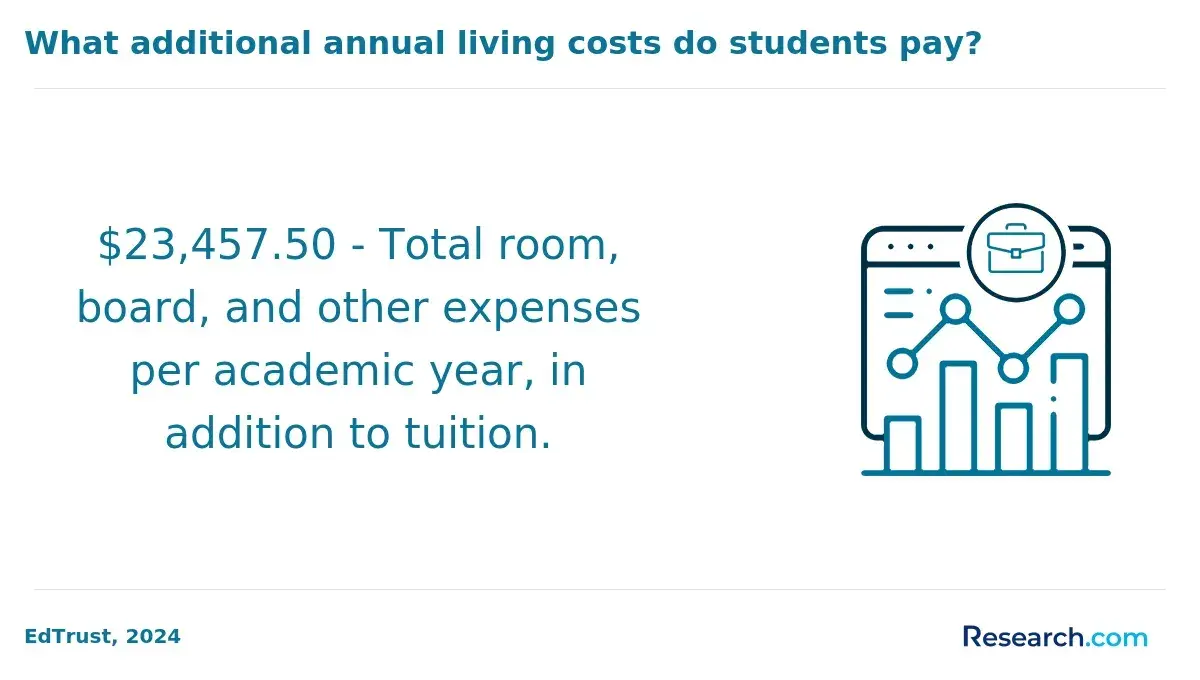
Mandatory fees can make a low-tuition program more expensive than it first appears. Before comparing schools, ask for a complete cost of attendance estimate for your exact program, course load, residency status, and transfer-credit profile.
Watch for these common online degree costs because they are not always included in the headline tuition rate:
- Technology or online learning fees: Charges for learning platforms, digital services, remote support, or online course delivery.
- Course-specific fees: Extra charges for assessments, lab-style activities, simulations, fieldwork coordination, or specialized software.
- Textbooks and digital access codes: Psychology courses may require publisher platforms, assessment tools, or research methods materials.
- Proctoring fees: Some online courses require paid remote exam monitoring.
- Graduation and transcript fees: These are usually smaller charges, but they still belong in the total cost estimate.
- Residency or internship travel: Most online bachelor's programs do not require clinical placements, but any optional field experience may create transportation or background-check costs.
- Repeat-course costs: Retaking a course can erase savings from a cheaper tuition model.
A useful red flag is vague language such as "fees may apply" without a clear fee schedule. If a school cannot provide a written estimate that includes mandatory fees, compare that program cautiously against schools with more transparent pricing.
How Does FAFSA and Federal Financial Aid Work for Online Child Psychology Degree Programs?
Online students can use federal financial aid if the school participates in Title IV aid and the student enrolls in an eligible degree program. For the 2025-26 award year, the maximum Federal Pell Grant remains $7,395, which can substantially reduce net price for eligible undergraduate students, although the exact award depends on financial need, enrollment intensity, and federal rules.
To use FAFSA for an online child psychology degree, follow these steps in order:
- Confirm the school is institutionally accredited and participates in federal student aid programs.
- Verify that the specific online degree or concentration is Title IV eligible.
- Submit the FAFSA using the school's federal code.
- Review the financial aid offer and separate gift aid from loans.
- Calculate net price by subtracting grants and scholarships from tuition, mandatory fees, books, and other required costs.
- Ask whether aid changes if you enroll part time, accelerate courses, stop out, or transfer additional credits.
Federal loans can help cover remaining costs, but they are not the same as affordability because they must be repaid with interest. Prioritize Pell Grants, state grants, institutional scholarships, employer benefits, and payment plans before borrowing.
Which Scholarships, Grants, and Tuition Benefits Can Help Pay for an Online Child Psychology Degree?
Scholarships and grants are usually more valuable than loans because they do not need to be repaid if students meet the award rules. The most useful strategy is to combine several smaller funding sources rather than waiting for one large scholarship.
Students in online child psychology programs should check these funding categories early, preferably before the first billing deadline:
- Federal Pell Grants: Need-based undergraduate grants for eligible students who have not already earned a bachelor's degree.
- State grants: Awards that may require residency, in-state enrollment, minimum credits, or attendance at an approved institution.
- Institutional scholarships: School-funded awards based on need, merit, transfer status, military affiliation, or adult learner status.
- Psychology and human services scholarships: Awards from professional associations, community foundations, nonprofits, and local mental health organizations.
- Employer tuition assistance: Benefits for employees working in schools, childcare centers, healthcare systems, social services, or nonprofit youth programs.
- Military and veteran education benefits: Tuition assistance, GI Bill benefits, Yellow Ribbon participation, and military spouse programs may apply depending on eligibility.
- AmeriCorps education awards: Students who complete eligible service may apply awards toward qualifying education expenses.
When comparing scholarships, ask whether each award is renewable, whether it applies to online students, and whether it requires full-time enrollment. Students comparing multiple career-oriented online options can use the same aid checklist when reviewing programs such as the best school for medical billing and coding, where grant eligibility and institutional aid can also change net price.
Can Transfer Credits, Prior Learning, and Competency-Based Study Lower the Cost of an Online Child Psychology Degree?
Transfer credit is one of the strongest cost-saving tools for online child psychology students. If a school accepts 60 credits from an associate degree, the student may only need to pay for the final 60 credits instead of the full 120-credit bachelor's program.
Use this checklist before choosing a school because transfer rules vary widely:
- Request an unofficial transfer evaluation before committing to the program.
- Ask how many credits can transfer into the major, general education, and elective categories.
- Confirm the minimum number of credits that must be completed at the new school, often called the residency requirement.
- Ask whether prior learning assessment, military training, CLEP, DSST, AP, or professional certifications can apply.
- Check whether old psychology, statistics, or research methods courses expire for major requirements.
- Compare the cost after transfer credit, not the advertised full-degree cost.
Competency-based study can also lower cost if tuition is charged by term and the student completes courses quickly. This model works best for organized adult learners with relevant work or prior academic experience, but it is risky for students who need fixed deadlines and frequent instructor structure.
Transfer planning is equally important in adjacent online fields, including a nutrition degree online, where accepted credits can determine whether a program is truly affordable.
How Should Students Compare the Net Price, Quality, and Return on Investment of Online Child Psychology Degree Programs?
The best-value program is not always the one with the lowest tuition. Students should compare net price alongside accreditation, transferability, student support, curriculum fit, graduate-school preparation, and realistic career outcomes.
The table below summarizes the main value signals to review after narrowing your list by cost. These factors help identify programs that are affordable without being risky.
| Value Factor | What to Look For | Why It Matters |
| Net price | Cost after grants, scholarships, discounts, and accepted transfer credits | This is closer to what you actually pay than advertised tuition. |
| Accreditation | Recognized institutional accreditation and Title IV eligibility | Supports federal aid access, transferability, and graduate-school recognition. |
| Curriculum fit | Child development, adolescent psychology, family systems, abnormal psychology, research methods, and statistics | Relevant coursework is important for youth services roles and graduate study. |
| Student support | Online advising, tutoring, career services, library access, disability services, and faculty availability | Support can affect completion, especially for working adults. |
| Graduate-school pathway | Preparation for counseling, school psychology, clinical psychology, social work, or applied behavior analysis programs | Many advanced child psychology careers require graduate education. |
| Career alignment | Transparent outcomes, internship options, field experience, and career advising | A low-cost degree is more valuable when it connects to realistic next steps. |
Salary expectations should be handled carefully. The Bureau of Labor Statistics reported a May 2024 median annual wage of $94,310 for psychologists, but most psychologist roles require a graduate degree and licensure; a bachelor's degree alone usually leads to support, social service, education, or entry-level behavioral health roles rather than licensed psychologist positions.
Before enrolling, avoid these common mistakes that can increase cost or reduce value:
- Choosing the lowest-tuition program without checking recognized accreditation.
- Comparing tuition rates while ignoring mandatory online, technology, course, and graduation fees.
- Assuming every accredited school makes every online program eligible for federal financial aid.
- Overlooking transfer-credit limits, residency requirements, or old-course expiration rules.
- Counting scholarships as permanent without confirming renewal requirements.
- Borrowing the full cost before applying for grants, employer benefits, state aid, and institutional scholarships.
- Choosing a cheap program that does not include the child development or research coursework needed for graduate-school goals.
If your long-term goal involves graduate health or clinical education, compare cost and outcomes at each stage rather than only the bachelor's level. Students planning advanced professional study often use similar ROI logic when comparing programs such as the easiest DNP program, where affordability, accreditation, and career requirements must be evaluated together.
Other Things You Should Know About Child Psychology Degrees
In 2027, students enrolling in online child psychology degree programs can explore federal financial aid, including Pell Grants and Direct Loans. Additionally, many institutions offer scholarships and assistantships specifically for online students. Always check with the institution for specific aid packages available to distance learners.
A full 120-credit bachelor's degree usually takes about four years of full-time study. Students with an associate degree or significant transfer credits may finish faster, while part-time students may take longer.
The application deadline for enrolling in an online child psychology degree program for the fall 2027 semester varies by institution, but many programs close applications by April 30, 2027. It's important to check with the specific institution for exact deadlines.
In 2027, an online child psychology bachelor's degree typically requires between 120 and 130 credit hours. These programs often cover subjects like developmental psychology and cognitive processes, ensuring a comprehensive education in child psychology topics.
References
- Cost of Psychology Degree: Tuition, Fees & Is it Worth it? | SoFi https://www.sofi.com/cost-of-psychology-degree/
- Online Child Psychology Degree Programs | Psychology.org https://www.psychology.org/online-degrees/child-psychology/
- BA in Psychology (General Psychology) https://www.umassglobal.edu/academic-programs/ba-in-psychology
- The Hidden Costs of Payments in International Education: What You Need to Know https://qualyhq.com/blog/hidden-costs-international-payments-education/
- 2025 Most Affordable Online Child Development Degrees https://www.onlineu.com/most-affordable-colleges/child-development-degrees
- 2025's Most Affordable Online Master’s Degrees in Psychology https://www.onlinemastersdegrees.org/most-affordable/psychology-programs/
- Financial Aid: Child Development Degree | Erikson Institute https://www.erikson.edu/admissions/financial-aid-tuition/
- Unveiling the Potential: Advantages of an Online Psychology Degree https://www.calcoast.edu/news/unveiling-the-potential-advantages-of-an-online-psychology-degree