
2027 How to Become a PE Teacher: Salary & Career Paths

Co-Founder and Chief Data Scientist
Becoming a physical education teacher is a good fit for people who want to teach, coach movement skills, promote student health, and work in a school setting. The career is not simply about leading games or supervising sports. PE teachers design age-appropriate lessons, assess student progress, support inclusive participation, manage safety risks, and help students build fitness habits that can last beyond graduation. More than 28,500 PE teachers are employed across the US, and schools continue to need qualified educators as wellness, physical activity, and student health remain priorities.
This guide explains how to become a PE teacher for 2027, including degree options, certification requirements, alternative licensure routes, skills, salary expectations, job outlook, career advancement, technology trends, and common mistakes to avoid before choosing a program or certification path.
Quick Answer: How Do You Become a PE Teacher?
To become a PE teacher, you generally need a bachelor’s degree in physical education, kinesiology, exercise science, or a closely related field; completion of a teacher preparation program; student teaching experience; passing scores on required licensure exams; a background check; and, in many districts, CPR and first aid certification. Requirements vary by state, so the best first step is to check your state education department’s rules before enrolling in a degree or alternative certification program.
- A bachelor’s degree with approved teacher preparation is the most common route into K-12 PE teaching.
- Public school PE teachers must meet state licensure or certification requirements, which usually include exams and supervised teaching experience.
- Career changers may qualify through alternative certification or post-baccalaureate programs instead of earning a second full bachelor’s degree.
- Advanced education can support movement into athletic administration, curriculum leadership, coaching, postsecondary instruction, or related wellness careers.
- What degree do you need to become a PE teacher for 2027?
- What certifications do you need to become a PE teacher?
- Are there alternative certification programs for aspiring PE teachers?
- What are the top skills every PE teacher needs for 2027?
- What is the average salary of a PE teacher in the US for 2027?
- What are the job growth projections for PE teachers?
- What are the best career paths for experienced PE teachers?
- What challenges do PE teachers face and how can they overcome them?
- What additional steps can prospective PE teachers take to strengthen their credentials?
- How can PE teachers build strategic leadership skills for career advancement?
- What is the difference between teaching PE in elementary vs. high school?
- How do PE teacher responsibilities change at the college level?
- How do professional networks and community partnerships boost career growth?
- How is technology changing the way PE is taught for 2027?
- Can advanced degrees in educational leadership drive PE teachers' career advancement?
- Can cross-disciplinary research enhance PE teaching outcomes?
- How can historical insights shape modern physical education strategies?
What degree do you need to become a PE teacher for 2027?
Most future PE teachers earn a bachelor’s degree in physical education, kinesiology, exercise science, health education, or another related field that includes an approved teacher preparation sequence. In many states, the cleanest route is a Bachelor of Science in Education with a physical education concentration because it usually combines subject-area coursework, pedagogy, classroom observation, and student teaching.
Degree requirements differ by state, but strong PE teacher preparation programs usually include coursework in human anatomy, biomechanics, motor development, fitness assessment, health education, adapted physical education, child and adolescent development, curriculum planning, and classroom management. Student teaching is especially important because PE teachers must learn how to manage large groups, teach safely in gyms or outdoor spaces, adapt activities for different ability levels, and assess student learning beyond athletic performance.
Students who need more flexibility can compare accredited online education degree options, but they should verify that the program leads to teacher certification in the state where they plan to work. Online coursework may be available, but supervised fieldwork and student teaching typically happen in person.
| Education path | Best for | What to check before enrolling |
| Bachelor’s in physical education | Students who know they want to teach PE in K-12 schools | State approval, student teaching placement, licensure exam preparation, and health or adaptive PE endorsements |
| Bachelor’s in kinesiology or exercise science with teacher preparation | Students who want PE teaching eligibility plus broader movement science knowledge | Whether the program includes a teaching certification component, not just science coursework |
| General education degree with PE-related coursework | Students in states that allow broader education majors with physical education specialization | Exact state coursework rules, required clinical hours, and exam requirements |
| Master’s degree in education | Licensed teachers seeking advancement, higher-level roles, or expanded expertise | Whether the degree supports licensure renewal, salary schedule movement, curriculum roles, or administration goals |
A master’s degree is not always required to start teaching PE, but many teachers pursue an online master’s degree in teaching or education to strengthen their instructional skills, qualify for leadership roles, or meet state renewal expectations. Some states require teachers to earn a master’s degree within a few years of initial certification to maintain licensure, so prospective teachers should confirm local rules early.
What certifications do you need to become a PE teacher?
Public school PE teachers need state certification or licensure. The exact process varies, but most states require candidates to complete an approved teacher preparation program, pass required exams, submit fingerprints, clear a background check, and document supervised teaching experience.
- Teacher licensure exam: Many candidates take a state-approved content exam, such as the Praxis Physical Education: Content Knowledge test, or a comparable state-specific assessment.
- Background check and fingerprinting: Schools require screening because PE teachers work directly with minors and often supervise active, high-movement environments.
- CPR and first aid: Many districts expect PE teachers to hold first aid and CPR certification because injuries, asthma episodes, heat-related concerns, or other health issues can occur during physical activity.
- Additional endorsements: Some states or districts may require health education, coaching, or adapted physical education endorsements, especially for teachers who serve students with disabilities or teach combined PE and health courses.
If you are comparing degree options, remember that not every kinesiology or exercise science program is designed for teacher licensure. A low-cost online exercise science or kinesiology degree may provide useful subject knowledge, but you still need to verify that it satisfies your state’s educator certification rules.
Are there alternative certification programs for aspiring PE teachers?
Alternative certification can help career changers become PE teachers without completing a second full bachelor’s degree. This path is most relevant for people who already hold a bachelor’s degree in a related area, such as kinesiology, exercise science, health, coaching, athletic training, or recreation, but did not complete a traditional teacher preparation program.
Alternative certification programs commonly include:
- Accelerated coursework in teaching methods, lesson planning, classroom management, assessment, and student development.
- Mentored teaching experience in a school, often while the candidate works toward full licensure.
- Online or hybrid academic coursework paired with in-person field requirements.
- State exams, background checks, and other educator licensing steps.
Many post-baccalaureate certification programs can be completed in one to two years. They can be efficient, but they are not automatically easier. Candidates still need to prove they can teach safely, manage students, adapt instruction, and meet state standards. Teachers who want to expand into nutrition, wellness, or health promotion may also consider a related graduate option, such as an affordable online master’s in nutrition, when it aligns with their career goals.
What are the top skills every PE teacher needs for 2027?
Effective PE teachers combine teaching ability, safety awareness, communication, movement knowledge, and inclusive classroom management. Zippia identifies several common skills found on PE teacher resumes for 2027, including classroom management, professional development, student learning, public school experience, K-12 instruction, curriculum design, learning process adaptation, and other skills such as teamwork, leadership, first aid, and sport-specific knowledge.
| Skill area | Why it matters in PE teaching | How to build it |
| Classroom management | PE classes involve movement, equipment, transitions, and safety risks, so clear routines are essential. | Practice procedures during student teaching, observe experienced teachers, and use consistent expectations. |
| Curriculum design | Lessons should support fitness, motor development, health knowledge, teamwork, and inclusive participation. | Learn state standards, plan units by age level, and use assessments beyond win-loss outcomes. |
| Student learning adaptation | Students differ in fitness, confidence, disability status, cultural background, and prior sports exposure. | Use modified equipment, varied activity levels, small-group options, and adaptive PE strategies. |
| Professional development | PE expectations change as schools adopt new wellness priorities, safety practices, and technology tools. | Attend workshops, join professional associations, and review current health and education research. |
| Leadership and teamwork | PE teachers often coordinate field days, wellness initiatives, coaching assignments, and schoolwide events. | Volunteer for committees, coach when appropriate, and collaborate with nurses, counselors, and classroom teachers. |
| First aid and safety awareness | Teachers must reduce injury risk and respond quickly when students need help. | Maintain CPR and first aid training and establish clear emergency procedures. |
Students who are more interested in human biology, lab science, or research than teaching may want to compare PE-related majors with the best biological science degree programs before choosing a path.
The chart below summarizes how often selected skills appear in PE teacher resumes.
What is the average salary of a PE teacher in the US for 2027?
PE teacher pay depends on grade level, state, district salary schedule, years of experience, education level, union agreements, and whether the teacher also coaches or takes on extra duties. The US Bureau of Labor Statistics reports the following median annual salaries for teachers as of May 2023:
| Teaching category | Median annual salary as of May 2023 |
| Elementary School Teachers | $63,680 |
| Middle School Teachers | $64,290 |
| High School Teachers | $65,220 |
| Postsecondary Teachers | $84,380 |
PE teachers generally fall within the salary ranges associated with their grade level. Public school compensation is often tied to published salary schedules, degree level, and years of service, while private school salaries can follow different structures. In high-demand educator markets such as California, New York, and Texas, some PE teachers may earn $70,000 or more annually.
Teachers who want to increase long-term earning potential often consider additional endorsements, coaching stipends, graduate education, athletic administration, or college-level teaching. The decision should be based on actual district salary schedules and advancement policies, not only on national averages. Readers comparing education with healthcare pathways may also review the best ADN programs to understand how different credential paths lead to different career and salary structures.
What are the job growth projections for PE teachers?
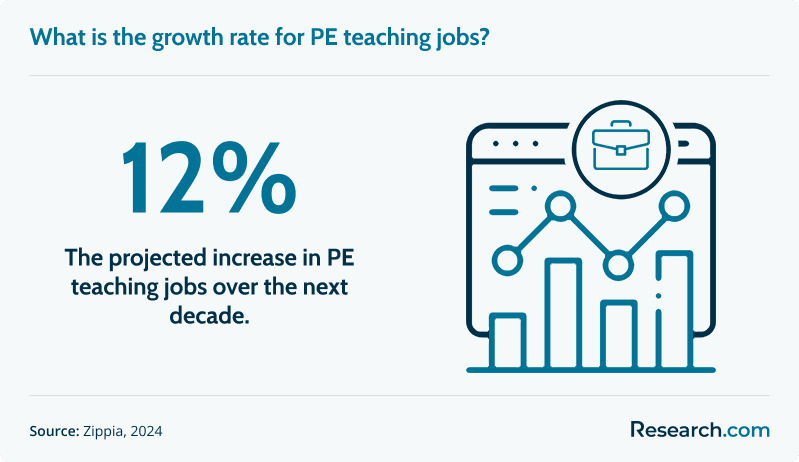
The PE teaching field is projected to grow by 12%, adding approximately 159,400 new jobs over the next decade. This demand is linked to ongoing attention to student wellness, physical activity, fitness education, and childhood obesity prevention programs. Schools increasingly recognize that movement, health literacy, and social-emotional development can all intersect in a strong PE program.
Still, local hiring conditions can vary. A district’s budget, enrollment trends, state graduation requirements, and staffing priorities can affect the number of PE openings. Candidates can improve their competitiveness by earning dual endorsements, gaining coaching or adapted PE experience, and learning how to document student outcomes.
PE teachers interested in broader population health, wellness programming, or community health education may find it useful to compare this path with public health options, including information on salary outlooks with an MPH degree.
What are the best career paths for experienced PE teachers?
Experienced PE teachers can stay in the classroom, move into leadership, or shift toward sports, wellness, or higher education roles. The best path depends on whether the teacher prefers direct instruction, program management, coaching, research, counseling, or administration.
| Career direction | Typical next step | Why PE teachers choose it | Salary information stated in this guide |
| Athletic director | Build coaching, budgeting, scheduling, compliance, and leadership experience | Good fit for teachers who want to manage sports programs and supervise coaches | Around $115,676 |
| Sports psychologist | Pursue specialized graduate training and meet relevant professional requirements | Appeals to educators interested in performance, motivation, stress, and athlete well-being | Up to $108,792 |
| PE curriculum coordinator | Develop expertise in standards, assessment, teacher training, and district curriculum planning | Best for teachers who enjoy improving programs across multiple schools | Salary varies by district and role |
| College-level instructor | Earn graduate credentials in physical education, kinesiology, sports science, or a related field | Suitable for teachers who want to train future educators, coaches, or fitness professionals | Postsecondary Teachers: $84,380 median annual salary as of May 2023 |
| Sports administration or coaching leadership | Combine teaching experience with management training | Useful for teachers who want to lead athletic programs or work beyond K-12 instruction | Depends on employer, level, and responsibilities |
Some PE teachers explore sports psychology careers when they become interested in the mental side of athletic performance and student-athlete development. Others pursue an affordable online master’s in sports management to prepare for athletic administration, coaching leadership, or sports program management.
The chart below compares average salaries for selected advancement paths.
What challenges do PE teachers face and how can they overcome them?
PE teaching can be rewarding, but it comes with practical challenges that are different from many classroom-based subjects. Teachers often manage large groups in open spaces, adapt activities for a wide range of fitness levels, monitor safety, share limited facilities, and teach with equipment that may be outdated or insufficient. They may also balance teaching with coaching, lunch duty, field day planning, wellness committees, or other school responsibilities.
| Common challenge | Why it matters | Better approach |
| Mixed fitness and confidence levels | Students may feel embarrassed, excluded, or unsafe if activities favor only athletic students. | Use tiered activities, student choice, modified rules, and assessments based on growth and participation. |
| Limited equipment or facilities | Budget constraints can make it harder to deliver varied lessons. | Design low-equipment stations, rotate groups, partner with community programs, and document needs for budget requests. |
| Safety during high-movement activities | Injuries can occur when expectations, spacing, or supervision are unclear. | Teach procedures explicitly, inspect equipment, use warmups, and maintain emergency response training. |
| Administrative workload | Coaching, events, assessments, and reporting can reduce planning time. | Use reusable unit templates, collaborate with colleagues, and schedule recurring planning blocks. |
| Changing curriculum expectations | PE now often includes health literacy, wellness, inclusion, and technology-supported learning. | Use professional development and standards-based planning to keep instruction current. |
Teachers who want to move into system-level leadership may consider advanced study after gaining classroom experience. Options such as 2 year EdD programs may appeal to educators focused on school improvement, leadership, and program design, but candidates should compare accreditation, cost, workload, and career relevance before enrolling.
What additional steps can prospective PE teachers take to strengthen their credentials?
Prospective PE teachers can stand out by building evidence of teaching readiness before applying for full-time roles. Strong credentials show that a candidate can do more than demonstrate sports skills; they show the ability to teach diverse learners, manage safety, assess progress, and contribute to school wellness goals.
- Confirm state requirements first. Certification rules vary, so start with your state education department and review this guide on how to get a teaching credential.
- Choose a state-approved program. Make sure the degree or certification route is approved for PE licensure, not just related to fitness or exercise science.
- Get experience with children and teens. Coaching, summer camps, after-school programs, adaptive recreation, and youth fitness programs can help build practical skills.
- Maintain CPR and first aid certification. This is especially valuable in active learning environments.
- Develop inclusive teaching strategies. Learn how to modify activities for students with disabilities, medical needs, low confidence, or limited prior experience.
- Create a teaching portfolio. Include sample lesson plans, assessment tools, safety procedures, reflections from fieldwork, and evidence of student engagement.
How can PE teachers build strategic leadership skills for career advancement?
PE teachers who want to advance should intentionally build leadership skills in addition to instructional expertise. This may include learning how to manage budgets, coordinate coaches, analyze program participation, supervise staff, lead wellness initiatives, and communicate with families, administrators, and community partners.
Leadership development can happen through school committees, coaching roles, curriculum teams, professional associations, and graduate study. Educators interested in research, policy, change management, or organizational leadership may compare options such as an online PhD in organizational leadership, especially if their long-term goals extend beyond K-12 PE instruction.
What is the difference between teaching PE in elementary vs. high school?
The biggest difference is developmental focus. Elementary PE introduces movement, coordination, balance, cooperation, spatial awareness, and positive attitudes toward activity. High school PE is usually more structured and may include fitness planning, strength training, sport-specific units, health education, injury prevention, and lifelong wellness habits.
| Teaching level | Main instructional focus | Common responsibilities |
| Elementary school PE | Fundamental movement skills, coordination, balance, teamwork, and enjoyment of activity | Use games, obstacle courses, relay activities, simple ball skills, and routines that help young students move safely. |
| Middle school PE | Skill development, confidence, cooperation, fitness foundations, and basic health knowledge | Support students through major developmental changes while encouraging participation and reducing embarrassment. |
| High school PE | Fitness training, sports units, health concepts, nutrition, injury prevention, and lifelong physical activity | Teach more advanced activities, support student-athletes, organize intramurals, and sometimes coach school teams. |
Some students interested in fitness, discipline, and public service may eventually compare PE-related careers with other government or security roles. For broader career research, this resource on the average salary outlook for CIA agents offers a different example of how physical readiness and career requirements can intersect outside education.
How do PE teacher responsibilities change at the college level?
College-level physical education and kinesiology instructors usually teach more specialized content than K-12 PE teachers. Instead of focusing primarily on general movement, participation, and school wellness, they may teach courses in kinesiology, biomechanics, sports medicine, exercise science, athletic training, coaching, health promotion, or teacher preparation.
Postsecondary instructors may also mentor future coaches and PE teachers, contribute to athletic department initiatives, support student wellness programs, conduct research, or design advanced fitness and performance curricula. Compared with K-12 teaching, college roles often require stronger specialization and, in many cases, graduate-level education.
How do professional networks and community partnerships boost career growth?
Professional relationships can help PE teachers improve instruction, find advancement opportunities, and expand what students can access. Partnerships with local recreation departments, health agencies, youth sports organizations, universities, and community wellness programs can support guest instruction, equipment access, family fitness events, adaptive recreation, and student leadership opportunities.
Networking also helps teachers learn from related fields. For example, educators interested in research organization, information literacy, or schoolwide learning resources may explore career paths with a master’s in library science to understand how information management skills can support curriculum development and professional growth.
How is technology changing the way PE is taught for 2027?
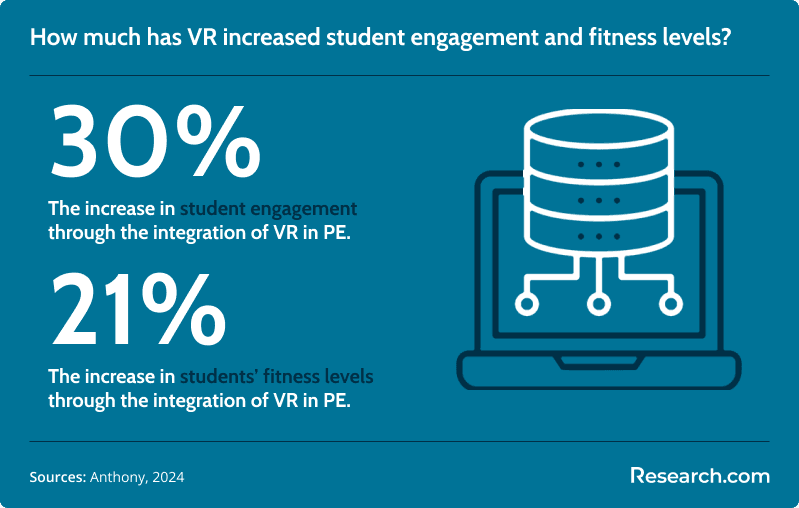
Technology is changing PE by giving teachers more ways to track effort, personalize instruction, and increase student engagement. Research cited in this guide reports that wearable fitness trackers can improve engagement by 25% and fitness outcomes by 20%, while interactive fitness apps boost engagement by 22% and enhance fitness by 15%. Virtual reality has also been reported to increase student engagement by 30% and improve fitness levels by 21%.
These tools can be useful, but they should not replace thoughtful teaching. PE technology works best when it supports clear learning goals, protects student privacy, avoids public shaming, and gives students feedback they can use. Schools should also consider cost, device access, data policies, maintenance, and whether teachers receive enough training to use the tools effectively.
| Technology tool | Potential use in PE | Decision question for schools |
| Wearable fitness trackers | Monitor activity, effort, heart rate, or movement goals | How will student data be protected and used fairly? |
| Interactive fitness apps | Support guided workouts, goal setting, and student feedback | Does the app align with curriculum standards and student needs? |
| Virtual reality | Create immersive movement or skills-based experiences | Is the cost justified by instructional value and accessibility? |
What do PE teachers say about their career journey?
Teaching PE is meaningful because I get to see students gain confidence, learn teamwork, and discover that movement can be enjoyable. The work is active, challenging, and tied to student well-being. Jessica
Physical education is bigger than sports. My goal is to help students build habits they can carry into adulthood, especially students who did not always feel comfortable being active. Paul
Every class feels different. Some days I am building a new activity, some days I am using fitness technology, and some days I am mentoring student-athletes. It is a career that keeps you engaged. Dan
Can advanced degrees in educational leadership drive PE teachers' career advancement?
Advanced degrees in educational leadership can help PE teachers prepare for roles that involve supervision, curriculum design, program evaluation, resource planning, and schoolwide wellness strategy. This route is most useful for teachers who want to influence programs beyond their own classes, such as department chairs, curriculum coordinators, athletic administrators, or district-level wellness leaders.
Before enrolling, compare tuition, accreditation, field requirements, format, and whether the degree aligns with your district’s salary schedule or promotion criteria. Teachers seeking flexible graduate options can review affordable online master’s degrees in educational leadership.
Can cross-disciplinary research enhance PE teaching outcomes?
Cross-disciplinary research can strengthen PE instruction when it helps teachers make better decisions about curriculum, assessment, inclusion, and student motivation. PE teachers often draw from education, health science, psychology, biomechanics, nutrition, public health, and data-informed instruction. The goal is not to make PE overly academic; it is to use evidence to design safer, more inclusive, and more effective learning experiences.
Research and information organization skills can also help teachers evaluate new programs, avoid unsupported fitness trends, and document outcomes for administrators. Professionals exploring library science degree and career options provide one example of how systematic research, information management, and evidence evaluation can support education-focused work.
How can historical insights shape modern physical education strategies?
Historical context helps PE teachers understand why physical education has changed over time. Curriculum priorities, public health concerns, school funding, sports culture, inclusion policies, and technology have all influenced what PE looks like in schools. Looking at past reforms can help teachers avoid repeating weak approaches and identify practices that have consistently supported student development.
Teachers interested in analyzing education trends over time may find interdisciplinary study useful. For example, an affordable online master’s degree in history can build analytical skills for comparing policy changes, social trends, and institutional decisions, although it is not a direct requirement for PE licensure.
Common mistakes to avoid when becoming a PE teacher
| Mistake | Why it can hurt you | What to do instead |
| Choosing a related degree without checking licensure approval | A fitness, sports, or exercise science degree may not qualify you to teach in public schools. | Confirm state approval and teacher preparation requirements before enrolling. |
| Looking only at tuition | A cheaper program may cost more later if credits do not transfer or licensure requirements are missing. | Compare total cost, certification outcomes, student teaching support, and exam preparation. |
| Assuming online automatically means fully remote | Teacher preparation usually requires in-person fieldwork and student teaching. | Ask where placements occur and whether the school helps arrange them in your area. |
| Ignoring adaptive physical education | PE teachers must serve students with different needs and abilities. | Take coursework or professional development in inclusion, modifications, and adaptive PE. |
| Assuming salary outcomes are guaranteed | Pay depends on district, state, degree level, years of experience, and added duties. | Review actual district salary schedules and contract details. |
| Relying only on rankings | A highly ranked school may not fit your state, budget, schedule, or licensure goals. | Use rankings as one input, then verify accreditation, outcomes, cost, and certification alignment. |
Questions to ask before choosing a PE teacher preparation program
- Is the program approved for PE teacher licensure in the state where I want to work?
- Does the curriculum include student teaching, adapted physical education, health education, and classroom management?
- What licensure exams do graduates need to pass, and how does the program prepare them?
- How are field placements arranged, especially for online or hybrid students?
- Can I add endorsements in health education, coaching, or adaptive PE?
- What is the total cost after fees, books, testing, background checks, and student teaching expenses?
- Do graduates find jobs in public schools, private schools, coaching, wellness, or related roles?
- Will credits transfer if I later pursue a master’s degree?
Key Insights
- Becoming a PE teacher usually requires a bachelor’s degree in physical education, kinesiology, exercise science, or a related field plus a state-approved teacher preparation pathway.
- Licensure matters. Public school PE teachers typically need exams, supervised teaching, background checks, and often CPR and first aid certification.
- Alternative certification can work well for career changers who already have a bachelor’s degree, but candidates still need to meet state teaching requirements.
- Salary depends heavily on grade level, location, district salary schedules, education level, and extra duties. BLS median annual teacher salaries as of May 2023 range from $63,680 for elementary school teachers to $65,220 for high school teachers, with postsecondary teachers at $84,380.
- The field is projected to grow by 12%, adding approximately 159,400 new jobs over the next decade, but local hiring varies by district budgets, enrollment, and state requirements.
- Experienced PE teachers can advance into athletic administration, curriculum coordination, sports psychology, coaching leadership, or college-level instruction. Athletic directors earn around $115,676, while sports psychologists can make up to $108,792.
- Technology can improve PE engagement when used carefully. Research cited here reports engagement gains of up to 30% and fitness-level improvement of 21% with VR, but schools still need strong privacy, equity, and instructional policies.
- The safest program choice is one that is accredited, state-approved for licensure, transparent about fieldwork, and aligned with your target teaching state and career goals.
References:
- Anthony, J. (2024). Influence of technology integration in physical education on student engagement and fitness outcomes in American schools. ResearchGate.
- BLS. (2024, August 29). High school teachers. BLS.
- BLS. (2024, August 29). Kindergarten and elementary school teachers. BLS.
- BLS. (2024, August 29). Middle school teachers. BLS.
- BLS. (2024, August 29). Postsecondary teachers. BLS.
- Glassdoor. (2024, June 6). Salary: Athletics Director in United States 2025. Glassdoor.
- Glassdoor. (2024, June 6). Salary: Physical education Coordinator in United States 2025. Glassdoor.
- Glassdoor. (2024, June 6). Salary: Sports Psychologist in United States 2025. Glassdoor.
- Zippia. (2024, July 24). Physical education teacher trends. Zippia.
- Zippia. (2025, January 8). Physical Education Teacher Demographics and Statistics [2025]: Number of physical education teachers in the US. Zippia.
- Zippia. (2025, January 8). Physical Education Teacher skills for your resume and career. Zippia.
Other Things You Should Know About Becoming a PE Teacher
To become a PE teacher in 2027, you need a bachelor's degree in physical education or a related field. Most states require completion of a teacher preparation program and passing the Praxis Physical Education content exam to gain licensure.
Most states require a supervised student-teaching placement of 12 to 16 weeks, often totaling about 400 to 600 hours. The placement must be completed in an accredited teacher-preparation program and evaluated by both the university supervisor and the host-school mentor teacher.


